New Jersey’s Provincial Congress first convened in May, but by now they’d gotten a bunch of stuff done. They’d already made arrangements to remove the Royal Governor from power, and resolved to do it like gentlemen (it didn’t work out that way, unfortunately).
At this point the colony had only one delegate to the Continental Congress: a couple had resigned, one never showed up, and that left exactly one man holding down the fort. So the Provincial Congress appointed new delegates, with a specific mission.
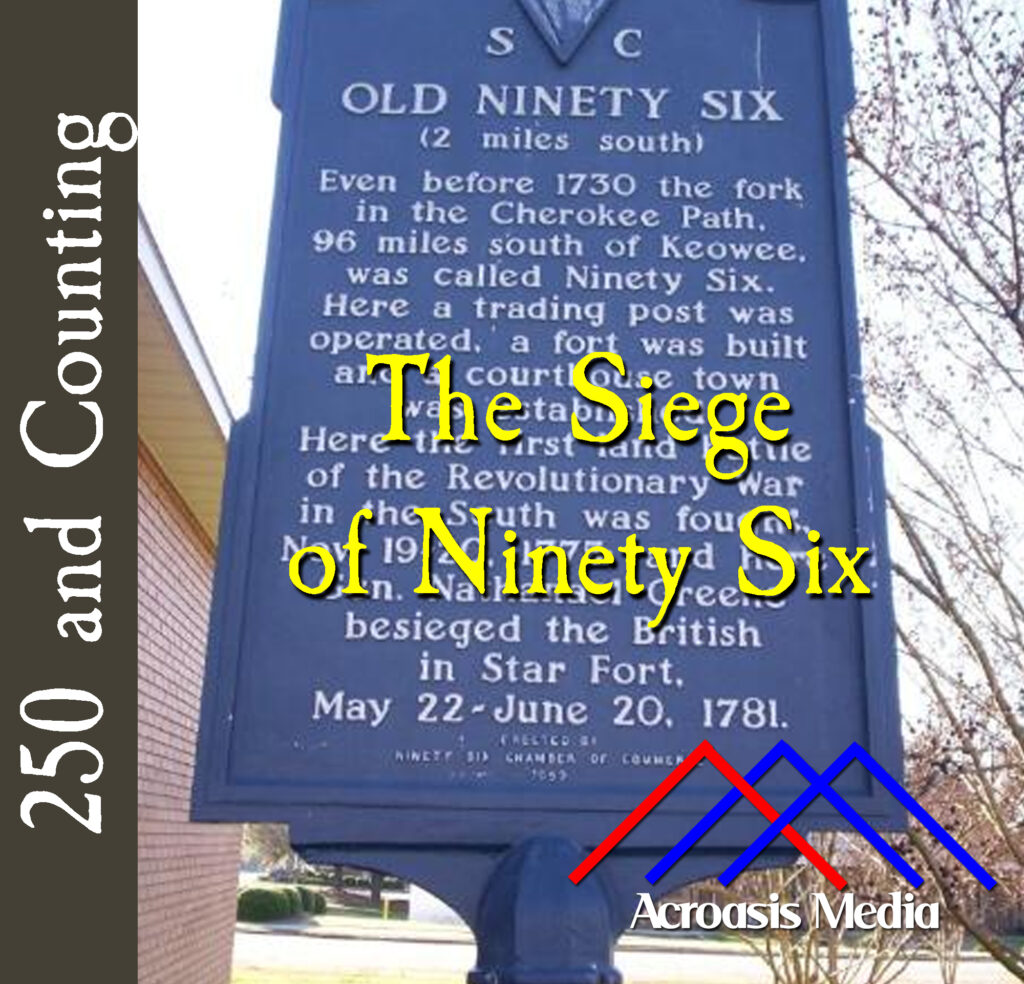
Mike has already mentioned the location of the historical marker in today’s art. It’s tough to read even when you’re standing there, so here’s the text:
At or near this place ever since known as “Liberty Point” was promulgated in June 1775, by patriots of the Cape Fear A Declaration of Independence of the British Crown.
This was an extremely historic neighborhood, should you choose to visit. There are at least eight other historical markers within a short walking distance of this one, not all of them are connected to the American Revolution. In fact, one of them dates back to living memory of some of the locals.
Sometimes when you’re watching a movie or listening to music, you find yourself in the awkward position of separating the artist from the work, because it turns out that the artist has some shady stuff going on in the past, or even in the present. But the song/movie/book is just so good that you need to temporarily overlook that.
Such is the case, we think, with Vardry Echols McBee, an entrepreneur and philanthropist who basically invented the town of Greenville, South Carolina. He was also a slave owner who sided with the Union but provided material assistance to the Confederacy.
Mixed messages! Conflict of loyalty!
But it’s also clear that he was instrumental in making the town of Greenville what it is today, even more than 150 years later. What’s more, by all contemporary accounts he did it “without pride, pretense or ostentation.”
It’s Cake and Candles today for a future State Representative of a future state.
Orsamus Cook Merrill was born in Connecticut but moved to Vermont coincidentally the same year that the Vermont Republic was admitted to the Union as our fourteenth state. He spent the rest of his life in the Bennington area, working in jobs as diverse as newspaper editor or publisher, postmaster, attorney and Engrossing Clerk for the Vermont House of Representatives before becoming a Representative himself.
(For those not in the know: an Engrossing Clerk is responsible for preparing prints of intermediate drafts of bills that a governing body is considering before they vote at the next stage.)
By most accounts, he represented his constituents well, and he was largely done in by shifts in the political winds. He died in 1865 and is buried in Bennington Centre Cemetery.
In the long run, the Battle at Bunker Hill Breed’s Hill was a tactical win for the British, but they incurred heavy losses and it took three tries to get that win.
So why is it one of the battles that so many Americans seem to remember all these years later?
We’re speculating here, but it’s possible that, between this battle and the ones at Lexington and Concord, the Colonial forces realized that this was a war that they could actually win: it wasn’t crazy at all to fight the British army. It almost didn’t matter that we didn’t win this one; the colonial militiamen could stand up against the British and force them to work much harder for their victories.
There’s a scene in The Godfather, Part II in which Michael describes an incident he’d seen earlier in the day. He says he saw some Cuban rebels being rounded up by the soldiers, and one of them, rather than being taken prisoner, detontated a grenade on his person, taking a Captain of the Guard with him. From that he concluded that because the rebels weren’t getting paid to fight, they can actually win.
Yesterday, George Washington was unanimously elected Commander in Chief of the Continental Army.
Today he officially accepted the position.
He won’t take actually begin until early July (we’ll get to that episode in a few weeks), but take a look at this image here. He’s already in the blue coat, and his hair is whiter than it was in yesterday’s art.
The truth about his hair color is likely somewhere in between these two images, but of course he wasn’t wearing a coat like that just yet. This art is from a hundred years later, by Currier and Ives.
What I found interesting is that some of the people in the background look a little put out by Washington, even though they’re the ones who elected him. I think Currier and Ives were trying to convey that it was a serious event, but everyone just looks angry. John Adams (in the dark blue to the right) appears especially annoyed, and he’s the one who nominated him in the first place.
And check out the guy to Adams’ right, staring straight at us. There’s always one guy who can’t help but look at the camera.
Jeez, I gotta stop writing these titles late at night.
Sometimes the history books make it sound like some people just appeared out of nowhere, but they did have pasts. George Washington would be a good example.
Washington has been nearly invisible since this show started on January 1, but that doesn’t mean that the Congress hollered “Anyone wanna be a general?” and he stepped up first. In fact, he was a delegate to the First Continental Congress in 1774, and for some time he’d been a member of the Virginia House of Burgesses, often simultaneously with the Congress thing. And he did have a commendable military background dating back to the French and Indian War, so appointing him the Commander of Colonial forces wasn’t part of someone’s crazy scheme: they thought he could really do it.
It wasn't even close to being the first time, but this was an important "get": the colonist forces learned that troops were coming to capture Charlestown and Dorchester in an effort to break the siege. They got lucky, it all led to some ugliness and eventually both sides could call it a win, and both sides could call it a loss.