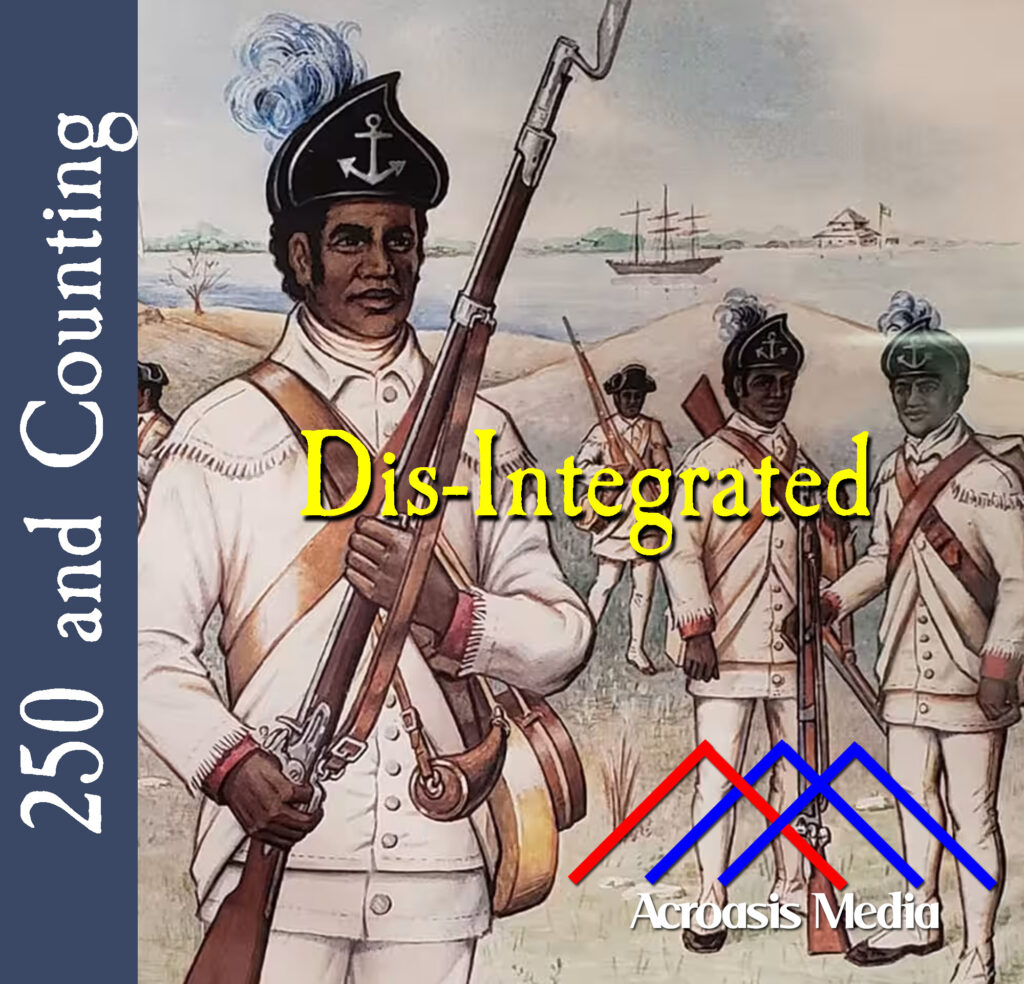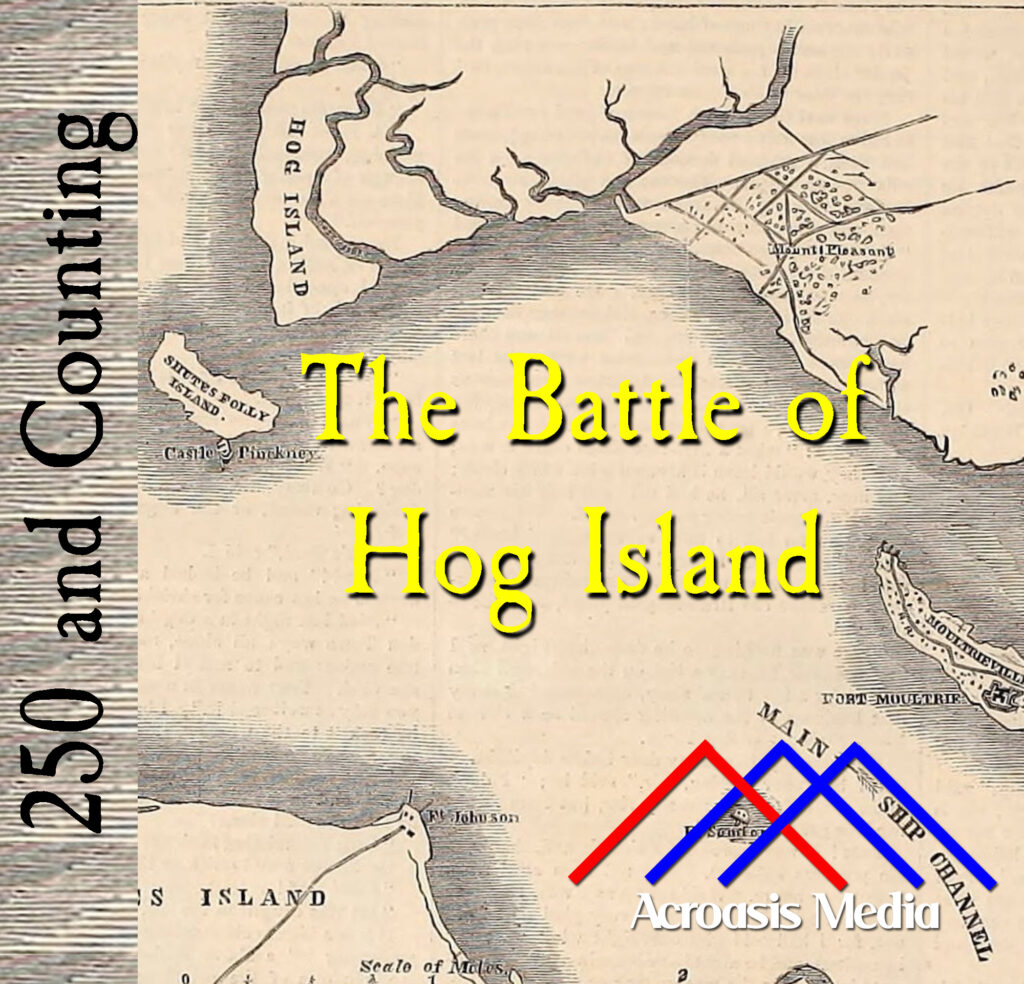
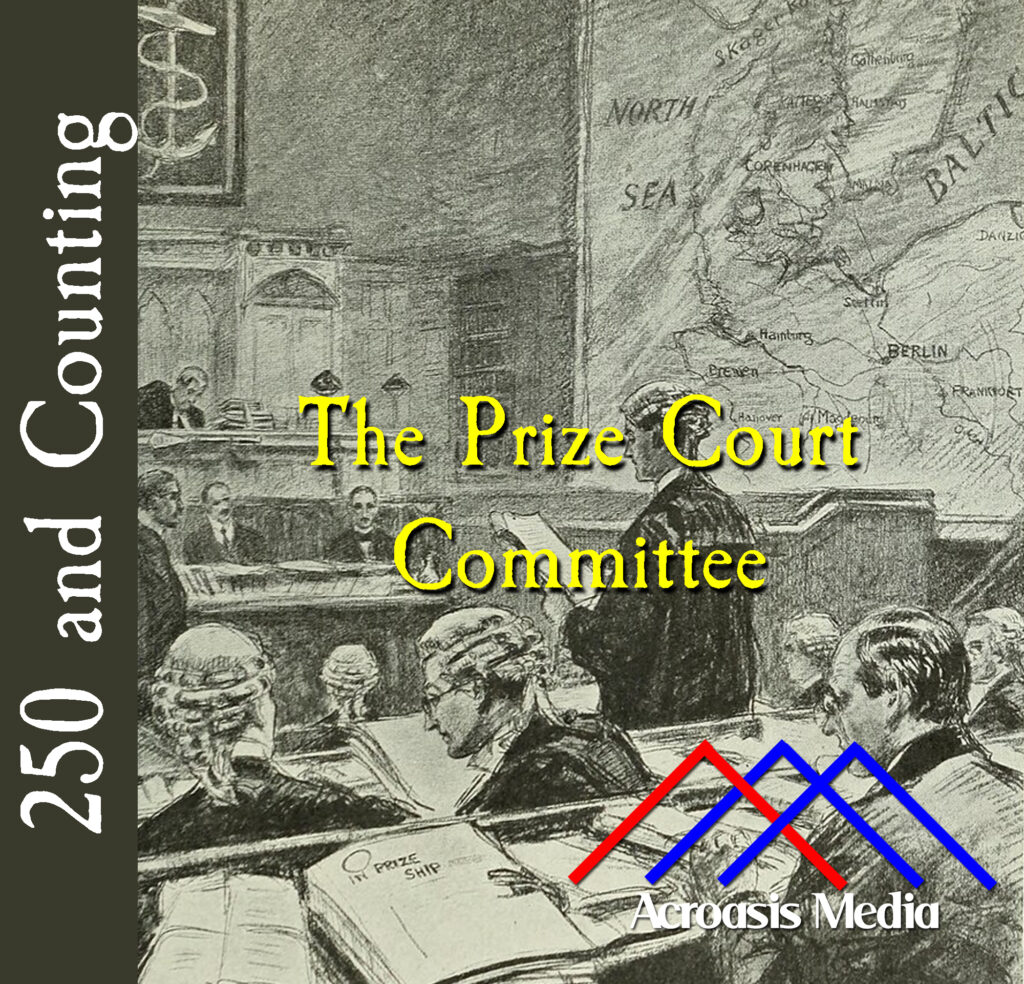
The folks in America wanted to ensure that the folks in Canada knew just how bad the conditions were, but the problem was that most of the regular inhabitants of Canada spoke French, so when the Continental Congress created documents meant to sway the Canadians to our side of the loyalty fence, they were written in French.
But the problem was, they couldn’t use these documents as evidence for folks here in the Colonies, because not enough people understood French. What to do, what to do?
Full Disclosure: I have no idea whether I pronounced “Machias” correctly. We’ll all have to live with that one, I suppose.
The Battle of Machias was not exactly one of epic proportions. It was a couple of boats chasing after a couple of other boats, and one boat got away but the other one managed to damage itself and was ultimately boarded.
So why is it significant?
Well. Not only was it the first naval battle of the American Revolution, it was a battle that the Colonies won, no matter how you look at it. And every little win was, in fact, a big win.
In the wake of Lexington and Concord, some places didn’t wait to start assembling troops to fight off the British. Most of them were in that part of the Colonies, though.
Enter the Berkeley County Riflemen, from a section of Virginia that is now West Virginia. George Washington put out the word that soldiers were needed, and about a hundred men from Martinsburg stepped up, even going so far as to ensure that they dressed mostly alike, since there was no Continental Army just yet, and therefore there were no uniforms.
And while the sign doesn’t really say much about it, the Berkeley County Riflemen are said to be the genesis of the United States Army.
We’ve spent all our time on the East Coast; let’s take a side quest to the West Coast to see what the Spanish are up to.
We have two main players here: Bruno de Heceta, after whom at least two locations on the West Coast are named (and they’re pronounced differently, go figure), and Juan Francisco de la Bodega y Quadra.
They sailed together, each in charge of a ship, and made it almost to Canada before Heceta headed back to Mexico and Bodega y Quadra continued on up to Alaska. Their goal was to find Russians, and in that respect they failed, but they did manage to claim a lot of territory for Spain.
In the aftermath of the Gunpowder Incident, Lord Dunmore decided that the better part of valor involved getting out of town before the locals could get a good lynch mob together, and he left Virginia on the HMS Fowey.
Here’s the interesting part: the Fowey which Dunmore boarded was not the first of its name; in fact it was the fifth. But the other interesting part is that it was the second one of that name to sink in American waters.
The fourth HMS Fowey was a fifth-rate vessel (remember, ratings refer to the number of guns, not the quality of the boat) with 44 guns on it. It was first launched in 1744. In June of 1748 the ship struck a coral reef and sank off the coast of Florida (see map). She wasn’t re-discovered until 1975 and, through an agreement with England, is considered a Protected Site by the National Park Service. The photo used for today’s art is of divers swimming over the exposed timbers of that ship. It’s definitely a “look but don’t touch” situation.
In 1749 another Fowey was built, a sixth-rate frigate with 24 guns. This is the one which Lord Dunmore used to skip town. The remains of this ship are probably in the York River, but it’s not known for sure.
Why is “Fowey” such a popular name for a ship? It’s not clear. In fact, it’s not clear whether the name comes from the Cornish town of Fowey, or the river Fowey which runs through it.
The Second Continental Congress was in full swing by now. The first committees are beginning to report out to the Congress. New committees are being created for various purposes. The Congress is meeting as a group to determine the state of America. And one committee is recruited to draft a proclamation that, to modern ears, might sound a little peculiar. But the fact is, even a hundred years later a proclamation like this was quite common.
We’ve mentioned the Willett family in prior episodes. They were a prominent family at the east end of Long Island, and in what we’d now call the Queens portion of New York City, at a time when there wasn’t a whole lot of much else between the two. There are some landmarks around Long Island that have the Willet (the other ‘t’ dropped off somewhere in history) name attached to them; in fact when I was young I lived quite close to one of the roads named after that family.
(Spider Robinson fans please note: it’s less than a mile from where I think Callahan’s Saloon is located.)
Marinus Willett made a name for himself early on; first in the French and Indian War and then again during the American Revolution. In between, he attended college. He was so ambitious that he managed to distinguish himself after the Revolution as well, but I’ll let Mike tell you about that.
Peter Tondee and his wife Lucy ran Tondee’s Tavern in Savannah, Georgia. It was quite the location for revelry and such, and it was a popular meeting place up until it burned down in 1796, along with most of that city. Nowadays there’s a plaque in the side of the building where Tondee’s once stood.
And on this day in 1775, the Sons of Liberty got together to throw the King a little birthday part, without balloons, or cake and candles, or much other than a little food and a lot of fermented beverages, if you catch our drift.
It’s been nearly two months since the Gunpowder Incident started, and the entire time, the Royal Governor, Lord Dunmore, has been trying to keep things from getting out of hand.
He might—might—have succeeded, had something not happened on this day in 1775.
Silas Deane was a delegate to the Continental Congress from Connecticut, and by most accounts he did a decent job of it, although he did lose his position after a dispute with Roger Sherman. He stuck around Congress anyway, helping however he could.
The following year he went to France as a secret delegate to drum up support for the Colonies. Unfortunately when he returned he was accused of financial impropriety; it took some time to clear his name and when the dust settled, he was nearly broke.
The following year he returned to France and, while there, letters he’d written suggesting that the Colonies would not win the war were released to the press by British spies, and he again faced accusations, this time of treason.
Eventually Deane moved to Ghent and in 1789 he made plans to return to the newly-minted United States of America so he could clear his name. But he fell ill and died shortly after boarding a ship to take him back home. He was 51 years old.
P.S. you only think this has nothing to do with today’s episode.