Tag: 1775 births

  • Philemon Beecher–March 19, 1776

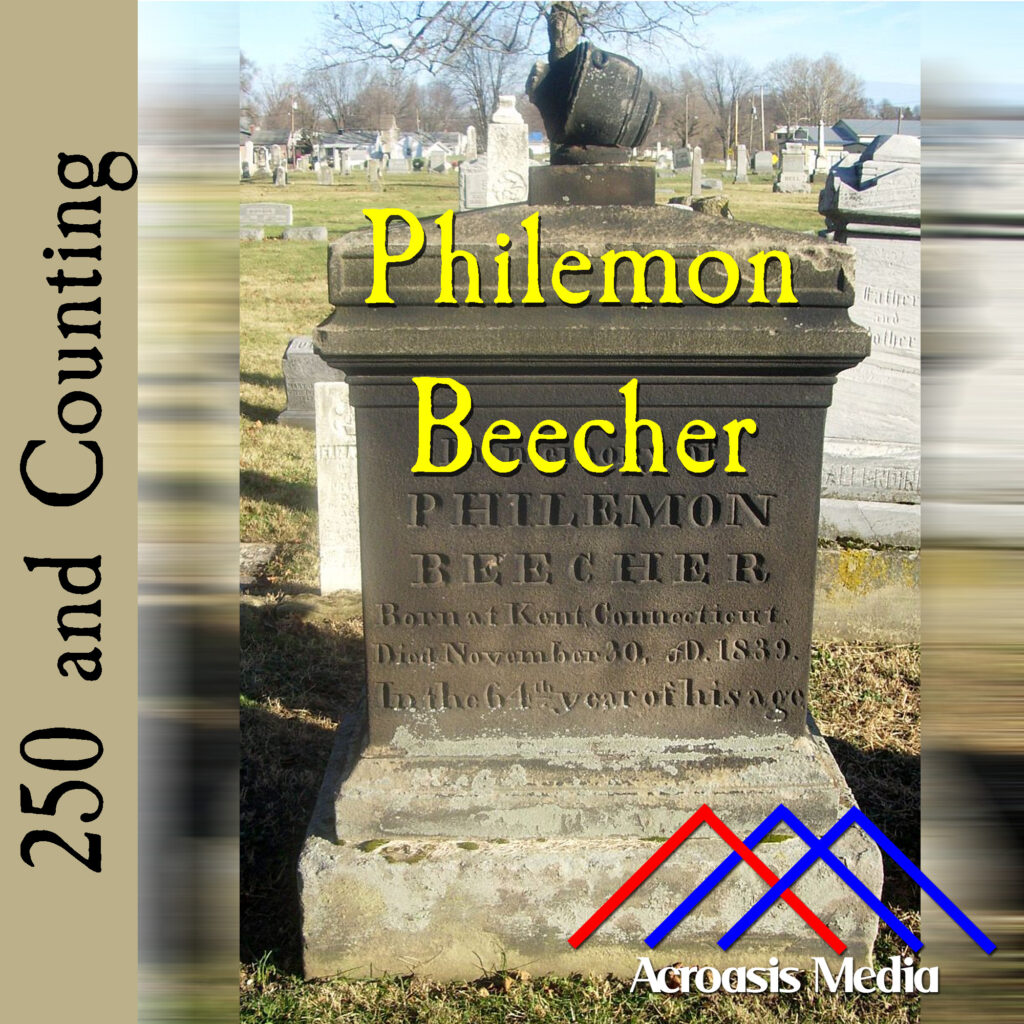
    Cover art for March 19, 1776: Gravestone of Philemon Beecher. via findagrave.com.

    Philemon Beecher is an unusual name (said the guy named Claude Call, sigh), but that’s on us for not recognizing it as a name from the Bible. Philemon was a man to whom the apostle Paul wrote while in prison. He was in prison more than once, but it’s not entirely clear which stretch Paul was doing when he wrote it.

    Philemon was a leader in the Colossian Church, and Paul’s letter—one of a very few that scholars generally agree was actually written by Paul—touches on themes of reconciliation, forgiveness, and Christian fellowship, addressing themes of slavery, freedom, and ethical conduct within the Roman social context. While it doesn’t explicitly condemn slavery, it reframes master-servant relationships in spiritual terms, highlighting the moral and social transformation encouraged within early Christian communities.

    But I digress. Philemon Beecher was a successful attorney and a semi-successful politician who was one of Ohio’s first House members once Ohio became a state. Beecher also got married in 1803, so that was a pretty good year for him. He was one of ten children, one of whom died at the age of three and who coincidentally was also named Philemon Beecher. They recycled that name two years later! Some of his other siblings also died relatively young but they had reached adulthood.

    I don’t imagine he had an especially distinguished political career, given that I couldn’t find an image of him in any of my usual haunts. What’s more, I couldn’t ascertain whether he and his wife Susan had any children, though it appears the answer to that is “no.” Nevertheless, he remained a prominent citizen as an attorney and member of the board of the Lancaster, Ohio Bank. He also participated as a member of The Colonization Society in Lancaster, a group dedicated to repatriating Black people back to Africa as an alternative to slavery.

  • Mary Pickersgill–February 12, 1776

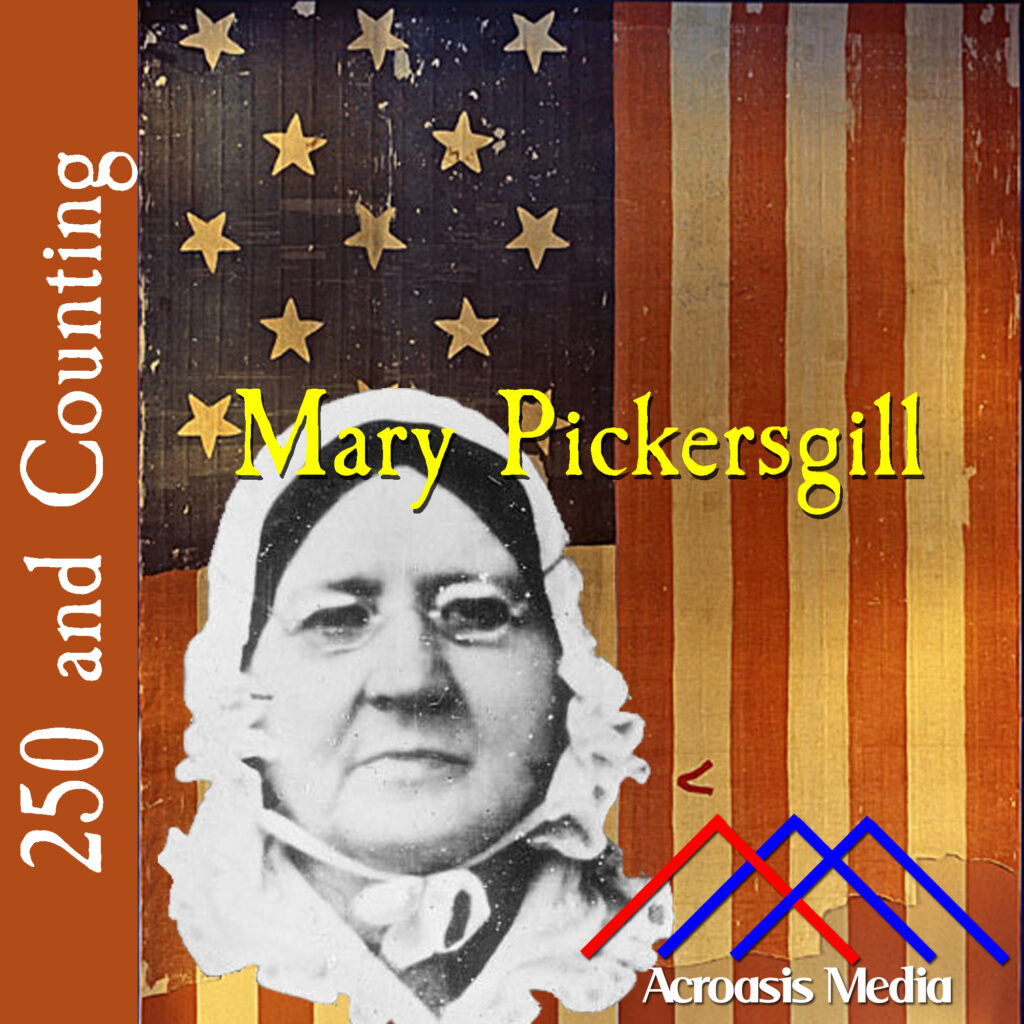
    Cover art for February 12, 1776: Mary Pickersgill and the Star-Spangled Banner flag, now on display at the Smithsonian Museum of American History.

    The thing that’s hard to understand when considering the flag that Mary Pickersgill put together, and that inspired our National Anthem, is that it’s huge. Mike says specifically that this flag is 17 feet by 42 feet, but that’s hard to picture.

    When the flag was first displayed at the Smithsonian, it hung out in the open, against the atrium wall. But a flag that big, and that old, eventually begins to give in to gravity. So the Smithsonian folks took it down and spent a couple of years restoring it. Part of the work involved undoing the restoration job from 1914:

    Now, a lot of it had been cut away for souvenirs (you can see the frayed bottom partially disguised by the painted stripes in the cover art today), and that red “V” shape is really meant to be an “A” for General Armistead. But the flag is back on display, lying flat at an angle making it easier to see, in a temperature- and humidity-controlled setting.

    The parts that have been cut away are still missing, and the “A” has been removed. but even with nearly half of it gone, this thing is still enormous. And an original-size replica often flies over Fort McHenry, weather permitting.

  • Charles Pinckney Sumner–January 20, 1776

    Cover art for January 20, 1776: Sumner's grave in Cambridge, Massachusetts. via Find-a-Grave.com.

    Charles Pinckney Sumner was a man ahead of his time, in the sense that he knew not only that slavery was wrong, but that slaves need not only to be freed, but to be treated as equal citizens.

    He also carried a rather Utopian view of what society should be like, that Nature was at least as important as Nurture, if not more so.

    Although he and his wife Relief Jacob had at least nine children, they were considered to be not especially demonstrative with one another, even described by some as “formal.”

  • John M. Snowden–January 13, 1776

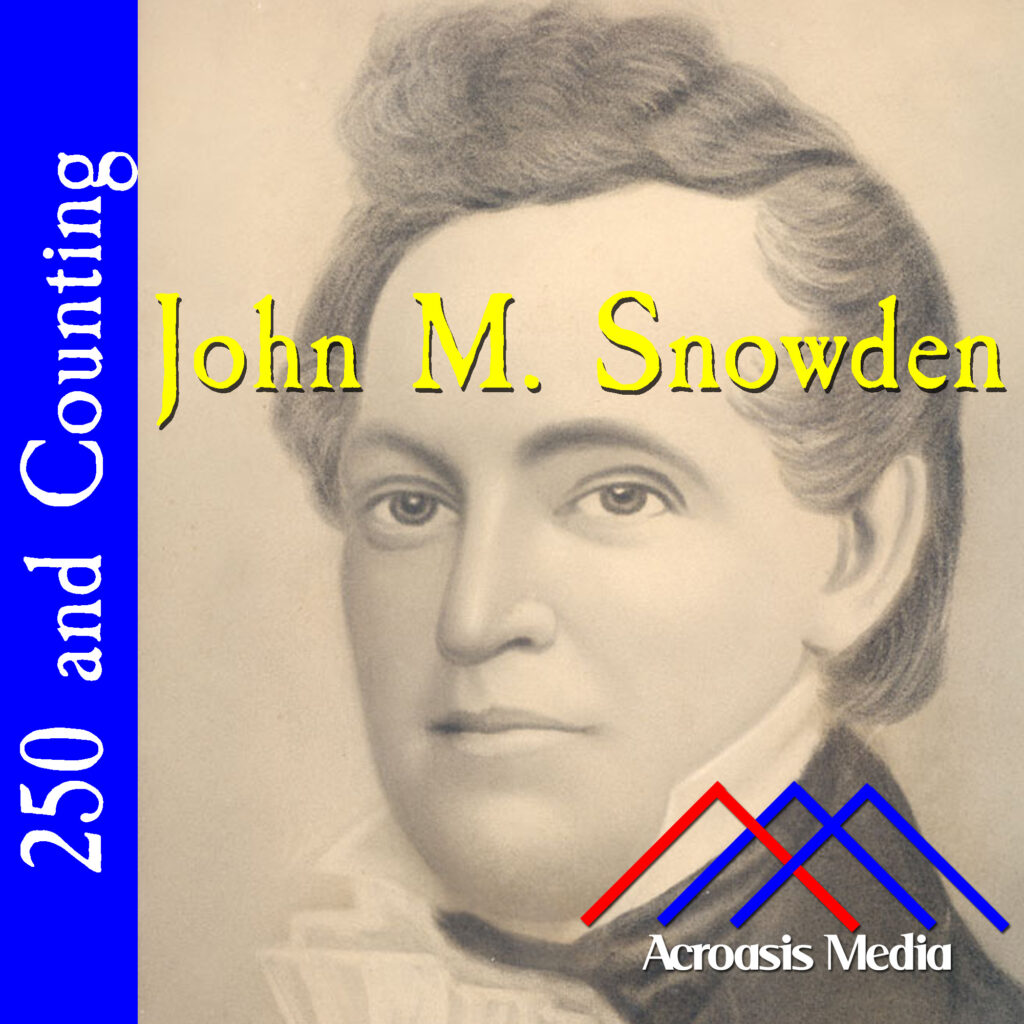
    Cover art for January 13, 1776: Portrait of John Maugridge Snowden, Third Mayor of Pittsburgh. From the Snowden Family Collection via Wikimedia Commons.
    Portrait of John Maugridge Snowden, Third Mayor of Pittsburgh. From the Snowden Family Collection via Wikimedia Commons.

    What can I say about John M. Snowden that I didn’t tell you about in the episode itself?

    The truth is, he’s not a well-documented man, nor is his family, even though (as I noted) his wife was an advisor to George Washington for awhile.

    I can note that I foreshortened his career a little bit, in that he had done a little public service before he was the mayor of Pittsburgh. He also spent some time as the Allegheny County Recorder and Treasurer before he was elected mayor. It should be noted, however, that until 1835 mayors were appointed by the City Council. It wasn’t necessarily a bad thing, but it could lend itself to corruption. And the incumbent won the first election, so chances are the process wasn’t too bad.

    We also spend a little time with Henry Knox, who (you might remember) began the Noble Train of Artillery journey back on December 17. His arrival in Cambridge is still about two weeks out; we don’t know a lot about what happened during that time because today is the day that his diary stops. But when he arrives, we’ll all be there to greet him.

  • Thomas Cochrane–December 14, 1775

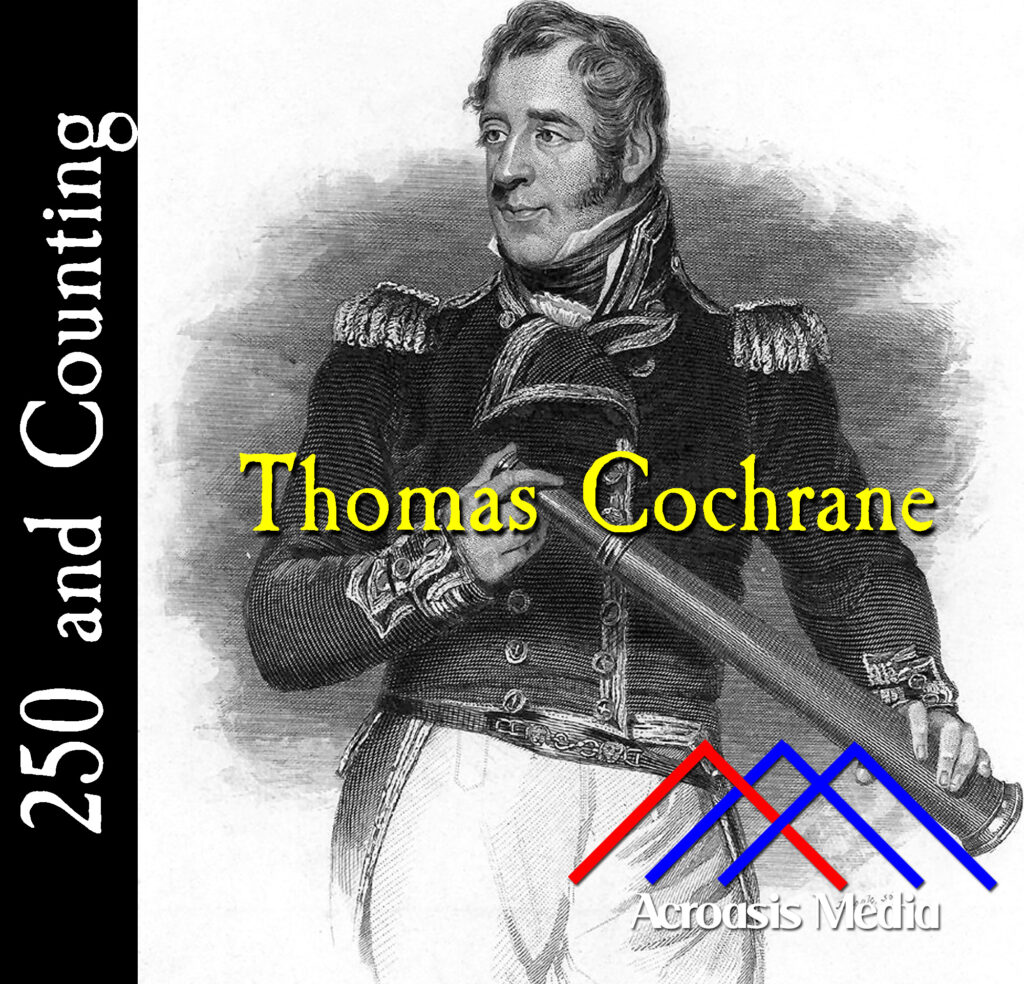
    Engraving of Thomas Cochrane, Lord Dundonald. Original painting by James Ramsay, engraving by John Cook, published 1866.

    Thomas Cochrane had quite the colorful, storied life, and it’s too bad that we can only cram so much into a twenty-minute podcast episode.

    For instance, it’s entirely possible that he was involved in a stock fraud scheme based on false rumors of Napoleon’s death. Fortunately for him, he was elected back into the House of Commons about a month after his conviction. Even today, his guilt is in question by historians.

    Cochrane also spent several years serving in the Chilean Navy and spent time as that nation’s first Vice Admiral, reorganizing the structure and assisting with the independence of Peru.

    At any rate, if you dig naval history, take a look at Thomas Cochrane’s career.

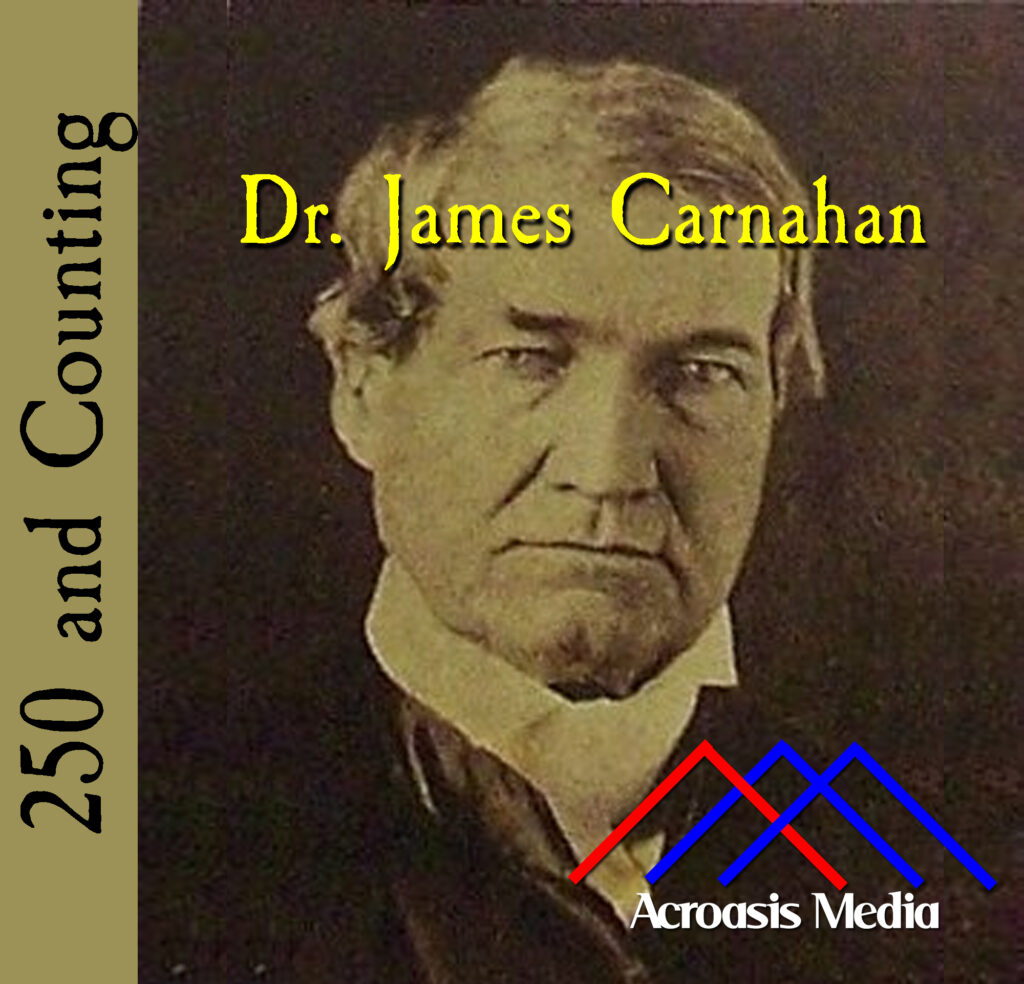
  • Dr. James Carnahan–November 15, 1775

    Cover art for November 15, 1775: Undated photo of Rev. James Carnahan, via findagrave.com.

    As noted during the episode, James Carnahan was the president of what was later known as Princeton University, the ninth man to hold that title since the school’s founding nearly 90 years earlier.

    Carnahan held that position for over 30 years, making him the longest tenured president of that school to that date, a record that remains to this day.

    Carnahan was buried in the University President’s Plot at Princeton Cemetery. Curiously, he specified in his will that none of his lectures, manuscripts or other writings be published, even though he was held in high esteem as a writer. This may account for his relative obscurity despite his enormous tenure.

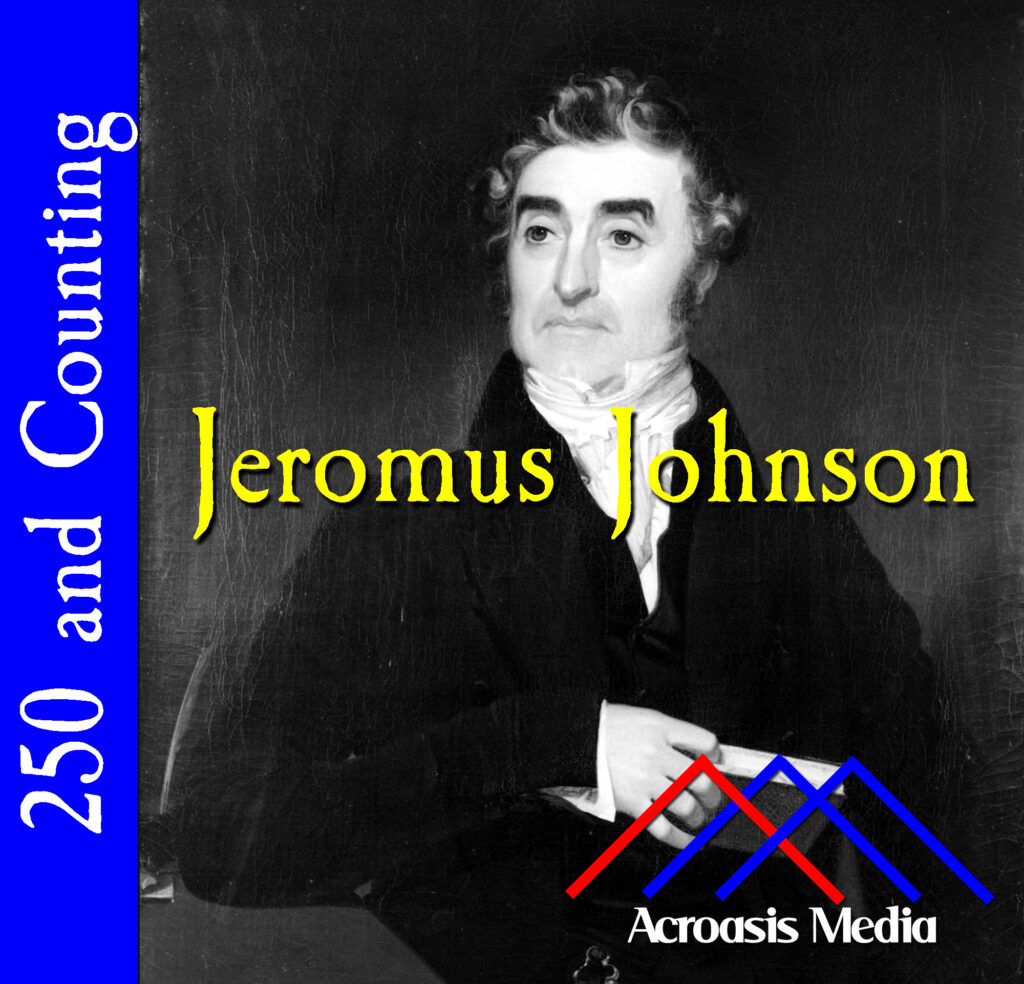
  • Jeromus Johnson–November 2, 1775

    Cover art for November 2, 1775: Jeromus Johnson, 1832. Oil on canvas portrait by William Sidney Mount. via the Brooklyn Museum.

    It’s noted that Brooklyn is the place where Jeromus Johnson was born, but to be more specific, Johnson was born in a neighborhood called Wallabout, which still exists but Johnson wouldn’t recognize it today. Wallabout got its name from the adjacent Wallabout Bay, which has been mostly filled in and is now occupied by the Brooklyn Navy Yard. “Wallabout” is a corruption of a French phrase meaning “bend in the harbor”.

    For all that, you rarely hear the name Wallabout anymore; the village has been largely absorbed by Fort Greene, Bedford-Stuyvesant and Clinton Hill.

    How do I know all this? I used to work a few blocks from there.

    Another personal connection: the town to which Johnson retired is Goshen, NY, in Orange County. My oldest daughter used to go to school up that way, and to avoid traffic I’d often visit her by driving a state highway that passed right through Goshen. It’s a lovely, rustic-looking village (at least it was ten years ago), and that area is a nice, relaxing drive.

    But what about Jeromus Johnson? Go listen to Mike.

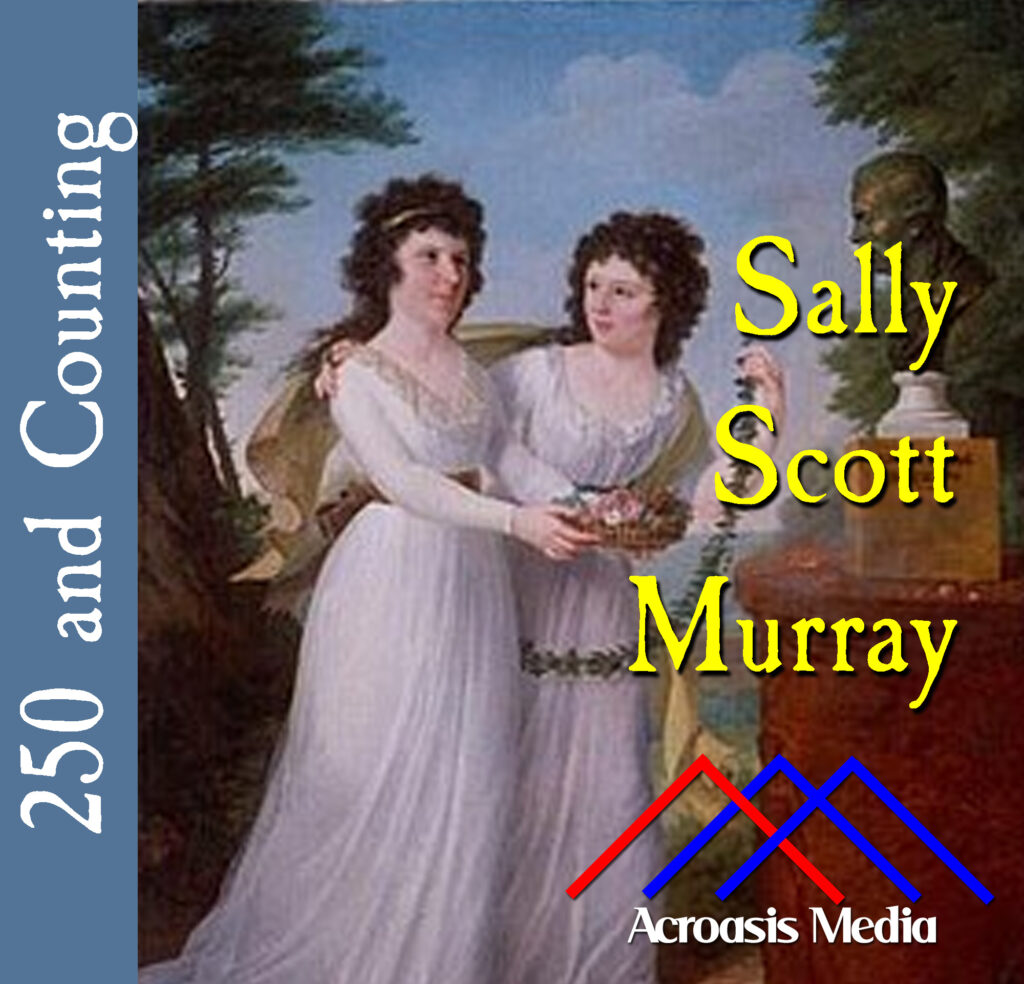
  • Sally Scott Murray–October 30, 1775

    Cover art for October 30, 1775: Portrait of Sally Scott Murray (left) and her sister Anna Maria Murray.

    Sally Scott Murray was a political wife for the better part of her adult life, given all the different elected offices that her husband Edward Lloyd the 5th held. There were a few years immediately after their marriage when id didn’t hold elected office, and he predeceased her by about twenty years, but in between, Edward’s resume is all over the Maryland State Archives.

    And, of course, there’s a Lloyd Street in Baltimore. Just around the corner on Lombard Street is one of the best places ever to get a corned beef sandwich; a Jewish deli by the name of Attman’s. Stop in and tell them I said Hi. They won’t know what you’re talking about, but we can use the publicity.

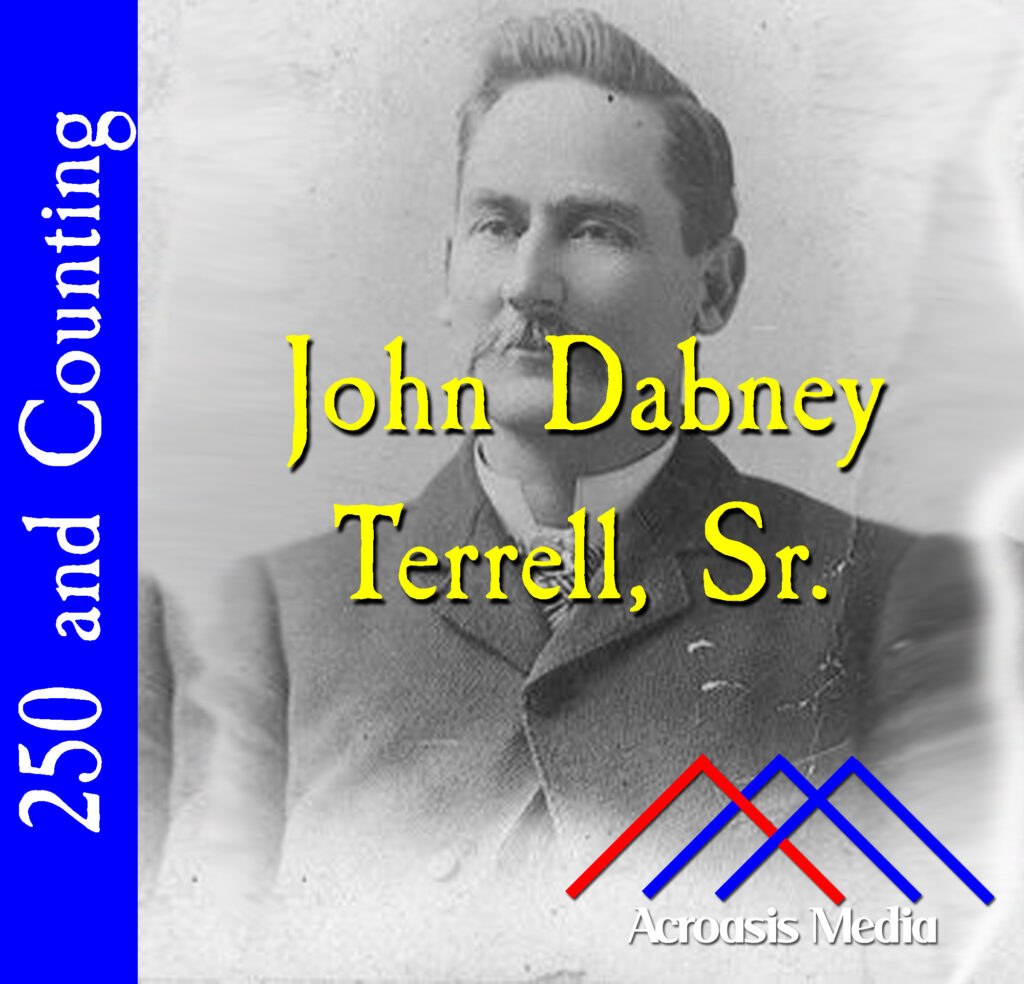
  • John Dabney Terrell Sr.–October 14, 1775

    Cover art for October 14, 1775: photo of John Dabney Terrell Sr. via findagrave.com

    Programming Note: Mike came down with a case of electronic laryngitis, so you’re getting me again for today’s episode. But Mike wrote it, so there’s that.

    John Dabney Terrell Sr. was…not one of our best and brightest Americans, but the work he did will lead us to a bigger story some time down the road. Much of what he did laid down the foundation for the event that became known for the Trail of Tears.

    As if that wasn’t bad enough, he was a slave owner who put some of his slave property (ugh, but that was the legal term) in his son’s name to avoid losing them in a pending lawsuit against him.

    That he did all this and chose to be buried in a very Native American fashion is kind of amazing.

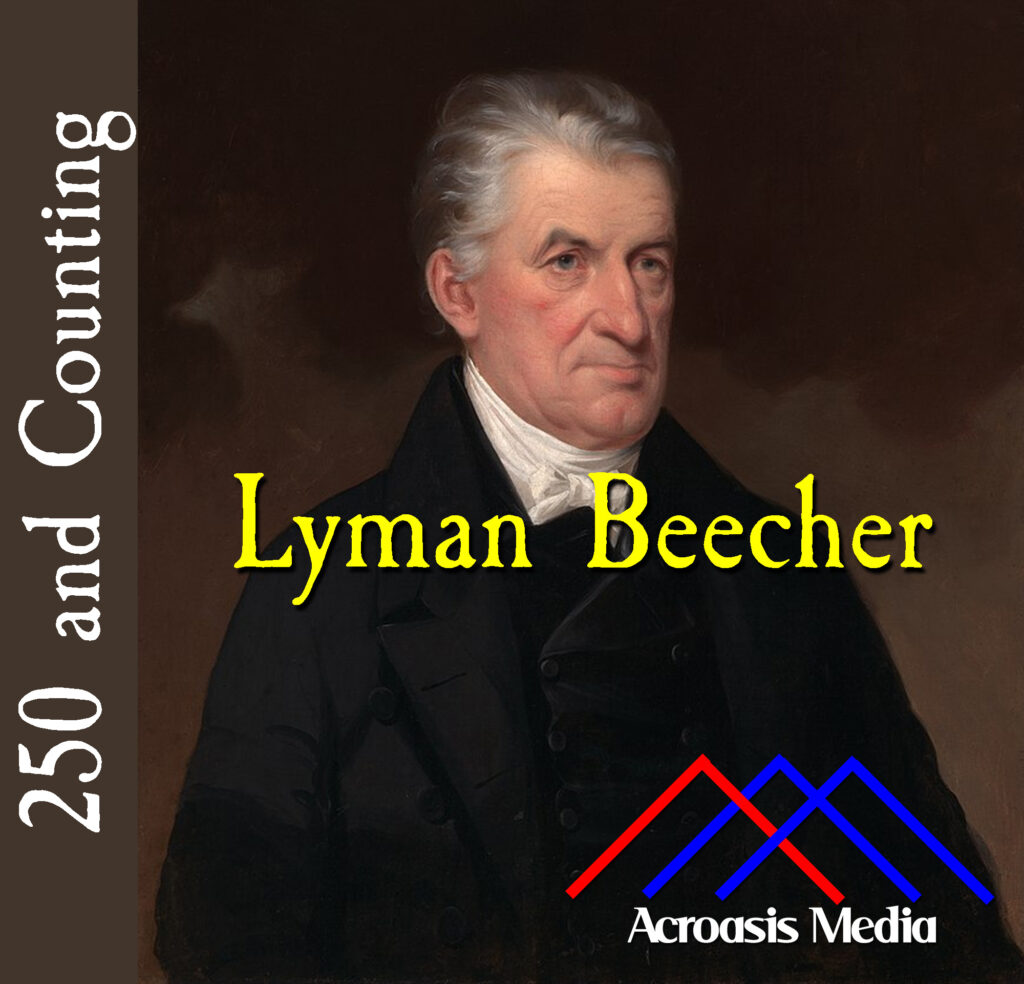
  • Lyman Beecher–October 12, 1775

    Cover art for October 12, 1775: Portrait of Lyman Beecher by James Henry Beard, ca. 1842.

    Although Lyman Beecher could be considered famous just for being the father of several prominent writers and ministers, he also had some achievements in his own right.

    Beecher first became known for a sermon which was published shortly afterward on the evils of duelling. Because it was in the wake of Alexander Hamilton’s death, it proved quite popular.

    Beecher next turned his eyes to intemperance, which is what intoxication was called at the time. It was a concern throughout America in the mid 1820s, so he delivered and published a half-dozen sermons which sold very well in America and in Europe. Those sales continued well into the 1870s.

    By the time Beecher arrived at Lane Seminary in the early 1830s, slavery was coming to the fore as an important social topic. While he was an abolitionist at heart, his public stance was with colonization: the freeing of slaves and then moving them to start a colony in West Africa. (This is where Liberia got its start, incidentally.) Unfortunately, a multi-day public debate about colonization morphed into a discussion of abolitionism, and many students left the school altogether in protest.

    Shortly after that, his views on changes in the church led to accusations of heresy, which he successfully defended. However, the seminary was left gutted and he moved back to New York to live with his son Henry in Brooklyn, where he remained until his death.