Connecticut had already been fighting the war for independence since Bunker Hill, but that’s not the same thing as separating politically from Great Britain. In retrospect, we made it look relatively easy, but once again, remember: something like this hadn’t been done before, and sending instructions to their delegates to vote in favor of Independence was literally directing them to commit an act of treason. So let’s give the individual colonies a little bit of grace, here.
Now, New York is going to bump into a different kind of trouble, but we’ll talk about that in a few days.
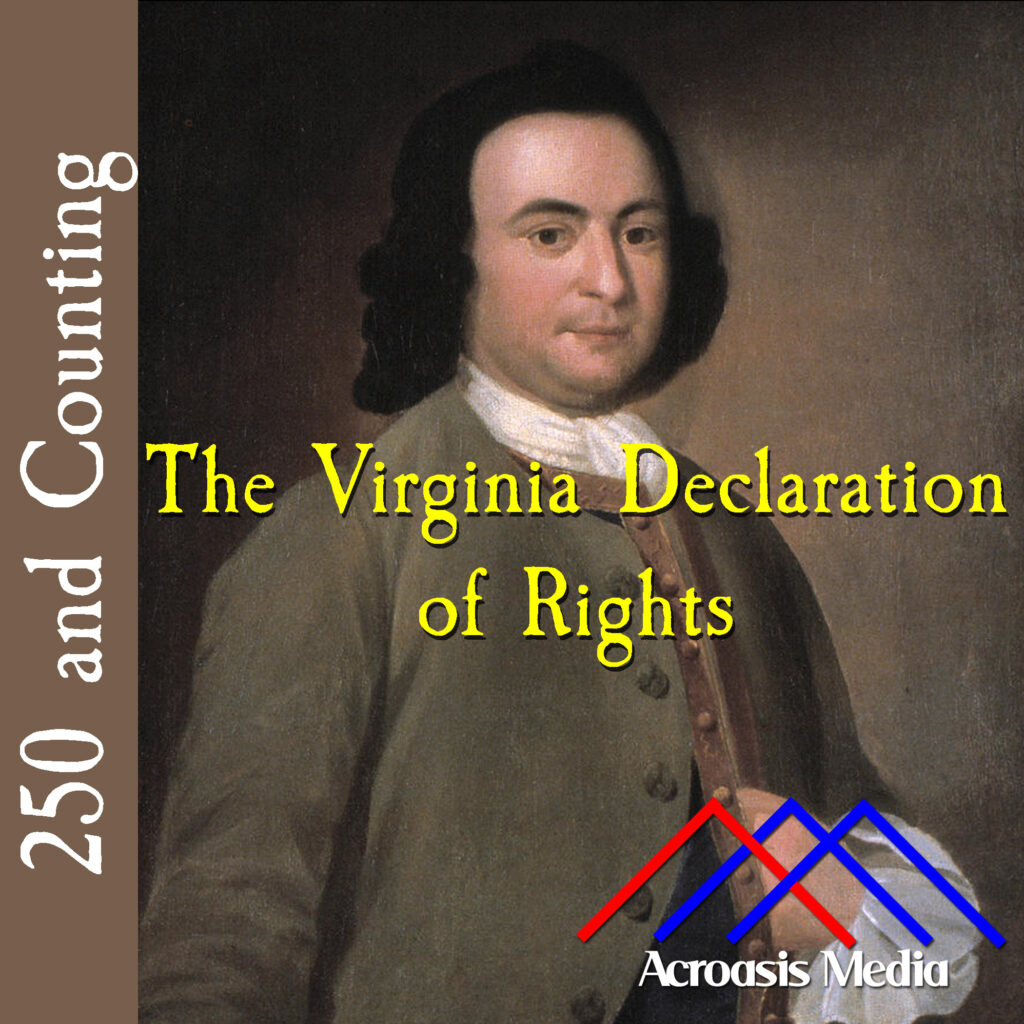
While the Virginia Declaration of Rights wasn’t adopted until today, and Thomas Jefferson only got started on writing the Declaration of Independence yesterday, it’s known that the Virginia document was one of the few references that Jefferson had with him when he first began writing.
The other one we know about for sure is the draft of the Virginia Constitution, which Jefferson himself had written.
The Virginia Declaration of Rights not only served as a big chunk of Jefferson’s inspiration for the Declaration of Independence, you can definitely see echoes of it in the US Constitution, particularly the Bill of Rights. (In fact, if you read Section 13 of the Virginia Declaration, you’ll see the heart of the more contentious language from the Constitution’s Second Amendment.)
The big difference between the Virginia Declaration and the Constitution is that the Constitution is the actual law, whereas George Mason’s document is more prescriptive (e.g. thus-and-such should happen, or this ought to be the situation.)
Follow the links above and do a little compare-and-contrast. You might have fun!
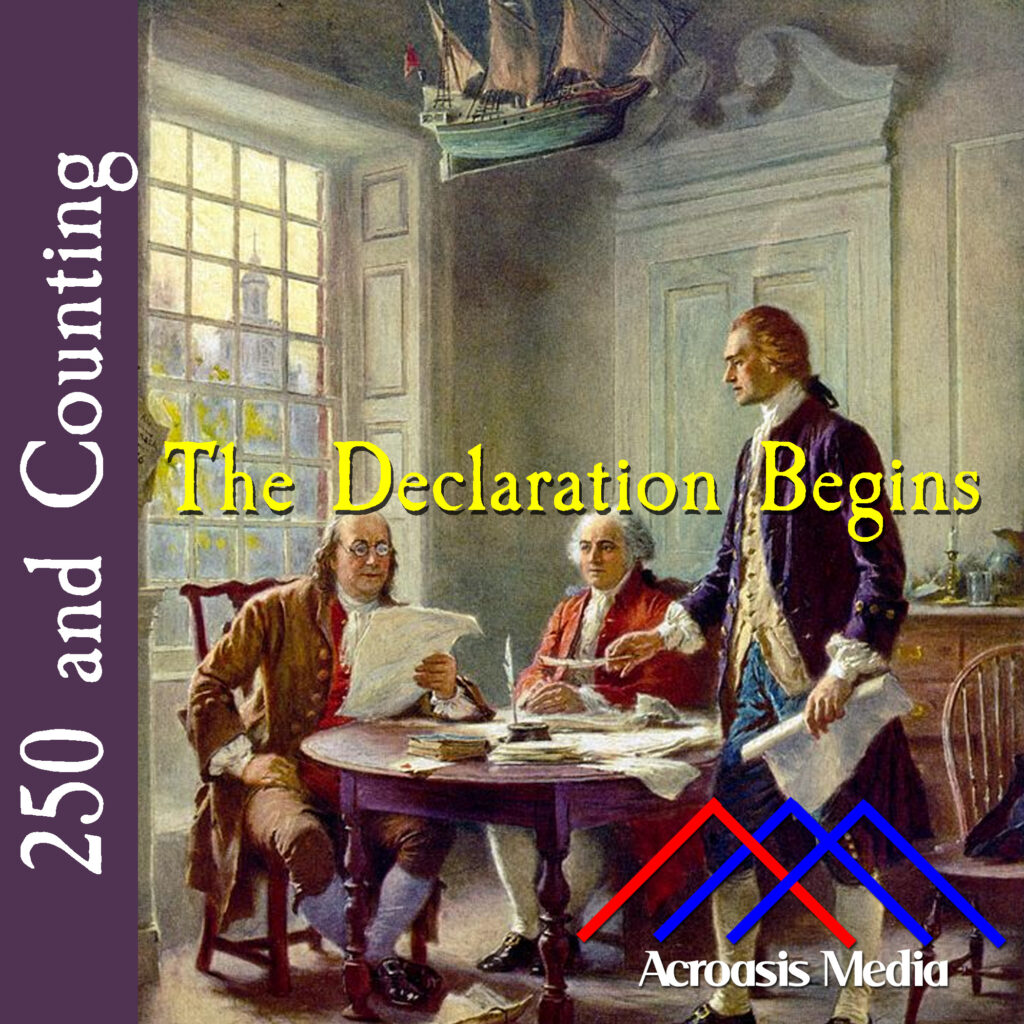
After temporarily tabling the Lee Resolution, which called for our independence from Great Britain, the Second Continental Congress identified its Declaration Committee. Five men were chosen to articulate why we were asking King George to go screw himself in the politest possible terms.
While the Committee involved five men—John Adams, Benjamin Franklin, Thomas Jefferson, Roger Sherman and Robert Livingston—most of the work fell to three of them: Jefferson, Adams and Franklin. Jefferson spent a few days working on the first draft in isolation, then Adams and Franklin began reviewing and revising his work.
The Declaration Committee worked steadily for over two weeks before presenting their finished product to the Congress, though John Hancock did get to see an earlier draft.
With the Lee Resolution on hold for the time being, but still a very real thing, the Continental Congress needed to get organized with regard to how this was going to be presented and effected. As we told you a few days ago, some delegates needed hard instructions. Others needed a little more clarity regarding the structure. Still others determined that a formal declaration was necessary.
Why? You have to remember, this kind of thing had never been done before. And even though some other nations saw what was going on and were sympathetic in some way, it was still necessary for us to lay out the argument, and in such a way that the entire world could look at it and say “Well yeah, that makes sense.”
(Maybe not in so many words; they probably said archaic stuff like “ye” or something, but you get the idea. Also: catch me on a slow show notes day and I’ll dive into the whole “ye” thing.)
Now, you may be wondering why Lee’s proposal was presented on the 7th and only on the 10th did they decide that a Declaration Committee was necessary? I have two reasons off the top of my head. First, June 7th, 1776 was a Friday, and while they did do some business on Saturday, the whole thing needed greater consideration so it was probably tabled to the 10th. Second, remember we’ve been telling you for many months that the Second Continental Congress was a very thoughtful, deliberate body of men. They considered many, many things before making decisions, and it’s likely that they had to arrive at consensus regarding the need for a declaration at all. So in that respect it does make sense.
And tomorrow, while one guy gets most of the credit, we’re going to meet all of the men responsible for the declaration.
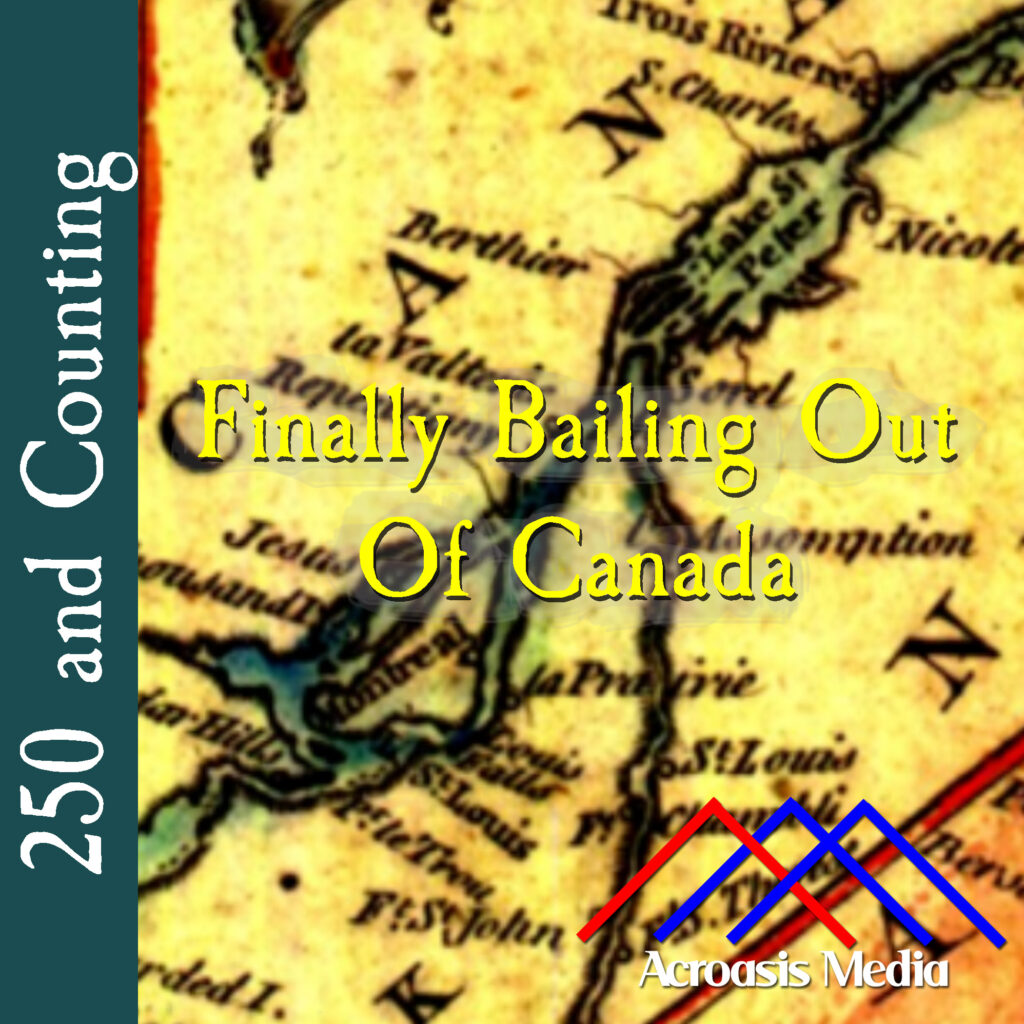
As a nation, we should be able to face our failures as squarely as we crow our triumphs, and make no mistake: the invasion of, and withdrawal from Canada was a botched effort from one end to the other.
Perhaps the only thing that kept it from being a bigger deal was the distraction a few weeks later of the Colonies delcaring themselves to be states independent from Great Britain.
We barely had an army that had any idea of how to provision its forces, yet we sent a bunch of them to the north anyway, far from home and no easy way to get there or back. We started this invasion in a blizzard! And, perhaps even worse, our withdrawal from Canada suddenly left us open to a potential invasion from the north by British troops.
I realize that I have the benefit of 250 years of hindsight on this, but this really does feel like one of those things where people said “We have to see this through to the end, which will be glorious,” and then nearly six months later, when it all falls apart, the same people say, “Wow, it was so obvious.”
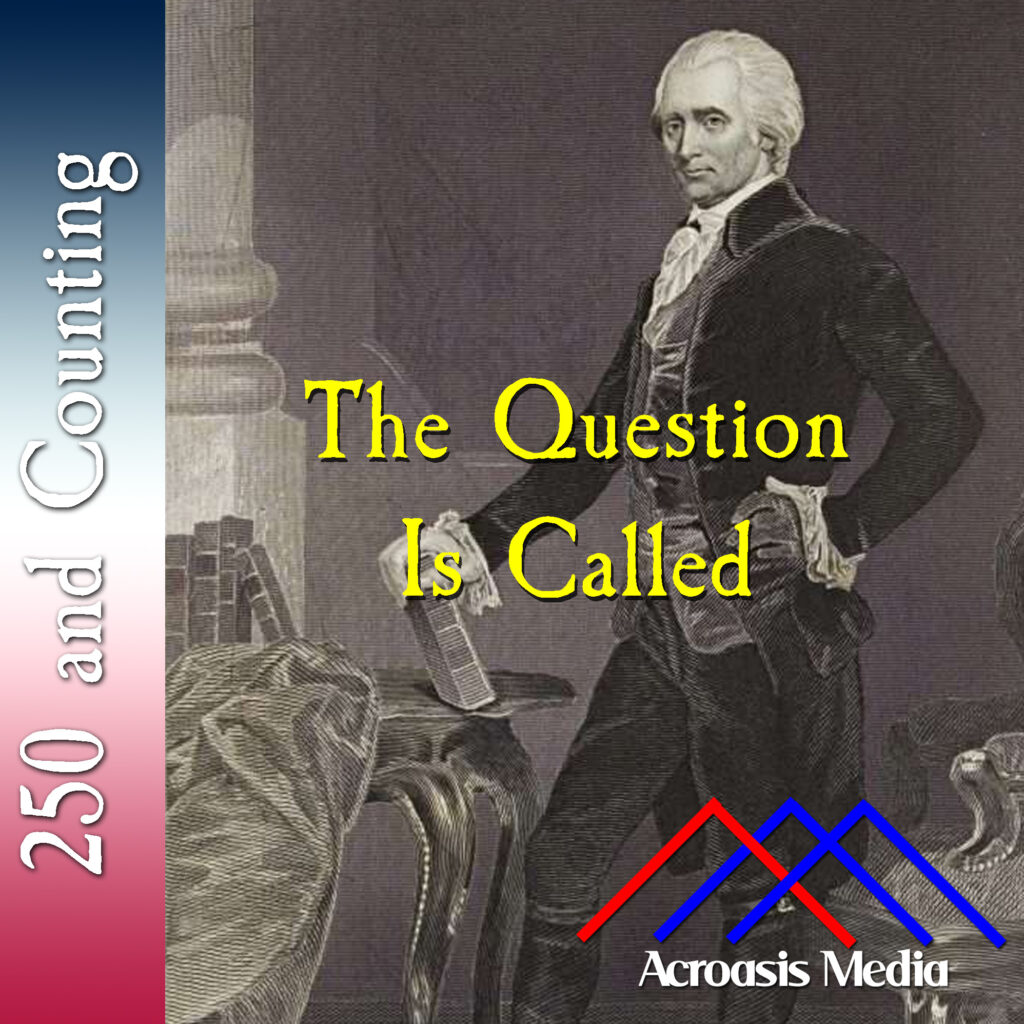
It was one of the last major steps before the Declaration, and it happened on this day. The Lee Resolution, as it came to be known, was named after Richard Henry Lee, delegate from Virginia, who was given instructions from his government to propose that the Colonies become designated as free and independent states.
Now, because some of the delegates didn’t have specific instructions on the Lee Resolution, and because Congress had long ago decided that votes needed to be unanimous, the vote was postponed for three weeks to give everyone an opportunity to get instructions from home. It took 26 days rather than 21 to get everyone to the point of voting, with the exception of New York, which was under instructions not to vote at all, so they abstained from voting until mid-July, at which point they finally also cast their Yes vote because a new legislative body was in place.
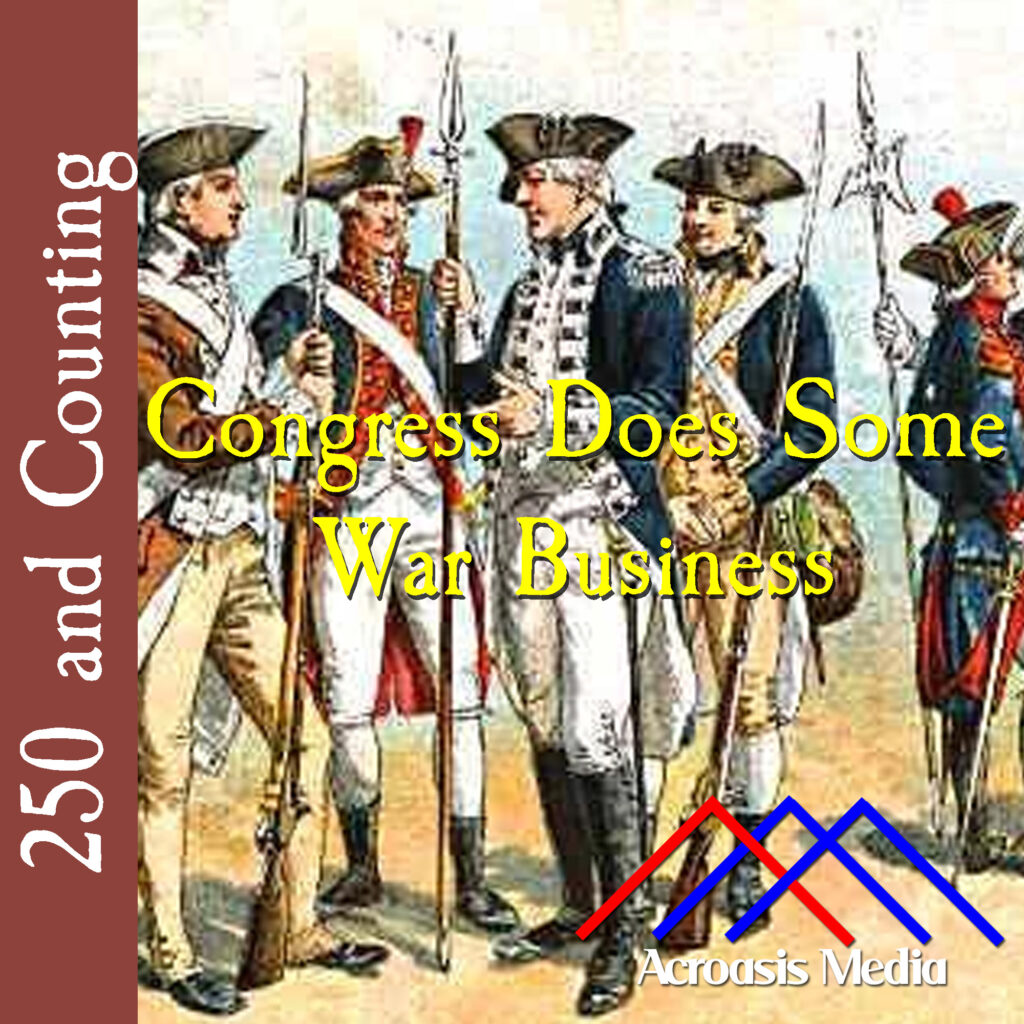
Using the input of George Washington from just a few days earlier, the Second Continental Congress wasted little time putting together some Continental Army protocols to ensure that this relatively ragtag group of men would adhere to some kind of formalized behavior.
But the Continental Army protocols they worked on also helped to establish better pay for some personnel, or set up protocol ranks for some otherwise non-officer personnel.
And, of course, getting everyone paid was important so they talked about that as well.
And as we creep closer to a formal declaration announcing the break with Britain, more Congressional delegates are convinced that reconciliation was always on the table, at least until quite recently. Robert Morris wrote as much to Silas Deane of Connecticut, and likewise Oliver Wolcott wrote to Roger Newberry, a Connecticut military officer, that he was of the opinion that the army is undertaking a Mighty Cause, and that as far as he could tell, the people support it.
Josiah Bartlett was, in fact, the inspiration for the presidential character who appears in the TV show The West Wing. The modern day president, Jed Bartlet only spelled his name with a single T at the end, but it was only around this time that the spelling of English words was starting to standardize, so Bartlett gets a pass.
Bartlett, of course, was involved in the creation of the state constitution, and while he declined the position of US Senator in 1789 despite the vote, he accepted the position of Chief Executive in 1790. When New Hanpshire adopted a constitution and became a state, Bartlett’s title changed to Governor. In 1794 he resigned because of his health, and in 175 he died.
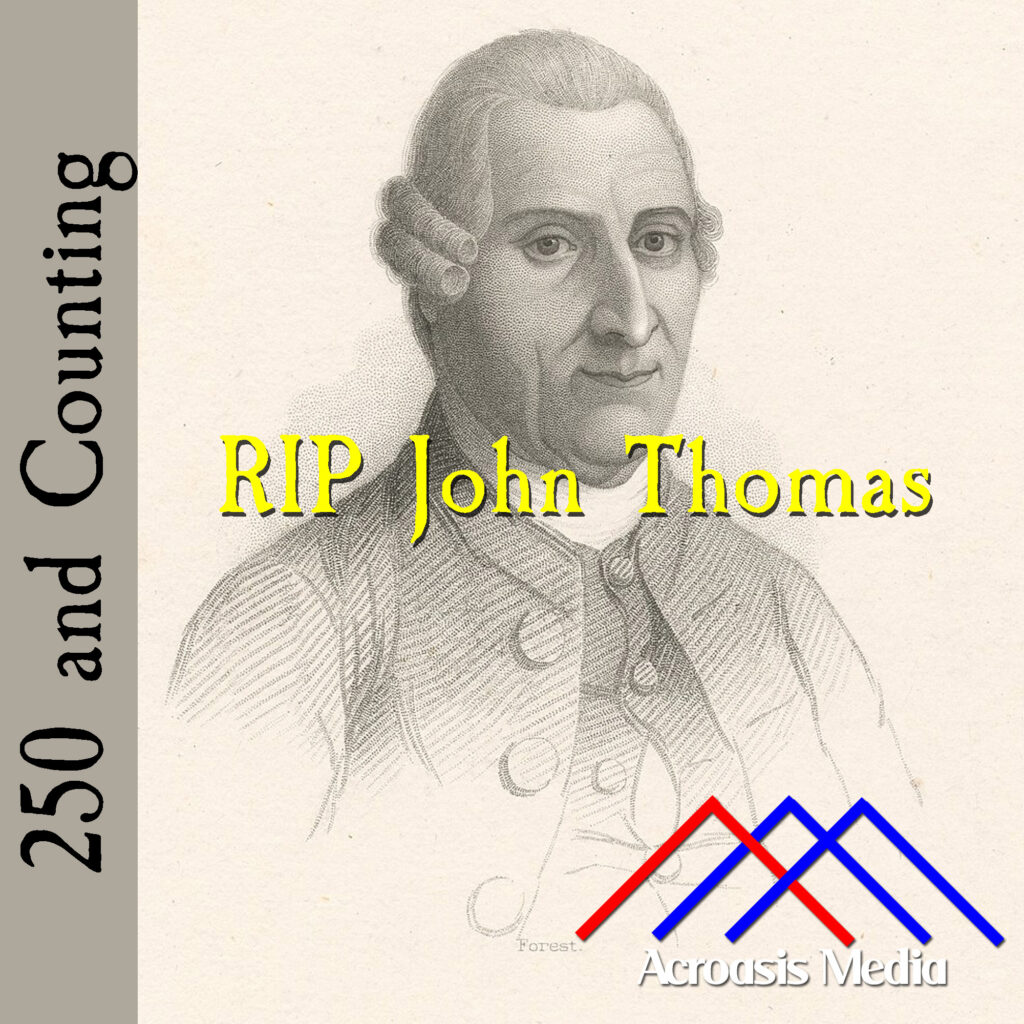
John Thomas was a doctor and a soldier from Massachusetts who was in Quebec during the attempted invasion and was in charge of the withdrawal until he got smallpox and died on this day in 1776.
Thomas discovered he liked military service about as much as he liked being a surgeon, so in 1747 he became a lieutenant in the British army. A few years later he served as a surgeon for a different regiment.
In the early days of the Revolution, Thomas nearly quit the Continental Army because he wasn’t named as a major general. At the time, Congress was trying to avoid having all its generals come from the same place, and Artemis Ward got the nod instead. It was only because both George Washington and Charles Lee both talked him into staying that he remained in the army and returned to service. Shortly thereafter he was assured that he would get top priority for advancement.
It was that which led directly to his being assigned to command in Canada when Richard Montgomery was killed. Unfortunately for him, what he found when he arrived in Quebec was a mess: the army was far outnumbered (plus the city had walls), about a third of the Continental soldiers were due—or overdue—for discharge, and smallpox was making its way through the camp.
Also unfortunately, as the smallpox moved through the camp, it made a stop at Roberts’ tent, and he died just a few weeks after arriving in Canada.
While the Second Continental Congress always had a lot going on, not creating “an animated address” to make the Independence movement appearent to everyone seems like an odd failure.
But sure enough, when it was recommended that such an address be created, this specific committee came up with nothing. Other committees appear to have presented addresses without problems, and many delegates worked on multiple committees, so was this an oversight? Was it overwork? Or perhaps the need to actually write a Declaration of Independence obviated the need for creating “an animated address”?