The Second Continental Congress was in full swing by now. The first committees are beginning to report out to the Congress. New committees are being created for various purposes. The Congress is meeting as a group to determine the state of America. And one committee is recruited to draft a proclamation that, to modern ears, might sound a little peculiar. But the fact is, even a hundred years later a proclamation like this was quite common.
We’ve mentioned the Willett family in prior episodes. They were a prominent family at the east end of Long Island, and in what we’d now call the Queens portion of New York City, at a time when there wasn’t a whole lot of much else between the two. There are some landmarks around Long Island that have the Willet (the other ‘t’ dropped off somewhere in history) name attached to them; in fact when I was young I lived quite close to one of the roads named after that family.
(Spider Robinson fans please note: it’s less than a mile from where I think Callahan’s Saloon is located.)
Marinus Willett made a name for himself early on; first in the French and Indian War and then again during the American Revolution. In between, he attended college. He was so ambitious that he managed to distinguish himself after the Revolution as well, but I’ll let Mike tell you about that.
It’s been nearly two months since the Gunpowder Incident started, and the entire time, the Royal Governor, Lord Dunmore, has been trying to keep things from getting out of hand.
He might—might—have succeeded, had something not happened on this day in 1775.
Silas Deane was a delegate to the Continental Congress from Connecticut, and by most accounts he did a decent job of it, although he did lose his position after a dispute with Roger Sherman. He stuck around Congress anyway, helping however he could.
The following year he went to France as a secret delegate to drum up support for the Colonies. Unfortunately when he returned he was accused of financial impropriety; it took some time to clear his name and when the dust settled, he was nearly broke.
The following year he returned to France and, while there, letters he’d written suggesting that the Colonies would not win the war were released to the press by British spies, and he again faced accusations, this time of treason.
Eventually Deane moved to Ghent and in 1789 he made plans to return to the newly-minted United States of America so he could clear his name. But he fell ill and died shortly after boarding a ship to take him back home. He was 51 years old.
P.S. you only think this has nothing to do with today’s episode.
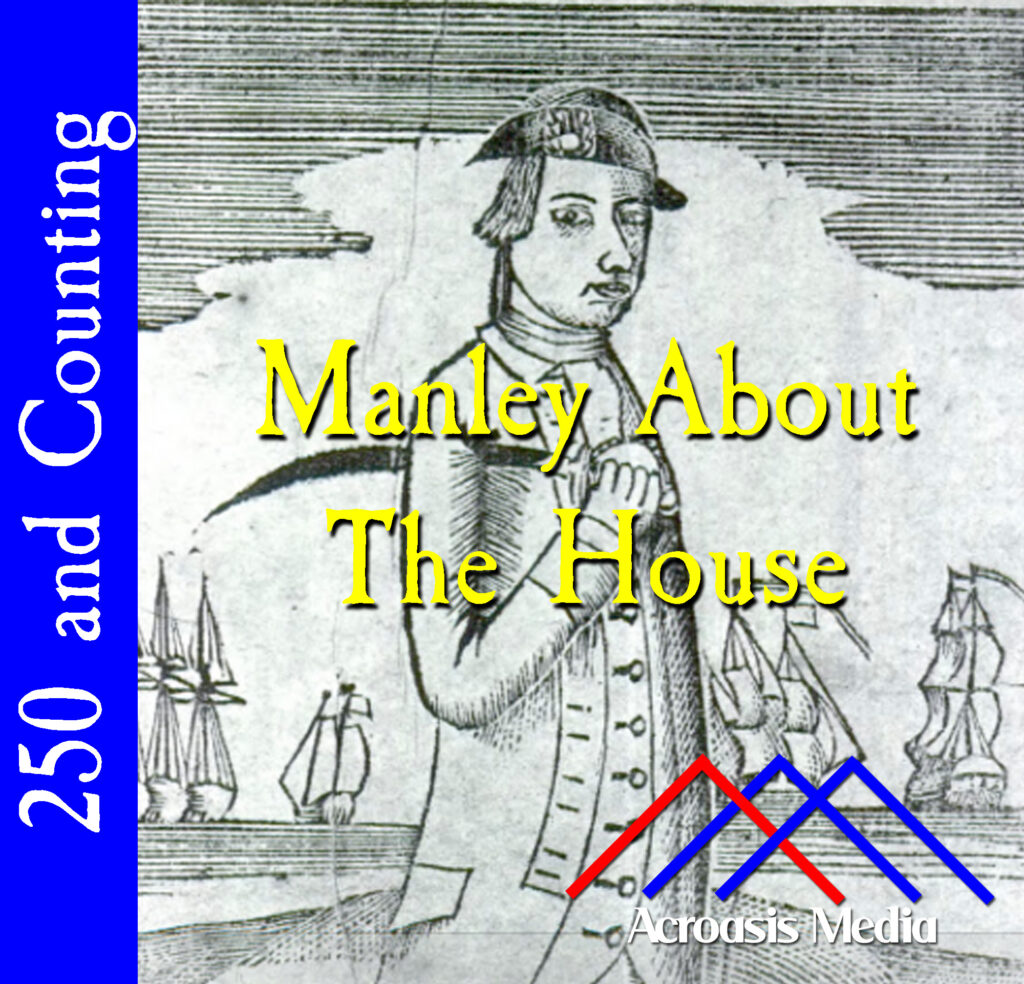
Joseph Warren is definitely one of the unsung heroes of the American Revolution. We last heard from him on March 5, when he did his You Are There routine describing the events of the Boston Massacre at a memorial event (in fact, we used the same cover art).
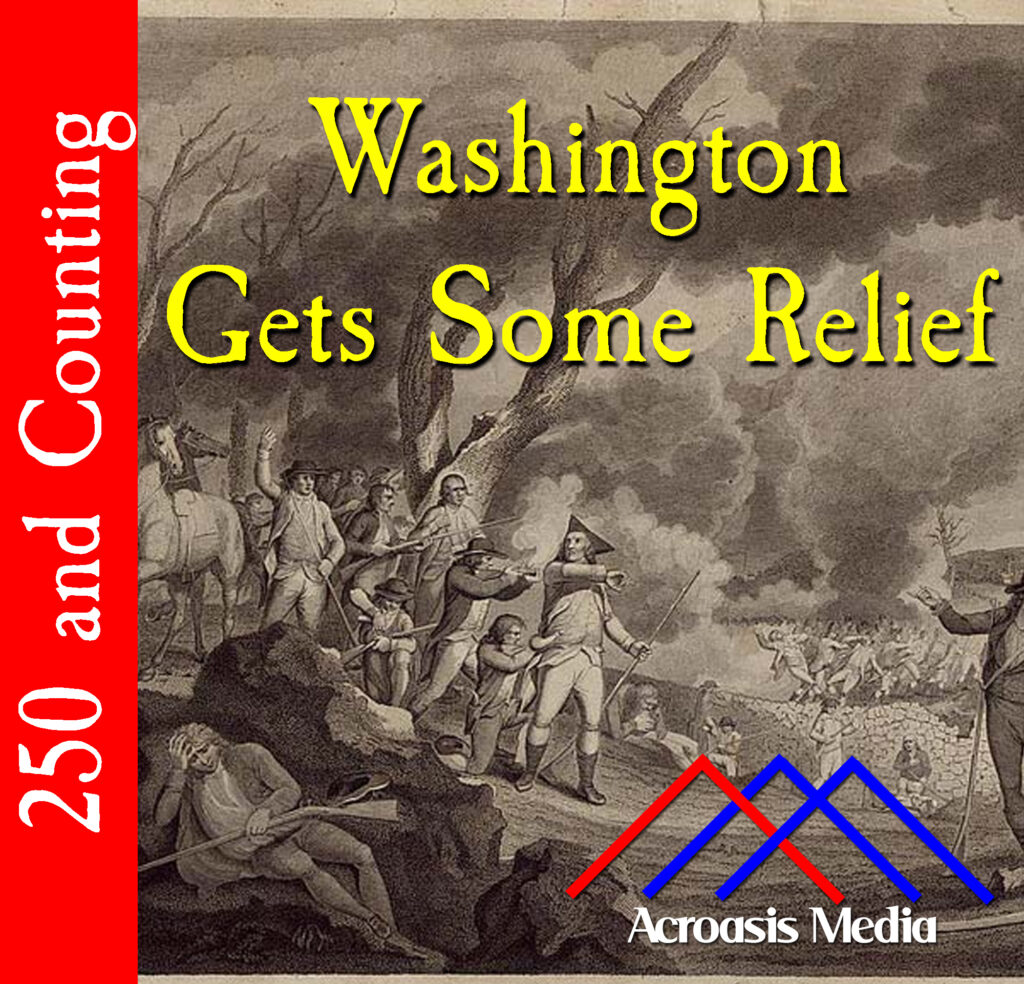
Today he’s more of the guy with the common sense solution: “Hey, instead of having a whole bunch of little militias fighting this thing…what if we put ’em all together into one big army?”
And the Continental Congress, moving with its usual speed…took no action for about two weeks. It’s possible that there were still delegates not feeling the urgency just yet, though.
When I was a kid learning about the American Revolution, we somehow got it in our heads that Hessians were some kind of Super Troopers, practically undefeatable and certainly not to be trifled with.
And to a certain extent, that was true. Hessians were professional soldiers, that is, they were mercenaries. What’s more, they were well-trained and well-paid. But still in the long run, they were still just soldiers, and we won the war anyway, against all odds.
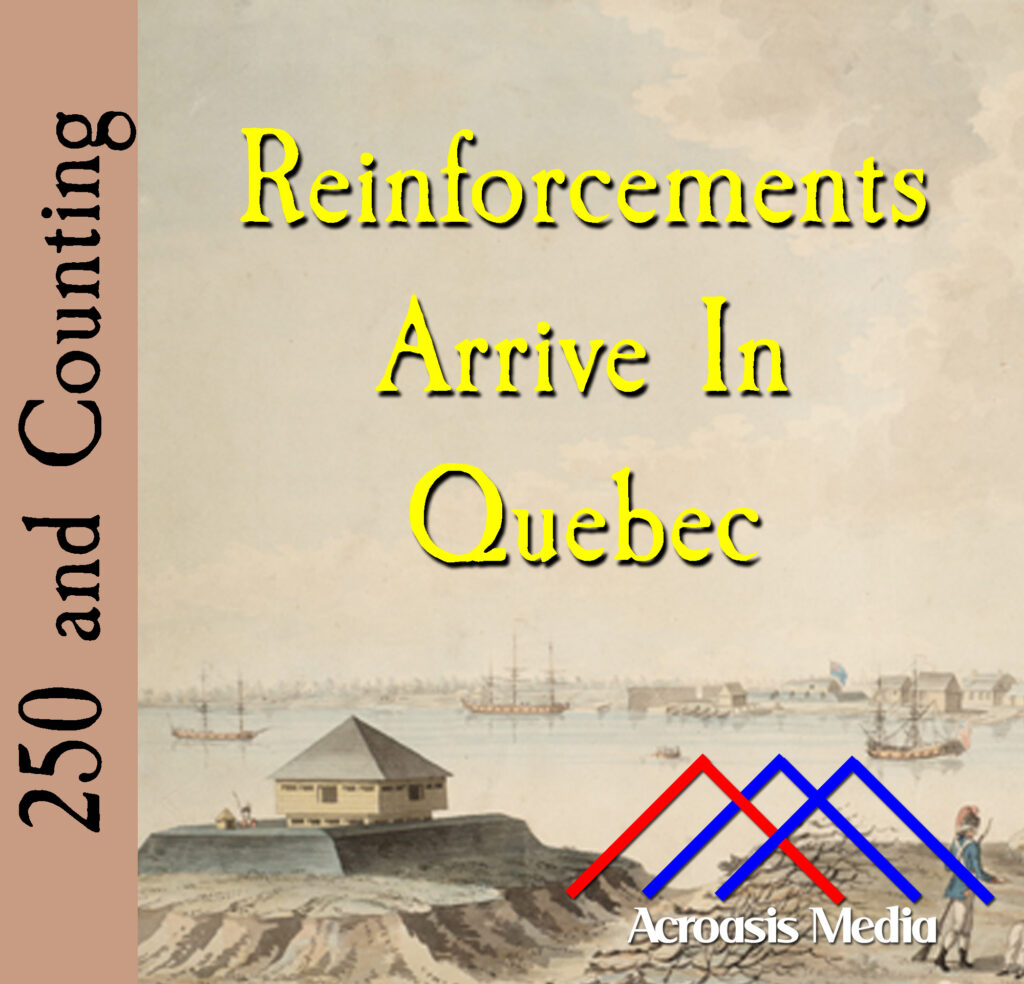
Britiain eventually hired over 30,000 Hessians. On this day in 1775, the first batch of them arrived.
With all the talk of our good relationships with Canada possibly going awry in the light of tariffs being levied [or not] against that country, it’s interesting to recognize that there was, in fact, a genuine relationship established before the Colonies broke away from England.
It started in 1774, and continues on this day in 1775, and there’s one more attempt in the works. But for the time being let’s live for today.
As we noted a couple of days ago, the Continental Congress had its share of delegates who wanted to take one more crack at reconciliation. To that end they’d begun working on the Olive Branch Petition, though it wouldn’t be ready to send to Britain for several more weeks.
So when a letter came in from Lord North to one of the delegates, and the letter offered its own form of reconciliation…well, attention must be paid.
Some of what you’ll be hearing today will have overlap with yesterday’s episode, but we all have shorter memories, we read in an article…uh, somewhere.
But in the long run, that’s okay, because context is everything, and it’s important to understand what a big deal this particular incident was against the bigger picture.
Not to be confused with Chelsea of Battle Creek, who has worked for a famous cereal company for 28 years. (We may have made that up.)
Lexington and Concord was the first “official” battle of the American Revolution, but at best it was a draw: Patriots took a bunch of losses, soldier-wise, but the British were forced to retreat under fire the entire time, and they wound up mostly sequestered in Boston when the dust settled.
This could be considered the next chapter in that story, in that the Siege of Boston led directly to the events of this day, and the next, in 1775. Claude is setting up the story, and Mike will be finishing it off tomorrow. Enjoy!