Tag: American Revolution

  • June 24, 1775: The Committee of Seven

    Cover art for June 24, 1775: Portrait of Roger Sherman by Roger Earl, 1768.

    With the war in full swing and a Commander-in-Chief on his way to Boston, the Continental Congress took the next step of finding a way to organize the troops.

    So naturally they formed a committee. The Committee of Seven (maybe all the good names were taken?) worked diligently for about three weeks to put together a plan that would indicate just who could fight and how they would be organized. There were still some details to iron out, but in the meantime the disaggregated militias were getting the job done. All that remained was to aggregate them into a single fighting force.

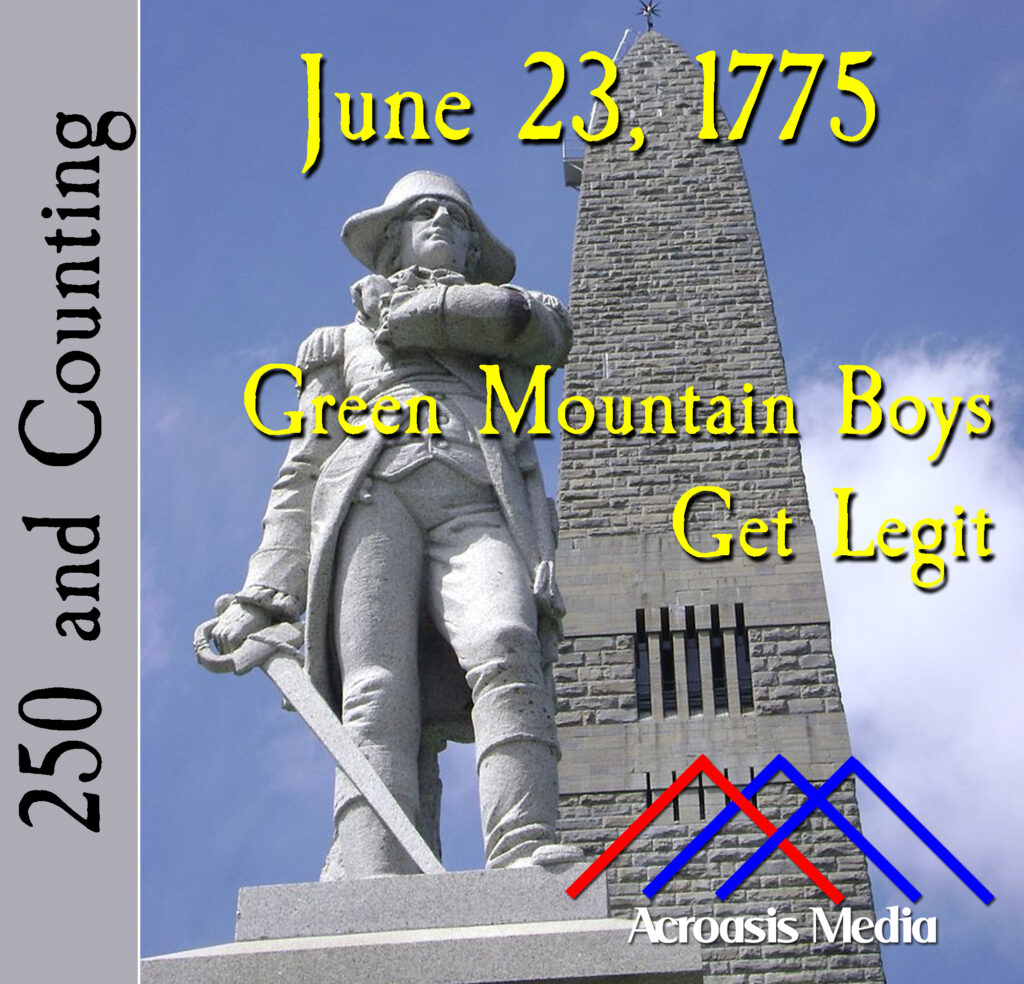
  • June 23, 1775: Green Mountain Boys Get Legit

    Cover art for June 23, 1775: Statue of Seth Warner outside the Bennington Battle Monument. Photo by Hunter Kahn for the French edition of Wikipedia.

    While the Green Mountain Boys were very successful so far in their military exploits, they were still just some unaffiliated militia group. At best they were considered Patriot-sympathetic, but not much else.

    After the capture of Fort Ticonderoga and Fort Crown Point, two of their leaders decided that it was time to get official recognition. So they headed down to Philadelphia to bring their case to the Continental Congress.

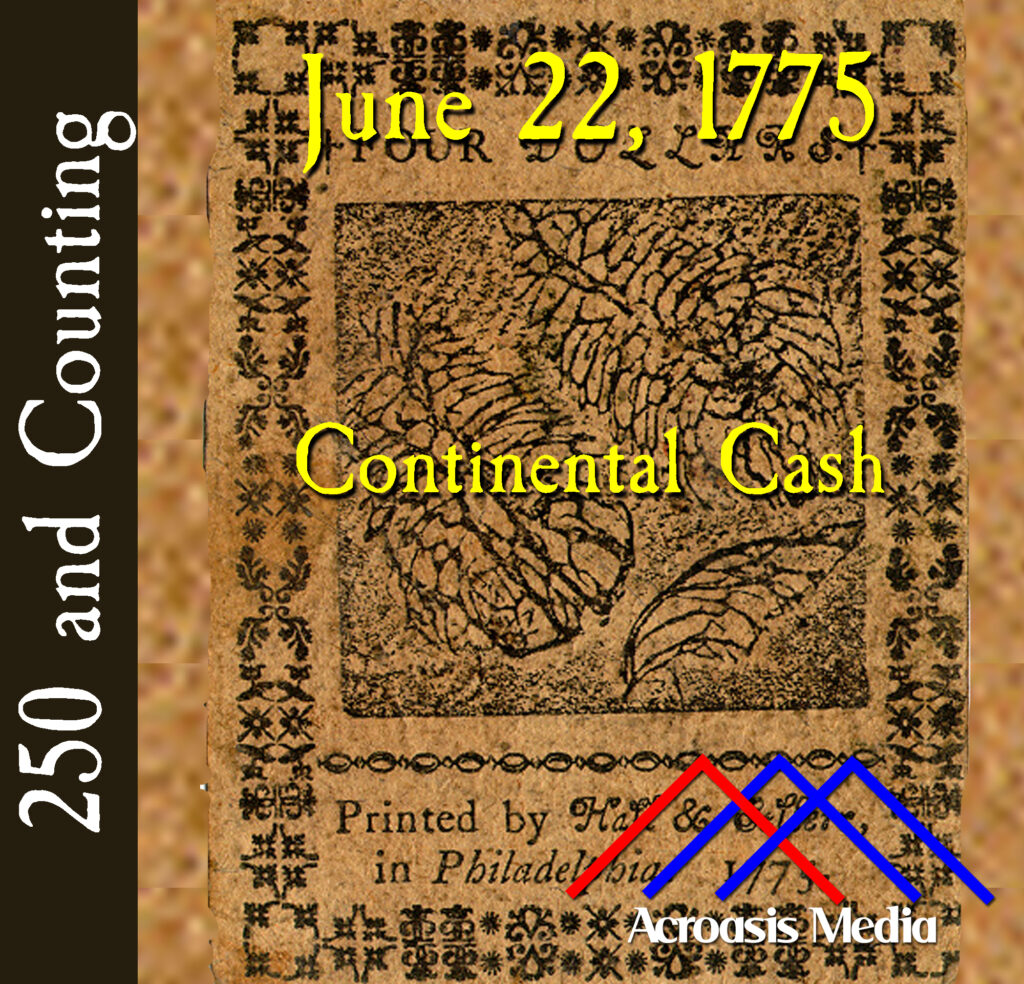
  • June 22, 1775: Continental Cash

    Cover art for June 22, 1775: Four Continental Dollars bill issued in November 1775. via University of Notre Dame archives

    Here’s a hard economic reality: if you want to break away from a parent nation, you need to stop using their currency.

    Here’s another one: if you’re going to issue currency, you certainly need to have the capital to back it up.

    And you also don’t want to make it easy to counterfeit.

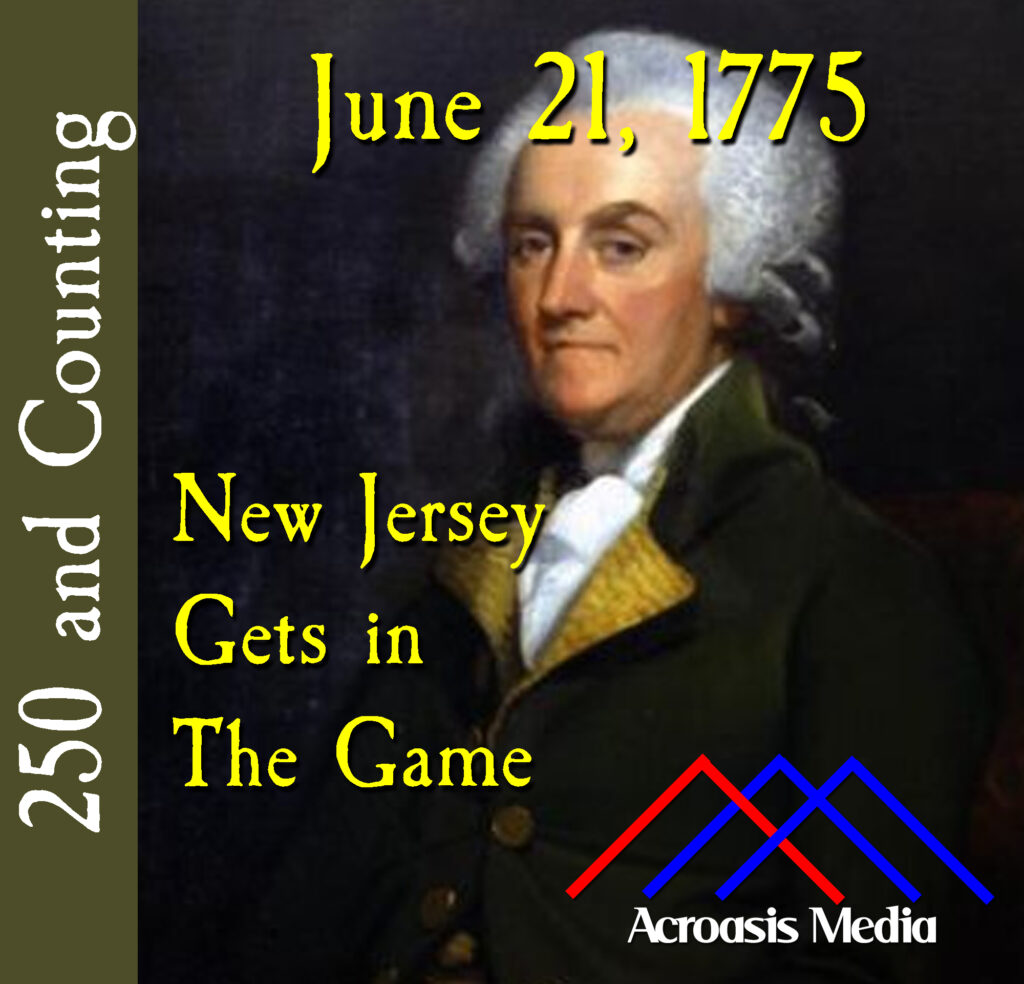
  • June 21, 1775: New Jersey Gets in the Game

    Cover art for June 21, 1775: Portrait of William Franklin, attributed to Mather Brown, ca 1790

    New Jersey’s Provincial Congress first convened in May, but by now they’d gotten a bunch of stuff done. They’d already made arrangements to remove the Royal Governor from power, and resolved to do it like gentlemen (it didn’t work out that way, unfortunately).

    At this point the colony had only one delegate to the Continental Congress: a couple had resigned, one never showed up, and that left exactly one man holding down the fort. So the Provincial Congress appointed new delegates, with a specific mission.

  • June 20, 1775: The Liberty Point Resolves

    Cover art for June 20, 1775: historical marker denoting the place where the Liberty Point Resolves were developed.

    Mike has already mentioned the location of the historical marker in today’s art. It’s tough to read even when you’re standing there, so here’s the text:

    At or near this place
    ever since known as

    “Liberty Point”
    was promulgated in
    June 1775,
    by patriots of the Cape Fear
    A Declaration of Independence
    of the British Crown.

    This was an extremely historic neighborhood, should you choose to visit. There are at least eight other historical markers within a short walking distance of this one, not all of them are connected to the American Revolution. In fact, one of them dates back to living memory of some of the locals.

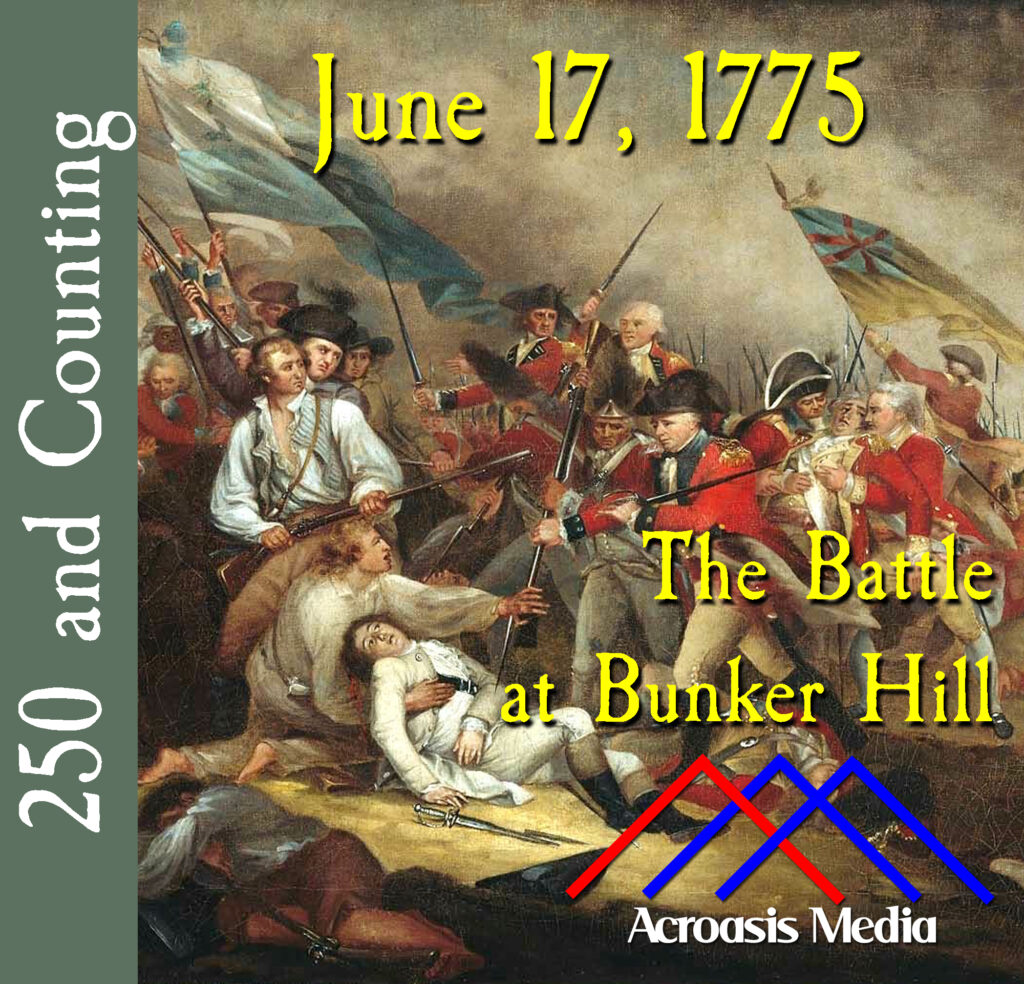
  • June 17, 1775: The Battle at Bunker Hill

    Cover art for June 17, 1775: The Death of General Warren at the Battle of Bunker's Hill (detail) by John Trumbull, 1786.

    In the long run, the Battle at Bunker Hill Breed’s Hill was a tactical win for the British, but they incurred heavy losses and it took three tries to get that win.

    So why is it one of the battles that so many Americans seem to remember all these years later?

    We’re speculating here, but it’s possible that, between this battle and the ones at Lexington and Concord, the Colonial forces realized that this was a war that they could actually win: it wasn’t crazy at all to fight the British army. It almost didn’t matter that we didn’t win this one; the colonial militiamen could stand up against the British and force them to work much harder for their victories.

    There’s a scene in The Godfather, Part II in which Michael describes an incident he’d seen earlier in the day. He says he saw some Cuban rebels being rounded up by the soldiers, and one of them, rather than being taken prisoner, detontated a grenade on his person, taking a Captain of the Guard with him. From that he concluded that because the rebels weren’t getting paid to fight, they can actually win.

    That’s pretty much what happened here.

  • June 16, 1775: Washington Officially Accepts Command

    Cover art for June 16, 1775: George Washington accepting command of the Continental Army (detail). From a print by Currier and Ives, c. 1876.

    Yesterday, George Washington was unanimously elected Commander in Chief of the Continental Army.

    Today he officially accepted the position.

    He won’t take actually begin until early July (we’ll get to that episode in a few weeks), but take a look at this image here. He’s already in the blue coat, and his hair is whiter than it was in yesterday’s art.

    The truth about his hair color is likely somewhere in between these two images, but of course he wasn’t wearing a coat like that just yet. This art is from a hundred years later, by Currier and Ives.

    What I found interesting is that some of the people in the background look a little put out by Washington, even though they’re the ones who elected him. I think Currier and Ives were trying to convey that it was a serious event, but everyone just looks angry. John Adams (in the dark blue to the right) appears especially annoyed, and he’s the one who nominated him in the first place.

    And check out the guy to Adams’ right, staring straight at us. There’s always one guy who can’t help but look at the camera.

  • June 15, 1775: The Original G-Man

    Cover art for June 15, 1775: Portrait of George Washington in 1775 by Samuel King

    Jeez, I gotta stop writing these titles late at night.

    Sometimes the history books make it sound like some people just appeared out of nowhere, but they did have pasts. George Washington would be a good example.

    Washington has been nearly invisible since this show started on January 1, but that doesn’t mean that the Congress hollered “Anyone wanna be a general?” and he stepped up first. In fact, he was a delegate to the First Continental Congress in 1774, and for some time he’d been a member of the Virginia House of Burgesses, often simultaneously with the Congress thing. And he did have a commendable military background dating back to the French and Indian War, so appointing him the Commander of Colonial forces wasn’t part of someone’s crazy scheme: they thought he could really do it.

    And do it, he did.

  • June 14, 1775: Cake and Candles for the US Army

    Cover art for June 14, 1775: The former seal of the now-defunct United States Department of War founded in1778. It is now used as the seal of the United States Department of the Army.

    No tongue-in-cheek for today.

    No weird jokes.

    No political stances.

    Just thanks for giving us America, and then helping us keep it.

    In today’s episode, Mike takes you back to the first day.

  • June 13, 1775: Colonists Catch Wise…Again

    Cover art for June 13, 1775: 1850 map of the Bunker Hill and Breed's Hill areas. Boston is in the lower right corner.

    It wasn't even close to being the first time, but this was an important "get": the colonist forces learned that troops were coming to capture Charlestown and Dorchester in an effort to break the siege. They got lucky, it all led to some ugliness and eventually both sides could call it a win, and both sides could call it a loss.