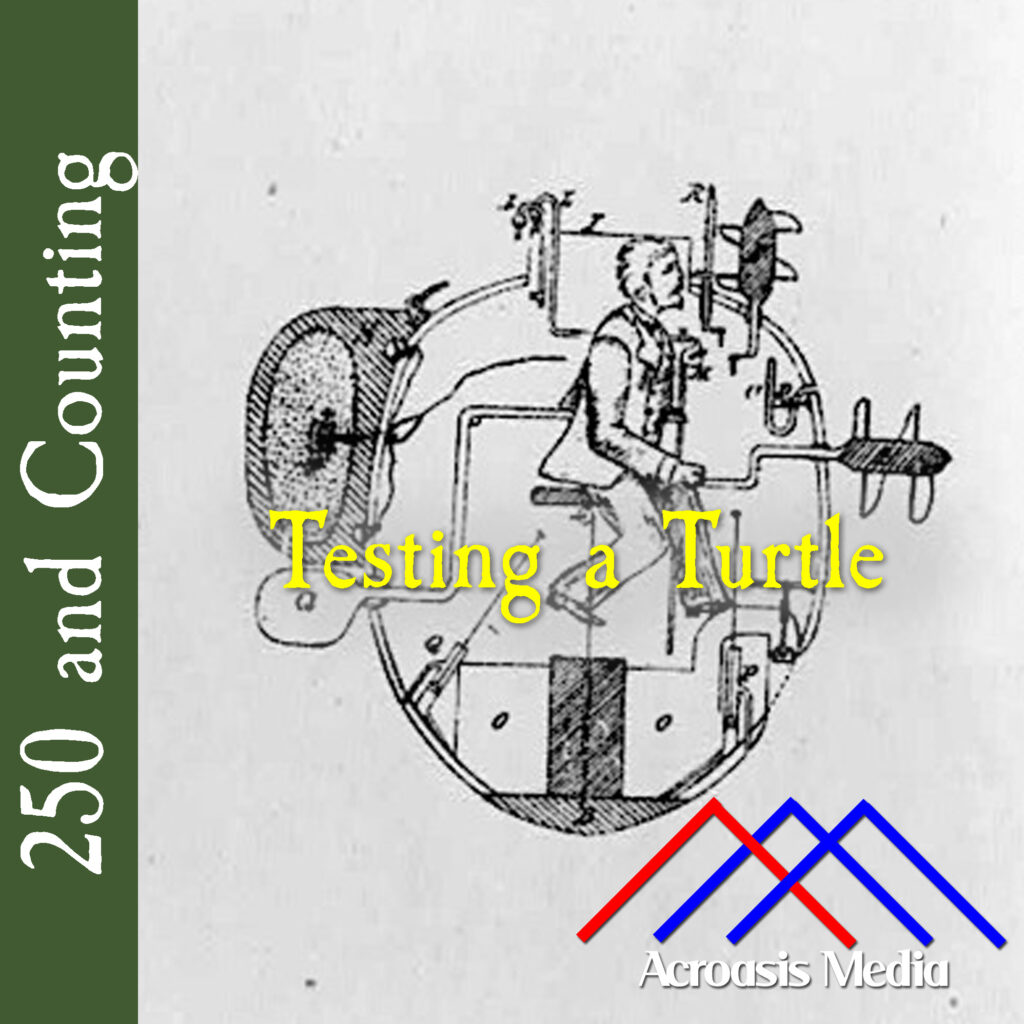
David Bushnell came up with the idea for the Turtle submersible only days after Lexington and Concord. He’d been working on several different experiments he’d conducted at Yale College, and found a way to integrate them into a single device to use against the British.
The Turtle was revolutionary (heh) in a couple of ways: first, nobody had successfully created anything like it before, and more importantly, Bushnell (along with Isaac Doolittle) came up with the screw propeller as a means of maneuvering the vehicle. No water vehicle had ever used a propeller as a means of getting from one place to another, and while the design has been refined for various purposes and to improve efficiency, Bushnell’s propeller is easily recognizable today for what it is.
It was pretty brilliant for its time, and in September we’ll see it in action, in New York Harbor.
Coming up with a model treaty wasn’t John Adams’ idea, but it turned out to be a very good idea that he was responsible for implementing.
Once Adams had it in his head, he began to work on the model treaty along with the committee, and while it was intended to be used for commercial trade, it could be (and eventually was) adapted for soliciting military support in the form of weapons and other ordnance (rather than troops).
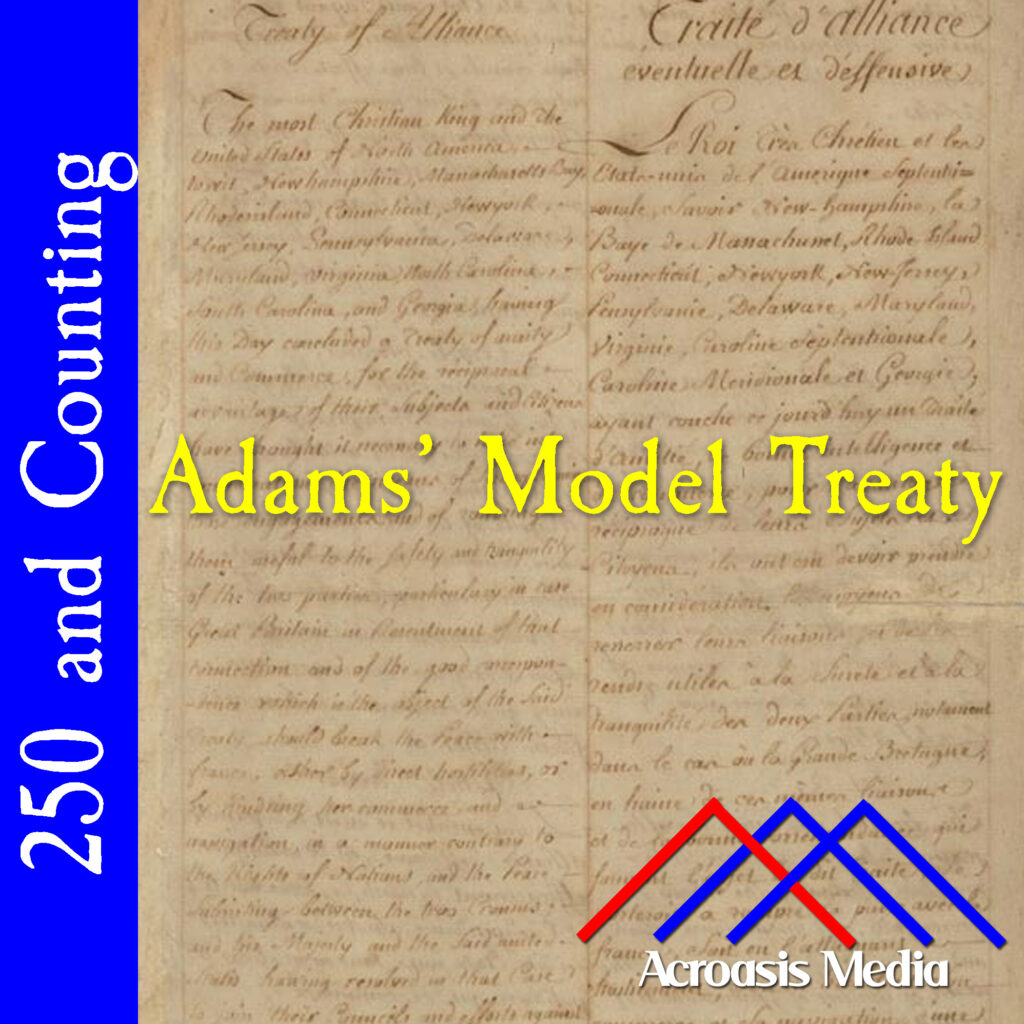
Today’s artwork, incidentally, is the Treaty of Amity and Commerce from 1778 that the US signed with France. If you look closely you’ll see that the left side is in English and the right side is the French translation. This is just most of the first page, of course, but it’s interesting to see how such things were handled.
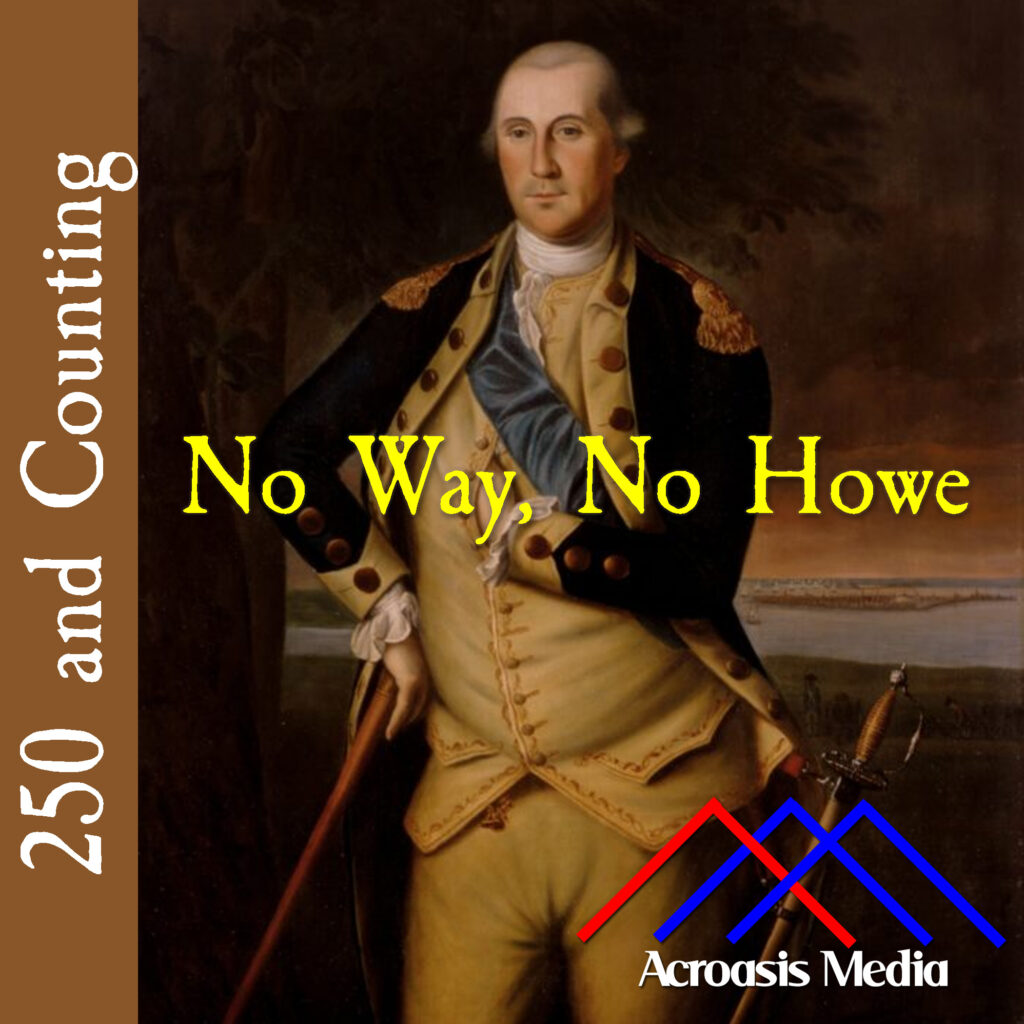
That George Washington agreed to meet with Colonel James Patterson was a bit of a surprise.
He’d turned down the opportunity to meet with his British counterparts on multiple occasions, but when asked if he’d meet with one of those men’s officers, Washington accepted the offer.
Once the meeting was set, Washington was more gracious than most people would expect. Colonel James Patterson was rowed to the Battery dock in lower Manhattan from the British barge. At this point it was expected that he would be blindfolded to prevent him from gathering intelligence on Washington’s headquarters. Instead, he was brought to a different location without being blindfolded.
Patterson met with Washington, Henry Knox, Joseph Reed and a few others, and it was clear that these officers were very deferential to the General, typically referring to him as “Your Excellency.” Again, protocols were important to Washington.
After rejecting the Howes’ letter yet again, Patterson mentioned the benevolence of His Majesty, King George III (which was probably not the right thing to say to George Washington, but still), and explained that the Howes were there “to accommodate this unhappy dispute”.
According to Knox’s letter to his wife, Patterson then explained that Lord Howe had broad powers of pardon, but Washington wasn’t interested. As far as the General was concerned, “the Americans had not offended, therefore they needed no pardon. This confused [Patterson].”
Shortly thereafter, Patterson was escorted back to his barge, disappointed but sociable.
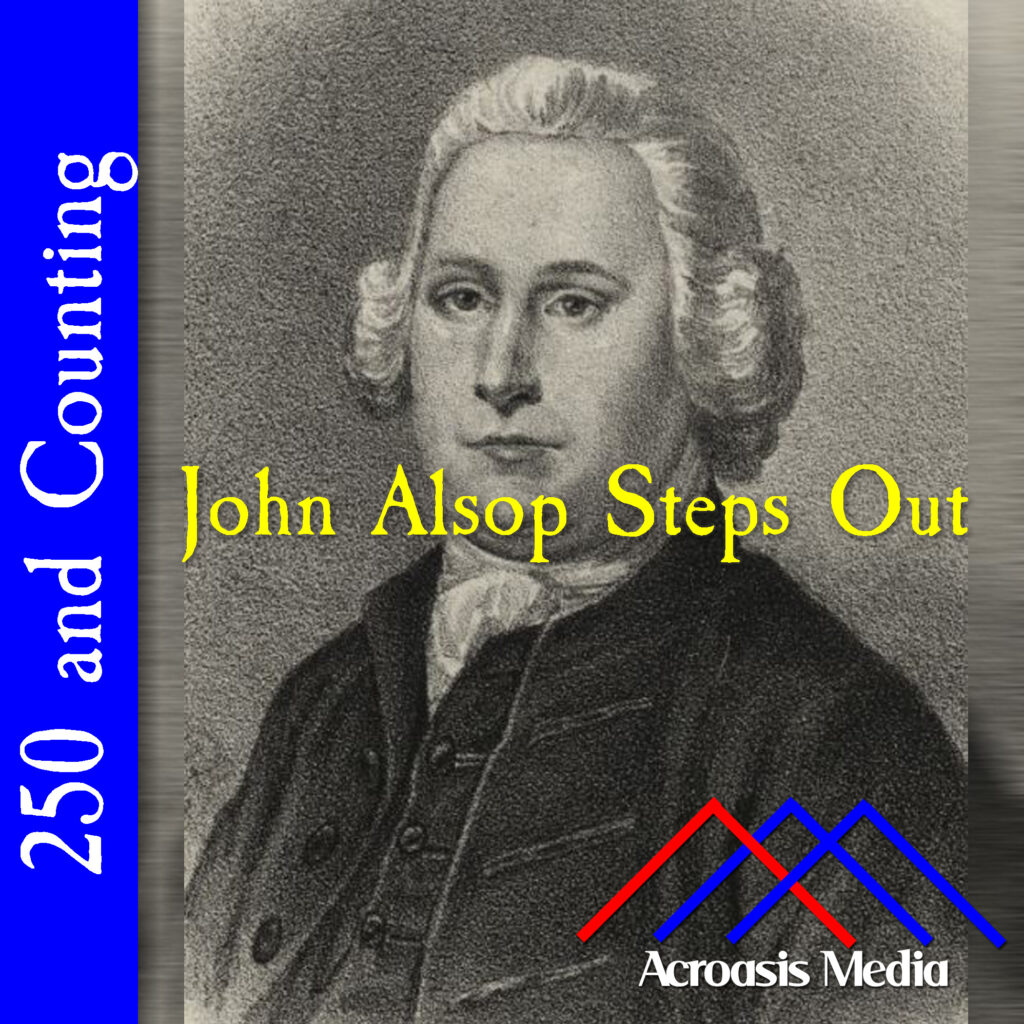
John Alsop was born in 1724 in New Windsor, Orange County, in the British Province of New York. He was the son of John Alsop, Sr. and Abigail Sackett. His father was a lawyer in New Windsor and later New York City, where he was largely interested in real estate.
As a young man he moved to New York City, where he entered the mercantile world with his brother Richard. The brothers became importers and merchants in cloth and dry goods. John became interested in civic and political activities. He was elected by New York County to serve in the Province of New York Assembly. He was one of the civic leaders that incorporated the New York Hospital Association and served as its first governor from 1770 to 1784. In 1757, his brother Richard retired from business and removed to Middletown, Connecticut.
Early in the Revolution, the Province of New York Assembly could not reach a conclusion about the Continental Congress. As a result, delegates were selected by the revolutionary committees in each county. In 1774, Alsop, along with James Duane, John Jay, Philip Livingston, and Isaac Low, was named as a delegate. When the First Continental Congress convened on September 5, Jay presented their credentials, and the Congress accepted. Alsop arrived in Philadelphia on September 14.
Alsop returned to the Second Continental Congress, and while he assisted in the war effort prior to the Declaration, he never lost his hope for reconciliation with Britain and he wound up resigning from the Congress rather than sign the Declaration. He did continue supporting the Continental Army, from his home in Newtown, NY until that town was overtaken by the British, then he continued to work from Manhattan. When they took Manhattan as well, Alsop fled to Connecticut and stayed there until 1783, when the occupation ended.
Alsop died at his home in Newtown, Queens County, New York, on November 22, 1794, and is buried in Trinity Church Cemetery in Manhattan. His considerable fortune, which he managed to rebuild, was passed to his daughter and son-in-law after his death.
The raids along the Catawba River in North Carolina we talked about on July 1 were just the beginning of the Cherokee-American Wars; the next major effort was an attack on Fort Lindley, not far from modern-day Greenville, South Carolina.
It’s not entirely clear when Fort Lindley was first constructed; there are indications here and there that it was already considered “old” in 1776. In the 1760s there were some Native American disturbances going on in the area, so it’s possible that the fort was built by an individual looking for personal protection.
The structure was called Fort Lindley, or “Lindley’s Fort” because at the time it was most recently owned by a Loyalist named James Lindley. Unfortunately for him, when the Patriots fled to the fort and Major Downs moved in to assist, Lindley, who was part of the battle, essentially wound up attacking his own home.
As noted in the episode, the attack was unsuccessful and Downs pursued his attackers, eventually capturing about ten men. They were immediately brought to the jail in the Ninety-Six District, which we talked about a little bit back in November.
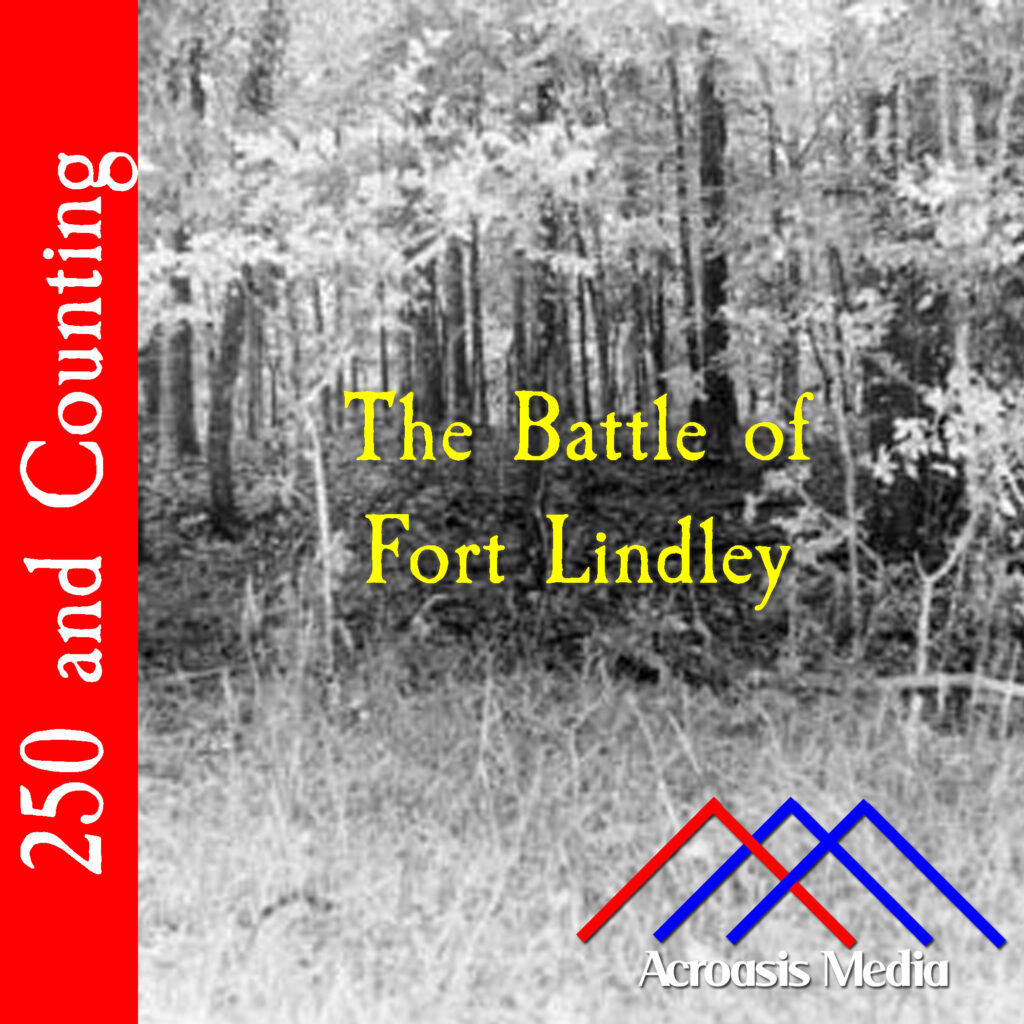
The photo in today’s artwork was probably taken in the 1970s as part of the application for the site’s historical marker; it’s a photo of the land where the fort most likely stood. What’s not entirely clear is what happened to it after the 1770s, as no efforts have been made to excavate the site and determine what parts of Fort Lindley still remain to be found, or even what sort of layout it had. There is evidence of a ditch about three feet wide, and possibly two rock pits nearby, but not much else. And given that the historical marker notes that the fort was about “600 yards south” of its location, chances are that the site itself is on private land rather than a public park of some kind.
One of the most common things written about George Washington is that he always behaved like a gentleman, and expected others to behave the same way; following protocol was very, very important to him.
When he was sixteen years old, he copied out by hand 110 rules of Civility & Decent Behavior in Company and Conversation, likely as a penmanship exercise. These rules are based on a set of rules composed by French Jesuits in 1595. The first English translations of the French rules appeared in 1640, and are ascribed to Francis Hawkins, the twelve-year-old son of a doctor. (So, probably as a translation exercise from Hawkins’ French tutor.)
Without even knowing it, the people who worked with this set of rules was absorbing a code of behavior that worked for people of all social strata, rather than for a specific class of people. Thus, it makes sense that the protocol for Washington as a leader of soldiers, and then a nation, depended on the “all men are created equal” credo.
As Parson Mason Locke Weems said of Washington, “‘no wonder every body honored him, who honored every body.” And while Weems is also thought to be the guy who made up the Cherry Tree story, he was certainly correct in this respect.
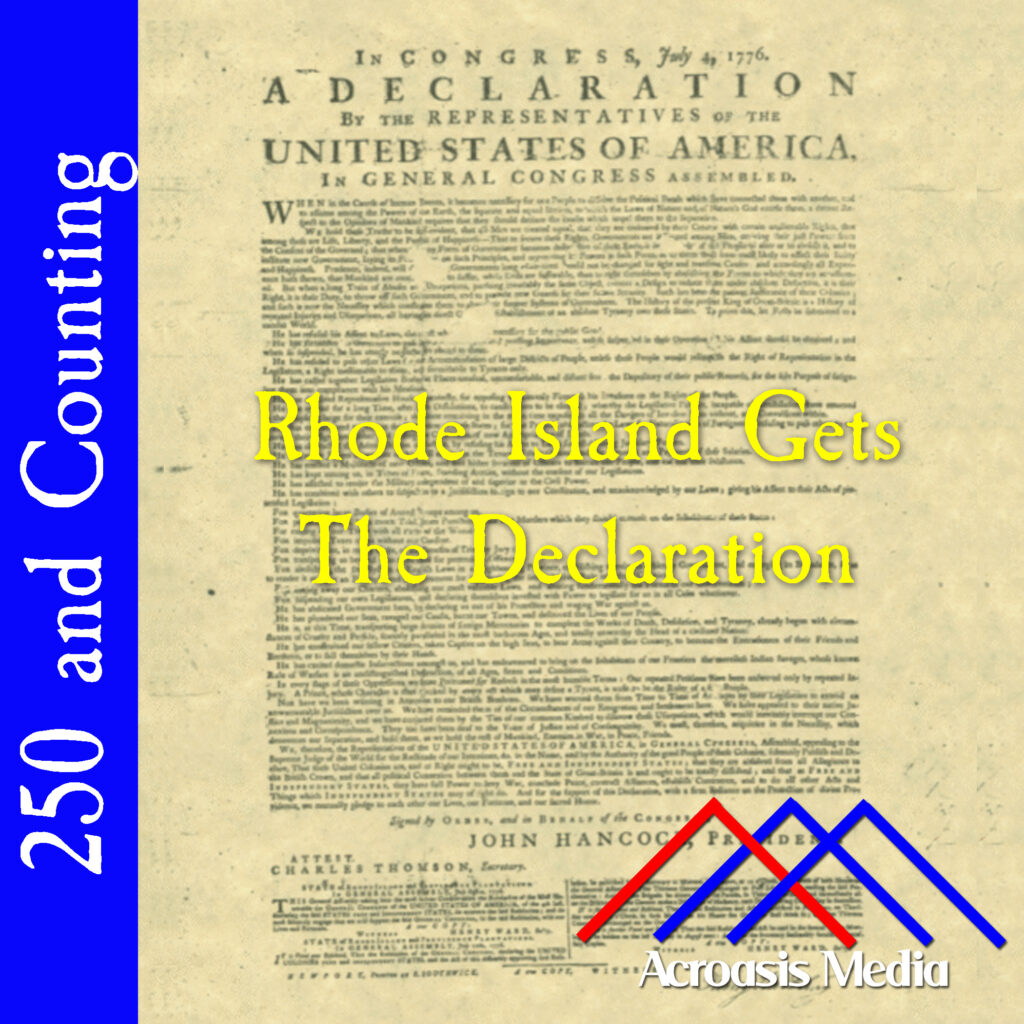
That the Southwick Broadside version of the Declaration of Independence isn’t as famous as the Dunlap Broadside shouldn’t be a surprise, since the Dunlap is the first one, and the one on which all the others are based. The the Southwick has the wrong date on it is an interesting nugget of information.
It’s worth noting, however, that while John Dunlap spent the better part of the night of July 4 setting the type, making a copy, making corrections, rinse and repeat, there are still mistakes on his as well. Some copies are on the “wrong” side of the paper (i.e. the watermark is reversed). Some have ink smudges, as though they were folded or rolled up before the ink was quite dry, and according to Ted Widmer in an Op-Ed he wrote for the New York Times (soft paywalled link), the punctuation doesn’t necessarily agree from one copy to another.
Historians have identified nineteen different versions of the Declaration of Independence printed around that time, though there may be a few more idenfied since that initial survey, which was in the late 1940s. Of those nineteen, 71 copies were known to exist. That said, when the survey was published, only 14 of those copies were the Dunlap Broadside. Now that there are 26 Dunlaps, we’re up to 84 contemporary copies of the Declaration, with another few whose provenance or source are unknown.
Interestingly, three copies of the Dunlap Broadside are in the hands of the British. One was seized by Richard Howe in New York, another accidentally fell into Howe’s hands while he was on Staten Island, and the third one was part of a larger Customs seizure from a man named Jonas Phillips, who was sending a box of documents to Great Britain from Philadelphia in late July 1776. Phillips’ note to his relative in Britain was in Yiddish, which the Customs agents thought was a code, so he seized the documents without examining them. It was only a couple of years ago that the contents were examined and identified.
Accidents of history, I tell you what.
For what it’s worth, only seven copies of the Southwick Declaration are known to exist today.
In the play/film 1776, John Dickinson is portrayed as a Loyalist from the Pennsylvania Colony whose goal is to obstruct any efforts at achieving Independence. When his efforts fail, he resigns from the Congress and leaves, though John Adams publicly admires his integrity before Dickinson departs.
(Leave us alone; 1776 is a delightful film and we both like it, plus it’s many people’s only lens for viewing the story of that time.)
As usual, however, the truth is far more complicated than could be well-conveyed, especially when cramming several weeks’ worth of story into 168 minutes. So let’s dive in a little bit.
Dickinson, to begin with, actually represented the Delaware colony, whose delegates were divided on the cause of Independence. But remember that Delaware and Pennsylvania were the same colony as far as Britain was concerned.
Now, Dickinson argued that while the British Parliament had the right to regulate trade in Europe, they did not have the right to raise revenue via taxing the Colonies; furthermore if the Colonies didn’t resist this, then Parliament would only push their agenda further. But while he felt that the Colonies had the right to seek redress for whatever grievances they had, AND he felt that the Colonies were right in defending themselves against the British, they did not have the right to separate themselves from Britain. Part of this stand involved the fact that Dickinson was immersed in Quaker beliefs for most of his life, though he never officially joined a Quaker meeting.
Now, because it had been previously agreed by the Congress that no man could serve without signing the Declaration, Dickinson stuck to his principles and voluntarily left, but he did join the Pennsylvania/Delaware militia afterward, though he never actually saw combat. It’s also worth reminding you that the Declaration was still largely unsigned at this point, and would remain so for a few more weeks, so it’s not a contradiction that he was working on a new Constitution at this point.
Dickinson was re-appointed to the Continental Congress in 1779 and he did sign the Articles of Confederation, which arose from the document submitted by his committee on this day in 1776.
John Dickinson was a complex and fascinating man, and you can learn a lot about him by visiting the John Dickinson Plantation, part of First State National Historical Park.
The provincial congress, having fled New York City to White Plains, received a copy of the Declaration of Independence and immediately approved it, then resolved to change their name from “The Provincial Congress of the Colony of New York” to “The Convention of Representatives of the STATE of New York.”
Thus, when the Declaration was read aloud to an assembled crowd a short time later, it was the first time it had been read in New York State. The earlier reading in New York City didn’t count for that, because New York was still technically a colony. (And sticklers know that “technically correct” is the best kind of correct. Sticklers also get beat up a lot…um, I’ve heard. )
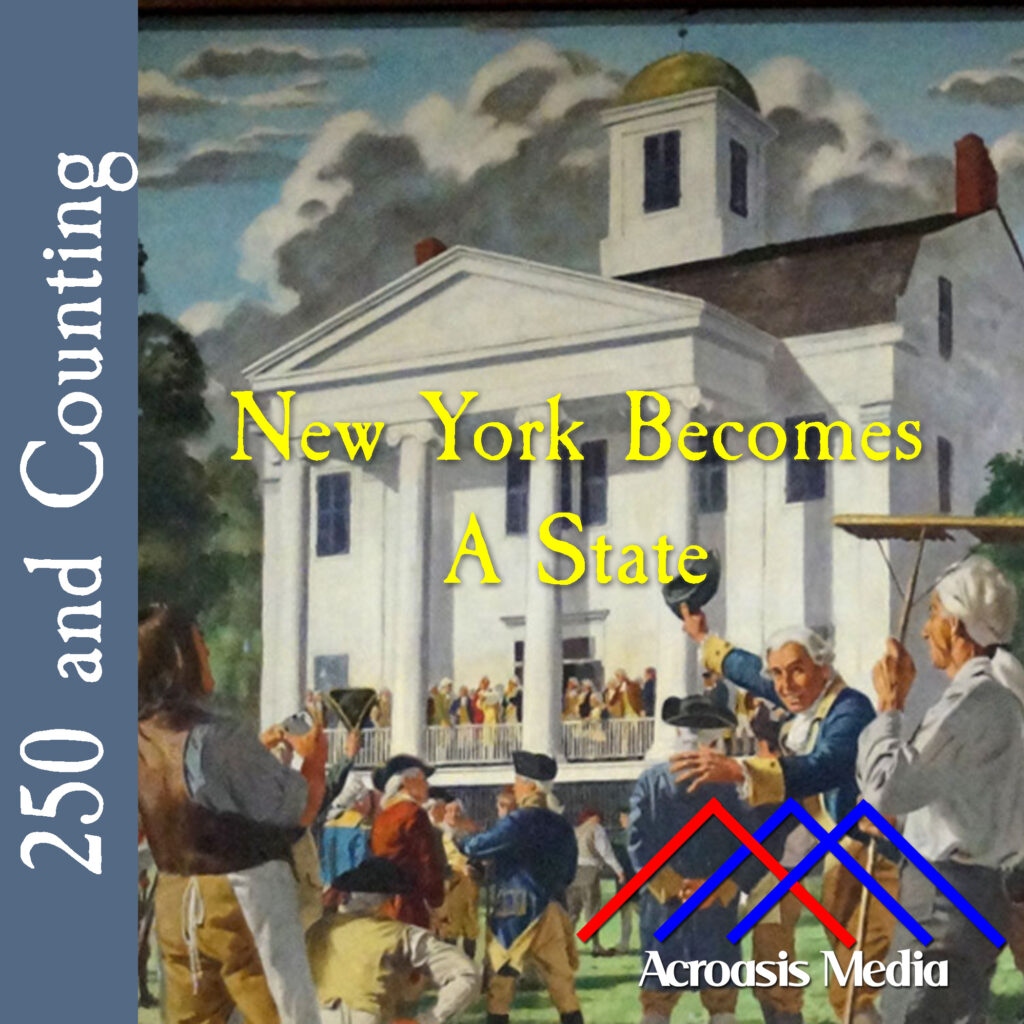
About today’s cover art: the image that we used on the July 3 episode is also a depiction of Judge Thomas reading the Declaration to the people of White Plains, which is why it’s titled “Birth of the State of New York.” This is a different angle of the same event, created around the same time as the other image, by the same artist. Mr. Harker got some mileage out of this day and he wasn’t even there.
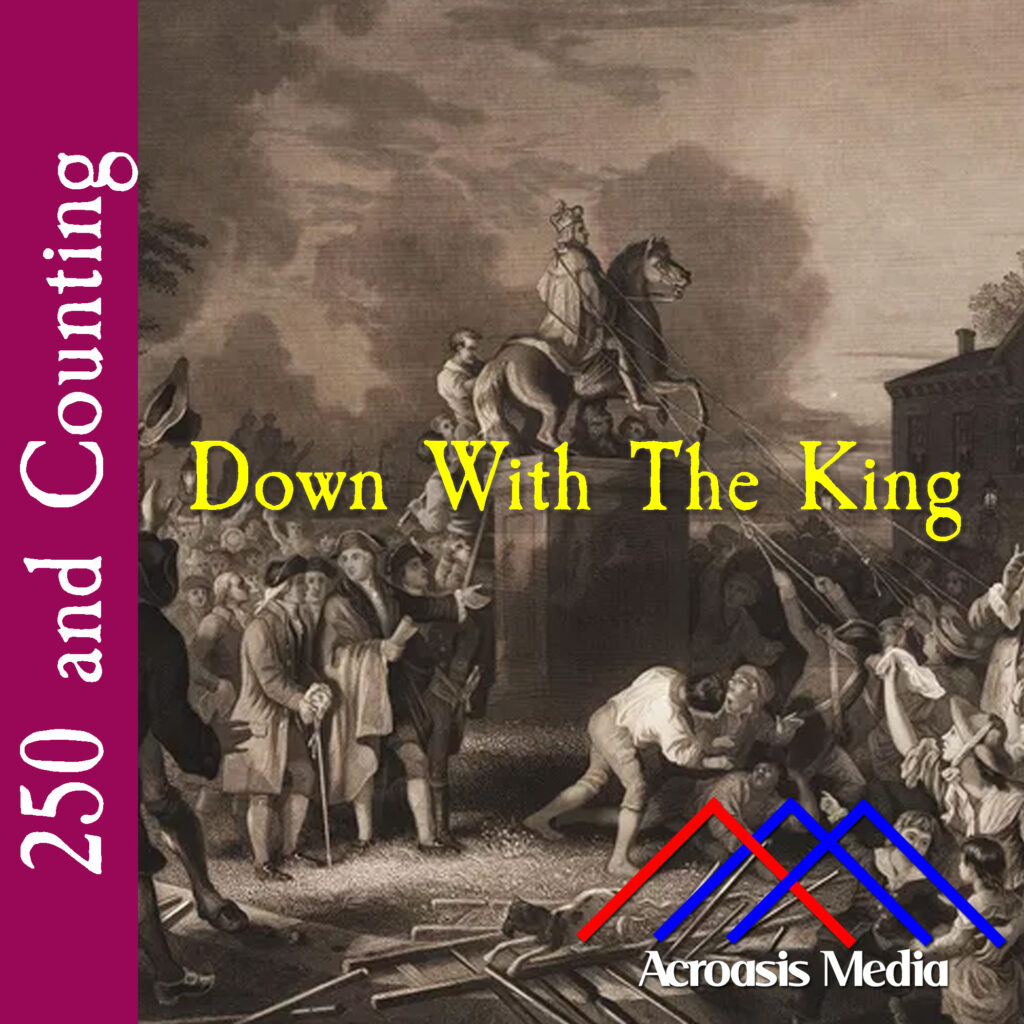
When a statue of King George III was pulled down in New York, it was a good sign for the city, since there were times that it felt that the spirit of Independence was rather squashed by the sight of the British fleet, which was still arriving.
A brief digression: several years ago (ugh, longer ago than I care to remember) I took the opportunity to visit the City of the Museum of New York. It’s quite a cool museum that has hundreds of thousands of objects in its collection, with several thousands on display at any given time. They currently have a special exhibit called The Occupied City, which deals with New York City during the early years of the American Revolution.
According to an article I recently read in Smithsonian Magazine, which provided some of my research material for today’s episode, the Museum of the City of New York has, as part of this exhibit, an opportunity to virtually pull down the statue of King George III. Who can pass up something like that?
No kidding, if you’re in Manhattan, budget yourself a few hours to see this museum. You’re guaranteed to learn a lot of fascinating things. Then head on over to the New York Historical Society. They already pulled down their statue of King George III (today, in fact), but there’s still plenty to see and do. They’re on opposite sides of Central Park and about 30 blocks apart, but if you do it in that order, you’ll end your day close to Zabar’s and that’s a whole other experience for you.