Tag: Colonel Henry Knox

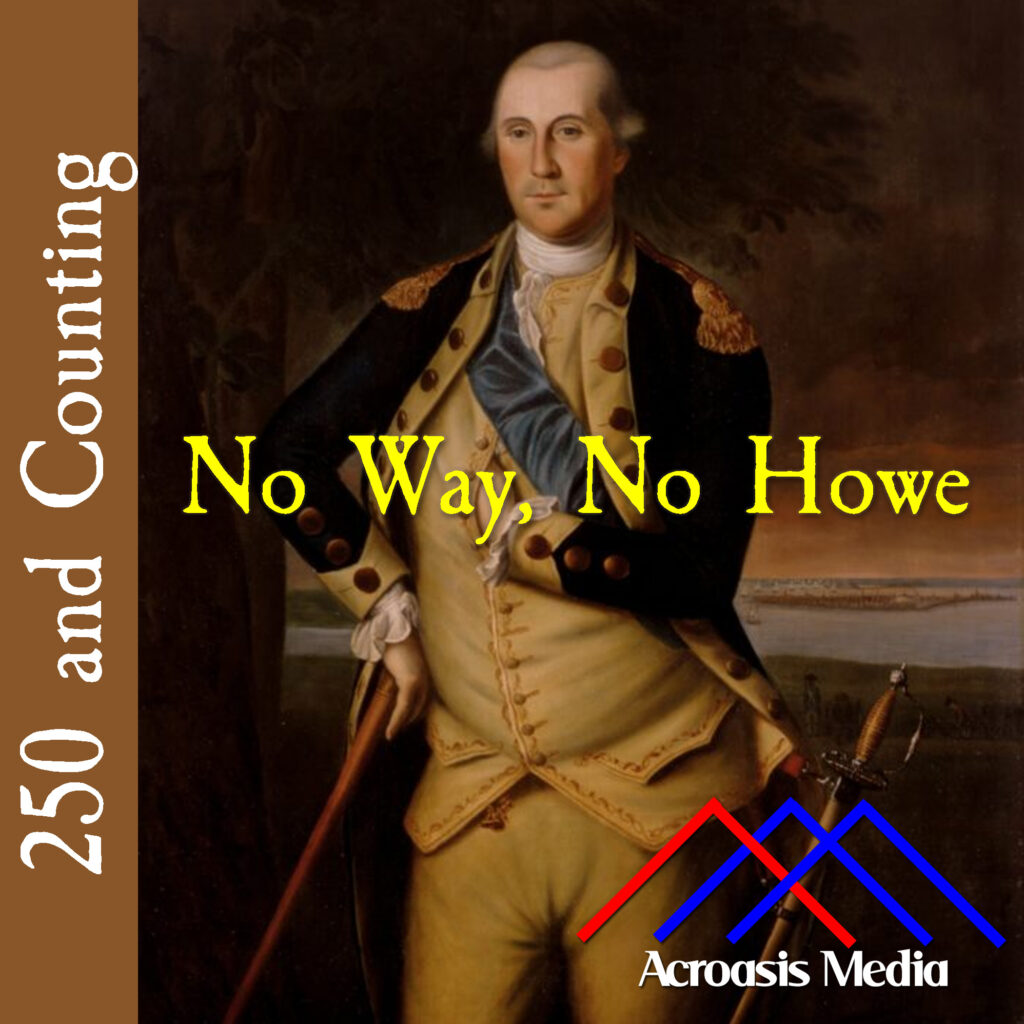
  • No Way, No Howe–July 17, 1776

    Cover art for July 17, 1776: Portrait of George Washington, ca. 1776 by Chales Willson Peale.

    That George Washington agreed to meet with Colonel James Patterson was a bit of a surprise.

    He’d turned down the opportunity to meet with his British counterparts on multiple occasions, but when asked if he’d meet with one of those men’s officers, Washington accepted the offer.

    Once the meeting was set, Washington was more gracious than most people would expect. Colonel James Patterson was rowed to the Battery dock in lower Manhattan from the British barge. At this point it was expected that he would be blindfolded to prevent him from gathering intelligence on Washington’s headquarters. Instead, he was brought to a different location without being blindfolded.

    Patterson met with Washington, Henry Knox, Joseph Reed and a few others, and it was clear that these officers were very deferential to the General, typically referring to him as “Your Excellency.” Again, protocols were important to Washington.

    After rejecting the Howes’ letter yet again, Patterson mentioned the benevolence of His Majesty, King George III (which was probably not the right thing to say to George Washington, but still), and explained that the Howes were there “to accommodate this unhappy dispute”.

    According to Knox’s letter to his wife, Patterson then explained that Lord Howe had broad powers of pardon, but Washington wasn’t interested. As far as the General was concerned, “the Americans had not offended, therefore they needed no pardon. This confused [Patterson].”

    Shortly thereafter, Patterson was escorted back to his barge, disappointed but sociable.

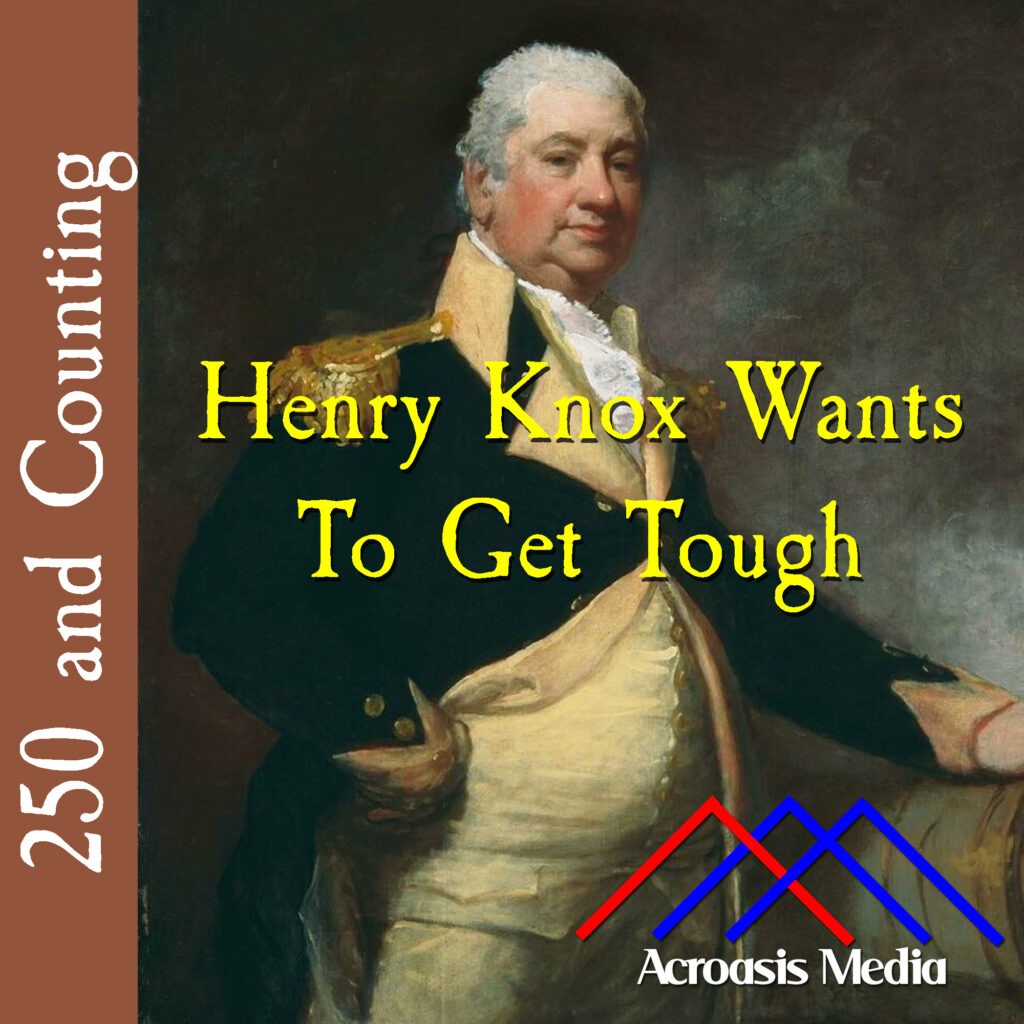
  • Henry Knox Wants To Get Tough–May 16, 1776

    Cover art for May 16, 1776: Portrait of Henry Knox by Gilbert Stuart, 1806.

    If the name Henry Knox sounds familiar to you, give yourself a prize. Knox was the man in charge of the Noble Train of Artillery, in which large amounts of ordinance were taken from Fort Ticonderoga and transferred to Boston. The presence of the new guns, with greater range than either side had at that point, led to the British finally evacuating the city a relatively short time later.

    But by this point Knox was back in New York, only he was in the city rather than the upstate area, and he could see that reconciliation was a pipe dream at best. So he wrote to John Adams to stress the importance of eventual independence.

    It is not recorded whether Adams replied “No duh,” since he’d been making the same arguments to the Second Continental Congress for some time.

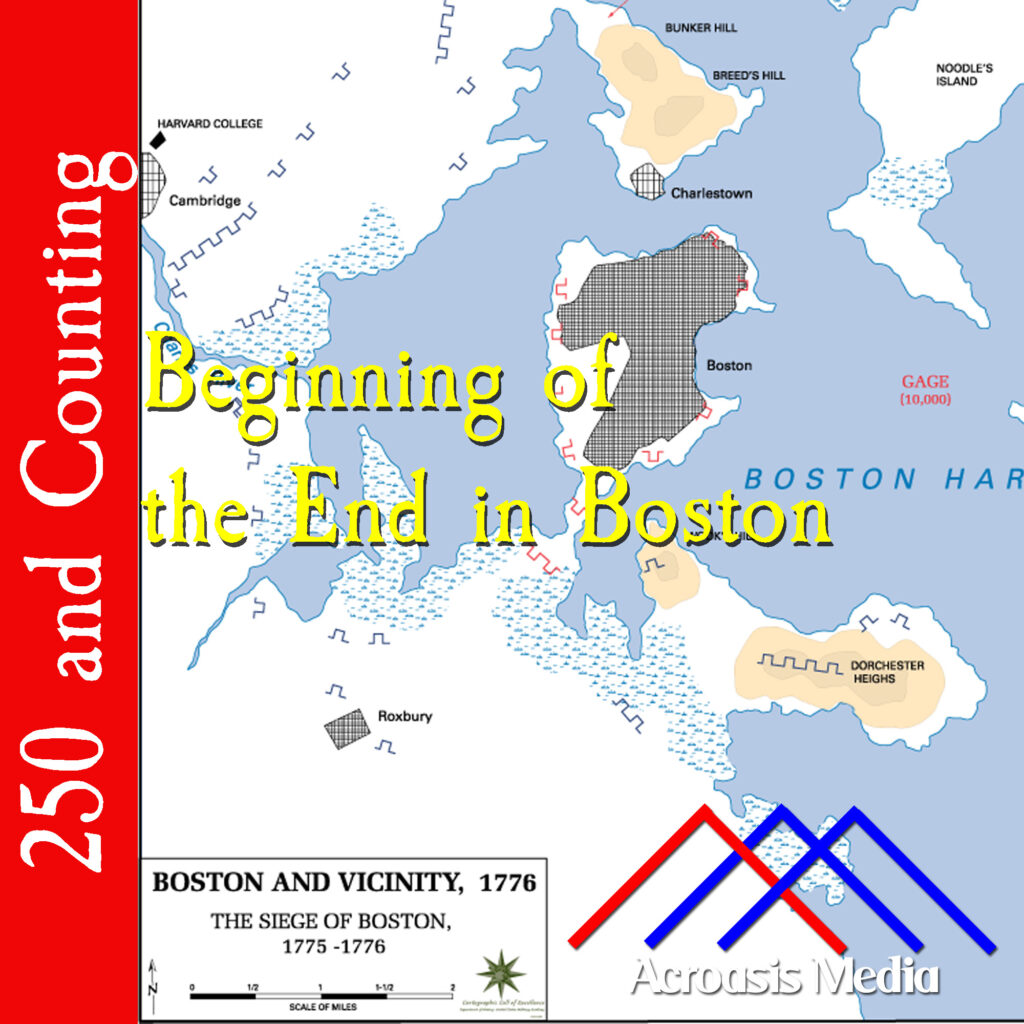
  • Beginning of the End in Boston–March 4, 1776

    Cover art for March 4, 1776: A map of the Boston area during the siege. from the History Department at the US Military Academy.

    Colonel Henry Knox took about ten weeks to get from Ticonderoga to Cambridge rather than the two he anticipated. But his arrival meant the siege’s end in Boston would come soon.

    Knox had brought something like 60 tons worth of material overland using hand-built sledges and carts drawn by oxen. The last leg of the trip is still a mystery, because Knox’ diary ends about two weeks early. What is known is that as he passed through the occasional town, people would line up to watch. So we know when he was where, but the usual stuff that ran through Knox’ head for that portion of the trip is gone.

    Still, his arrival at Cambridge meant that Washington now had what he needed to fortify his position and do what he needed to drive the British out of Boston. After nearly a year, the siege’s end was actually in sight.

  • The Noble Train Of Artillery–December 17, 1775

    Cover art for December 17, 1775: One of many, MANY images mistakenly showing the Ticonderoga artillery being transported on ox-drawn sleds. Author unknown, National Archive Collection number 111-SC-100815.
    One of many, MANY images mistakenly showing the Ticonderoga artillery being transported on ox-drawn sleds. Author unknown, National Archive Collection number 111-SC-100815.

    Colonel Henry Knox was just about ready to begin moving the Noble Train of Artillery (a phrase he coined, incidentally). He’d have everything he needed to move by the 20th or 21st of December, and then just seventeen days later, he’d be marching into Cambridge.

    As we all know, he was wrong about how long it would take. But that sort of thing happened frequently.

    What we don’t know is why he said he had the animals he needed to transport the materiel when he didn’t. And even though there are numerous images of the Noble Train of Artillery involving oxen, there weren’t any at all: everything was moved using horses.

    On a personal note: today would have been my grandmother’s 103rd birthday. A lot of things have changed since I was born, but a lot more things changed from the time she was born. The mind boggles.