Tag: Connecticut History

  • Samuel Tweedy–March 8, 1776

    Cover art for March 8, 1776: Samuel Tweedy's grave, in Danbury, CT. via Findagrave.com.

    When Samuel Tweedy moved from Dutchess County, NY to Danbury, CT, it was a fortuitous time to do something like that. Danbury was undergoing an economic expansion as part of a post-war boom, which gave him extra opportunities to gain access to trade and manufacturing that he never would have seen back in New York, which was a largely agrarian economy at the time.

    Tweedy’s marriage to Ann Burr had both social and economic benefits, since Danbury was rather tight-knit as a community, and his having Ann for a spouse gave him an “in” where some of that was concerned.

    One of Danbury’s biggest products was hats, and Samuel Tweedy established his own business with the assistand of his father-in-law. He immersed himself in the craft of making hats, and ultimately established himself as a man capable of building smaller-scale workshops dedicated solely to producing unfinished hat blanks, which could then be sold to hatmakers. Since an efficient shop could only turn out a few dozen hat blanks in a week, having several shops meant that Tweedy could turn out more blanks than anyone else. Tweedy’s shops also specialized in making hat blanks with fur linings. And Tweedy benefitted from protective tariffs, which reduced the number of British imports when it came to hats.

  • From Connecticut To Georgia–February 20, 1776

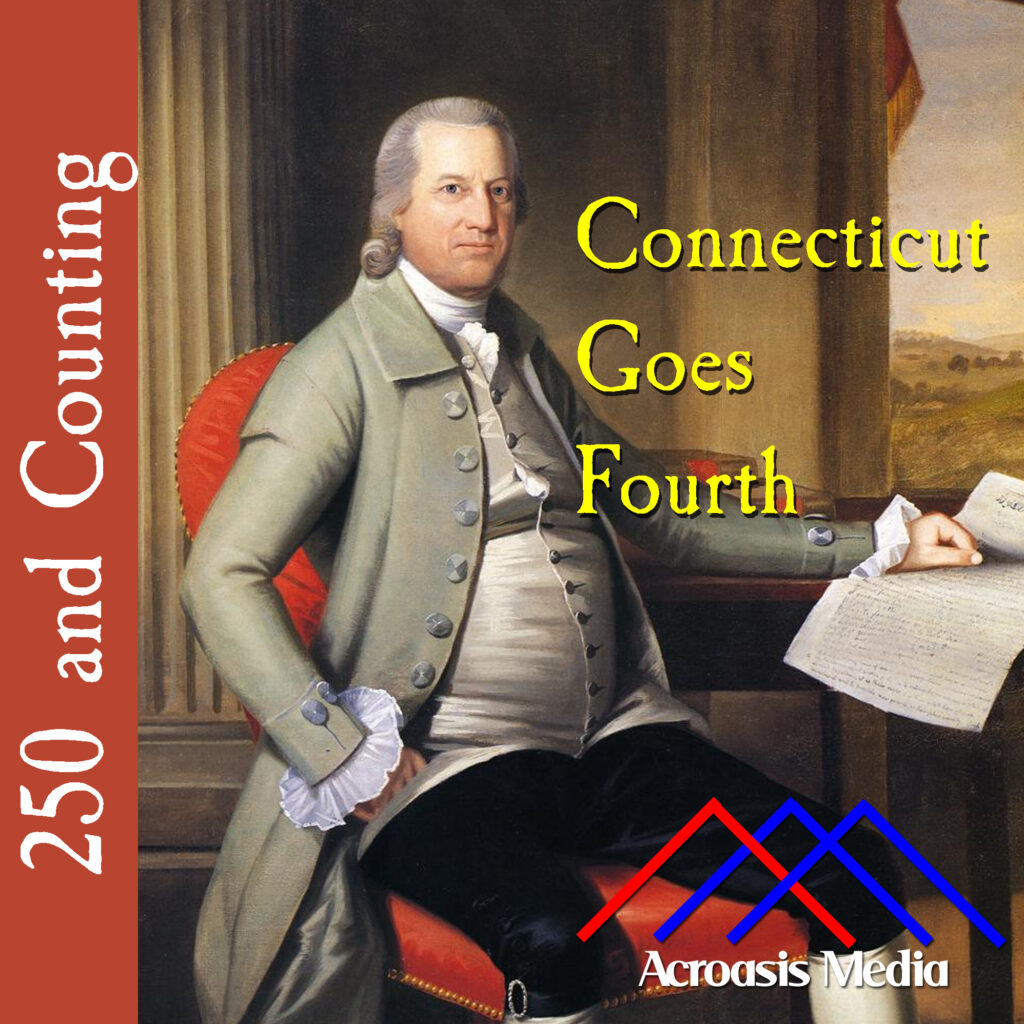
    Cover art for February 20, 1776: Portrait of Connecticut Founding Father Oliver Wolcott by the American painter Ralph Earl, oil on canvas. Courtesy of the Museum of Connecticut History.

    Oliver Wolcott was one of our Founding Fathers in that he was one of the men who signed the Declaration of Independence, but while he never achieved prominence on the level of Franklin or Adams, he nevertheless served an important role as a member of the Second Continental Congress.

    As the Revolution began, Wolcott was made a commissioner of Indian affairs, largely to work on ensuring that the northern tribes remained neutral. He was considered qualified for that position because he worked in that part of the continent during the French and Indian War.

    He was elected to the Continental Congress in 1775, and although he was quite ill for a chunk of 1776, he did sign the Declaration of Independence, although it was some time later than everyone else. He was also a signatory to the Articles of Confederation, but he did not sign the US Constitution because by then he was the Lieutenant Governor of Connecticut, becoming governor in 1796. A year later he died at the age of 71.

  • Salisbury Iron Furnace–February 2, 1776

    Cover art for February 2, 1776: A typical iron factory setup, This image is generally used to represent the Salisbury Furnace. via National Park Service.
    A typical iron factory setup, This image is generally used to represent the Salisbury Furnace. via National Park Service.

    In early 1775 when hostilities first broke out, the Salisbury Iron Furnace was owned by an Englishman named Richard Smith. By the end of the year he’d cleared out and gone back home to England, and remained there for the rest of the war.

    After an inspection in early January, the Committee of Safety formally recommended that the Salisbury Iron Furnace be confiscated and made ready for the production of cannon. The first cannon rolled out on May 27, and by the time the war ended, about 850 cannon—about 75% of all the cannons made in the colonies—had come from Salisbury, not to mention ammunition and other armaments.

  • Elisha Haley–January 21, 1776

    Cover art for January 21, 1776: Portrait of Elisha Haley, artist unknown, created approximately 1860.
    Portrait of Elisha Haley, artist unknown, created approximately 1860.

    Elisha Haley wasn’t necessarily a lawmaker at either the State or the Federal level who made such a huge mark that he’s become a kind of household name, but he appears to have been solid enough that he could get elected multiple times at both levels.

    I did discover, after recording the episode, that Haley is not, in fact, buried in Crary Cemetery but rather in the Wightman Cemetery, which is also in Groton. His wife and four of his children are also buried there.