Tag: john Adams

  • John Adams, Correspondent–September 29, 1776

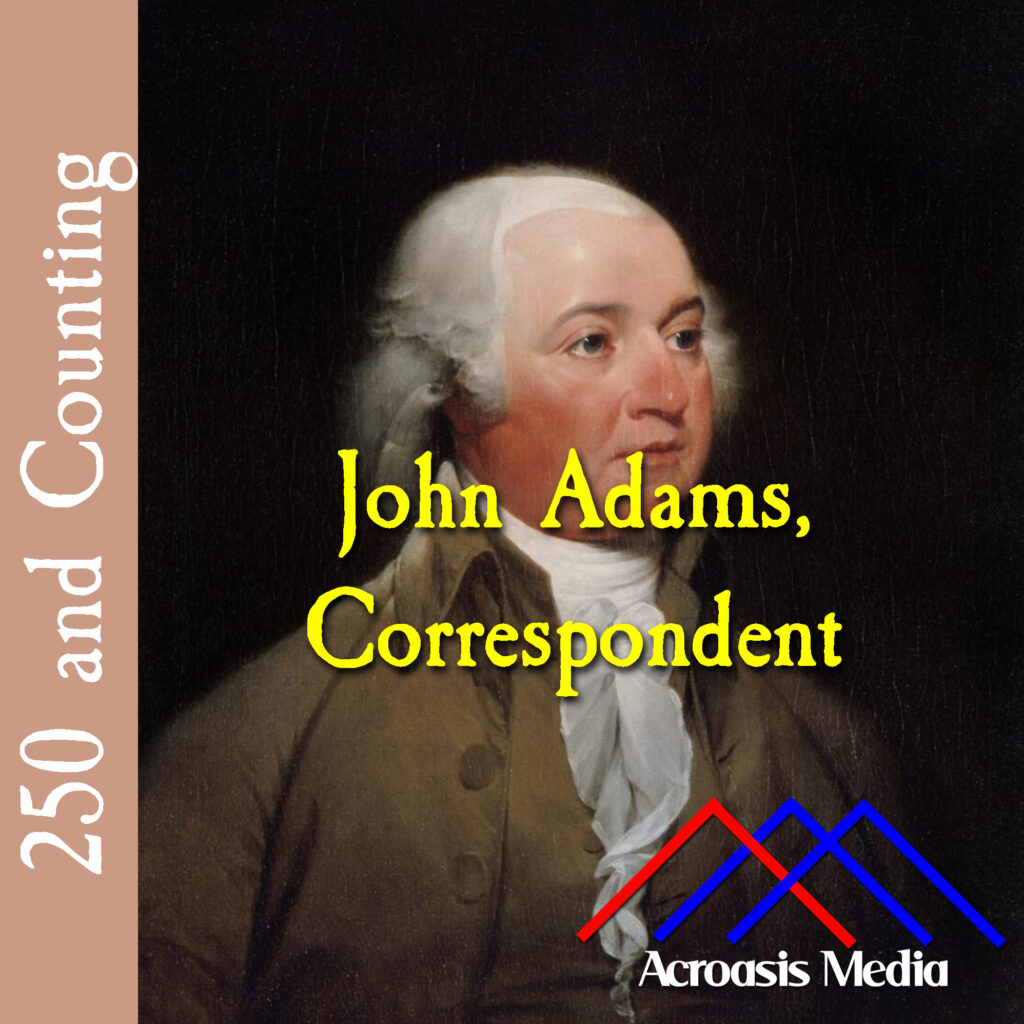
    Cover art for September 29, 1776: portrait of John Adams by John Trumbull, 1793. via White House Historical Association.

    When you only have two minutes to get the point across, you sometimes lose some of the nuances. This is a rundown of the second letter discussed today:

    Abigail Adams penned a poignant letter to her husband, John Adams, who was still serving in the Continental Congress but hoping to get home as soon as his replacement arrived.

    This correspondence highlights the immense psychological and economic strain experienced by those on the home front during the American Revolutionary War.


    Abigail’s primary anxiety centered on the military situation in New York. She expressed deep frustration over conflicting reports regarding casualties and prisoners, troubled by rumors of colonial regiments refusing orders or behaving poorly under pressure. This operational uncertainty coupled with the immediate hardships in Massachusetts painted a grim picture of the war effort.

    Furthermore, Abigail criticized a growing “venal spirit” within the local communities. She observed that patriotism alone was no longer enough to motivate enlistment; instead, towns were forced to offer increasingly high bounties to secure short-term military commitments. The relentless military drafts heavily strained Massachusetts towns as they struggled to meet their quotas, forcing citizens to pay exorbitant costs to hire replacement soldiers.

    On a domestic front, Abigail balanced these structural societal collapses with immediate family pressures. Rumors of an enemy fleet in the bay magnified her isolation as she managed the family household and farm entirely on her own. This letter serves as a vital historical record of the domestic sacrifices that sustained the revolution, an account that John Adams later acknowledged receiving in his response on October 8, 1776 (which we’re not likely to discuss then).

  • Busy Day For Mr. Rutledge–September 27, 1776

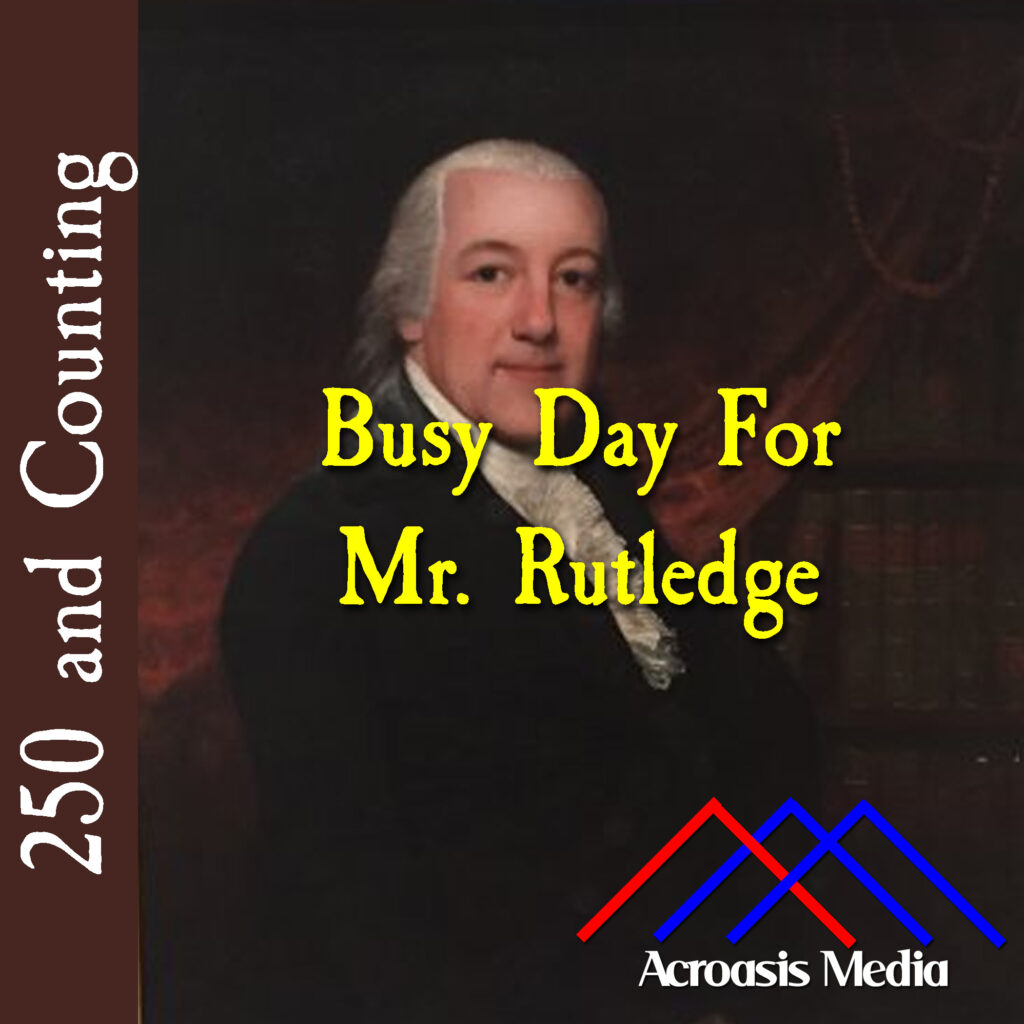
    Cover art for September 27, 1776: Portrait of Edward Rutledge by James Earl, 1791. via Gibbes Museum of Art in Charleston, SC.

    In putting this episode together, I realized that I used this same image of Edward Rutledge back in the September 9 episode. However, I neglected to put the information for the image in the alt text. And that’s something I do try not to overlook. On the other hand, I was still hopped up on cold medication, so there’s that.

    And before I forget, I mentioned the censure of Esek Hopkins during the episode, so I wanted to ensure that I linked back to that as well.

    In addition to being the youngest signer of the Declaration of Independence, at the tender age of 26, Edward Rutledge was also a governor of South Carolina. By my count he was their ninth governor, from 1798 to 1800, but that’s if you count his brother John Rutledge twice, since John served twice, non-consecutively. Also, he was the ninth governor of the state of South Carolina; if you count the colonial governors, he’d be thirty-ninth.

    After leaving the Continental Congress, Rutledge did fight in the Continental Army. He was captured during the Siege of Charleston in 1780 and released in a prisoner exchange the following year.

    I should note that while Rutledge was governor he suffered from an attack of gout and went home to Charleston to recuperate. Not long afterwards, he heard the news of George Washington’s death and was so upset by this that he had an attack of apoplexy and died. (Modern-day medical types would probably say that he had a cerebral stroke.) Rutledge had been the Governor for 401 days.

  • John Adams Wants To Go Home–September 25, 1776

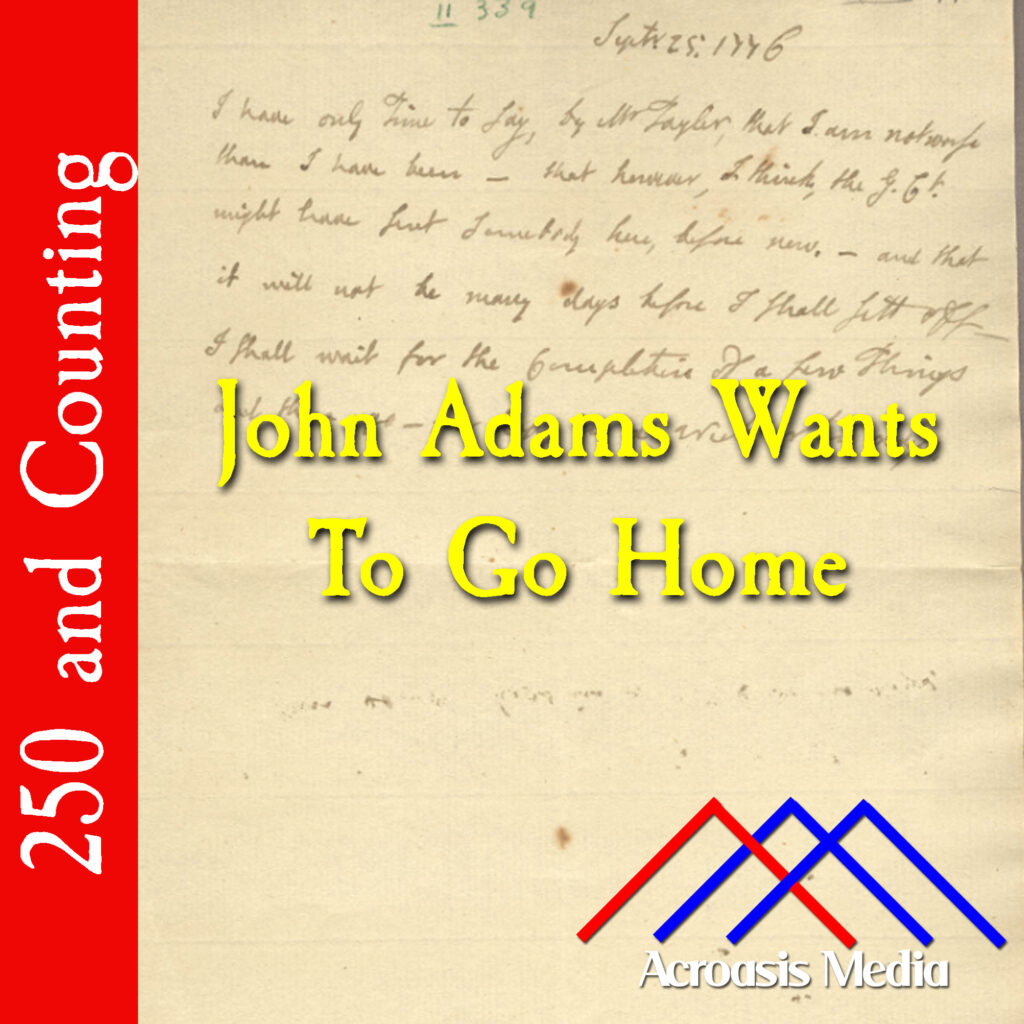
    Cover art for September 25, 1776: the entire letter from John Adams to Abigail on this date. via Massachusetts Historical Society.

    Back in April, Mike and I had the opportunity to visit the Massachusetts Historical Society, and we were able to spend some time with the man whose job it is to curate, analyze and organize the papers of the Adams family. Not just John and Abigail, but their descendants and maybe a few ancillary branches of the family. At one point in the conversation I said to him, “It seems like John and Abigail were really hot for each other.”

    He was a little taken aback by this but he didn’t disagree with me, either.

    And I stand by my statement; it was clear by both the content and the tone of their writing that they were deeply in love with one another, and it was positively killing him that he had to spend so much time in Philadelphia, away from her.

    Which is why the letter discussed in today’s episode may come as a surprise.

  • The Staten Island Peace Conference–September 11, 1776

    Cover art for September 11, 1`776: The Billop House on Staten Island, where the aborted peace conference took place. Via Wikimedia Commons.

    The Staten Island Peace Conference was a bust almost from the beginning. Not because the sides were so opposed, but because one side didn’t have the authority to do any real negotiation.

    John Adams, Edward Rutledge and Benjamin Franklin had to row over from Perth Amboy, New Jersey to get to the Totten House, which is near the southernmost tip of New York State, on Staten Island. At the narrowest point I could find from the vicinity of the house, that’s nearly a half-mile across the mouth of the Arthur Kill River where it opens into Raritan Bay and ultimately the Atlantic Ocean.

    Unfortunately, Admiral Howe was so limited from a diplomatic standpoint that there wasn’t a lot he could do at that point, so after a few hours they broke up and the delegation was allowed to return to New Jersey. The war would continue for another severn years before concluding.

    In retrospect, we have multiple attempts for Admiral Howe to meet with George Washington, which failed on the basis of protocol (Howe wouldn’t refer to Washington as a General), so now we have to wonder what direction negotiations would have gone had one of those attempts succeeded. Would things be different, or would it wind up the same, and the events of today be obviated? If a meeting in July had ended in no agreement, would John Sullivan even have been paroled to go to Philadelphia and present the plan?

    I’ll leave that for you to chew on. In the meantime I’m still sounding pretty sultry, so enjoy that.

  • The Peace Delegation–September 9, 1776

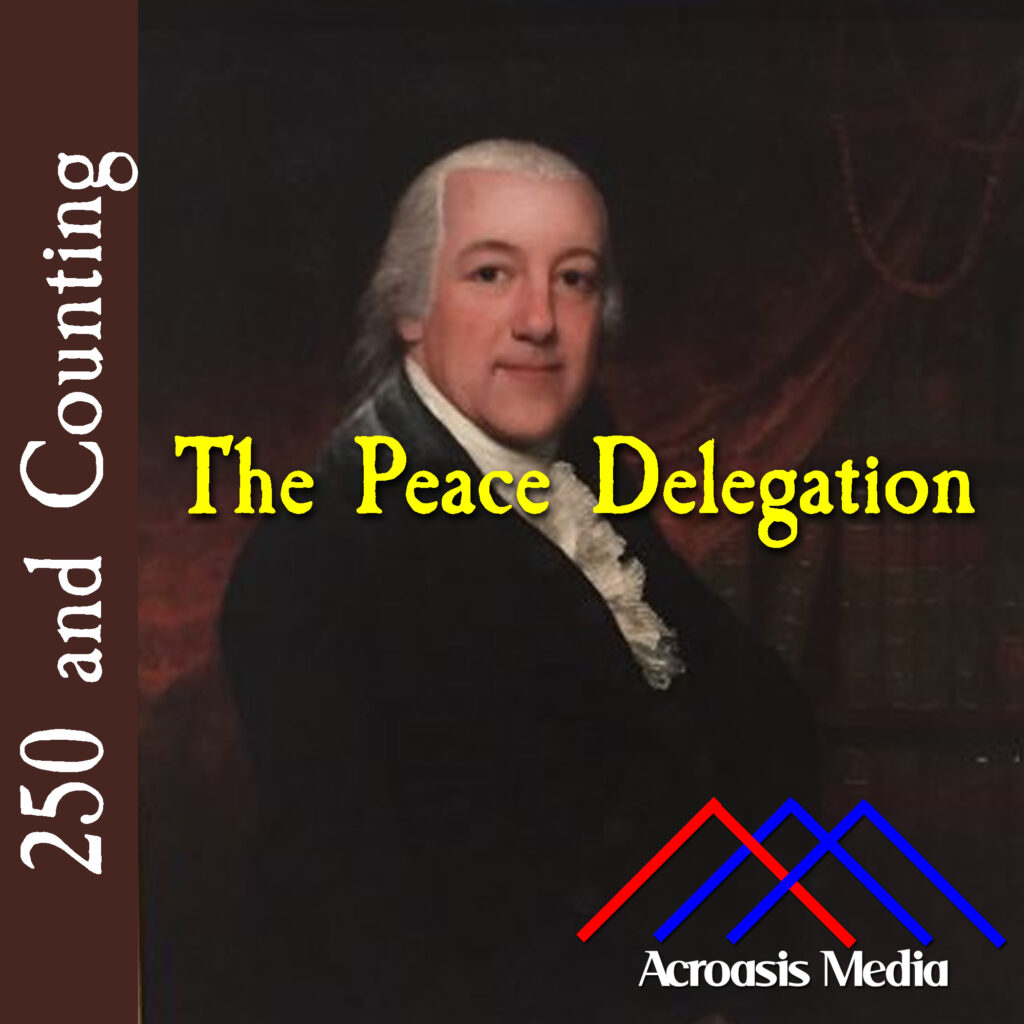
    Cover art for September 9, 1776: portrait of Edward Rutledge, ca. 1791 by James Earl. Via Gibbes Museum of Art, Charleston SC.

    First off, my apologies to you, and to Mike (because it was his episode), for not double-checking that yesterday’s episode was actually loaded into the feed. I’ve been fighting off a ridiculous sinus infection and I think my medication had me woozy.

    On the bright side, I’m probably sounding extra sexy in today’s episode because my head still feels like a brick.

    Yesterday’s show should be in your podcast feed now, though, along with this one.

    Today we have a trio of delegates headed to New York to attempt peace talks with the British. Meanwhile back in Philadelphia, the Congress officially declares that our country’s name is the United States of America. Check out the story behind that.

  • Mail From Braintree–August 14, 1776

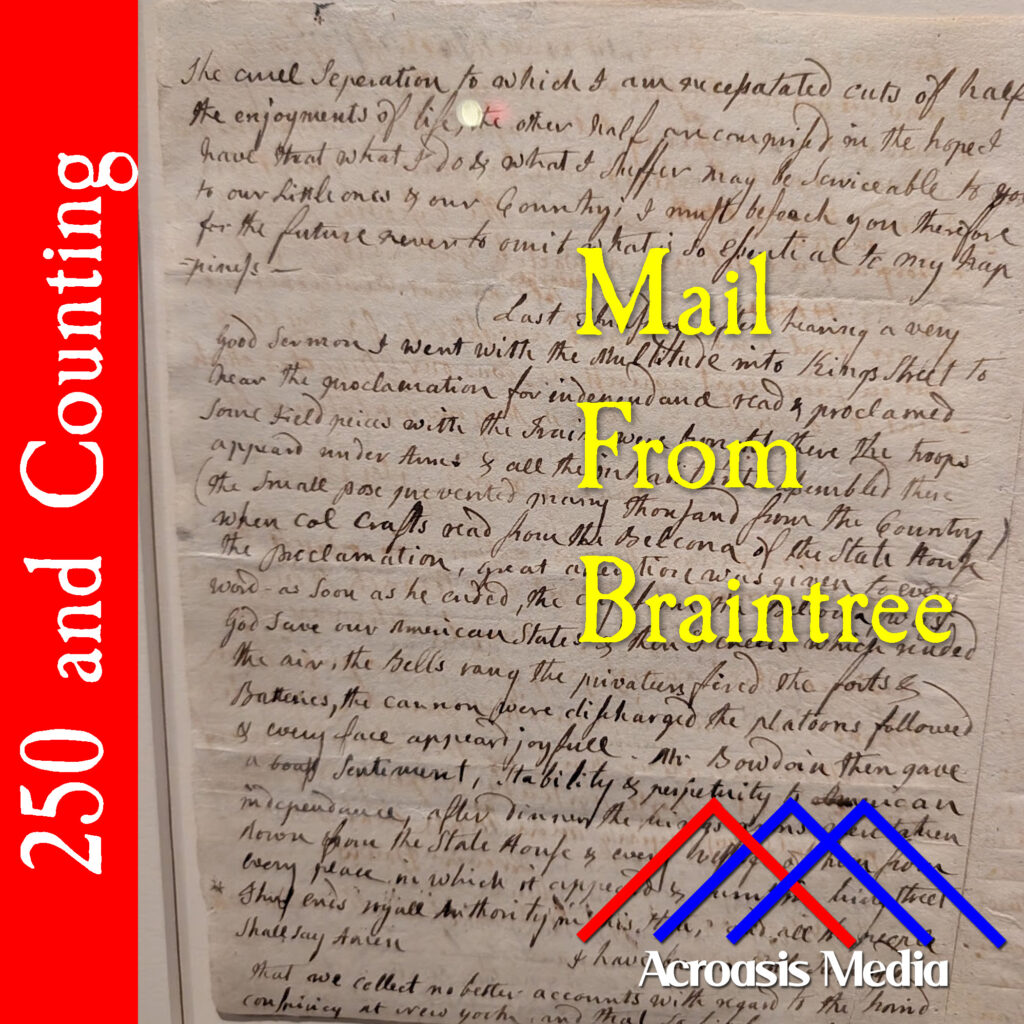
    Cover art for August 14, 1776: one of many, MANY letters written by Abigail Adams to John Adams. Photographed by Claude Call at the Massachusetts HIstorical Society.

    John and Abigail Adams were one of the great love stories of the 18th Century, and for John to receive a letter from Abigail must have been heavenly, even if it happened nearly every day.

    To be sure, Abigail didn’t always have good news with regard to whatever might be happening at home, and today’s letter is no exception to that. But Abigail was a woman with strong opinions and she wasn’t afraid to put them to paper and let John know what she thought. It was presumably her hope that John could sway the Congress to take on some of her ideas, and it’s entirely possible that he tried, but Abigail was a very progressive, forward-thinking woman and the men in Congress just weren’t realy for that level of social change.

  • British Forces Gather in NY–July 29, 1776

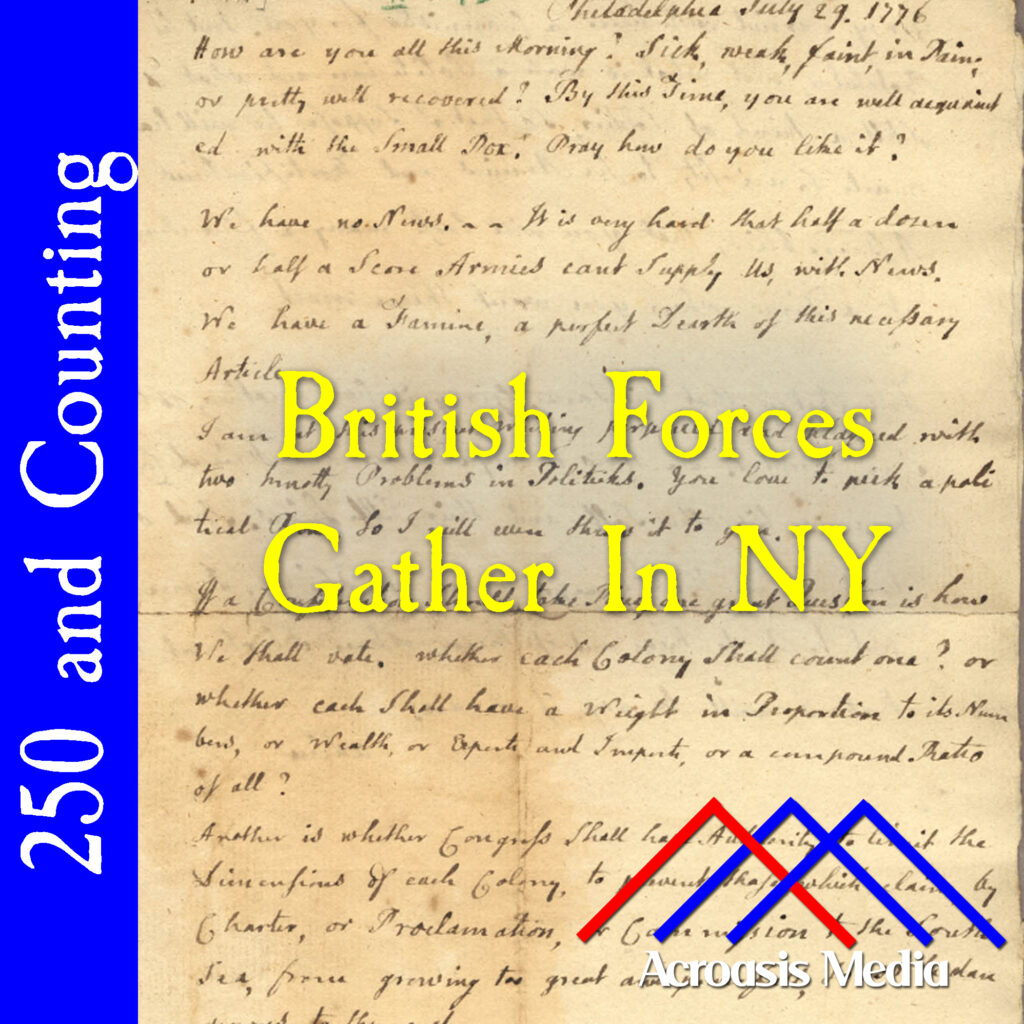
    Cover art for July 29, 1776: letter from John Adams to Abigail written on this date. Via Massachusetts Historical Society.

    The presence of the British in Staten Island wasn’t a big mystery, but within a month after they first arrived, the number of ships in New York Harbor was well over 100, and still growing.

    And, as George Washington suspected (along with many others), the British began moving up the rivers surrounding Manhattan, working their way up the Hudson River in the effort to use New York as a wedge between New England and the rest of the colonies. Specifically, if supplies couldn’t get through, then it weakens both sides of the line.

    As for New York itself, part of Washington’s problem was that he didn’t know if the British plan was to take New York City (still a small chunk of Manhattan Island at that time), or to move through Long Island. As a result he had to hedge the bet a little bit and send troops in both directions, spreading the Continental Army rather thinly. This may have forced the British to do something quite similar, but they still had Washington vastly outnumbered.

  • Adams’ Model Treaty–July 18, 1776

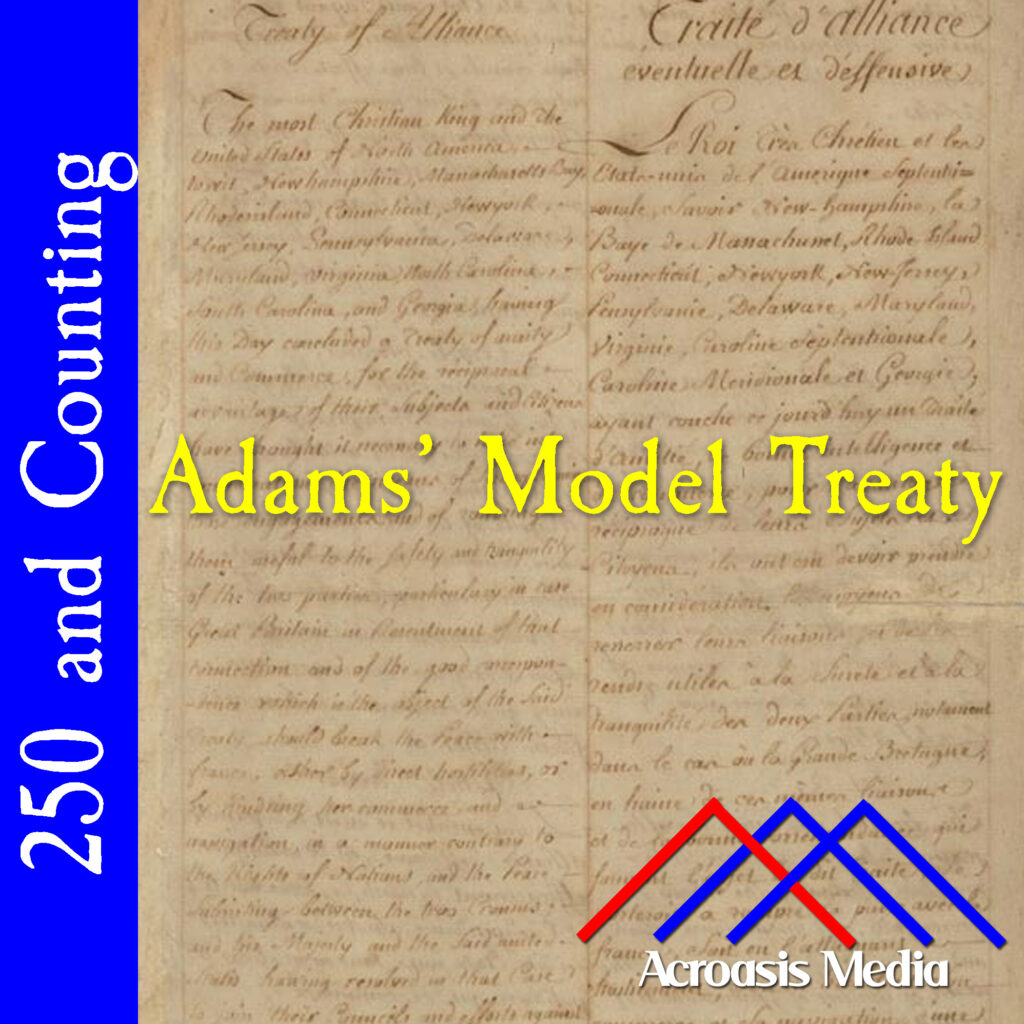
    Cover art for July 18, 1776: The 1778 Treaty of Alliance with France, based on Adams' work of today. Via National Archives.

    Coming up with a model treaty wasn’t John Adams’ idea, but it turned out to be a very good idea that he was responsible for implementing.

    Once Adams had it in his head, he began to work on the model treaty along with the committee, and while it was intended to be used for commercial trade, it could be (and eventually was) adapted for soliciting military support in the form of weapons and other ordnance (rather than troops).

    Today’s artwork, incidentally, is the Treaty of Amity and Commerce from 1778 that the US signed with France. If you look closely you’ll see that the left side is in English and the right side is the French translation. This is just most of the first page, of course, but it’s interesting to see how such things were handled.

  • Board of War and Ordnance–June 21, 1776

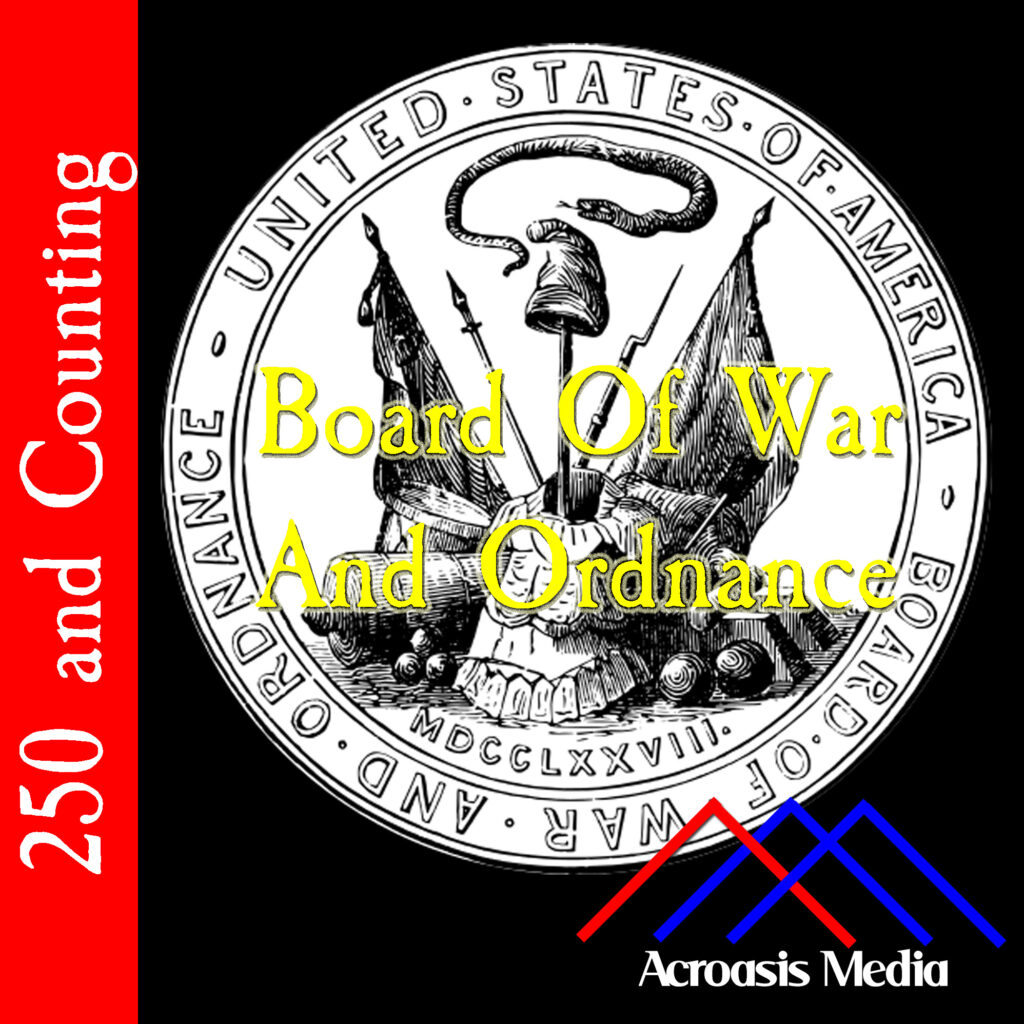
    Cover art for June 21, 1776: Seal of the United States Board of War and Ordnance, created in 1778. It was used by the U.S. War Department until 1880.

    We’ve spent a bunch of episodes describing a day in the life of the Second Continental Congress, and many of them were almost exclusively dealing with military matters.

    In January 1776 George Washington recommended that the Congress designate a specific office for these dealings, and Edward Rutledge picked up the idea and suggested it to the Congress. It took a little time, but the Congress ultimately agreed and set up a Board of War and Ordnance, which began operating on this day in 1776.

    The original Board of War and Ordnance was five delegates to the Congress, plus a secretary who wasn’t a delegate. After only a few months they recognized that they couldn’t do their jobs as delegates and keep up with the War workload, so they had themselves replaced with a permanent Board.

    The Board operated until the war ended, after which it was dissolved, but the logo (see cover art) persisted in the War Department until 1880. Incidentally, note the Phrygian Cap in the artwork. We haven’t talked about that in a while, but in those days the Cap was a universally-recognized symbol of freedom dating back to ancient Rome, when it was given to former slaves. In the Revolutionary Era, it specifically symbolized freedom from British tyranny.

  • The Declaration Begins–June 11, 1776

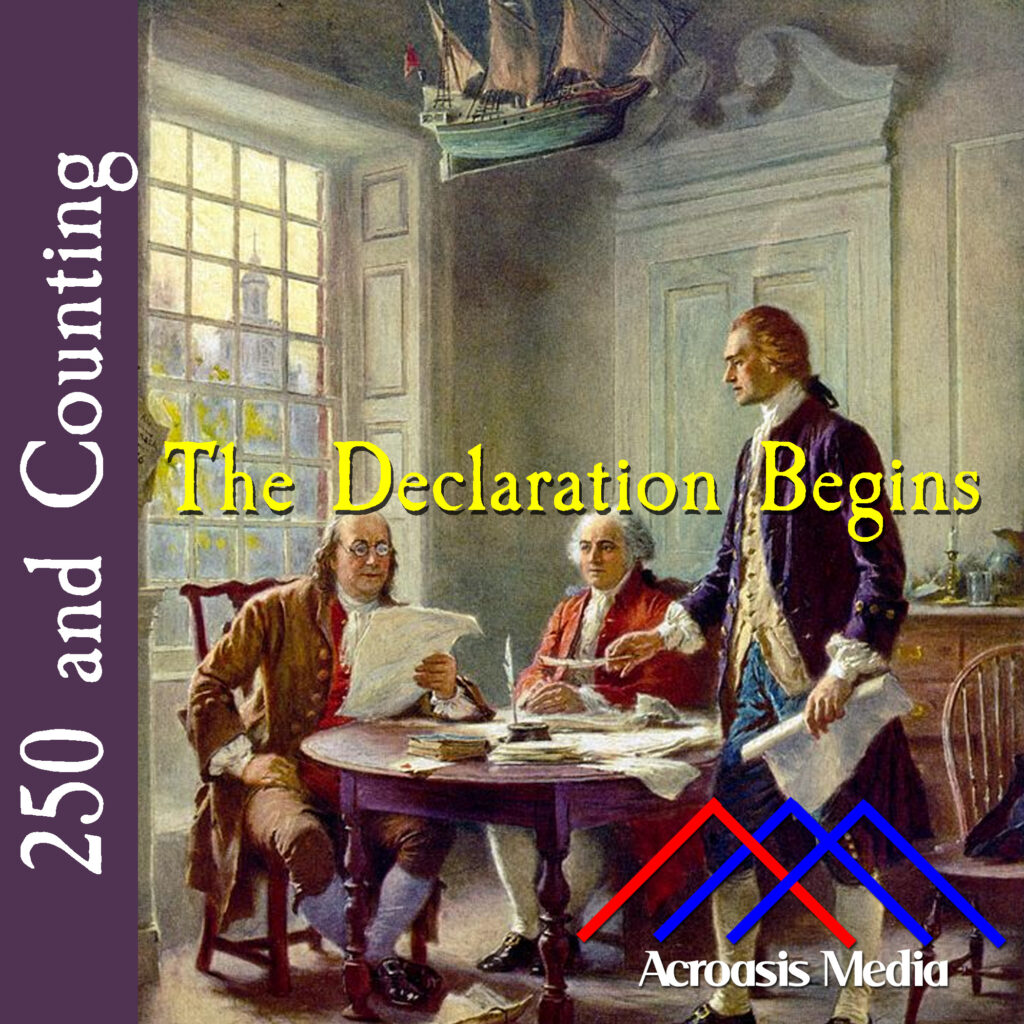
    Cover art for June 11, 1776: "Writing the Declaration of Independence 1776" by Jean Leon Gerome Ferris, 1900. via Wikimedia Commons.

    After temporarily tabling the Lee Resolution, which called for our independence from Great Britain, the Second Continental Congress identified its Declaration Committee. Five men were chosen to articulate why we were asking King George to go screw himself in the politest possible terms.

    While the Committee involved five men—John Adams, Benjamin Franklin, Thomas Jefferson, Roger Sherman and Robert Livingston—most of the work fell to three of them: Jefferson, Adams and Franklin. Jefferson spent a few days working on the first draft in isolation, then Adams and Franklin began reviewing and revising his work.

    The Declaration Committee worked steadily for over two weeks before presenting their finished product to the Congress, though John Hancock did get to see an earlier draft.