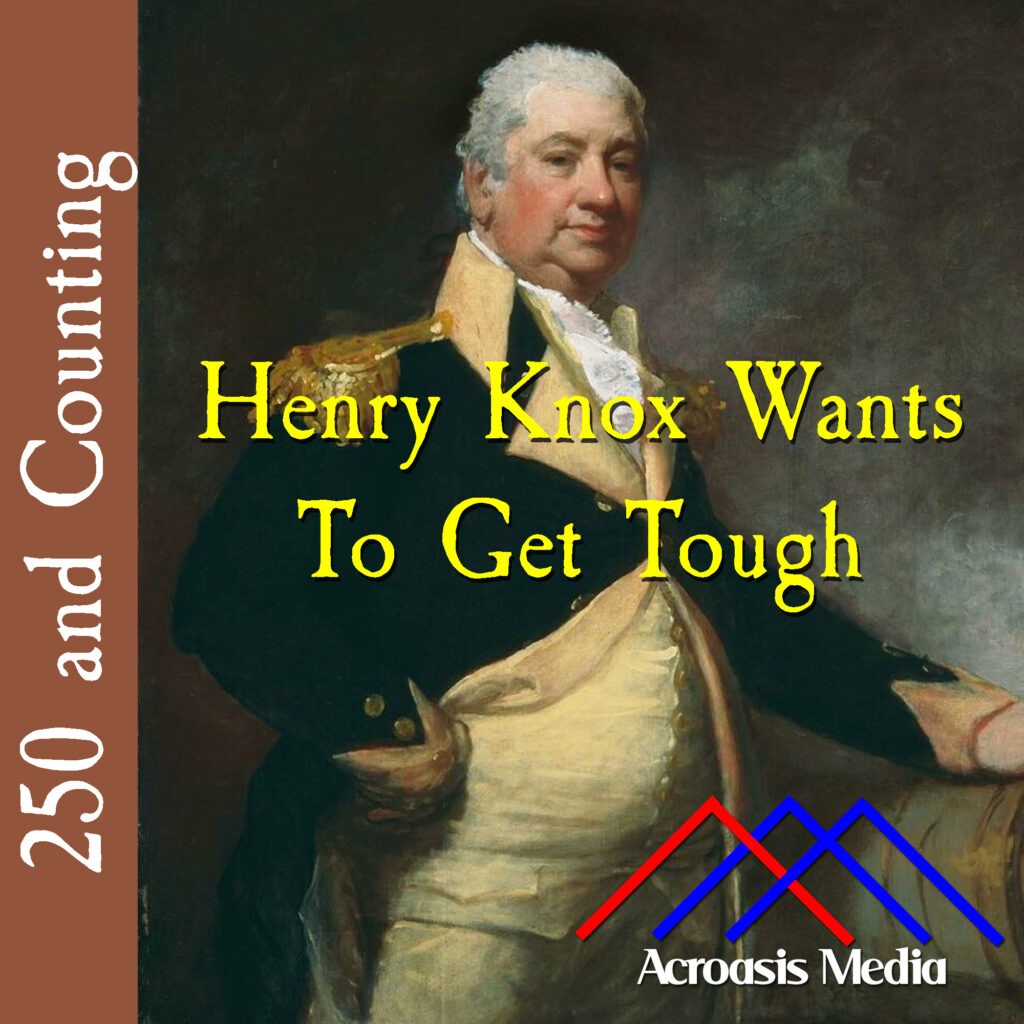
If the name Henry Knox sounds familiar to you, give yourself a prize. Knox was the man in charge of the Noble Train of Artillery, in which large amounts of ordinance were taken from Fort Ticonderoga and transferred to Boston. The presence of the new guns, with greater range than either side had at that point, led to the British finally evacuating the city a relatively short time later.
But by this point Knox was back in New York, only he was in the city rather than the upstate area, and he could see that reconciliation was a pipe dream at best. So he wrote to John Adams to stress the importance of eventual independence.
It is not recorded whether Adams replied “No duh,” since he’d been making the same arguments to the Second Continental Congress for some time.
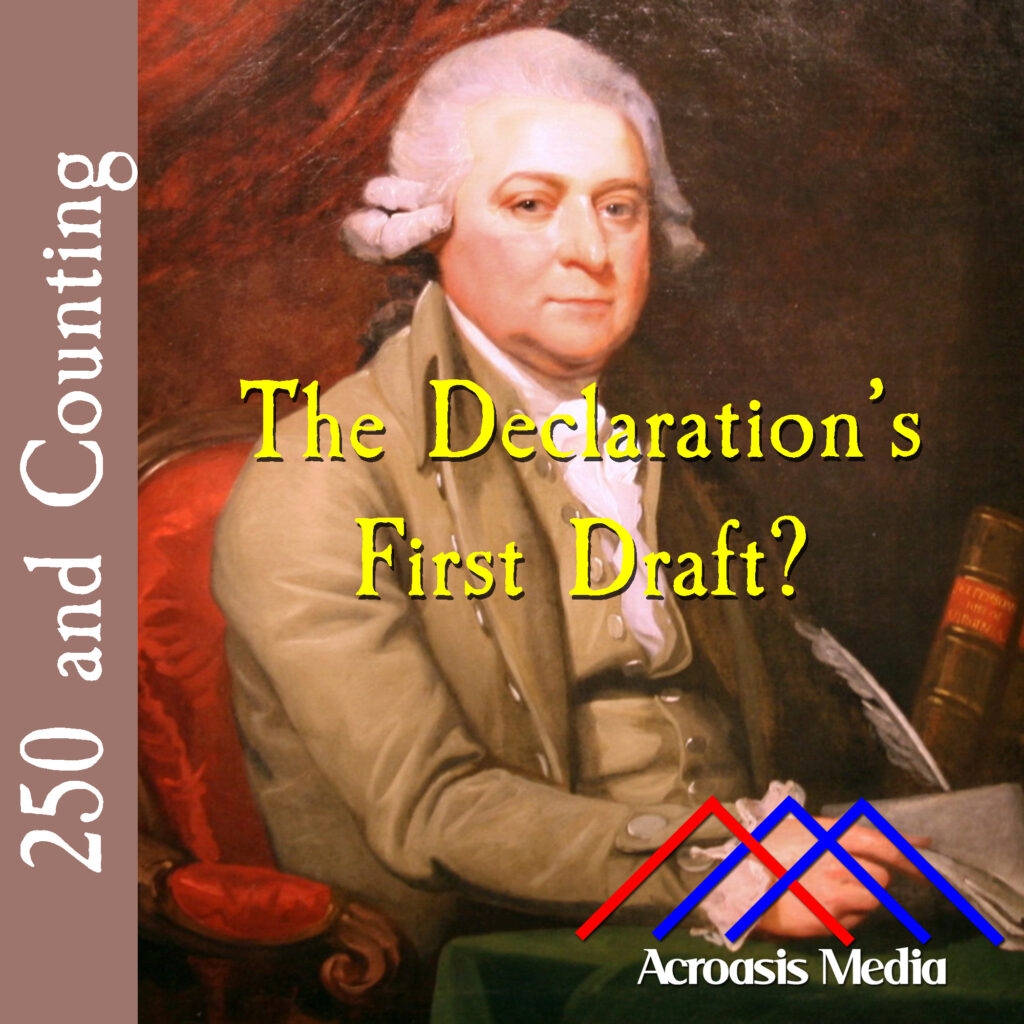
I have to admit that this small chunk of history has me a little confused, because if you’re going to vote on a resolution, shouldn’t you have the wording of that resolution in place? But the Second Continental Congress did vote on May 10, and now they’ve written a Preamble to the Resolution, largely drafted by John Adams. And from many angles, it looks like a formal break from England, but it’s really not.
Adams also thought the Preamble to the Resolution looked like a formal break, but he also recognized that a genuine declaration would be needed, and soon.
The Preamble to the Resolution read thus:
Whereas his Britannic Majesty, in conjunction with the Lords and Commons of Great Britain, has, by a late Act of Parliament, excluded the Inhabitants of these united Colonies from the Protection of his Crown; and whereas no Answer whatever to the humble Petitions of the Colonies for redress of Grievances and reconciliation with Great Britain has been or is likely to be given, but the whole force 386of that Kingdom aided by foreign Mercenaries is to be exerted for the destruction of the good People of these Colonies; and whereas it appears absolutely irreconcileable to reason, and good Conscience, for the People of these Colonies now to take the Oaths and Affirmations necessary for the support of any Government under the Crown of Great Britain, and it is necessary that the Exercise of every kind of Authority under the said Crown should be totally suppressed, and all the Powers of Government exerted under the Authority of the People of the Colonies, for the preservation of internal peace, Virtue and good order, as well as for the defence of their Lives, Liberties and Properties against the hostile Invasions and cruel depredations of their Ennemies; therefore
Resolved That it be recommended to the respective Assemblies and Conventions of the United Colonies, where no Government sufficient to the Exigencies of their affairs hath been hitherto established, to adopt such Government as shall in the Opinion of the Representatives of the People best conduce to the happiness and Safety of their Constituents in particular and America in General.
Adams was pushing the rest of the Congress hard, and he knew it. Moreover, so did they, and in his diaries he notes the dismay and even anger that he brings on when he talks about Independence. But before long a Committee of Five will be formed to write up an important document.
You may also remember that motions by the Second Continental Congress needed to be voted on unanimously in order to pass, so they could “speak as one voice.”
To that end, the Congress recommended today that Colonies with a government that wasn’t in favor of independence, form a new government that would be more likely to endorse independence. It’s not entirely clear how they expected the individual Colonies to effect this recommendation, but before long it wouldn’t be difficult at all.
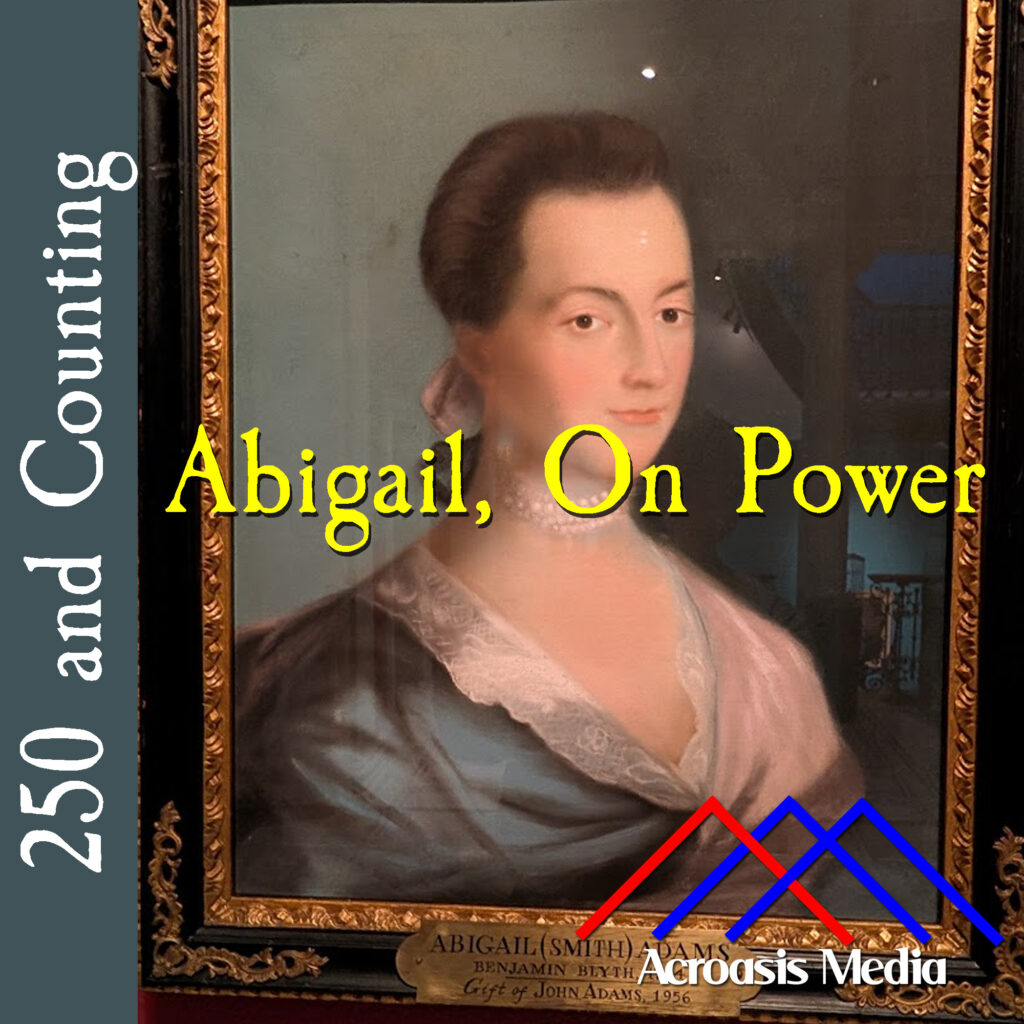
Abigail Adams had some thoughts when it came to arbitrary power, and how fragile it is.
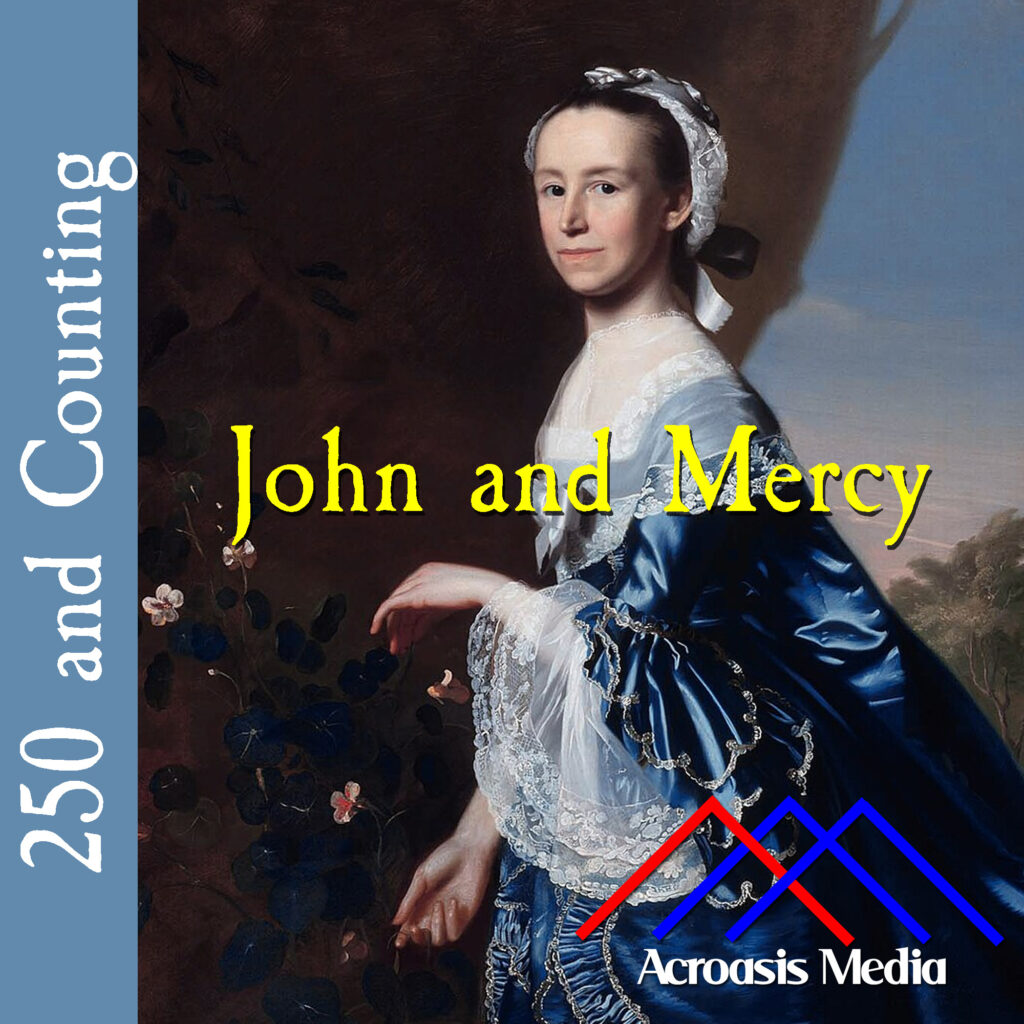
But you get all that from the episode itself. Instead, here in the show notes, I’m going to point out that I’m the one who took the photo used for today’s cover art.
The painting hangs at the Massachusetts Historical Society, and because they keep it relatively dim there, you can see the reflection of the stairwell leading down to the main entrance. The white spot over Abigail’s head is the reflection of a light across the gallery, which is maybe 15 feet across. I’m standing at a slight angle so I’m not part of the reflection. (It’s also partially cropped here; I’m not that bad a photographer.)
The painting was donated to the Society by one of John and Abigail’s descendants, who is coincidentally also named John. The docent I spoke with didn’t know whether there was a family tradition of naming sons “John” as homage to our Founding Father, but he conceded it’s certainly likely.
The letter cited in today’s episode is part of the MHS collection, though it wasn’t on display the day Mike and I visited. MHS has literally thousands of Adams Family documents, and there are people there who work only with those documents. That’s their only job!
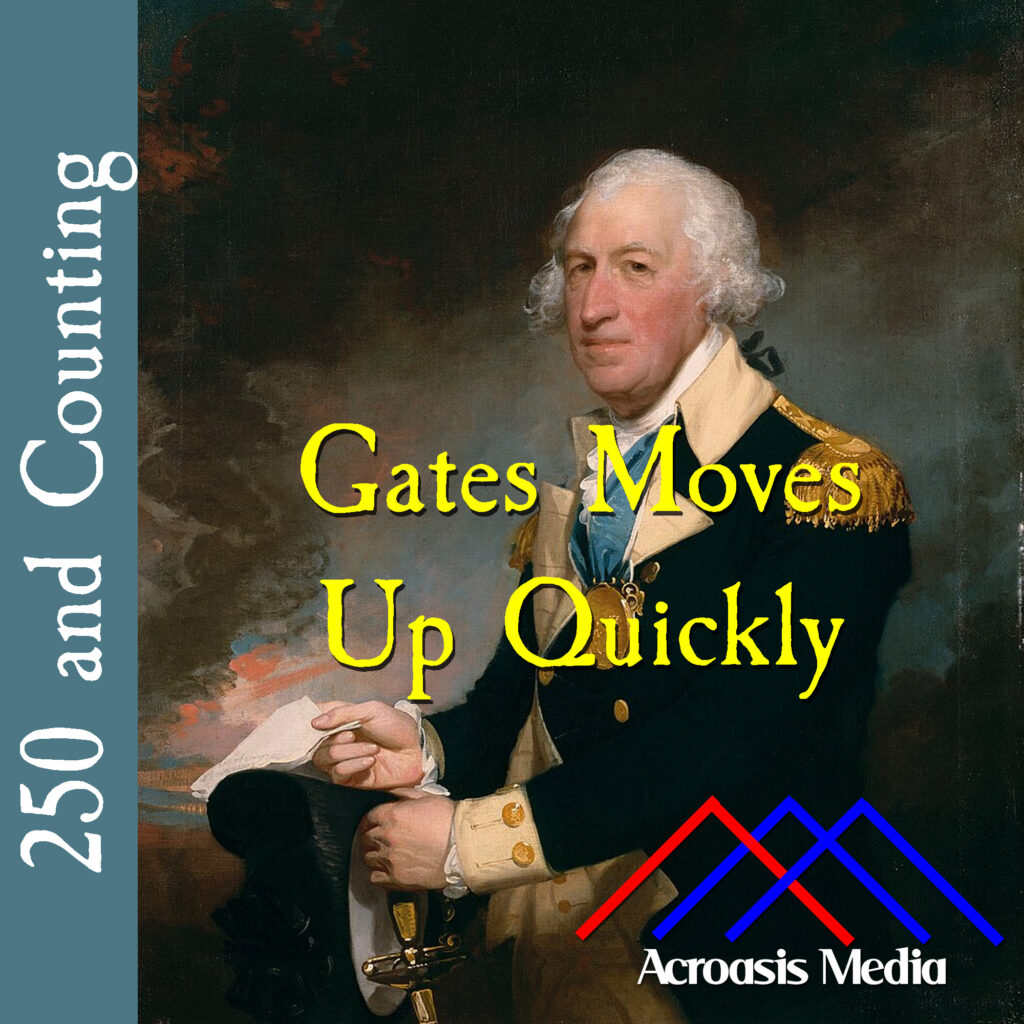
Horatio Gates did move up quickly through the ranks, and partially because he knew George Washington well, but it was also because he had a pretty good handle on getting things done.
As an Adjutant General, Gates was the man who ran the administrative side of the Continental Army, and is now thought of as the US Army’s first Adjutant General. He handled a lot of the logistics of keeping records and ordering supplies, and offered Washington wise counsel when it came to the Siege of Boston. In that respect it appears that he prevented Washington from acting rashly now and then.
But Gates was anxious to get a field position, and just a few weeks after this date, he was assigned to the Canadian Department with the new rank of Major General. Some intramural disputes followed as the Continental Army began to retreat from Canada, but were quickly settled.
Unfortunately Gates’ ambition got the better of him, and as the year wore on, he left his troops to attempt to talk the Congress into having him replace Washington as Commander in Chief.
Later, Horatio Gates was present when General Burgoyne surrendered at Saratoga. He tried to parlay this into political gain, but his status began to falter for the rest of the war, to the point where he was nearly court-martialed. Shortly thereafter he retired and lived in Virginia, and then New York City, until his death in 1806. He was buried in the Trinity Church graveyard in lower Manhattan, but the exact site of his grave is unknown.
When Henry Knox wrote to George Washington apologizing for getting to Noweich,Connecicut so late, he had a pretty good excuse: he spent a bunch of money on hiring people to move materials down; and those people had trouble getting the job done.
But then Henry Knox also tells the story of leaving the caravan briefly to look at Newport RI and determine whether it’s defensible. Imagine how he felt when, after he spent two days figuring out the five best places to stand when defending Newport, he has to explain why he lost those two days afterward. But he did take the time to frame it as an activity that surely would make the Commander-in-Chief look better.
Mercy Otis Warren doesn’t get nearly enough love in our history books, and barely enough of it here, besides. Having said that, our episode a little over a year ago was a fun little tribute.
Mercy Otis Warren was a playwright, a pamphleteer and a poet before, during and after the Revolution. Some of her plays were thinly veiled attacks on the British. She was self-taught and pretty brilliant at it, considering that she was one of the first to advocate for a Bill of Rights (though nobody knew she’d written the piece advocating one until her great-great-grandson found a document tying the pamphlet to her).
And while this episode focuses on correspondence between her and John Adams, she frequently exchanged letters with George Washington, John Hancock, Patrick Henry, Samuel Adams, and Thomas Jefferson. But her best relationship was with John Adams, who she looked to as a wiritng mentor. It was at his suggestion that she began writing a history of the Revolution while it was still being fought. She didn’t need primary sources to write her history, she was the primary source. At worst, she was getting it second-hand from the members of the Continental Congress and local leaders.
Mercy was married to James Warren, and I mention that here because oftentimes she’s thought to be the widow of Dr. Joseph Warren, who died at Bunker Hill. In fact, despite having the same name, Joseph was not related to James, nor to Mercy.
Incidentally, Mike gives a shout-out to the Massachusetts Historical Society, which is a fascinating repository of documents and items related to the history of the state, but which has a special lens on the Revolution, especially this year. So I figured I’d do the same here, along with a link. If you’re in town, it’s not to be missed. And it’s free, though donations are encouraged. Go check them out and from there it’s a short walk to Fenway Park, where you can catch a Red Sox game. (Alas, they were playing away games while we were in town.)
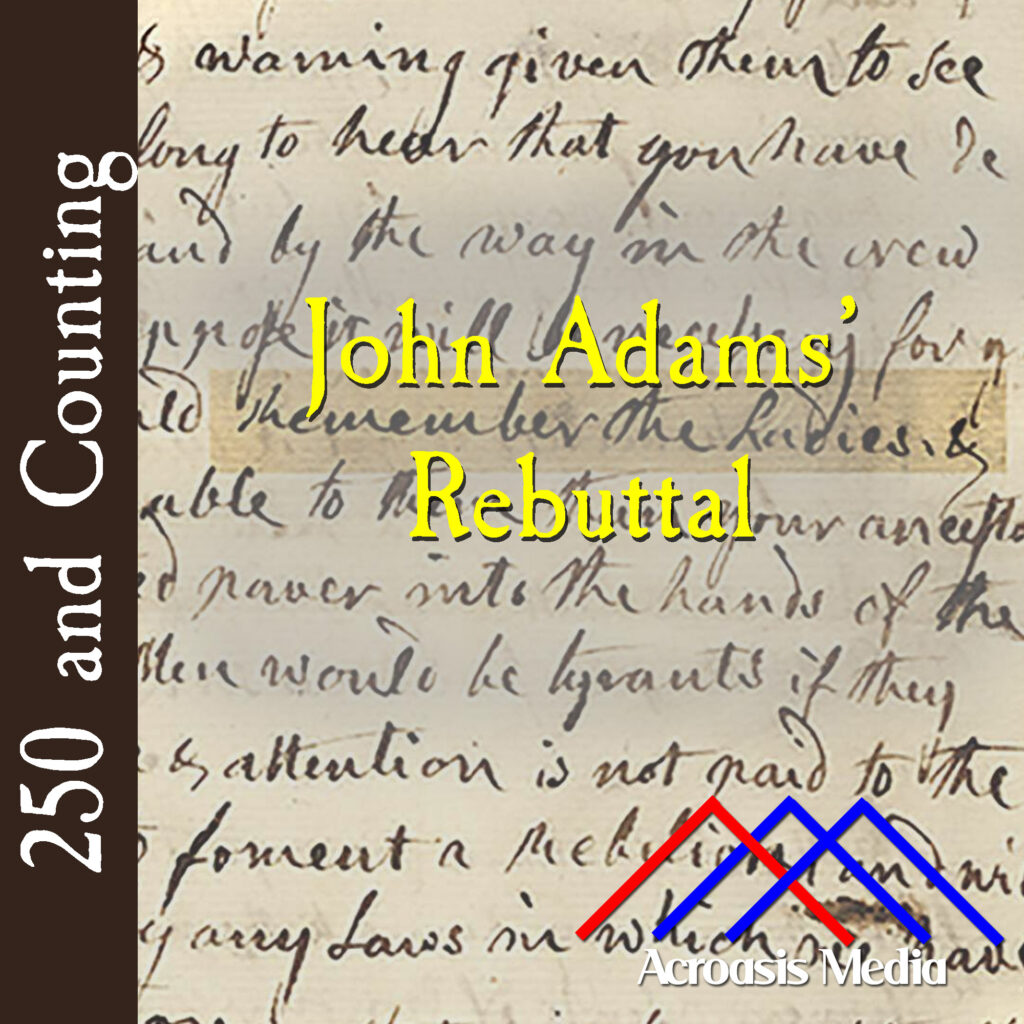
When Abigail Adams wrote her “remember the ladies” letter on March 31, she wasn’t just filling the page with anything that came into her head. Abigail Adams was quite intelligent and John treated her as an intellectual equal, seeking out her counsel on many matters. This in an era in which such things are rare. (And shame on us for giving it short shrift.)
This also means that John’s reply, which Mike talks about today, was in earnest, if it was a little naïve in retrospect.
Mike also mentions that he and I were at the Massachusetts Historical Society last week, which is true, and we hope to have some material to share with you over the next few weeks. In addition, we shot a bunch of video which will need some editing, after which we’ll give you our tour of Old Boston. Or maybe Mike’s tour; I don’t appear on camera at all. Try to live with that disappointment.
While there were a lot of smaller things going on on this day in 1776, there are typically multiple things going on for any given day. We often have to make choices regarding what we’re going to concentrate on, and don’t think we don’t feel a twinge of regret when we spot something else that happened on thus-and-such a date and had a moment of “Man, I wish we’d done that one.”
So today we were fortunate in that there were several smaller items going on, but we didn’t have to use up a lot of audio real estate to cover all of them. It’s nice to have the luxury of telling all the stories you’ve got for a day.
Incidentally: Mike and I are in Boston this week, absorbing history, interviewing people and shooting video for you to enjoy in a few weeks when we’ve finished editing it. It’s an extra dimension to the show that we hope you’ll enjoy.
One of John Adams’ stronger talents was being able to see the motivation behind the action, and because of this he was usually able to thwart unattractive actions somehow.
In today’s case, he was able to thwart people who opposed him by simply agreeing with them. As a newly-minted Chief Justice of Massachusetts, some Loyalist (if not Loyalist, then certainly in the Don’t Declare Independence crowd) delegates from Maryland suggested that because he worked for Massachusetts, he had an inherent conflict of interest and therefore couldn’t vote in Congress.
Now, at that time a colony’s quorum was exactly one delegate, so if he was the only person from Massachusetts attending that day, Massachusetts wouldn’t be able to cast a vote. So, Adams did the sensible thing and agreed with the Marylanders. Then he resigned from the position they thought he’d never give up.