Cover art for December 25, 1775: A portrait of Major General Howe, artist unknown. From the book A brief history of the North Carolina troops on the Continental establishment, by: Charles Lukens Davis & Henry Hobart Bellas, published 1896.
The Battle of Great Bridge may be over, but its effects linger on.
Lord Dunmore, the former Royal Governor of South Carolina, communicated to General Robert Howe that he’d like to effect a prisoner exchange.
It’s not clear whether Howe was playing hard-to-get, or playing dumb, or something else. He and Dunmore exchanged several letters over the next couple of days, and apparently didn’t end in a prisoner exchange. It did, however, end in violence. We’ll be talking about that as we get into the new year.
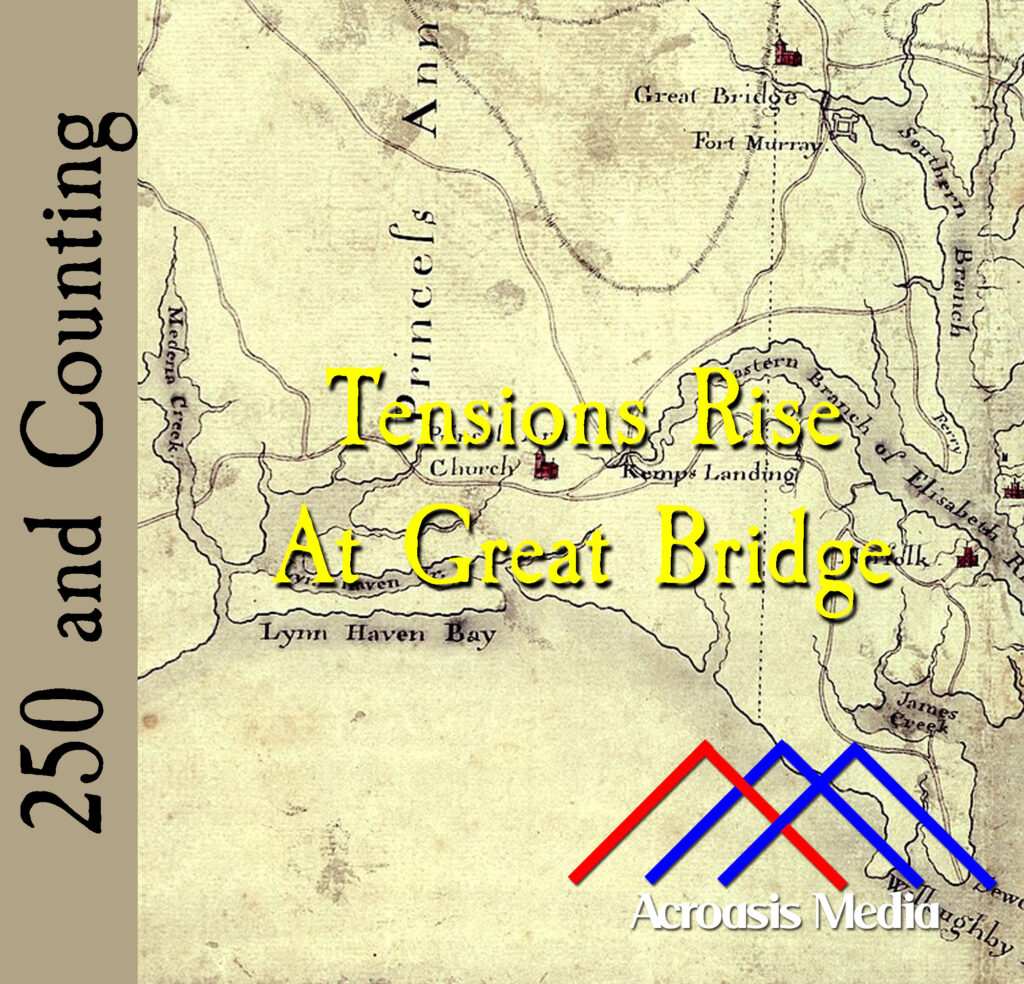
Note once again that the map is drawn with North on the bottom. Hover to get the guide to the markers.
The Battle of Great Bridge is a little bit overlooked these days, and more’s the pity. It was the first battle in Virginia, it was a big victory for Patriot troops, the Royal Governor and his crowd got pushed out altogether, and nobody died on the Patriot side.
On the British side, about 100 soldiers were dead. The last time the British lost a substantial number of troops, it was at Bunker Hill, which they won. (The vocabulary word you seek is “Pyrrhic Victory.”)
Best of all, it fueled Virginia’s moves toward independence.
The map in today’s cover art might be a little confusing to people who live and work in the modern-day Norfolk area. That’s because it’s oriented with North at the bottom. What’s not known is why this was done in this particular case. North/Up South/Down is, of course, the usual convention, and there are arguments that there’s a psychological component to this (e.g. north/up is somehow “better” than south/down).
From a cartography standpoint, there isn’t much difference between a map oriented one way and a map oriented any other way. In fact, most cartographers consider the matter trivial in nature.
The bodies are gathering at Great Bridge; in a couple of days the battle begins.
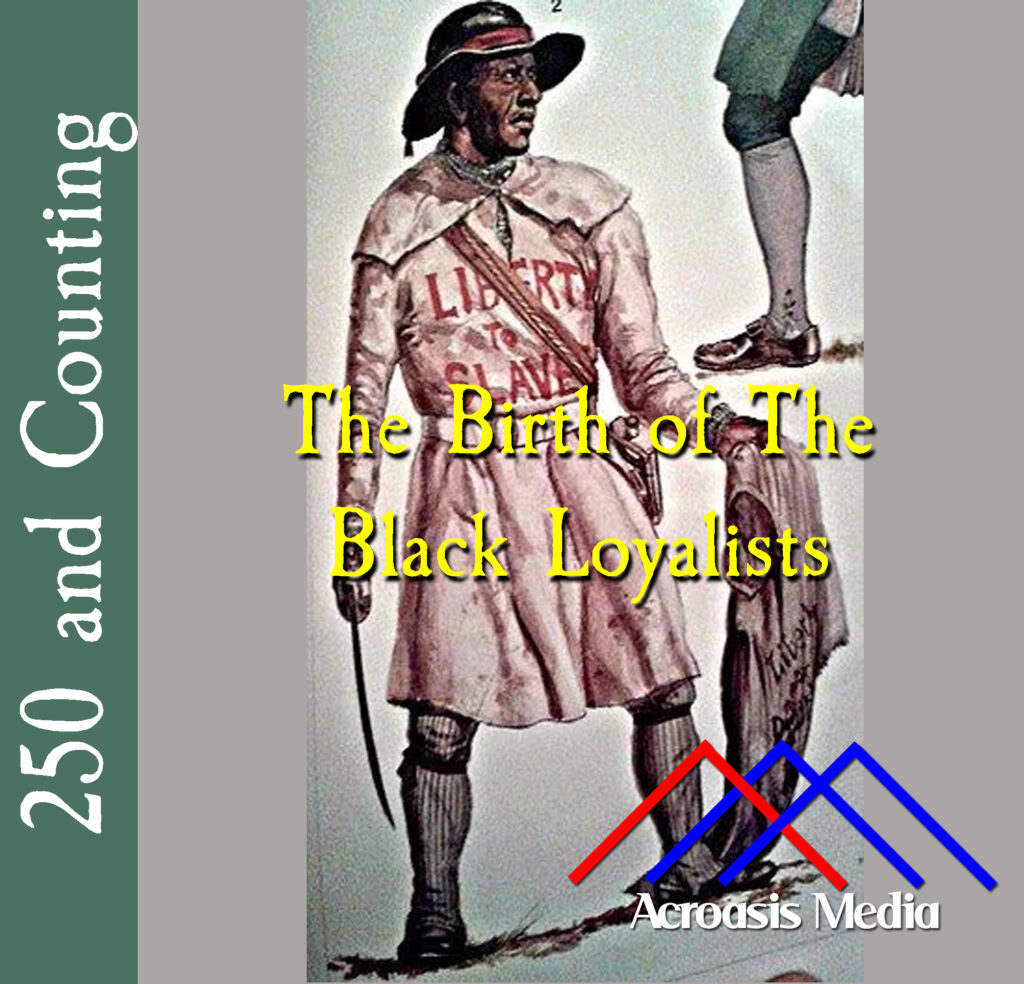
Back on November 14 we told you about the Royal Ethiopian Regiment, which was assembled following Lord Dunmore’s Proclamation. The proclamation offered freedom to slaves belonging to Patriot owners who chose to fight on the British side in the Revolution.
Dunmore was putting together another band of soldiers at the same time, called “The Queen’s Own Loyal Virginia Regiment,” which suggests that he knew something about George III that wasn’t common knowledge. (Heh, kidding.)
They both fought in the Battle of Kemp’s Landing, which went very well for the British, but Dunmore took the win as a sign that the Patriots were weak, so he went in to the Battle of Great Bridge, as we’ll see in just a few days.
Lord Dunmore issued his Proclamation just a week earlier, but the response was much stronger than anticipated, probably because—who knew!—people hate being slaves.
While the Proclamation only applied to the Virginia colony, because Dunmore had no authority conferred upon him anywhere else, a huge number of slaves and otherwise indentured servants from throughout the thirteen colonies fled to the British side of the lines.
(We have to say “throughout” because slavery was a thing in the north at this point; it just wasn’t nearly as common as in the south.)
This led to thousands of “American” blacks living ex-patriate lives throughout the British Empire after the Revolution.
Lord Dunmore was driven from the Governor’s Mansion back in June, but he never went far. That same day he took refuge on a British ship near Williamsburg and continued playing the role of Governor, even though the House of Burgesses was already doing quite nicely, thank you.
Slave revolts were a constant concern in the slave states, and Dunmore was almost certainly inspired by an incident just a couple of days earlier during the Battle of Kemps Landing. An enslaved man, serving alongside the British regulars, came face to face with his former enslaver, Joseph Hutchings, a local militia commander. Hutchings fired at him point blank and missed. In retaliation, the black soldier wounded him with a sword.
Dunmore and his British compatriots, who were clearly already aware of the power of a general revolt, saw this event as an opportunity.
In the aftermath of the Gunpowder Incident, Lord Dunmore decided that the better part of valor involved getting out of town before the locals could get a good lynch mob together, and he left Virginia on the HMS Fowey.
Here’s the interesting part: the Fowey which Dunmore boarded was not the first of its name; in fact it was the fifth. But the other interesting part is that it was the second one of that name to sink in American waters.
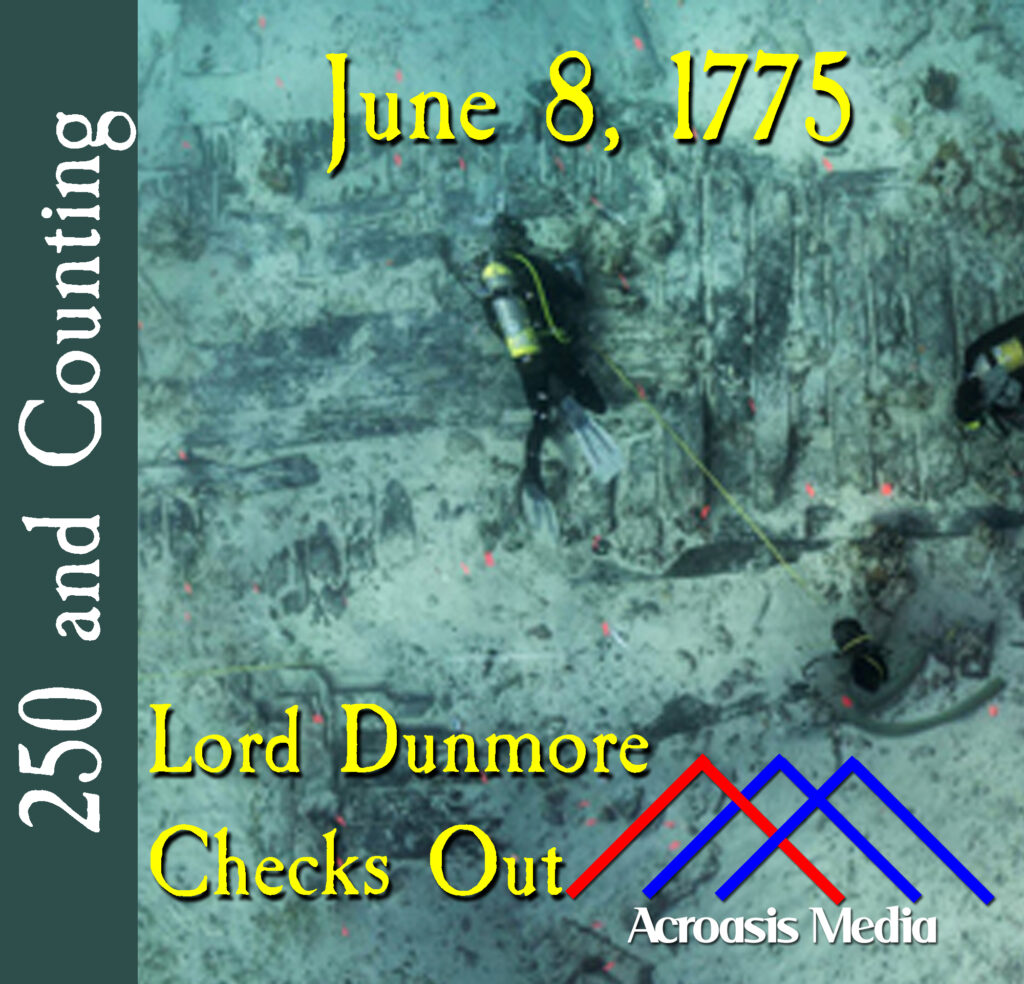
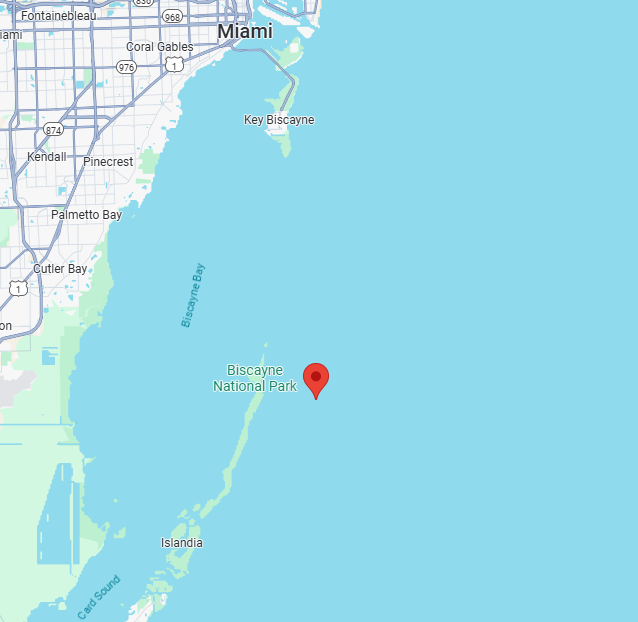
The fourth HMS Fowey was a fifth-rate vessel (remember, ratings refer to the number of guns, not the quality of the boat) with 44 guns on it. It was first launched in 1744. In June of 1748 the ship struck a coral reef and sank off the coast of Florida (see map). She wasn’t re-discovered until 1975 and, through an agreement with England, is considered a Protected Site by the National Park Service. The photo used for today’s art is of divers swimming over the exposed timbers of that ship. It’s definitely a “look but don’t touch” situation.
In 1749 another Fowey was built, a sixth-rate frigate with 24 guns. This is the one which Lord Dunmore used to skip town. The remains of this ship are probably in the York River, but it’s not known for sure.
Why is “Fowey” such a popular name for a ship? It’s not clear. In fact, it’s not clear whether the name comes from the Cornish town of Fowey, or the river Fowey which runs through it.
As we noted a few days ago, both Payton Randolph and George Washington managed to quell a couple of militia-based riots which would have resulted in the torching of the Royal Governor’s mansion. Both of those riots came from Fredericksburg.
What nobody counted on, however, was that militia from other parts of Virginia had the same idea to march on Williamsburg and wreak a little havoc. They were led by Patrick Henry, who (let’s face it) extorted payment for the missing gunpowder from Lord Dunmore, and then took off for Philadelphia to deliver the money.
Dunmore called him out on it, declaring Henry an outlaw, and the Virginia citizens acted accordingly. I’ve said too much here; listen in to see what they did.
One of the interesting things about many of the British officials who were around during the early days of the American Revolution is that most of them were actually pretty good at their job. It’s just that they were given rather thankless tasks to do which wound up backfiring on them.
And then there’s John Murray, the Fourth Earl of Dunmore. History has not been especially kind to Lord Dunmore, not should it be. He often acted rashly and without consulting some of the people he should have consulted, and in the end he wound up getting a lot of people very angry, instead of getting a few people a little annoyed.
Lord North, over in London, is often defined as the Prime Minister who lost the Colonies, but Dunmore clearly did his part to ensure that they stayed lost regardless of the outcome. And today in history, Lord Dunmore issued a proclamation against electing delegates to the Second Continental Congress, but the Second Virginia Convention, by now in its last day or so, ignored him and sent people anyway. (They’d already elected a couple, so Dunmore’s proclamation was a little bit of closing the barn after the horse had escaped.)
John Murray, the Fourth Earl of Dunmore, or more commonly Lord Dunmore, came to the Colonies in 1770 to become the Royal Governor of New York, but fate intervened and he wound up as the Royal Governor of Virginia instead.
He might have fared better in New York, but given the events of the Westminster Massacre you learned about yesterday, we’re not sure it would have made much difference. Dunmore wasn’t an especially good politician in general, and he didn’t hold the Colonists in an especially high esteem. And that’s the sort of thing that A) isn’t easily concealed, and B) doesn’t always go over well with your constituents. Not always.