
Tag: New Jersey History

  • Arrest of a Franklin–January 28, 1776

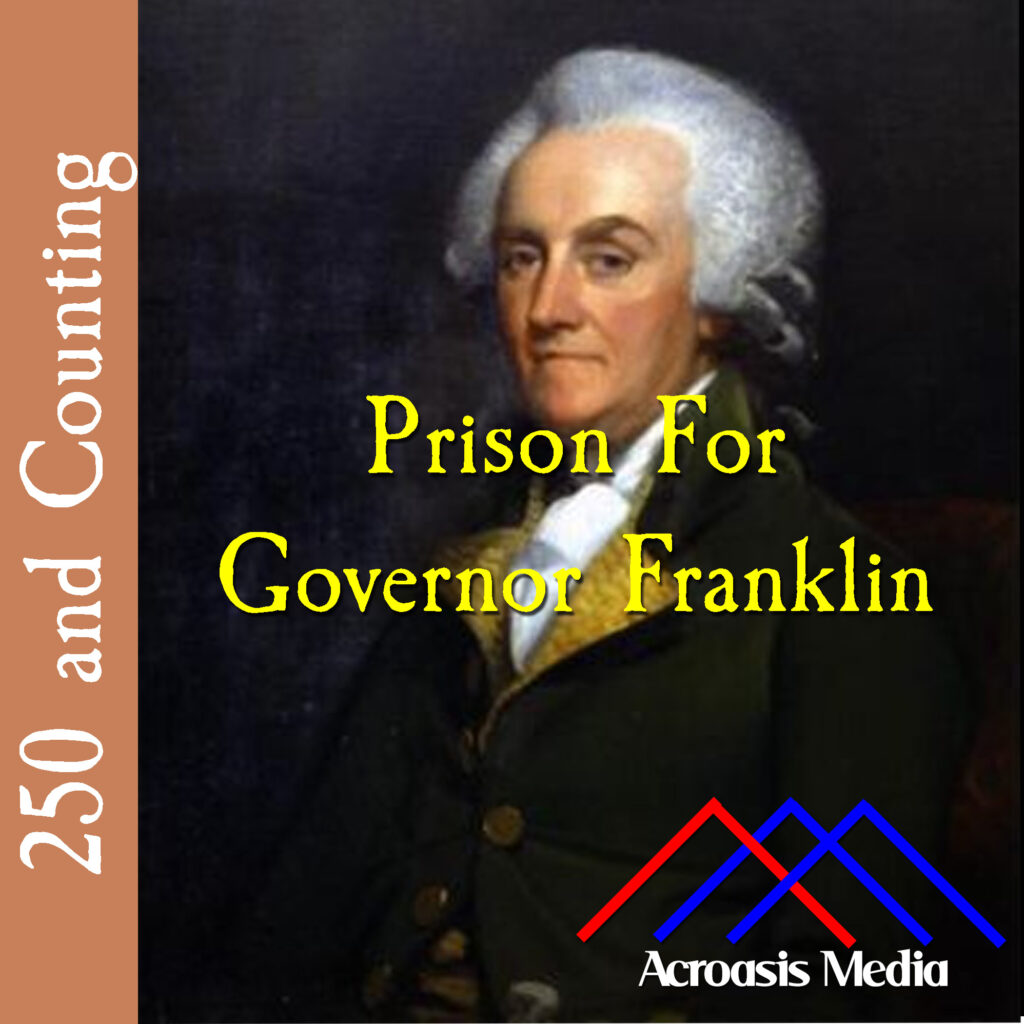
    Cover art for January 28, 1776: Portrait of William Franklin, 1790, attributed to Mather Brown. via Wikimedia.
    Portrait of William Franklin, 1790, attributed to Mather Brown. via Wikimedia.

    It used to be rumored that Benjamin Franklin had over 30 children out of wedlock, but that’s since been debunked. (And there goes a perfectly good “lightning rod” joke.)

    But William Franklin was considered illegitimate, though he was raised by his father and his common-law wife Deborah Read. There are some breadcrumbs here and there that lead some historians to believe that Deborah was, in fact, William’s mother, but nothing thick enough exists to confirm that.

    At any rate, William was one of the last great Loyalists, and while his arrest and move to Connecticut was alluded to in the play 1776, it didn’t quite happen the way it was described there. Or at the time the viewer was led to believe. Tune in to get the real story from Mike.

  • A Most Dreadful Voyage–January 23, 1776

    Cover art for January 23, 1776: "An English Ship at Sea Lying-To in a Gale," painted by Willem van de Velde the Younger, late 17th century.
    “An English Ship at Sea Lying-To in a Gale,” painted by Willem van de Velde the Younger, late 17th century.

    The HMS Blue Mountain Valley—which probably got its name from the place in eastern Jamaica—had rather a rough trip to America from London in late 1775 and early 1776.

    They left London in mid-October 1775 and ran into multiple storms before arriving somewhere near Boston nine or ten weeks later. Damage to the ship was such that it was judged unsafe to enter the Massachusetts Bay because safe navigation there couldn’t be guaranteed. They decided to head further south, arriving near Egg Harbor, NJ on January 18.

    Given that they were under orders not to approach the coast without an escorting warship (or reassurance from a warship that a given harbor was safe), they chose to take the Blue Mountain Valley a few miles north to Sandy Hook, where they could get a refit to navigate the ship safely. Bad luck for them; Patriot forces knew they were coming and laid a trap, capturing them easily. By that point, the sailors were hungry and thirsty, much of their cargo had died or gone rotten, and it’s entirely possible that the crew actually viewed capture as a kind of rescue. The ship was moved to Elizabethtown (now known as just Elizabeth, just south of modern-day Newark Airport) and the crew given parole in the town.

    PS: much of my research for this episode came from Eric Wiser’s Journal of the American Revolution article Blue Mountain Valley and the Rise of Lord Stirling,” which goes into much greater depth than I could provide either here or in the episode. It’s a pretty fascinating read.

  • Dr. James Carnahan–November 15, 1775

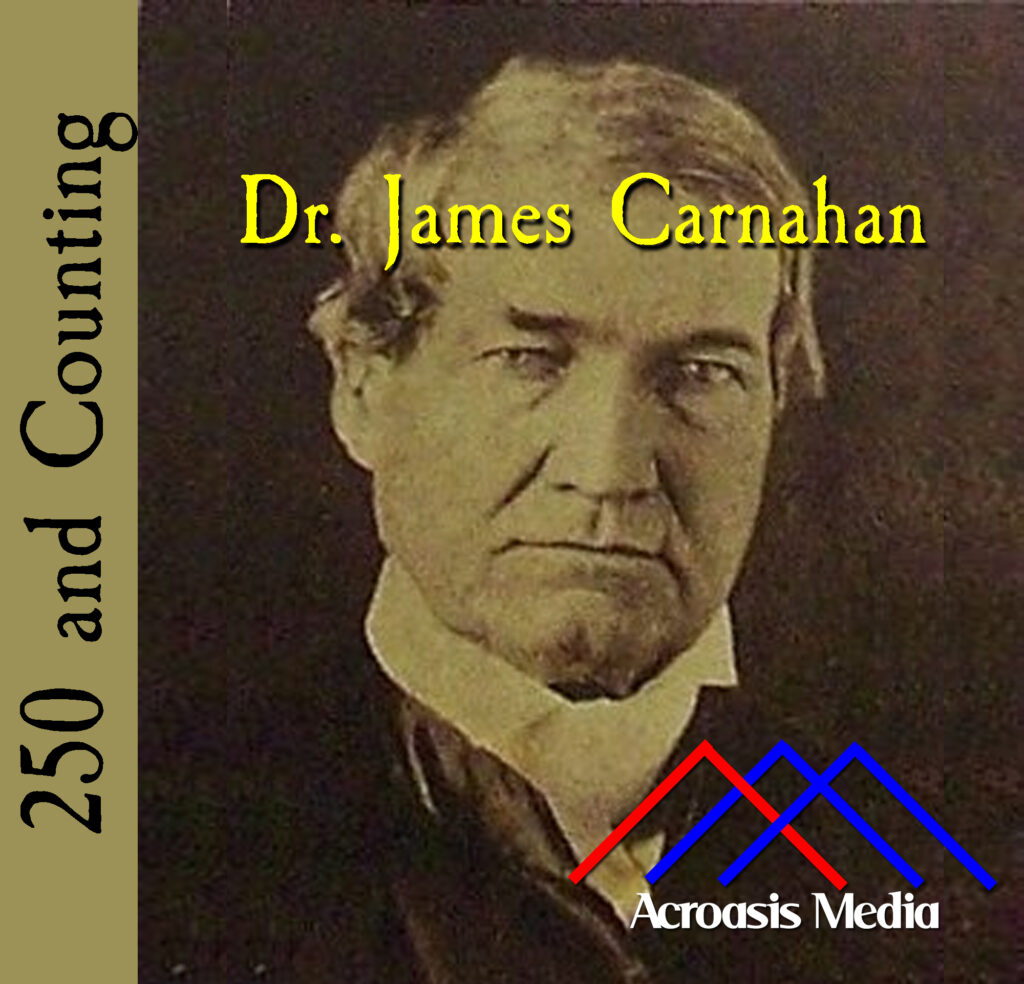
    Cover art for November 15, 1775: Undated photo of Rev. James Carnahan, via findagrave.com.

    As noted during the episode, James Carnahan was the president of what was later known as Princeton University, the ninth man to hold that title since the school’s founding nearly 90 years earlier.

    Carnahan held that position for over 30 years, making him the longest tenured president of that school to that date, a record that remains to this day.

    Carnahan was buried in the University President’s Plot at Princeton Cemetery. Curiously, he specified in his will that none of his lectures, manuscripts or other writings be published, even though he was held in high esteem as a writer. This may account for his relative obscurity despite his enormous tenure.

  • September 22, 1775: Philip Milledoler

    Cover art for September 22, 1775: Portrait of Philip Milledoler By James Peale - Private Collection, ca. 1830

    Philip Milledoler was a minister and the fifth president of Rutgers University (Rutgers College, then), but it’s a little more complicated than that.

    Milledoler took a moribund college and transformed it into the intellectual powerhouse it is today. But how it happened is at the heart of our story.

  • June 21, 1775: New Jersey Gets in the Game

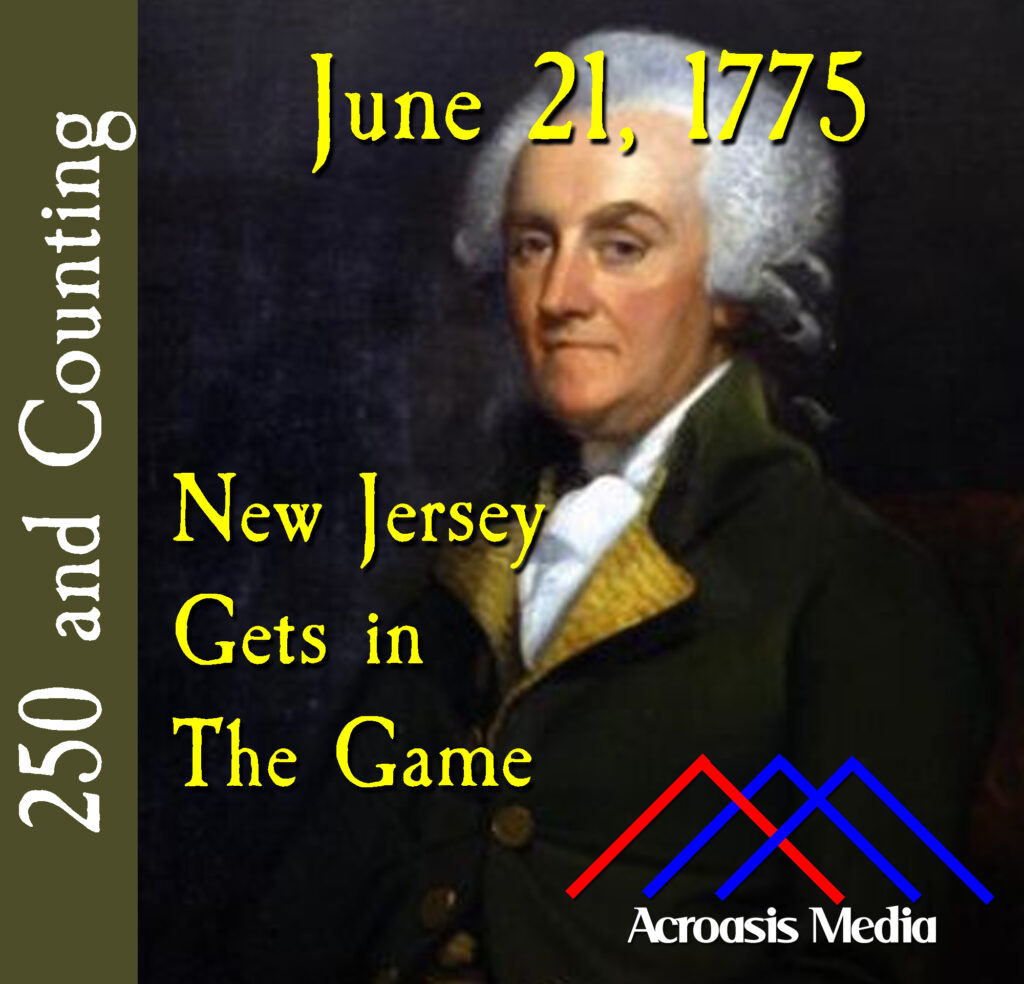
    Cover art for June 21, 1775: Portrait of William Franklin, attributed to Mather Brown, ca 1790

    New Jersey’s Provincial Congress first convened in May, but by now they’d gotten a bunch of stuff done. They’d already made arrangements to remove the Royal Governor from power, and resolved to do it like gentlemen (it didn’t work out that way, unfortunately).

    At this point the colony had only one delegate to the Continental Congress: a couple had resigned, one never showed up, and that left exactly one man holding down the fort. So the Provincial Congress appointed new delegates, with a specific mission.

  • May 23, 1775: New Jersey Gets Into the Act

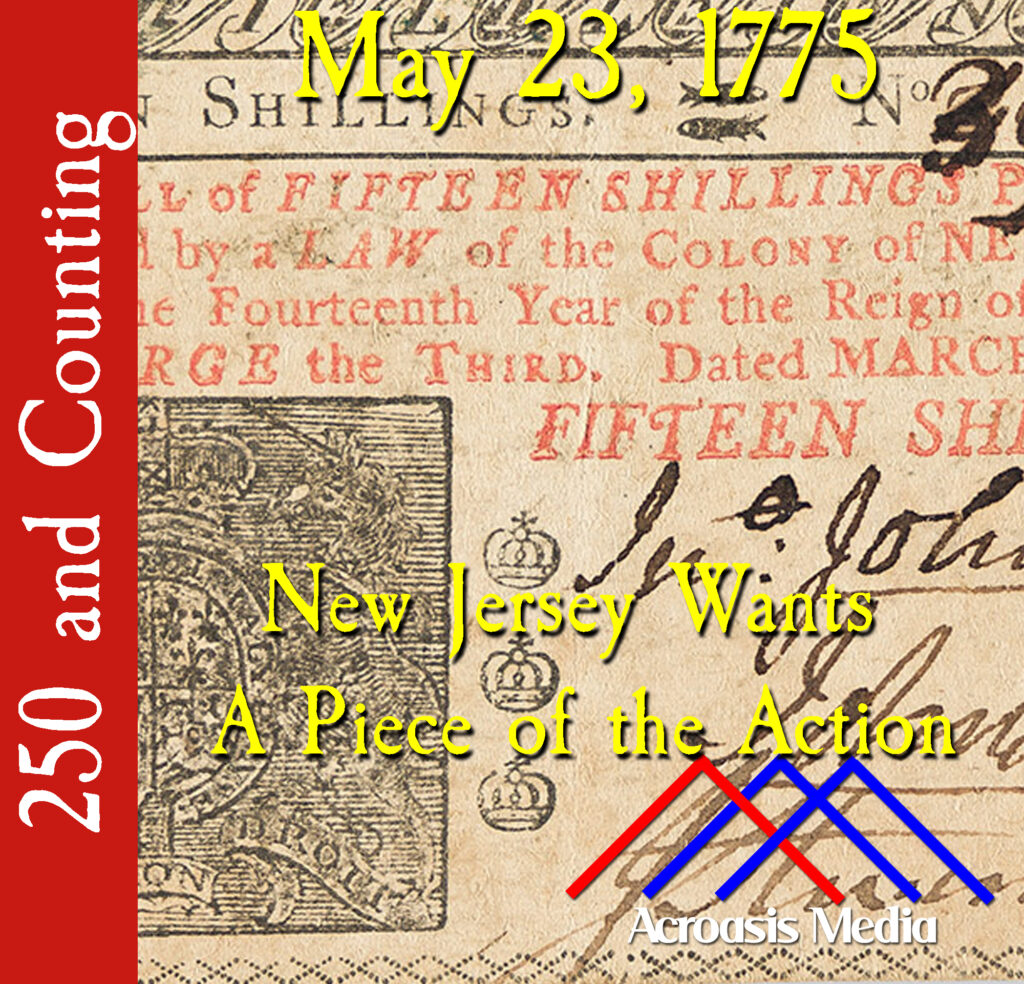
    Cover art for May 23, 1775: colonial banknote signed by John Hart.

    New Jersey has been pretty quiet since the Lexington and Concord fighting took place. But no more: today they came back…with a vengeance!

  • February 8, 1775

    Cover art for February 8, 1775: Portrait of Colonel John Cox in 1793 by Charles Willson Peale

    (Forgive us the jokey headline–sometimes it’s late at night when we post this stuff and we get punchy.)

    Over the course of a single year—and beginning with this day in 1775—John Cox experienced what any reasonable person would call a “meteoric rise” in his personal and professional fortunes. He started out adjudicating British laws in the Colonies, but moved quickly into assisting with the Colonial resistance effort and subsequently to assisting with the actual war. He did this both materially (as a Quartermaster) and passively (allowing his land to be used by Patriot troops).

    He died in 1793, at the age of 60, and even this week he’s probably still more productive than most of us.