Tag: Thomas Paine

  • Common Sense Comes to NC–February 10, 1776

    Cover art for February 10, 1776: Portrait of John Penn, ca. 1776. Artist unknown. Now at the Guilford Courthouse National Military Park. via Wikimedia.

    As the ideas behind Common Sense spread through the country, it’s an interesting coincidence that Common Sense came to both North and South Carolina a day apart. What’s curious is the way it caught on very quickly in South Carolina, but was more of a slow burn in North Carolina.

    It’s possible that the difference is as simple as Christopher Gadsden presenting the pamphlet orally before the Provincial Congress, whereas John Penn took more of a backdoor approach, giving a copy to a colleague and hoping word gets out. Sure enough it did, and while there was no hard line of “Wow! We need to act on this!,” it proved to be quite the influential pamphlet that led to a gradual changing of minds regarding whether or not the Colonies should be free from England.

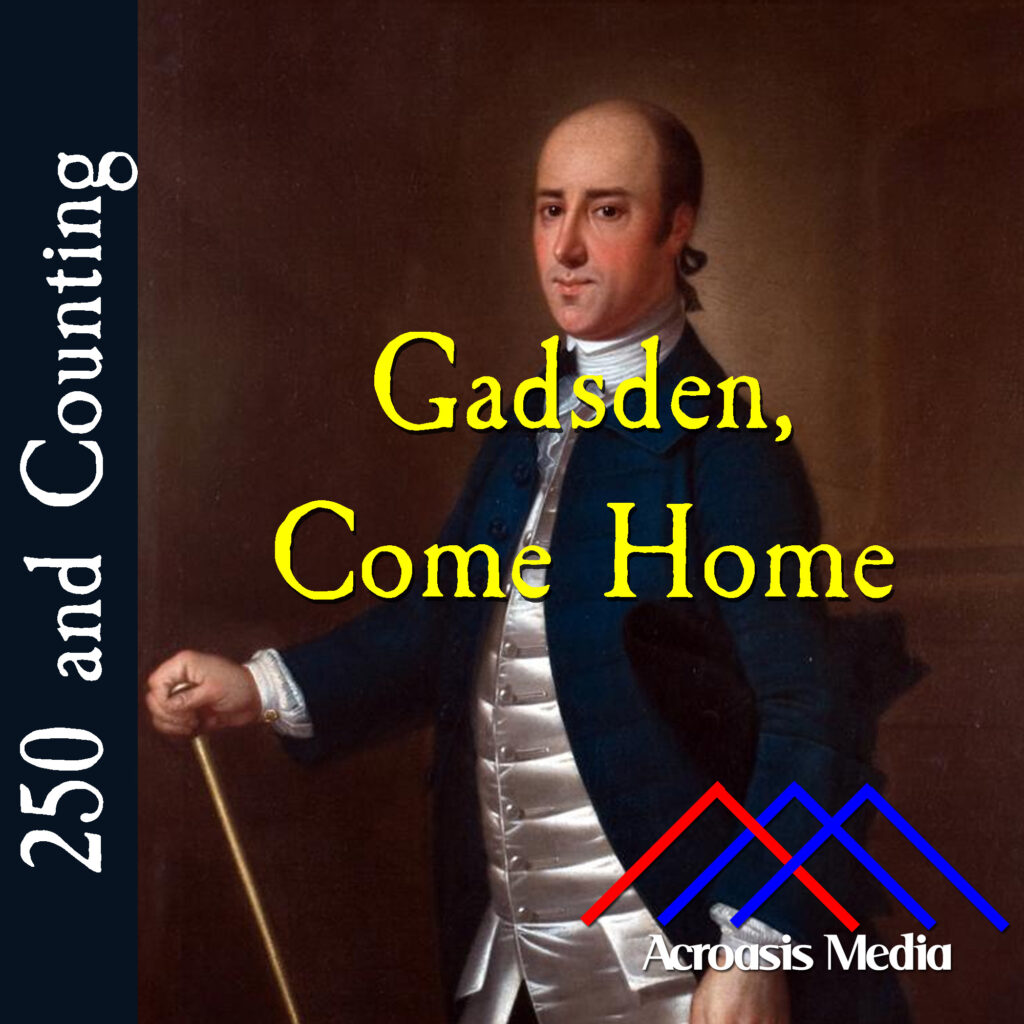
  • Gadsden, Come Home–February 8, 1776

    Cover art for February 8, 1776: portrait of Christopher Gadsden, ca. 1760-1770 by Jeremiah Theus. via Wikimedia.

    Christopher Gadsden is famous almost entirely for the “Don’t Tread On Me” flag. But even for that, most people don’t know that the flag was named after a person. And those who do, don’t necessarily know Gadsden’s first name.

    And yet, he was instrumental in getting America to break away from England.

    Christopher Gadsden was the one who got South Carolina more excited about Independence. He was a Brigadier General in that colony during the war. He helped draft a state constitution and was then elected Lieutenant Governor. When Charleston was overrun by the British, Gadsden stuck around so he could surrender the city like a gentleman.

    For his gentlemanly act, he was allowed to return home on parole. But when the next British leader came in and broke the parole by arresting him, he refused new parole because they’d already lied to him about the first one, so why believe them now? That cost him the better part of a year in solitary confinement.

    In short, he was a badass. Go listen to part of the reason why.

  • It’s Just…You Know…–January 10, 1776

    Cover art for January 10, 1776: the original cover of Common Sense. via Wikimedia Commons.
    The original cover of Common Sense. via Wikimedia Commons.

    Okay, so here’s the thing about Common Sense:

    It’s not as though Thomas Paine came up with prose so extraordinarily clear that everyone suddenly smacked their foreheads and said, “My God! Independence! Of COURSE!”

    In fact, many people thought Common Sense was crazy, and others considered it an incitement to the all-out war that everyone was trying to avoid. There were complaints that what Paine had written was dangerous, even violent.

    But the pamphlet was heavily advertised, and Paine was involved in a very ugly, very public feud with his publisher Robert Bell. Those two things, combined with the accusations of scandalousness, meant that sales were going through the roof. And people weren’t just buying it, they were reading it.

    And as time went on, the argument made by Paine became more and more palatable. And by the time July came around, Paine’s ideas largely stood up to reason.

    P.S. One time years ago, when I lived in New York, I came home from work in a powerful rainstorm. When I entered the house, rather than track my wet feet throughout the house, I opened up my newspaper and dropped it on the floor, and I stepped lightly a few times on it. When my wife asked what I was doing, I told her, “These are the Times that dry men’s soles.”
    I’ll let myself out, now.

  • March 8, 1775

    Cover art for March 8, 1775: the front page of the March 8, 1775 Pennsylvania Journal.

    It was on this day that an essay appeared in the Pennsylvania Journal advocating for the abolition of slavery. The content wasn’t a huge surprise for Pennsylvania, but the interesting thing is: the essay is known for being written under a pen name, and for a long time, people were pretty sure they knew who that person was.

    They’re still not 100% positive.