Fun Fact: I say “Cephas Thompson” several times during this podcast, mostly because it’s fun to say.
He wasn’t a formally-trained painter, but he had a good eye and some natural talent, and during his career he painted over 600 portraits, with roughly a fourth of those made entirely in Bristol, Rhode Island.
Even after retiring from the itinerant artist life, he continued to work in Middleborough, Massachusetts until his death.
With the army being literally only a few weeks old, it was necessary to put together some regulations for this group, to ensure consistency throughout the Colonies.
Interestingly enough, as the rules were revised over the next several years, a pattern of using another army’s regulations as a template began to emerge. This isn’t necessarily a bad thing: take what works and build on it, yes?
A quick note about the cover art: it’s a recruitment poster from about that time, because a true Army Manual did not emerge until the third version was published in 1779.
Thomas Boyle wasn’t born in Baltimore, Maryland, but when he was a young man he made it his home and became quite successful there, as a merchant marine and an overall businessman.
And, of course, given Baltimore’s penchant for naming streets after historic people and events, there is a Boyle Street. It’s not very long; in fact you see the entire road in the photo below.
In this picture the viewer is standing on Fort Avenue looking down toward Key Highway. The green structure in the background is the Baltimore Museum of Industry, and the Inner Harbor is just beyond that. Based on my research, Boyle didn’t live near this location; he’d settled in a part of town called Fell’s Point, which is on the other side of the harbor and about a mile to the east. If a person standing where the camera was for this photo turned to the right, they could probably see the entrance to Fort McHenry.
It feels like we’re selling the day a little short, but not every day has to be Bunker Hill. Also, we’re discovering (and we hope you are, too) that sometimes it’s the smaller moments between the bigger ones that give us better insight into the hearts and minds of the people who lived during that time.
Today’s artwork is a portrait of Jonathan Trumbull (brother of John Trumbull, the guy who painted so many of the Founding Fathers), but this painting—which was created in 1880, long after he died—appears to show him as he was around the time of the Revolution. Compare that to the image we used for him back in April (right), which showed him in his later years as Governor of Connecticut.
“Schuyler” is one of those names in New York history that pops up quite frequently, partly because they were a prominent family. But it’s also one of those names that you may suddenly realize you’ve heard many times. “Schermerhorn” is another one (no kidding).
So is “Burr,” for that matter, as in Aaron and family. Several Burrs are buried very close to the Long Island town where I grew up. I have childhood memories of passing a cemetery in Smithtown and seeing BURR on a few of the tombstones. It wasn’t until later that I learned it was the same family.
As far as the Schuylers, they were originally from the Albany area but after his father died he was raised in the New Rochelle area. Most of his military experience derived from fighting on the side of the British in the French and Indian War. Later in his life he lived on his estate in Saratoga, just north of Albany. He spent some time as a member of Congress and is also known for being Alexander Hamilton’s father-in-law.
In 1775, New York didn’t have a Times Square, nor a Statue of Liberty, nor even a Brooklyn Bridge. Bagels hadn’t made it to the new world, and pizza wasn’t a thing yet.
So why did George Washington feel it necessary to stop in New York City on his way to Boston?
Short answer: he knew that some of the locals were nervous about his taking command of the army.
Longer answer: oh no, you don’t. You’re going to have to listen to Mike tell you.
There are lots of times when historians have to pull a lot of small pieces together to get a decent picture of events. They use oddball clues such as artifacts in paintings to determine someone’s state of health, for instance. They have to take into account that published reports could be propaganda in nature.
But once in a while, something turns up that was written more or less at the time it happened, and what’s more it was written by someone who doesn’t necessarily have an agenda.
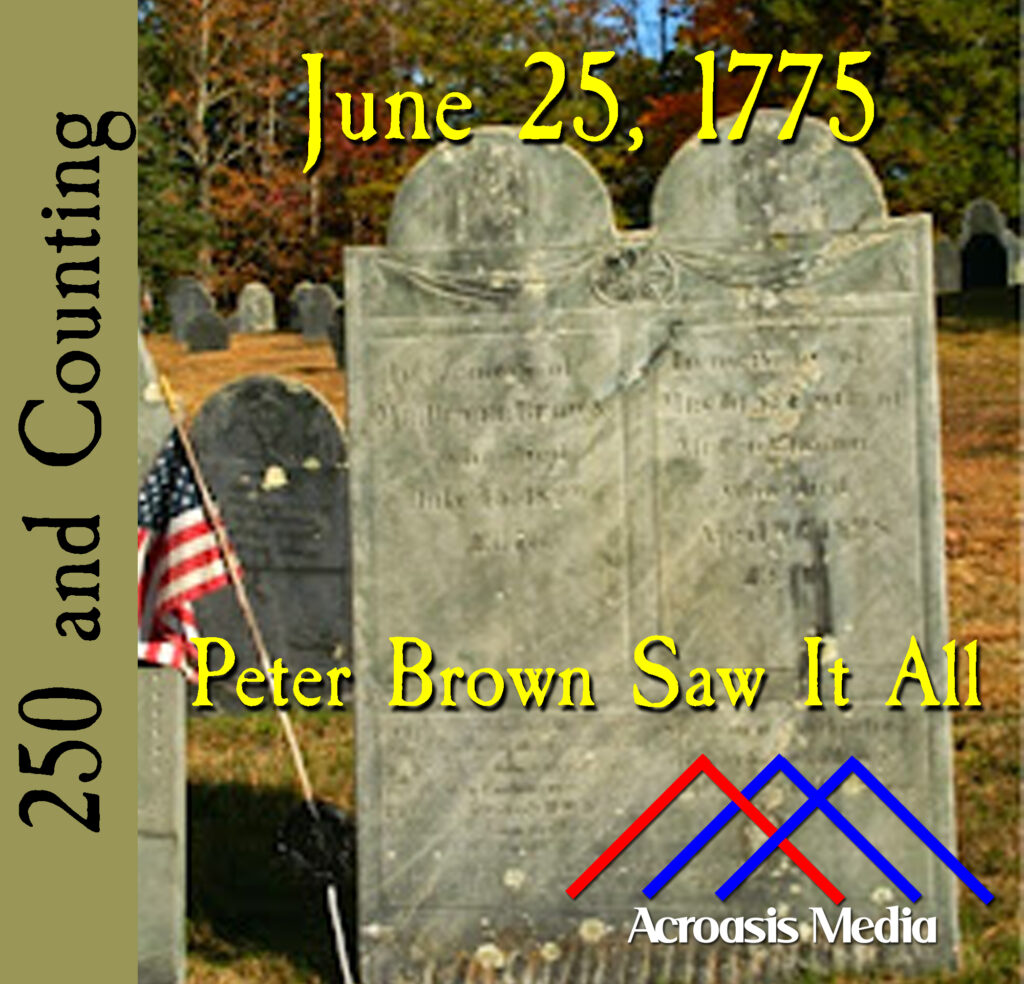
And in this case, nobody even knew it existed until a hundred years later. Exactly a hundred years later, in fact. A young soldier named Peter Brown wrote a letter to his mother just a few days after the Bunker Hill battle to tell her what happened. He spared few details and told a rather complete story of a couple of days’ worth of activity. And while he did mail the letter, and his mother did receive it, it mostly lay in family archives until 1875, when a descendant found it and realized that it might be important.
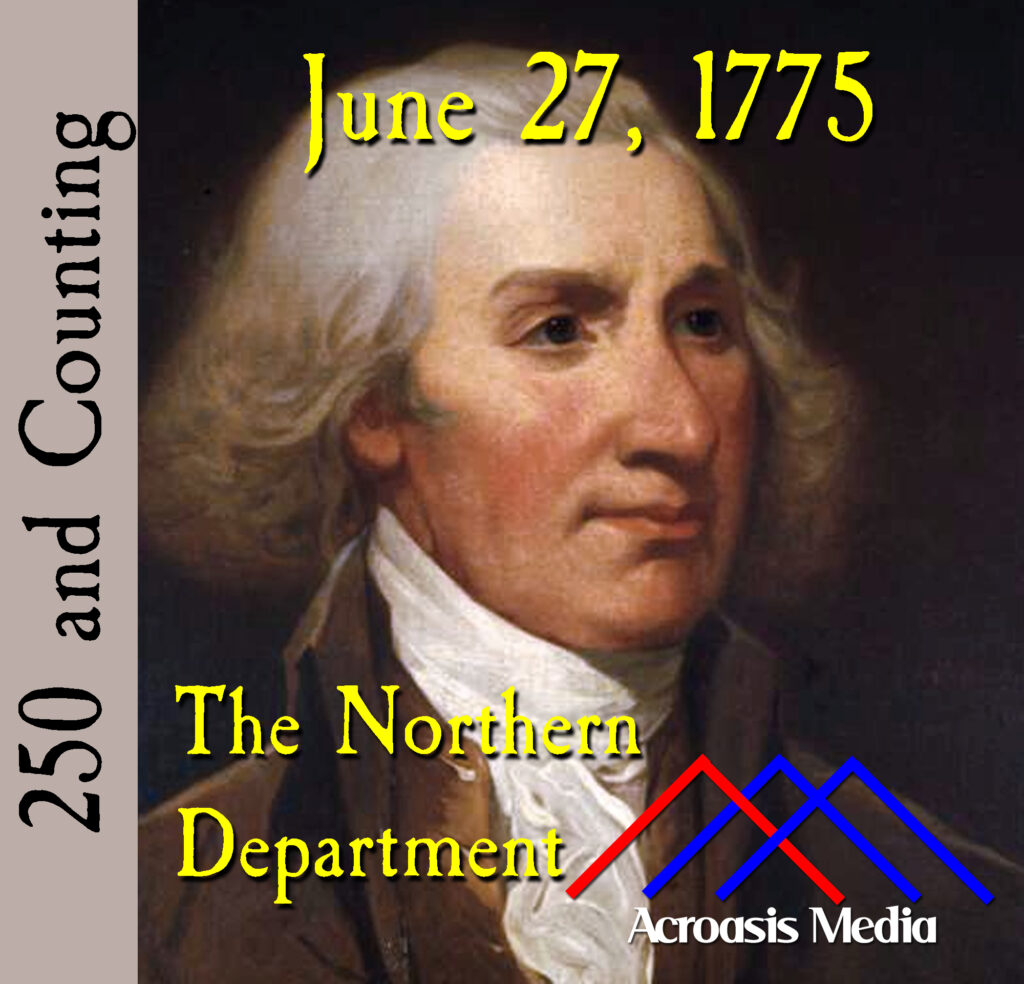
With the war in full swing and a Commander-in-Chief on his way to Boston, the Continental Congress took the next step of finding a way to organize the troops.
So naturally they formed a committee. The Committee of Seven (maybe all the good names were taken?) worked diligently for about three weeks to put together a plan that would indicate just who could fight and how they would be organized. There were still some details to iron out, but in the meantime the disaggregated militias were getting the job done. All that remained was to aggregate them into a single fighting force.
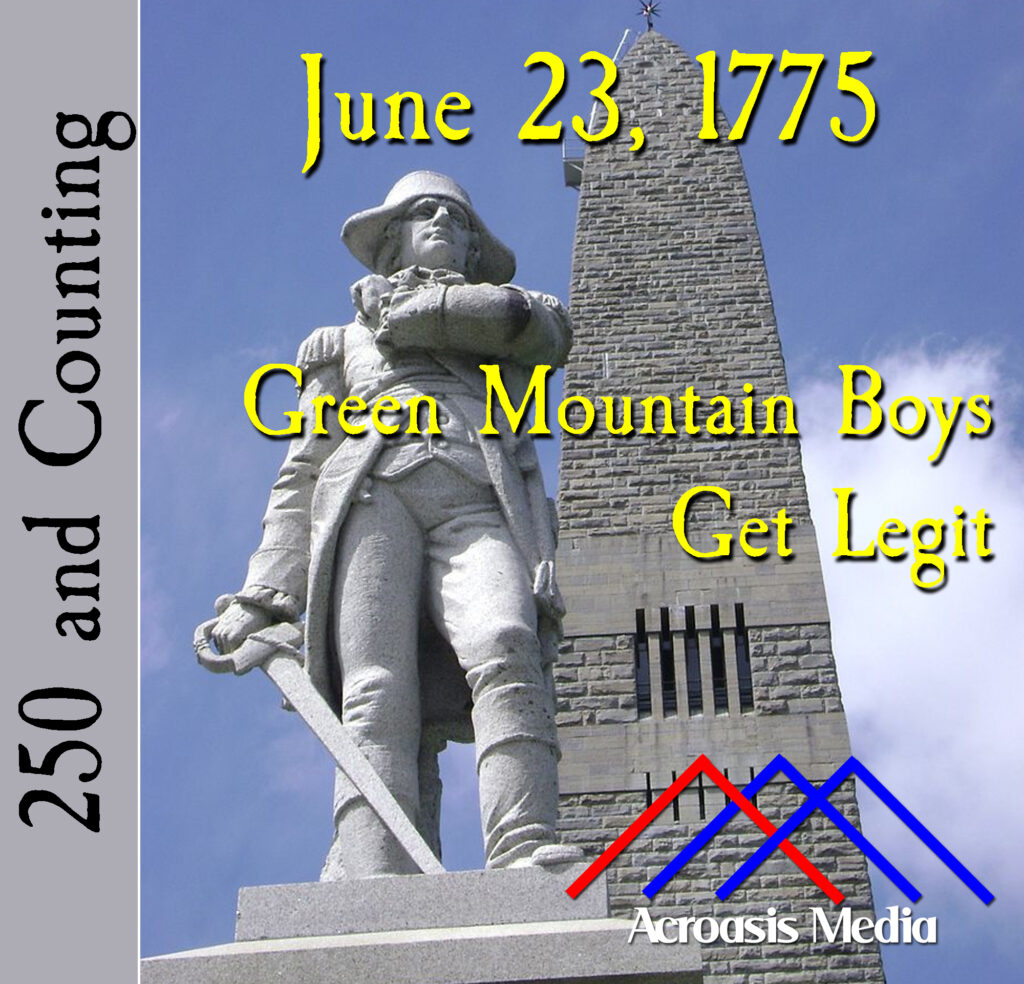
While the Green Mountain Boys were very successful so far in their military exploits, they were still just some unaffiliated militia group. At best they were considered Patriot-sympathetic, but not much else.
After the capture of Fort Ticonderoga and Fort Crown Point, two of their leaders decided that it was time to get official recognition. So they headed down to Philadelphia to bring their case to the Continental Congress.