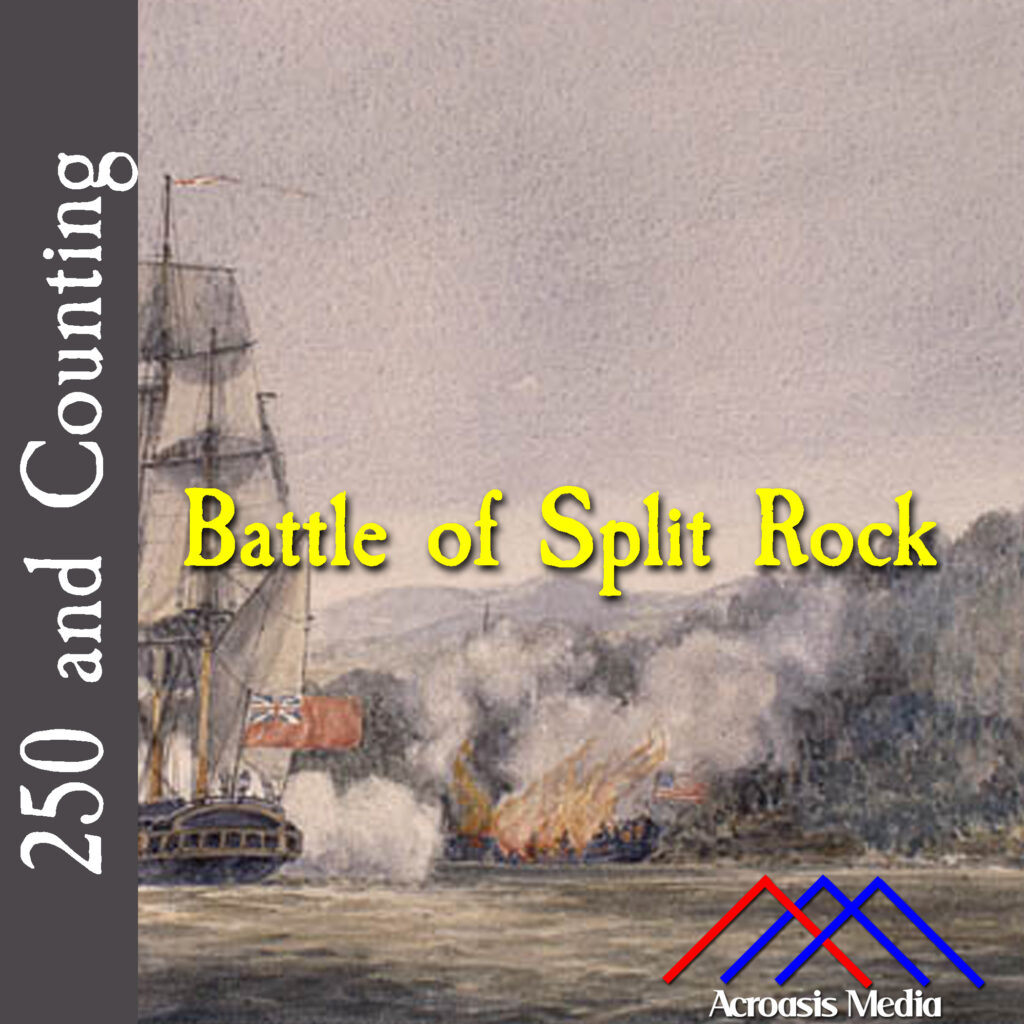
The Battle of Split Rock is really just a continuation of the Battle of Valcour, and a lot of it takes place in a location called Button Mould Bay (or Buttonmold Bay).
So why is it called the Battle of Split Rock?
That’s a fine question. On the western shore of Lake Champlain, just north of Button Mould Bay, is a formation called Split Rock Mountain. It rises sharply from the lake to an altitude of just over 1000 feet, and it’s where the confrontation between the British and the Americans resumed.
Button Mould Bay is an area of shallower water on the opposite side. It gets its name from a series of clay masses which have hardened almost to the point of concrete, into a shape much like an oversize button, or like the molds used in button making. Those concretions actually made it easier for Benedict Arnold to run his ship, and the galleys accompanying him, aground and set ablaze. This was the ship that had all of Arnold’s papers on it that I told you about the other day.
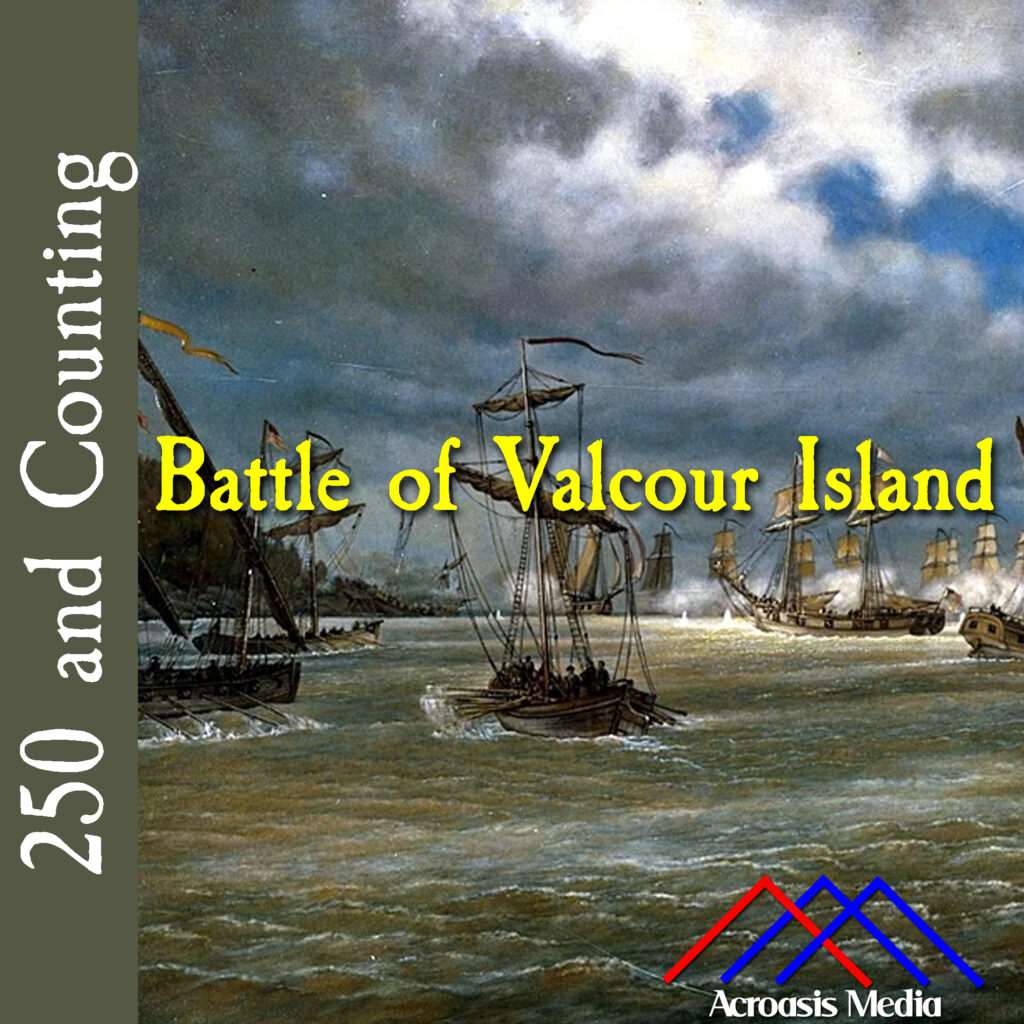
The Battle of Valcour Island didn’t really take place on the island; rather it was in Valcour Bay, a strait between New York and Valcour Island, in Lake Champlain.
After the failed invasion of Quebec the Continental forces retreated south to Fort Ticonderoga, at the south end of Lake Champlain. As they retreated they destroyed materiel they couldn’t use and left it behind in the relatively shallow, relatively narrow lake. This made navigating the lake tough for the British, so they took their time to get more reliable ships to assist with their next move.
That turned out to be a mistake.
As both sides prepared for the next conflict, the Americans scouted the lake and determined that they could effectively steer the British ships into Valcour Bay, where they would have ships waiting to fight them off. In addition, the wind was blowing the “wrong” way for British navigation, making things even tougher. Some British ships actually ran aground near the island but the battle itself was pretty brutal, with ships on both sides being badly hit. One British vessel’s powder magazine was struck and the entire ship exploded.
In the long run, however, darkness began to fall and both sides backed off. The Americans retreated, and the British basically stopped their attack largely because they were getting low on ammunition.
Benedict Arnold realized that Crown Point was no longer a viable defense point, so he destroyed and abandoned the fort, moving the forces to Ticonderoga. The next day, the British took Crown Point and remained there for about two weeks. Unfortunately, cold weather was already settling in and the decision was made to winter back up in Canada.
Remember when I said that taking their time was a mistake? Had they acted more quickly, they’d have beaten the weather AND caught the Americans by surprise. General Carleton and other officers recognized this in hindsight. Hessian commander Baron Riedesel noted, “If we could have begun our expedition four weeks earlier, I am satisfied that everything could have ended this year.”
And in a weird way, this battle was the catalyst for Benedict Arnold turning against the Americans. He’d lost a lot of personal papers during the battle, and when he requested compensation for some of his expenses in and following Quebec, he couldn’t provide documentation. He’d already been secretly negotiating with the British to change alliances (this would have been in late 1779), but that incident pushed him into resigning his command in order to be transferred to West Point, which he’d planned to surrender to the British.
Fortunately his plot was discovered and he fled to New York City, which was still occupied by the British. Eventually he got passage for himself and his family to England. He never set foot in the United States again.
That Admiral Richard Howe maintained some sympathies for the Colonists in the earlier years of his career might be overselling it a little bit.
Howe did have some sympathies, but when he and his brother, General William Howe, met with the Committee of Safety headed by Benjamin Franklin, the idea was to quash the idea of revolution and effect a return to status quo. When that failed, Admiral Howe was the first to hoist the Jolly Roger.
Okay, he didn’t do that exactly, but he was fully prepared to do whatever he needed to do to end the situation. And that’s probably why he moved up in the ranks so quickly between 1770 and 1776. He’d already shown his competence in the Seven Years’ War, and now he was proving himself again.
Howe’s plan to blockade ships entering major harbors might have worked in the long run, but those plans were interrupted when John Burgoyne’s troops were captured, forcing Richard Howe to winter in Rhode Island.
In recent years there have been suggestions that Howe’s blockades were less successful in the northern colonies because he was allowing ships to get through, accidentally on purpose as they say. Is it possible that he was letting those sympathies get the better of him? It’s actually tough to say for sure.
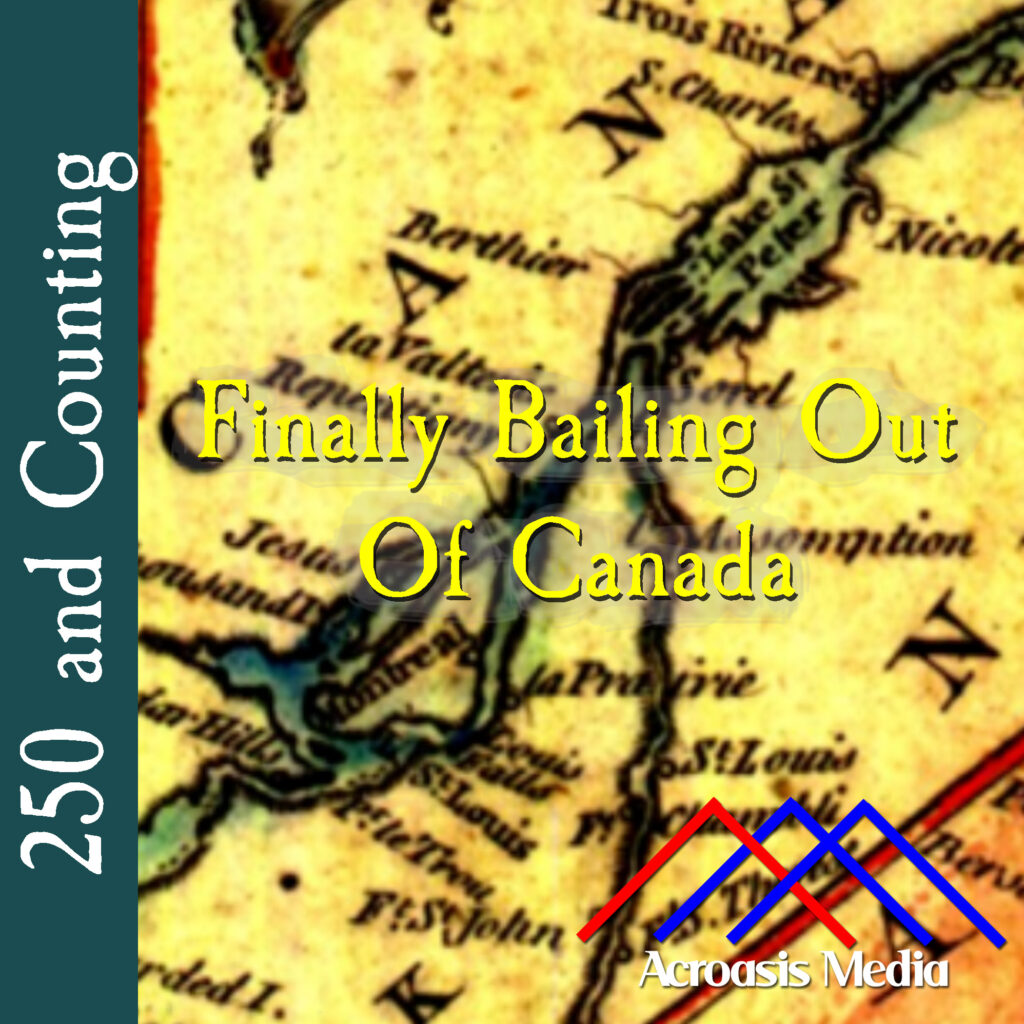
As a nation, we should be able to face our failures as squarely as we crow our triumphs, and make no mistake: the invasion of, and withdrawal from Canada was a botched effort from one end to the other.
Perhaps the only thing that kept it from being a bigger deal was the distraction a few weeks later of the Colonies delcaring themselves to be states independent from Great Britain.
We barely had an army that had any idea of how to provision its forces, yet we sent a bunch of them to the north anyway, far from home and no easy way to get there or back. We started this invasion in a blizzard! And, perhaps even worse, our withdrawal from Canada suddenly left us open to a potential invasion from the north by British troops.
I realize that I have the benefit of 250 years of hindsight on this, but this really does feel like one of those things where people said “We have to see this through to the end, which will be glorious,” and then nearly six months later, when it all falls apart, the same people say, “Wow, it was so obvious.”
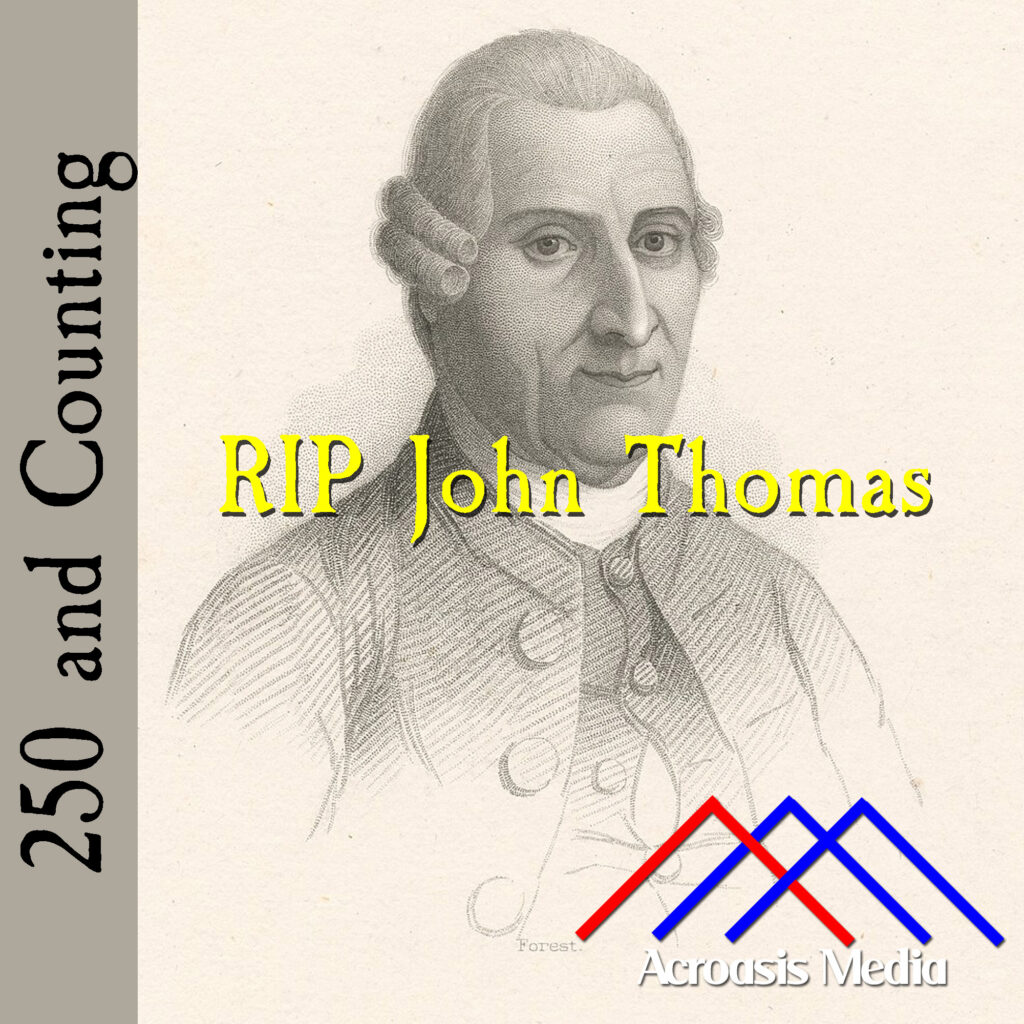
John Thomas was a doctor and a soldier from Massachusetts who was in Quebec during the attempted invasion and was in charge of the withdrawal until he got smallpox and died on this day in 1776.
Thomas discovered he liked military service about as much as he liked being a surgeon, so in 1747 he became a lieutenant in the British army. A few years later he served as a surgeon for a different regiment.
In the early days of the Revolution, Thomas nearly quit the Continental Army because he wasn’t named as a major general. At the time, Congress was trying to avoid having all its generals come from the same place, and Artemis Ward got the nod instead. It was only because both George Washington and Charles Lee both talked him into staying that he remained in the army and returned to service. Shortly thereafter he was assured that he would get top priority for advancement.
It was that which led directly to his being assigned to command in Canada when Richard Montgomery was killed. Unfortunately for him, what he found when he arrived in Quebec was a mess: the army was far outnumbered (plus the city had walls), about a third of the Continental soldiers were due—or overdue—for discharge, and smallpox was making its way through the camp.
Also unfortunately, as the smallpox moved through the camp, it made a stop at Roberts’ tent, and he died just a few weeks after arriving in Canada.
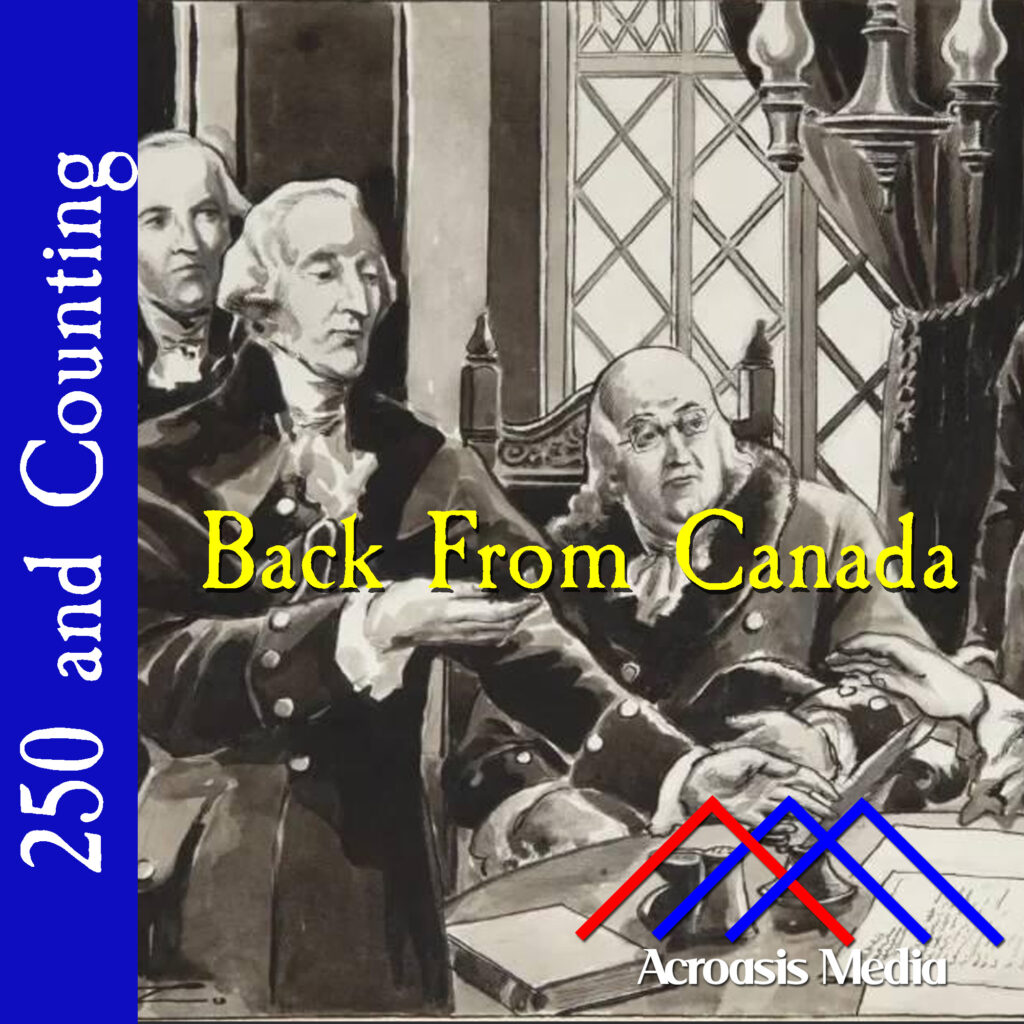
Ben Franklin in Canada isn’t completely unreasonable, even though he was already the oldest delegate to the Continental Congress at 70. He was America’s first diplomat and a very skilled one at that, with oodles of charm.
But Franklin in Canada was also a bad idea, because his health was bad and it’s not like he could just shoot up the New York Thruway to get there. He had to head up the Hudson River through Albany and Saratoga, and then across Lake Champlain. And he had to do it in wartime, in hostile territory.
For all that, however, Franklin’s failure in Canada eventually led to the Battle of Saratoga and in turn got the French on our side.
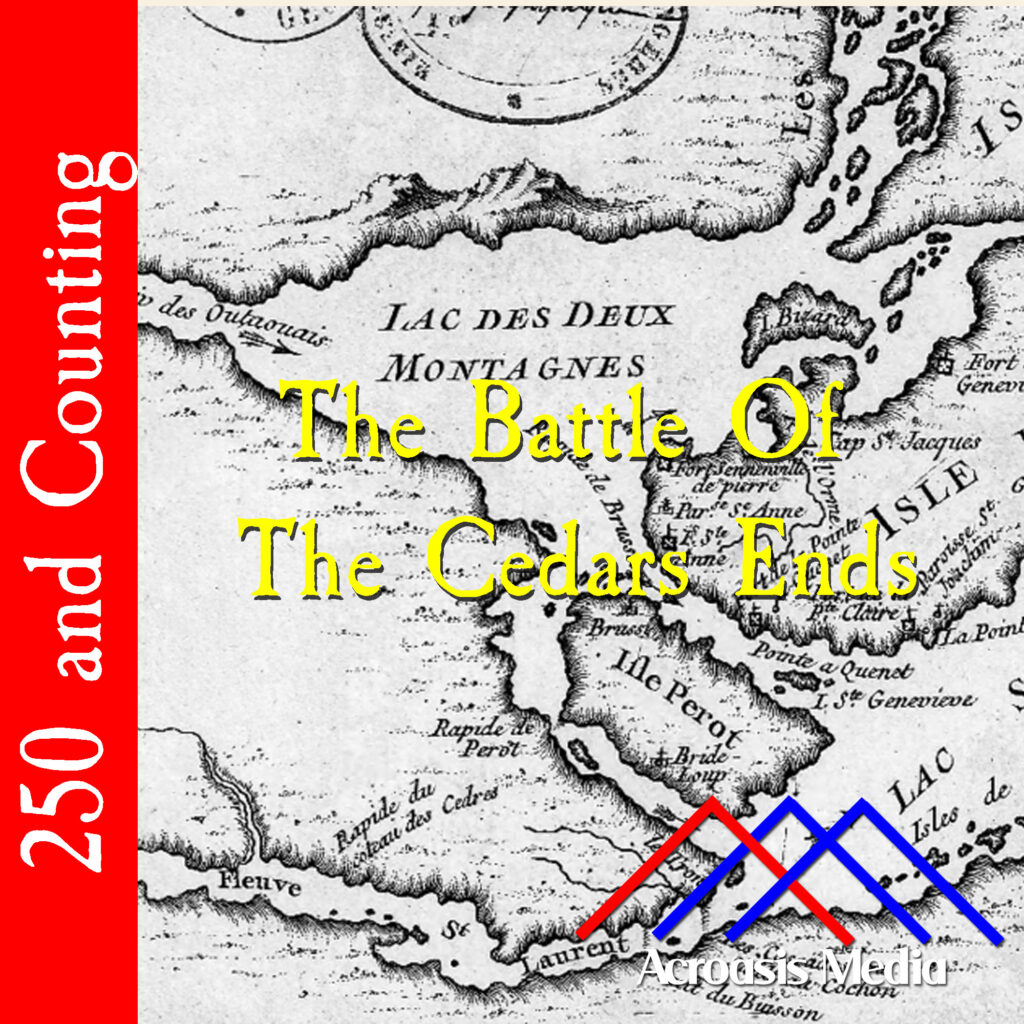
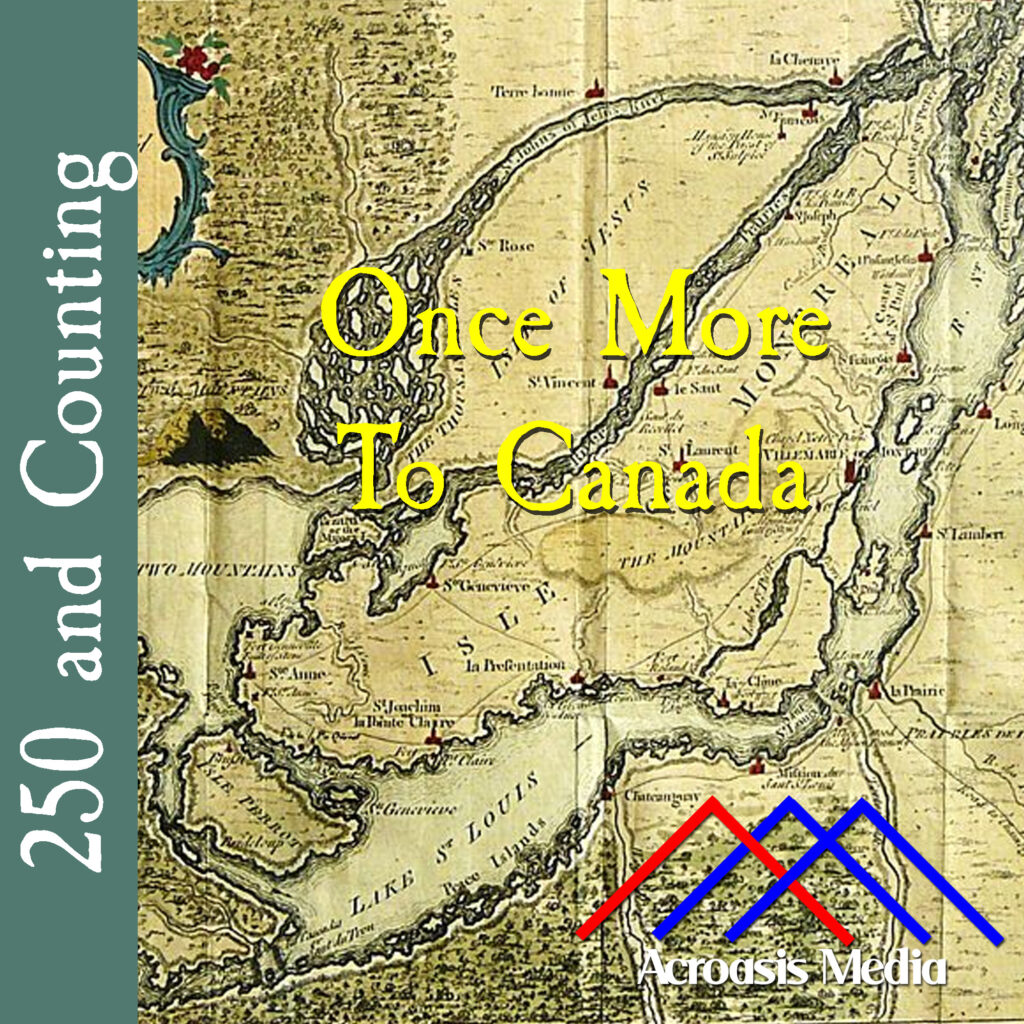
The Battle of the Cedars was actually a series of skirmishes that took place near the end of the American invasion of Quebec, which started in September 1775. The Cedars was an area just under 30 miles west of Quebec, and in April, Benedict Arnold had placed a detachment of troops in that area, because he’d heard that British and Indian troops were forming there.
When Arnold’s men engaged with them, they wound up surrendering. What’s more, a backup force was also captured. But Arnold wasn’t giving up so easily, and he was able to get reinforcements that allowed him to move from the area just outside Montreal toward The Cedars. Unfortunately for him, the British had four-inch guns to fire at him, plus the threat that any prisoners captured so far would be killed—by the Indians, not by the British. Arnold may or may not have known what rules the Indians worked under, so he called a war council to get his advisers’ opinions. Arnold wanted to mount a surprise attack but his council convinced him otherwise.
And that was pretty much that for the Battle of the Cedars. All that remained was the negotiations for prisoner exchange, but I won’t spoil for you here how that worked out; you’ll have to let Mike tell you.
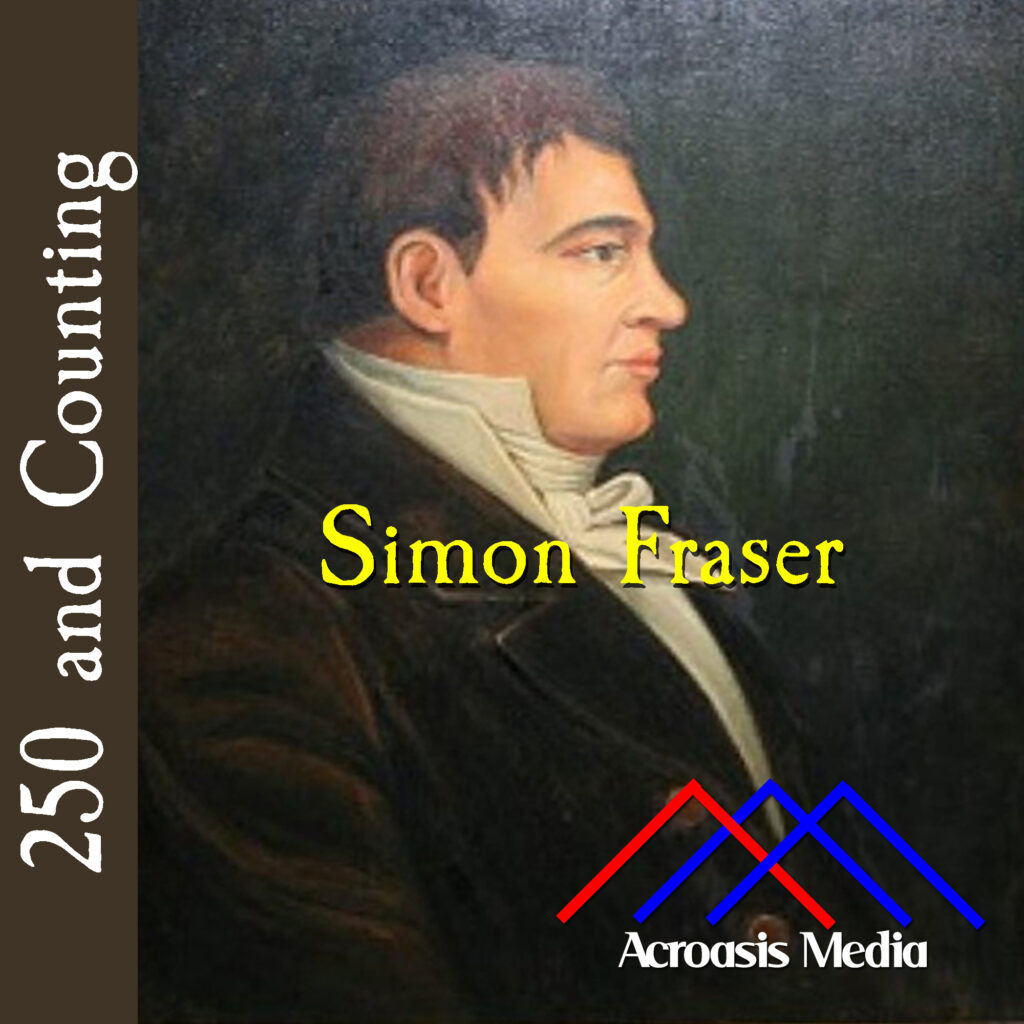
Simon Fraser was born in Hoosick, New York, which is close to where New York’s border meets with those of Vermont and Massachusetts. He was the youngest of eight children.
He moved to Montreal when he was 14 and worked with his uncles in the fur trade, apprenticing to the North West Company the following year. Now, the North West Company had already commissioned someone to find a river route to the Pacific Ocean. That may did find a route that worked for fur sources but wasn’t especially good as a trade route. Fraser was given the responsibility for extending operations to the west, and he did it by establishing trading posts along the way, essentially taking possession of that part of the continent. This led to further exploration and either establishing or expanding fur trade along the way.
In 1814 he got caught up in a dispute in the Red River Valley area, between the North West Company and Thomas Douglas, a controlling shareholder of the Hudson’s Bay Company, which had established the Red River Colony. By 1816 this dispute ballooned into the Battle of Seven Oaks, in which twenty people were killed. Fraser wasn’t involved in the battle but he was arrested anyway by Douglas. He was eventually acquitted of any charges, but that was pretty much the end of his involvement in the fur trade industry, though he remained an active menber of the North West Company until his death in 1862. Because his wife died the next day, the pair were buried in a single grave in a cemetery near their home in Cornwall, Ontario.
If nothing else, the tenacity of the Continental Congress has to be admired, because sending a delegation to Canada, especially after the recent New Year’s Eve disaster in Quebec, and then the “who knows how well it went” trip in March, was a sign of either eternal optimism or an inability to get the hint.
It was probably a little of Column A and a little of Column B.
At any rate, Ben Franklin, Samuel Chase and Charles Carroll headed up to Montrèal to see if relations with Canada could be smoothed over a little bit. And perhaps they could, but the Canadians still weren’t interested in the events going on to their south.
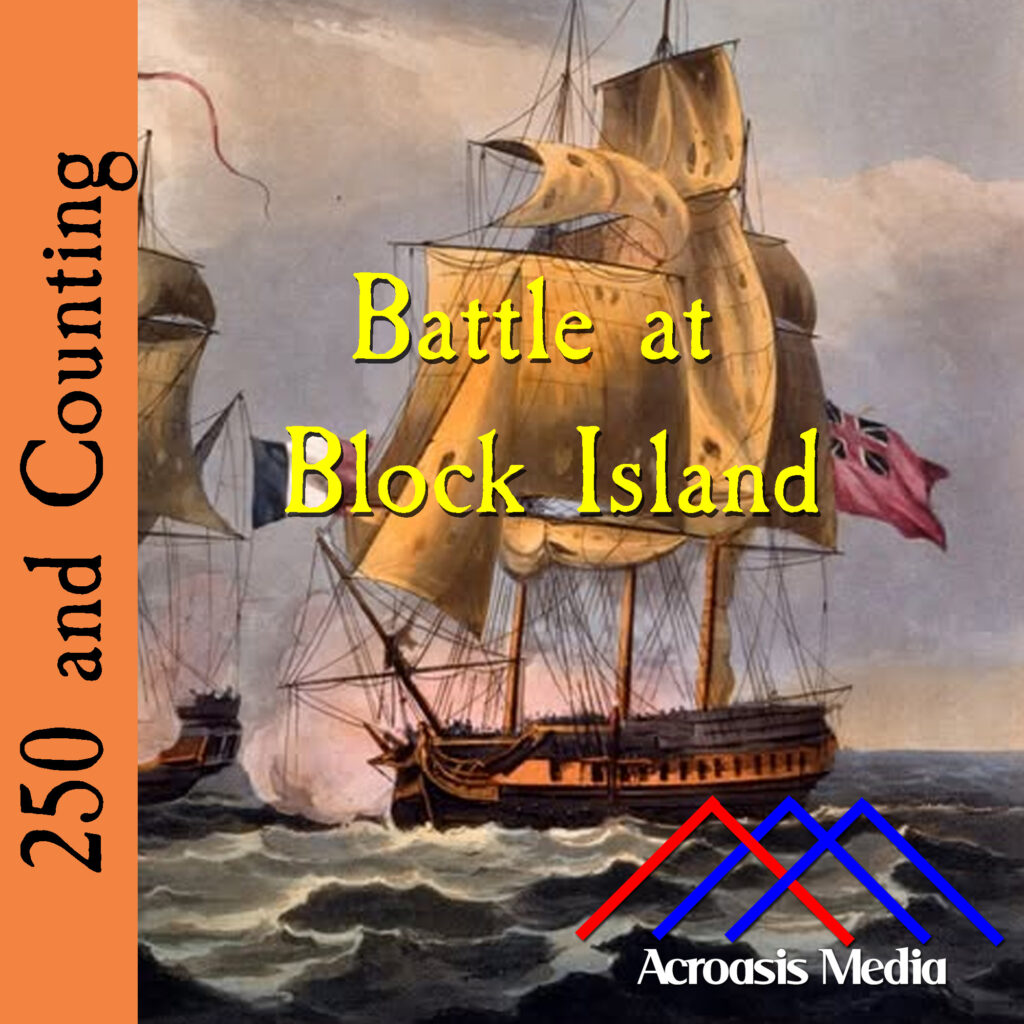
When you have seven ships and you encounter a single ship belonging to the enemy, the Battle of Block Island teaches us that it’s still possible to be overconfident.
Some people tried to frame the Battle of Block Island as a draw, but those people really weren’t paying attention. The HMS Glasgow took some damage, but far more damage was done to the ships that engaged her: The Cabot had its steering disabled and mostly just got in the way, the Alfred lost its tiller as well and also served as an obstacle. Providence held back and was undamaged; Columbus came in late and her fire was ineffective; likewise the Andrew Doria, which got stuck behind the Alfred. And the Glasgow got away, besides.
Between Esek Hopkins’ earlier disobeying of his orders and now this debacle, among other transgressions, he was formally censured. By 1778 he had been dismissed altogether from the Navy.