Category: Georgia History

  • Raid On Tybee Island–March 25, 1776

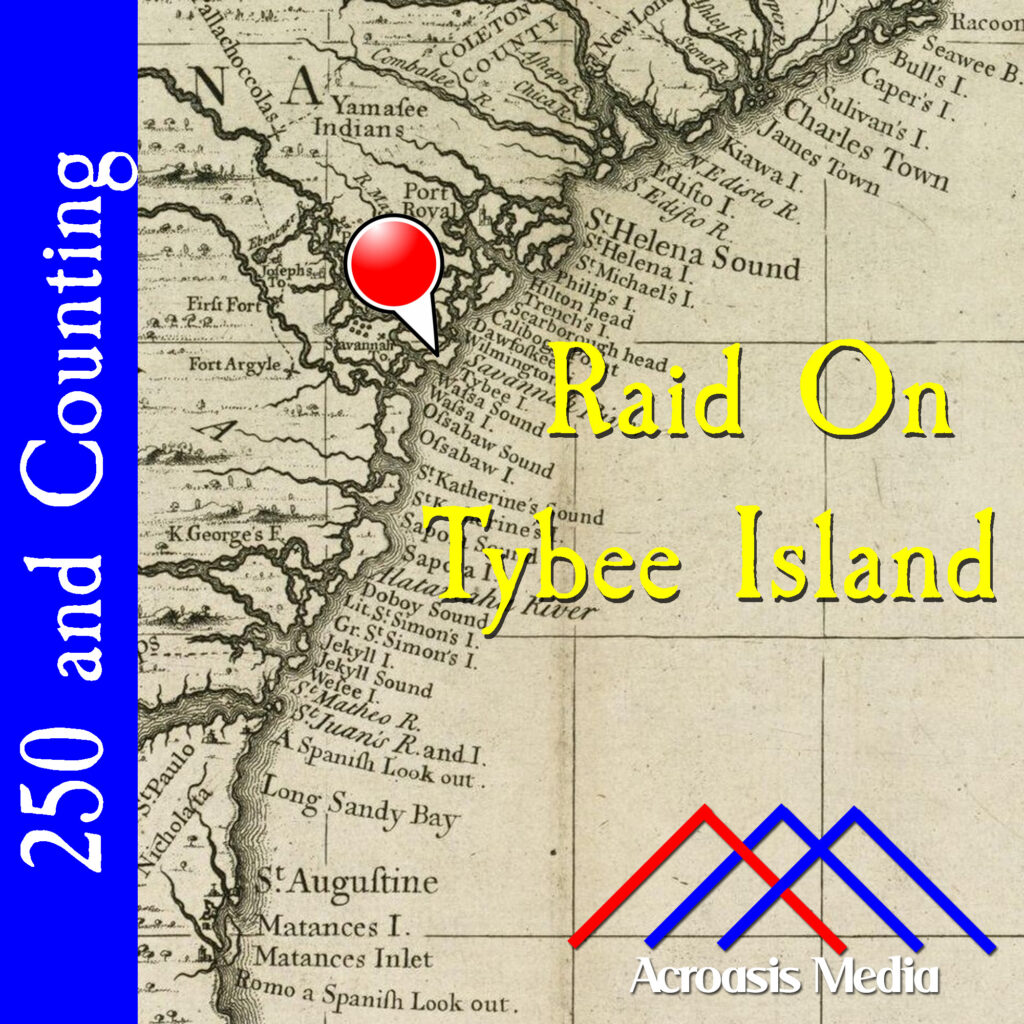
    Cover art for March 25, 1776: Map showing Savannah and Tybee Island, 1733. Via The Boston Public Library digital map archive.

    The raid on Tybee Island wasn’t the only one of its kind; in fact a similar action had been taken at Sullivan’s Island in South Carolina a few weeks earlier.

    In that case there were many more runaway slaves involved, but like Tybee, very few were actually captured and the fate of most of the others is unknown, although there is one account that says fifty people had resisted capture and were subesquently killed.

    But in both cases we see a raid that took place specifically to deny people their freedom, and the proclamation the led to these raids directly influenced the argument in the Declaration of Independence that King George incited “domestic insurrections.” So…the desire of slaves to be free…drove the Patriots to desire independence.

  • Georgia Gets In The Game–March 15, 1776

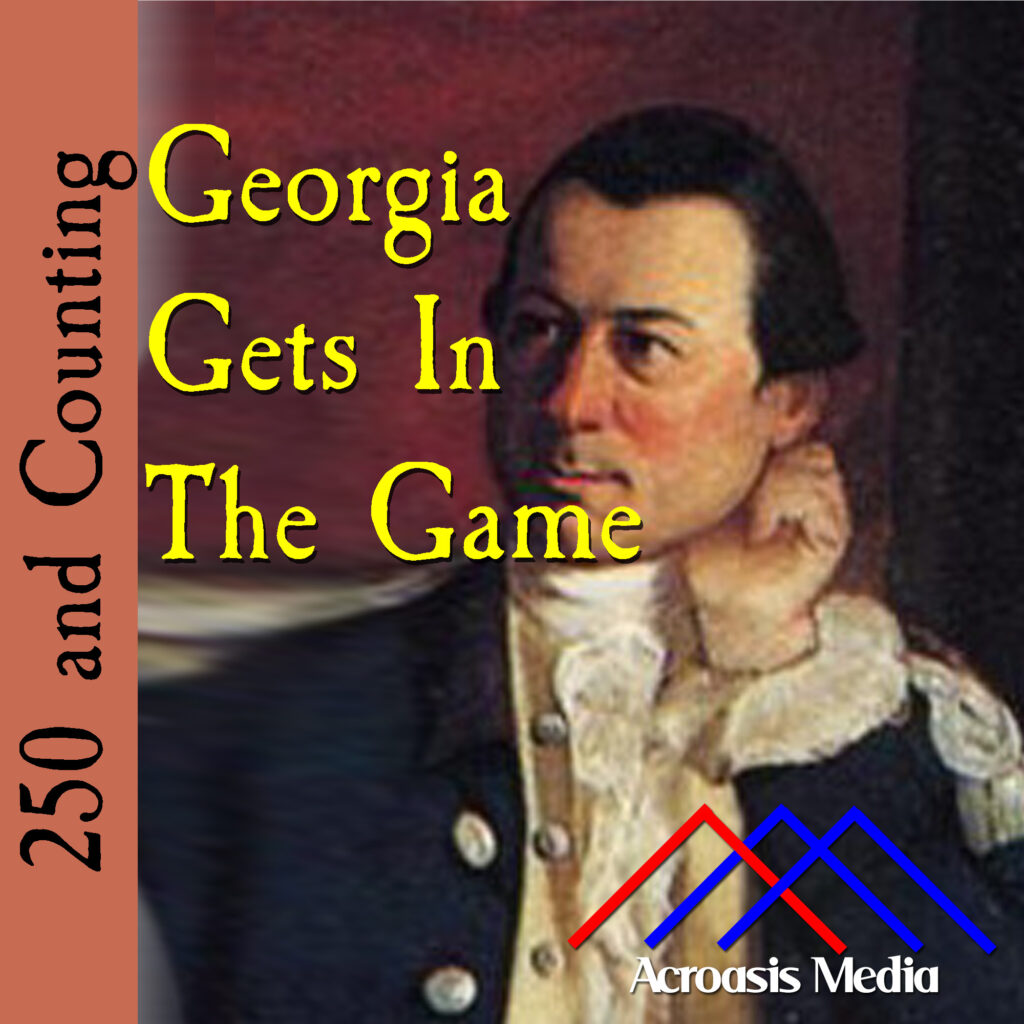
    Cover art for March 15, 1776: Archibald Bulloch circa 1775. Detail from painting by Henry Benbridge. via Wikimedia Commons.

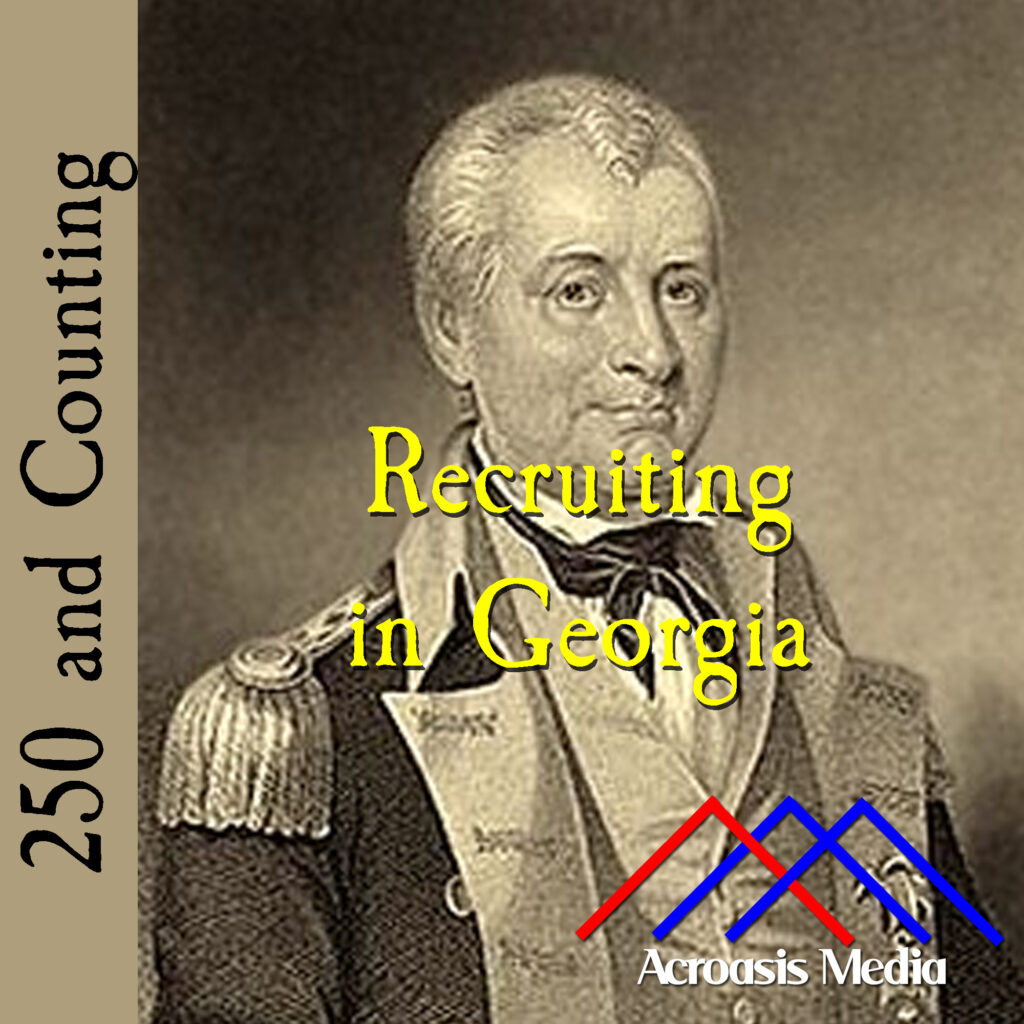
    Georgia delegates to the Second Continental Congress numbered exactly one until around this time. That would be Dr. Lyman Hall, who didn’t believe it was ethical for him to represent the entire colony when he knew that feelings were largely divided back home.

    Then came the Battle of the Rice Boats, on March 2 and 3. After that, it seems, things moved very quickly for Georgians: the Royal Governor, who’d been in and out of custody, fled to a nearby warship, the Provincial Congress was left in charge, and they immediately began making plans to raise a more formal army than the militia that fought in the Battle of the Rice Boats, and Georgia delegates were sent to the Continental Congress with actual instructions.

    In addition, pieces were put in place to write a constitution for Georgia, a good first step toward the document that was created later in the year and adopted the following February.

  • From Connecticut To Georgia–February 20, 1776

    Cover art for February 20, 1776: Portrait of Connecticut Founding Father Oliver Wolcott by the American painter Ralph Earl, oil on canvas. Courtesy of the Museum of Connecticut History.

    Oliver Wolcott was one of our Founding Fathers in that he was one of the men who signed the Declaration of Independence, but while he never achieved prominence on the level of Franklin or Adams, he nevertheless served an important role as a member of the Second Continental Congress.

    As the Revolution began, Wolcott was made a commissioner of Indian affairs, largely to work on ensuring that the northern tribes remained neutral. He was considered qualified for that position because he worked in that part of the continent during the French and Indian War.

    He was elected to the Continental Congress in 1775, and although he was quite ill for a chunk of 1776, he did sign the Declaration of Independence, although it was some time later than everyone else. He was also a signatory to the Articles of Confederation, but he did not sign the US Constitution because by then he was the Lieutenant Governor of Connecticut, becoming governor in 1796. A year later he died at the age of 71.

  • Nicholas Ware–February 16, 1776

    Cover art for February 16, 1776: portrait of Nicholas Ware. Date and artist unknown. Via US Senate Historical Office.

    Mike already tells you about all you need to know about Nicholas Ware in today’s episode, so let me focus on his home, which was derisively nicknamed “Ware’s Folly.”

    The house was completed in 1818 at a total cost of $40,000, which would be well over $12 million today. Part of this derives from the elaborate styling on the outside, and part of it is from the extravagant details on the inside, including a three-story elliptical staircase.

    The house, as Mike noted, is now the home of the Gertrude Herbert Institute of Art, which was founded in 1932 as the Augusta Art Club and later renamed in honor of founder Olivia Herbert’s daughter Gertrude Herbert Dunn.

    By 1936 the Art Club was in need of classroom and gallery space, and the house had been neglected for many years and was facing demolition. Olivia Herbert saved the building and donated the money for renovation. The following year the Institute was established and renamed after Gertrude, who had recently died of spinal meningitis.

    The house acts as the Main Gallery building and Administrative Offices for the Institute, while another house directly behind it was expanded, renovated and converted into classrooms in 2001.

    If you’re in Augusta, the Institute could make for an interesting diversion.

  • July 10, 1775: The Georgian Navy

    Cover art for July 10, 1775: Historical marker in Savannah commemorating the first ordered capture in Southern waters of the Revolution.

    Hey! We have a Navy now!

    Okay, it’s only one ship, but it’s a start. And to be clear, it’s Georgia’s navy, not the navy of the Continental forces. But we’re getting somewhere.

    And what’s more, on its first day it took on a British ship, with amazing results. Listen in and learn the story.

  • July 8, 1775: Judge William Davies

    Cover art for July 8, 1775: Picture of Judge William Davies. Creator unknown, via findagrave.com

    N.B. While it’s Mike recording today, I write this part and I’m still a little under the weather, so I’ll be brief again.

    It’s Cake and Candles today for William Davies, born in Savannah on this day in 1775. Davies enjoyed careers in both the legal and political fields, and appeared to do well in both of them.

    Also, my brain might be addled by the drugs the doctor gave me, but my calculation has him dying at the age of 54, so Mike was a little off, there. That’s probably why he teaches History and not Math.

  • May 13, 1775: Lyman Hall Joins the Continental Congress

    Cover art for May 13, 1775: portrait of Lyman Hall, created ca. 1871

    Dr. Lyman Hall gets a little name recognition because he was a strong supporting character in the play/film 1776, but he was more involved in the Revolution than that.

    While Georgia (eventually) sent five delegates to the Continental Congress, Hall was one of the three who regularly attended and signed the Declaration of Independence.

    For instance, he ensured that food and medicine got to Colonial soldiers, and it was he who convinced the Georgia congress to send official delegates to the Second Continental Congress, himself among them.

    He also became the state’s first Governor and spent that single year establishing the state university.

  • May 11, 1775: The Second Continental Congress Gets to Business

    Cover art for May 11, 1775: The Second Continental Congress in July 1775. Unknown artist, printed by Currier & Ives in 1876.

    When the Second Continental Congress convened, they spent a little time with the formalities of going over credentials and establishing some ground rules. But right after that, they got right down to business. They knew that they were going to move into a wartime footing immediately. They also knew that they wanted to operate in an “official” capacity, so they took the time to review, on the record, the events leading up to and including the battle at Lexington and Concord.

    They then adjourned until the next day, but tabled discussion of the state of America to the following Monday. (May 11 was a Thursday, so this wasn’t terribly out of line.)