Washington was on the brink of retreating from New York City, but he was getting pushback from some of his generals regarding how it should be done.
Fortunately for him, this Gordian Knot was cut by a letter arriving from John Hancock on behalf of the Continental Congress.
Nathanael Green and William Heath weren’t necessarily in agreement with Hancock’s recommendations, but orders are orders and everyone prepared to move out based on those.
But about a week later, something happened to render part of those orders moot.
Washington wrote two letters today: one to General William Heath, and the other to Congress.
To Heath, he basically gave a little bit of an “attaboy” in agreeing with Heath’s assessment regarding the British Army’s next move. So he recommended that chevaux de frise be sunk in the waters nearby the next likely target (Huntspoint), to thwart the British ships moving in. Other than that, some reinforcements are on their way, so until the British arrive, just hurry up and wait.
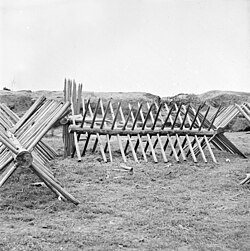
Now, a cheval de frise (“chevaux” is plural) was tough for me to explain during the show, but picture a sawhorse with long spikes protruding from it. That’s a basic cheval de frise. (The one in the picture is from the Civil War.) But they’re not limited to this specific design; some stone walls had broken glass, or sharp rocks embedded in their tops to make it tougher to climb over them; those are also considered to be a cheval de frise. The ones that Heath were expected to sink in the East River looked more like boxes with angled spears pointed in the direction the ships were likely to be coming from.
Washington’s other letter, to the Continental Congress, wasn’t so much to inform them of his loss on Long Island as it was to assure them that he was alive and well, and that most of his troops had gotten away despite the magnitude of the loss. It would be several months before Washington could truly notch one in the “Win” column against the British.
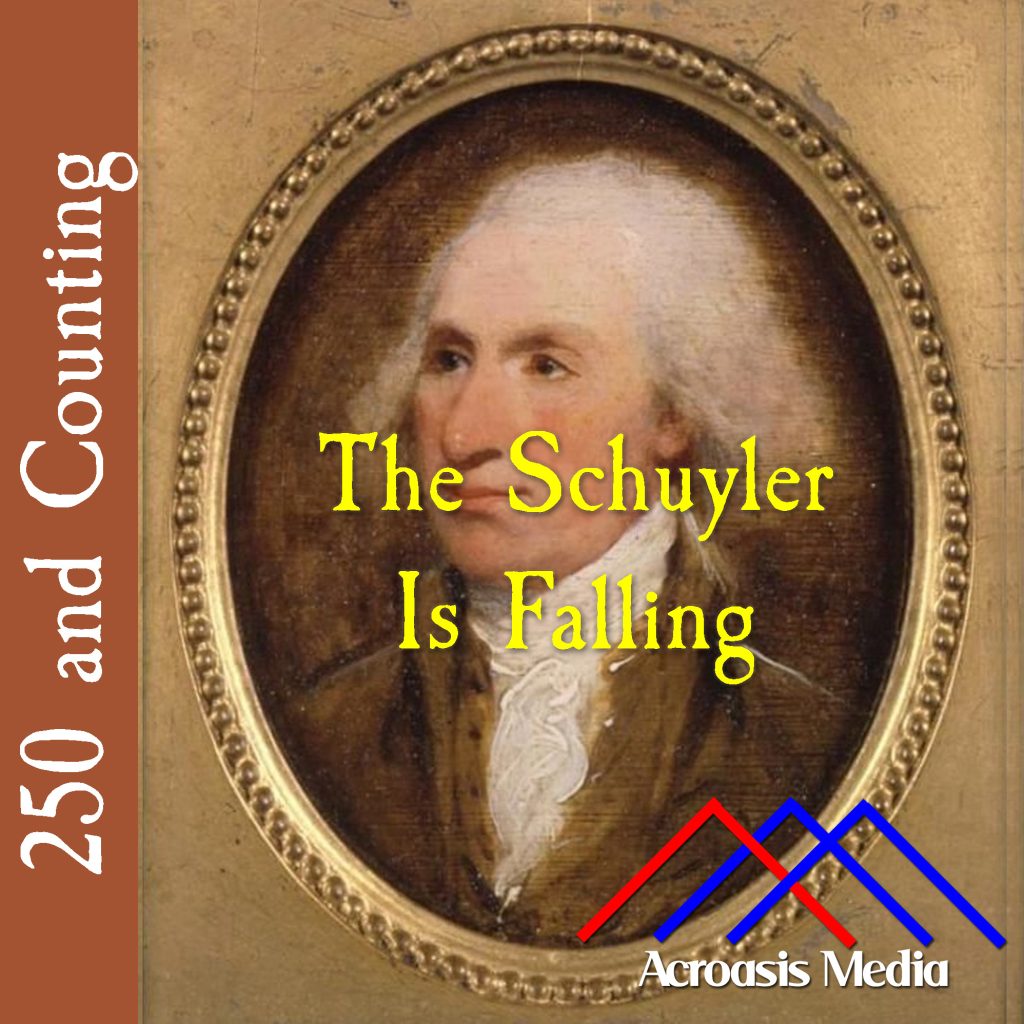
Philip Schuyler was part of a prominent New York family, enough that if you have any familiarity with that state’s history, you realize that the Schuyler name keeps popping up, especially during and shortly after the Revolution. (Similarly, the names Schermerhorn and Burr also manage to crop up a lot; Burr is probably the most famous name of the three but there are more Burrs than just Aaron.)
Schuyler was born in Albany but moved to New Rochelle when he was eight years old, shortly after his father died. He fought in the French and Indian War, and was sent to England for three years afterward to help settle some expenses related to the war.
Philip Schuyler was elected to the Second Continental Congress but left to become a general in the Continental Army, where he was involved with the failed invasion of Quebec. His health forced him to turn command over to General Montgomery, and in 1777 he returned to Congress.
Later in life, he served as a Semator in the First US Congress, but lost his bid for re-election to Aaron Burr. (See? Popping up everywhere.) He did return to the Senate a few years later, and remained there until he resigned due to his health.
Schuyler died at the Schuyler Mansion in Albany on November 18, 1804, four months after his son-in-law, Alexander Hamilton, was killed in a duel (by Aaron Burr) and two days before his 71st birthday. He is buried at Albany Rural Cemetery in Menands, New York, about 500 feet away from President Chester A. Arthur. It’s really a lovely place to visit and see the graves of several notable figures, not all of whom were “big” names historically unless you like to deep-dive into such things.
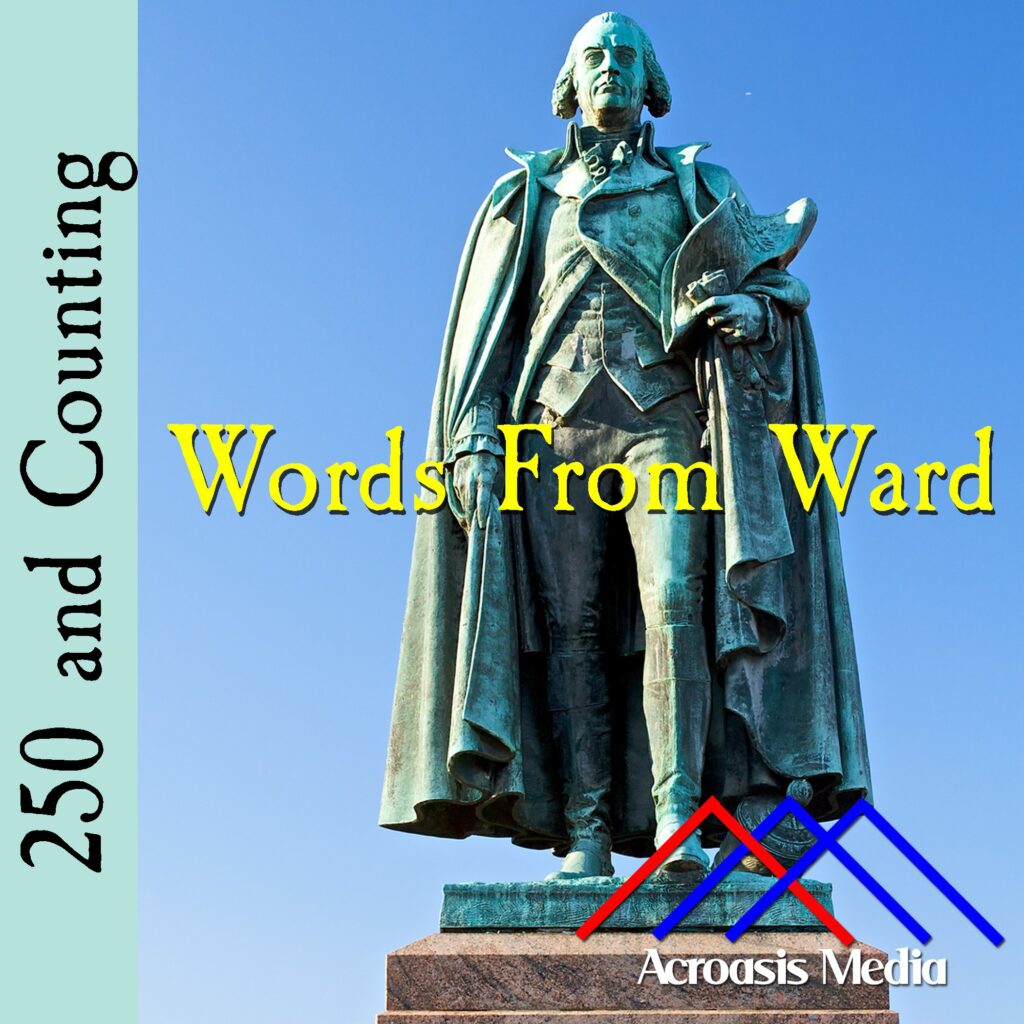
Artemas Ward was the man left in charge of things when Washington made his trek to New York, so you know that this was a man that Washington trusted. As a result they corresponded with one another frequently.
So it only makes sense that once in a while, the two would write to one another on the same day, and this was one of those days. Washington wrote to Ward his concern that the British would return to Boston and therefore the city should be fortified to protect against such an event, and Ward wrote to Washington about a pair of ships that had been captured in the Bay just a couple of days earlier.
For what it’s worth: Ward Circle, where the statue from today’s cover art is located, is in the middle of a peculiar looking traffic circle on Massachusetts Ave NW. There are no pedestrian crossings that will get you close to it, so if you do choose to make that particular pilgrimage, stop off at the National Cathedral first and ask for divine intervention, ’cause the traffic can easily make that a nightmare to cross.
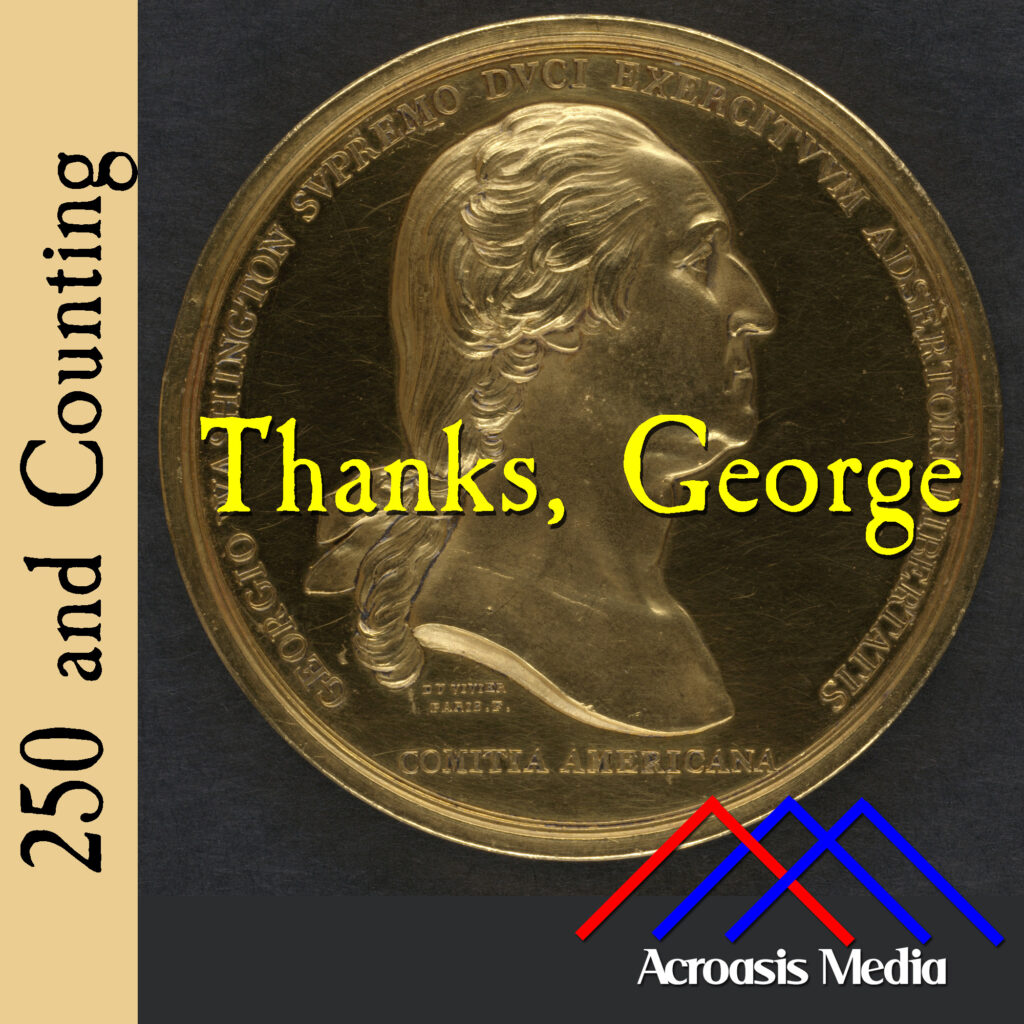
Just a few days ago, Congress passed a resolution that George Washington should be thanked for his efforts in Boston, and that a Congressional Medal should be issued to him.
Specifically, the resolution read:
Resolved, That the thanks of this Congress, in their own name, and in the name of the thirteen United Colonies, whom they represent, be presented to His Excellency General Washington, and the officers and soldiers under his command, for their wise and spirited conduct in the siege and acquisition of Boston; and that a medal of gold be struck in commemoration of this great event, and presented to His Excellency; and that a committee of three be appointed to prepare a letter of thanks and a proper device for the medal.
They did do all this, but frankly striking a congressional medal (or any other type, presumably) during the Revolutionary War was kind of a low priority (in addition to the other issues Mike cites), but it did eventually get done.
An unknown Greek poet, possibly from the 1st century CE, once said:
Ὀψὲ θεῶν ἀλέουσι μύλοι, ἀλέουσι δὲ λεπτά. The millstones of the gods grind late [slowly], but they grind fine.
There’s a ninth season episode of The Simpsons called “Sideshow Bob’s Last Gleaming” in which Bart’s nemesis, Sideshow Bob, steals a nuclear bomb and threatens to detonate it unless the town disables all of its television broadcasts. He delivers this ultimatum via a Jumbotron screen. Before ending the transmission, he says, “By the way, I’m aware of the irony of appearing on TV in order to decry it…so don’t bother pointing that out.”
And to a certain extent, that’s what happened today in 1776 as well. The Colonies were protesting British oppression, but in order to do that successfully, they had to briefly resort to British tactics.
It’s an unfortunate truism that the “good” side often has to resort to the “bad” side’s means of doing things to achieve an objective. On the other hand, the difference between the “good” and the “bad” side is that the “good” side is willing to undo the thing they did.
I cited The Simpsons above, but I’m sure you could come up with your own specific television episodes in which this is what happens. (I’m sure you can because another one just came to mind, but I’m not sharing it.)
Letters from John Hancock to George Washington weren’t especially scarce, nor were letters going the other way. However, today’s letter takes on a few important topics for Washington that one hopes came greatly appreciated.
There was commendation that Washington had the foresight to send troops to New York, there was some good financial news, there was also good news in the realm of troop recruitment, and there was a warning about likely military action coming fairly soon.
All in all, it was a letter packed with information, and if we had to guess (because we don’t know), it was likely conveyed by courier rather than the postal system, which was still prone to interception by the British.
Correspondence from Charles Thompson, Secretary to the Second Continental Congress, to George Washington. via Library of Congress.
As George Washington’s aide-de-camp, Joseph Reed was privy to a lot of things on his Commander-in-Chief’s mind. And it shows in the level of prose that Washington uses when writing to Reed, because it’s much less formal.
Compare that to the letter he sent to the Continental Congress the same day. In both cases he was expressing concerns regarding his troops, but in one case it’s a criticism of their readiness (Joseph Reed), and in the other it’s concern for their well-being (John Hancock).
Washington’s troops would remain relatively undisciplined for several months, until the winter encampment at Valley Forge. But I’m getting waaaaay ahead of the story, so stick around. Meanwhile, put this in your ears.
A hand-colored printed halftone of a 19th-century illustration of George Washington writing at his desk.
Military Intelligence is a peculiar thing, if only because you never know where it’s going to come from, and/or what it’s going to affect.
And that’s where today’s episode comes in, because Congress received a letter written today which detailed some plans for British military activity in Virginia. What’s surprising is that the intelligence came from…George Washington, in Cambridge, Massachusetts.
Washington was the lucky recipient of food that had been intercepted on its way to the British folks under siege in Boston. He also received several documents outlining plans that were afoot in Virginia, and he dutifully passed them along.
Most of it was related to Great Bridge, which had already seen some action, but it still put Congress wise to the fact that the war wasn’t only taking place in the northeast, and that military intelligence can come from anywhere.