Category: John Hancock

  • Washington Has Some Intel–December 18, 1775

    Cover art for December 18, 1775: A hand-colored printed halftone of a 19th-century illustration of George Washington writing at his desk.
    A hand-colored printed halftone of a 19th-century illustration of George Washington writing at his desk.

    Military Intelligence is a peculiar thing, if only because you never know where it’s going to come from, and/or what it’s going to affect.

    And that’s where today’s episode comes in, because Congress received a letter written today which detailed some plans for British military activity in Virginia. What’s surprising is that the intelligence came from…George Washington, in Cambridge, Massachusetts.

    Washington was the lucky recipient of food that had been intercepted on its way to the British folks under siege in Boston. He also received several documents outlining plans that were afoot in Virginia, and he dutifully passed them along.

    Most of it was related to Great Bridge, which had already seen some action, but it still put Congress wise to the fact that the war wasn’t only taking place in the northeast, and that military intelligence can come from anywhere.

  • Dorothy Becomes Mrs. Hancock–October 28, 1775

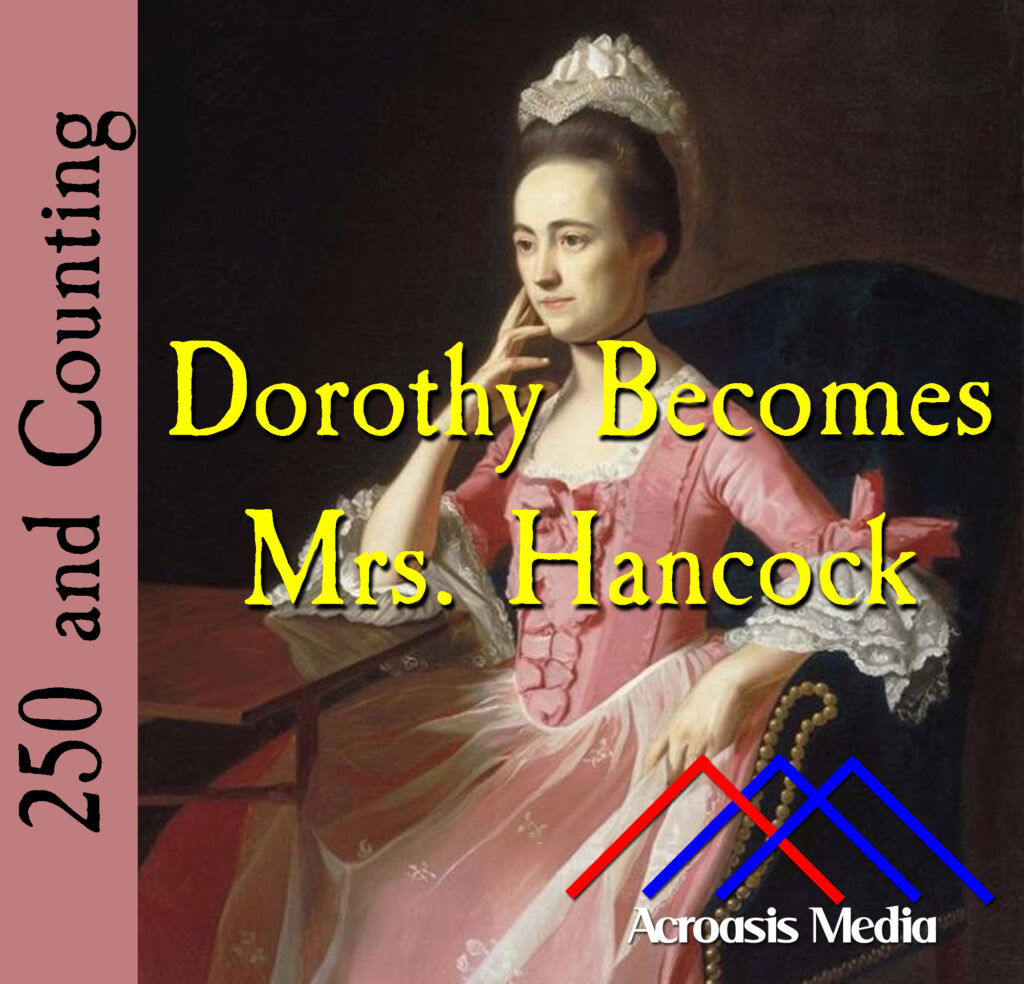
    Cover art for October 28, 1775: Portrait of Dorothy Quincy, 1772, by John Singleton Copley

    It’s nice, isn’t it, that not everything we have for your benefit concentrates on people shooting at each other or generally not being kind?

    Take today, for instance. It’s Wedding Bells for the President of the Continental Congress! John Hancock got married to Dorothy Quincy today!

    (Okay, never mind that the motivations to get these two together may have been a little corrupt. Let’s just be happy for this couple, hm? )

  • May 24, 1775: Congress Elects Its President

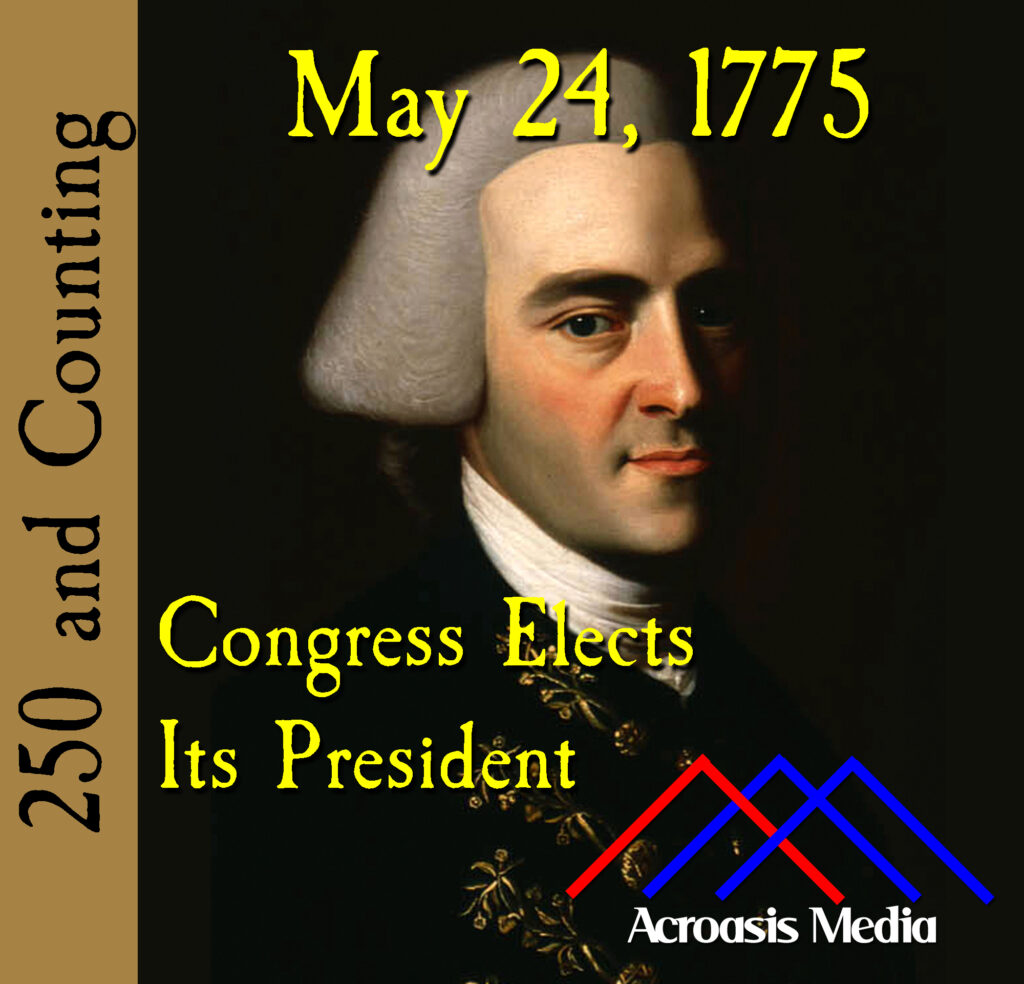
    Cover art for May 24, 1775: Portrait of John Hancock in 1770 (Crop) by By John Singleton Copley - Massachusetts Historical Society, Public Domain, via Wikimedia Commons,

    Even though he was President of the Second Continental Congress when the Declaration of Independence was signed in 1776 (whoops…spoiler alert), it’s entirely possible that John Hancock would be just one more guy who signed the document, except for the fact that he signed his name so large.

    His signature is so large and so well-known that you can say to someone “Give me your John Hancock” and they know exactly what you mean.

    Sure, we know John Adams and Thomas Jefferson, because they became presidents of the US, and Ben Franklin was already a living legend. But how many others can you name?

    See what we mean? Even if you’re a fan of 1776, you might only come up with a couple of others, and you’d still be trying to work out the name of the guy from the south with the white outfit on. And Richard Henry Lee doesn’t count because he didn’t sign the thing.

    It’s just some late-night thinking on my part.

    Addendum: for the next few nights I’m not in my usual recording space, so apologies in advance if you pick up some stray background noises.

  • March 24, 1775: The Massachusetts Provincial Congress Steps Up

    Cover art for March 24, 1775: John Hancock, oil on canvas by John Singleton Copley, 1765; in the Museum of Fine Arts, Boston.

    We’ve spent a lot of time talking about events in Virginia lately, but that doesn’t mean that the folks in Massachusetts weren’t getting things done. It just means that they weren’t making a big deal about it.

    For the past several weeks, they’d been working on the down-low to make plans in case the British took any action that they might find too intrusive, from simple confiscations to an all-out shooting offense. (Of course that was still on the table; nobody had forgotten the Boston Massacre.)

    It wasn’t until this day in history that they made their resolution publicly known. And in the wake of Patrick Henry’s very recent proclamation, nobody would be surprised if things escalated sooner rather than later.

  • 250 and Counting: February 1, 1775

    Cover art for February 1, 1775: Portrait of John Hancock.

    Before the shooting started, Boston appeared to be the place which gave King George III the most hassles. But to be fair, Boston is the place that the British seemed to provoke more than the other Colonies, so it kind of evened out in the end.

    When the Intolerable Acts dissolved the existing government in Massachusetts, the locals said, “Whatever” and convened anyway that same summer. But there’s no denying the results: they did all the things that a government is supposed to do, and the locals pretty much ignored whatever apparatus was set up by the British.

    There were three Provincial Congresses in Massachusetts, but by the time the Third one convened, much of what they did was rendered unnecessary because the war had turned “hot” and other structures were in place to do the job.