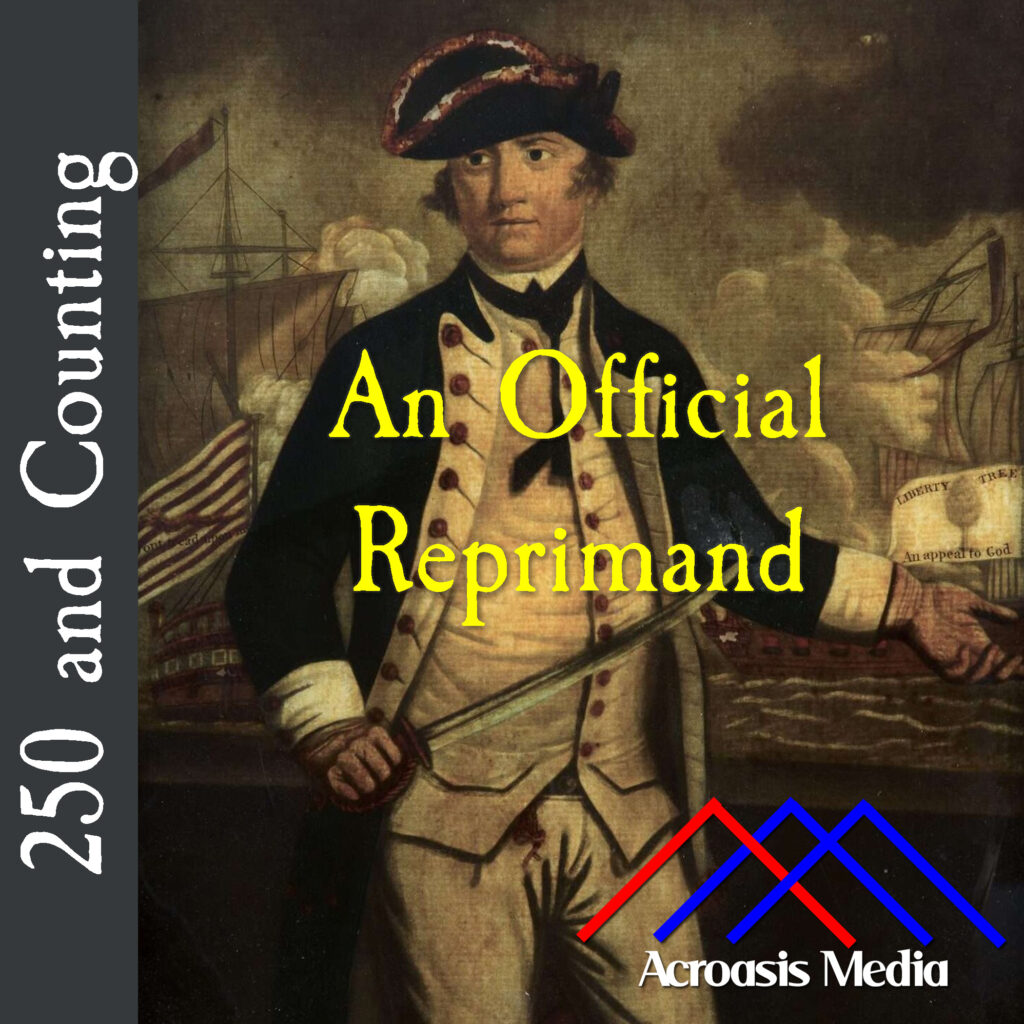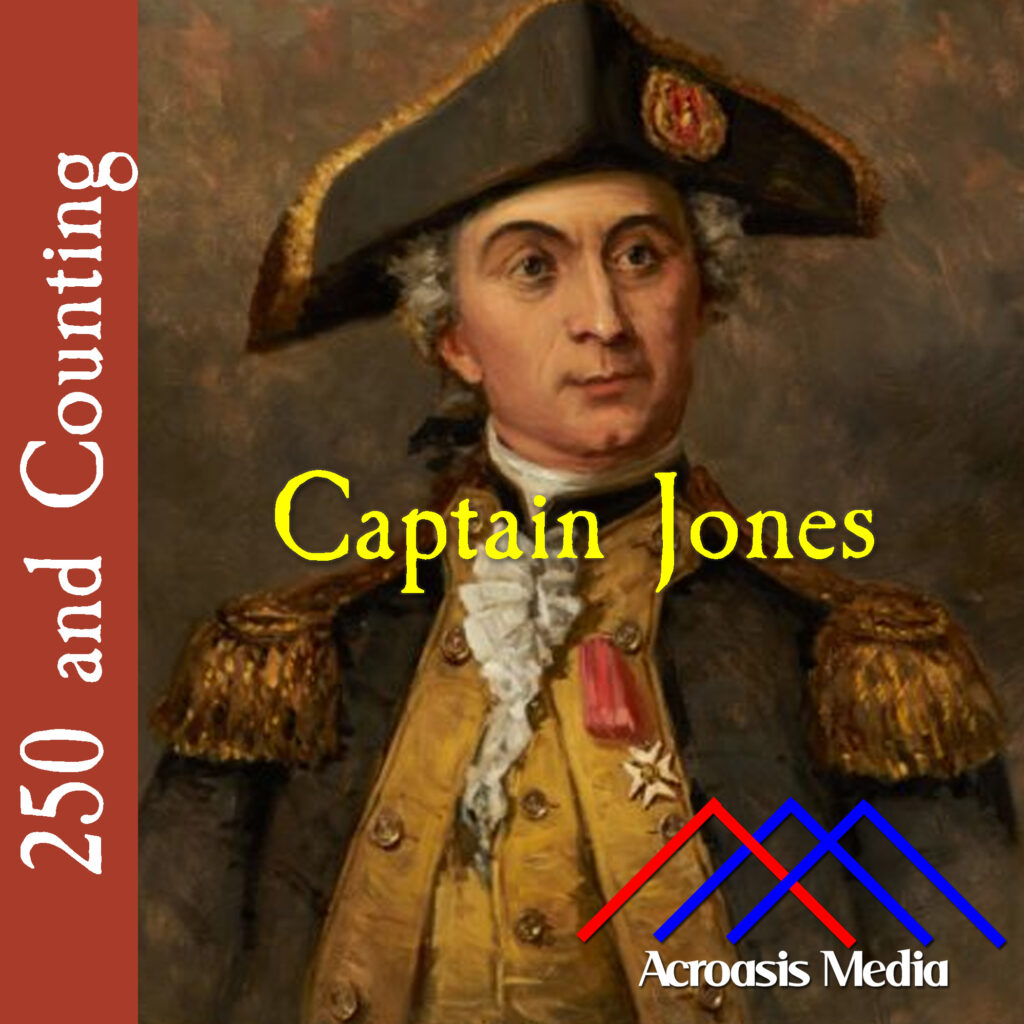
Captain enlisted in the Continental Army not long after the battles at Lexington and Concord. He was commissioned as a Captain and immediately put to work capturing British ships.
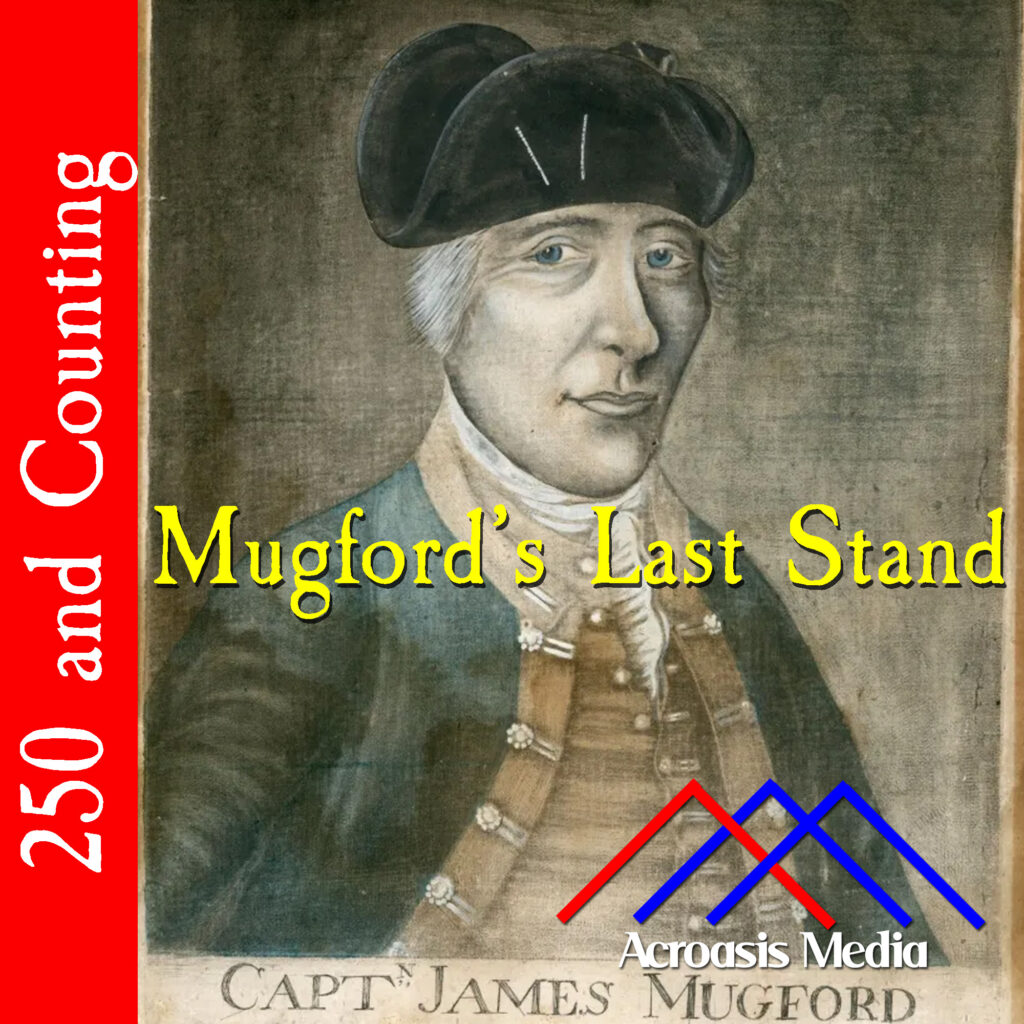
One of the more surprising things about the battle between the USS Franklin is not so much the victorious outcome, which was starting to feel a little bit of a foregone conclusion at this point, or that the ships moving in on the Franklin at first pretended to be friendly Bostonians, since that was actually a common tactic.
It was the fact that his birth date and death date are the same calendar day. Mugford was born in 1789, and died in 1776, on May 19. That seems like the sort of coincidence that might get a little more attention.
The HMS Roebuck was a ship that tangled with the Americans numerous times. One advantage that she had over other British ships was a relatively shallow draught (vertical distance between keel and waterline), which proved helpful when it came to navigating some of the shallower waters off the American coast.
The HMS Roebuck had already had an encounter just south of today’s events back in March. She was also involved in the Battle of Long Island, which took place during the summer, in a battle on the Hudson River in October 1776, and then in 1777 during another attempt to take Philadelphia, this time as part of a successful assault.
There were other small battles that went on for another couple of years before she was finally recalled to England for a refit, after which she returned to America, successfully engaging again with the Americans. I
In 1783 HMS Roebuck finished her war service and was recommissioned as a hospital ship for the French Revolutionary Wars. In the late 1790s she was recommissioned as a warship and participated in the Anglo-Dutch War and then the Napoleonic Wars. Once the Treaty of Amiens was ratified, Roebuck was was used as a guardship, then a receiving ship. Finally in 1811 she was formally decommissioned and broken up.
HMS Roebuck was in action–most of it battles–for 37 years, a relatively long time for any ship of that era. Even though they were on the enemy side of the war, we can’t help but admire her record, which was quite glossed-over in this relatively small space.
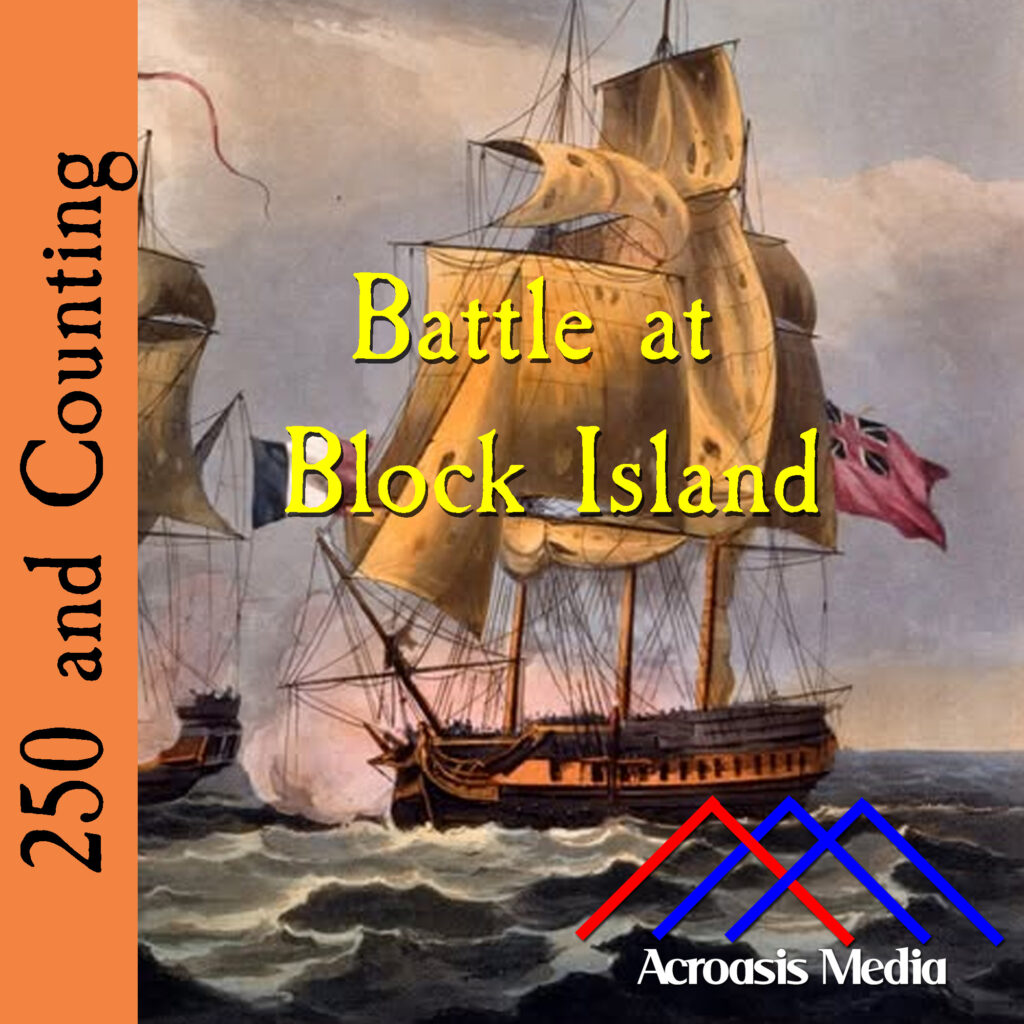
When you have seven ships and you encounter a single ship belonging to the enemy, the Battle of Block Island teaches us that it’s still possible to be overconfident.
Some people tried to frame the Battle of Block Island as a draw, but those people really weren’t paying attention. The HMS Glasgow took some damage, but far more damage was done to the ships that engaged her: The Cabot had its steering disabled and mostly just got in the way, the Alfred lost its tiller as well and also served as an obstacle. Providence held back and was undamaged; Columbus came in late and her fire was ineffective; likewise the Andrew Doria, which got stuck behind the Alfred. And the Glasgow got away, besides.
Between Esek Hopkins’ earlier disobeying of his orders and now this debacle, among other transgressions, he was formally censured. By 1778 he had been dismissed altogether from the Navy.
Esek Hopkins wasn’t just the Commander In Chief of the Continental Navy; he was the only Commander In Chief of the Continental Navy. As we noted just a day ago, the navy was disbanded shortly after the war (sold off, you may recall) until a few years later, when the US Congress decided we needed a US Navy and we had to start all over again.
In the 1760s he was a merchant who once took on a slave ship. Unfortunately he didn’t really know what he was doing, and more than half the slaves died enroute to the West Indies; furthermore the surviving captives were in such poor health that they sold for very little.
For a couple of months, in 1775, Esek Hopkins was appointed as a brigadier general to shore up forces in Rhode Island, but two months later he was appointed Commander in Chief of the Continental Navy authorized by the Continental Congress to protect American commerce.
His specific orders, which were issued on January 5, 1776, were:
You are instructed with the utmost diligence to proceed with the said fleet to sea and if the winds and weather will possibly admit of it to proceed directly for Chesapeake Bay in Virginia and when nearly arrived there you will send forward a small swift sailing vessel to gain intelligence….If…you find that they are not greatly superior to your own you are immediately to enter the said bay, search out and attack, take or destroy all the naval force of our enemies that you may find there. If you should be so fortunate as to execute this business successfully in Virginia you are then to proceed immediately to the southward and make yourself master of such forces as the enemy may have both in North and South Carolina…Notwithstanding these particular orders, which it is hoped you will be able to execute, if bad winds, or stormy weather, or any other unforeseen accident or disaster disenable you so to do, you are then to follow such courses as your best Judgment shall suggest to you as most useful to the American cause and to distress the Enemy by all means in your power.
Having been given eight small ships to carry this out, Hopkins instead read the last part of his orders very closely, and did exactly that part of it. Instead of hanging around Virginia and the Carolinas, he made for the Bahamas, where he executed the raid on New Providence.
While this move proved advantageous to the colonies as a whole, the Southern Colonies were especially upset and the rifts between them and the Northern Colonies got a little wider. Ultimately (though not right away) Hopkins was politically damaged for this action. It didn’t help that Hopkins was also accused of torturing British prisoners in his care, but that led to a military policy of immediate reporting of any misconduct committed by any person acting in the service of the United States.
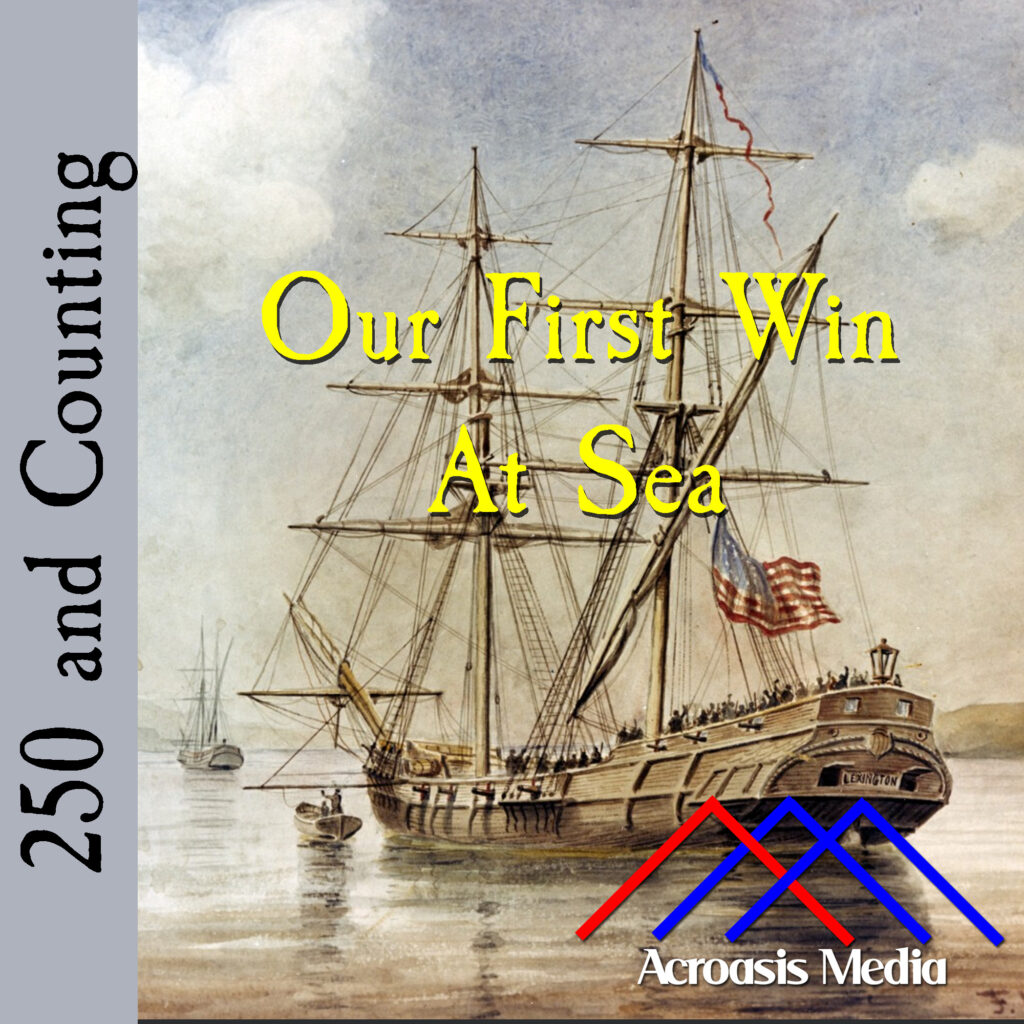
Captain John Barry was commanding the Lexington, looking for Lord Dunmore’s fleet when they more or less stumbled on the HMS Edward off the coast of the Virginia Capes.
By most accounts the battle went on for two hours and included the Edward trying to lure the Lexington into the capes, though it’s not clear why. Possibly there was some help there in the form of other ships or land-based guns. And possibly because being in the capes meant that geographically, the Lexington wouldn’t have as much room to maneuver. But in the end the Lexington was victorious.
Capturing a ship from the world’s mightiest navy, and bringing that ship back to Philadelphia, was a huge morale boost to Continental forces, especially given that the Continental Navy was so small and newly-established. Plus, John Barry became a celebrity and eventually was promoted to Commodore.
When you first hear the word “Privateers” and its definition, your mind probably goes to your basic concept of a pirate: someone who attacks a ship and plunders its hold for anything valuable. And you wouldn’t be entirely wrong, but there’s still a difference.
A privateer is essentially a pirate who’s working on the right side of the law. Privateers are given commissions through a document called a Letter of Marque, which authorizes a vessel to engage with any ship they consider unfriendly. This wasn’t unique to America; privateering was done all over the world. But in our case, it was a response to the fact that America was sorely out-gunned by the British and needed whatever help they could get. And early privateers had a high success rate, until the British realized that privateers were in use at all.
One of our most famous privateers is John Paul Jones, who volunteered his services and, rather than using his ship to raid British vessels near America, did most of his work near the English coast. He would raid towns, attack vessels and send the Congress their share of the spoils.
So the bottom line when it comes to the difference: permission. Privateers and pirates did much the same thing, except privateers had consent.
Portrait of William Montgomery Crane. By Unknown author – The National Cyclopaedia of American Biography, Volume XII, 1904, page 422, via Wikimedia Commons.
If you’re going to have a kid in 1776, you’re probably going to be feeling a little patriotism when you do so. Such was the case with William Montgomery Crane, who got his middle name from General Richard Montgomery, under whom his father served around this point in the Revolutionary War.
Crane’s father was General William Crane, but at that time he was a lieutenant in the expedition to Quebec, and was part of the New Years Eve assault on that city. Crane was badly wounded in the ankle, an injury that bothered him for decades and eventually led to the foot being amputated, and his eventual death in 1814.
As far as his son William is concerned, we had to gloss over this, but Crane spent a few years in the Mediterranean during the Barbary War, working on protecting ships from piracy. After the Revolution, American ships naturally lost protection from the British Navy and were vulnerable to pirate attacks when they refused to pay protection. President Thomas Jefferson relied on a strategy of using the US Navy to put together blockades, patrols and even direct assaults on the pirate ships. Eventually the tactic worked and Crane was recognized for his efforts when his gunboat endured heavy fire to destroy a battery’s walls in Tripoli in just a couple of hours.
Etching of William Alexander, Lord Stirling, as a Major General. Etching by H.B. Hall, 1892. via New York Public Library.
The capture and ultimate disposition of the HMS Blue Mountain Valley and her crew was, in the bigger scheme of things, a relatively minor event in the American Revolution, however it did suddenly bring both New Jersey and New York into more active participation in the war.
And even though the Blue Mountain Valley was beset by storms that they couldn’t possibly control, the fact that the ship was so easily captured despite the protections they’d put in place so far became a major point of debate back in England. It led to a policy prohibiting the use of transport ships to America unless they had a Naval escort.
A policy like that is pretty good for keeping the ship and cargo losses down, but it wreaks havoc on the Naval resources. So this event was a win in the short run for the Americans, but it was a long-run win as well because of the way it inconvenienced the British over the next several years.
“An English Ship at Sea Lying-To in a Gale,” painted by Willem van de Velde the Younger, late 17th century.
The HMS Blue Mountain Valley—which probably got its name from the place in eastern Jamaica—had rather a rough trip to America from London in late 1775 and early 1776.
They left London in mid-October 1775 and ran into multiple storms before arriving somewhere near Boston nine or ten weeks later. Damage to the ship was such that it was judged unsafe to enter the Massachusetts Bay because safe navigation there couldn’t be guaranteed. They decided to head further south, arriving near Egg Harbor, NJ on January 18.
Given that they were under orders not to approach the coast without an escorting warship (or reassurance from a warship that a given harbor was safe), they chose to take the Blue Mountain Valley a few miles north to Sandy Hook, where they could get a refit to navigate the ship safely. Bad luck for them; Patriot forces knew they were coming and laid a trap, capturing them easily. By that point, the sailors were hungry and thirsty, much of their cargo had died or gone rotten, and it’s entirely possible that the crew actually viewed capture as a kind of rescue. The ship was moved to Elizabethtown (now known as just Elizabeth, just south of modern-day Newark Airport) and the crew given parole in the town.
PS: much of my research for this episode came from Eric Wiser’s Journal of the American Revolution article “Blue Mountain Valley and the Rise of Lord Stirling,” which goes into much greater depth than I could provide either here or in the episode. It’s a pretty fascinating read.
The Pine Tree Flag, which was the ensign of the Massachusetts State Navy. There are a few variations of this, because the original was destroyed by the British.
While the Massachusetts Naval Militia was pretty much wiped out in 1779 (oops, spoiler alert), it wasn’t the end of a state-based Navy for Massachusetts.
Massachusetts began to rebuild, but in 1780 a new state constitution was adopted, and just as the navy was delayed in its original inception by bureaucracy, the Massachusetts State Navy wound up dissolved the next year. They were re-established for the War of 1812, but again disbanded when that war ended.
Nowadays, any state naval militia are automatically part of the United States Militia, and in Massachusetts specifically, any attempt to reactivate a naval militia in Massachusetts must be done either by the governor of Massachusetts or the Massachusetts General Court.
There are five state naval militia extant, so far as I can tell: Alaska, New York, Ohio, South Carolina, and Texas.