First off, my apologies to you, and to Mike (because it was his episode), for not double-checking that yesterday’s episode was actually loaded into the feed. I’ve been fighting off a ridiculous sinus infection and I think my medication had me woozy.
On the bright side, I’m probably sounding extra sexy in today’s episode because my head still feels like a brick.
Yesterday’s show should be in your podcast feed now, though, along with this one.
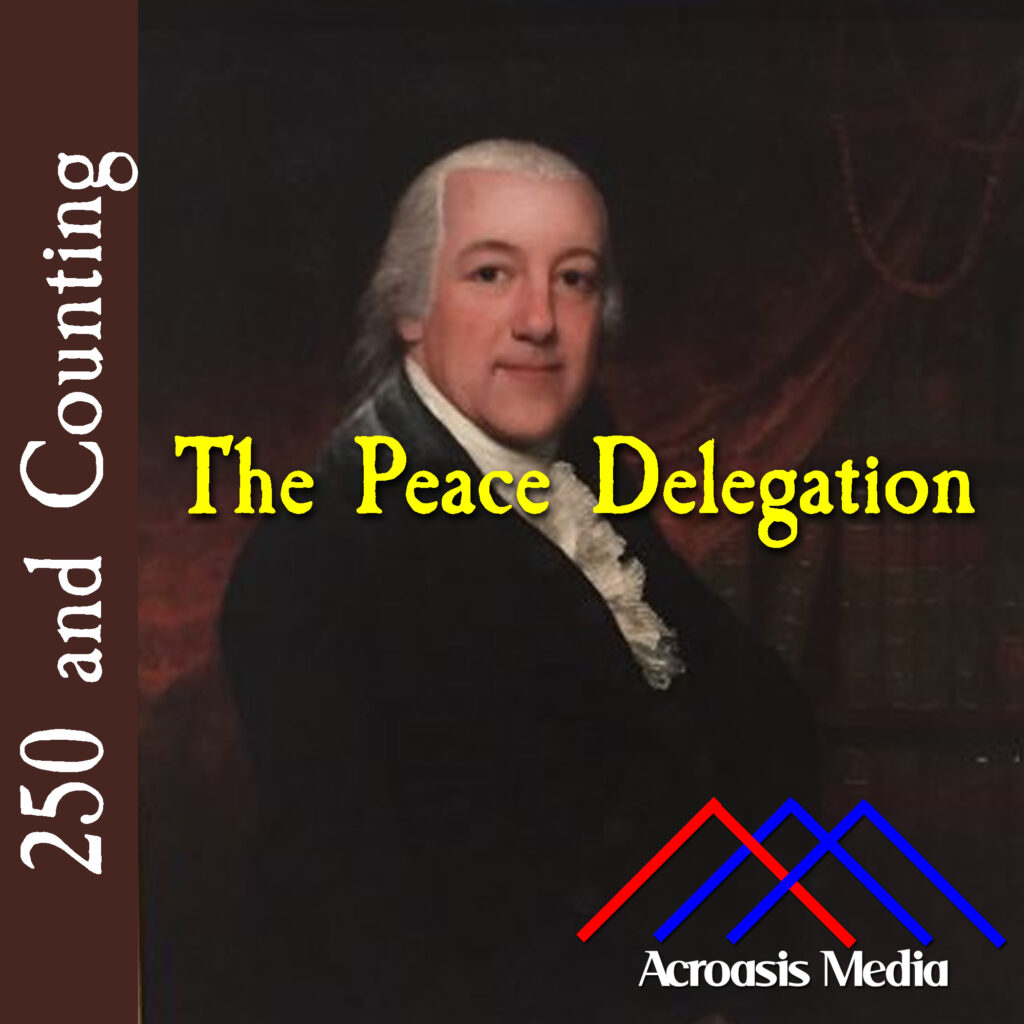
Today we have a trio of delegates headed to New York to attempt peace talks with the British. Meanwhile back in Philadelphia, the Congress officially declares that our country’s name is the United States of America. Check out the story behind that.
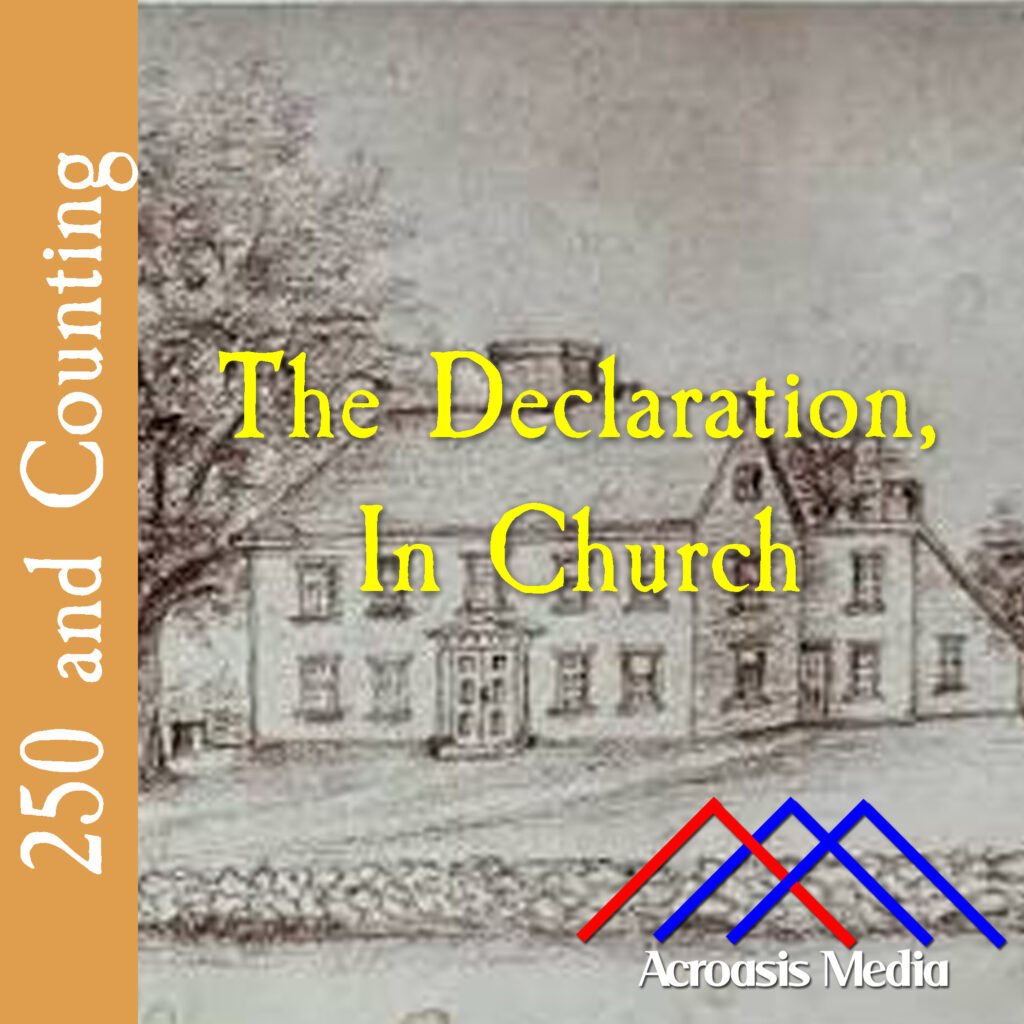
Samuel Dunbar was born in Boston on October 2, 1704. When he was 4, his father died. At a very early age he attracted the attention of the Reverend Cotton Mather.
With Mather’s guidance, Dunbar attended Boston Latin School and Harvard College. In 1727, the people of Canton reached out and sent letters of inquiry asking that the 23 year old accept a ministry over the Church of Christ in Stoughton.
Dunbar was a Loyalist, much like nearly everyone else in New England in the mid-1700s, but as time went by he began to support Patriot causes. He was present at the meeting that brought about the Suffolk Resolves, and it was said that he opened that meeting with “the most extraordinary liberty prayer” ever heard.
So it makes sense that Dunbar was the first minister to read the Declaration from the pulpit.
The approval of the Lee Resolution was July 2, the Declaration was approved July 4, the signingof the Declaration was (mostly) on August 2.
Which date would you have considered for Independence Day if you were in charge back then?
Ah, who are you kidding. You’d have picked the Fourth as well. The approval of the Lee Resolution was a detail of procedure. The signing of the Declaration was just finishing up the paperwork. And we have an actual document with a date on it! Of course everyone chose the Fourth! (Sorry, Mike.)
Incidentally, practically every American knows what the Declaration of Independence looks like. But do you know that there’s something on the back?
Remember that early on, the original document was not especially well-treated. And oftentimes it was simply rolled up for transport. Because there were probably other documents it was housed with, someone wrote along one edge, “Original Declaration of Independence, dated 4th July 1776”.
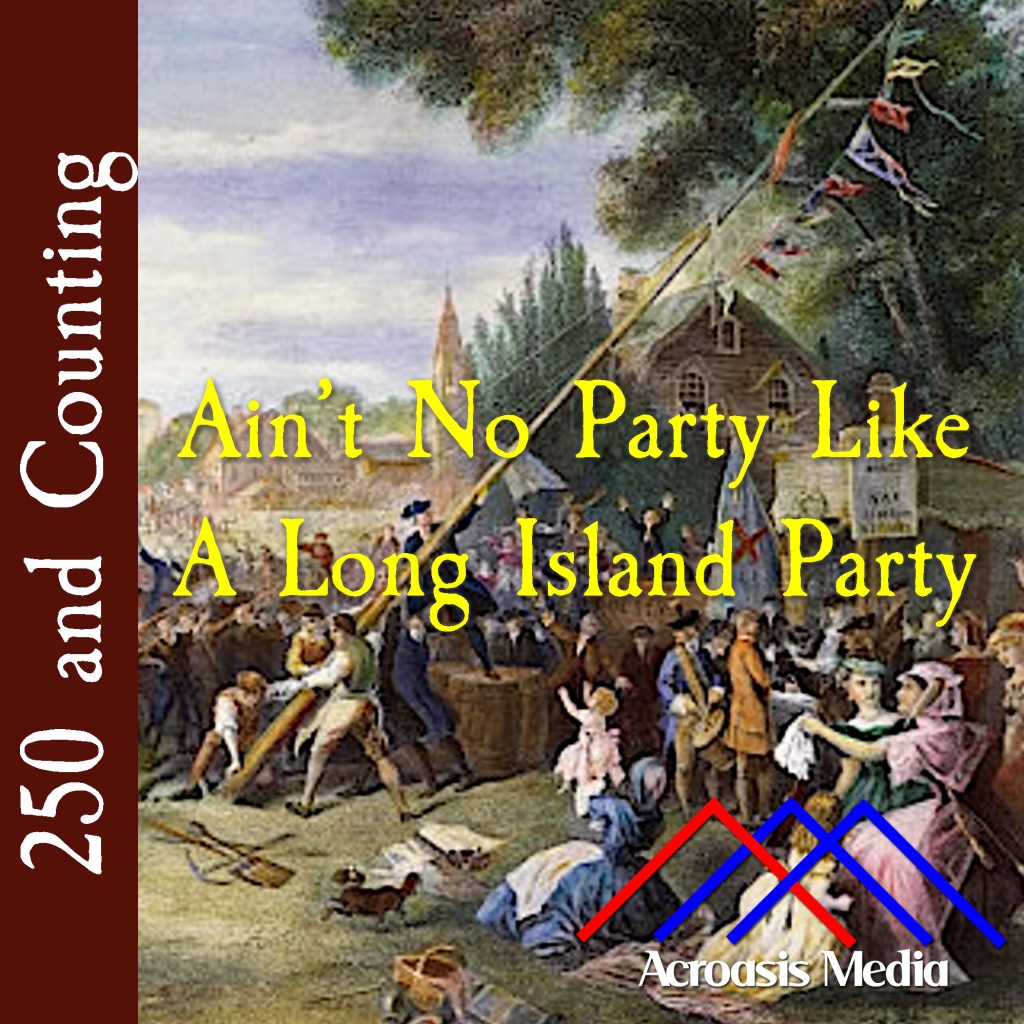
Huntington, New York, is coincidentally quite close to where I grew up. And frankly, I had no idea that they could celebrate the way they did on this day in history.
In addition to being its own little town, Huntington was determined not to let the British take any more of Long Island than they already had. They’d gotten word that the inhabitants of New York City had determined not to oppose the British. This kind of makes sense, since there were lots of Loyalists there still. But a man named John Sloss Hobart, who was one of the Sons of Liberty in the area, headed a committee that was designed to secure the disaffected, to remove or destroy any grain, and, if necessary, lay Brooklyn to waste.
This effort ultimately failed, and unfortunately their absence from the Huntington area near the end of August meant that British soldiers were making landfall about 50 miles east of Huntington with no militia to meet them. Since Huntington had the bulk of the militia in the area, the British could act as they wanted, further hastening the fall of Long Island that summer.
Many Patriots had to get out of town, so they headed across the Long Island Sound to Connecticut for the duration.
But for all that, Huntington, NY remains proud of their heritage, and they even took the time this past weekend to reenact the event, demonstrating the firing of weapons, showing off 18th Century crafts and trades, and offering tours of the Arsenal. And yes: they blew up an effigy of King George III. I guess they still know how to party in Huntington.
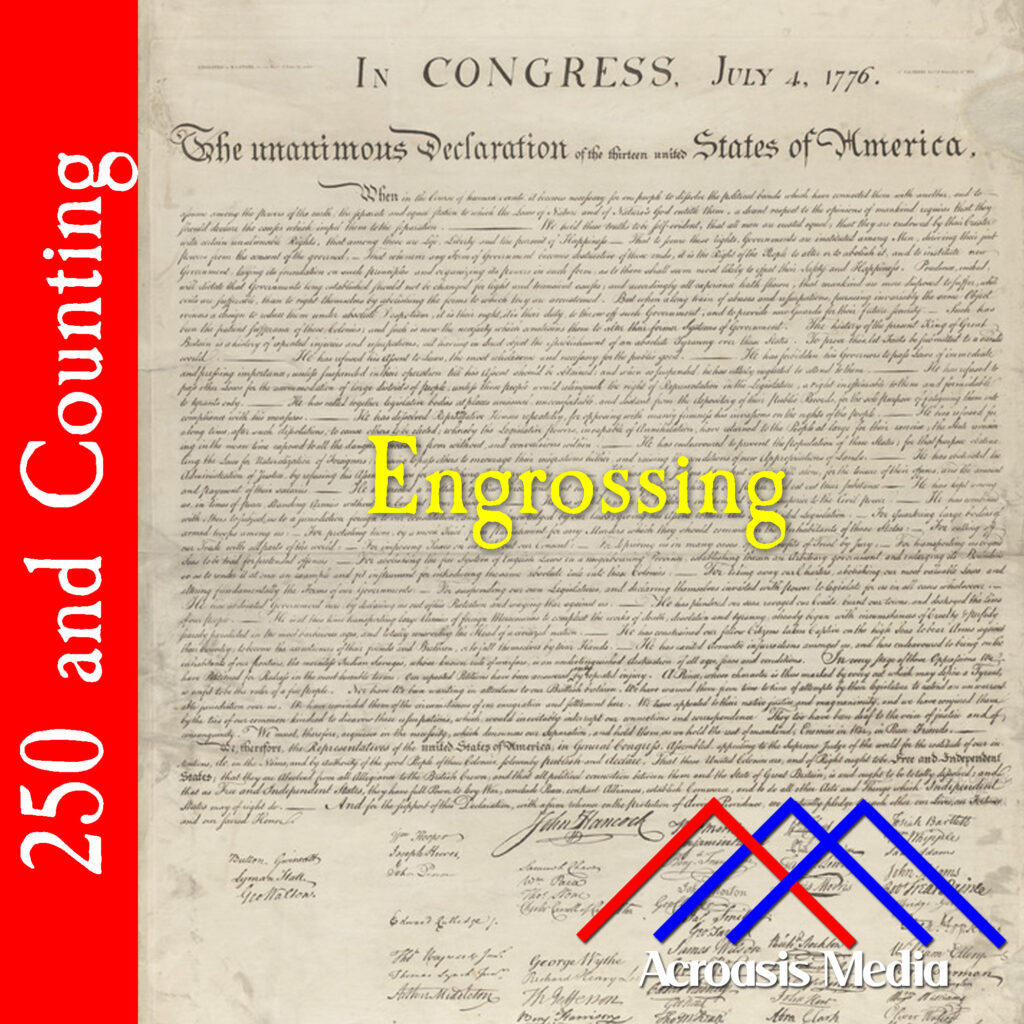
As I explained during the episode, “engrossing” was the practice of having a formal document written out in a larger hand for public presentation. This often had different purposes: some were engrossed to make them more attractive; this was typically called illuminating, and the most typical examples are the ornate Bible pages you see from time to time.
Sometimes it was the preparation of the “final” version of a document. This is the modern use of the term, and you can still hear it bandied about in the US Congress.
The engrossing of the Declaration of Independence was a little bit of both: given its purpose, it needed to look especially good, because its audience wasn’t just Great Britain but the entire world. And the document needed to be signed in order to be final, or official, so engrossment was necessary so that the members of the Continental Congress could affix their signatures.
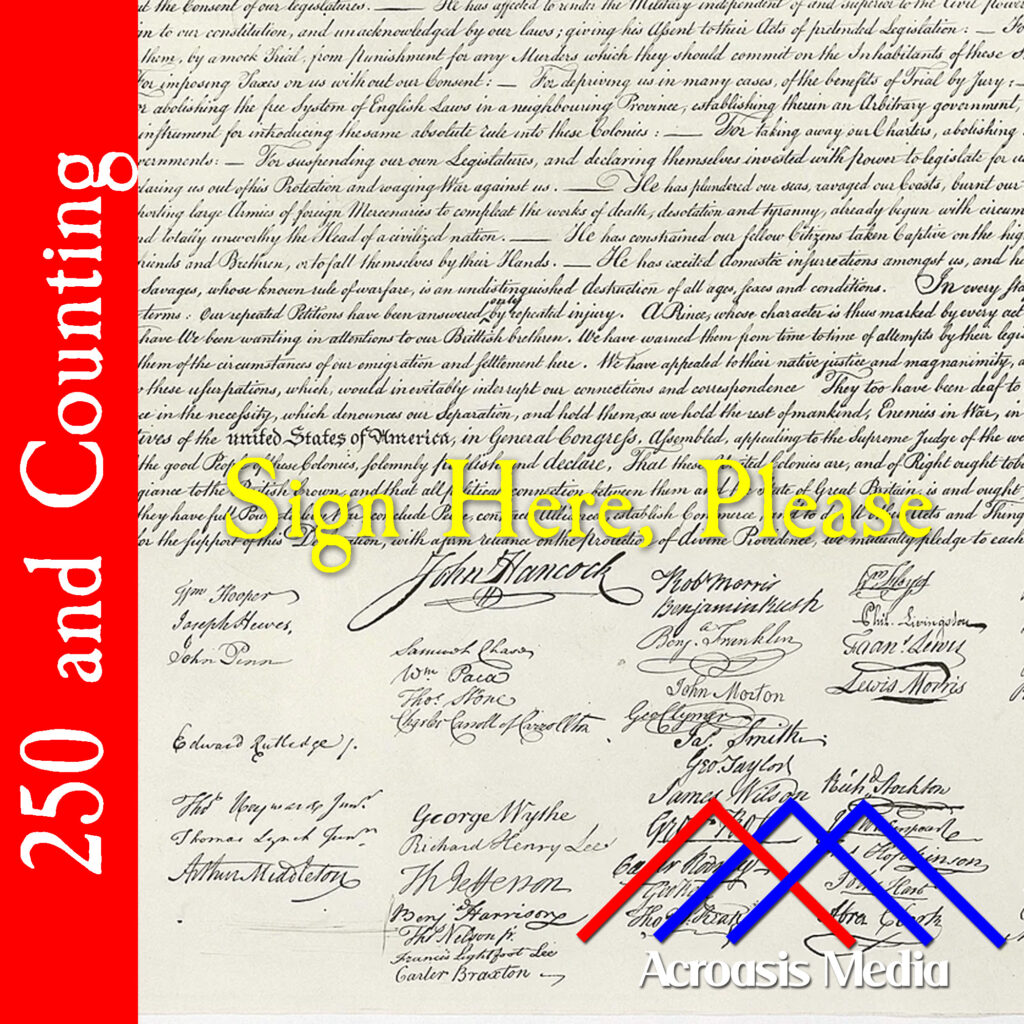
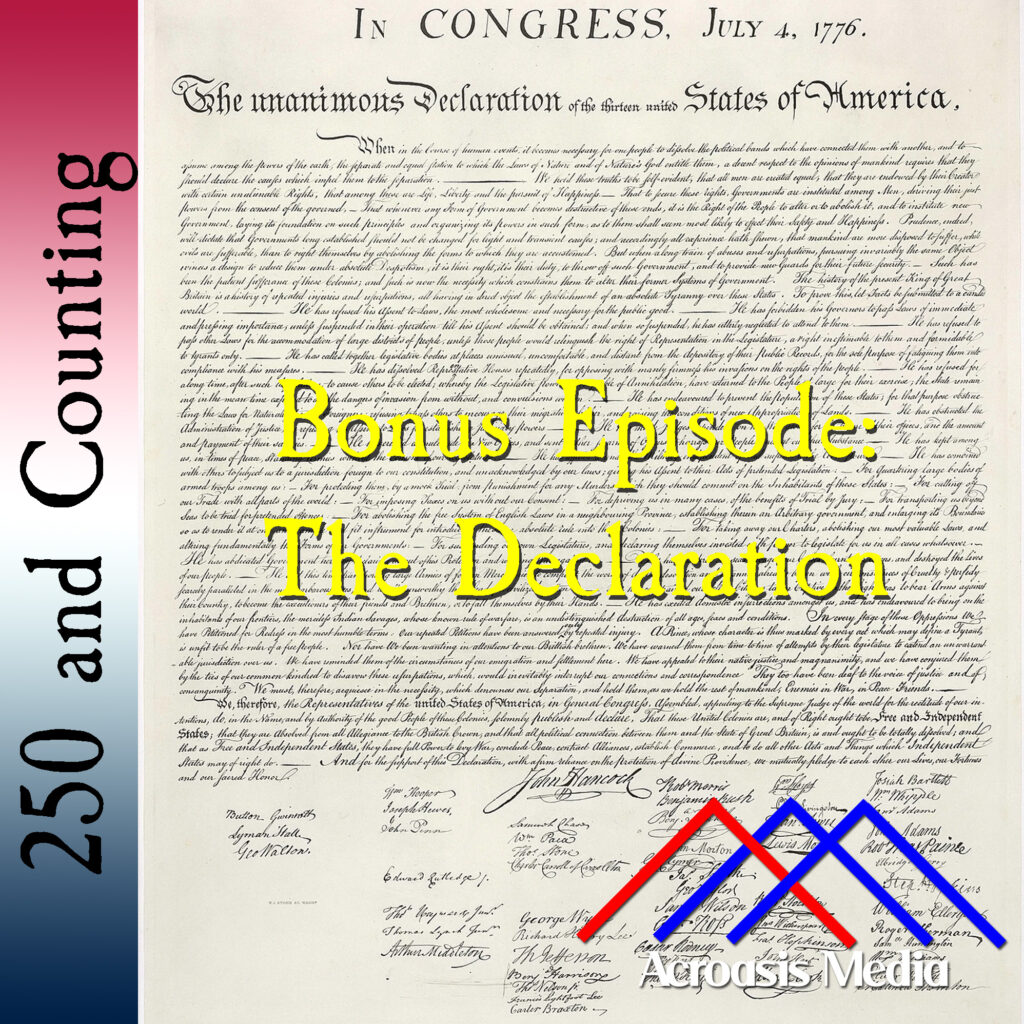
So what’s the “official” version of the Declaration of Independence? There really isn’t any. What we consider to be “the” Declaration is the engrossed and signed version that now resides at the National Archives. That one’s in poor shape, and I’ll get to it shortly. That’s the version that wound up being engraved by William J. Stone, and when you see an especially clear copy of that document (e.g., today’s cover art), it’s almost certainly a reproduction of Stone’s work.
There are versions in Thomas Jefferson’s handwriting, which have crossouts and changes, and such. That resides at the Library of Congress. The L of C also has a fragment of one of Jefferson’s earliest drafts. Jefferson also made a few “clean” copies of the draft so they would have records of what changes were made by the Congress. Those are at the New York Public Library and the American Philosophical Society. There’s a draft in John Adams’ handwriting at the Massachusetts Historical Society.
There are other broadsides as well, not to mention the full text appearing in many newspapers up and down the coast.
And there are a few manuscript copies here and there.
So if we’re so hung up on the initial engrossing (and I get it, I do), then what happened to it?
Let’s start with Timothy Matlack, who did the engrossing. He first had to lay out the text on the parchment, figure out the margins and spacing, and how much room would be needed at the bottom for the signatures. Over the next thirteen days he wrote out the text, using the best animal skin available, in this case sheepskin.
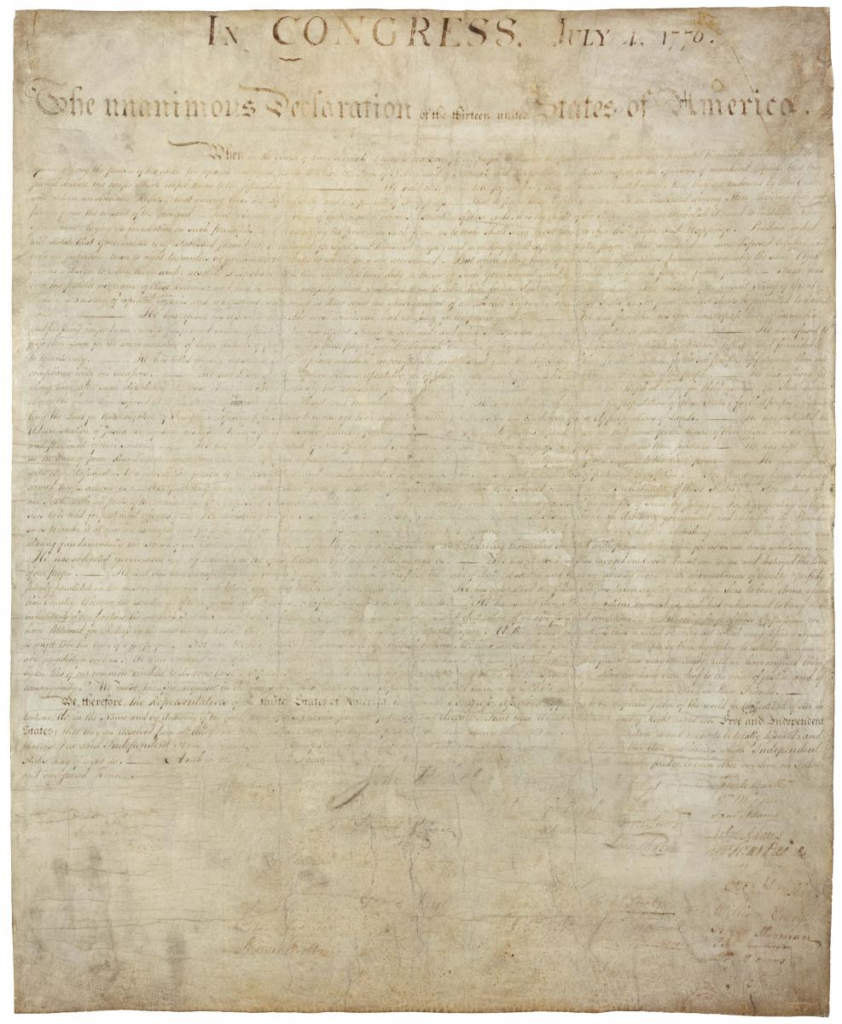
Matlack used iron gall ink, which was made up of tannic acid, iron, a binder and a little colorant. It’s got a light color when it’s first applied, then darkens to a purple approaching black, then ages to more of a brown like the background of this page. He wrote in very straight lines, suggesting that he made rule lines that are no longer visible (though there are vertical marks in the signature area to help maintain the columns).
Over time, the Declaration was repeatedly rolled, unrolled, folded and unfolded. This means that in some spots some of the ink simply flaked away. In addition, the document was exposed to prolonged sunlight when exhibited. (In fact, if you’re in the Archives, look closely and you’ll see fold marks, especially on the bottom.)
A brief aside: in the early 1800s the Declaration was already looking kind of rough, so (former President and current Secretary of State) John Adams called upon William Stone to create a copperplate facsimile, which took three years to create.
For over 35 years, the engrossed Declaration hung in the Patent Office Building, which was considered to be “fire proof”, but that meant 35 years’ worth of exposure to light coming through the windows. It moved another few times, and each time was under uncontrolled environmental conditions. Finally, in 1876 a commission was created to look into restoring the ink and the signatures. It took a few years but the commission’s recommendation was NOT to restore the document but to store it away in the dark.
In the 1920s the Declaration was displayed again, this time alongside the Constitution, in a room with filters on the glass. Unfortunately by the 1940s insects were found in one of the Constitution cases, plus the humidity in room was uncontrolled. And, of course, Hitler was shooting at us and all, so there was that worry to deal with. Everything was moved to Fort Knox for a few years.
Finally, in 1952 they were moved to the National Archives and placed in cases with dim lighting, controlled humidity, and nonadhesive restraints holding the documents flat. And that’s where you can see them today (modern image at right). There are still a few mysteries, for instance: why hasn’t it faded evenly under the light exposures? How did a handprint get on it sometime between 1903 and 1940? And is it still somehow experiencing damage?
It’s hard to say. But I’ve visited the National Archives a few times and I still can’t help but be awed at the sight of these documents, no matter how faded they are. I can’t help but feel somehow connected to the people who put them together.
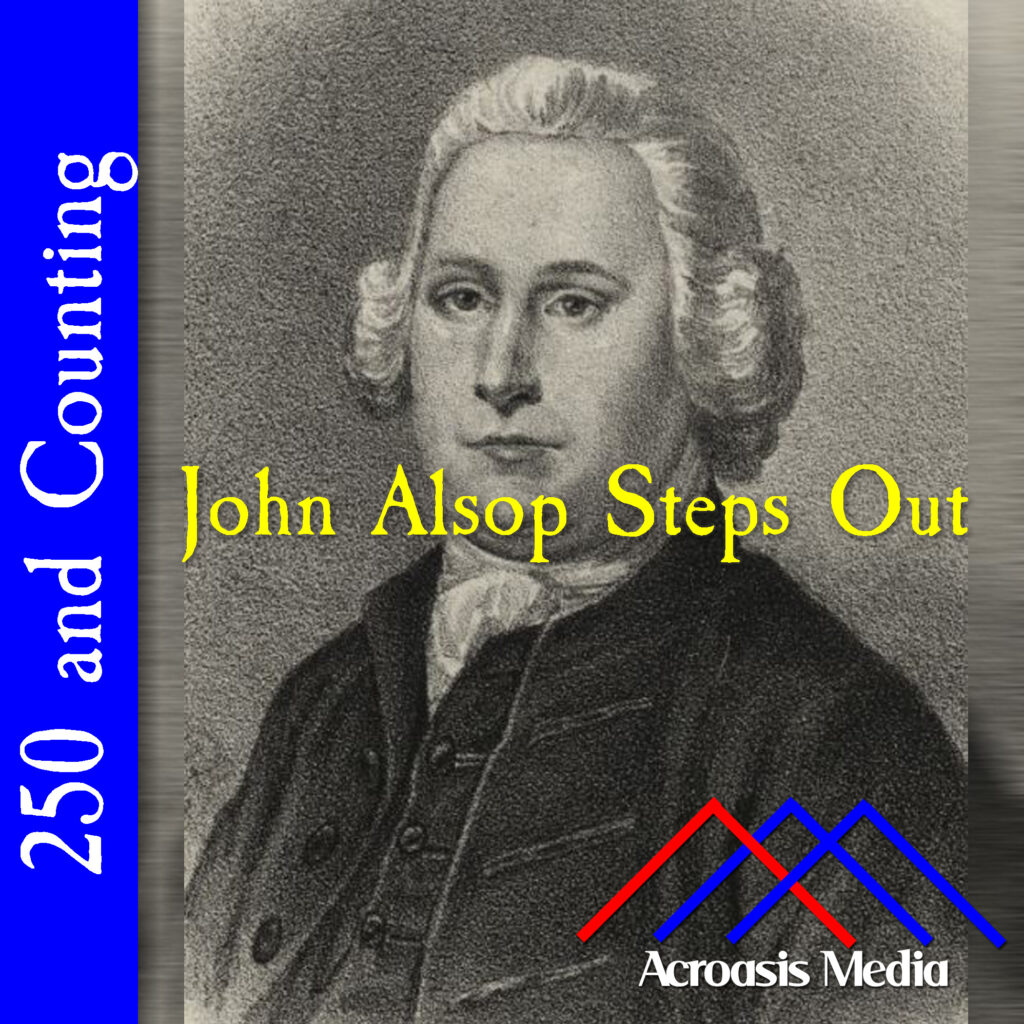
John Alsop was born in 1724 in New Windsor, Orange County, in the British Province of New York. He was the son of John Alsop, Sr. and Abigail Sackett. His father was a lawyer in New Windsor and later New York City, where he was largely interested in real estate.
As a young man he moved to New York City, where he entered the mercantile world with his brother Richard. The brothers became importers and merchants in cloth and dry goods. John became interested in civic and political activities. He was elected by New York County to serve in the Province of New York Assembly. He was one of the civic leaders that incorporated the New York Hospital Association and served as its first governor from 1770 to 1784. In 1757, his brother Richard retired from business and removed to Middletown, Connecticut.
Early in the Revolution, the Province of New York Assembly could not reach a conclusion about the Continental Congress. As a result, delegates were selected by the revolutionary committees in each county. In 1774, Alsop, along with James Duane, John Jay, Philip Livingston, and Isaac Low, was named as a delegate. When the First Continental Congress convened on September 5, Jay presented their credentials, and the Congress accepted. Alsop arrived in Philadelphia on September 14.
Alsop returned to the Second Continental Congress, and while he assisted in the war effort prior to the Declaration, he never lost his hope for reconciliation with Britain and he wound up resigning from the Congress rather than sign the Declaration. He did continue supporting the Continental Army, from his home in Newtown, NY until that town was overtaken by the British, then he continued to work from Manhattan. When they took Manhattan as well, Alsop fled to Connecticut and stayed there until 1783, when the occupation ended.
Alsop died at his home in Newtown, Queens County, New York, on November 22, 1794, and is buried in Trinity Church Cemetery in Manhattan. His considerable fortune, which he managed to rebuild, was passed to his daughter and son-in-law after his death.
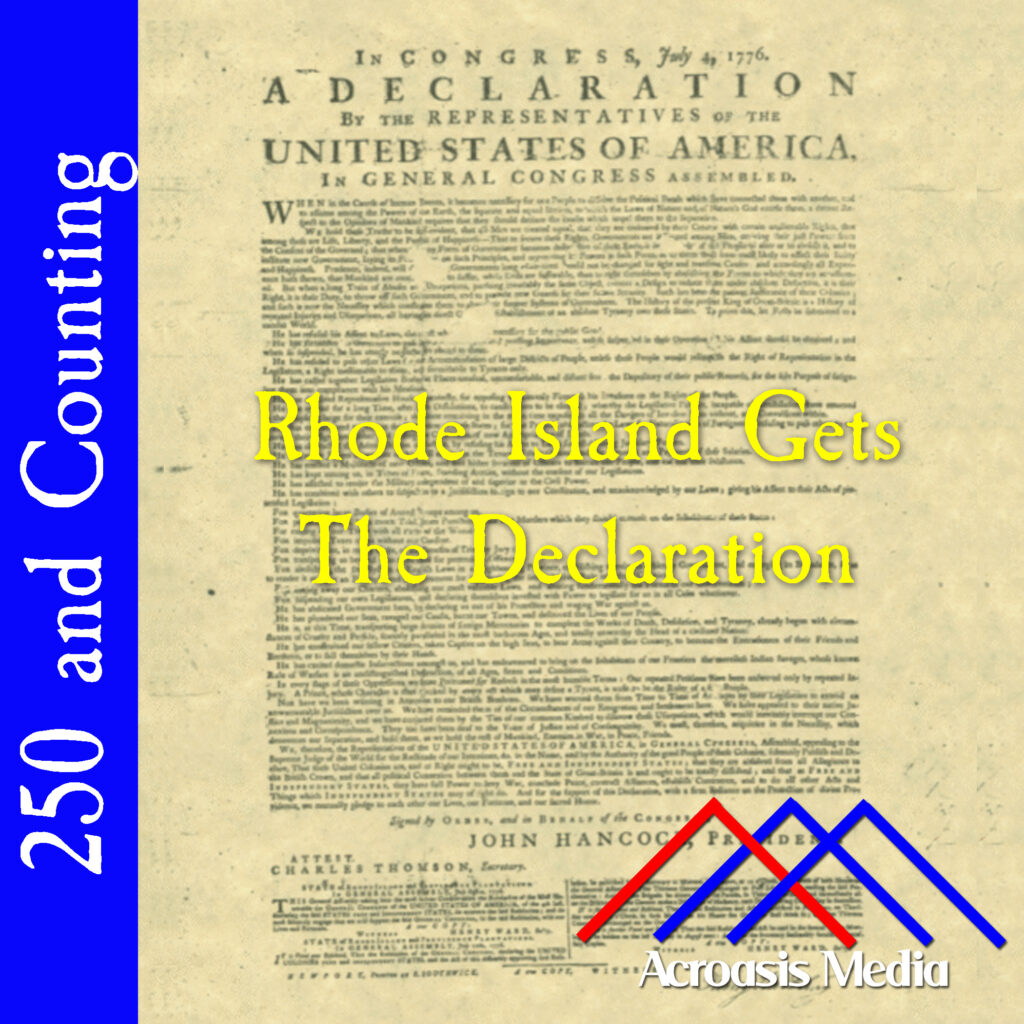
That the Southwick Broadside version of the Declaration of Independence isn’t as famous as the Dunlap Broadside shouldn’t be a surprise, since the Dunlap is the first one, and the one on which all the others are based. The the Southwick has the wrong date on it is an interesting nugget of information.
It’s worth noting, however, that while John Dunlap spent the better part of the night of July 4 setting the type, making a copy, making corrections, rinse and repeat, there are still mistakes on his as well. Some copies are on the “wrong” side of the paper (i.e. the watermark is reversed). Some have ink smudges, as though they were folded or rolled up before the ink was quite dry, and according to Ted Widmer in an Op-Ed he wrote for the New York Times (soft paywalled link), the punctuation doesn’t necessarily agree from one copy to another.
Historians have identified nineteen different versions of the Declaration of Independence printed around that time, though there may be a few more idenfied since that initial survey, which was in the late 1940s. Of those nineteen, 71 copies were known to exist. That said, when the survey was published, only 14 of those copies were the Dunlap Broadside. Now that there are 26 Dunlaps, we’re up to 84 contemporary copies of the Declaration, with another few whose provenance or source are unknown.
Interestingly, three copies of the Dunlap Broadside are in the hands of the British. One was seized by Richard Howe in New York, another accidentally fell into Howe’s hands while he was on Staten Island, and the third one was part of a larger Customs seizure from a man named Jonas Phillips, who was sending a box of documents to Great Britain from Philadelphia in late July 1776. Phillips’ note to his relative in Britain was in Yiddish, which the Customs agents thought was a code, so he seized the documents without examining them. It was only a couple of years ago that the contents were examined and identified.
Accidents of history, I tell you what.
For what it’s worth, only seven copies of the Southwick Declaration are known to exist today.
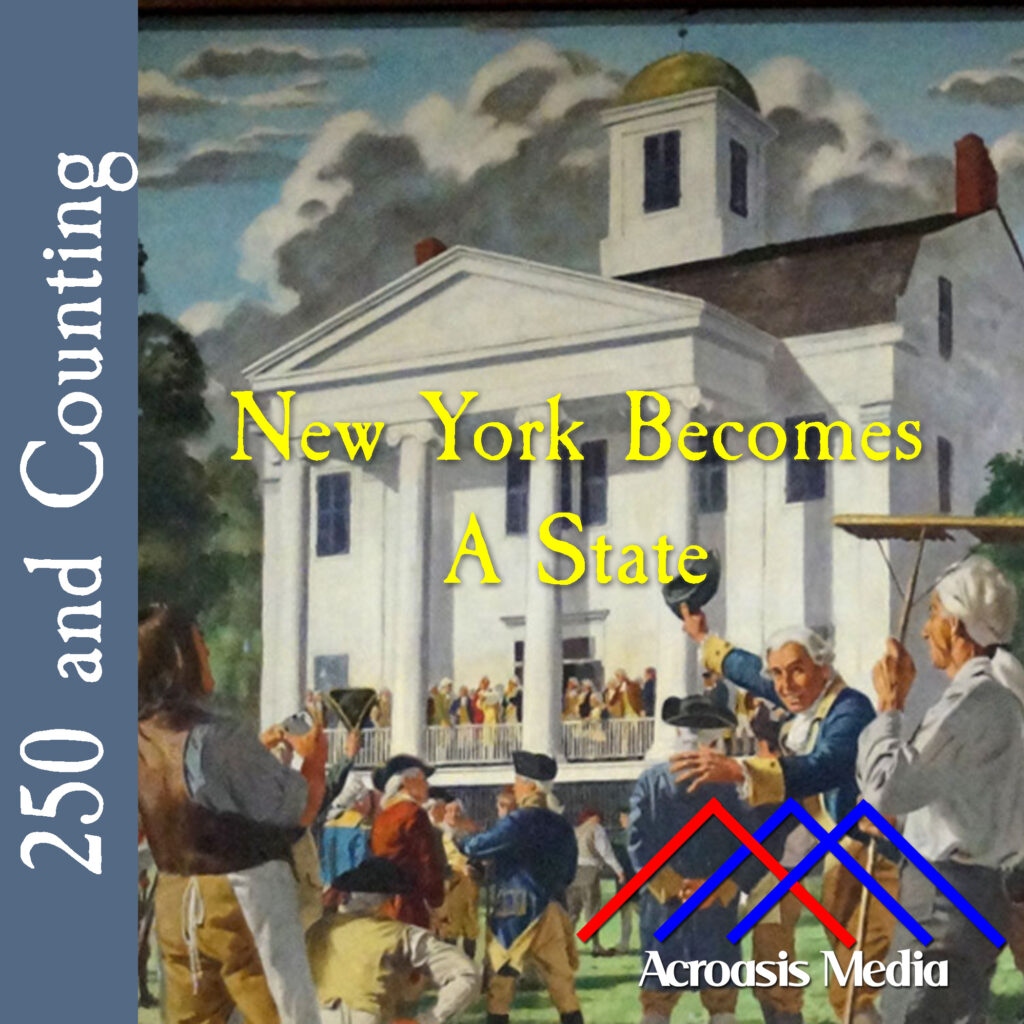
The provincial congress, having fled New York City to White Plains, received a copy of the Declaration of Independence and immediately approved it, then resolved to change their name from “The Provincial Congress of the Colony of New York” to “The Convention of Representatives of the STATE of New York.”
Thus, when the Declaration was read aloud to an assembled crowd a short time later, it was the first time it had been read in New York State. The earlier reading in New York City didn’t count for that, because New York was still technically a colony. (And sticklers know that “technically correct” is the best kind of correct. Sticklers also get beat up a lot…um, I’ve heard. )
About today’s cover art: the image that we used on the July 3 episode is also a depiction of Judge Thomas reading the Declaration to the people of White Plains, which is why it’s titled “Birth of the State of New York.” This is a different angle of the same event, created around the same time as the other image, by the same artist. Mr. Harker got some mileage out of this day and he wasn’t even there.
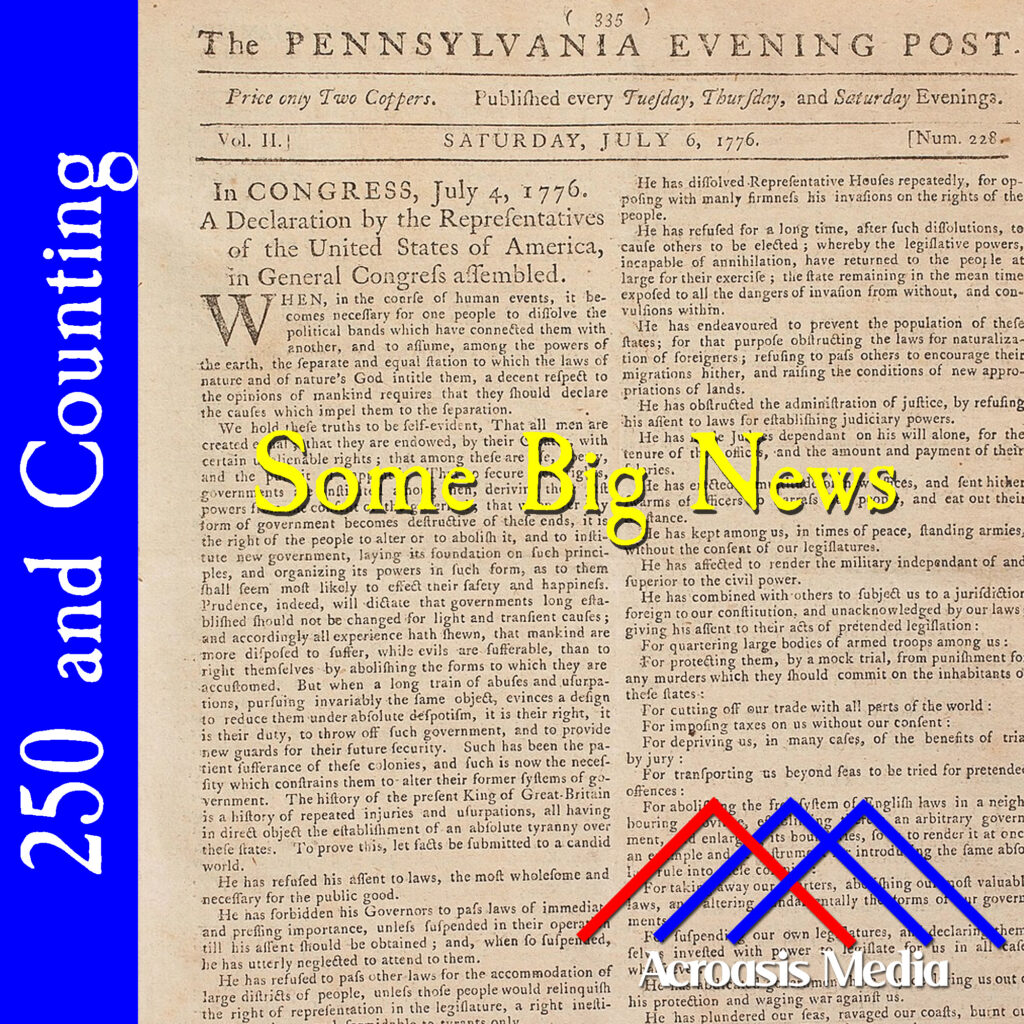
The Pennsylvania Evening Post is an interesting study in media relations and what a publication sometimes has to do in order to survive.
The Post was America’s first daily newspaper, but early on it published three times a week, on Tuesdays, Thursdays and Saturdays. They were generally supportive of the Revolution and published pro-Patriot articles.
As Mike explains, it was through a quirk of their publishing schedule that the Post was able to publish the text of the Declaration of Independence before anyone else, but the war got worse before it got better, and as things progressed into 1778 and the British occupied Philadelphia, they simply shifted gears, publishing Loyalist opinions and British-positive stories. All the other Patriot newspapers in town ceased operating. The crazy part of this is, because of their sudden political shift, the Supreme Executive Council of the Commonwealth of Pennsylvania placed its publisher, Benjamin Towne, on a list of traitors. Because the other printers had not returned to the city, the list was printed in The Post!
Some of this activity did lead to public controversy and a drop in revenue. Towne resorted to selling the newspaper via hawkers (the people on street corners in old movies hollering “Extra! Read all about it!” and such), but the Pennsylvania Evening Post ultimately shut down in 1784.
The unanimous Declaration of the thirteen united States of America,
When in the Course of human events, it becomes necessary for one people to dissolve the political bands which have connected them with another, and to assume among the powers of the earth, the separate and equal station to which the Laws of Nature and of Nature’s God entitle them, a decent respect to the opinions of mankind requires that they should declare the causes which impel them to the separation.
We hold these truths to be self-evident, that all men are created equal, that they are endowed by their Creator with certain unalienable Rights, that among these are Life, Liberty and the pursuit of Happiness.—That to secure these rights, Governments are instituted among Men, deriving their just powers from the consent of the governed,—That whenever any Form of Government becomes destructive of these ends, it is the Right of the People to alter or to abolish it, and to institute new Government, laying its foundation on such principles and organizing its powers in such form, as to them shall seem most likely to effect their Safety and Happiness. Prudence, indeed, will dictate that Governments long established should not be changed for light and transient causes; and accordingly all experience hath shewn, that mankind are more disposed to suffer, while evils are sufferable, than to right themselves by abolishing the forms to which they are accustomed. But when a long train of abuses and usurpations, pursuing invariably the same Object evinces a design to reduce them under absolute Despotism, it is their right, it is their duty, to throw off such Government, and to provide new Guards for their future security.
Such has been the patient sufferance of these Colonies; and such is now the necessity which constrains them to alter their former Systems of Government. The history of the present King of Great Britain is a history of repeated injuries and usurpations, all having in direct object the establishment of an absolute Tyranny over these States. To prove this, let Facts be submitted to a candid world.
He has refused his Assent to Laws, the most wholesome and necessary for the public good.
He has forbidden his Governors to pass Laws of immediate and pressing importance, unless suspended in their operation till his Assent should be obtained; and when so suspended, he has utterly neglected to attend to them.
He has refused to pass other Laws for the accommodation of large districts of people, unless those people would relinquish the right of Representation in the Legislature, a right inestimable to them and formidable to tyrants only.
He has called together legislative bodies at places unusual, uncomfortable, and distant from the depository of their Public Records, for the sole purpose of fatiguing them into compliance with his measures.
He has dissolved Representative Houses repeatedly, for opposing with manly firmness his invasions on the rights of the people.
He has refused for a long time, after such dissolutions, to cause others to be elected, whereby the Legislative Powers, incapable of Annihilation, have returned to the People at large for their exercise; the State remaining in the meantime exposed to all the dangers of invasion from without, and convulsions within.
He has endeavoured to prevent the population of these States; for that purpose obstructing the Laws for Naturalization of Foreigners; refusing to pass others to encourage their migrations hither, and raising the conditions of new Appropriations of Lands.
He has obstructed the Administration of Justice by refusing his Assent to Laws for establishing Judiciary Powers.
He has made Judges dependent on his Will alone for the tenure of their offices, and the amount and payment of their salaries.
He has erected a multitude of New Offices, and sent hither swarms of Officers to harass our people and eat out their substance.
He has kept among us, in times of peace, Standing Armies without the Consent of our legislatures.
He has affected to render the Military independent of and superior to the Civil Power.
He has combined with others to subject us to a jurisdiction foreign to our constitution, and unacknowledged by our laws; giving his Assent to their Acts of pretended Legislation:
For quartering large bodies of armed troops among us:
For protecting them, by a mock Trial from punishment for any Murders which they should commit on the Inhabitants of these States:
For cutting off our Trade with all parts of the world:
For imposing Taxes on us without our Consent:
For depriving us in many cases, of the benefit of Trial by Jury:
For transporting us beyond Seas to be tried for pretended offences:
For abolishing the free System of English Laws in a neighbouring Province, establishing therein an Arbitrary government, and enlarging its Boundaries so as to render it at once an example and fit instrument for introducing the same absolute rule into these Colonies:
For taking away our Charters, abolishing our most valuable Laws and altering fundamentally the Forms of our Governments:
For suspending our own Legislatures, and declaring themselves invested with power to legislate for us in all cases whatsoever.
He has abdicated Government here, by declaring us out of his Protection and waging War against us.
He has plundered our seas, ravaged our coasts, burnt our towns, and destroyed the lives of our people.
He is at this time transporting large Armies of foreign Mercenaries to compleat the works of death, desolation, and tyranny, already begun with circumstances of Cruelty & Perfidy scarcely paralleled in the most barbarous ages, and totally unworthy the Head of a civilized nation.
He has constrained our fellow Citizens taken Captive on the high Seas to bear Arms against their Country, to become the executioners of their friends and Brethren, or to fall themselves by their Hands.
He has excited domestic insurrections amongst us, and has endeavoured to bring on the inhabitants of our frontiers, the merciless Indian Savages whose known rule of warfare, is an undistinguished destruction of all ages, sexes and conditions.
In every stage of these Oppressions We have Petitioned for Redress in the most humble terms: Our repeated Petitions have been answered only by repeated injury. A Prince, whose character is thus marked by every act which may define a Tyrant, is unfit to be the ruler of a free people.
Nor have We been wanting in attentions to our British brethren. We have warned them from time to time of attempts by their legislature to extend an unwarrantable jurisdiction over us. We have reminded them of the circumstances of our emigration and settlement here. We have appealed to their native justice and magnanimity, and we have conjured them by the ties of our common kindred to disavow these usurpations, which, would inevitably interrupt our connections and correspondence. They too have been deaf to the voice of justice and of consanguinity.
We must, therefore, acquiesce in the necessity, which denounces our Separation, and hold them, as we hold the rest of mankind, Enemies in War, in Peace Friends.
We, therefore, the Representatives of the united States of America, in General Congress, Assembled, appealing to the Supreme Judge of the world for the rectitude of our intentions, do, in the Name, and by Authority of the good People of these Colonies, solemnly publish and declare, That these United Colonies are, and of Right ought to be Free and Independent States; that they are Absolved from all Allegiance to the British Crown, and that all political connection between them and the State of Great Britain, is and ought to be totally dissolved; and that as Free and Independent States, they have full Power to levy War, conclude Peace, contract Alliances, establish Commerce, and to do all other Acts and Things which Independent States may of right do. And for the support of this Declaration, with a firm reliance on the protection of divine Providence, we mutually pledge to each other our Lives, our Fortunes and our sacred Honor.
New Hampshire: Josiah Bartlett, William Whipple, Matthew Thornton Massachusetts:Samuel Adams, John Adams, John Hancock, Robert Treat Paine, Elbridge Gerry Rhode Island: Stephen Hopkins, William Ellery Connecticut: Roger Sherman, Samuel Huntington, William Williams, Oliver Wolcott New York: William Floyd, Philip Livingston, Francis Lewis, Lewis Morris New Jersey: Richard Stockton, John Witherspoon, Francis Hopkinson, John Hart, Abraham Clark Pennsylvania: Robert Morris, Benjamin Rush, Benjamin Franklin, John Morton, George Clymer, James Smith, George Taylor, James Wilson, George Ross Delaware: George Read, Caesar Rodney, Thomas McKean Maryland: Samuel Chase, William Paca, Thomas Stone, Charles Carroll of Carrollton Virginia: George Wythe, Richard Henry Lee, Thomas Jefferson, Benjamin Harrison, Thomas Nelson Jr., Francis Lightfoot Lee, Carter Braxton North Carolina: William Hooper, Joseph Hewes, John Penn South Carolina: Edward Rutledge, Thomas Heyward Jr., Thomas Lynch Jr., Arthur Middleton Georgia: Button Gwinnett, Lyman Hall, George Walton