Category: Declaration of Independence

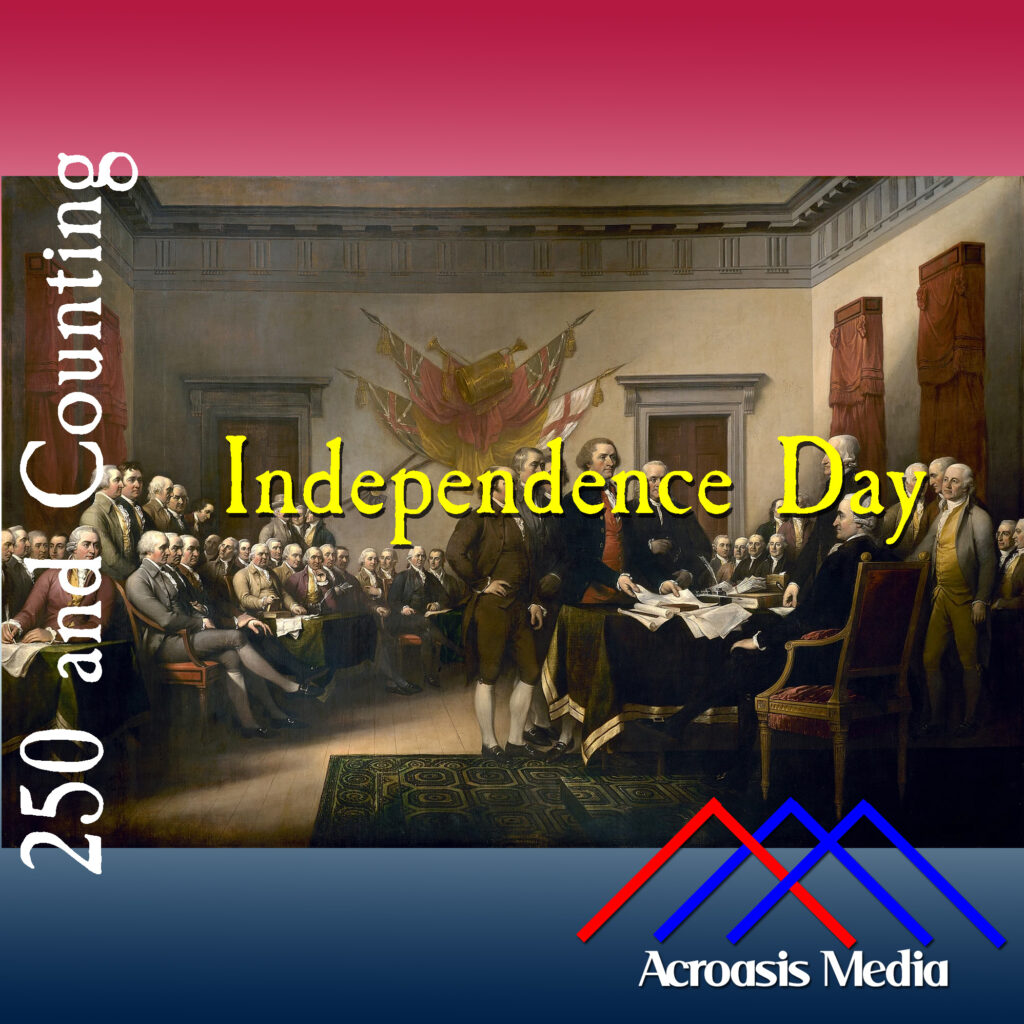
  • Independence Day–July 4, 1776

    Cover art for July 4, 1776: Declaration of Independence, depicting the five-man drafting committee of the Declaration of Independence presenting their work to the Congress. Painted by John Trumbull in 1819. The original hangs in the US Capitol Rotunda.

    Happy Independence Day!

    I don’t know if we ever mentioned this, but People of a Certain Age may remember that back in the Bicentennial Days, on our television every night during the 8:00 PM hour there was a one-minute (two, if you count the commercial) which offered up some snippet of history from that day 200 years previous, told to us by a famous person (whose identity changed every day).

    Here’s a YouTube playlist of the shows, if you’re curious. (One of the videos is a 20-minute collection of ads, and another is a straight-up recorded hour of CBS television, but you’ll get the idea.)

    Does that sound familiar? It should. The “Bicentennial Minute,” as it was usually called, ran from July 1974 to 1976, and was meant to end on July 4, 1976, but instead ran through the end of that year. So they did 912 episodes. At any rate, this was the inspiration for 250 and Counting. I wanted to revive the Bicentennial Minute in podcast form.

    Now, there was a lot of anticipation as we got closer to July 4, 1976/1776, because after all, that was the big day, yes? The July 4 episode was narrated by First Lady Betty Ford. But of course, the Lee Resolution had already been approved, the editing of the document was yesterday, the signing of the finished Declaration wouldn’t happen for some time…all there was for Independence Day was the vote to approve the Declaration as edited, so it wound up being a little anticlimactic. (We did try to warn you about not getting too excited. Learn From My Fail and all that.)

    Mike and I have committed to 729 episodes, from January 1, 2025 through the end of this year. After that, who knows? Maybe we’ll keep it up, maybe we’ll move on to another project. That largely depends on your level of interest. But there’s still lots of American History to look into as word gets out about this bold step our Founding Fathers took, and the repercussions for the war. We still have a couple of major battles to deal with (Long Island and Trenton, NJ come immediately to mind), the launching of the first military submarine attack, the Cherokee-American Wars are heating up, and so much more. We hope you’ll continue to ride with us. And thank you for riding so far.

  • The Question Is Called–July 2, 1776

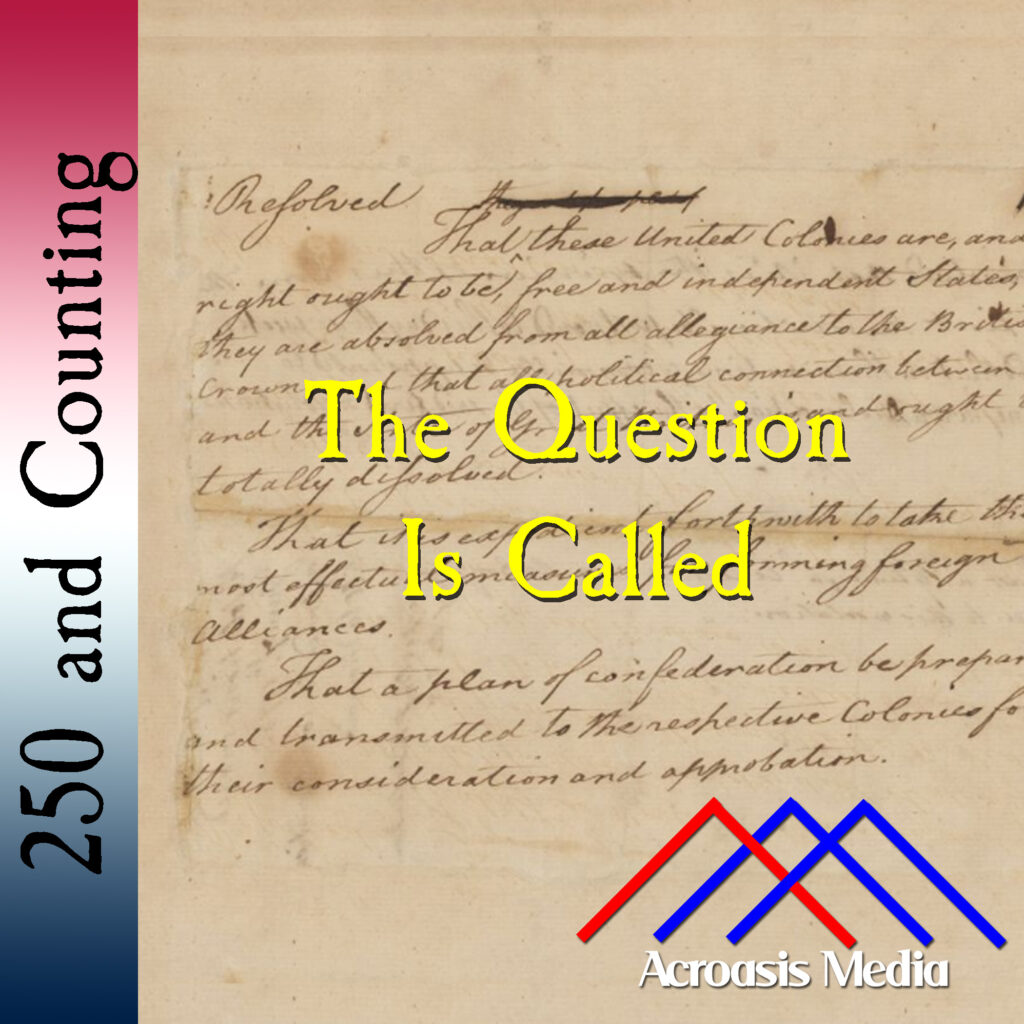
    Cover art for July 2, 1776: The original Lee Resolution, in Richard Henry Lee's handwriting. via National Archives.

    It’s been twenty-five days since the Lee Resolution was introduced, asking the delegates of the Continental Congress to vote for Independence from Great Britain. Some of the delegates returned to their homes to get the formal instructions in the affirmative, others stayed behind and worked on drafting a Declaration.

    Finally all the stars have aligned, and the votes come in: twelve in favor, none against, and one abstention. (In tomorrow’s episode we’ll talk about why that abstention happened.)

    This was a huge move on the part of the Continental Congress; people like to say that it hadn’t been done before, but that’s not quite correct. San Marino broke away from the Roman Empire in the year 301. But since then it had only happened five times, and while one or two of the others also involved bloodshed, the other new nations weren’t under threats of treason and the punishments associated with that particular crime. So it wasn’t quite unique, but it also wasn’t something that was common. And breaking away from the British Empire? Well, that had certainly never been done before.

    In being asked to vote for Independence, these men were literally putting their lives on the line, and that’s the thing it’s important not to forget.

  • The First Draft–June 18, 1776

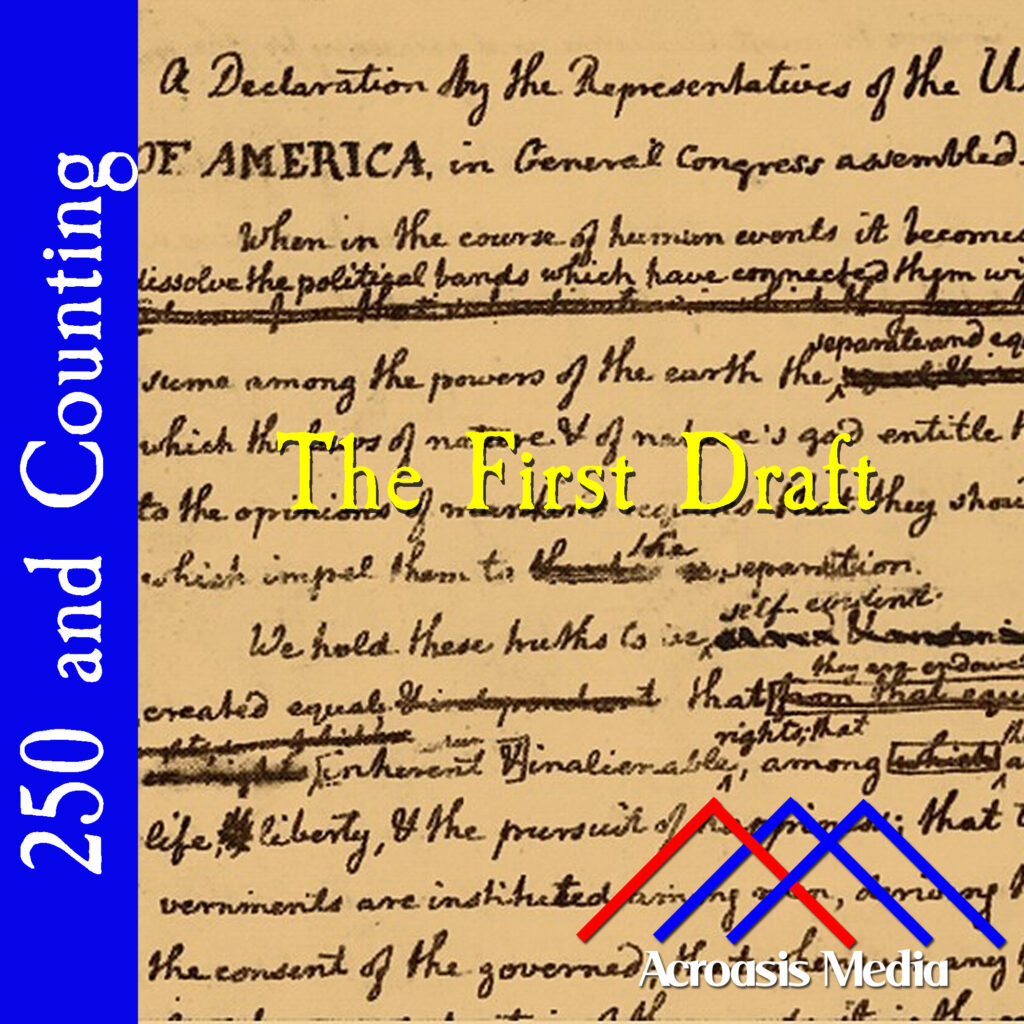
    Cover art for June 18, 1776: Detail of the original first draft of the Declaration, in Thomas Jefferson's handwriting. The finished engrossed version (what you're used to seeing) has Timothy Matlack's handwriting.

    As Mike notes, marking today as the day that the first draft of the Declaration of Independence was presented to Congress is largely a matter of interpoloation on the part of historians working from incomplete information. But who are we to argue?

    The writing you see in today’s cover art is, in fact, Thomas Jefferson’s, mostly. Some of it is corrections made by Benjamin Franklin. It’s also worth noting that this image came from Wikimedia Commons and is color-adjusted. The original image has the paper looking much whiter, but the parchment coloring makes for a little bit better contrast against the ink.

    Incidentally, some documents from this era do look very good still while others are quite faded. The original Declaration of Independence, for example, is rather faded. This is because over time, the ink oxidized from black to a brownish color. In addition, it was displayed under relatively bright light for many years, and the ultraviolet radiation from those lights further faded the ink. The specific paper can also have an effect; some documents are written on a kind of cotton rag, which allows the ink to “bleed” over time and start to look rather smeared, whereas other documents written on vellum (which was basically calfskin) hold their shape better. In both cases the color holds better unless UV gets to it.

    Oddly enough, paper from the 19th through mid-20th centuries made use of wood pulp, which turns color and becomes more brittle over time, and is more acidic, which will damage the ink as well. So it’s possible that there could be a “hole” in our historical records unless steps are taken to preserve, or at least digitize, some of them.

  • The Declaration Begins–June 11, 1776

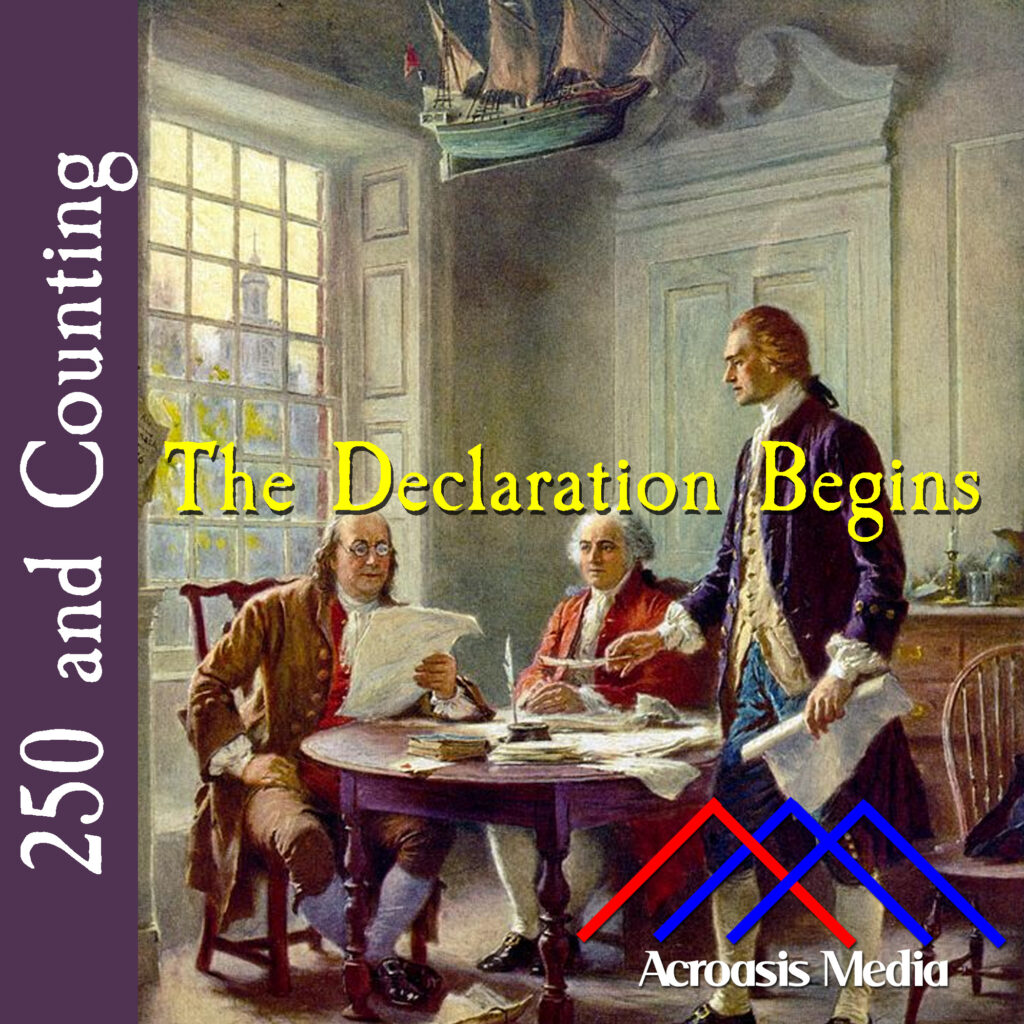
    Cover art for June 11, 1776: "Writing the Declaration of Independence 1776" by Jean Leon Gerome Ferris, 1900. via Wikimedia Commons.

    After temporarily tabling the Lee Resolution, which called for our independence from Great Britain, the Second Continental Congress identified its Declaration Committee. Five men were chosen to articulate why we were asking King George to go screw himself in the politest possible terms.

    While the Committee involved five men—John Adams, Benjamin Franklin, Thomas Jefferson, Roger Sherman and Robert Livingston—most of the work fell to three of them: Jefferson, Adams and Franklin. Jefferson spent a few days working on the first draft in isolation, then Adams and Franklin began reviewing and revising his work.

    The Declaration Committee worked steadily for over two weeks before presenting their finished product to the Congress, though John Hancock did get to see an earlier draft.

  • Who Wants To Write A Declaration?–June 10, 1776

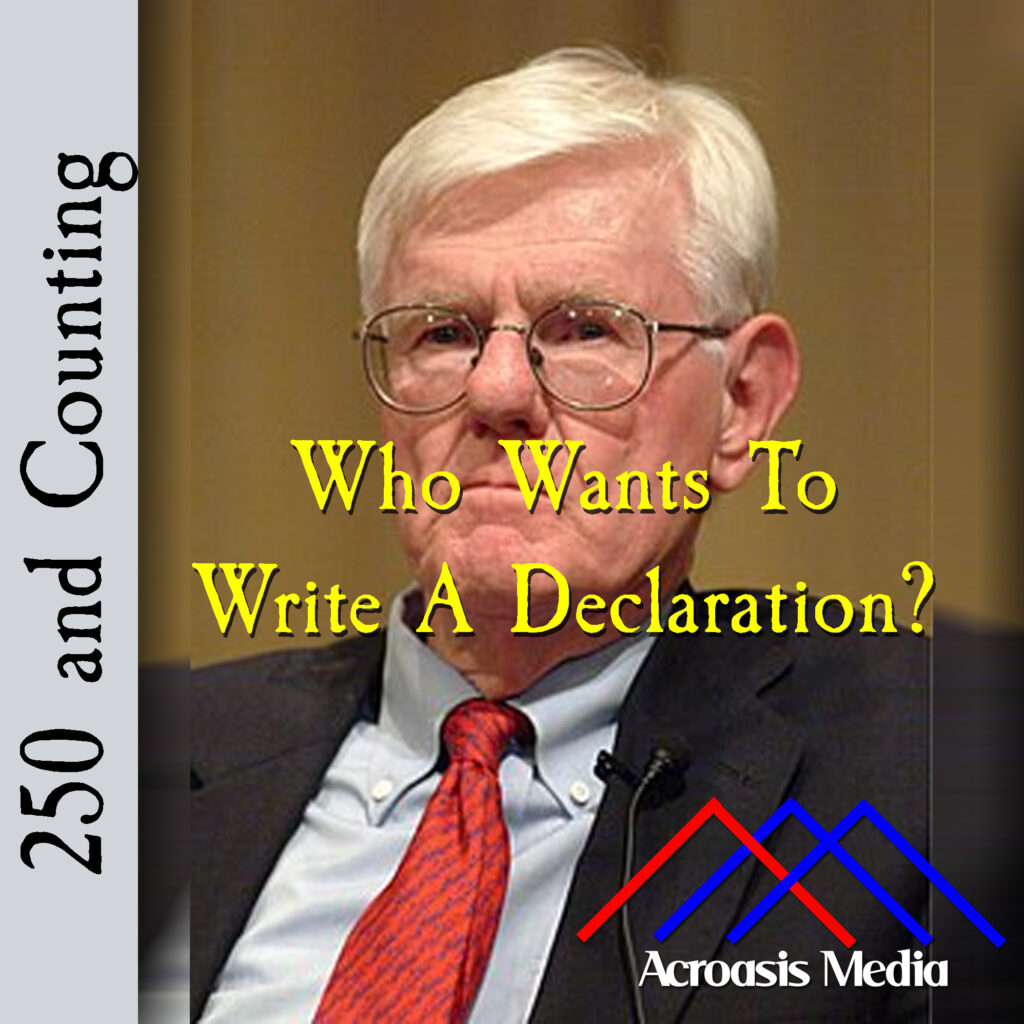
    Cover art for June 10, 1776: photo of Gordon S. Wood (1933-2026) in 2008. Photo by Earl McDonald, NARA.

    With the Lee Resolution on hold for the time being, but still a very real thing, the Continental Congress needed to get organized with regard to how this was going to be presented and effected. As we told you a few days ago, some delegates needed hard instructions. Others needed a little more clarity regarding the structure. Still others determined that a formal declaration was necessary.

    Why? You have to remember, this kind of thing had never been done before. And even though some other nations saw what was going on and were sympathetic in some way, it was still necessary for us to lay out the argument, and in such a way that the entire world could look at it and say “Well yeah, that makes sense.”

    (Maybe not in so many words; they probably said archaic stuff like “ye” or something, but you get the idea. Also: catch me on a slow show notes day and I’ll dive into the whole “ye” thing.)

    Now, you may be wondering why Lee’s proposal was presented on the 7th and only on the 10th did they decide that a Declaration Committee was necessary? I have two reasons off the top of my head. First, June 7th, 1776 was a Friday, and while they did do some business on Saturday, the whole thing needed greater consideration so it was probably tabled to the 10th. Second, remember we’ve been telling you for many months that the Second Continental Congress was a very thoughtful, deliberate body of men. They considered many, many things before making decisions, and it’s likely that they had to arrive at consensus regarding the need for a declaration at all. So in that respect it does make sense.

    And tomorrow, while one guy gets most of the credit, we’re going to meet all of the men responsible for the declaration.

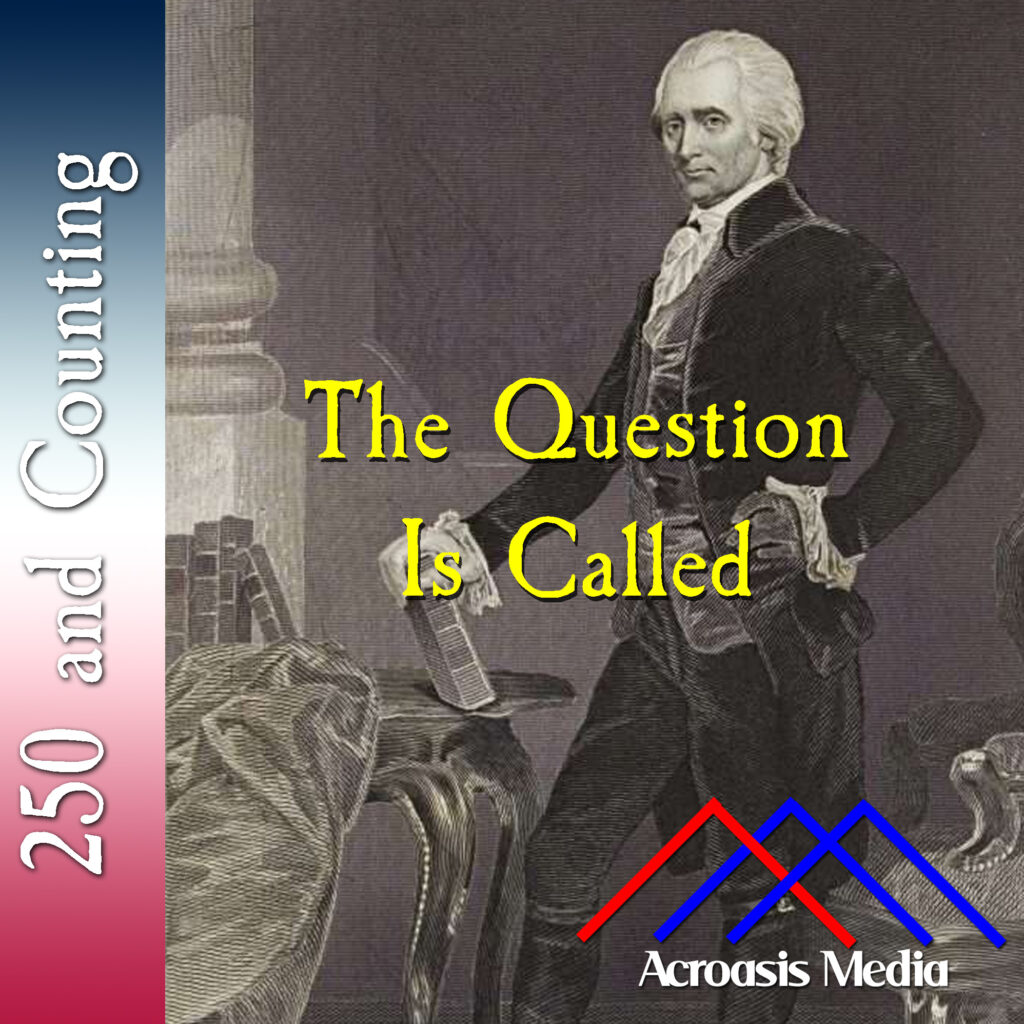
  • The Question is Called–June 7, 1776

    Cover art for June 7, 1776: An 1861 steel engraving of Richard Henry Lee, based on an 1860 painting by Alonzo Chappel. Part of the Massachusetts Historical Society Online Collection.

    It was one of the last major steps before the Declaration, and it happened on this day. The Lee Resolution, as it came to be known, was named after Richard Henry Lee, delegate from Virginia, who was given instructions from his government to propose that the Colonies become designated as free and independent states.

    Now, because some of the delegates didn’t have specific instructions on the Lee Resolution, and because Congress had long ago decided that votes needed to be unanimous, the vote was postponed for three weeks to give everyone an opportunity to get instructions from home. It took 26 days rather than 21 to get everyone to the point of voting, with the exception of New York, which was under instructions not to vote at all, so they abstained from voting until mid-July, at which point they finally also cast their Yes vote because a new legislative body was in place.

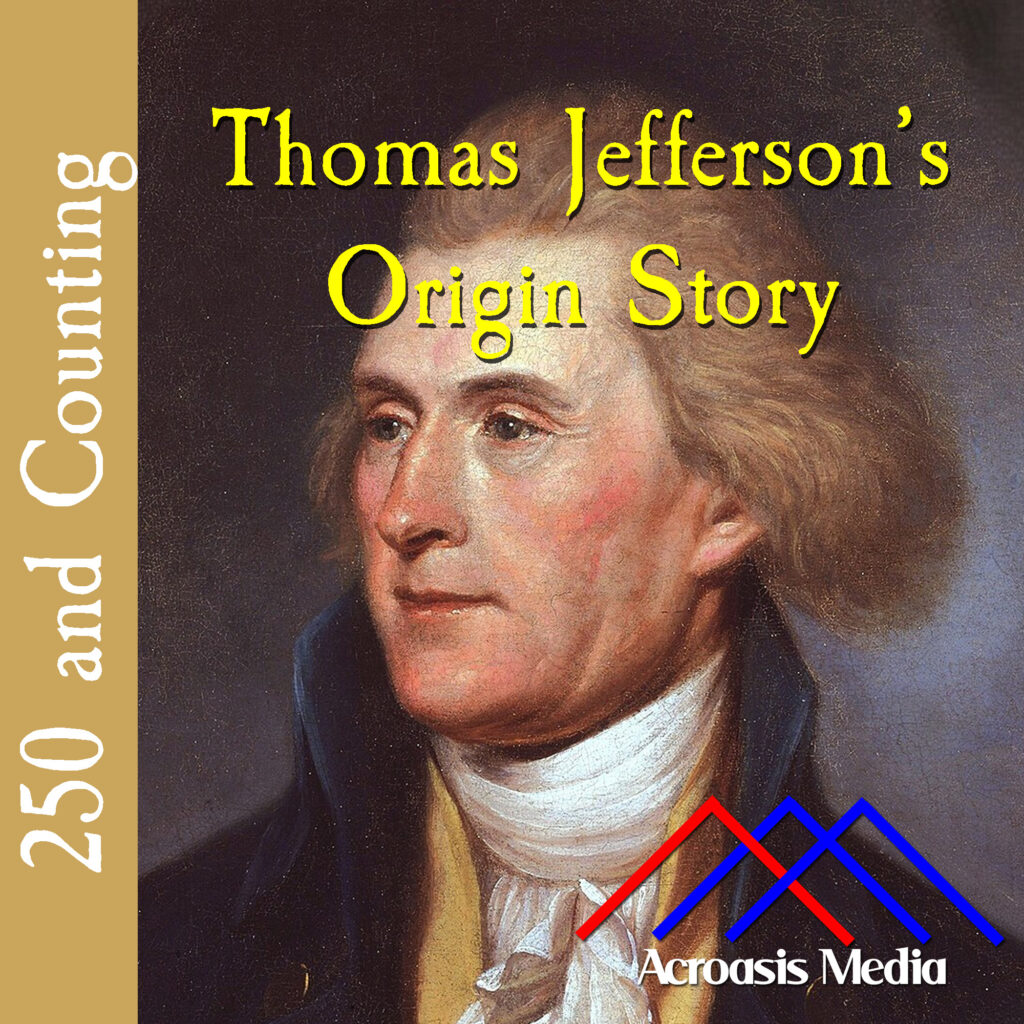
  • Thomas Jefferson’s Origin Story–May 14, 1776

    Cover art for May 14, 1776: Portrait of Thomas Jefferson in 1791, by Charles Willson Peale. Now hanging in Independence Hall.

    Thomas Jefferson gets most of the credit for writing the Declaration of Independence, but Thomas Jefferson’s background clearly informed his writing of that document. That’s what Mike talks about in today’s episode.

    In this space I’d like to tell you a little about Declaration House. The building was newly erected at the time Jefferson rented out a room from its builder, a bricklayer named Jacob Graff (which is why it was originally called the Graff House, go figure).

    Jefferson lived in the space with his 14-year-old enslaved valet, Robert Hemmings. Between 1776 and 1883, the house underwent several remodelings until it was finally torn down. It was reconstructed in 1975 by the National Park Service, and when it’s open, it has some museum exhibits on the first floor along with a short film about the drafting of the Declaration. The second floor is a reproduction of the space Jefferson used, containing period furnishings.

    As this is published, the site has been closed to the public since 2025 as part of a comprehensive rehabilitation project.