In the wake of Lexington and Concord, some places didn’t wait to start assembling troops to fight off the British. Most of them were in that part of the Colonies, though.
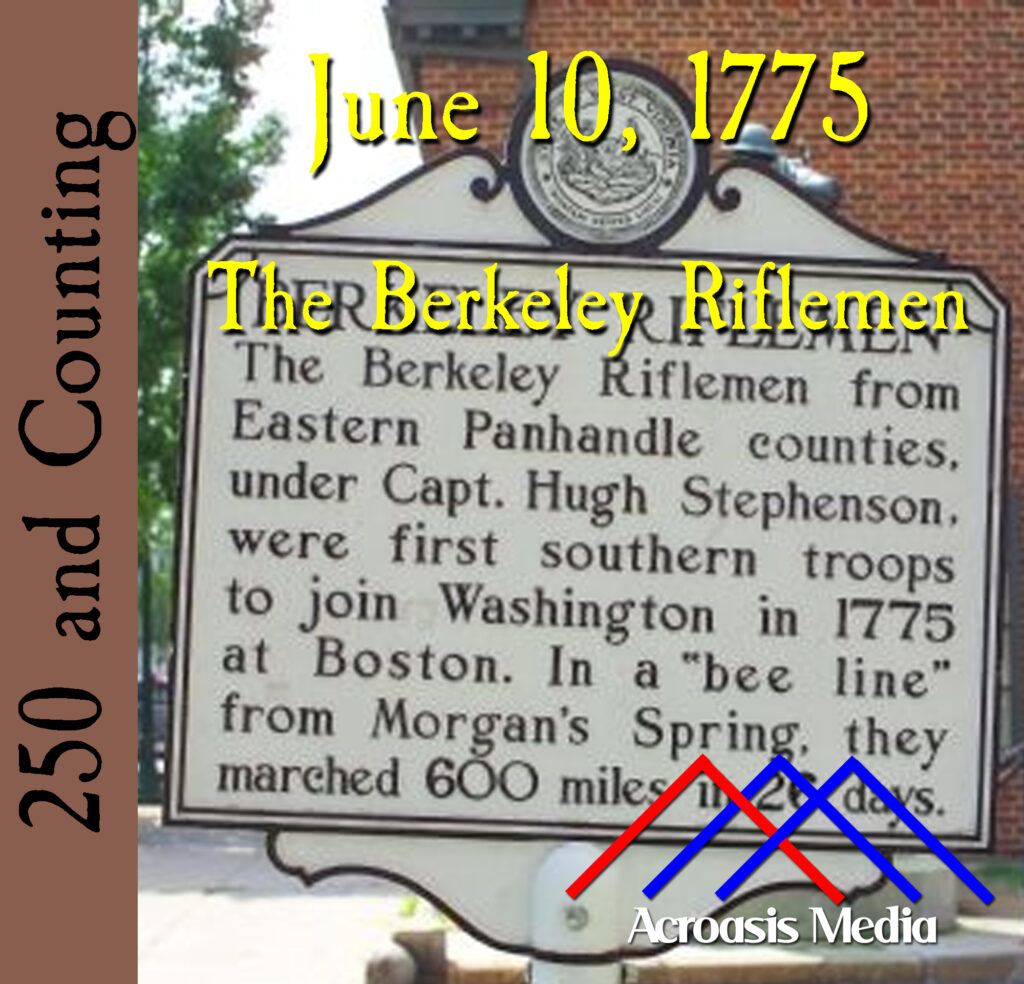
Enter the Berkeley County Riflemen, from a section of Virginia that is now West Virginia. George Washington put out the word that soldiers were needed, and about a hundred men from Martinsburg stepped up, even going so far as to ensure that they dressed mostly alike, since there was no Continental Army just yet, and therefore there were no uniforms.
And while the sign doesn’t really say much about it, the Berkeley County Riflemen are said to be the genesis of the United States Army.
In the aftermath of the Gunpowder Incident, Lord Dunmore decided that the better part of valor involved getting out of town before the locals could get a good lynch mob together, and he left Virginia on the HMS Fowey.
Here’s the interesting part: the Fowey which Dunmore boarded was not the first of its name; in fact it was the fifth. But the other interesting part is that it was the second one of that name to sink in American waters.
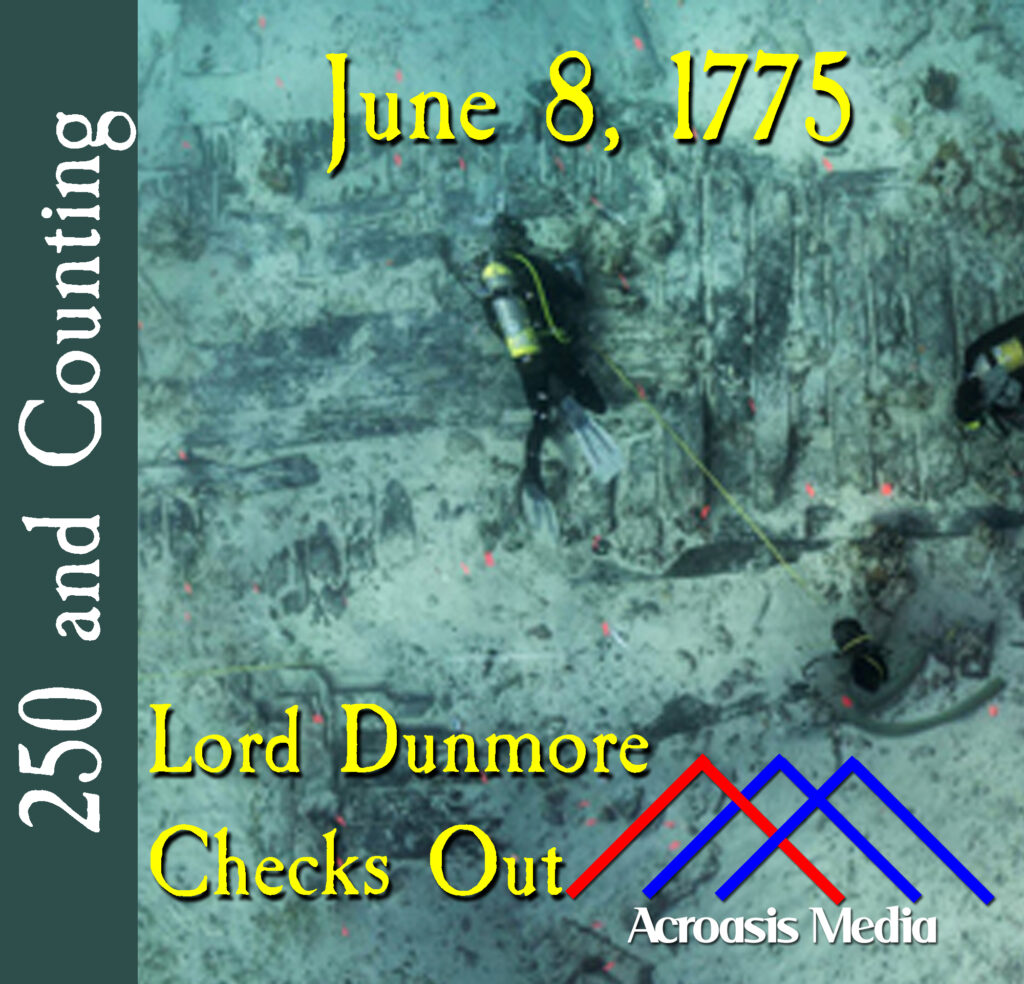
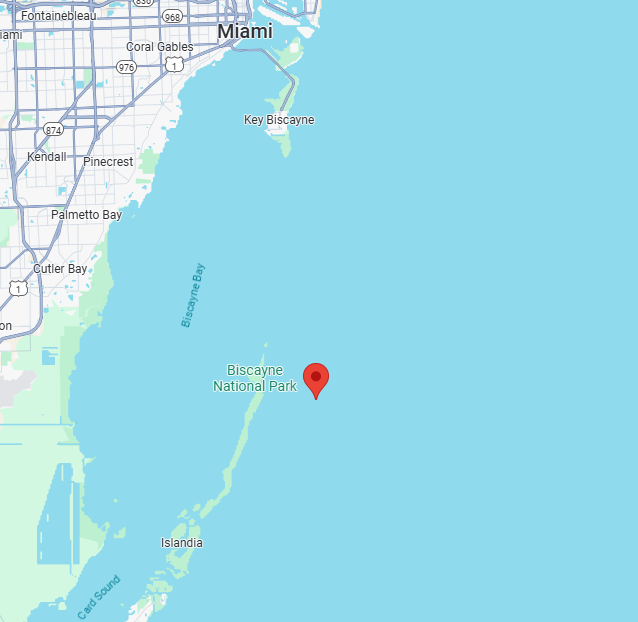
The fourth HMS Fowey was a fifth-rate vessel (remember, ratings refer to the number of guns, not the quality of the boat) with 44 guns on it. It was first launched in 1744. In June of 1748 the ship struck a coral reef and sank off the coast of Florida (see map). She wasn’t re-discovered until 1975 and, through an agreement with England, is considered a Protected Site by the National Park Service. The photo used for today’s art is of divers swimming over the exposed timbers of that ship. It’s definitely a “look but don’t touch” situation.
In 1749 another Fowey was built, a sixth-rate frigate with 24 guns. This is the one which Lord Dunmore used to skip town. The remains of this ship are probably in the York River, but it’s not known for sure.
Why is “Fowey” such a popular name for a ship? It’s not clear. In fact, it’s not clear whether the name comes from the Cornish town of Fowey, or the river Fowey which runs through it.
It’s been nearly two months since the Gunpowder Incident started, and the entire time, the Royal Governor, Lord Dunmore, has been trying to keep things from getting out of hand.
He might—might—have succeeded, had something not happened on this day in 1775.
The Second Continental Congress has only been convened for about five days and things are already heating up for them.
Delegates are still arriving. Lexington and Concord has upset their original plans so they’re making alternate plans. And even the alternate plans they made five days ago are being amended.
And then Virginia comes in with some crazy idea about Independence? Will the madness never end?
(Spoiler alert: it doesn’t, but we’ll tell you if it ever does.)
As we noted a few days ago, both Payton Randolph and George Washington managed to quell a couple of militia-based riots which would have resulted in the torching of the Royal Governor’s mansion. Both of those riots came from Fredericksburg.
What nobody counted on, however, was that militia from other parts of Virginia had the same idea to march on Williamsburg and wreak a little havoc. They were led by Patrick Henry, who (let’s face it) extorted payment for the missing gunpowder from Lord Dunmore, and then took off for Philadelphia to deliver the money.
Dunmore called him out on it, declaring Henry an outlaw, and the Virginia citizens acted accordingly. I’ve said too much here; listen in to see what they did.
Payton Randolph was the Speaker of the House of Burgesses during this period in 1775, and while what was said wasn’t recorded, he managed to put down two riots in which Virginians were ready to trash the Royal Governor’s place with the Royal Governor inside of it.
He did it twice.
No question, this man was a patriot who cared deeply about the soul of its people. And if he hadn’t died just a few months later, he would almost certainly have been a name we’d have heard a lot more often in recent years.
Word was already getting out about the fighting in and near Boston. While Virginia hadn’t been much of a concern to anyone until then, the British wanted to ensure that there wouldn’t be any trouble.
So in the middle of the night, they removed the gunpowder from the magazine at Williamsburg. Oddly, as we’ll learn shortly, this wasn’t a popular move on their part.
One of the interesting things about many of the British officials who were around during the early days of the American Revolution is that most of them were actually pretty good at their job. It’s just that they were given rather thankless tasks to do which wound up backfiring on them.
And then there’s John Murray, the Fourth Earl of Dunmore. History has not been especially kind to Lord Dunmore, not should it be. He often acted rashly and without consulting some of the people he should have consulted, and in the end he wound up getting a lot of people very angry, instead of getting a few people a little annoyed.
Lord North, over in London, is often defined as the Prime Minister who lost the Colonies, but Dunmore clearly did his part to ensure that they stayed lost regardless of the outcome. And today in history, Lord Dunmore issued a proclamation against electing delegates to the Second Continental Congress, but the Second Virginia Convention, by now in its last day or so, ignored him and sent people anyway. (They’d already elected a couple, so Dunmore’s proclamation was a little bit of closing the barn after the horse had escaped.)
We hate to say it, but Thomas Jefferson was kind of a nepo baby.
Jefferson was part of the Second Virginia Convention, and no doubt he got there honestly, as a man who had lots of property and was well-regarded, even at the tender age of 32. But when Peyton Randolph needed someone to replace him in the Second Continental Congress, he called on Jefferson—who was his cousin.
On the positive side, Jefferson acquitted himself well in both the Virginia House of Burgesses, where he represented Albemarle County, and simultaneously at the Second Continental Congress. So while he probably didn’t need the familial boost, it surely didn’t hurt.
Never let it be said that we can’t find the less-obvious folks in American History. Thomas Bayly was definitely one of them.
Bayly was a one-term congressman to the US House of Representatives as part of the 13th Congress (as this is written, we’re in the 118th). By most accounts he wasn’t especially distinguished, but only serving for the one term didn’t mean that he was politically finished. A few years after he left Congress, he was elected to the Virginia House of Delegates, and he was part of the Virginia Constitutional Convention.
Bayly was “minor” enough in history that we were only able to find a single image of him—the one in the cover artwork. And it’s actually a black-and-white rendering of a color painting that’s been zoomed in to the point where you can see the texture on the canvas. It’s a detail from a painting of the entire House of Delegates around 1820.