This day in American History, 250 years ago.

  • Sam Adams Has Thoughts–December 26, 1775

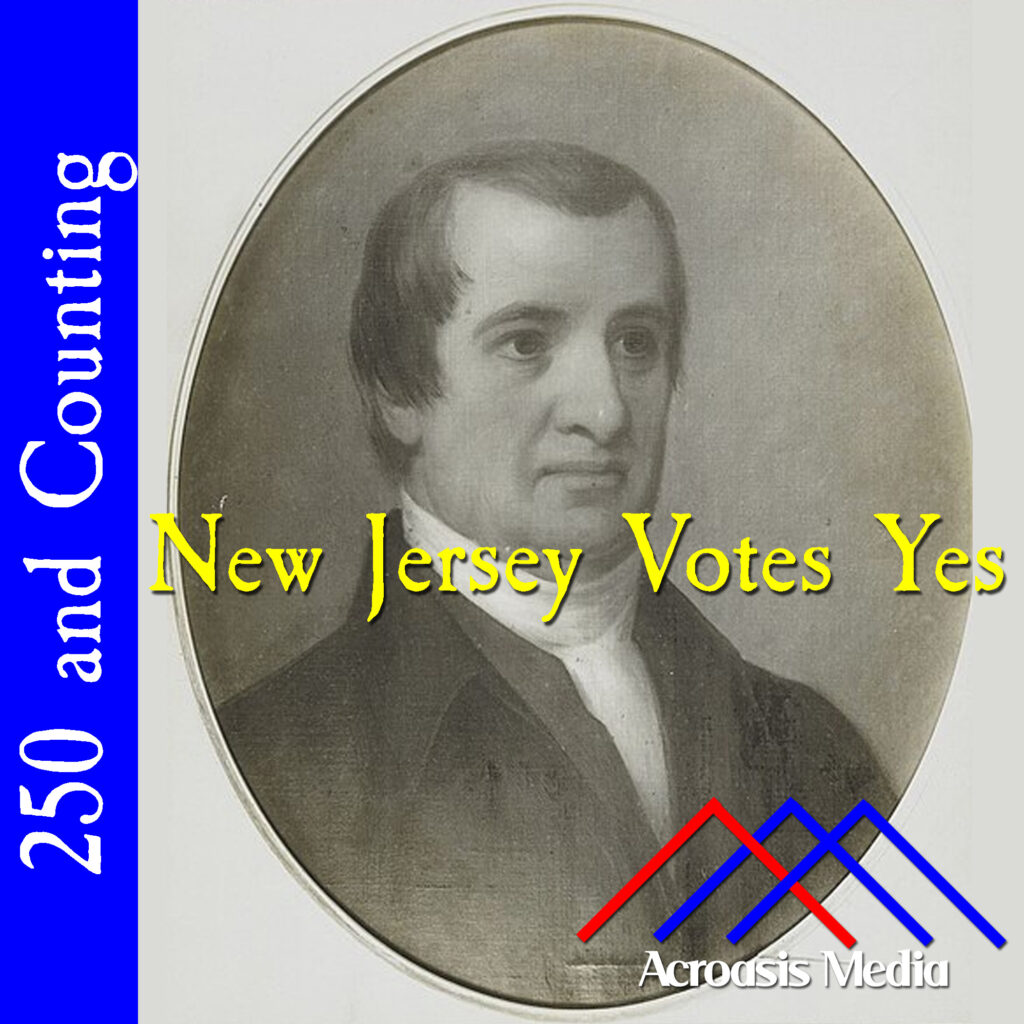
    Cover art for December 26, 1775: portrait of Samuel Adams, 1772. By John Singleton Copley - Museum of Fine Arts, Boston, and Wikimedia Commons
    Portrait of Samuel Adams, 1772. by John Singleton Copley – Museum of Fine Arts, Boston, and Wikimedia Commons

    Most of us have a pop culture view of the American Revolution period, and some of us go so far as to have some idea of what happened via the 1970 film 1776. Oddly enough, that movie has both a ton of accuracy with its facts (but not necessarily in the right order), and a ton of dramatic license.

    One thing the film gets right is that John Adams was a bit of a nudge, constantly pushing the other delegates toward the Indepency movement. He wasn’t considered exactly obnoxious, but maybe a bit zealous. At the same time, his cousin Samuel Adams wasn’t represented at all in the movie. And that’s a shame, because while he was the quieter one overall, he was instrumental in shaping the debate.

    As far as historians can tell (and it’s tough, because Congress worked under a secrecy rule–their notes tell you what happened but not necessarily who did what), Samuel Adams acted as a kind of parliamentary whip, schmoozing with delegates and getting them to see his side of things. He was on most of the military committees, and in fact was the man who first proposed that George Washington become the Continental Army’s Commander-in-Chief.

    See? It’s not about the beer.

  • Confusing–And Howe–December 25, 1775

    Cover art for December 25, 1775: A portrait of Major General Howe, artist unknown. From the book A brief history of the North Carolina troops on the Continental establishment, by: Charles Lukens Davis & Henry Hobart Bellas, published 1896.
    Cover art for December 25, 1775: A portrait of Major General Howe, artist unknown. From the book A brief history of the North Carolina troops on the Continental establishment, by: Charles Lukens Davis & Henry Hobart Bellas, published 1896.

    The Battle of Great Bridge may be over, but its effects linger on.

    Lord Dunmore, the former Royal Governor of South Carolina, communicated to General Robert Howe that he’d like to effect a prisoner exchange.

    It’s not clear whether Howe was playing hard-to-get, or playing dumb, or something else. He and Dunmore exchanged several letters over the next couple of days, and apparently didn’t end in a prisoner exchange. It did, however, end in violence. We’ll be talking about that as we get into the new year.

  • Merry Christmas, Indeed–December 24, 1775

    Joseph Warren conferring with Israel Putnam prior to the battle at Bunker Hill
    Joseph Warren conferring with Israel Putnam before the battle at Bunker Hill, at which
    Warren was killed.

    Mike’s pretty much covered the story of the capture of a British ship in the episode, so I’m going to tell you a little bit about Joseph Warren, who (you may recall) was killed at the battle of Bunker Hill.

    Warren became a doctor early in his career, and he also became a Patriot before it was fashionable. He was a powerful speaker, and for several years in a row he would deliver a speech commemorating the anniversary of the Boston Massacre.

    In the fall of 1774, he composed the Suffolk Reserves, which urged armed resistance to the British and a boycott of British goods.

    So by the time 1775 rolled around, he was one of the most influential men in Massachusetts; in fact he was the president of the Provincial Congress, which by then was the body actually running things there.

    In addition, he was on the Safety Committee, ensuring that gunpowder and ammunition was available to militiamen who needed it.

    We’ve been talking about the Siege of Boston since April. That was his doing; he’d organized the siege in the first place. George Washington took over a while later. He then organized the building of the earthworks at Bunker Hill before that battle started. And when the British began to overrun the Patriots, he was instrumental in giving them an opportunity to escape. But that’s where his luck ran out: a British soldier recognized him and shot him in the head, killing him instantly.

    The Brits then stripped his body and stabbed it several times, then buried him in a shallow grave with another Patriot who’d been killed. Later on, Paul Revere had to identify the body.

    The point to all of this is that, had he survived the battle, Joseph Warren would almost certainly have been a much larger figure in the American mythos; maybe he’d even have been our first President instead of Washington.

    Ponder that!

  • The Snow Campaign–December 23, 1775

    Cover art for December 23, 1775: a 1775 map of Charleston and surrounding areas, owned by Henry Laurens. Charleston is the small dark patch above the first 'a' in "Campaign".
    A 1775 map of Charleston and surrounding areas, owned by Henry Laurens. Charleston is the small dark patch above the first ‘a’ in “Campaign”.

    As important as some of the action in the southern colonies was—and make no mistake, Colonel Richard Richardson’s campaign to sniff out the Loyalist leaders in the western part of the state wound up being very important—other events were important in different ways.

    One such event would be the Snow Campaign. There came a point where Richardson decided that he’d done about as much as he could, so he started to head back to the Low Country, where Charleston is located. On the way back his men, who were ill-prepared for poor weather, ran into snow.

    Lots of snow.

    Fifteen inches of snow.

    Before very long the troop had disbanded and about 130 prisoners had to be escorted to Charleston, after which a few were set free as a conciliatory move.

    So no, not everything took place during the snow; in fact the snow was really the very ending of the Snow Campaign.

  • The Battle of Great Cane Brake–December 22, 1775

    Cover art for December 22, 1775: Historical marker placed at the location of the Battle of Great Cane Brake.
    Historical marker placed at the site of the Battle of Great Cane Brake, explaining where another historical marker is located.

    The Battle of Great Cane Brake took place near modern-day Simpsonville, South Carolina. That’s a few miles southeast of Greenville.

    A “Brake of Canes” is pretty much what it sounds like. The cane stalks in question are a kind of bamboo that grows in the area, and a “Cane Brake” is a large thicket of these stalks. It would probably be a good place to hide, if the Loyalists weren’t also cutting and burning the stalks to keep warm, and because they were wet, they were popping quite loudly. It’s like sending up an audio flare.

    While the Battle of Great Cane Brake was a victory for the Patriots, before very long the weather would turn it into a bigger problem for the troops involved.

  • One Thing Ends, Another One Begins–December 21, 1775

    Cover art for December 21, 1775: portrait of Richard Richardson, attributed to Jeremiah Theus.
    Undated portrait of Richard Richardson, attributed to Jeremiah Theus.

    General Richard Richardson was a delegate to the Provincial Congresses in South Carolina in 1775 and 1776, and he served in both the South Carolina Militia and the Continental Army during the Revolution. He was instrumental in the Americans winning the Battle of Charleston in 1776, but doesn’t get much else attention, perhaps because he was captured a few years later and then sent home, essentially to die.

    But the fact that he spent time driving Loyalists out of the western areas of South Carolina led directly to that province getting on board with the Independence movement more quickly. He also left behind a legacy of descendants who would affect the state well into the twentieth century.

    Incidentally, I have no idea if there’s any truth to the rumor that Richard Richardson was so poor as a child that he couldn’t afford a different last name. Largely because I made that rumor up just now.

  • The Gadsden Flag Debuts–December 20, 1775

    Cover art for December 20, 1775: one variation of the flag.
    One variation of the flag. Some of them have an apostrophe in “DONT”, some use a non-serifed font, some don’t have any greenery under the snake. A few have the snake facing right.

    It’s arguably the most recognizable and popular symbol of the Revolutionary Era, and its debut turns 250 years old today. Ladies and Gentlemen, it’s the Gadsden Flag.

    The concept of the snake image representing the Colonies is a little older than this by about twenty years, with the “JOIN OR DIE” image of the snake broken into nine pieces, each representing some portion of the colonies. In either case it’s a means of using a uniquely American species of snake to represent the Colonies.

    Not only did Christopher Gadsden design the flag, he did it on his own, without anyone prompting him to do it. While the Join or Die snake was probably a little more generic, Gadsden specifically chose a rattlesnake largely because he was from South Carolina, and the rattlesnakes in the Charleston area had the good grace to warn you before taking a bite out of you. To that end, the rattlesnake was considered an honorable, “glorious” creature.

  • Protecting the Chesapeake–December 19, 1775

    Cover art for December 19, 1775: The Fry-Jefferson Map of the Chesapeake Bay area, commissioned in 1750 and completed in 1753.
    The Fry-Jefferson Map of the Chesapeake Bay area, commissioned in 1750 and completed in 1753. This was also one of the first maps of the area that had the “North is Up” orientation.

    The Great Chesapeake Bay, which is protected by the Delmarva Peninsula (DELaware, MARyland, VirginiA, get it?) is a watershed area that is hugely important for these three states, plus New York, Pennsylvania and New Jersey.

    Because of its importance, there are sensor buoys all over the place, measuring water temperature, salinity levels, turbidity (how clear the water is), air pressure and maybe a dozen other factors. They’re connected to NOAA (National Oceanic and Atmospheric Administration), and you can actually get the data for your own research here. I’ve actually used it in the classroom to demonstrate how bad weather can affect things like salinity, or how fertilizer-laden water runoff from farms can lead to algae blooms.

    It’s been called “Chesapeake” for so long that historians and etymologists aren’t quite sure where it derives from. It could be a corruption of the Algonquin word Chesepiooc; it could refer to the Chesepian people a tribe from the modern-day Hampton Roads area of Virginia. According to Wikipedia it’s the seventh-oldest place name in the US, but they weren’t telling what #1 through #6 are.

    It’s also—especially in the 18th Century—rather hard to defend. And while the Continental Congress dragged its feet a little bit to get the Navy raised, the more-nimble Virginia Convention commissioned a few ships of their own. Their first was a ship aptly named the Patriot.

  • Washington Has Some Intel–December 18, 1775

    Cover art for December 18, 1775: A hand-colored printed halftone of a 19th-century illustration of George Washington writing at his desk.
    A hand-colored printed halftone of a 19th-century illustration of George Washington writing at his desk.

    Military Intelligence is a peculiar thing, if only because you never know where it’s going to come from, and/or what it’s going to affect.

    And that’s where today’s episode comes in, because Congress received a letter written today which detailed some plans for British military activity in Virginia. What’s surprising is that the intelligence came from…George Washington, in Cambridge, Massachusetts.

    Washington was the lucky recipient of food that had been intercepted on its way to the British folks under siege in Boston. He also received several documents outlining plans that were afoot in Virginia, and he dutifully passed them along.

    Most of it was related to Great Bridge, which had already seen some action, but it still put Congress wise to the fact that the war wasn’t only taking place in the northeast, and that military intelligence can come from anywhere.

  • The Noble Train Of Artillery–December 17, 1775

    Cover art for December 17, 1775: One of many, MANY images mistakenly showing the Ticonderoga artillery being transported on ox-drawn sleds. Author unknown, National Archive Collection number 111-SC-100815.
    One of many, MANY images mistakenly showing the Ticonderoga artillery being transported on ox-drawn sleds. Author unknown, National Archive Collection number 111-SC-100815.

    Colonel Henry Knox was just about ready to begin moving the Noble Train of Artillery (a phrase he coined, incidentally). He’d have everything he needed to move by the 20th or 21st of December, and then just seventeen days later, he’d be marching into Cambridge.

    As we all know, he was wrong about how long it would take. But that sort of thing happened frequently.

    What we don’t know is why he said he had the animals he needed to transport the materiel when he didn’t. And even though there are numerous images of the Noble Train of Artillery involving oxen, there weren’t any at all: everything was moved using horses.

    On a personal note: today would have been my grandmother’s 103rd birthday. A lot of things have changed since I was born, but a lot more things changed from the time she was born. The mind boggles.