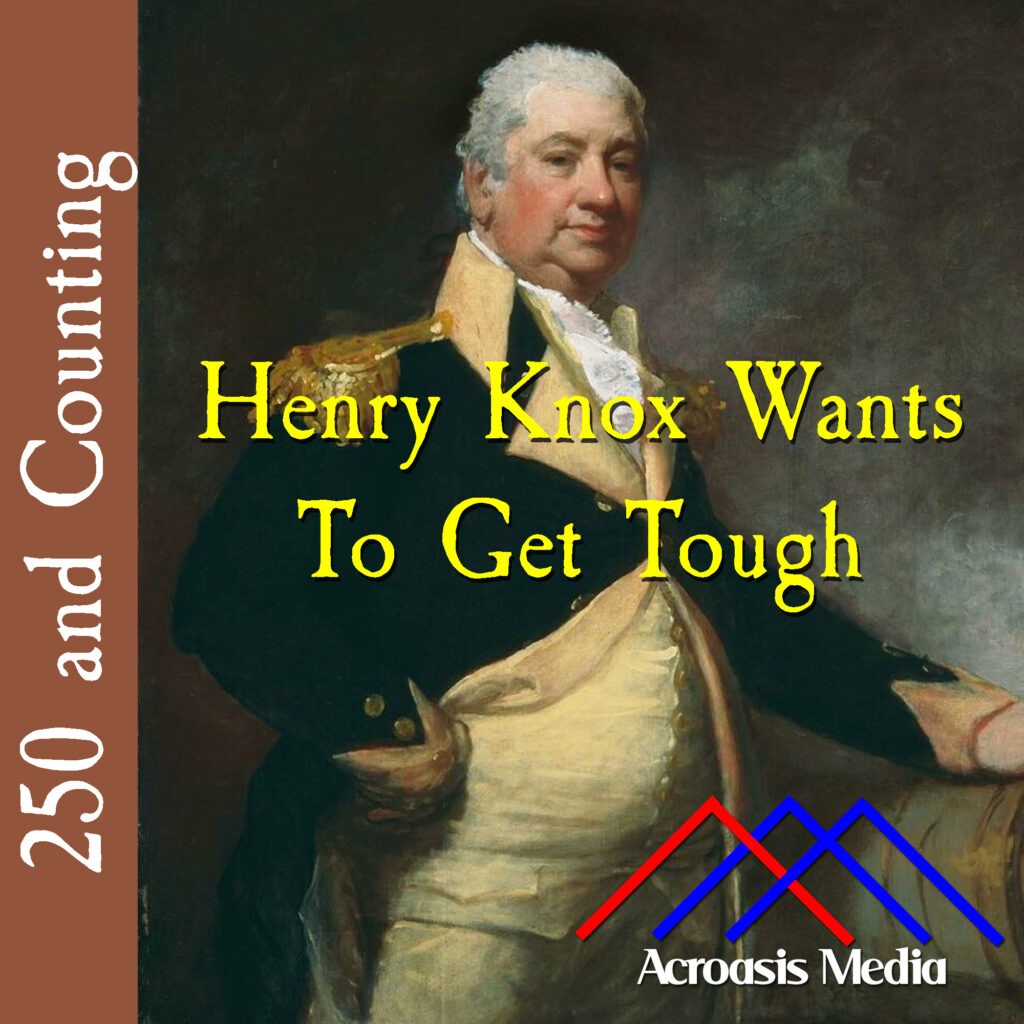
If the name Henry Knox sounds familiar to you, give yourself a prize. Knox was the man in charge of the Noble Train of Artillery, in which large amounts of ordinance were taken from Fort Ticonderoga and transferred to Boston. The presence of the new guns, with greater range than either side had at that point, led to the British finally evacuating the city a relatively short time later.
But by this point Knox was back in New York, only he was in the city rather than the upstate area, and he could see that reconciliation was a pipe dream at best. So he wrote to John Adams to stress the importance of eventual independence.
It is not recorded whether Adams replied “No duh,” since he’d been making the same arguments to the Second Continental Congress for some time.
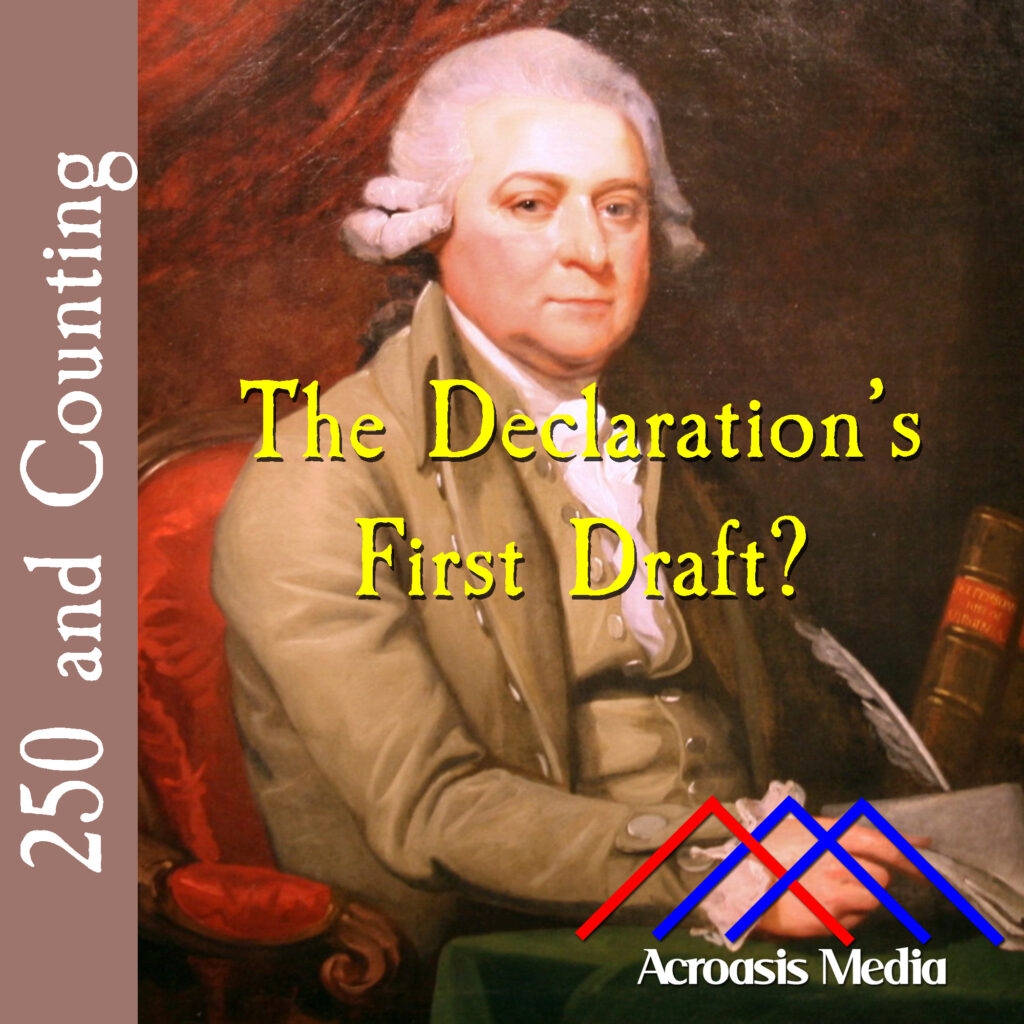
I have to admit that this small chunk of history has me a little confused, because if you’re going to vote on a resolution, shouldn’t you have the wording of that resolution in place? But the Second Continental Congress did vote on May 10, and now they’ve written a Preamble to the Resolution, largely drafted by John Adams. And from many angles, it looks like a formal break from England, but it’s really not.
Adams also thought the Preamble to the Resolution looked like a formal break, but he also recognized that a genuine declaration would be needed, and soon.
The Preamble to the Resolution read thus:
Whereas his Britannic Majesty, in conjunction with the Lords and Commons of Great Britain, has, by a late Act of Parliament, excluded the Inhabitants of these united Colonies from the Protection of his Crown; and whereas no Answer whatever to the humble Petitions of the Colonies for redress of Grievances and reconciliation with Great Britain has been or is likely to be given, but the whole force 386of that Kingdom aided by foreign Mercenaries is to be exerted for the destruction of the good People of these Colonies; and whereas it appears absolutely irreconcileable to reason, and good Conscience, for the People of these Colonies now to take the Oaths and Affirmations necessary for the support of any Government under the Crown of Great Britain, and it is necessary that the Exercise of every kind of Authority under the said Crown should be totally suppressed, and all the Powers of Government exerted under the Authority of the People of the Colonies, for the preservation of internal peace, Virtue and good order, as well as for the defence of their Lives, Liberties and Properties against the hostile Invasions and cruel depredations of their Ennemies; therefore
Resolved That it be recommended to the respective Assemblies and Conventions of the United Colonies, where no Government sufficient to the Exigencies of their affairs hath been hitherto established, to adopt such Government as shall in the Opinion of the Representatives of the People best conduce to the happiness and Safety of their Constituents in particular and America in General.
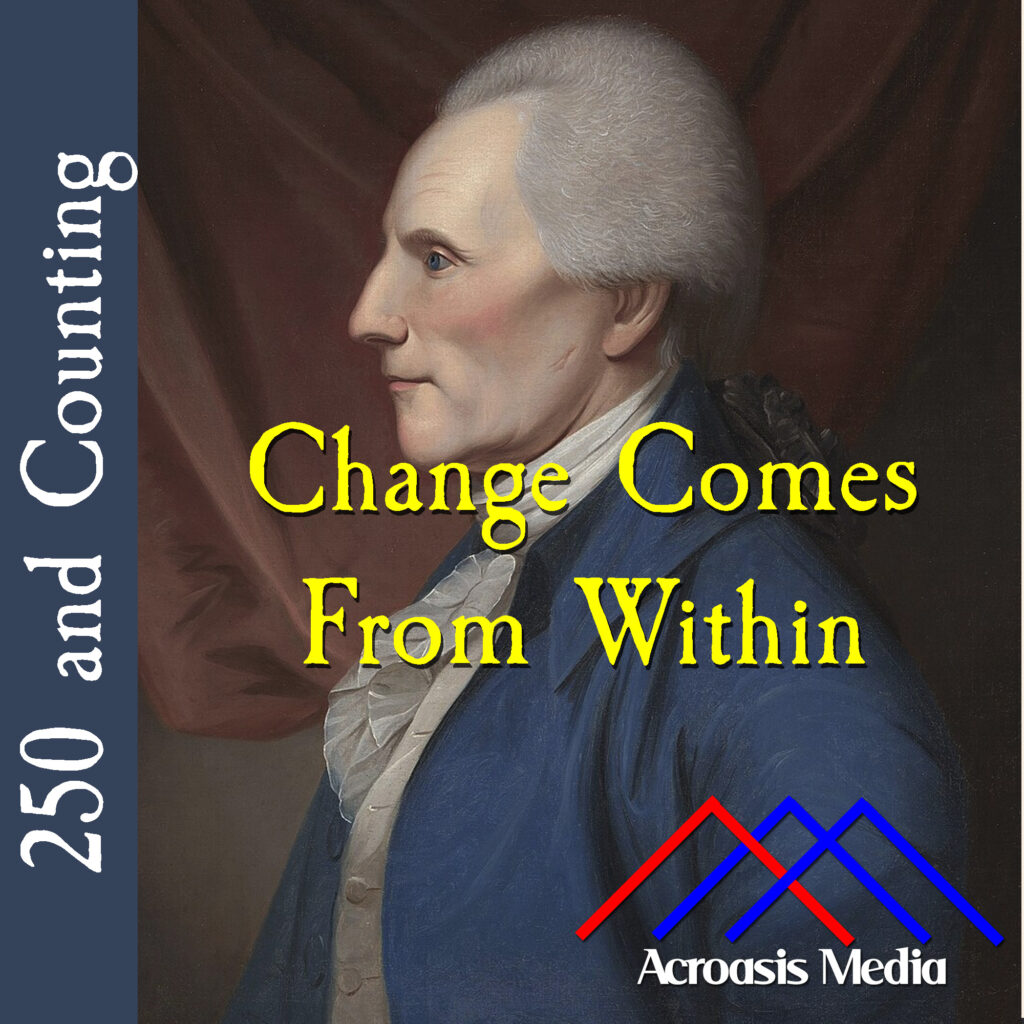
Adams was pushing the rest of the Congress hard, and he knew it. Moreover, so did they, and in his diaries he notes the dismay and even anger that he brings on when he talks about Independence. But before long a Committee of Five will be formed to write up an important document.
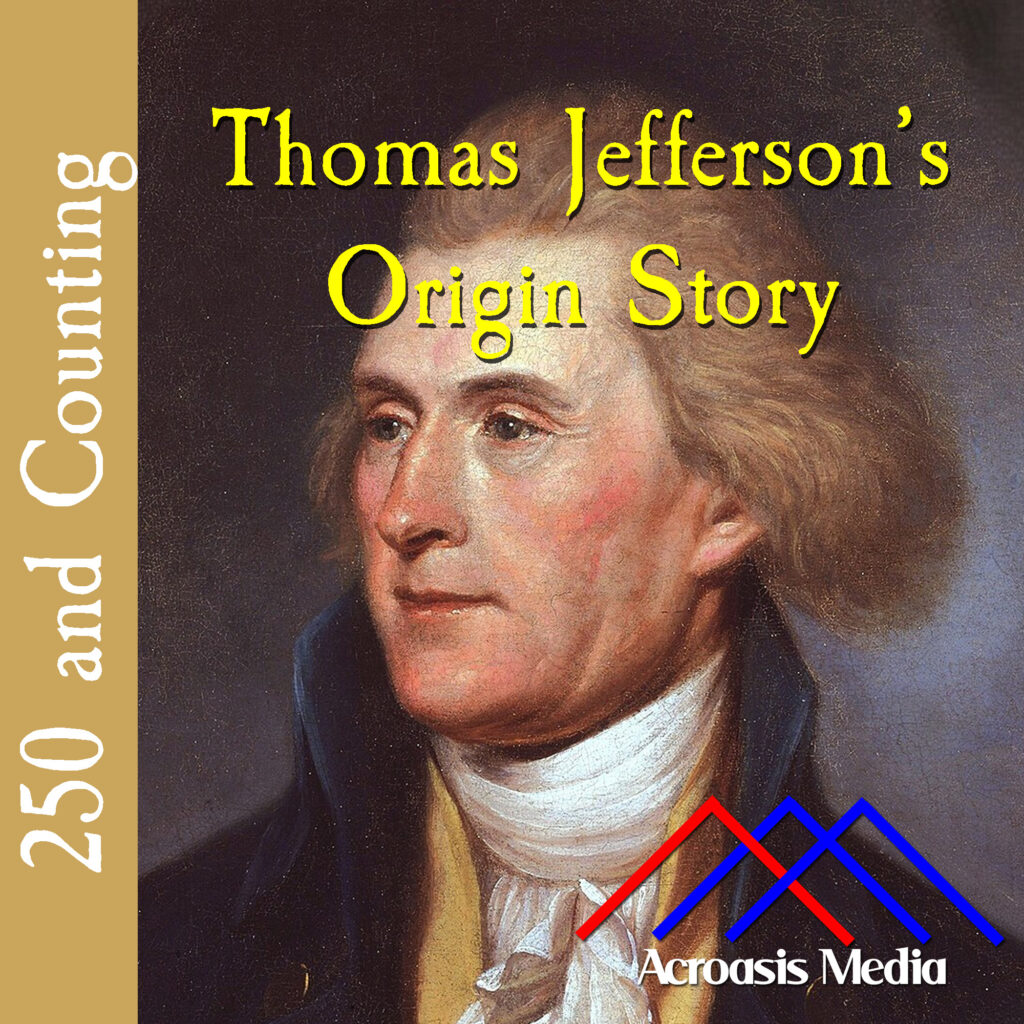
Thomas Jefferson gets most of the credit for writing the Declaration of Independence, but Thomas Jefferson’s background clearly informed his writing of that document. That’s what Mike talks about in today’s episode.
In this space I’d like to tell you a little about Declaration House. The building was newly erected at the time Jefferson rented out a room from its builder, a bricklayer named Jacob Graff (which is why it was originally called the Graff House, go figure).
Jefferson lived in the space with his 14-year-old enslaved valet, Robert Hemmings. Between 1776 and 1883, the house underwent several remodelings until it was finally torn down. It was reconstructed in 1975 by the National Park Service, and when it’s open, it has some museum exhibits on the first floor along with a short film about the drafting of the Declaration. The second floor is a reproduction of the space Jefferson used, containing period furnishings.
As this is published, the site has been closed to the public since 2025 as part of a comprehensive rehabilitation project.
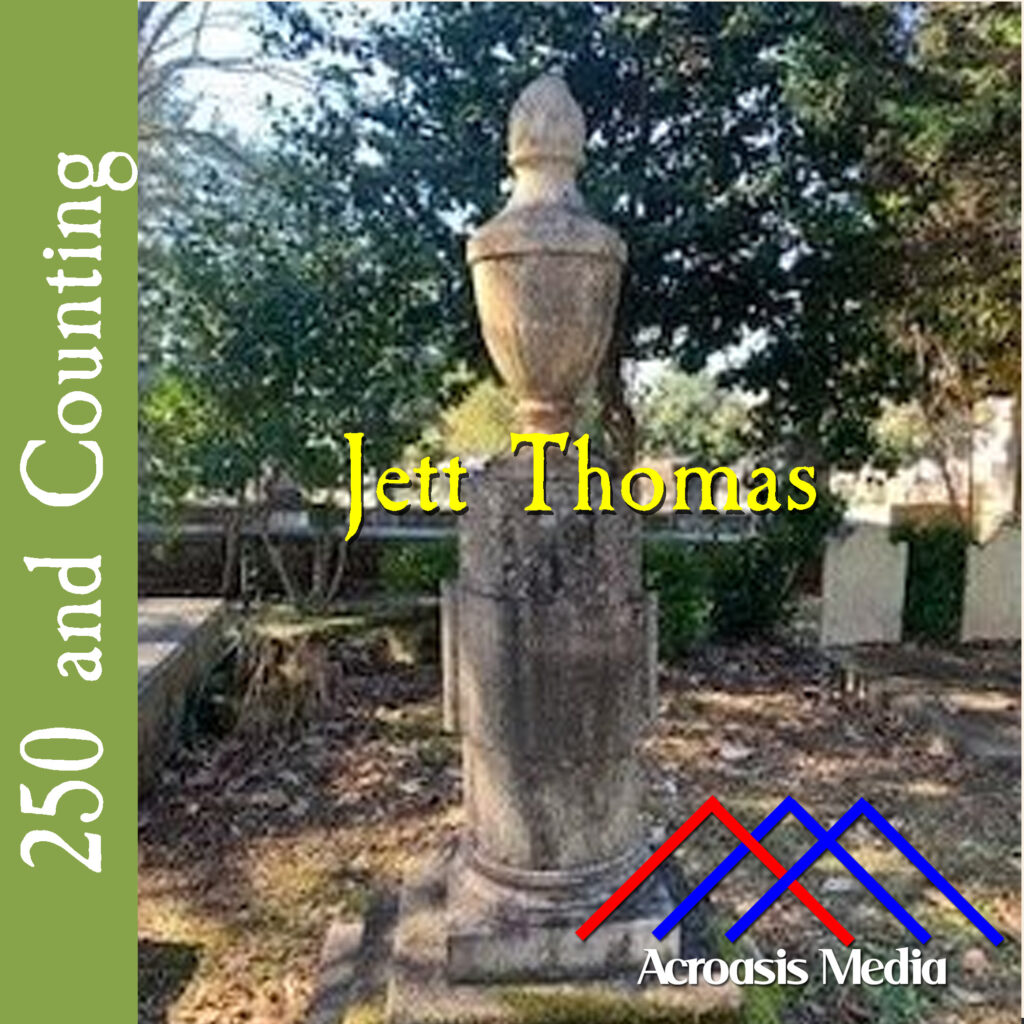
Few people outside of Georgia know who Jett Thomas was, and everybody’s kind of okay with that. Thomas was instrumental in ensuring that major buildings in Athens (Ga.) and Milledgeville were constructed specifically to support education and jurisprudence, and as a result two towns and an entire county are named after Jett Thomas today.
Now, that’s validation.
About the Federal Road: the Creek Indians gave the US Government permission to develop a “horse path” through their nation for more efficient mail delvery, specifically between Washington DC and New Orleans, LA. By 1812 the Federal Road begam in Fort Mitchell, AL, and was connected via the Three Notch Road, allowing for movement to Pensacola, FL. Two years later, the road was open and extended to Natchez, MS.
As noted above, the path was originally meant it allowed for better mail delivery, but as the War of 1812 approached, it was widened into a war road. In 1813-14 the road was also used for the purpose of removing Creek People to the western deserts.
There was a second Federal Road that went from Savannah, GA through Knoxville, TN. That one helped remove the Cherokee and open up their land for settlement/investment.
Charles Gravier, comte de Vergennes, was France’s Foreign Minister from 1774 to 1787 during Louis XVI’s reign.
France was still salty about having lost the Seven Years’ War. On this side of the pond we refer to it as the French and Indian War, but this was a global affair that took place mostly in Europe. France and Austria took on Great Britain and Prussia, and a few other nations joined in with the coalitions. Winston Churchill once called it the “First World War” because so many nations were in conflict on four different continents, and he’s not wrong in the bigger picture.
At any rate, Charles Gravier (more properly referred to as “Vergennes”) hoped that by helping the Americans, he could weaken British dominance on the global stage. (You may remember we talked about this ten days ago.) In the end it turned out to be a mixed bag: while the Americans eventually were successful in their attempt to break away from Britain, France didn’t get a lot out of it by the time the dust settled, and the French finances (which were already weakened) were further damaged. And then, of course, the French people took the hint from America and had themselves a French Revolution.
Ugh. Before I tell you any more about The Grove, I have to take care of a couple of corrections.
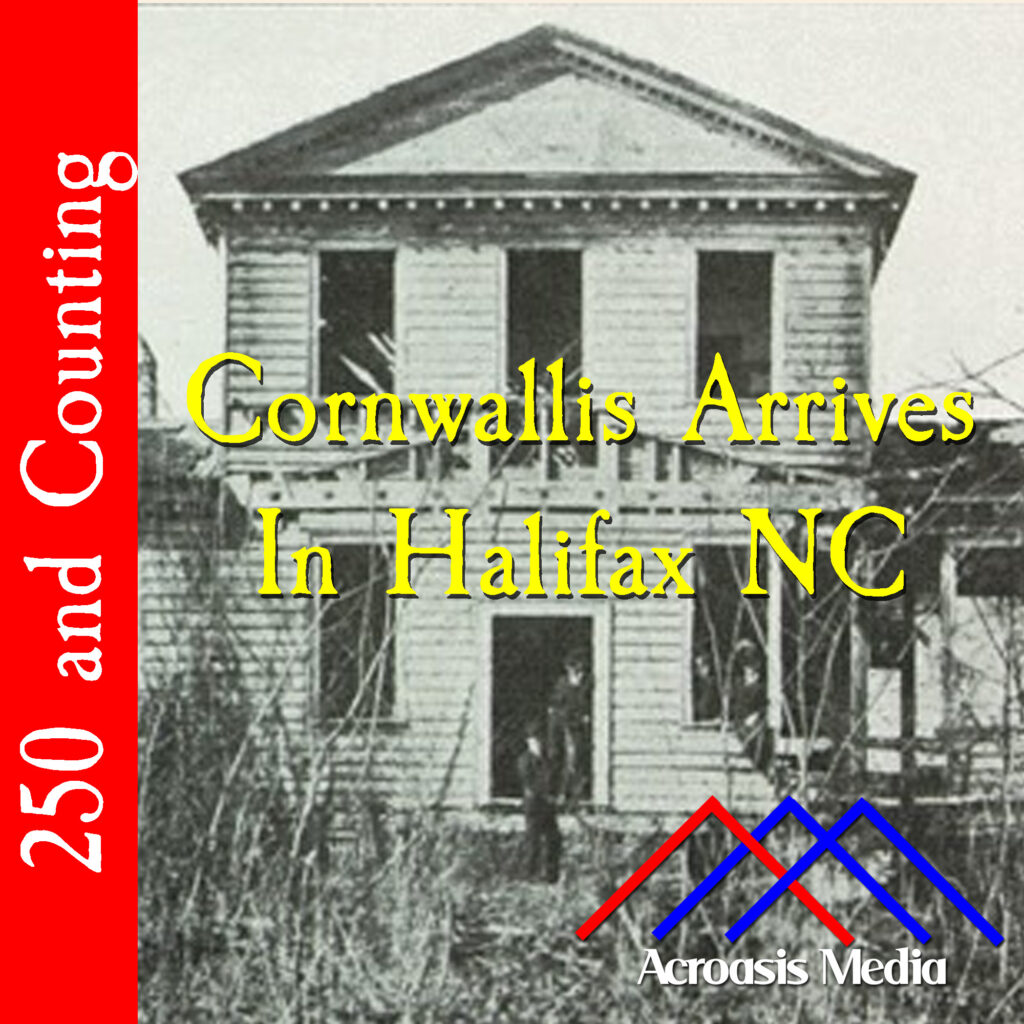
If you’ve listened to the episode already, you might be a little confused about Mike telling you that you’d be in Nova Scotia. Obviously he got his Halifaxes crossed.
Second, after I’d completed today’s episode and finished all the post-production stuff, I discovered that Willie Jones’ first name isn’t pronounced the way I thought it was. While most people would make the same error I did and say it as “Will-E”, it’s actually pronounced “Wylie”. A reasonable mistake but I should have paid closer attention. I did see one place where it was spelled “Wyley” but didn’t make the connection. mea culpa.
And yes, I do have a little more information about The Grove. A few years earlier, a young man named John Paul, who had recently turned up in America after having fled Scotland, spent some time at The Grove as a guest of the Jones family. Shortly thereafter he was granted some land in Frederick County, Virginia. At around this time, John Paul began appending “Jones” to his name, apparently in honor of Willie.
And, of course, shortly thereafter he became a lieutenant in the newly-minted Continental Navy.
You may also remember that motions by the Second Continental Congress needed to be voted on unanimously in order to pass, so they could “speak as one voice.”
To that end, the Congress recommended today that Colonies with a government that wasn’t in favor of independence, form a new government that would be more likely to endorse independence. It’s not entirely clear how they expected the individual Colonies to effect this recommendation, but before long it wouldn’t be difficult at all.
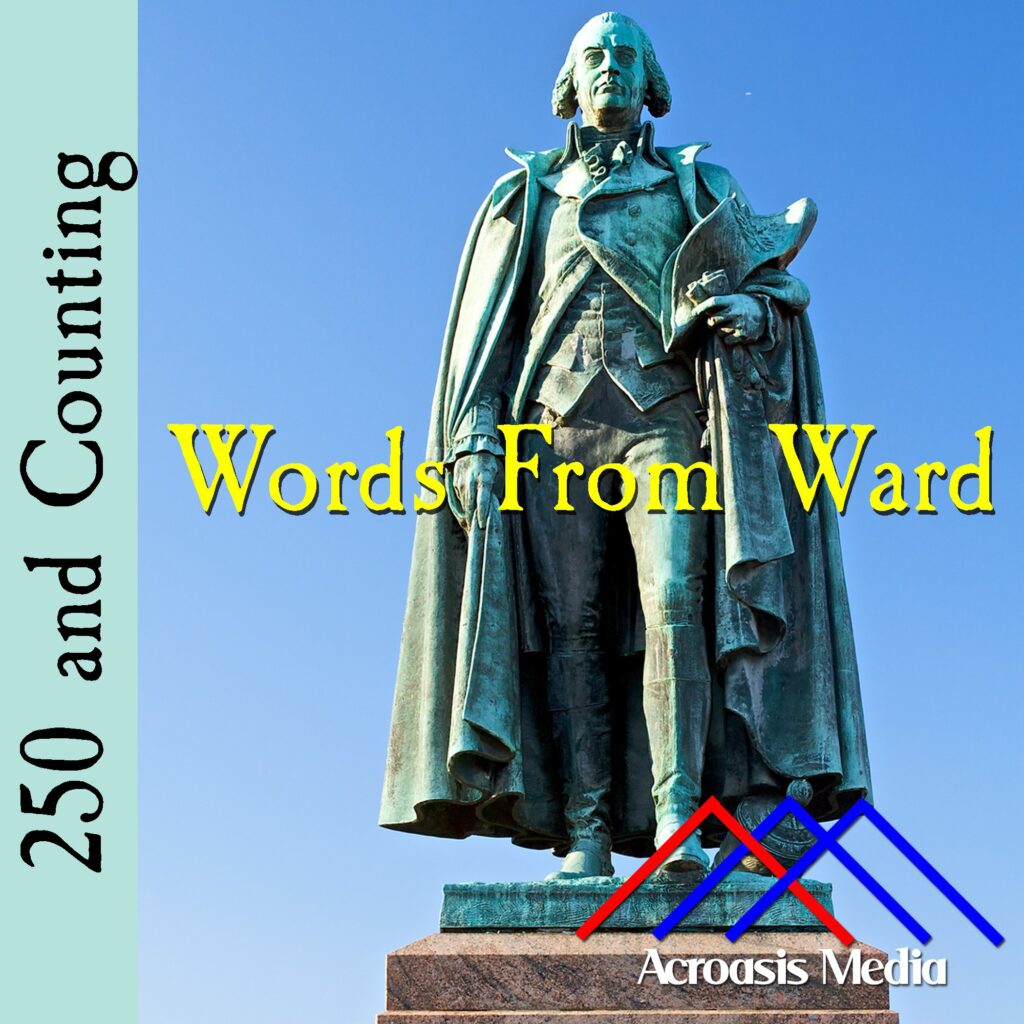
Artemas Ward was the man left in charge of things when Washington made his trek to New York, so you know that this was a man that Washington trusted. As a result they corresponded with one another frequently.
So it only makes sense that once in a while, the two would write to one another on the same day, and this was one of those days. Washington wrote to Ward his concern that the British would return to Boston and therefore the city should be fortified to protect against such an event, and Ward wrote to Washington about a pair of ships that had been captured in the Bay just a couple of days earlier.
For what it’s worth: Ward Circle, where the statue from today’s cover art is located, is in the middle of a peculiar looking traffic circle on Massachusetts Ave NW. There are no pedestrian crossings that will get you close to it, so if you do choose to make that particular pilgrimage, stop off at the National Cathedral first and ask for divine intervention, ’cause the traffic can easily make that a nightmare to cross.
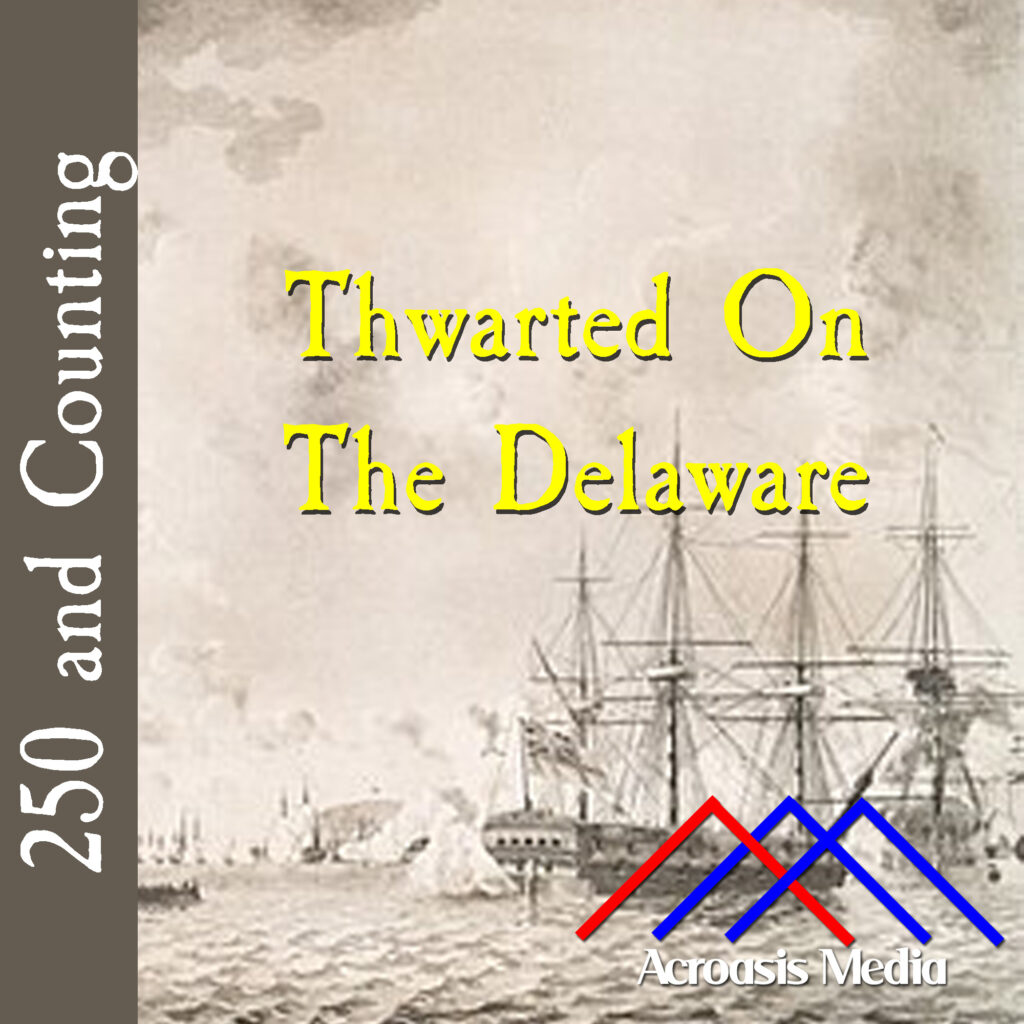
The HMS Roebuck was a ship that tangled with the Americans numerous times. One advantage that she had over other British ships was a relatively shallow draught (vertical distance between keel and waterline), which proved helpful when it came to navigating some of the shallower waters off the American coast.
The HMS Roebuck had already had an encounter just south of today’s events back in March. She was also involved in the Battle of Long Island, which took place during the summer, in a battle on the Hudson River in October 1776, and then in 1777 during another attempt to take Philadelphia, this time as part of a successful assault.
There were other small battles that went on for another couple of years before she was finally recalled to England for a refit, after which she returned to America, successfully engaging again with the Americans. I
In 1783 HMS Roebuck finished her war service and was recommissioned as a hospital ship for the French Revolutionary Wars. In the late 1790s she was recommissioned as a warship and participated in the Anglo-Dutch War and then the Napoleonic Wars. Once the Treaty of Amiens was ratified, Roebuck was was used as a guardship, then a receiving ship. Finally in 1811 she was formally decommissioned and broken up.
HMS Roebuck was in action–most of it battles–for 37 years, a relatively long time for any ship of that era. Even though they were on the enemy side of the war, we can’t help but admire her record, which was quite glossed-over in this relatively small space.
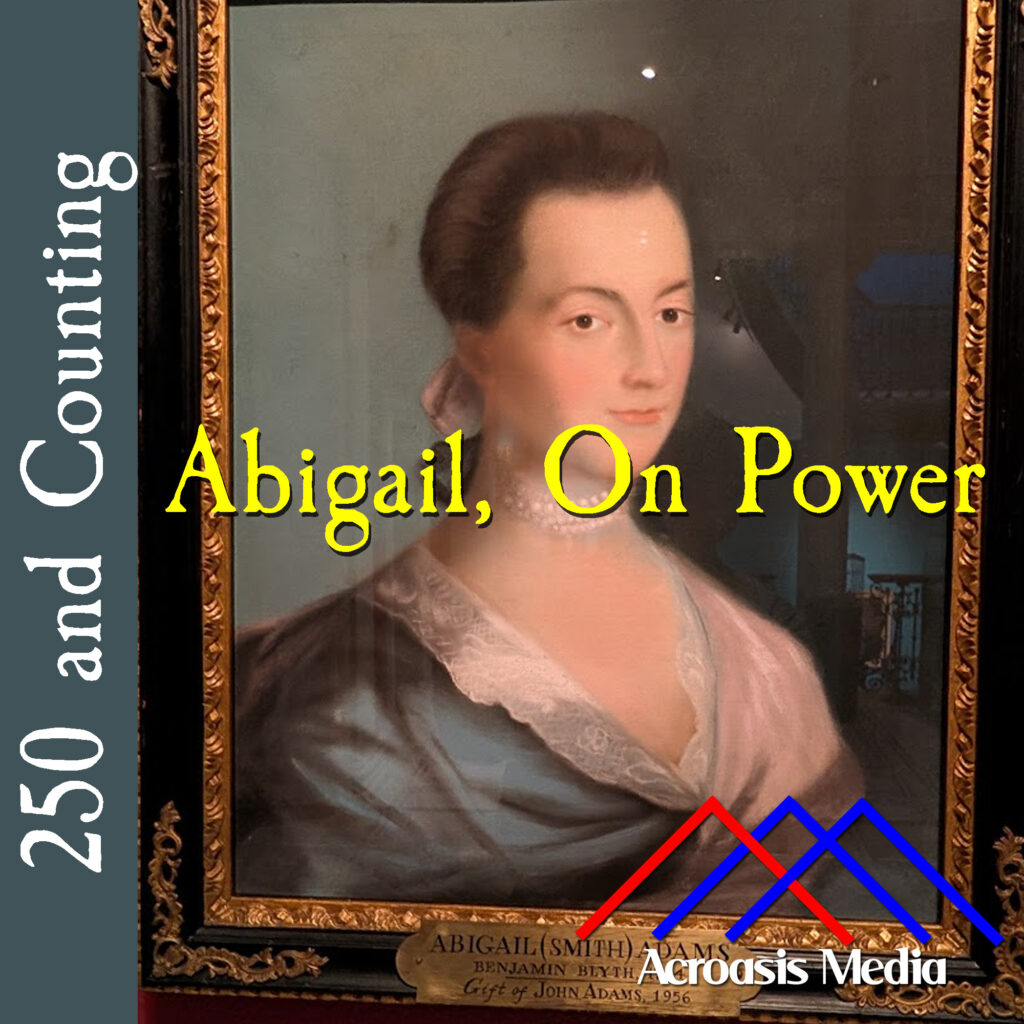
Abigail Adams had some thoughts when it came to arbitrary power, and how fragile it is.
But you get all that from the episode itself. Instead, here in the show notes, I’m going to point out that I’m the one who took the photo used for today’s cover art.
The painting hangs at the Massachusetts Historical Society, and because they keep it relatively dim there, you can see the reflection of the stairwell leading down to the main entrance. The white spot over Abigail’s head is the reflection of a light across the gallery, which is maybe 15 feet across. I’m standing at a slight angle so I’m not part of the reflection. (It’s also partially cropped here; I’m not that bad a photographer.)
The painting was donated to the Society by one of John and Abigail’s descendants, who is coincidentally also named John. The docent I spoke with didn’t know whether there was a family tradition of naming sons “John” as homage to our Founding Father, but he conceded it’s certainly likely.
The letter cited in today’s episode is part of the MHS collection, though it wasn’t on display the day Mike and I visited. MHS has literally thousands of Adams Family documents, and there are people there who work only with those documents. That’s their only job!