
This day in American History, 250 years ago.

  • Raid On Tybee Island–March 25, 1776

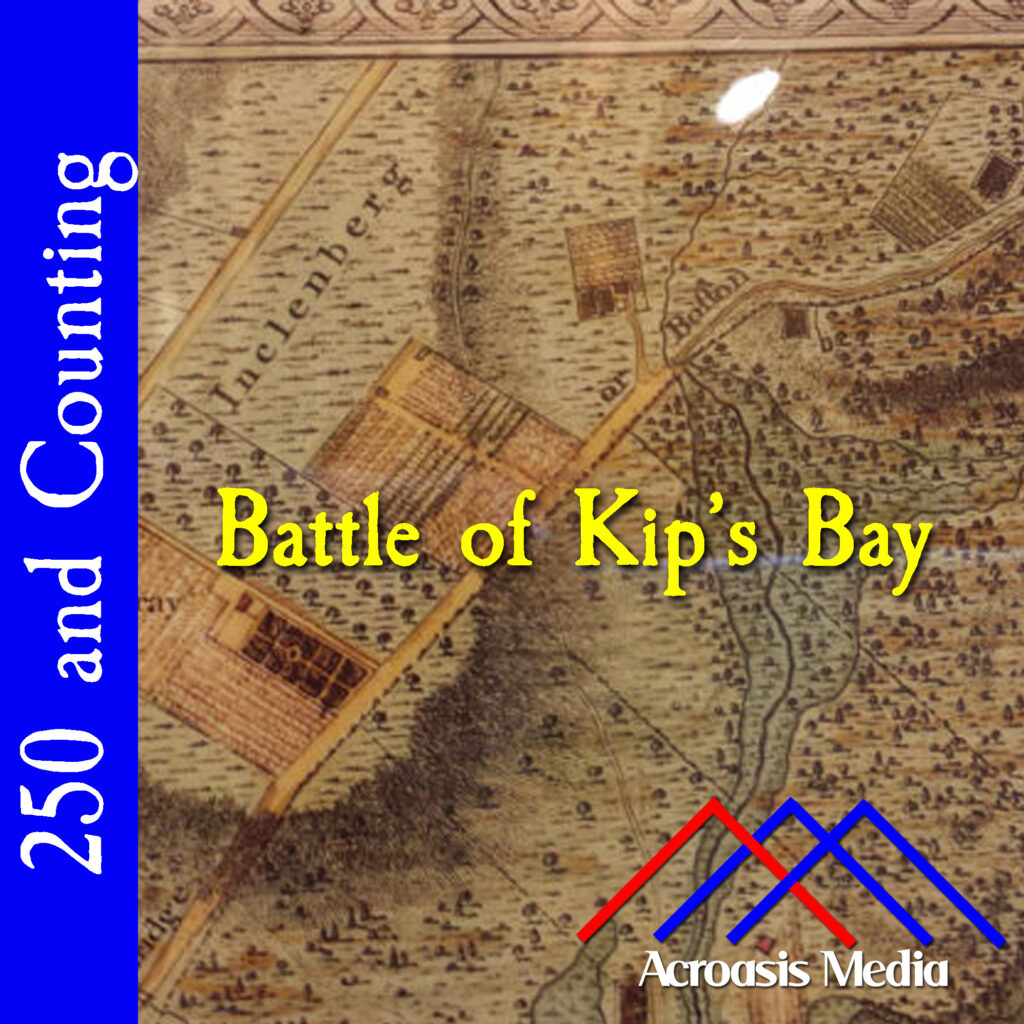
    Cover art for March 25, 1776: Map showing Savannah and Tybee Island, 1733. Via The Boston Public Library digital map archive.

    The raid on Tybee Island wasn’t the only one of its kind; in fact a similar action had been taken at Sullivan’s Island in South Carolina a few weeks earlier.

    In that case there were many more runaway slaves involved, but like Tybee, very few were actually captured and the fate of most of the others is unknown, although there is one account that says fifty people had resisted capture and were subesquently killed.

    But in both cases we see a raid that took place specifically to deny people their freedom, and the proclamation the led to these raids directly influenced the argument in the Declaration of Independence that King George incited “domestic insurrections.” So…the desire of slaves to be free…drove the Patriots to desire independence.

  • Letters From The General–March 24, 1776

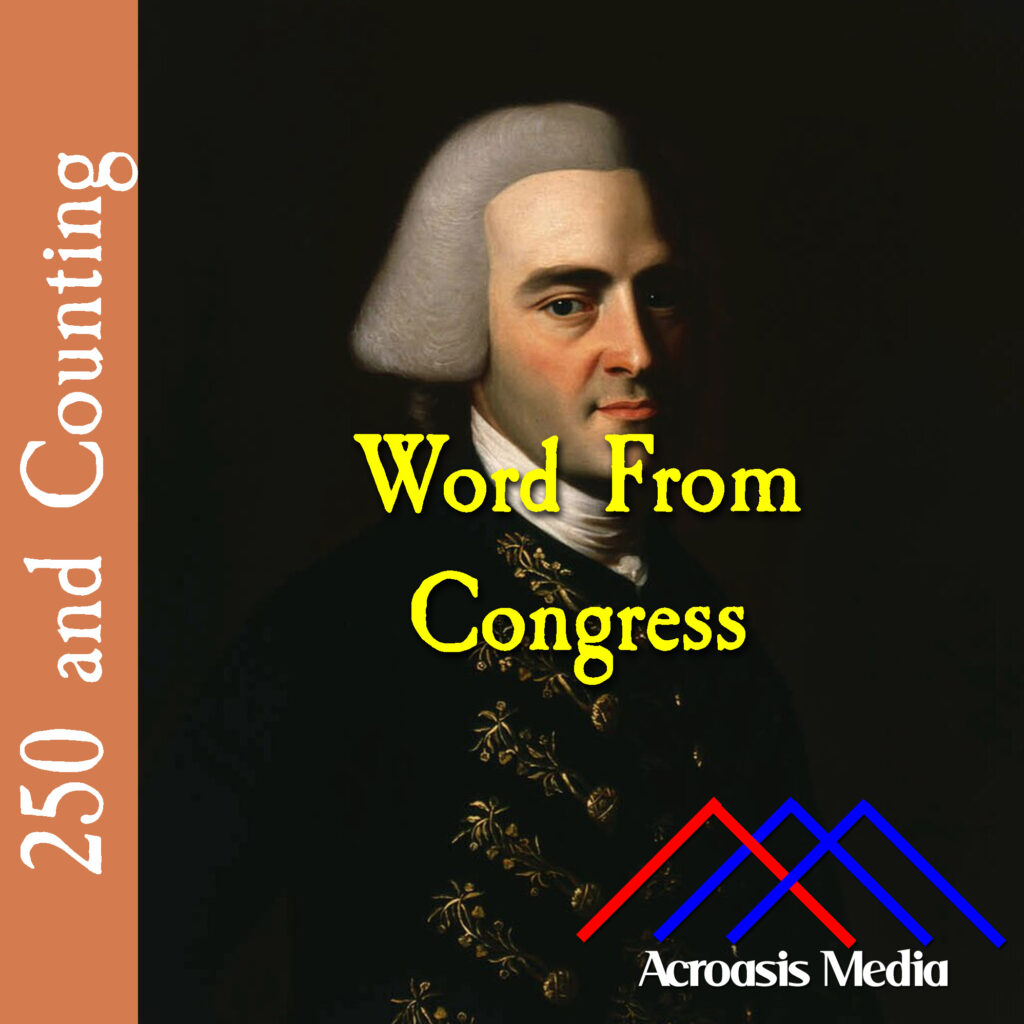
    Cover art for March 24, 1776: Reproduction of a portrait of Josiah Quincy I by John Singleton Copley. Photo uploaded to Wikipedia by user Mmangan333.

    Mike had a little fun busting on George Washington’s spelling in today’s episode, but we do have to offer a little grace here, because in 1776 efforts to standardize spelling in the English language were only just beginning to catch on.

    About a hundred years earlier, some of the language was simplified; thus, sinne became sin; logique became logic; toune to town, etc. Not long afterward, some words were tied to their Greek or Latin roots, e.g. det became debt (Latin, “debitum”) and dout became doubt (Latin, “dubitare”), and so on.

    It really wasn’t until the 19th Century that more serious efforts to standarize some English took place, as the science of phonetics began to rise. In the 1870s, societies actually began springing up that were dedicated to reforming the English language’s spelling. One such group had the editor of the Chicago Tribune as a member, so whenever his group had something they thought was good, he’d be the first one using it in print.

    In 1903 a group called the Simplified Spelling Board was formed, backed by Andrew Carnegie. Their recommendations were immediately relayed to all government agencies by President Teddy Roosevelt.

    And then between the 1930s and 1975, the Chicago Tribune (again) was at the forefront of changes to standardized spelling, thus giving the new language a huge platform on which to rest.

    Look that up in your Funk & Wagnalls, kids.

  • Here Come The Privateers–March 23, 1776

    Cover art for March 23, 1776: "A View of His Majesty's Brigg Observer Engaging the American Privateer Ship Jack, by British artist Robert Dodd. Hand-colored aquatint, 1784. The battle itself took place two years earlier.

    When you first hear the word “Privateers” and its definition, your mind probably goes to your basic concept of a pirate: someone who attacks a ship and plunders its hold for anything valuable. And you wouldn’t be entirely wrong, but there’s still a difference.

    A privateer is essentially a pirate who’s working on the right side of the law. Privateers are given commissions through a document called a Letter of Marque, which authorizes a vessel to engage with any ship they consider unfriendly. This wasn’t unique to America; privateering was done all over the world. But in our case, it was a response to the fact that America was sorely out-gunned by the British and needed whatever help they could get. And early privateers had a high success rate, until the British realized that privateers were in use at all.

    One of our most famous privateers is John Paul Jones, who volunteered his services and, rather than using his ship to raid British vessels near America, did most of his work near the English coast. He would raid towns, attack vessels and send the Congress their share of the spoils.

    So the bottom line when it comes to the difference: permission. Privateers and pirates did much the same thing, except privateers had consent.

  • William Tryon Isn’t Popular–March 22, 1776

    Cover art for March 22, 1776: "Governor Tryon and the Regulators." Alexander Bobbett's 1877 line engraving based on an earlier illustration by the prominent American artist Felix Octavius Carr Darley (F.O.C. Darley) in 1876.

    To be perfectly clear, William Tryon was never popular on this side of the pond.

    When he was appointed Lieutenant Governor in North Carolina in 1764, he wasn’t able to move into the usual housing for a man of that title because the previous inhabitant refused to move out.

    When the Stamp Act was enacted in 1765, there was a great deal of opposition in North Carolina, so he refused to allow meetings of the Assembly in order to prevent them from voting for a resolution formally opposing it.

    When he was appointed Royal Governor, he made plans for an elaborate new Governor’s Mansion that cost twice the amount of money allotted for it. Then he hired laborers from Philadelphia to construct it, saying that North Carolinians didn’t have the necessary skills.

    The 1771 Regulator Uprising that Mike talks about in today’s episode was the last straw for William Tryon in North Carolina, and many historians view it as the first sign that a true revolution was coming. Within a month of that event, he left North Carolina and headed for New York, where things, as you’ll hear, didn’t go any better.

  • John Frederick Frelinghuysen–March 21, 1776

    Cover art for March 21, 1776: John Frelinghuyser's gravestone in the Old Somerville Cemetery. via WIkimedia Commons.

    John Frelinghuysen was born on this day in 1776 (hey! Cake and Candles for this man!) and died in 1833. Like many people of the time, he never permanently left the area where he was born. Born there, lived and worked there, died there.

    He probably went to Trenton on business a few times, and he was stationed at Sandy Hook while in the Army, but that appears to be about all as far as travel.

    John Frelinghuysen married Louisa Mercer in 1797, and they had two daughters: Gertrude and Mary Ann. Louisa died around 1809 and John married Elizabeth Mercereau Van Vechten on November 13, 1811. They had eight children: Louisa, Theodore, Frederick J., Catharine, Sallie, Sophia, and Elizabeth LaGrange Frelinghuysen.

  • Meet The New Boss–March 20, 1776

    Cover art for March 20, 1776: portrait of Nathaniel Greene "painted from memory" by John Trumbull, 1792. via Yale University Art Gallery.

    While preparing to depart Boston for New York, George Washington appointed Nathaniel Greene to run things for awhile until everything was back in order.

    Fortunately for both Greene and Washington, matters straightened out rather quickly, because Greene was called to join Washington just a few weeks later.

    Nathaniel Greene was tasked with fortifying Brooklyn while Washington prepared to defend Manhattan. As a military leader, Greene had a bit of a mixed record, but more often than not it appears that he was the victim of poor timing when things didn’t go well for him.

    Later on in the war, he took on the position of Quartermaster General, which on its surface looks like a demotion, but Washington still considered him “inner circle” and Greene would sit in on War Council meetings, even though he was considered a staff officer.

    Later on, when things started looking gloomy in South Carolina and Georgia, Nathaniel Greene was put in charge of the Southern Department of the Continental Army, where he embarked on a campaign of guerilla warfare rather than pitched battles. His unconventional approach wasn’t always successful, but if the British won a battle it was at a much greater cost than it should have been.

  • Philemon Beecher–March 19, 1776

    Cover art for March 19, 1776: Gravestone of Philemon Beecher. via findagrave.com.

    Philemon Beecher is an unusual name (said the guy named Claude Call, sigh), but that’s on us for not recognizing it as a name from the Bible. Philemon was a man to whom the apostle Paul wrote while in prison. He was in prison more than once, but it’s not entirely clear which stretch Paul was doing when he wrote it.

    Philemon was a leader in the Colossian Church, and Paul’s letter—one of a very few that scholars generally agree was actually written by Paul—touches on themes of reconciliation, forgiveness, and Christian fellowship, addressing themes of slavery, freedom, and ethical conduct within the Roman social context. While it doesn’t explicitly condemn slavery, it reframes master-servant relationships in spiritual terms, highlighting the moral and social transformation encouraged within early Christian communities.

    But I digress. Philemon Beecher was a successful attorney and a semi-successful politician who was one of Ohio’s first House members once Ohio became a state. Beecher also got married in 1803, so that was a pretty good year for him. He was one of ten children, one of whom died at the age of three and who coincidentally was also named Philemon Beecher. They recycled that name two years later! Some of his other siblings also died relatively young but they had reached adulthood.

    I don’t imagine he had an especially distinguished political career, given that I couldn’t find an image of him in any of my usual haunts. What’s more, I couldn’t ascertain whether he and his wife Susan had any children, though it appears the answer to that is “no.” Nevertheless, he remained a prominent citizen as an attorney and member of the board of the Lancaster, Ohio Bank. He also participated as a member of The Colonization Society in Lancaster, a group dedicated to repatriating Black people back to Africa as an alternative to slavery.

  • Reviewing Boston–March 18, 1776

    Cover art for March 18, ,1776: Statue of Artemas Ward at Ward Circle in Washington, DC. Photo by Wikipedia user GarrisonLeMasters, 2008.

    In the aftermath of the siege of Boston, it was incumbent upon George Washington and his men to re-enter the city and take stock of its condition.

    Mike brings up Artemas Ward in today’s episode, and I’m pretty sure that was the first time his name has come up in the course of this podcast. Ward was a major general during the Revolutionary War, among others, and an effective political leader when he wasn’t being a soldier. It was Ward who sounded the alarm on Bunker Hill, and who took command of the New England area once Washington led most of the troops down to New York City. ‘

    The statue in today’s cover art can be found in the center of a traffic circle in Washington, DC, where Massachusetts and Nebraska Avenues cross one another. Ward’s great-grandson donated four million dollars to Harvard on the condition that they build a statue of Artamis, and maintain his Shrewsbury home. Harvard apparently chose to purchase a statue but did not provide enough money to provide the general with a horse. Oddly enough, because it’s a traffic circle and therefore has no obvious way for a pedestrian to get to the center (i.e., no crosswalk), it’s quite difficult to get close enough to the pedestal to read the inscription:

    ARTEMAS WARD
    1727–1800
    SON OF MASSACHUSETTS
    GRADUATE OF HARVARD COLLEGE
    JUDGE AND LEGISLATOR
    DELEGATE 1780–1781 TO THE CONTINENTAL CONGRESS
    SOLDIER OF THREE WARS
    FIRST COMMANDER OF THE PATRIOT FORCES

  • The Siege Ends–March 17, 1776

    Cover art for March 17, 1776: The first Congressional Gold Medal, given to George Washington in 1790 for his first victory of the war in Boston. 1776 Washington Before Boston Comitia Americana Second Restrike (Baker-48G) Image credit to Heritage Auctions

    It’s been 333 days since Lexington and Concord, when the British were forced to retreat to Boston and were bottled up there by Colonial forces.

    It’s been a week since the British said “enough” and decided to effect their departure from the city as soon as the weather cooperated.

    But today, the day finally came.

    It took about five hours to launch over a hundred ships, carrying thousands of soldiers, women and children from the city.

    It was Washington’s first major win and the last time the British did anything of importance in New England. The war began to move south, to New York, New Jersey, and Pennsylvania. Virginia and the Carolinas also had their share of action, as we’ll see in the coming months.

  • A Special Proclamation–March 16, 1776

    Cover art for March 16, 1776: the broadside version of the proclamation issued this day. via The Revolutionary City collection.

    As we noted back in July, a day of prayer, humiliation and fasting wasn’t new to the Continental Congress. (Go back to that episode’s show notes to see my explanation of the word “humiliation” in this context.) And, as Mike notes in the episode, it wasn’t even close to the last for this Congress.

    That’s neither good nor bad; it probably gave everyone the opportunity to simply stop and contemplate matters. Tensions were rising high by now, and it would have been easy to make a rash, emotion-based decision. So why not take a moment to ensure that whatever deity you subscribe to is inclined to help you?

    I don’t frame it that way to be provocative; we all too often hear rhetoric suggesting that all of the Founding Fathers were good Christians. In fact they ran the gamut from orthodox Christianity, through rationalistic theism, through Deism. Thomas Jefferson once edited a Bible which removed references to miracles and the divinity of Jesus. Even among the “orthodox Christian” crowd, one could find Quakers, Lutherans, Dutch Reformed, Anglicans, and Presbyterians. One of our first episodes featured a Jewish Patriot. And even though he didn’t appear to practice publicly, Alexander Hamilton was raised Jewish as a child.

    The point here is that when you’re in hopeless times—and fighting off the British was considered a lost cause in those days—you take the comfort where you can. Whether that’s in God, Buddha, Krishna, Zeus, Mohammed or another human being, it’s not wrong to give yourself some form of contemplation.

    Okay, rant over.