Tag: 1775 births

  • June 29, 1775: Thomas Boyle, Privateer

    Cover art for June 29, 1775: Picture of Thomas Boyle, source unknown

    Thomas Boyle wasn’t born in Baltimore, Maryland, but when he was a young man he made it his home and became quite successful there, as a merchant marine and an overall businessman.

    And, of course, given Baltimore’s penchant for naming streets after historic people and events, there is a Boyle Street. It’s not very long; in fact you see the entire road in the photo below.

    In this picture the viewer is standing on Fort Avenue looking down toward Key Highway. The green structure in the background is the Baltimore Museum of Industry, and the Inner Harbor is just beyond that. Based on my research, Boyle didn’t live near this location; he’d settled in a part of town called Fell’s Point, which is on the other side of the harbor and about a mile to the east. If a person standing where the camera was for this photo turned to the right, they could probably see the entrance to Fort McHenry.

  • June 19, 1775: The Father of Greenville

    Cover art for June 19, 1775: painting of Vardry McBee by William Garl Browne, Jr., 1854.

    Sometimes when you’re watching a movie or listening to music, you find yourself in the awkward position of separating the artist from the work, because it turns out that the artist has some shady stuff going on in the past, or even in the present. But the song/movie/book is just so good that you need to temporarily overlook that.

    Such is the case, we think, with Vardry Echols McBee, an entrepreneur and philanthropist who basically invented the town of Greenville, South Carolina. He was also a slave owner who sided with the Union but provided material assistance to the Confederacy.

    Mixed messages! Conflict of loyalty!

    But it’s also clear that he was instrumental in making the town of Greenville what it is today, even more than 150 years later. What’s more, by all contemporary accounts he did it “without pride, pretense or ostentation.”

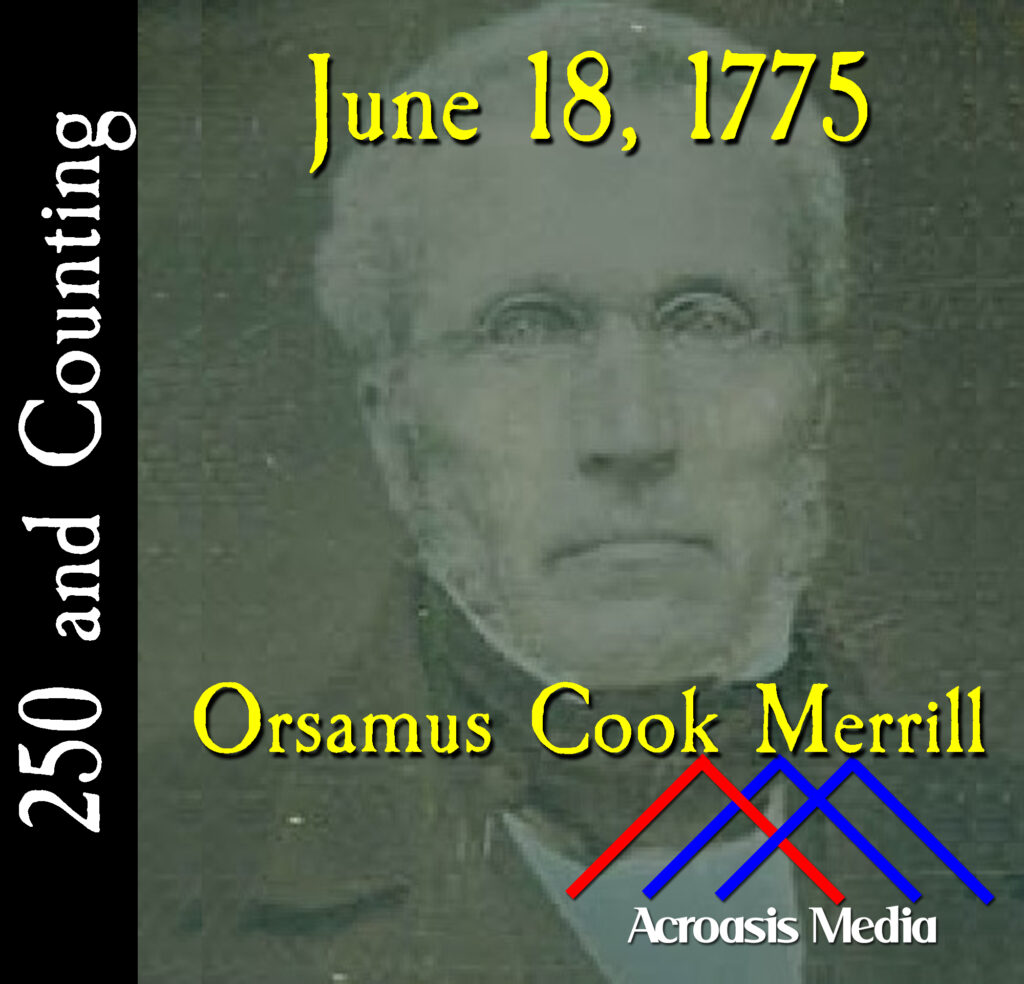
  • June 18, 1775: Orsamus Cook Merrill

    Cover art for JUne 18, 1775: Daguerrotype of Orsamus Cook Merrill, ca. 1850-1860. Cropped from the original image in the Bennington Museum.

    It’s Cake and Candles today for a future State Representative of a future state.

    Orsamus Cook Merrill was born in Connecticut but moved to Vermont coincidentally the same year that the Vermont Republic was admitted to the Union as our fourteenth state. He spent the rest of his life in the Bennington area, working in jobs as diverse as newspaper editor or publisher, postmaster, attorney and Engrossing Clerk for the Vermont House of Representatives before becoming a Representative himself.

    (For those not in the know: an Engrossing Clerk is responsible for preparing prints of intermediate drafts of bills that a governing body is considering before they vote at the next stage.)

    By most accounts, he represented his constituents well, and he was largely done in by shifts in the political winds. He died in 1865 and is buried in Bennington Centre Cemetery.

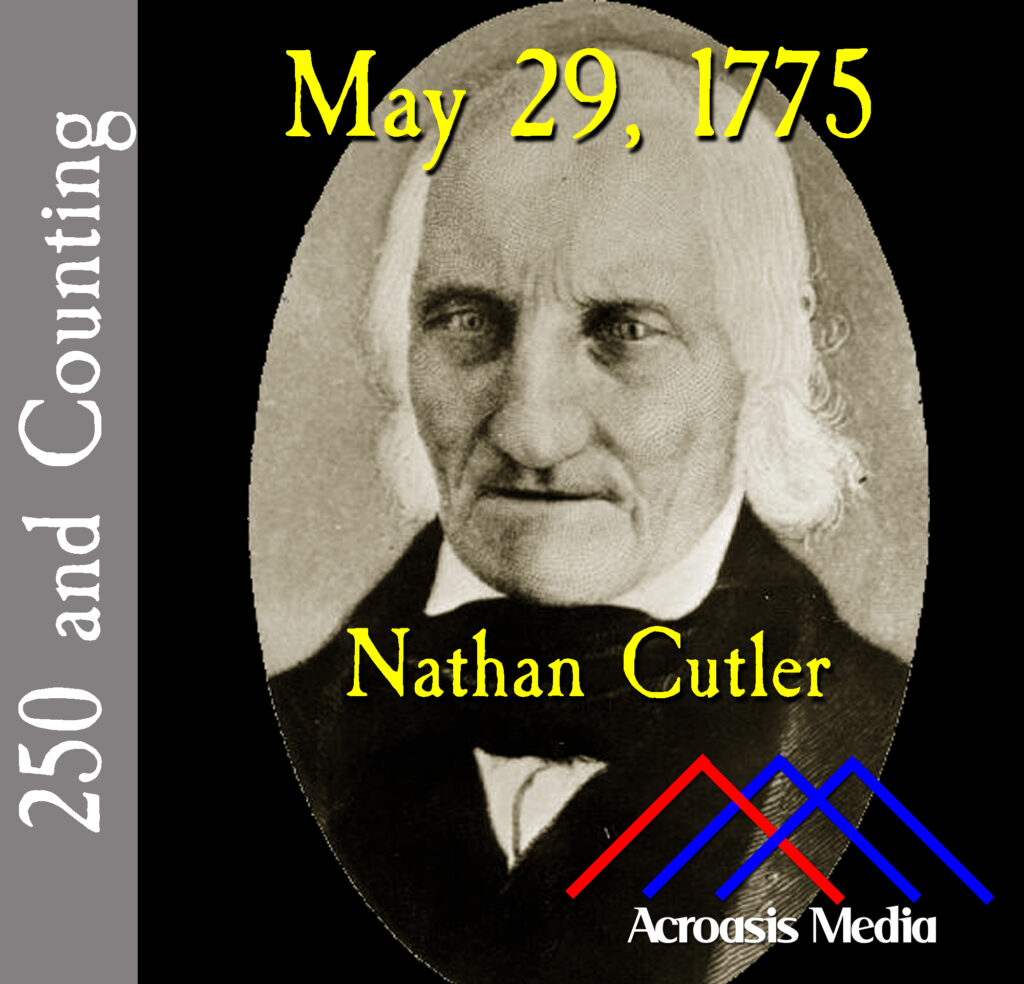
  • May 29, 1775: Nathan Cutler

    Cover art for May 29, 1775: Photo of Nathan Cutler, ca. 1850, photographer unknown.

    By all accounts, Nathan Cutler was an effective lawyer and legislator, as his frequent returns to the Massachusetts Legislature, and later the Maine House of Representatives, will attest.

    And when a governor of the State of Maine died, he was able to step into the role until the term of office expired.

    Cutler could have probably remained Governor, but he’d turned down positions before, so it’s entirely possible that he simply chose not to run again.

    Listen in, it’s an interesting story.

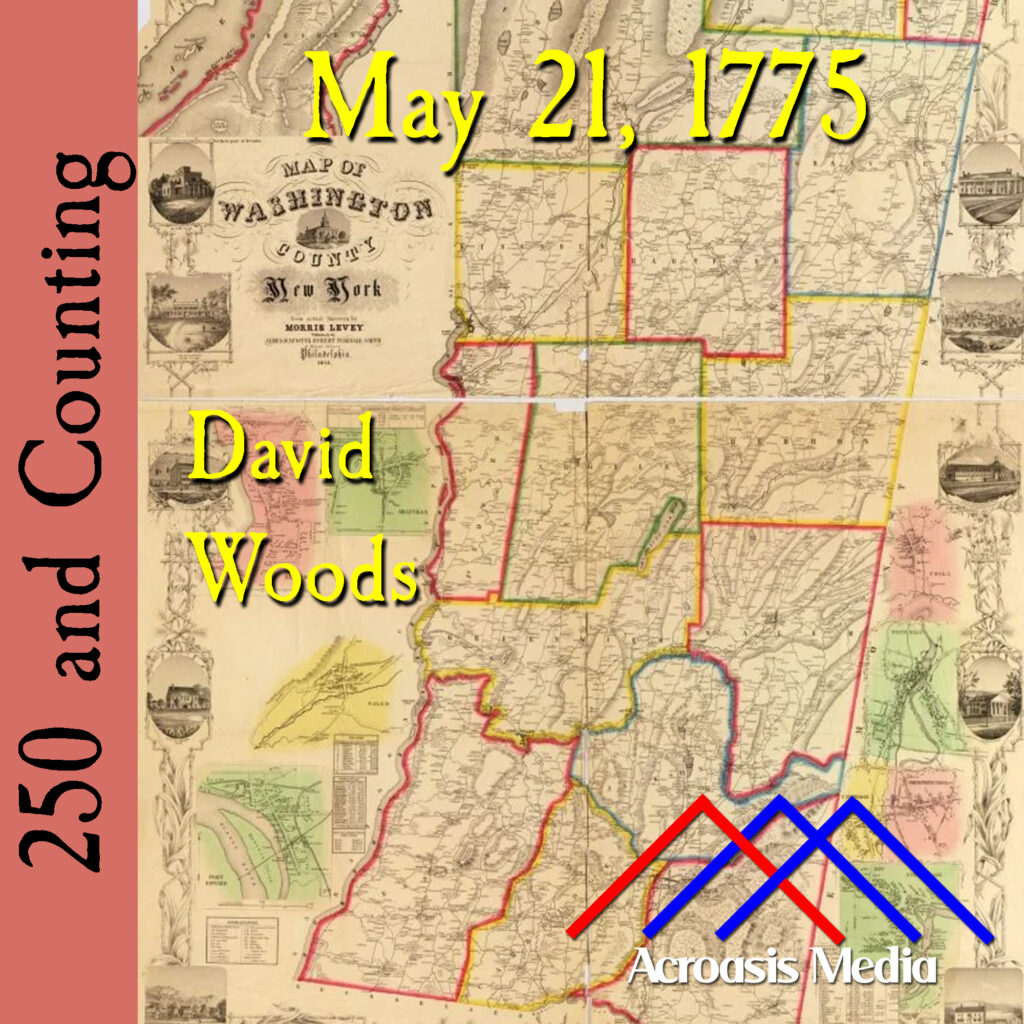
  • May 21, 1775: David Woods

    Cover art for May 21, 1775: Map of Washington County, NY (detail), circa 1814.

    Like so many people who lived in upstate New York in the Revolutionary era, David Woods was an immigrant from Ireland when he came over with his family in 1775.

    New York was unusual compared to the other colonies in that the overwhelming percentage of the population was immigrants; as a result it became a bit of an enclave for people from the UK and the Netherlands, so Woods blended in well.

    As a result, we believe that although he wasn’t a politician for very long, he did a solid job, which doesn’t always stand out from the bigger picture.

  • May 17, 1775: Daniel LeRoy

    Cover art for May 17, 1775: Portrait of Daniel LeRoy, slightly doctored by Claude. Original creator unknown.
    Actor Richard Kind

    Is it just me or does Daniel LeRoy look a lot like actor Richard Kind?

    Daniel LeRoy was born in upstate New York and started to put together a pretty good settlement, but an unfortunate choice on his part caused him to lose it all.

    So he moved west and rebuilt his life and, by most accounts, it’s reasonable to say that he did rather well in the Michigan Territory, and in the State after that area became our nation’s 26th.

  • May 9, 1775: Jacob J. Brown

    Art for May 9, 1775: portrait of Jacob Jennings Brown by James Herring, ca. 1835.

    When it comes to the War of 1812, Baltimore and the Fort McHenry get to eat for free for a long time, because they get most of the good stories: the star-spangled banner and Francis Scott Key, the battle at North Point, the Shot Tower being briefly the highest structure in America, and so on.

    But there was a lot of fighting going on elsewhere, particularly in upstate New York, around the Great Lakes area, and General Jacob Brown was in the thick of it. He was a nationally-recognized war hero back in the day, but nowadays he’s largely forgotten. And more’s the pity.

    Listen in on a brief review of General Brown’s life.

  • May 6, 1775: Mary Sherwood

    Cover art for May 6, 1775: Mrs. Mary Sherwood, artist unknown.

    First, I think we need to address the elephant in the room that Mike brought up during this episode: Winona Ryder comes third out of four; Katharine Hepburn and Saoirse Ronan are way ahead.

    And let’s just pretend June Allyson didn’t happen.

    Mary Sherwood is one of those authors who, it appears, was fated to fade into obscurity after dying despite the huge popularity they enjoyed in life. It still happens today; ask anyone under 40 about Erma Bombeck or Kurt Vonnegut.

    Fortunately you have us to learn a little bit about her and her work.

    [powerpress}

  • May 5, 1775: Alexander McNair, First Governor of Missouri

    Cover art for May 5, 1775: undated portrait of Alexander McNair, artist unknown.

    Alexander McNair wasn’t especially well-educated, but he became a judge and a governor of a territory and then that same area when it became a state, so he must have had something going on besides high-level friends.

    Then again, as governor, he wasn’t able to get a ton of stuff done, and when his term ended he took on a Federal job just for the money. So, for a guy who spent so much time in the “Show-Me State”, he didn’t really have much to show.

  • April 16, 1775: Sylvester Maxwell

    Cover art for April 16, 1775: the gravestone of Sylvester Maxwell, in the East Charlemont Cemetery in Charlemont, MA

    I (Claude) remember once reading something about how it’s not so much the dates on the tombstones so much as it is the dash in between the dates. Because the dates represent singular events, but a lot of stuff happened during the dash.

    And while that sentiment is often so much glurge, it does get me to thinking sometimes about the legacies left behind by tombstones. These were people who wanted to be remembered somehow. That’s not to say that people who choose to be cremated or buried at sea or dispensed with by some other means don’t want to be remembered; they just don’t seem to care whether there’s a marker saying I WAS AND NOW I’M NOT. These are largely the types who feel that you’re forgotten when your name is spoken for the last time, or when the last person who remembers you is, themselves, dead.

    Sylvester Maxwell, to me, is in an odd place. We have his name and we know a few things about him, but we don’t have a good handle on who he was. He could be any one of hundreds of stones we pass in any given cemetery.

    I’m getting maudlin here; I apologize. And I’m on vacation! In a beach condo! I gotta lighten up!

    Okay, then: for all that, Mike has a story for you about Sylvester Maxwell. And there is something rather notable about his life, that he’ll tell you about.

    Enjoy. I’m going to see if I can get some Vitamin D the natural way.

    Aw, man. It’s night time.