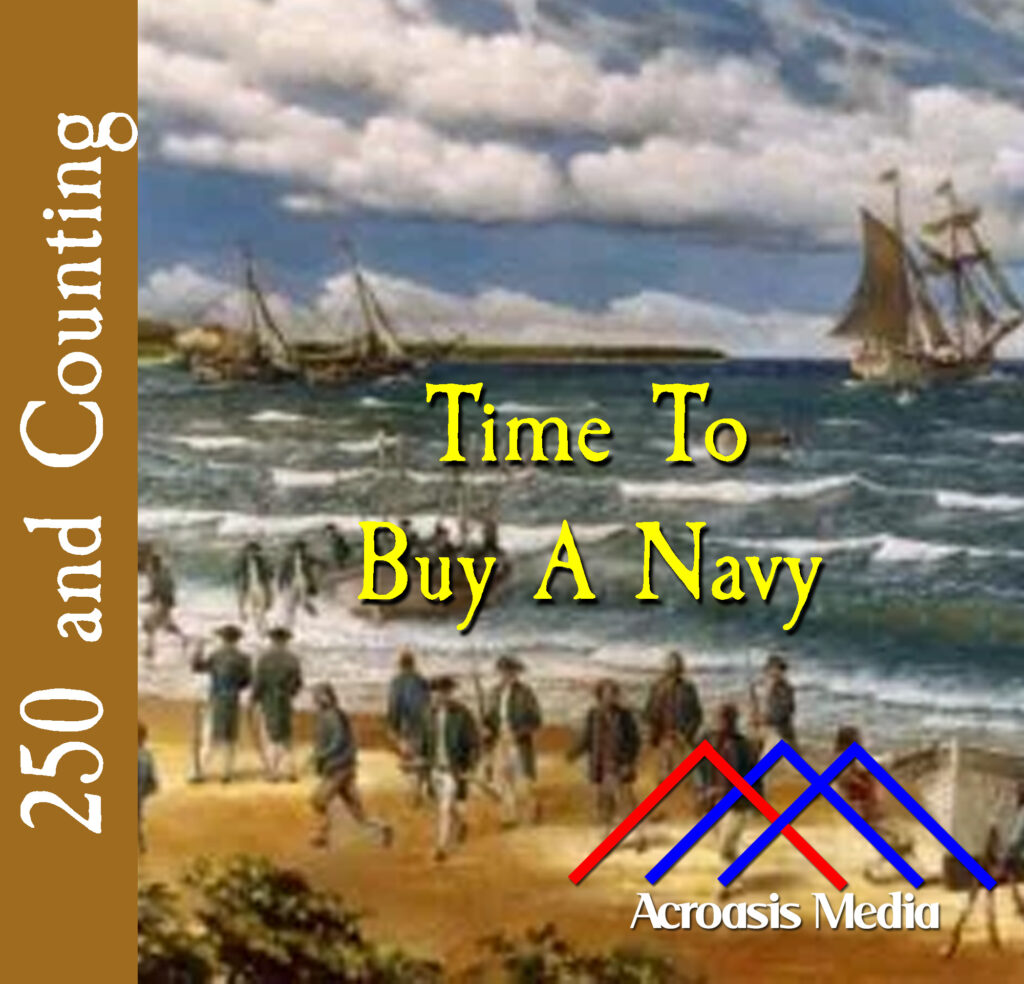
This image depicts the Battle of Nassau, one of the first major battles won by the Continental Navy in March of 1776. Oil painting on canvas by V. Zveg.
If you’re going to build a navy, you’ve got to get serious about it. Congress established the need for a Navy back in October, but they were kind of sloppy about executing the plan.
For the last several weeks, the Congress has been purchasing existing ships and retrofitting them to make them battle-worthy. That’s great if you’re maintaining status quo, but if you’re trying to overthrow the government, you’re going to need some new hardware.
So the Congress agreed to build thirteen ships from the ground up, each with sufficient firepower to do some real damage. And they want all thirteen of them by March.
Ben Franklin and Gabriel de Borbón had corresponded with one another previously, so while the letter that is the subject of today’s episode has a very specific (and relevant) ask in it, it was also just another in a chain of correspondence between the two.
For his part, Prince Gabriel was probably receptive to Franklin’s suggestions, but he wasn’t likely to be in a position to act on them in the way that Franklin hoped. As the fourth son of Charles III, the throne was a long way off, though he was considered the heir apparent for some time.
When Spain provided assistance the following year, they did so because Spain and France were allies and France was providing assistance to the Americans; furthermore they had their own bone to pick with the British, so Two Birds and all that. So they sent over lots of assistance, mostly in the form of money so that the Continental Army could purchase cannons, mortars, gun carriages and other ordinance.
It’s possible that Prince Gabriel had some influence on his father, but more likely is that Charles III was simply maintaining existing alliances.
Most of the portraits we see of Martha Washington were made when she was older, so we have (I think) this image of her as a bit of a crabby old frump.
And maybe she was, by the time her husband got to be President. She didn’t really love the life of the public spouse and charming party hostess. But it turned out she was good at it, and if it made her crabby, nobody who mattered knew about it on a firsthand basis.
In fact, Martha Washington was known to be fashionable, calm, outgoing and easy to get along with. And because Boston was rather straitlaced compared to Virginia, she gave off a bit of an exotic air during her time in Cambridge.
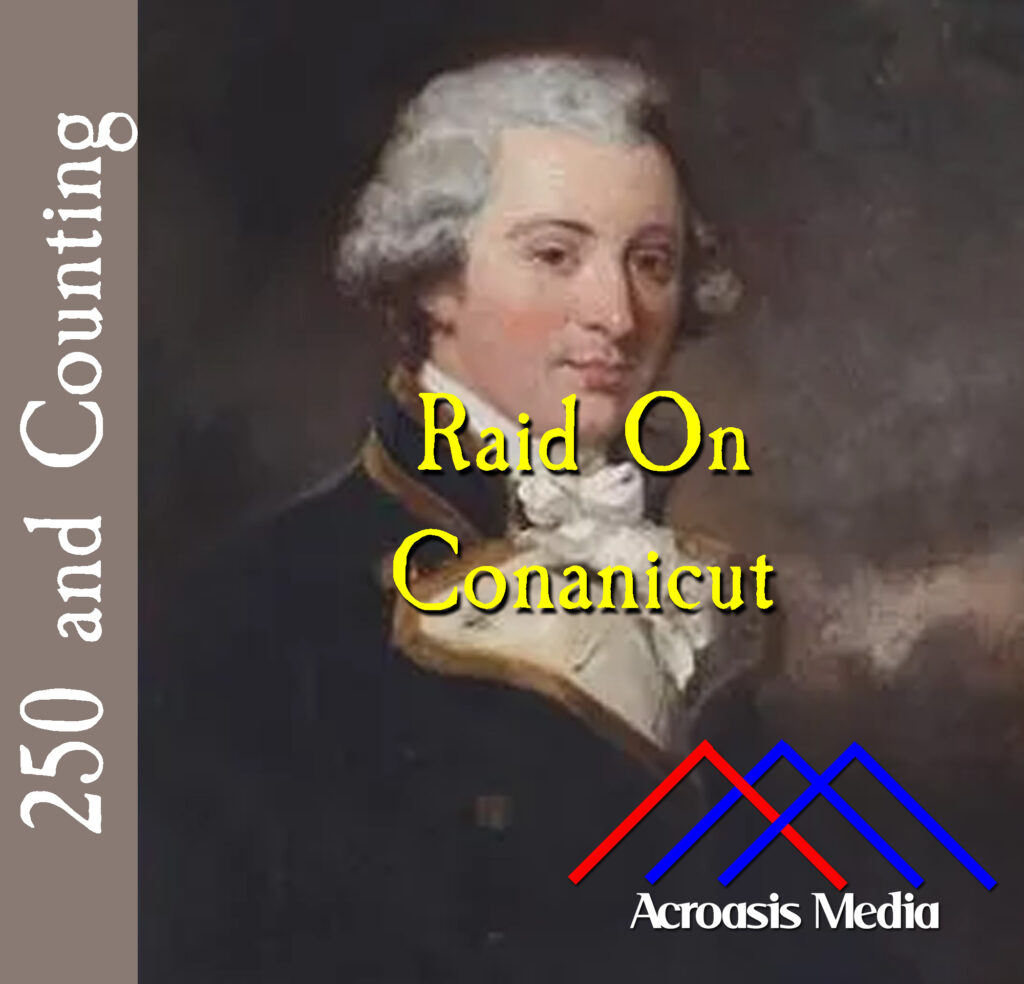
Conanicut Island isn’t much of an island to look at, but they had supplies of some kind, and the British were looking.
Admiral Graves had the task of finding supplies for the British who were under siege in Boston, and he decided to move beyond the local waters, and went into Narragansett Bay. In some towns (such as Newport, which was Loyalist) he was able to just buy supplies. But if the locals resisted, that’s when he broke out the guns.
Conanicut Island looked like a vulnerable place to get supplies. He was able to get some of what he needed, but it wasn’t the cake walk he thought it would be.
Note once again that the map is drawn with North on the bottom. Hover to get the guide to the markers.
The Battle of Great Bridge is a little bit overlooked these days, and more’s the pity. It was the first battle in Virginia, it was a big victory for Patriot troops, the Royal Governor and his crowd got pushed out altogether, and nobody died on the Patriot side.
On the British side, about 100 soldiers were dead. The last time the British lost a substantial number of troops, it was at Bunker Hill, which they won. (The vocabulary word you seek is “Pyrrhic Victory.”)
Best of all, it fueled Virginia’s moves toward independence.
The siege of Quebec was an event that was months in the making, and it was still just the penultimate act of the play.
Benedict Arnold and his troops thought they could get to the American side of the St. Lawrence River within 21 days; instead it took several weeks. Along the way they lost about a third of their troop strength. Some of the men died of illness en route, but most of them finally gave up altogether and headed home.
When they finally arrived they realized they didn’t have nearly what they needed to effect a decent attack on the city, so they had to hunker down and wait for supports to arrive. They were able to institute a couple of blockades, but that wasn’t nearly enough.
Finally General Montgomery showed up, and after an attempt at getting the city to surrender, they began the shooting. Unfortunately that didn’t do a lot of good, so the Continental Army had to settle for placing the city under siege. At this point, however, the clock was ticking because a big chunk of the Colonial soldiers were due to have their enlistments end on December 31. Something had to give, and soon.
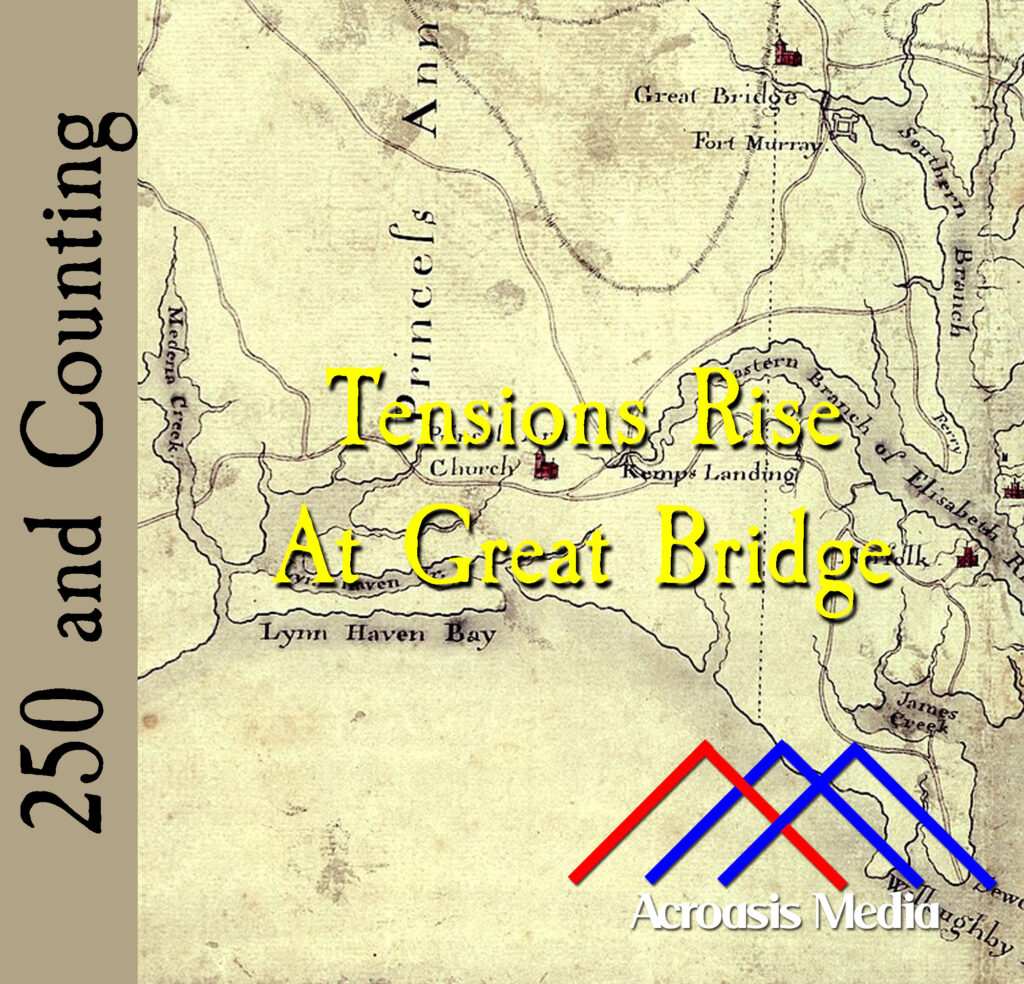
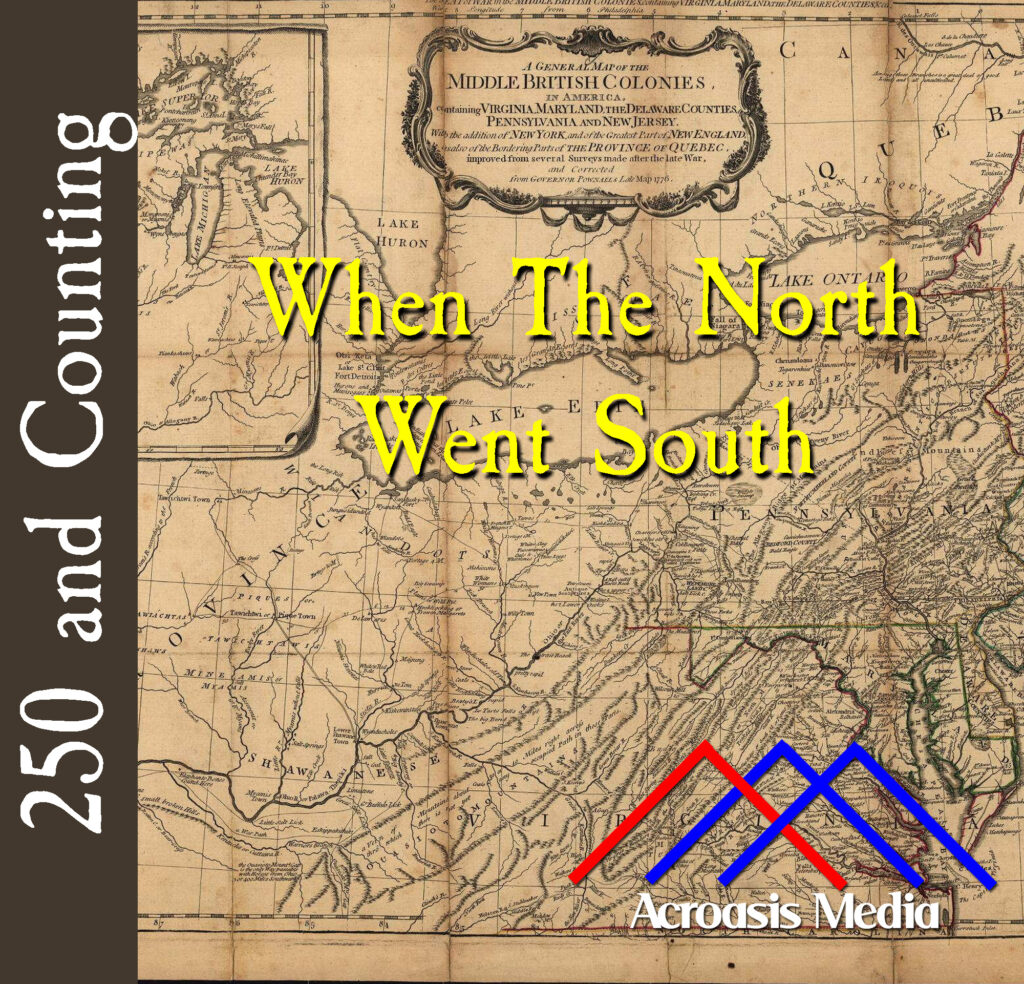
The map in today’s cover art might be a little confusing to people who live and work in the modern-day Norfolk area. That’s because it’s oriented with North at the bottom. What’s not known is why this was done in this particular case. North/Up South/Down is, of course, the usual convention, and there are arguments that there’s a psychological component to this (e.g. north/up is somehow “better” than south/down).
From a cartography standpoint, there isn’t much difference between a map oriented one way and a map oriented any other way. In fact, most cartographers consider the matter trivial in nature.
The bodies are gathering at Great Bridge; in a couple of days the battle begins.
Yarmouth, Nova Scotia was a frequent target of raids throughout the Revolution. Indeed, most of Nova Scotia was harassed from both land and sea by Americans. This had a huge impact on the maritime economy there. But all those attacks—mostly by American (and probably some French) privateers—inflicted lots of disruption on British supply lines the entire time.
On the downside, all these attacks pretty much put an end to any trade between America and Nova Scotia.
But the Raid on Yarmouth, as the event came to be known, was especially egregious both for its intensity and the lasting effect it had on its inhabitants.
While the premise of today’s episode seems a little far-fetched, if you look closely at the map in today’s cover art, you’ll see it makes a lot of sense. In the mid-1700s, neither Pennsylvania nor Virginia had well-defined western borders. In fact, Virginia was occasionally thought to continue northward all the way to Lake Erie. Some maps even have a Pennsylvania boundary somewhere east of Pittsburgh.
The point is, there have been times when the borders have been blurry, and others where they’ve overlapped, and still others (before West Virginia was a thing) when the two colonies had well-defined borders AND were neighbors. And now we’ve brought the South into the realm of mutual commitment.
John Paul Jones was born in Scotland as John Paul and began his maritime career at 13 when he was hired as an apprentice.
In 1770 he was involved in an incident wherein a crew member was flogged after a failed mutiny. The crew member later died, and it was clear that his reputation had taken a big hit. So John Paul left Scotland and took command of a British vessel. Again, however, he put down a mutinous sailor, this time killing him with a sword in Tobago. Before he could be tried, however, he fled the area and essentially disappeared for 18 months.
In the meantime his brother, who lived in the Fredericksburg, Virginia, area, died. John Paul went to America to settle his brother’s affairs. It was at this time that he appended the last name “Jones” to his name. Shortly thereafter he joined the American Navy. During his time as an American naval officer, it doesn’t appear that he killed anyone, but in his later years, he sailed for the Russian Navy, where he was derailed by the accusation of rape of a ten-year-old Russian girl. It was only because of the murkiness of some of the details that gave the Empress Catherine some leeway to have him exiled rather than beheaded.
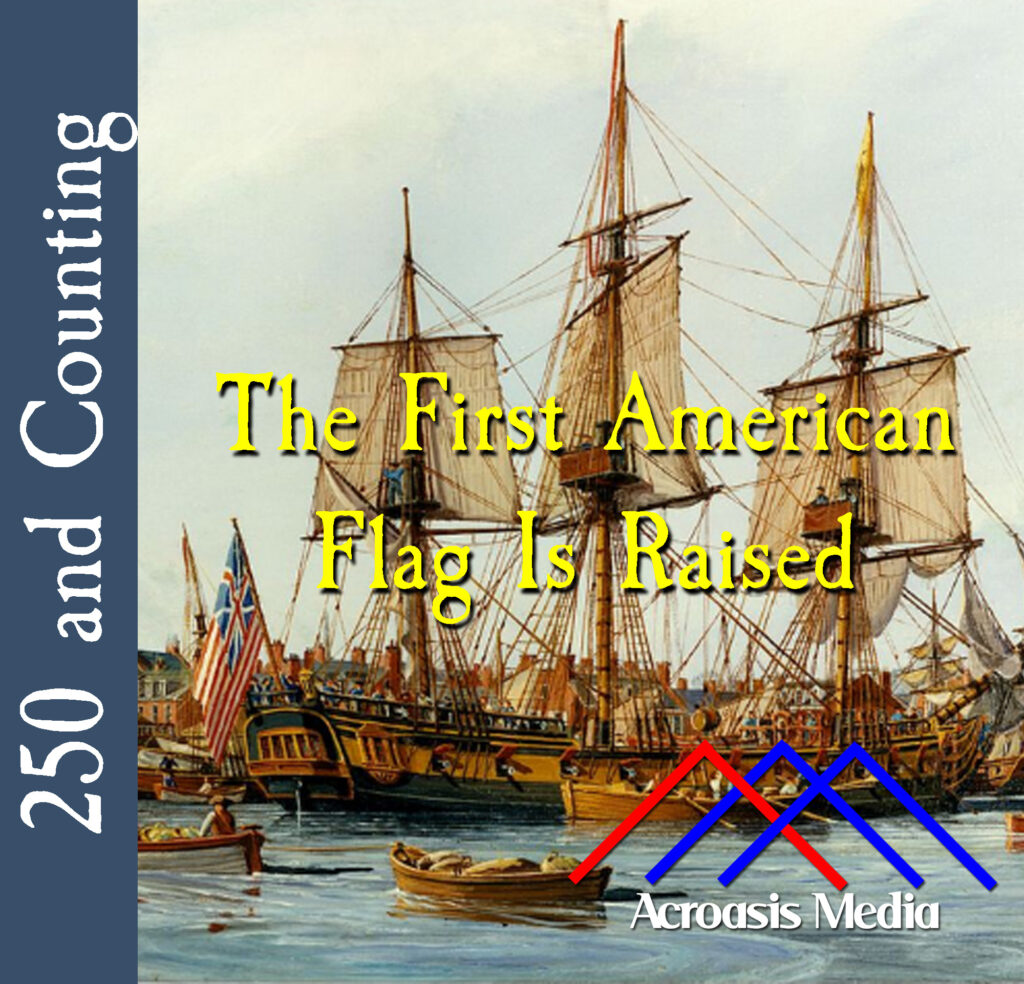
But as an American sailor, he did shine. And he shone for the first time on this day in 1775.