Nathanael Greene was among the first to step up when the shooting started at Lexington and Concord. This is almost certainly because a British official seized a vessel owned by Greene and his brothers.
After the Intolerable Acts were enacted in 1774, Greene organized a militia unit called the “Kentish Guards.” Despite his leadership, he was not selected as an officer in that militia because he had a limp he’d acquired in childhood (there are no records extant showing why this was the case.)
However, when the war broke out, Greene was selected to lead the Rhode Island Army of Observation and head to Boston. That company was involved with the battle at Bunker Hill but Greene wasn’t there for it; he was visiting home at the time.
Later that month, the Continental Army was established, and he became Brigadier General Nathanael Greene. Greene remained with the Boston-based forces after the siege of that city ended, but he rejoined Washington shortly thereafter in New York. As we note in today’s episode, Greene was ill with a severe fever when the Battle of Long Island broke out, but he was able to take command for the Battle of Harlem Heights in September, during the withdrawal from Manhattan. We’ll talk about that more in a few weeks.
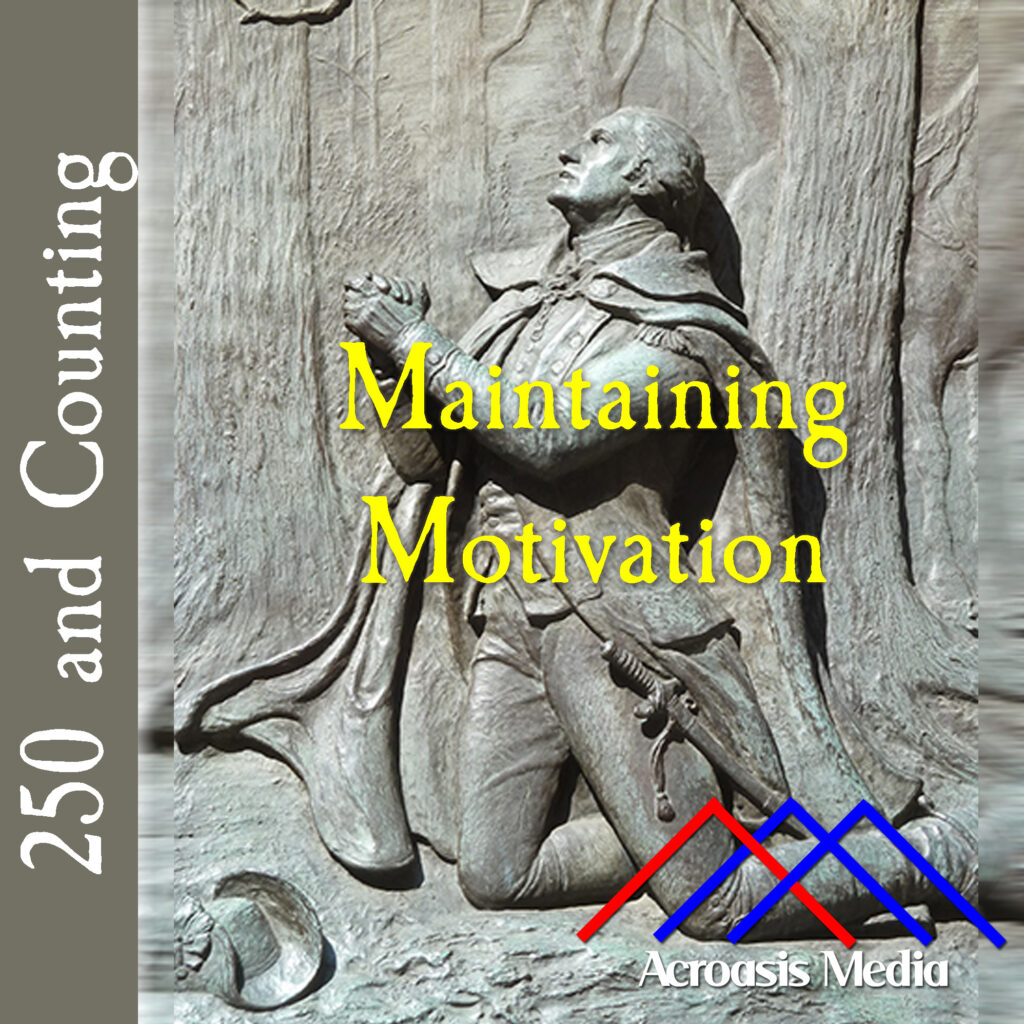
George Washington’s means for maintaining motivation in the Continental Army came from two directions: discipline and stirring rhetoric as a means of providing the troops with something to rally for.
And his Orders of the Day for this day seem to be focused simultaneously on both.
As noted elsewhere, Washington could be a stickler for protocol, and it shows in his Orders of the Day, which were usually written in the third person. But there was also some room—not a lot, but some—for a little floridness in his writing. For example, here’s an excerpt from today’s orders:
The Honorable Continental Congress having been pleased to allow a Chaplain to each Regiment, with the pay of Thirty-three Dollars and one third per month—The Colonels or commanding officers of each regiment are directed to procure Chaplains accordingly; persons of good Characters and exemplary lives—To see that all inferior officers and soldiers pay them a suitable respect and attend carefully upon religious exercises: The blessing and protection of Heaven are at all times necessary but especially so in times of public distress and danger—The General hopes and trusts, that every officer, and man, will endeavour so to live, and act, as becomes a Christian Soldier defending the dearest Rights and Liberties of his country.
In other words, God is here, we’re paying for him to be here, and God is someone you really don’t want to annoy, so get it together, please.
I promised you a postscript for the Christopher French story, but let me offer up some broader context first.
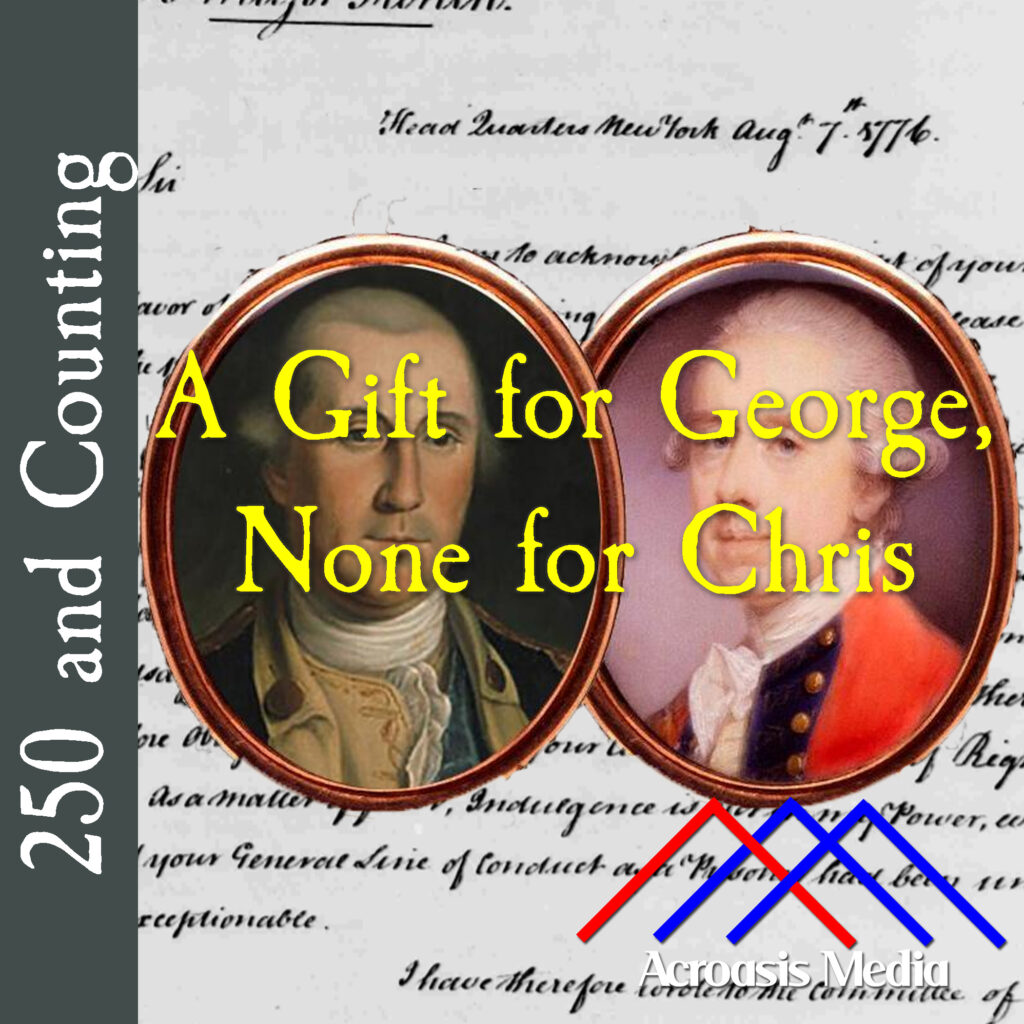
In July 1776, French wrote to George Washington from Connecticut, where he was being held as a prisoner of war. The purpose of the letter was to request parole from his confinement.
Washington’s reply reads:
Sir: I am to acknowledge the receipt of your favor of the [the date is missing here but from other documents it was probably the 22nd] July, intimating your expectations of release on the 12th. of this month.
I have considered your Parole, advised with those whose Knowledge and experience gives weight to their Opinion, and otherwise endeavoured to inform myself how far your Construction of it is founded upon Justice, Reason or Usage; I do not find it warranted by either, My Duty therefore Obliges me to over rule your Claim as a matter of Right. As a matter of favor, Indulgence is not in my Power, even if your General Line of Conduct as a Prisoner had been unexceptionable.
I have therefore wrote to the Committee of Hartford, sent them a Copy of this Letter and hope you will, without Difficulty, conform to the Regulations already made with respect to Prisoners, by the General Congress.
It is probable a general Exchange of Prisoners will soon take place, it will then be a pleasing part of my Duty, to facilitate your return to your Friends and connections, as I assure you it is now a painful one to disappoint you, in an Expectation which you seem to have formed, in a full Persuasion of being right and in which on mature Deliberation, I am so unhappy as totally to differ from you. I am Sir etc.
This much you knew. Here’s the postscript. Christopher French wrote another letter subsequent to the one Washington responded to. In that letter, which Washington received on August 8, it appears that French withdrew his request. Washington immediately sent a second letter, responding to this one:
Sir: I was unwilling to determine hastily, upon your claim of a Release founded upon your Parole, and therefore delayed the acknowledgment of your favor of the 22d July, until I should fully inform myself. I had accordingly wrote you Yesterday, that I was so unhappy as to differ from you in the construction you had put upon it, but as there was reason to believe, a General Exchange of Prisoners might soon take place, I should chearfully facilitate your return to your Friends.
Last Night I received your favour of the 5th. August waving your Claim of a Release, which makes any farther Discussion of that matter unnecessary. Your other proposal, of being exchanged for Major Meigs or Col. Allen, will meet with no Objection from me; should you write to General Howe on the Subject the Letter shall be chearfully forwarded and his Answer returned.
Should any Difficulty arise in the Exchange, I am doubtful, how far I should be authorized, without consulting the Congress, to grant you an Indulgence similar to that of Major Meigs, which I have been informed was allowed in consequence of his saving the Life of a British Officer, either nearly connected with, or much esteemed by General Carlton.
However, you may assure yourself Sir, that both Duty and Inclination lead me to relieve the unfortunate and that I agree with you, that your long and early Captivity gives you a very just Claim to special Notice, and I shall be happy in furthering your Wishes, as far as my Station will admit. I am Sir, etc.
In short, Washington was happy to be relieved of the burden of refusing the initial release, but also still more than willing to cooperate should a prisoner exchange take place.
When it came to army discipline, George Washington had some definite opinions. The punishments we hear about were rather harsh by modern standards, but Washington had some problems with his recruits that modern armies don’t tend to have.
Specifically, (and we’ve mentioned this before), the Continental Army had a relatively short enlistment period, which meant that soldiers were constantly turning over and by the time someone was finally in good shape as a soldier, they were gone and replaced with the next guy who had little idea of what he was doing. So Washington was constantly beset by soldiers who didn’t know how to be soldiers. This often meant that he had to lay down some harsh punishments to help ensure that his message got across.
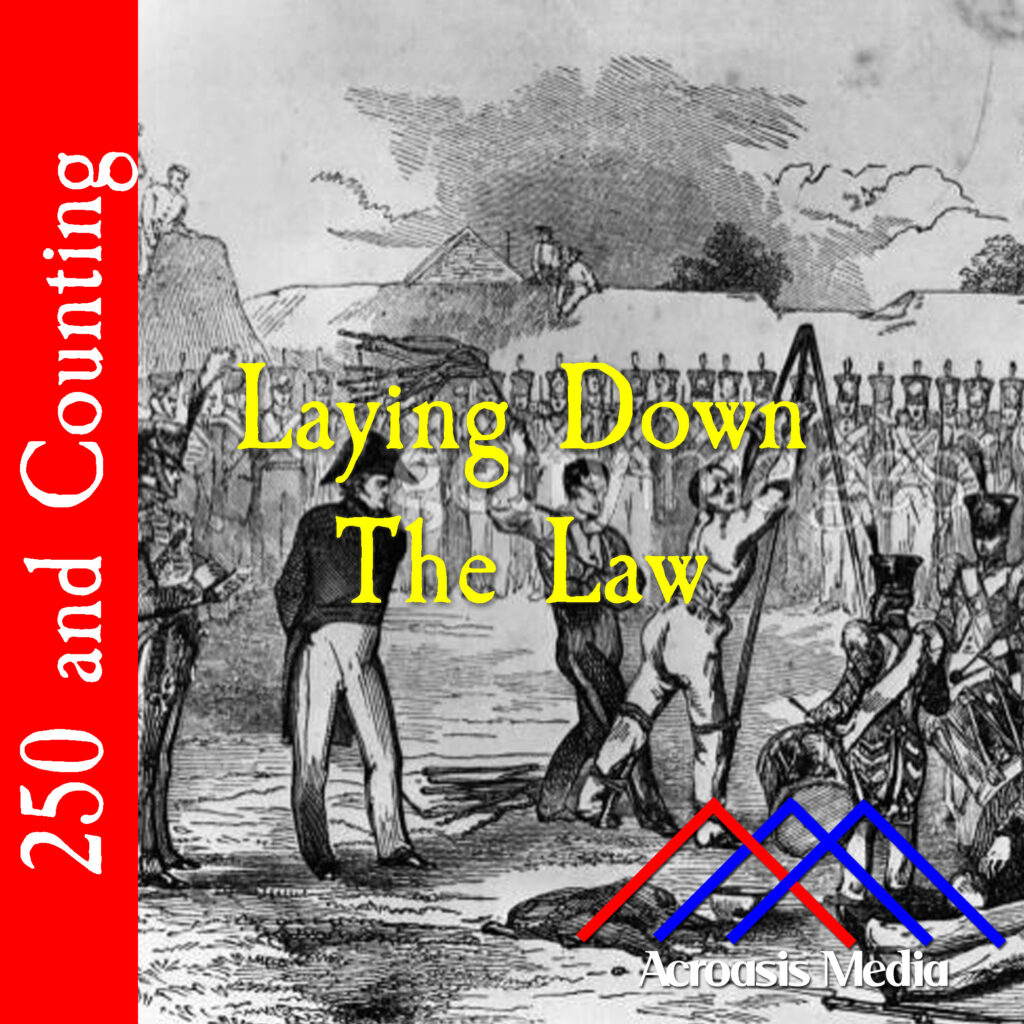
The punishments themselves weren’t especially unique; discipline of this nature was meted out in many places. In fact, today’s cover art is actually taken from a British flogging nearly a hundred years later. But Washington and other military leaders of the Revolution cut their teeth on British army discipline, and it didn’t look a lot different: the prisoner was strapped to a frame of some kind; the other soldiers were required to witness; and the drummer boys (at right in this image) did their best to drown out the cries of the man being punished. We had to crop this image to fit the space, but you can also see a pair of legs sticking out from the bottom right: that’s a soldier who has fainted from the stress of watching. And the man at left is a doctor, who is actually monitoring the prisoner’s health to ensure that the punishment isn’t fatal. So he’s got that going for him, which is nice.
George Washington had a deep-set sense of right and wrong, and sometimes his sense of Army decorum could get in his way. Our July 14 episode demonstrated that to a certain extent.
Other times it demonstrate the high expectations he placed on himself and others. He wanted his officers to be behavior models, especially because so many of the troops were so undisciplined. This only worked to a certain extent; it took the influence of some outside officers for the lessons to really sink in, but we won’t get to talk about that for some time.
It’s also important to note, as I think today’s episode demonstrates, that Washington did care about the well-being of his men. Not just their physical comforts (he was always trying to get blankets, better food and such for them), but their mental and spiritual comfort as well. It wasn’t all army decorum. So he made allowances for the men to take a day to worship if they so desired, and to be exempt from fatigue duty on Sundays, “until further orders.”
“Further orders” turned out to be until August 25, when the order was rescinded, but the fact that the order was given in the first place goes a long way.
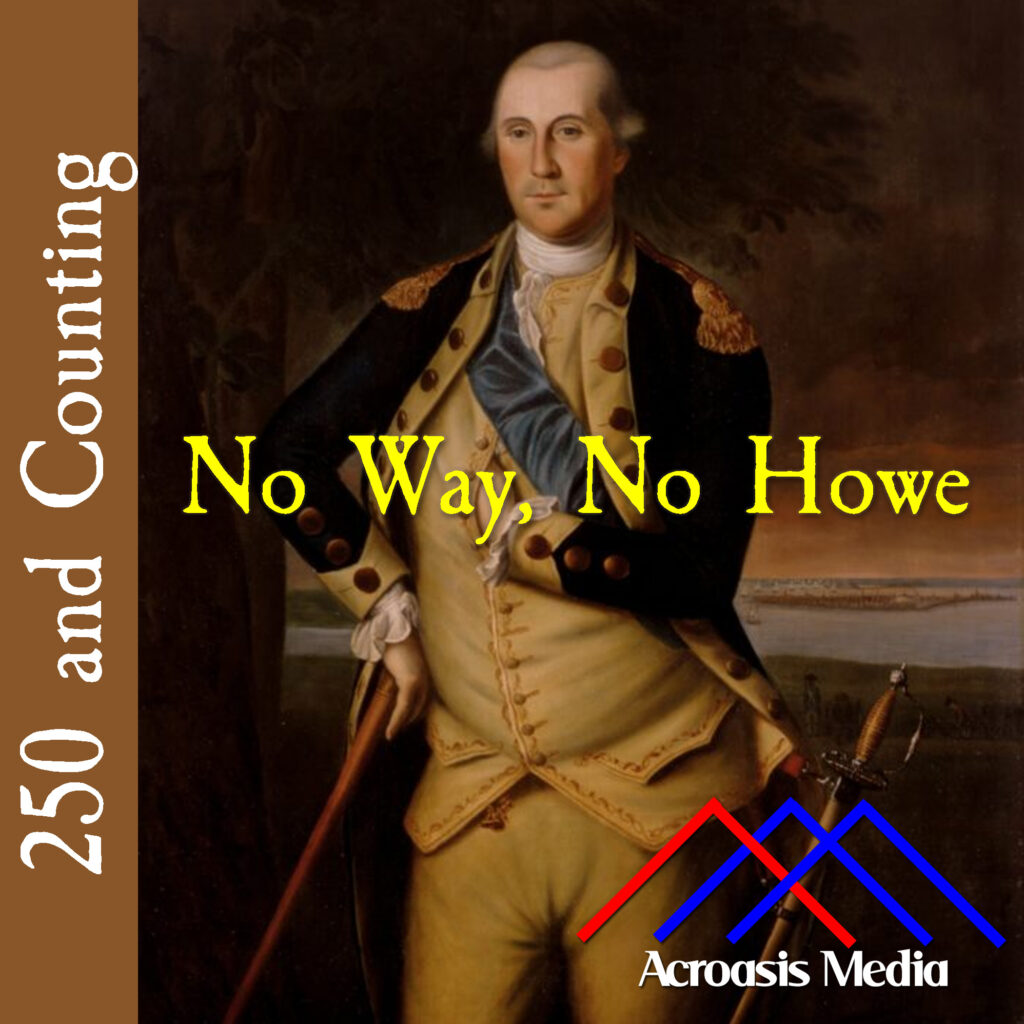
That George Washington agreed to meet with Colonel James Patterson was a bit of a surprise.
He’d turned down the opportunity to meet with his British counterparts on multiple occasions, but when asked if he’d meet with one of those men’s officers, Washington accepted the offer.
Once the meeting was set, Washington was more gracious than most people would expect. Colonel James Patterson was rowed to the Battery dock in lower Manhattan from the British barge. At this point it was expected that he would be blindfolded to prevent him from gathering intelligence on Washington’s headquarters. Instead, he was brought to a different location without being blindfolded.
Patterson met with Washington, Henry Knox, Joseph Reed and a few others, and it was clear that these officers were very deferential to the General, typically referring to him as “Your Excellency.” Again, protocols were important to Washington.
After rejecting the Howes’ letter yet again, Patterson mentioned the benevolence of His Majesty, King George III (which was probably not the right thing to say to George Washington, but still), and explained that the Howes were there “to accommodate this unhappy dispute”.
According to Knox’s letter to his wife, Patterson then explained that Lord Howe had broad powers of pardon, but Washington wasn’t interested. As far as the General was concerned, “the Americans had not offended, therefore they needed no pardon. This confused [Patterson].”
Shortly thereafter, Patterson was escorted back to his barge, disappointed but sociable.
One of the most common things written about George Washington is that he always behaved like a gentleman, and expected others to behave the same way; following protocol was very, very important to him.
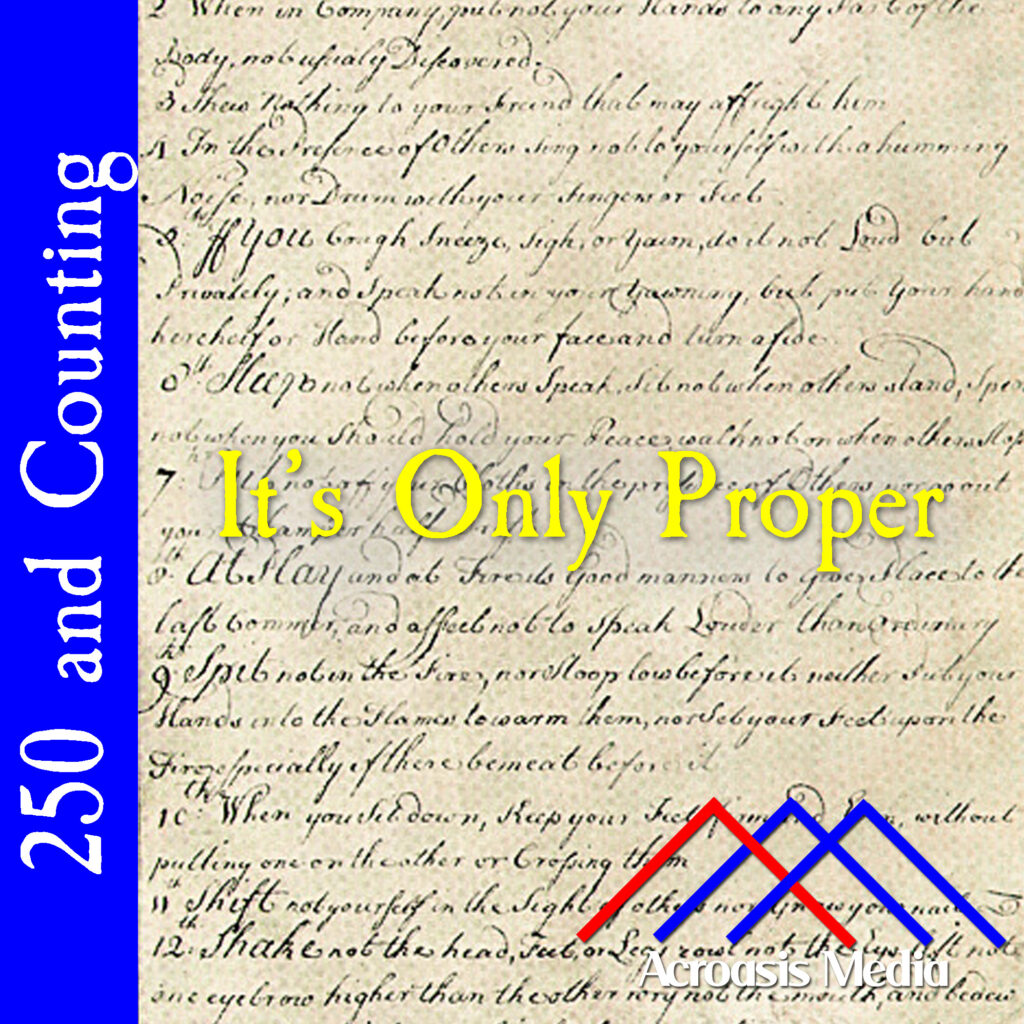
When he was sixteen years old, he copied out by hand 110 rules of Civility & Decent Behavior in Company and Conversation, likely as a penmanship exercise. These rules are based on a set of rules composed by French Jesuits in 1595. The first English translations of the French rules appeared in 1640, and are ascribed to Francis Hawkins, the twelve-year-old son of a doctor. (So, probably as a translation exercise from Hawkins’ French tutor.)
Without even knowing it, the people who worked with this set of rules was absorbing a code of behavior that worked for people of all social strata, rather than for a specific class of people. Thus, it makes sense that the protocol for Washington as a leader of soldiers, and then a nation, depended on the “all men are created equal” credo.
As Parson Mason Locke Weems said of Washington, “‘no wonder every body honored him, who honored every body.” And while Weems is also thought to be the guy who made up the Cherry Tree story, he was certainly correct in this respect.
Today’s episode covers a couple of events that took place today, and a couple that will take place tomorrow, largely because there isn’t a ton to say about any of them but they are noteworthy. Also, I wanted to clear the deck a little bit so that Mike can concentrate on events in South Carolina.
We start with a letter that Joseph Hawley wrote to George Washington about potential troop movements, though to our heads it’s a little bit of odd advice.
We visit the Committee of Five, which has a homework assignment due tomorrow, and they’re working frantically to finish it. Like so many group projects, only a few of them are really working here, while all five are going to get the grade for it. Yeah, we’re on to you, Sherman and Livingston.
That New York had a strong contingent of Loyalists was never a secret in 1776, but chances are that George Washington never thought one of his bodyguards, Thomas Hickey, was one of them.
Hickey was a private in the Continental Army, which meant that he was part of a group that not only protected George Washington, but the Army’s local cache of money. At one point he was arrested for passing counterfeit money and it was while he was in jail that word got back to Washington that Hickey was planning to switch sides as soon as the British got there. So Hickey betrayed both the General and the currency he’d been assigned to protect.
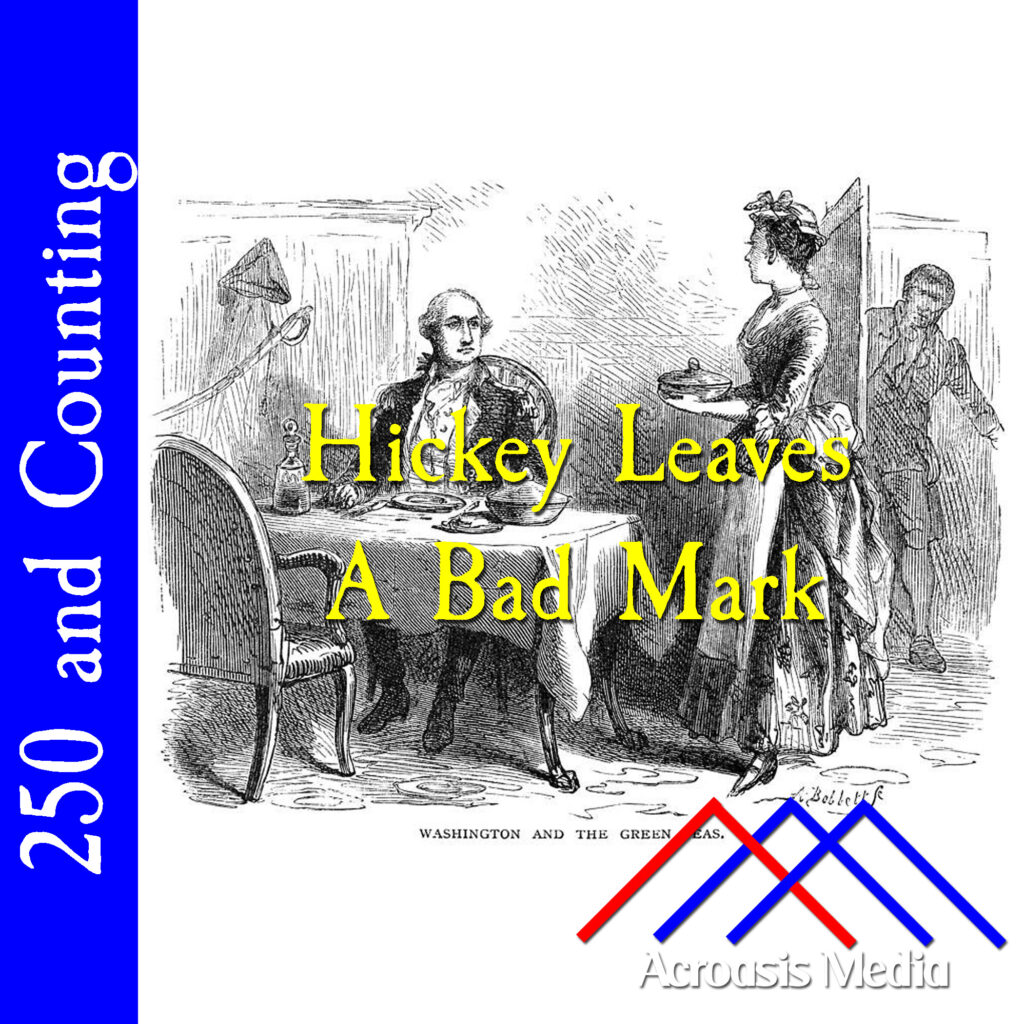
About the cover art: many years later, a story came out that was written by Washington’s grandson (more accurately, Martha Washington’s grandson) George Washington Parke Custis, that Washington was in danger of being killed by an insider via poisoning. After Custis died, his memoirs were published by his daughter Mary Anna Custis Lee, with extensive notes added by an antiquarian. According to this account:
When Washington and his army occupied the city, in the summer of 1776, the chief resided at Richmond Hill, a little out of town, afterward the seat of Aaron Burr. [Samuel] Fraunces’s daughter was Washington’s housekeeper, and she saved his life on one occasion, by exposing the intentions of Hickey, one of the Life-Guard (already mentioned), who was about to murder the general, by putting poison in a dish of peas prepared for his table.
Who alerted Washington to the poisoned peas varies from one account to another, and given a bunch of the details (which I’ve largely omitted here), it’s very likely that the story is apocryphal.
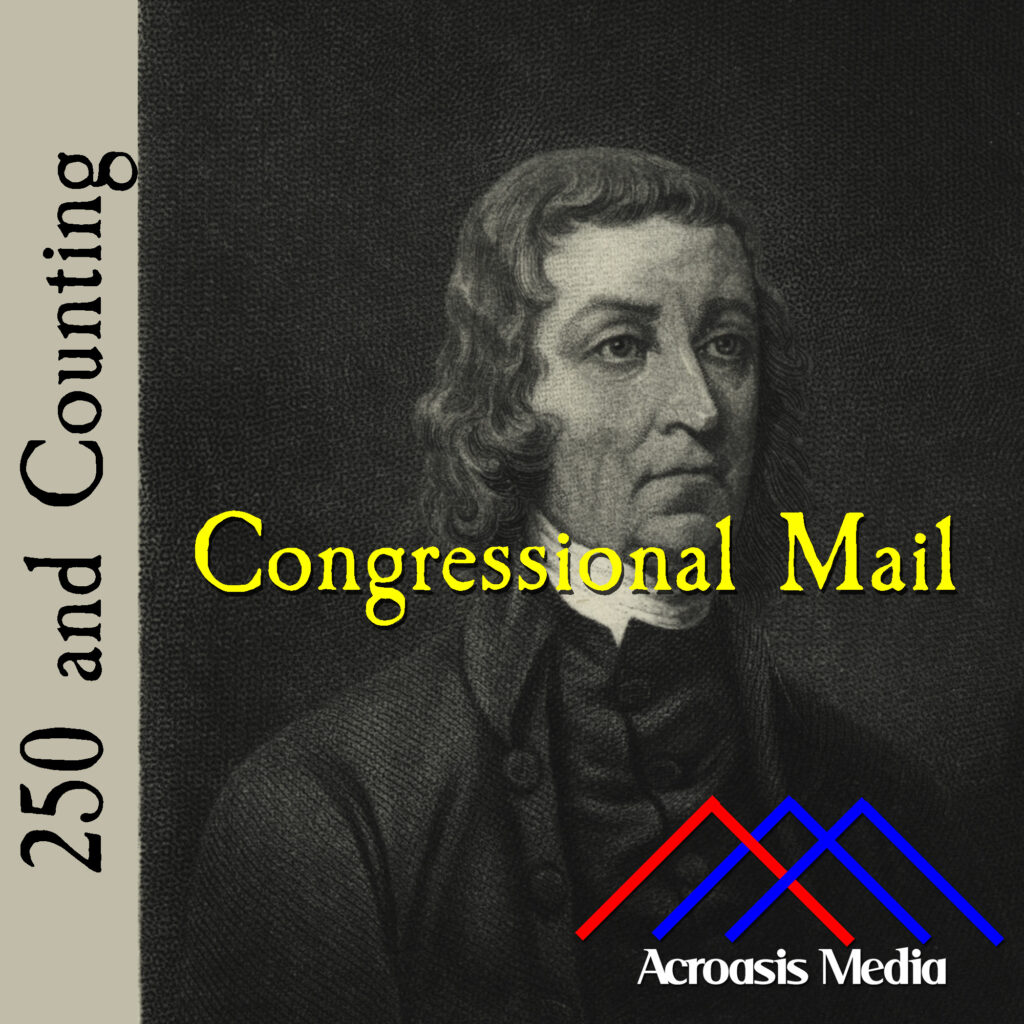
Josiah Bartlett was, in fact, the inspiration for the presidential character who appears in the TV show The West Wing. The modern day president, Jed Bartlet only spelled his name with a single T at the end, but it was only around this time that the spelling of English words was starting to standardize, so Bartlett gets a pass.
Bartlett, of course, was involved in the creation of the state constitution, and while he declined the position of US Senator in 1789 despite the vote, he accepted the position of Chief Executive in 1790. When New Hanpshire adopted a constitution and became a state, Bartlett’s title changed to Governor. In 1794 he resigned because of his health, and in 175 he died.