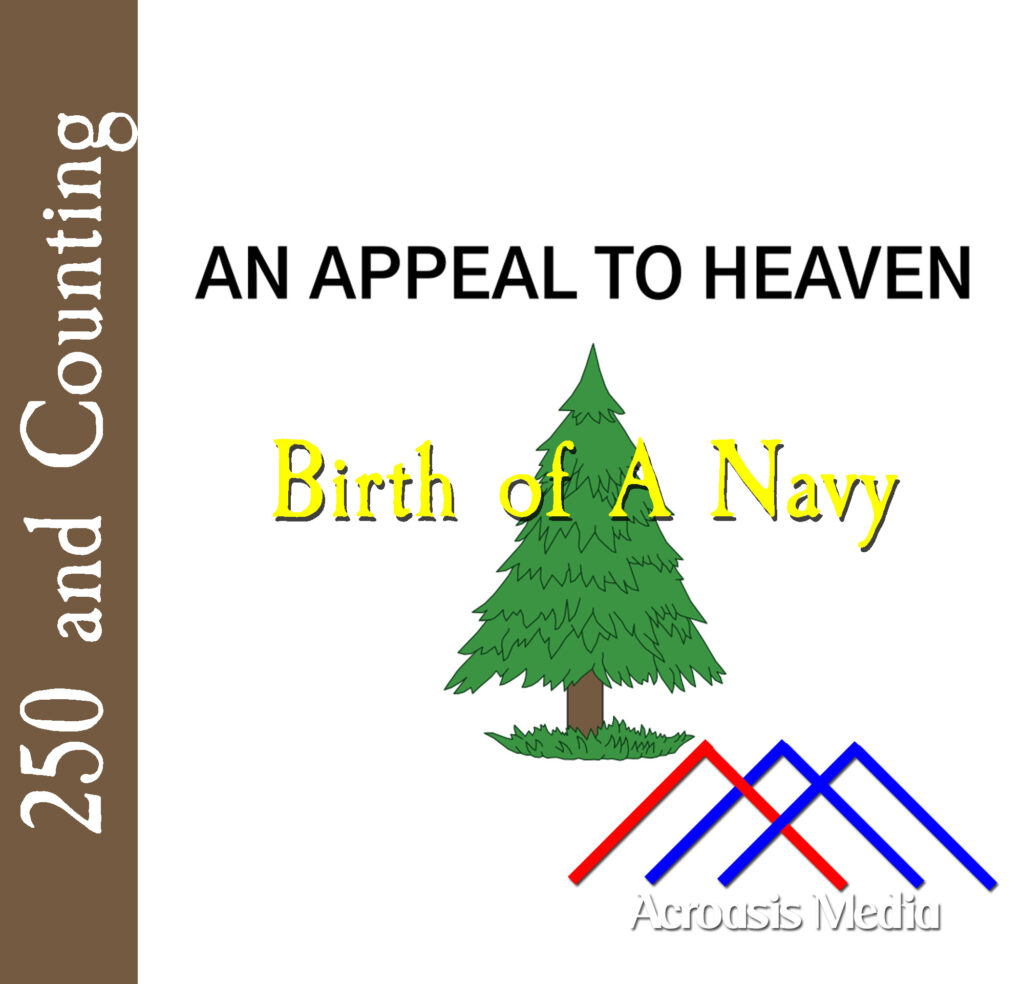
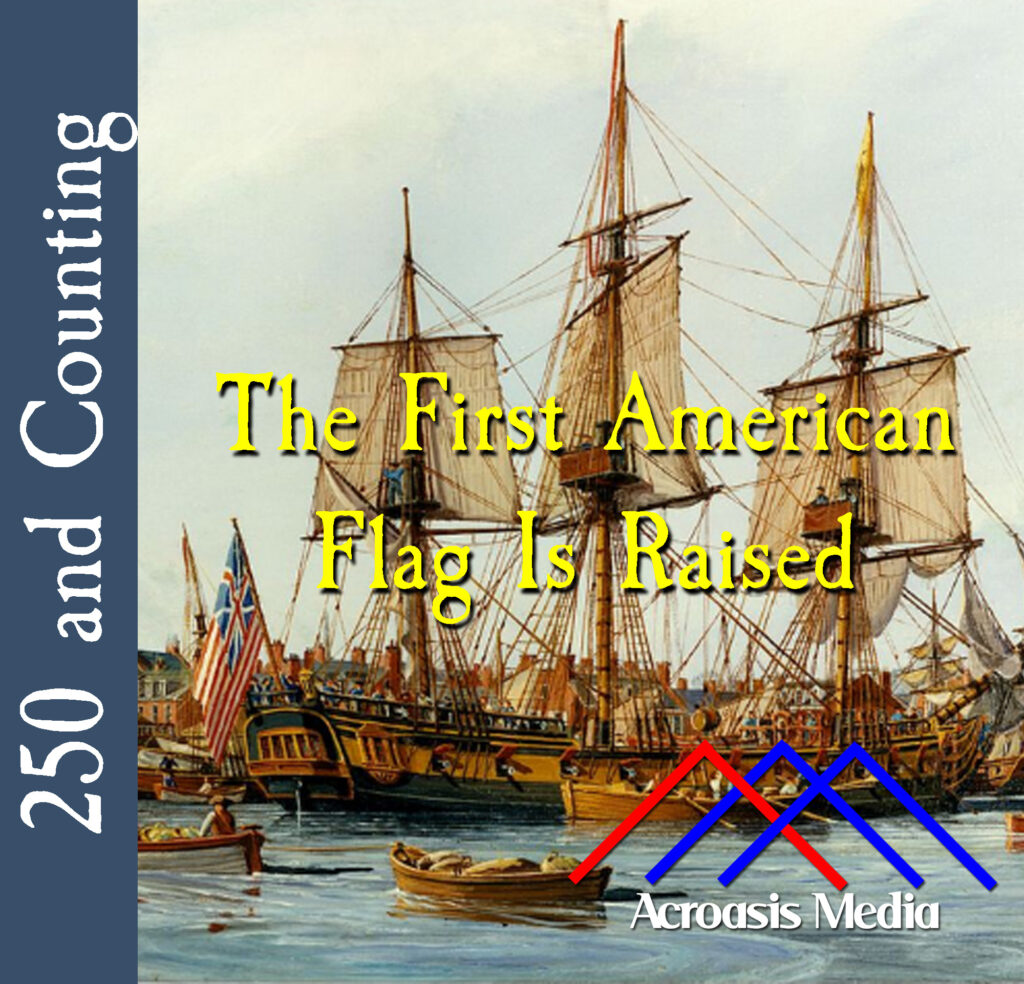
The Pine Tree Flag, which was the ensign of the Massachusetts State Navy. There are a few variations of this, because the original was destroyed by the British.
While the Massachusetts Naval Militia was pretty much wiped out in 1779 (oops, spoiler alert), it wasn’t the end of a state-based Navy for Massachusetts.
Massachusetts began to rebuild, but in 1780 a new state constitution was adopted, and just as the navy was delayed in its original inception by bureaucracy, the Massachusetts State Navy wound up dissolved the next year. They were re-established for the War of 1812, but again disbanded when that war ended.
Nowadays, any state naval militia are automatically part of the United States Militia, and in Massachusetts specifically, any attempt to reactivate a naval militia in Massachusetts must be done either by the governor of Massachusetts or the Massachusetts General Court.
There are five state naval militia extant, so far as I can tell: Alaska, New York, Ohio, South Carolina, and Texas.
Joseph Warren conferring with Israel Putnam before the battle at Bunker Hill, at which Warren was killed.
Mike’s pretty much covered the story of the capture of a British ship in the episode, so I’m going to tell you a little bit about Joseph Warren, who (you may recall) was killed at the battle of Bunker Hill.
Warren became a doctor early in his career, and he also became a Patriot before it was fashionable. He was a powerful speaker, and for several years in a row he would deliver a speech commemorating the anniversary of the Boston Massacre.
In the fall of 1774, he composed the Suffolk Reserves, which urged armed resistance to the British and a boycott of British goods.
So by the time 1775 rolled around, he was one of the most influential men in Massachusetts; in fact he was the president of the Provincial Congress, which by then was the body actually running things there.
In addition, he was on the Safety Committee, ensuring that gunpowder and ammunition was available to militiamen who needed it.
We’ve been talking about the Siege of Boston since April. That was his doing; he’d organized the siege in the first place. George Washington took over a while later. He then organized the building of the earthworks at Bunker Hill before that battle started. And when the British began to overrun the Patriots, he was instrumental in giving them an opportunity to escape. But that’s where his luck ran out: a British soldier recognized him and shot him in the head, killing him instantly.
The Brits then stripped his body and stabbed it several times, then buried him in a shallow grave with another Patriot who’d been killed. Later on, Paul Revere had to identify the body.
The point to all of this is that, had he survived the battle, Joseph Warren would almost certainly have been a much larger figure in the American mythos; maybe he’d even have been our first President instead of Washington.
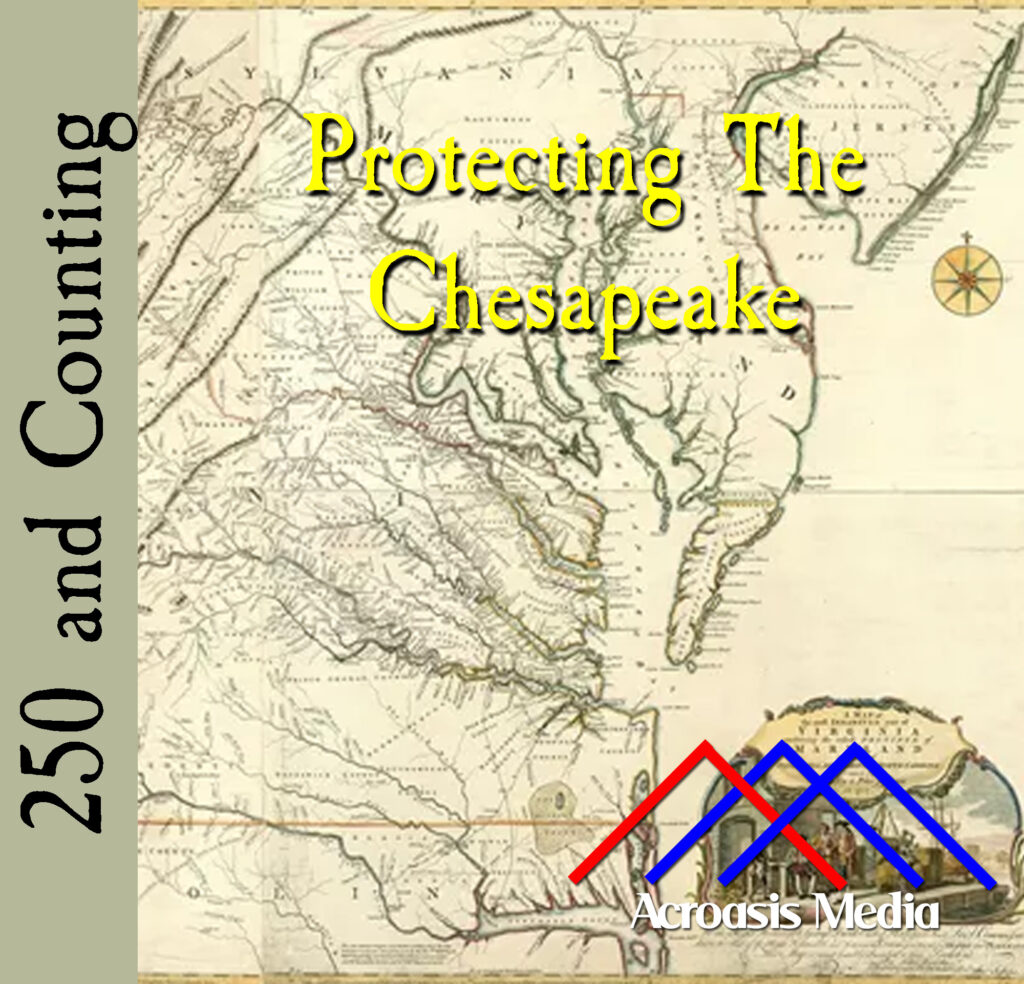
The Fry-Jefferson Map of the Chesapeake Bay area, commissioned in 1750 and completed in 1753. This was also one of the first maps of the area that had the “North is Up” orientation.
The Great Chesapeake Bay, which is protected by the Delmarva Peninsula (DELaware, MARyland, VirginiA, get it?) is a watershed area that is hugely important for these three states, plus New York, Pennsylvania and New Jersey.
Because of its importance, there are sensor buoys all over the place, measuring water temperature, salinity levels, turbidity (how clear the water is), air pressure and maybe a dozen other factors. They’re connected to NOAA (National Oceanic and Atmospheric Administration), and you can actually get the data for your own research here. I’ve actually used it in the classroom to demonstrate how bad weather can affect things like salinity, or how fertilizer-laden water runoff from farms can lead to algae blooms.
It’s been called “Chesapeake” for so long that historians and etymologists aren’t quite sure where it derives from. It could be a corruption of the Algonquin word Chesepiooc; it could refer to the Chesepian people a tribe from the modern-day Hampton Roads area of Virginia. According to Wikipedia it’s the seventh-oldest place name in the US, but they weren’t telling what #1 through #6 are.
It’s also—especially in the 18th Century—rather hard to defend. And while the Continental Congress dragged its feet a little bit to get the Navy raised, the more-nimble Virginia Convention commissioned a few ships of their own. Their first was a ship aptly named the Patriot.
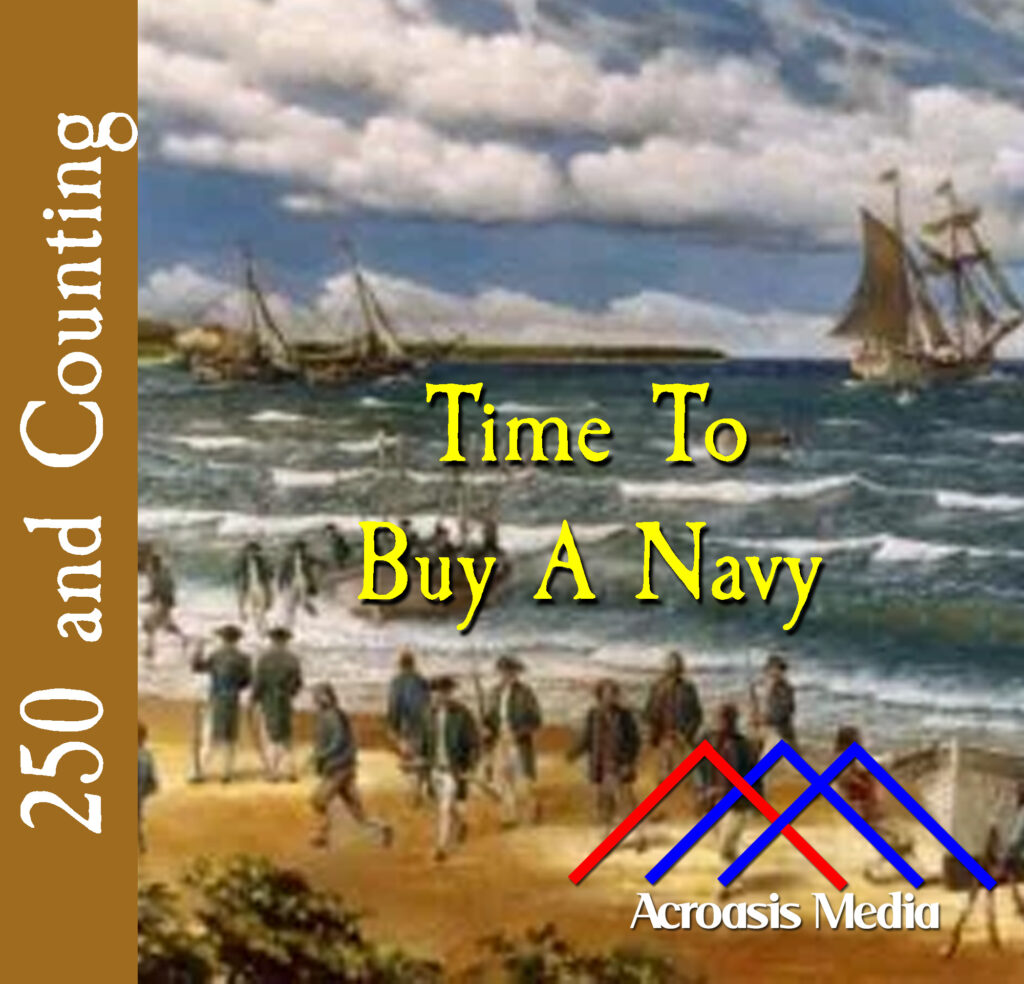
This image depicts the Battle of Nassau, one of the first major battles won by the Continental Navy in March of 1776. Oil painting on canvas by V. Zveg.
If you’re going to build a navy, you’ve got to get serious about it. Congress established the need for a Navy back in October, but they were kind of sloppy about executing the plan.
For the last several weeks, the Congress has been purchasing existing ships and retrofitting them to make them battle-worthy. That’s great if you’re maintaining status quo, but if you’re trying to overthrow the government, you’re going to need some new hardware.
So the Congress agreed to build thirteen ships from the ground up, each with sufficient firepower to do some real damage. And they want all thirteen of them by March.
John Paul Jones was born in Scotland as John Paul and began his maritime career at 13 when he was hired as an apprentice.
In 1770 he was involved in an incident wherein a crew member was flogged after a failed mutiny. The crew member later died, and it was clear that his reputation had taken a big hit. So John Paul left Scotland and took command of a British vessel. Again, however, he put down a mutinous sailor, this time killing him with a sword in Tobago. Before he could be tried, however, he fled the area and essentially disappeared for 18 months.
In the meantime his brother, who lived in the Fredericksburg, Virginia, area, died. John Paul went to America to settle his brother’s affairs. It was at this time that he appended the last name “Jones” to his name. Shortly thereafter he joined the American Navy. During his time as an American naval officer, it doesn’t appear that he killed anyone, but in his later years, he sailed for the Russian Navy, where he was derailed by the accusation of rape of a ten-year-old Russian girl. It was only because of the murkiness of some of the details that gave the Empress Catherine some leeway to have him exiled rather than beheaded.
But as an American sailor, he did shine. And he shone for the first time on this day in 1775.
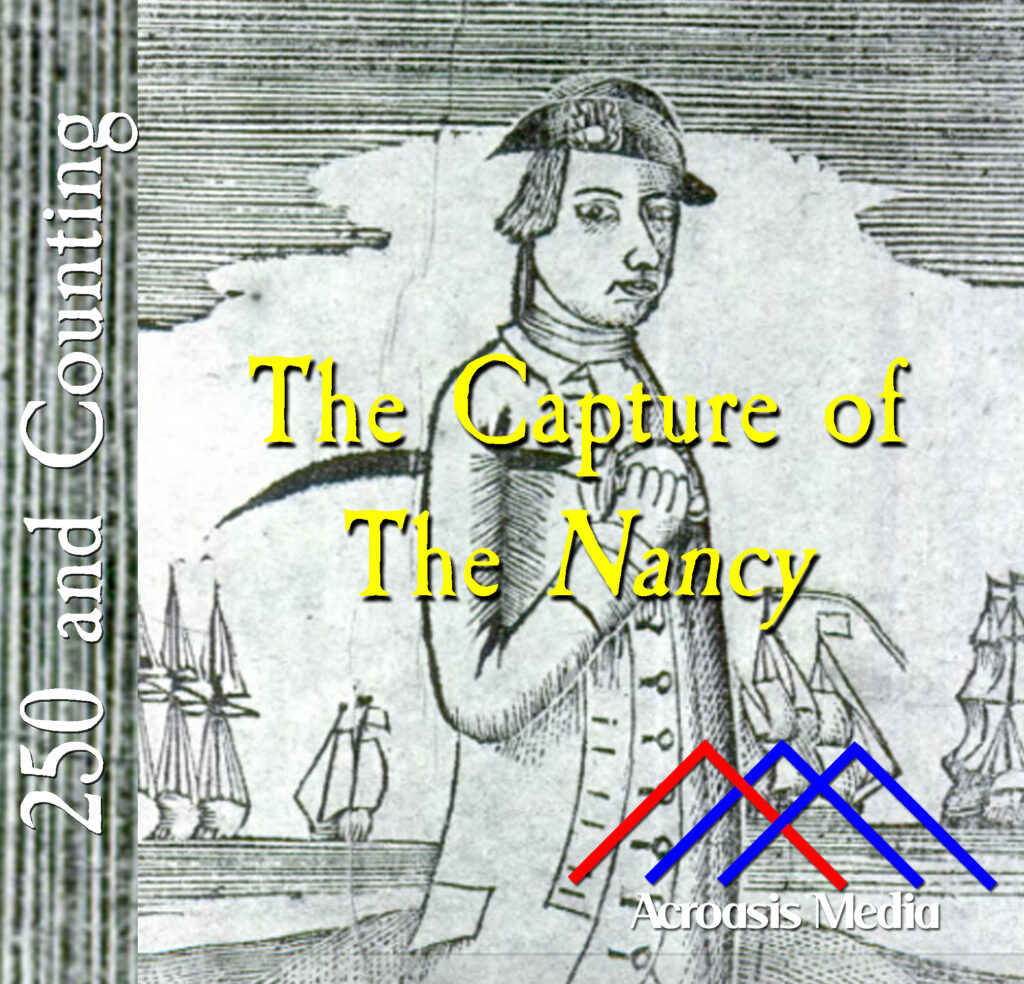
The capture of the British brigantine Nancy wasn’t Captain John Manley’s first (it was perhaps his third), but it was probably one of his most significant, considering the cargo. It was also probably the first British ship of any real consequence to be captured by any American.
Overall, Manley’s effectiveness as a Navy captain was rather variable. He was a big risk/big reward kind of sailor, and so when he was successful, he was very successful, and when he wasn’t, he wound up imprisoned. And frankly, there were a few times he wasn’t successful.
But that doesn’t take away from his successes. Between 1775 and 1783 Manley was the sole ship captain for the capture of ten ships, and was an active participant in the capture of five others.
The US Navy has named three ships after him, the most recent a Forrest Sherman-class destroyer which was decommissioned in 1983 after 26 years of service.
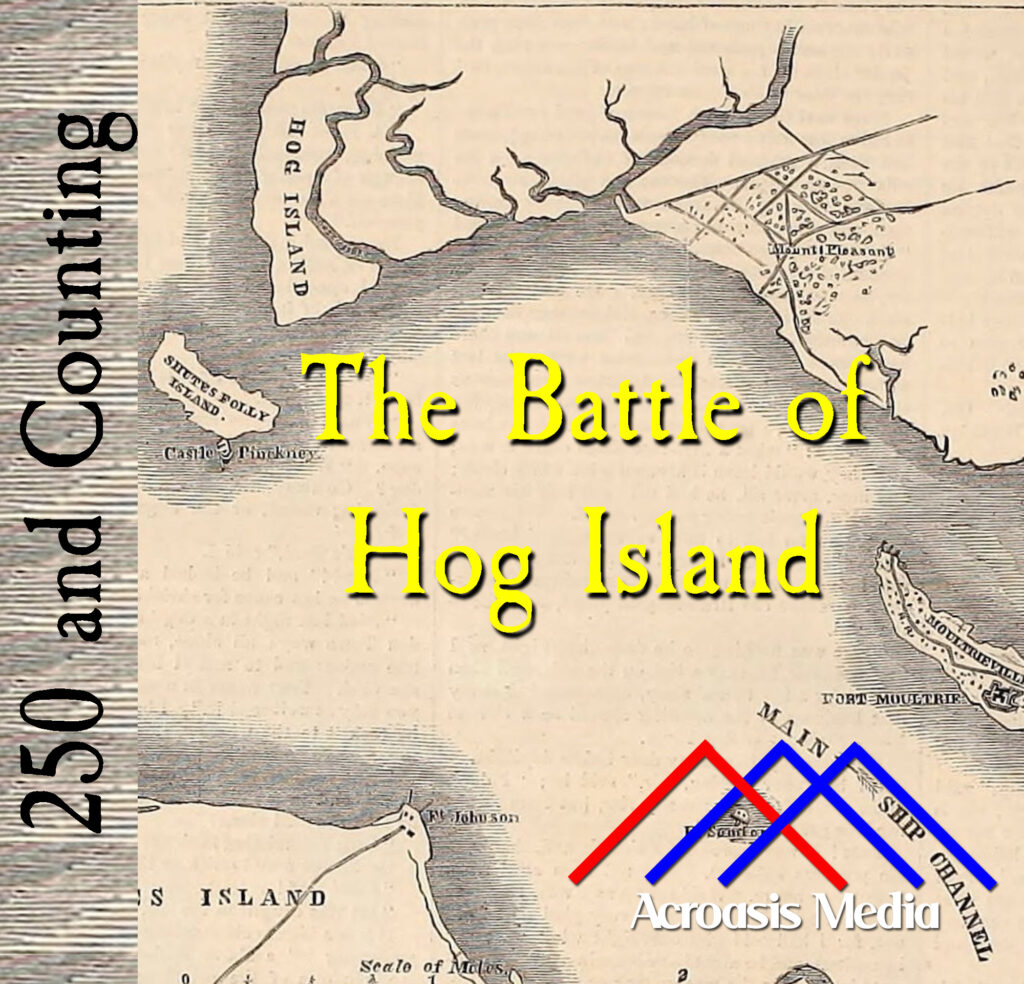
The Battle of Hog Island was the first of two major events early in the Revolution that got South Carolina firmly on board with the Independence cause.
Hog Island caused the South Carolina Committee of Safety to expand their navy; in this respect they were way ahead of the Continental Congress.
But when King George III approved the American Prohibitory Act in December, that really irritated South Carolinians. The Act act declared that any vessels captured by the Royal Navy after January 1, 1776, would now be considered lawful prizes. When this news reached Charleston, it was taken as an act of war.
And sure enough, it wouldn’t be long before another confrontation took place that would help to shape the overall look of the war.
Okay, first off, it’s only appropriate that I apologize for the stupid title. I really shouldn’t write when I’m low on sleep.
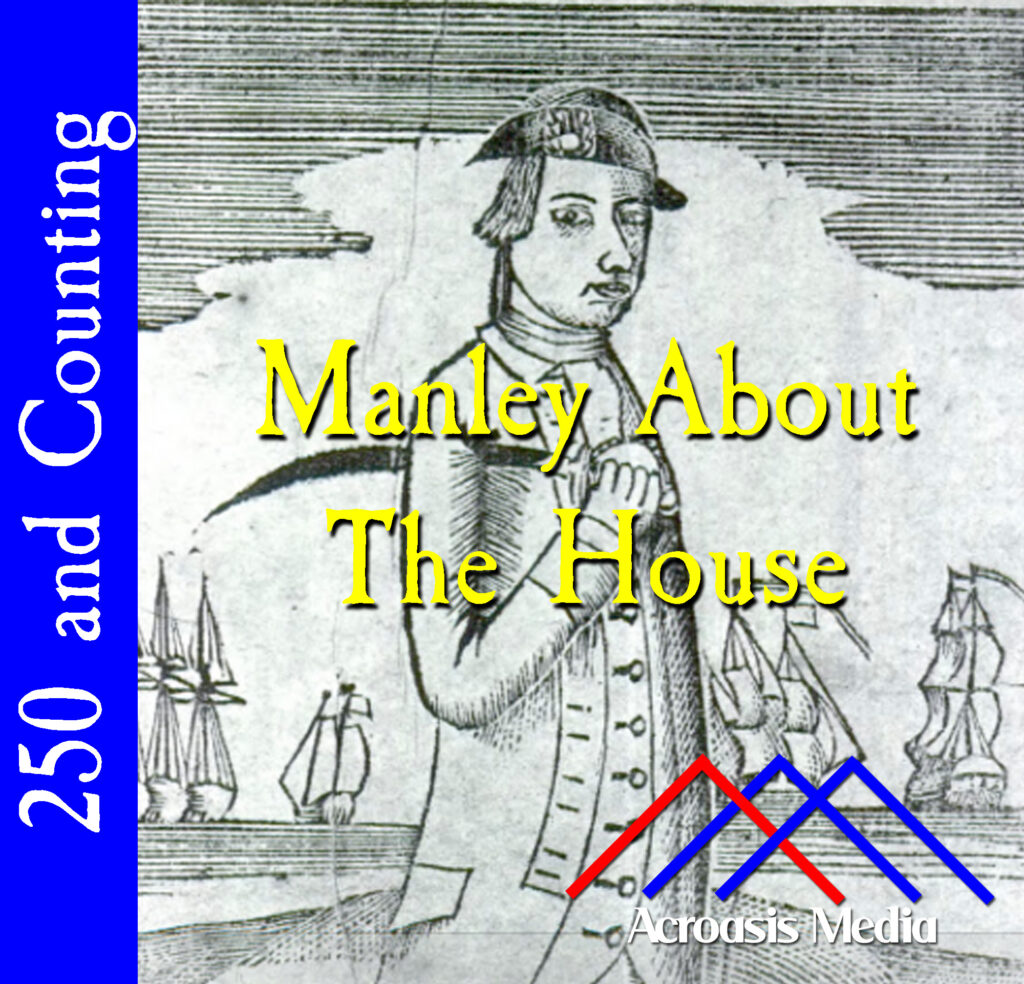
Manley’s beginnings were murky (e.g. his year of birth is approximate) but he was a quick study and it’s no wonder that George Washington selected him as one of his first captains in the Revolutionary War. Just a few months later he was promoted to Commodore.
Manley spent a couple of years harassing and capturing British ships, until he himself was captured. After nearly a year of imprisonment he was released. It was at that time that he became a privateer. A few years after that he re-joined the navy and remained there until his death in 1793.
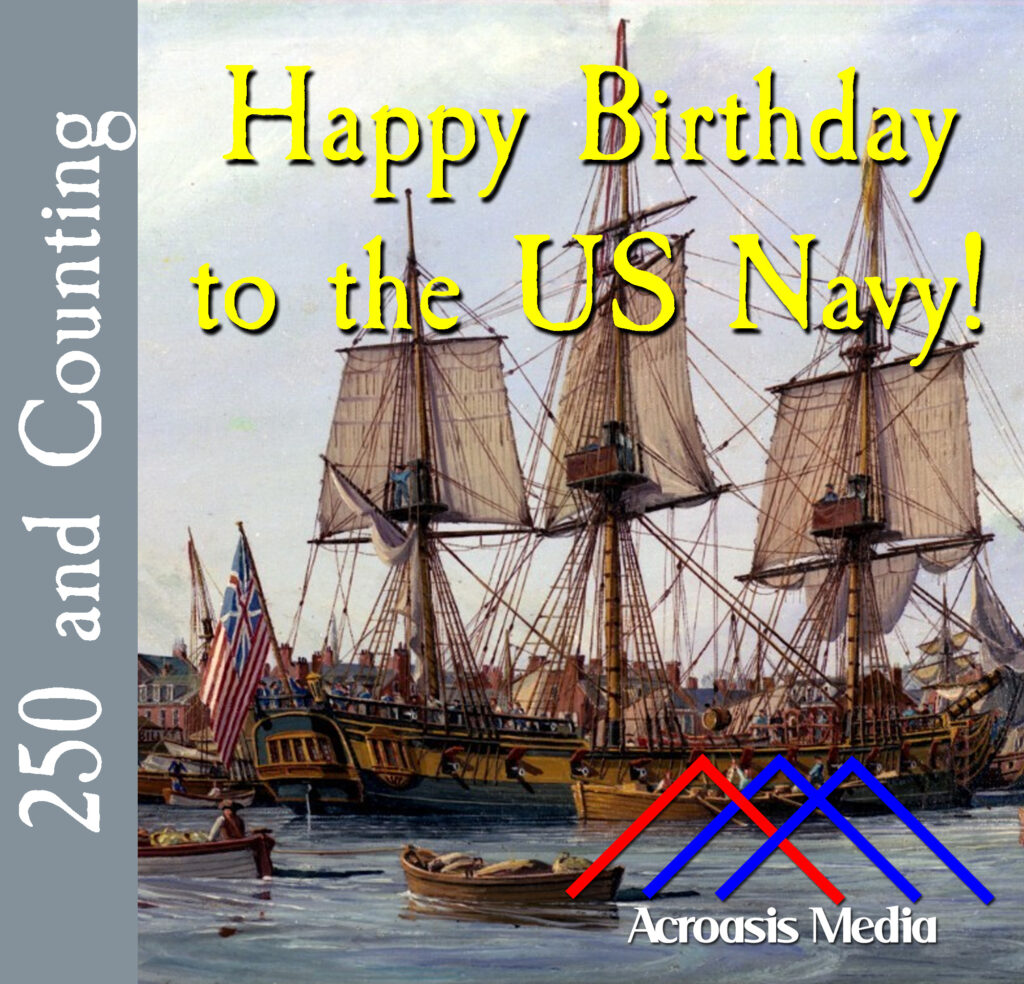
It’s Cake and Candles for the US Navy, born this day in 1775.
The Continental Congress initially authorized the purchase and retrofitting of two ships. But before long they saw the wisdom of having a navy, and soon many more ships were purchased, and commissioned into service.
The Continental Navy, to be honest, didn’t have a huge impact on the war. Many ships were lost to British attacks, weather, or accidents. What it did have a big impact on, however, was the War of 1812. The seamen who fought in the Revolution were well-seasoned officers by the time that war came along.
It’s also worth noting that the Continental Navy was disbanded after the Revolution, but a few years later the US Navy was officially established. However, given the continuity of tradition and the fact that today was the day that Congress authorized the purchase of the vessels, the Navy decided in 1971 that October 13, 1775 was the date of its official establishment.
It’s often tough to remember that when the fighting first broke out, it wasn’t a bid for independence from Britain. It was an attempt to protect and defend rights that the Colonists thought they had as part of their relationship with Britain. Reconciliation was (amazingly) still on the table, even six months after Lexington.
So while many colonies had created their own small navies (with Congress’ encouragement), there were several in Congress who felt that creation of a navy was a step too far. They were okay with an army, but not a navy? I don’t really get it either.
When Rhode Island finally put forth a formal proposal for a Continental Navy, it met with almost universal resistance. Why? Tune in and find out.