Tag: Naval History

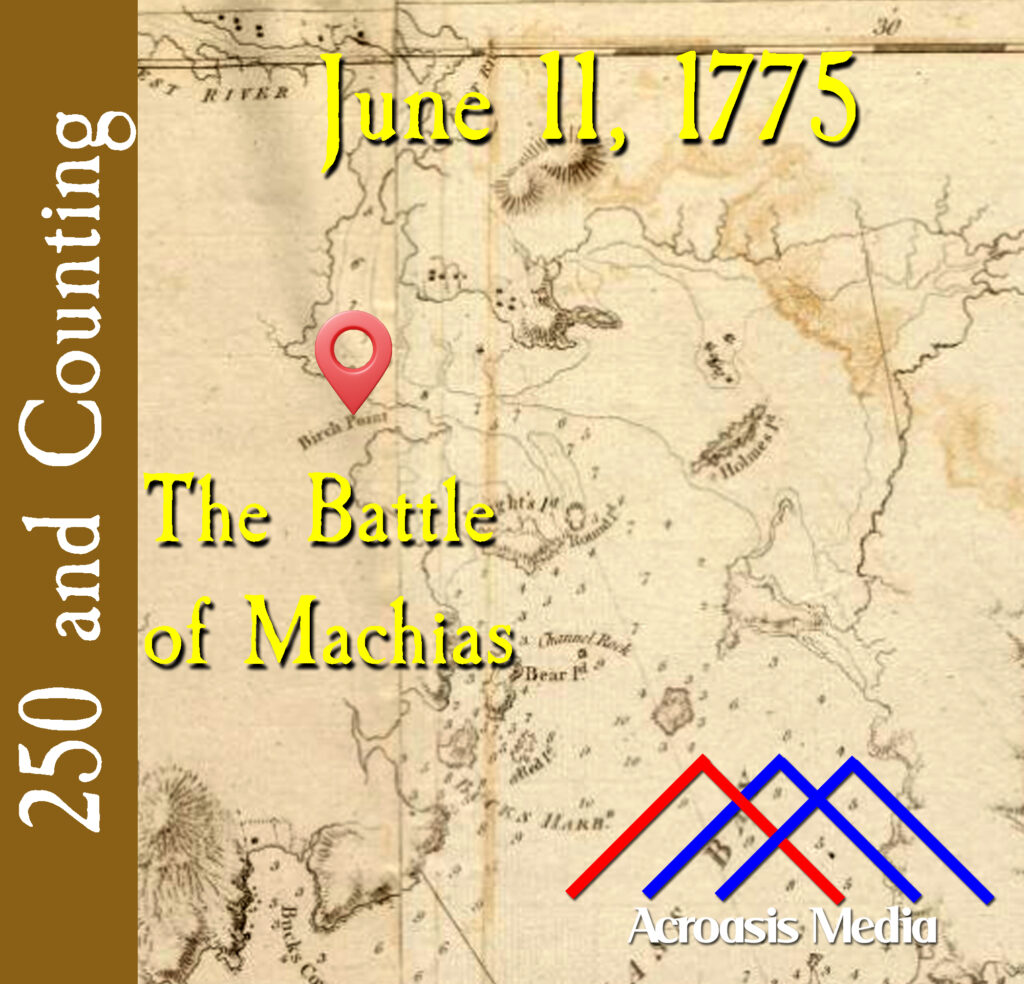
  • June 11, 1775: The Battle of Machias

    Cover art for June 11, 1775: A map from around that date of the Machias Bay area. The pin shows the approximate location of the town.

    Full Disclosure: I have no idea whether I pronounced “Machias” correctly. We’ll all have to live with that one, I suppose.

    The Battle of Machias was not exactly one of epic proportions. It was a couple of boats chasing after a couple of other boats, and one boat got away but the other one managed to damage itself and was ultimately boarded.

    So why is it significant?

    Well. Not only was it the first naval battle of the American Revolution, it was a battle that the Colonies won, no matter how you look at it. And every little win was, in fact, a big win.

  • May 14, 1775: Don’t Mess With Fairhaven

    Cover art for May 14, 1775: HMS Falcon, accompanied by a smaller ship. Painting by William Nowland Van Powell.

    The Thirteen Colonies didn’t have a lot in the way of a navy to help them with their battles, especially not against perhaps the biggest and best navy ever up until then.

    What they did have was people who were willing to act in lieu of a navy. Some of them did it out of sheer patriotism, and others were a little more mercenary about it. Specifically, privateers.

    Now, “privateers” sounds a little like “pirates” and people often use the words interchangeably. You should stop being friends with those people. Privateers are a specific breed of sailor. They’re government-sanctioned to act as a kind of ad-hoc navy, authorized to take action in times of war. Typically, their job was to disrupt merchant vessels (hence the confusion with pirates).

    It wasn’t long after the Revolution began that Fairhaven, Massachusetts, became a place known for privateer activity.

    Extra credit activity: check out the West Wing, Season 4, Episode 18. You’ll learn more about privateers, and as a bonus, you’ll never think of Francis Scott Key the same way ever again.

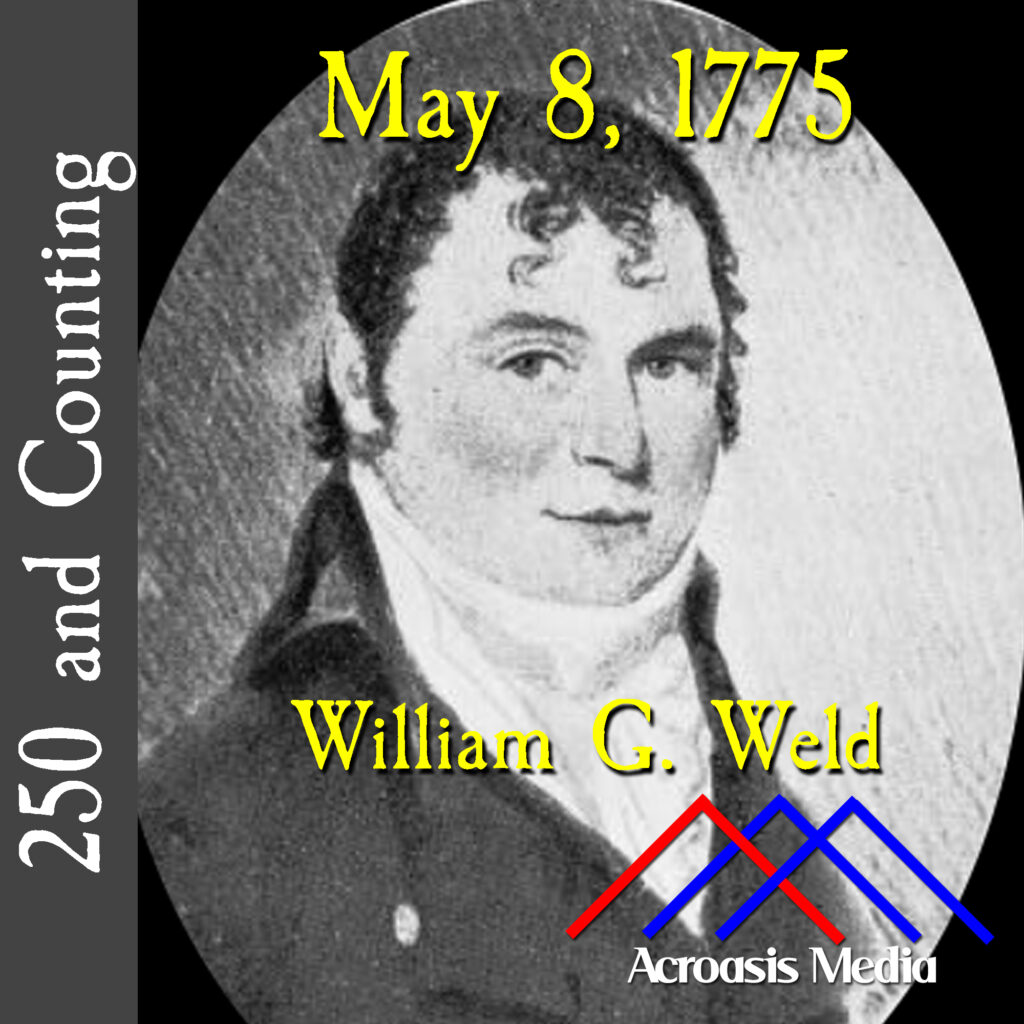
  • May 8, 1775: William G. Weld

    Cover art for May 8, 1775: Portrait of William G Weld by Isabel Anderson

    If you’re like me, you’ll hear a less-common name from history and have yourself a moment of “Wait…I should know that name, but from where…?” William G. Weld was one of those names, but it turns out that William wasn’t necessarily the famous one here; it’s just that he was a direct ancestor of so many other people named Weld.

    Listen in and learn about the patriarch of a family of merchants and politicians, and suddenly it’ll come to you that it wasn’t THIS William Weld you’re thinking of…it’s his great-great-great grandson, also named William, who got a bunch of press in recent years.

    [wordpress]

  • March 12, 1775: Henry Eckford, Shipbuilder

    Cover art for March 12, 1775: portrait of Henry Eckford, probably painted by John Wesley Jarvis

    Henry Eckford was born in Scotland on this day in 1775 and died in Constantinople in 1832. In between he spent a great deal of time in the Thirteen Colonies and then the United States, primarily in New York.

    Eckford also dabbled in politics, serving in the state legislature and as a delegate to the Electoral College, before moving to the Ottoman Empire to assist with rebuilding the fleet there. He died quite suddenly there, probably of cholera, and his body was brought back to America, where he was buried in the graveyard at St. George’s Episcopal Church in Hempstead, L.I., along with his wife.

    Coincidentally, many years ago I attended a wedding in that church. The weird bumps you make with history when you live on the East Coast, I tell you what.

    (At right: Eckford’s grave; picture via findagrave.com)

  • February 19, 1775

    Cover art for Februay 19, 1775: "The Fall of Nelson, Battle of Trafalgar, 21 October 1805" by Denis Dighton, 1825

    When I (Claude) was younger, I read a Star Trek novel titled The Final Reflection by John M. Ford. Trek novels weren’t considered canon, and later events in the films and subsequent series kind of wiped out some of the concepts put forth in the book, but what I found fascinating was that it was told entirely from the Klingons’ point of view. (It also provided an interesting explanation regarding why Federation transporters give off a high-pitched whine.)

    Before you think I’ve digressed before I’ve even started, my point here is that today’s episode focuses on a British military figure rather than one of the Founding Fathers or other Colonial figure. We’re taking an all-too-brief look at Lord Horatio Nelson, who did have an important life event take place on this day in 1775.

    Also, when you listen to the episode, you’ll see I just have Star Trek on my mind.