Tag: South Carolina History

  • South Carolina’s Small Declaration–April 23, 1776

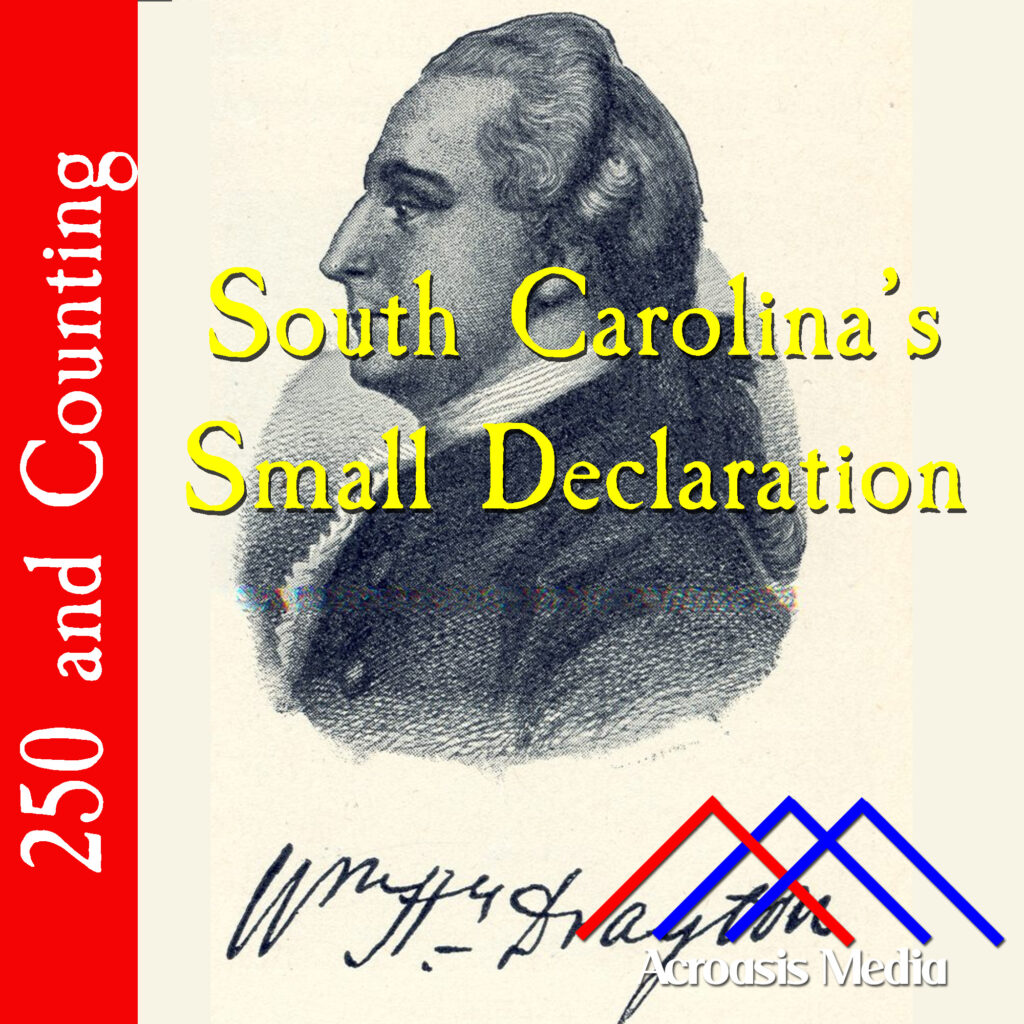
    Cover art for April 23, 1776: Portrait of William Henry Drayton. Image is cropped from a larger picture. Engraving by Benoît-Louis Prévost from a drawing by Pierre Eugene du Simitiere.

    William Henry Drayton was born in 1742 on his family’s plantation just outside of Charleston. The plantation was dedicated to growing rice.

    In 1764 he married Dorothy Golightly. In the early 1770s he was a Loyalist and enjoyed some of the perks that came with it. Then in 1774 he wrote a pamphlet supporting a Continental Congress and lost all his government jobs. That, go figure, radicalized him to the Patriot cause and he dedicated the rest of his life to it.

    William Henry Drayton died in Berkeley County, SC at the age of 37. His home, Drayton Hall, is now within Charleston city limits and operates as a museum.

  • Raid On Tybee Island–March 25, 1776

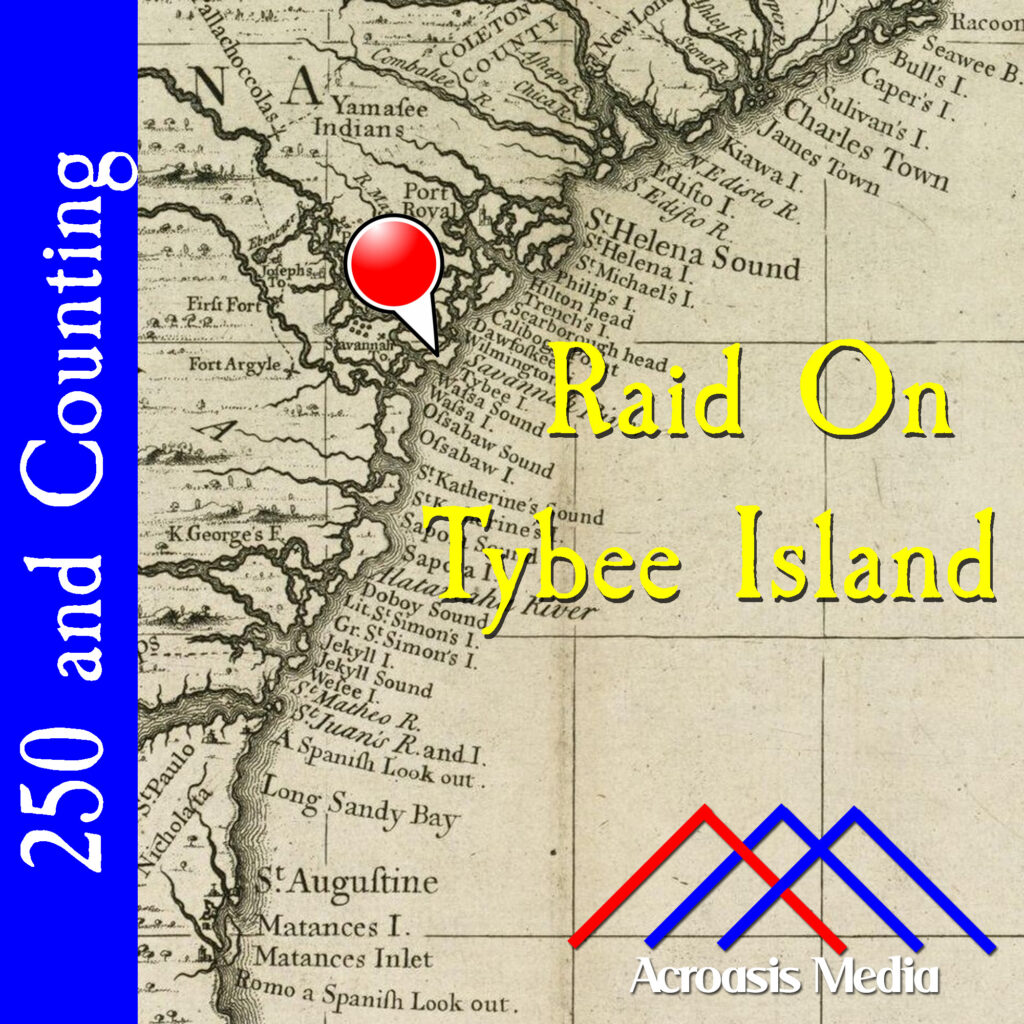
    Cover art for March 25, 1776: Map showing Savannah and Tybee Island, 1733. Via The Boston Public Library digital map archive.

    The raid on Tybee Island wasn’t the only one of its kind; in fact a similar action had been taken at Sullivan’s Island in South Carolina a few weeks earlier.

    In that case there were many more runaway slaves involved, but like Tybee, very few were actually captured and the fate of most of the others is unknown, although there is one account that says fifty people had resisted capture and were subesquently killed.

    But in both cases we see a raid that took place specifically to deny people their freedom, and the proclamation the led to these raids directly influenced the argument in the Declaration of Independence that King George incited “domestic insurrections.” So…the desire of slaves to be free…drove the Patriots to desire independence.

  • The South Carolina 5th Regiment–February 22, 1776

    Cover art for February 22, 1776: portrait of Revolutionary soldier Peter Horry, late 1700s, artist unknown. via horrycountyhistory.org.

    The South Carolina 5th Regiment ultimately wasn’t a huge success, with a single exception, which we’ll talk about in greater detail in a few months. But in those losses there were some long odds going on, so we’ll not judge too harshly.

    I learned a couple of things as a result of today’s episode. I own a piece of property in South Carolina, in the Myrtle Beach area, which is located in Horry County. I always wondered how it got that name, and now I’ve learned that Horry County was named after Peter Horry, who was a commander of the SC 5th. The other thing I learned was that when I looked for a picture of Peter Horry, I stumbled on his biography and learned that he was a great-grandchild of French Huguenot refugees who arrived in Charleston in the 1680s.

    And that is how I learned why Horry County is pronounced with a silent “H”.

  • Fort Moultrie–February 19, 1776

    Cover art for February 19, 1776: Diagram of Fort Sullivan (later Fort Moultrie) on June 28, 1776. From Edward McCrady's South Carolina in the Revolution 1775-1780, published 1902

    Today we’re looking at Fort Moultrie.

    I know, it wasn’t that long ago that I was gushing about Fort McHenry, but I live in Baltmore so it’s kind of the law around here to pump up the local history. Also, Fort, McHenry is a cool place to visit.

    And so is Fort Moultrie! In fact, Fort Moultrie itself was built several times, including its original Fort Sullivan incarnation, and as a result there are extensive historic exhibits throughout the park. The various forts went through three wars against America (see, I did a thing there), and consequently there are a lot of stories to tell here.

    And when you’re through touring the fort and the grounds, make sure you have your fishing pole with you, because there’s a fishing dock there (it’ll re-open sometime this spring); I hear the fishing is pretty good because of the location.

  • Gadsden, Come Home–February 8, 1776

    Cover art for February 8, 1776: portrait of Christopher Gadsden, ca. 1760-1770 by Jeremiah Theus. via Wikimedia.

    Christopher Gadsden is famous almost entirely for the “Don’t Tread On Me” flag. But even for that, most people don’t know that the flag was named after a person. And those who do, don’t necessarily know Gadsden’s first name.

    And yet, he was instrumental in getting America to break away from England.

    Christopher Gadsden was the one who got South Carolina more excited about Independence. He was a Brigadier General in that colony during the war. He helped draft a state constitution and was then elected Lieutenant Governor. When Charleston was overrun by the British, Gadsden stuck around so he could surrender the city like a gentleman.

    For his gentlemanly act, he was allowed to return home on parole. But when the next British leader came in and broke the parole by arresting him, he refused new parole because they’d already lied to him about the first one, so why believe them now? That cost him the better part of a year in solitary confinement.

    In short, he was a badass. Go listen to part of the reason why.

  • Retreat From Charleston–January 6, 1776

    Cover art for January 6, 1776; Oil painting of William Moultrie, who was a General when this was painted by Charles Wilson Peale in 1782.
    Oil painting of William Moultrie, who was a General when this was painted by Charles Wilson Peale in 1782.

    From a strategic standpoint, Charleston Bay was probably much more attractive to the British than Boston Harbor was. The northern harbor was more open to the sea, there were a bunch of small islands to navigate around, and the weather could get quite treacherous.

    Meanwhile in South Carolina, there was a definite entry/exit point, there were fewer islands to deal with, and while it can still get cold in that area, the winters are still much milder.

    But from a shipping standpoint, both cities were attractive and needed to be controlled, as far as the British were concerned.

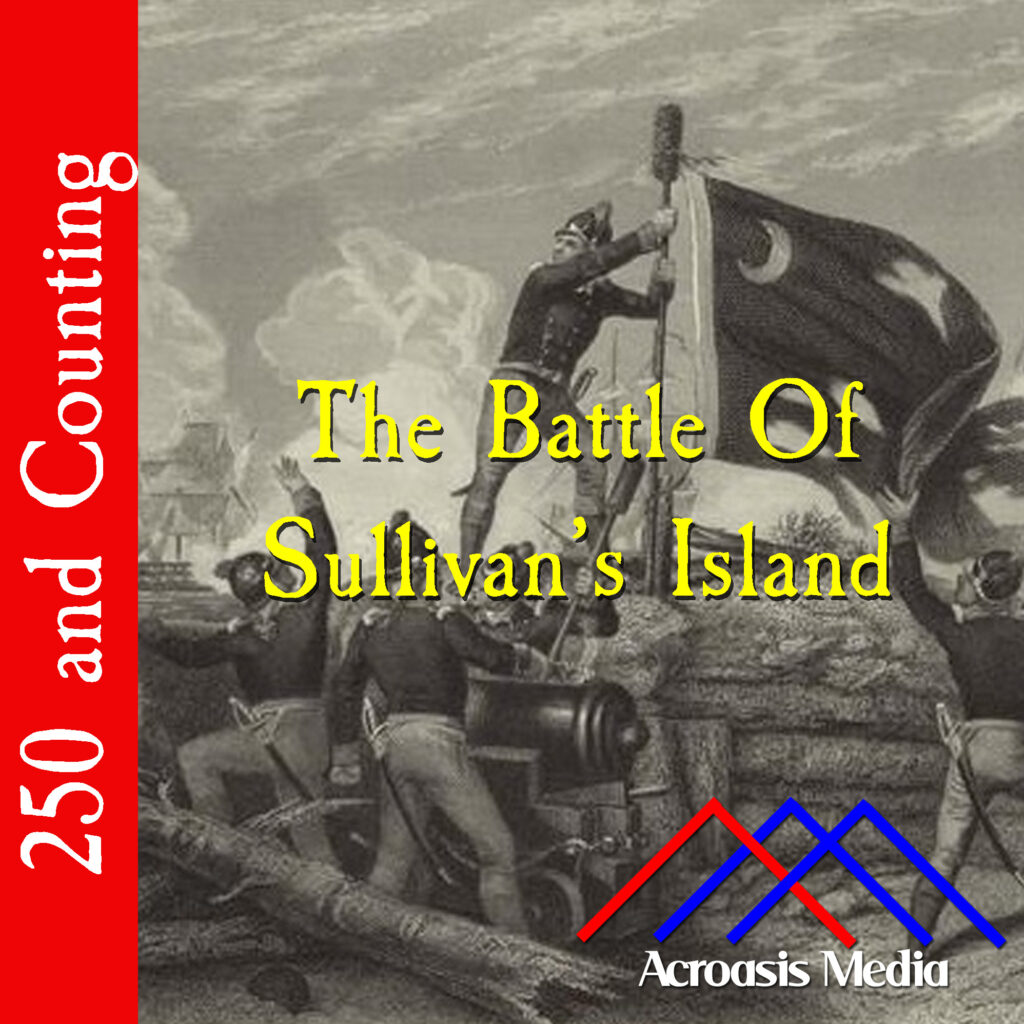
    It’s interesting, in retrospect, that the Patriots would attack the British ships as they departed the harbor area in Charleston, though. If nothing else, they more or less gave away the fact that Sullivan’s Island was fortified, which wasn’t necessarily common knowledge. And sure enough, there was an attack there by the British, which we’ll talk about in June. Stay tuned!

  • Confusing–And Howe–December 25, 1775

    Cover art for December 25, 1775: A portrait of Major General Howe, artist unknown. From the book A brief history of the North Carolina troops on the Continental establishment, by: Charles Lukens Davis & Henry Hobart Bellas, published 1896.
    Cover art for December 25, 1775: A portrait of Major General Howe, artist unknown. From the book A brief history of the North Carolina troops on the Continental establishment, by: Charles Lukens Davis & Henry Hobart Bellas, published 1896.

    The Battle of Great Bridge may be over, but its effects linger on.

    Lord Dunmore, the former Royal Governor of South Carolina, communicated to General Robert Howe that he’d like to effect a prisoner exchange.

    It’s not clear whether Howe was playing hard-to-get, or playing dumb, or something else. He and Dunmore exchanged several letters over the next couple of days, and apparently didn’t end in a prisoner exchange. It did, however, end in violence. We’ll be talking about that as we get into the new year.

  • The Snow Campaign–December 23, 1775

    Cover art for December 23, 1775: a 1775 map of Charleston and surrounding areas, owned by Henry Laurens. Charleston is the small dark patch above the first 'a' in "Campaign".
    A 1775 map of Charleston and surrounding areas, owned by Henry Laurens. Charleston is the small dark patch above the first ‘a’ in “Campaign”.

    As important as some of the action in the southern colonies was—and make no mistake, Colonel Richard Richardson’s campaign to sniff out the Loyalist leaders in the western part of the state wound up being very important—other events were important in different ways.

    One such event would be the Snow Campaign. There came a point where Richardson decided that he’d done about as much as he could, so he started to head back to the Low Country, where Charleston is located. On the way back his men, who were ill-prepared for poor weather, ran into snow.

    Lots of snow.

    Fifteen inches of snow.

    Before very long the troop had disbanded and about 130 prisoners had to be escorted to Charleston, after which a few were set free as a conciliatory move.

    So no, not everything took place during the snow; in fact the snow was really the very ending of the Snow Campaign.

  • The Battle of Great Cane Brake–December 22, 1775

    Cover art for December 22, 1775: Historical marker placed at the location of the Battle of Great Cane Brake.
    Historical marker placed at the site of the Battle of Great Cane Brake, explaining where another historical marker is located.

    The Battle of Great Cane Brake took place near modern-day Simpsonville, South Carolina. That’s a few miles southeast of Greenville.

    A “Brake of Canes” is pretty much what it sounds like. The cane stalks in question are a kind of bamboo that grows in the area, and a “Cane Brake” is a large thicket of these stalks. It would probably be a good place to hide, if the Loyalists weren’t also cutting and burning the stalks to keep warm, and because they were wet, they were popping quite loudly. It’s like sending up an audio flare.

    While the Battle of Great Cane Brake was a victory for the Patriots, before very long the weather would turn it into a bigger problem for the troops involved.

  • One Thing Ends, Another One Begins–December 21, 1775

    Cover art for December 21, 1775: portrait of Richard Richardson, attributed to Jeremiah Theus.
    Undated portrait of Richard Richardson, attributed to Jeremiah Theus.

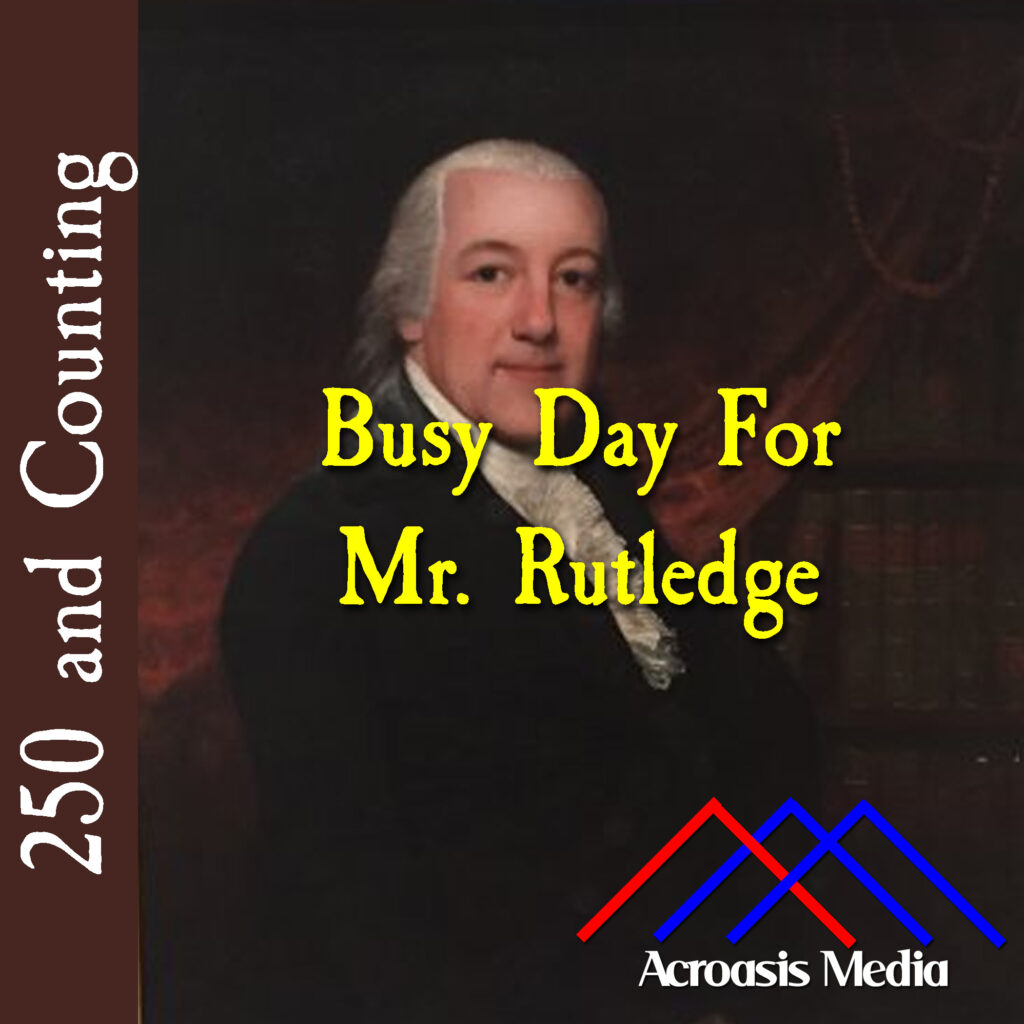
    General Richard Richardson was a delegate to the Provincial Congresses in South Carolina in 1775 and 1776, and he served in both the South Carolina Militia and the Continental Army during the Revolution. He was instrumental in the Americans winning the Battle of Charleston in 1776, but doesn’t get much else attention, perhaps because he was captured a few years later and then sent home, essentially to die.

    But the fact that he spent time driving Loyalists out of the western areas of South Carolina led directly to that province getting on board with the Independence movement more quickly. He also left behind a legacy of descendants who would affect the state well into the twentieth century.

    Incidentally, I have no idea if there’s any truth to the rumor that Richard Richardson was so poor as a child that he couldn’t afford a different last name. Largely because I made that rumor up just now.