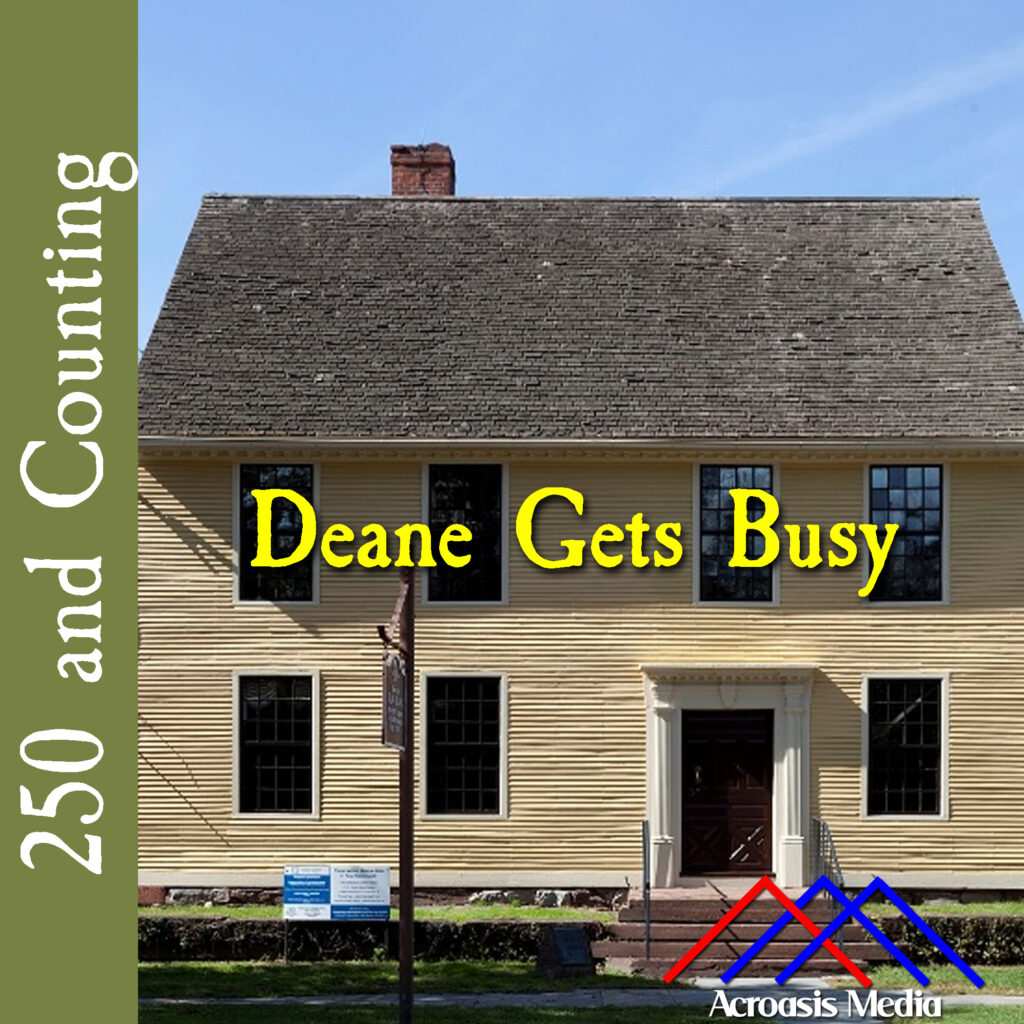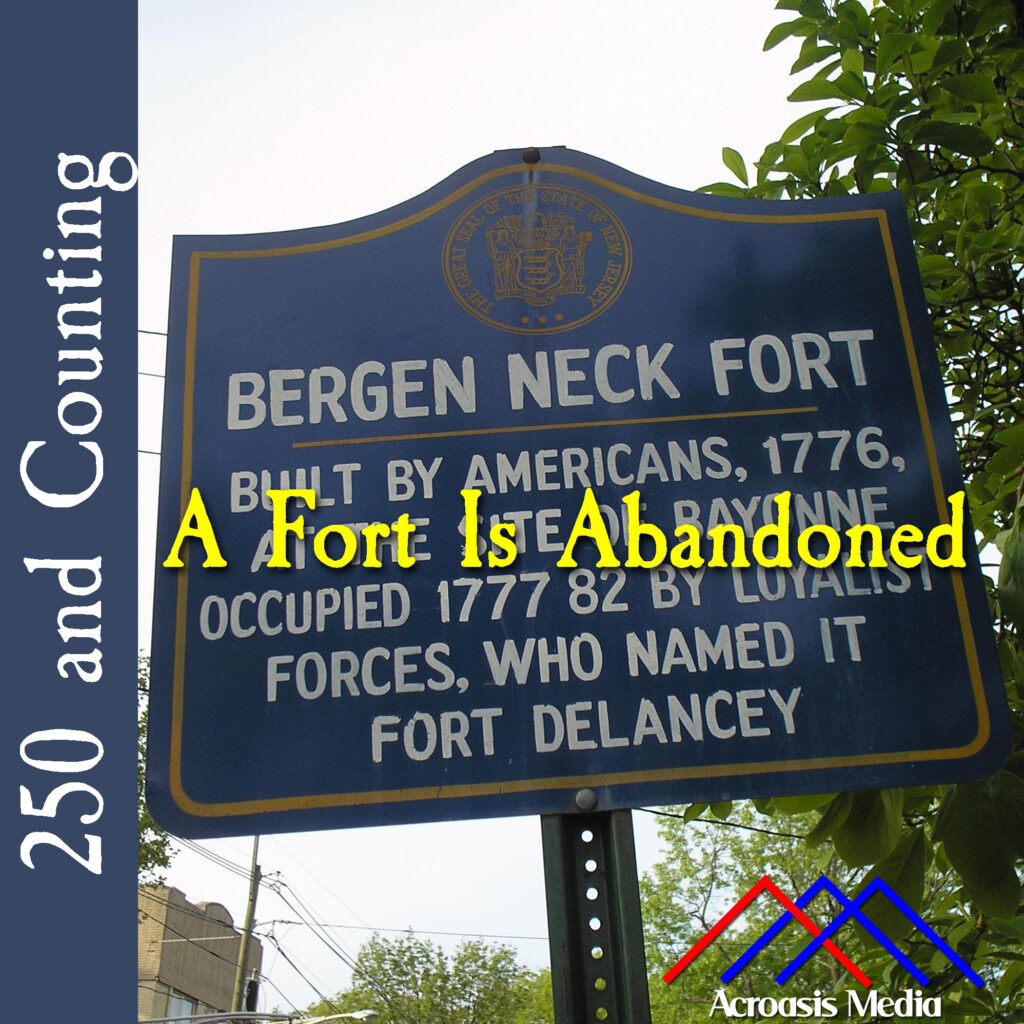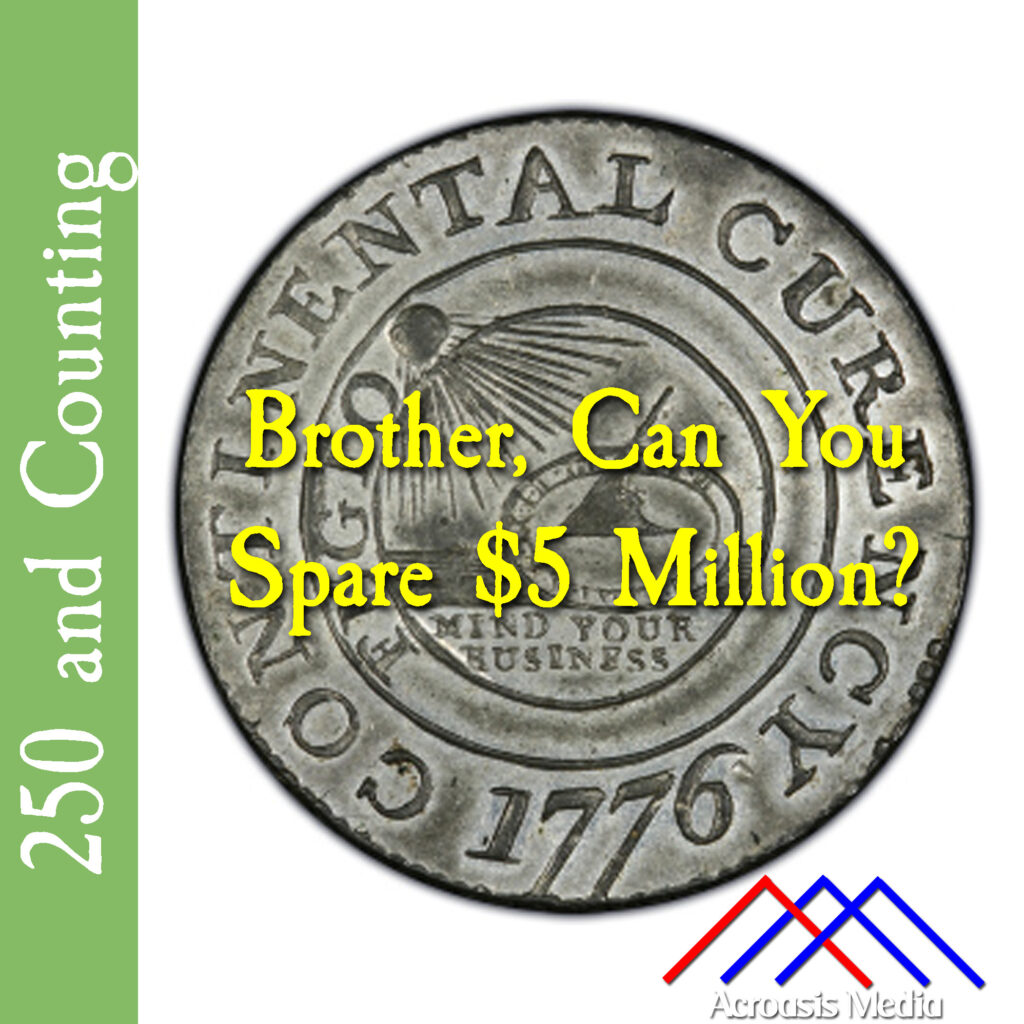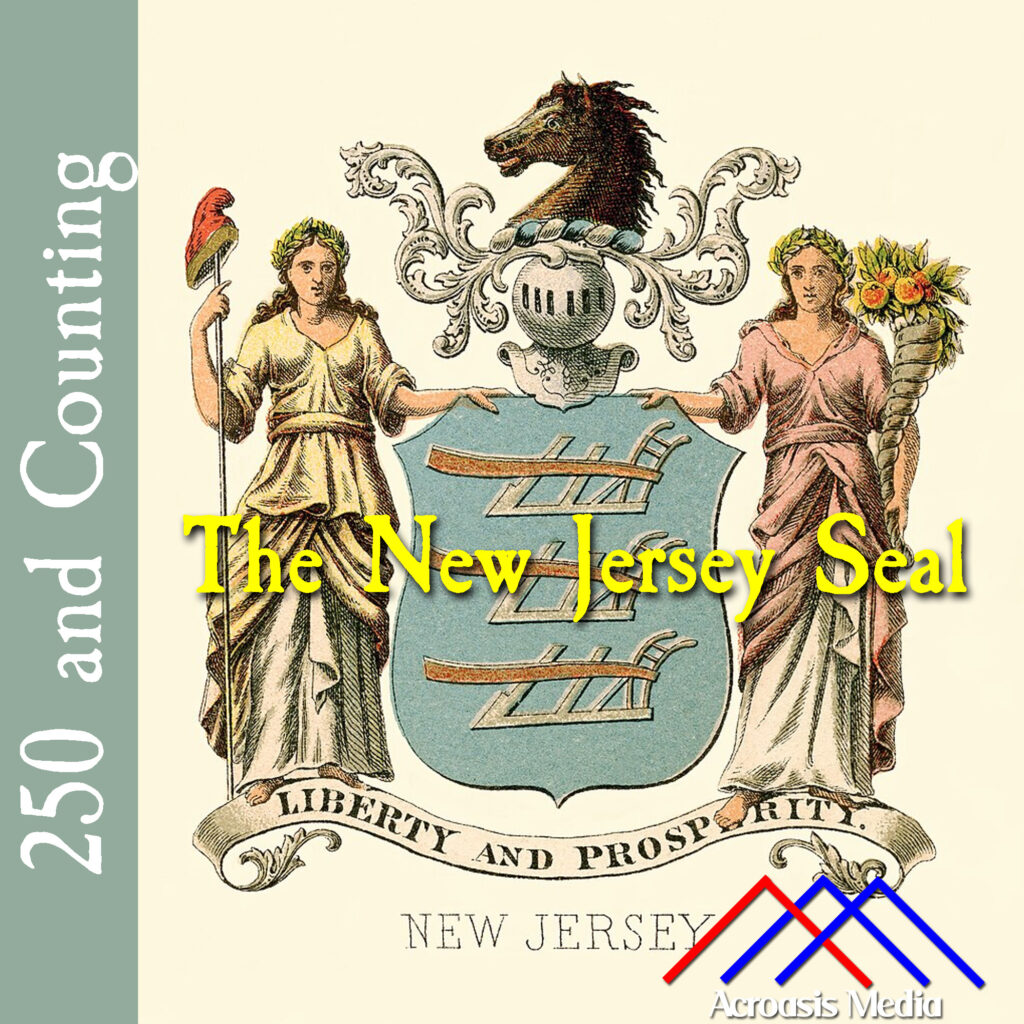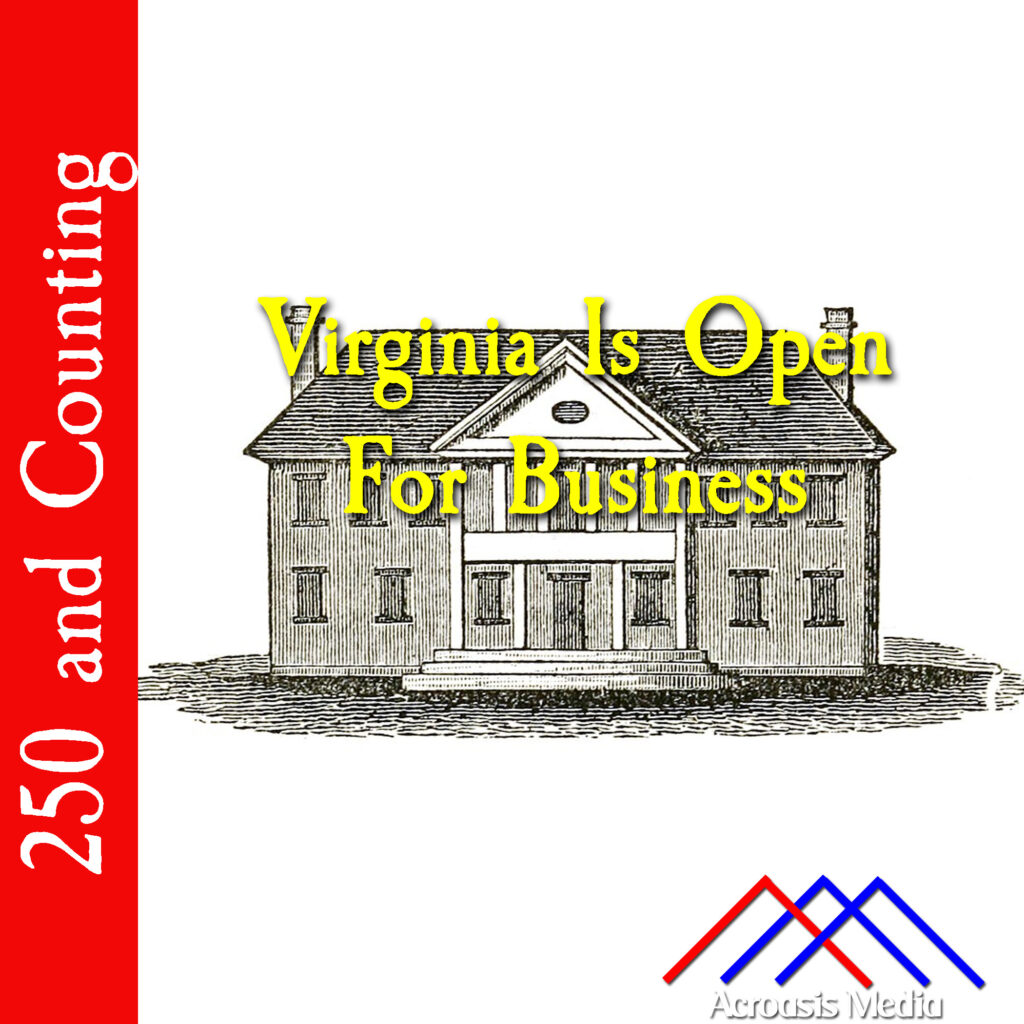
Before I tell you a little bit about the First Virginia General Assembly of 1776 (which I do have to differentiate with a date, so it’s not confused with the First Virginia General Assembly of 1619), I wanted to spend a moment on the show’s cover artwork.
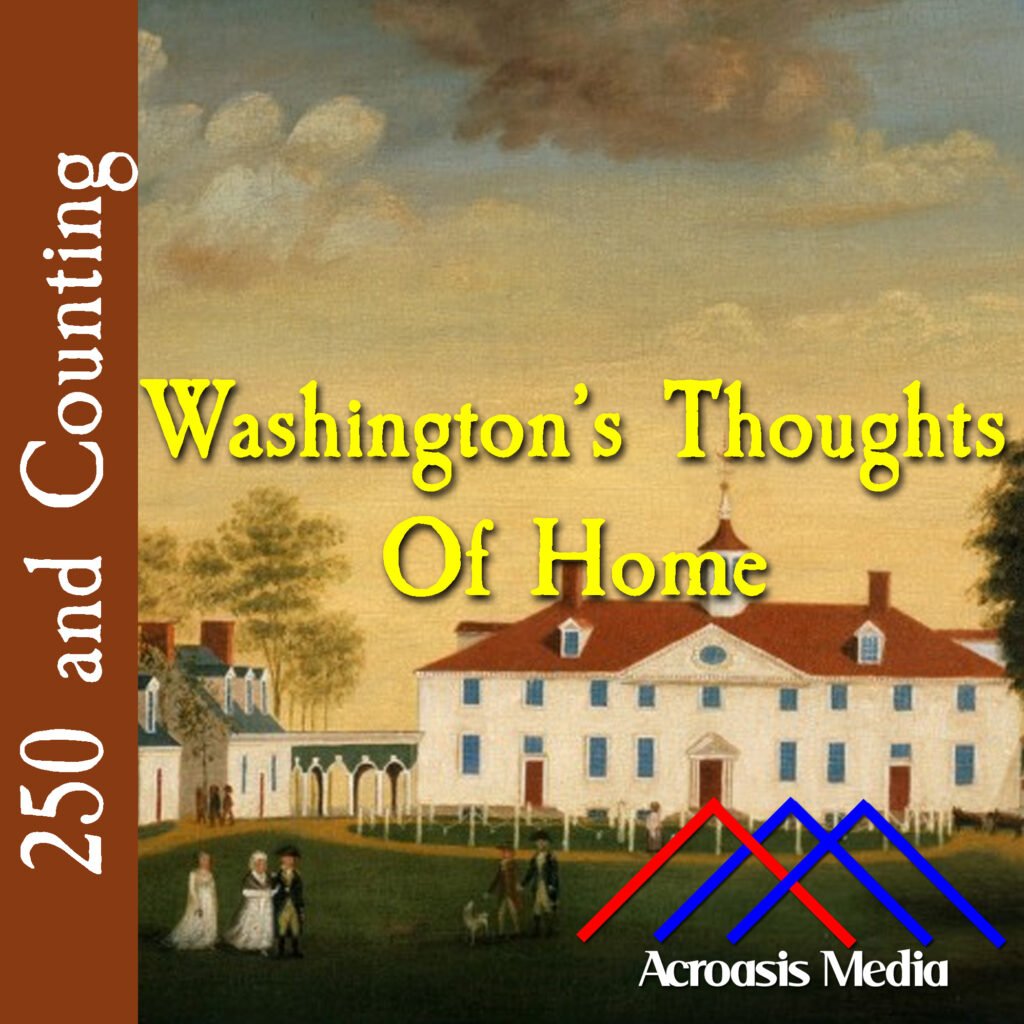
For some reason it was in putting today’s art together that I noticed the strong similarity between today’s artwork and yesterday’s. Perhaps it’s because they’re both buildings, even though today’s structure is much larger then yesterday’s. That, of course, is because I size it to fit the frame,
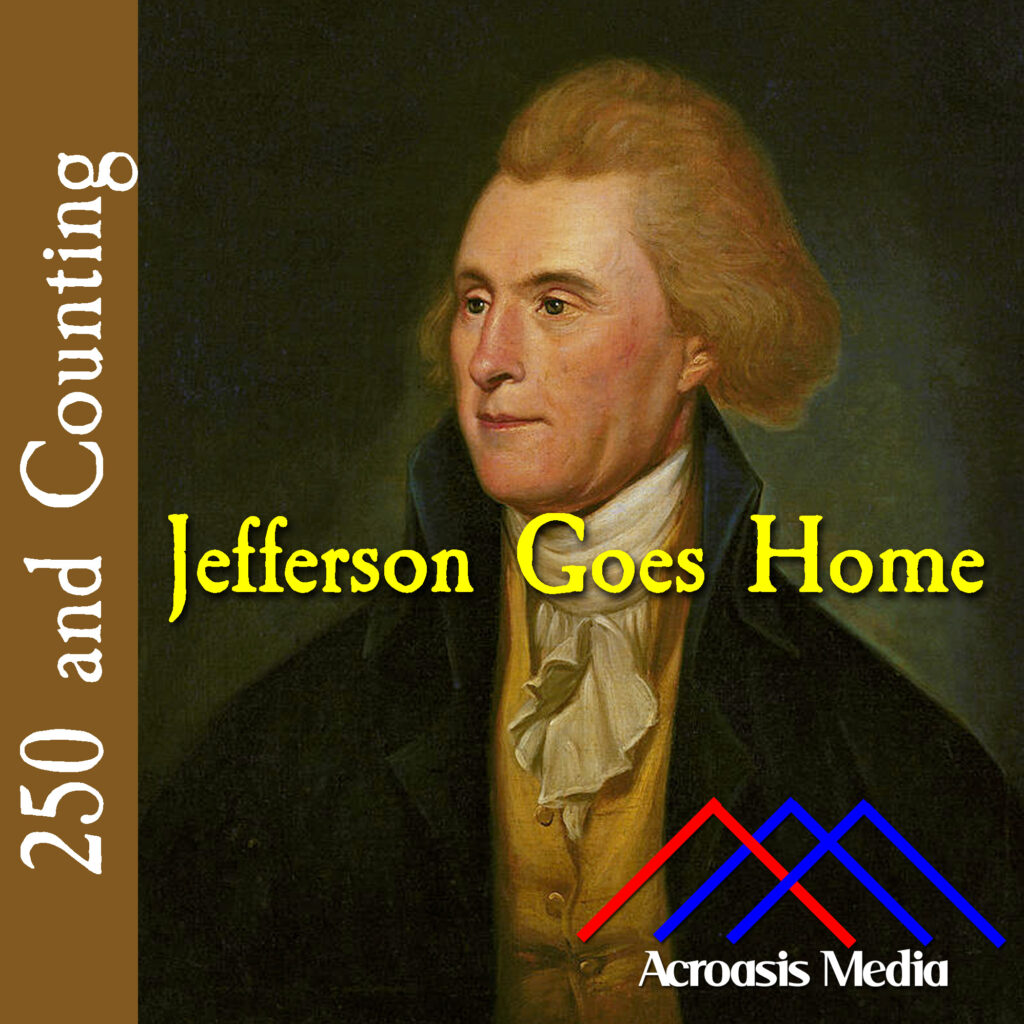
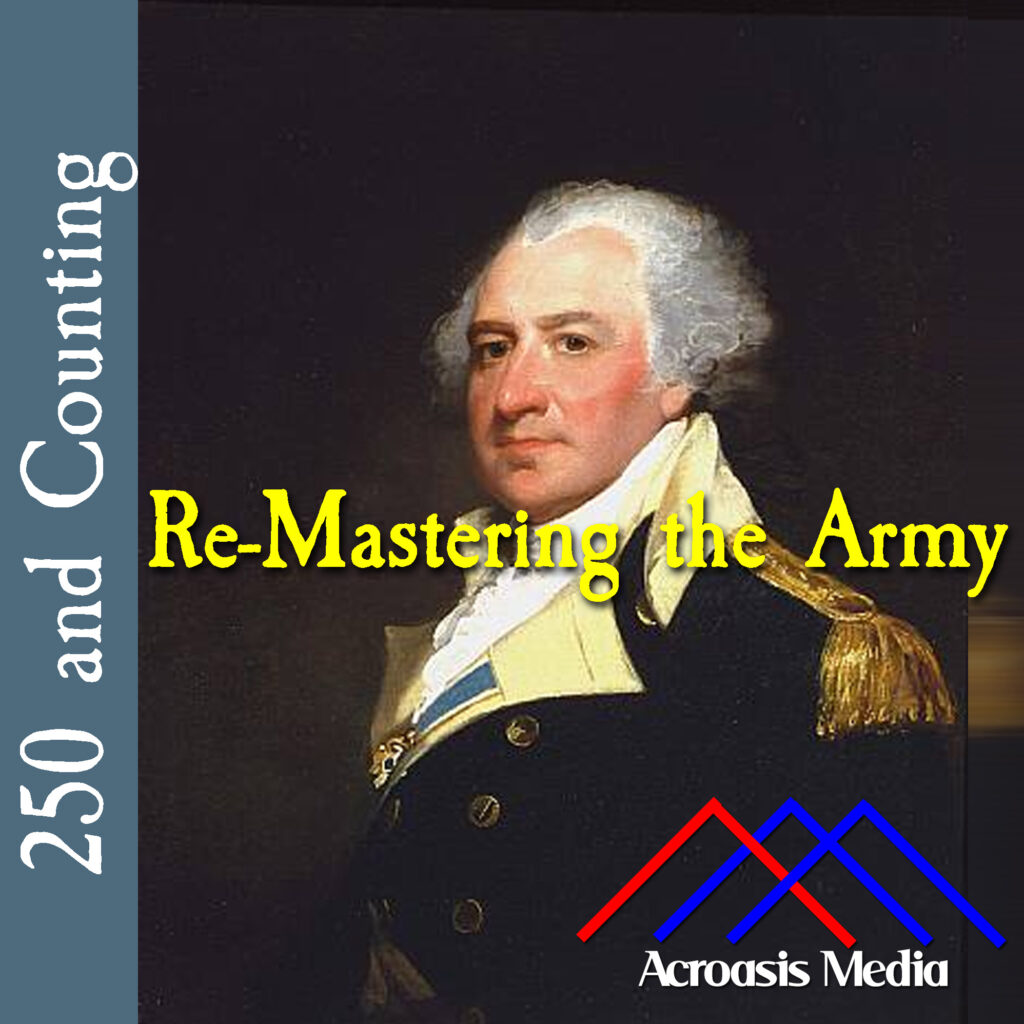
But it had me looking back on other artwork I’ve used (and, in two cases, created somehow) in the past, and of course there’s a lot of similarity among cover art pieces, largely because so many of them are portraits, and there’s a similarity in the way that people posed, and dressed, and so on. I’m sure another part of it is that I’ve done all of them, and so it’s my aesthetic that’s going into the cover art.
In 645 episodes to date, I’ve only repeated images a few times, and I’m rather proud of that track record. In one case it’s because there really was only one useable image available. There have been maps, and photographs, and stamps, and historical markers, and buttons, and official seals or flags, and documents, and once I used AI just for the laughs, and another time, just a few weeks ago, I did a little photoshop chicanery, again to amuse myself. Each time I tried to note the source of the artwork in the alt text, and the one time I didn’t, I was (rightly) called out for it by the guy who took the photo. He and I had a very pleasant exchange about it and I think it ended positively.
My point (I do have one, thanks for asking) is that even though this podcast doesn’t have a gigantic following, I do put some thought into stuff like this, and I hope that the efforts that Mike and I put into the show overall are evident.
I promised to spend some time talking about the First Virginia General Assembly of 1776, so here goes: during the episode I mentioned four big moves that they made in the relatively short period that they were convened. It’s worth noting that at least two of them were heavily influenced, or drafted by Thomas Jefferson. First was the abolition of entail. Entail was a rule that went back to the English feudal rules, which basically prevented the aristocracy from breaking up or selling off estates. Abolishing this rule helped to unravel the foundation of a landed aristocracy.
The other big one attributed to Jefferson was the Committee of Revisors, of which Jefferson was a member. It was recognized that the old Colonial Codes were based on royal laws which were outdated (like entail), and someone had to go through the entire legal code to redraft it into something that would work for a (small-r) republican system of government. It took them several years to get the job done, but the work began right away.
It’s possible that the assembly’s abolition of taxes for non-Anglican churches was also Jefferson’s work, and his later “Virginia Statute for Religious Freedom” was first introduced at this time, but that wasn’t enacted for several years. The other action related to freedom of religion during this period was the suspension of salaries for Anglican ministers, which did major damage to the state-based church system. (Remember, compulsory separation of church and state was still several years in the future.)
Podcast: Play in new window | Download | Embed