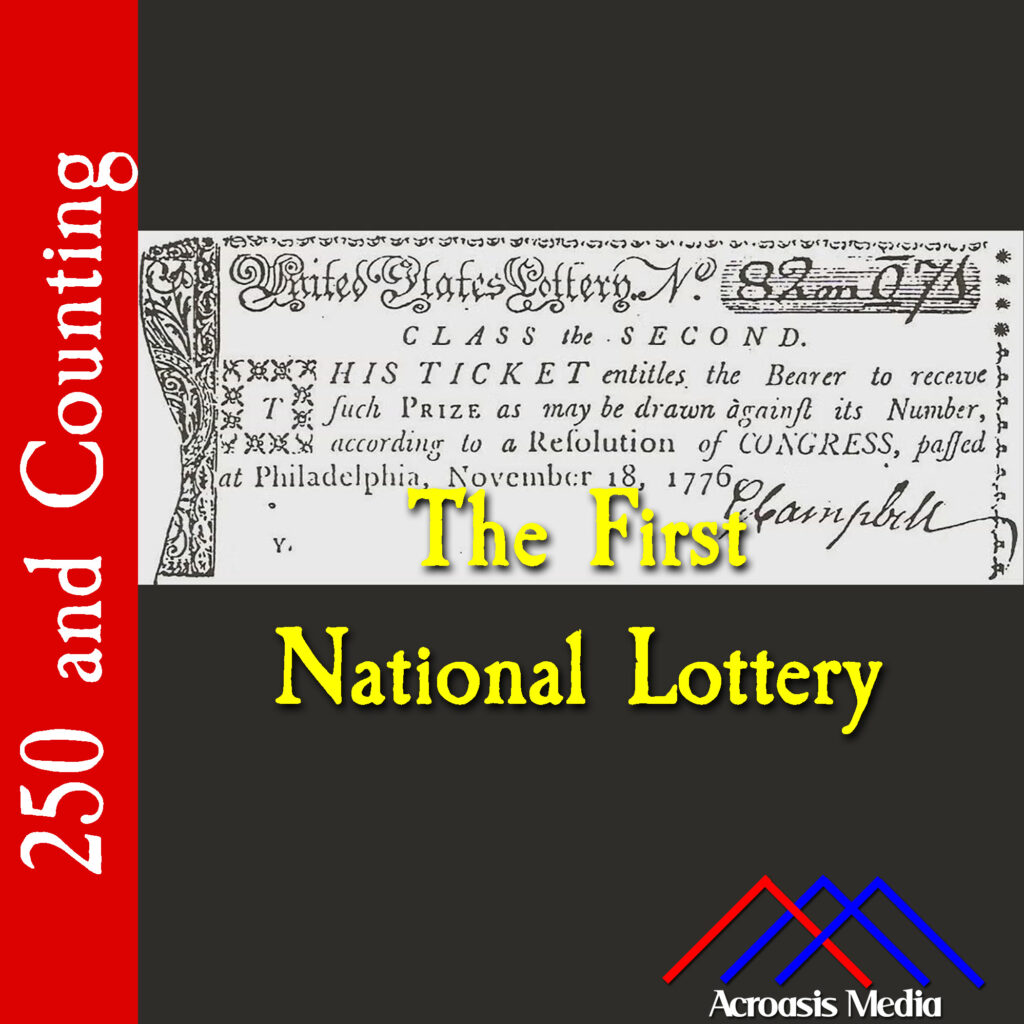
America, it seems, has always had an awkward relationship with the lottery.
Back in 1762, the Pennsylvania legislature barred anyone from running lotteries, levying fines and diverting that money to the poor. In short, they felt that a lottery was a regressive tax on the lower-income people that could lead to the corruption of young people.
Other colonies did the same, and for much the same reason. However, despite the laws, lotteries were still popular and managed to continue somehow, especially on a smaller scale, where they were used to finance things like churches, universities–oh, and the French and Indian War.
Lotteries could also be used to dispose of property: if someone dies and the heirs need to sell off the estate, community members might buy tickets to win the house that they otherwise couldn’t afford. (Unfortunately, this could also apply to slaves; however a slave could conceivably win their own freedom. It was rare but it did happen.)
Federal anti-lottery laws killed most lotteries by 1895, and after that the first state-sanctioned lottery was held in 1964 in New Hampshire. Not long after that, other states fell back into the lottery game as a means of raising funds, in defiance of those federal laws, which weren’t repealed until sometime in the 1790s.
I’m not a regular lottery player; I’m the kind who waits until there’s a gigantic jackpot and then I’ll buy a single Quick Pick ticket just for the fun of it. My one objection to a lottery (besides the usual “it’s a tax on people who can’t do math” bit) is that it’s often sold as a means of raising revenue to fund schools. The problem is, in most cases lottery income to states isn’t encumbered for educational purposes; it still goes into the General Fund and offsets other money previously earmarked for education. As far as I know, Florida is the only state that actually marks lottery income in its state budget as an addition to existing money, but it’s still a remarkably small percentage of the total amount of money taken in.
At any rate, it’s interesting that the arguments that we hear against the lottery today are more or less the same ones they were using over 250 years ago.
Podcast: Play in new window | Download | Embed
Leave a Reply