If the Battle of Fort Washington wasn’t the biggest loss for the American side of the entire war, it was definitely the worst so far.
We noted yesterday that General William Howe sent in a notice advising Colonel Robert Magaw to surrender the fort, or everyone in it would be killed. Magaw was defiant, sying the Patriots would defend the fort to the “last extremity.” Luckily for Magaw and company, Howe didn’t follow all they way through on his threat.
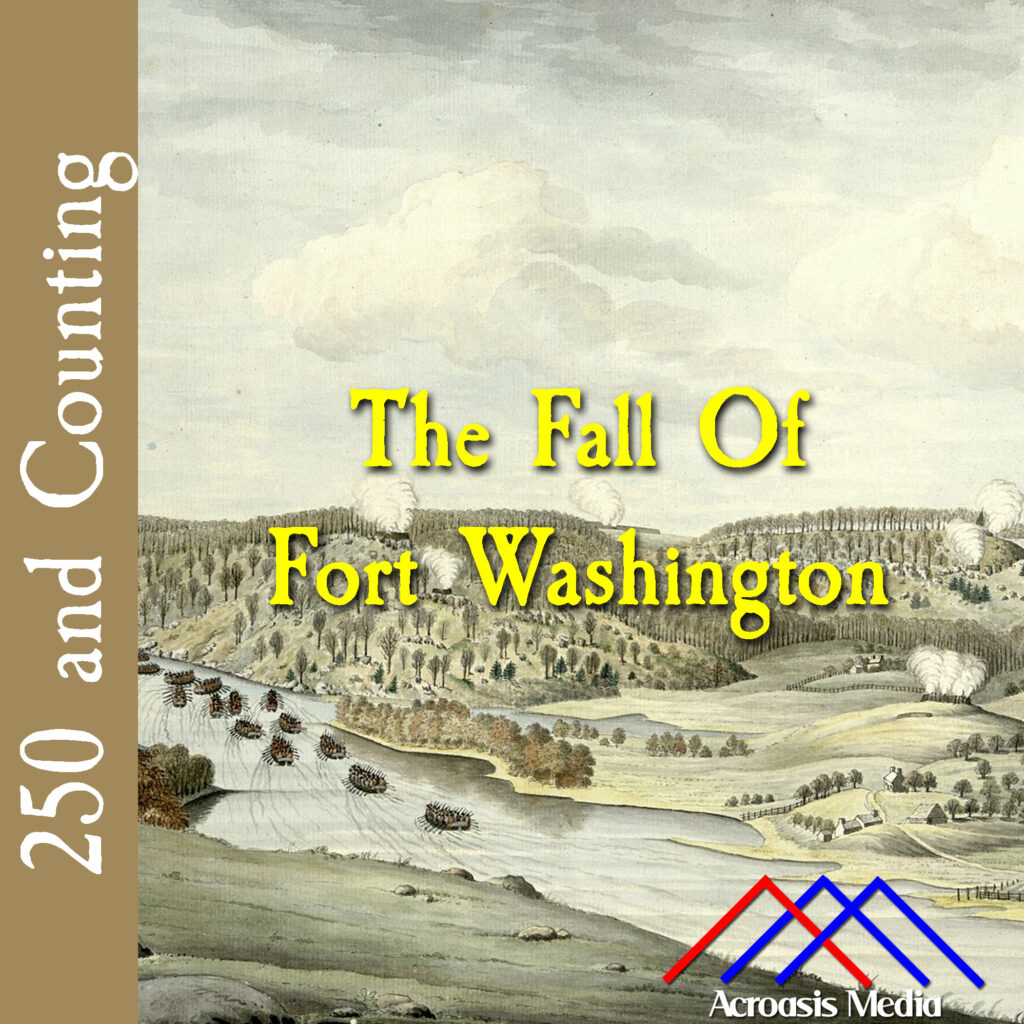
The main fighting began around 7:00 AM, when British and Hessian troops attacked from two directions, largely from the south. One of them, however, was a feint to draw attention from the other, which aimed directly at the fort and more specifically at the guns which had damaged British ships in the past.
By midday, more troops had arrived and easily dispersed the Americans waiting for them. From the north, a Hessian group met nearly no resistance as they moved up toward the high ground. Finally they were med by rifemen near the Post Road, who were especially good at guerilla-style warfare, and they managed to turn the Hessians back.
Of special note is John Corbin and his wife. Corbin was in charge of a cannon atop a ridge located on present-day Bennett Park. John was killed by a Hessian assault, so his wife Margaret, who was nearby at the time, took his place at the cannon and fired at the invasion until she was wounded repeatedly, making her the first known woman combatant in the Revolution. She did survive the battle but never fully recovered from her wounds, permanently unable to use her left arm.
In the end, the fort fell by 4:00 PM. 59 Americans had been killed, 96 were wounded and 2837 were captured, Magaw among the captives. The British and Hessians suffered 84 killed and 274 wounded. Because the British treated Revolutionary War prisoners rather poorly, about three-quarters of the prisoners died; only about 800 survived and were released in a prisoner exchange. Magaw was required to remain in New York for the duration as part of his parole, and eventually returned to Pennsylvania to resume his law practice.
Visitors to Bennett Park will see a commemorative plaque there (the one used for yesterday’s cover art), plus stones in the ground marking the locations where the walls of the fort once stood. A short walk from there is Fort Washington Park, on the banks of the Hudson, and the home of the Little Red Lighthouse, made notable by the 1942 children’s book The Little Red Lighthouse and The Great Gray Bridge.
Podcast: Play in new window | Download | Embed
Leave a Reply