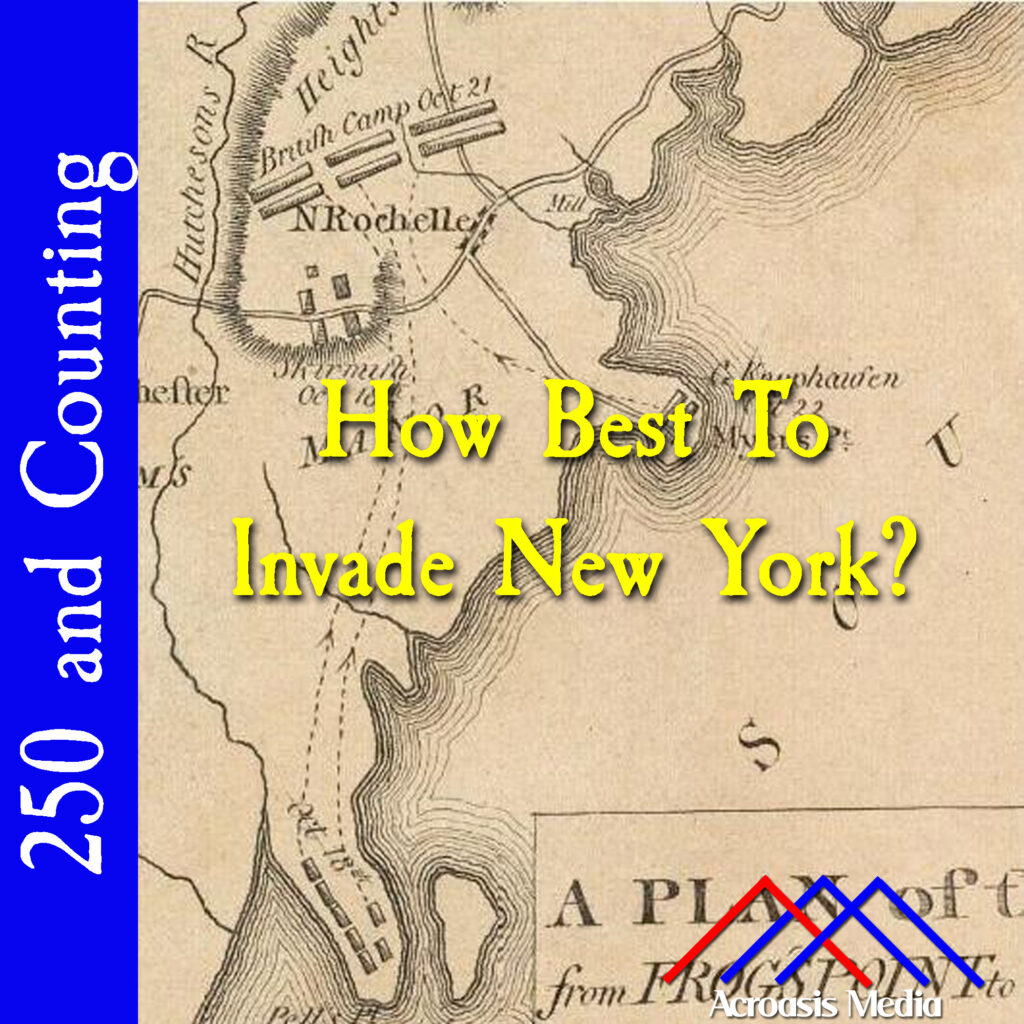
There are several names for the battle about to happen here, depending on how you view the geography; Battle of Throgs Neck, Battle of Throgs Point, Battle of Pells Point and believe it or not that isn’t even half of the total names given to this one conflict.
After George Washington’s successful defense of Harlem Heights, which was a good place to be from a defensive standpoint, the Continental and British armies were basically in a stalemate for a few weeks.
The Americans were under the impression that the British would either attack Fort Washington, or make a flanking move through the Long Island Sound. Washington’s Council of War finally tried to guard against both possibilities (because this worked out so well when the British invaded Long Island…ugh). Ten thousand men remained to defend Harlem Heights and Fort Washington, while General William Heath took five thousand troops to the far side of the Hudson, near Fort Constitution and modern-day West Point.
Ultimately General Howe chose a flanking maneuver but came in at a point much further south than Fort Constitution. In just a few days we’ll see how the confrontation works out.
Before I tell you a little bit about the First Virginia General Assembly of 1776 (which I do have to differentiate with a date, so it’s not confused with the First Virginia General Assembly of 1619), I wanted to spend a moment on the show’s cover artwork.
For some reason it was in putting today’s art together that I noticed the strong similarity between today’s artwork and yesterday’s. Perhaps it’s because they’re both buildings, even though today’s structure is much larger then yesterday’s. That, of course, is because I size it to fit the frame,
But it had me looking back on other artwork I’ve used (and, in two cases, created somehow) in the past, and of course there’s a lot of similarity among cover art pieces, largely because so many of them are portraits, and there’s a similarity in the way that people posed, and dressed, and so on. I’m sure another part of it is that I’ve done all of them, and so it’s my aesthetic that’s going into the cover art.
In 645 episodes to date, I’ve only repeated images a few times, and I’m rather proud of that track record. In one case it’s because there really was only one useable image available. There have been maps, and photographs, and stamps, and historical markers, and buttons, and official seals or flags, and documents, and once I used AI just for the laughs, and another time, just a few weeks ago, I did a little photoshop chicanery, again to amuse myself. Each time I tried to note the source of the artwork in the alt text, and the one time I didn’t, I was (rightly) called out for it by the guy who took the photo. He and I had a very pleasant exchange about it and I think it ended positively.
My point (I do have one, thanks for asking) is that even though this podcast doesn’t have a gigantic following, I do put some thought into stuff like this, and I hope that the efforts that Mike and I put into the show overall are evident.
I promised to spend some time talking about the First Virginia General Assembly of 1776, so here goes: during the episode I mentioned four big moves that they made in the relatively short period that they were convened. It’s worth noting that at least two of them were heavily influenced, or drafted by Thomas Jefferson. First was the abolition of entail. Entail was a rule that went back to the English feudal rules, which basically prevented the aristocracy from breaking up or selling off estates. Abolishing this rule helped to unravel the foundation of a landed aristocracy.
The other big one attributed to Jefferson was the Committee of Revisors, of which Jefferson was a member. It was recognized that the old Colonial Codes were based on royal laws which were outdated (like entail), and someone had to go through the entire legal code to redraft it into something that would work for a (small-r) republican system of government. It took them several years to get the job done, but the work began right away.
It’s possible that the assembly’s abolition of taxes for non-Anglican churches was also Jefferson’s work, and his later “Virginia Statute for Religious Freedom” was first introduced at this time, but that wasn’t enacted for several years. The other action related to freedom of religion during this period was the suspension of salaries for Anglican ministers, which did major damage to the state-based church system. (Remember, compulsory separation of church and state was still several years in the future.)
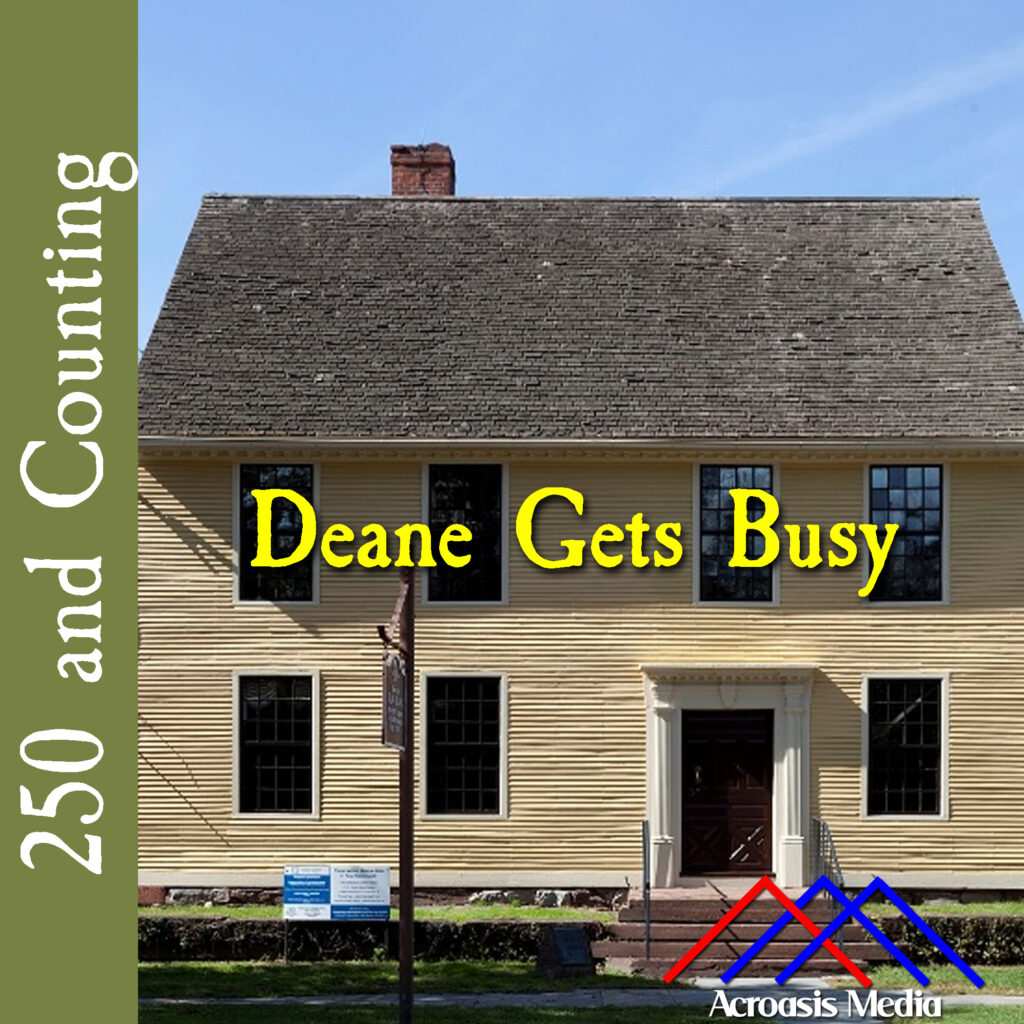
We’ve talked so much about Silas Deane that I don’t have much new to share in this space, so I’ll tell you a little about his house.
The house in today’s cover art was completed in 1769. It’s located in Wethersfield, Connecticut. The facade is asymmetrical because there was a porch at one time.
Deane designed the house specifically to impress people and to project an image of power. It has two parlors: one for entertaining and one for family dining, and the kitchen is oversized specifically to allow for preparation of larger meals when there were guests.
Elizabeth Deane entertained important people when Silas was away for one reason or another, whether it was performing his Congressional duties or engaging in diplomatic missions overseas, as he was during this episode. Among those VIPs would be John Adams and George Washington, on separate occasions. Elizabeth died in 1777, while Silas was still in Paris.
After Deane’s death overseas in 1789, house and possessions were sold to satisfy his creditors. It passed through many different owners until 1874, when the Fenn family took it over. Then in 1938 they bequeathed the house to the National Society of the Colonial Dames of America, and it’s been a historic site for visitors since then.
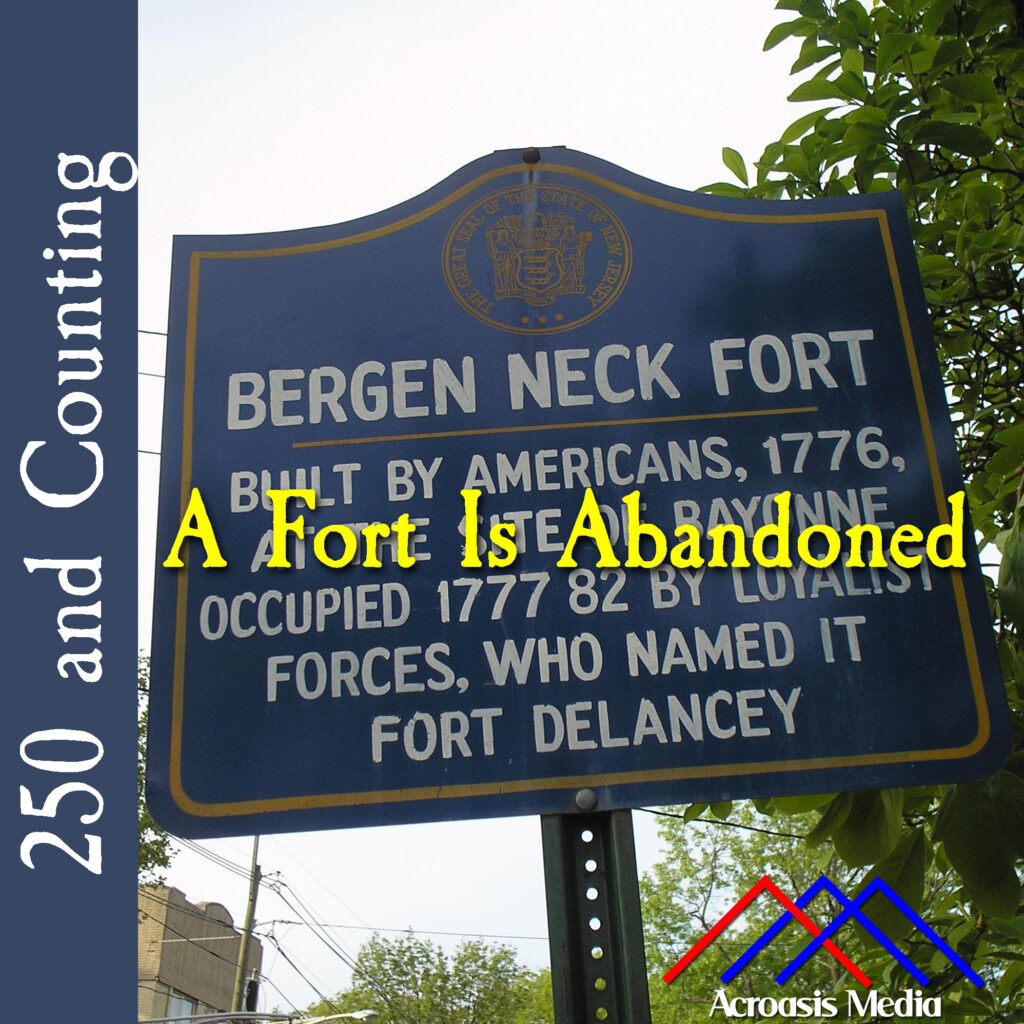
The cover art for today’s episode is the historical marker for Bergen Neck Fort, in Bayonne, New Jersey.
As someone who was born and raised on the other side of the East River, it’s supposed to be my duty to bust on New Jersey and say something like “there’s nothing interesting going on in Bayonne” and I’d mostly be right, but I will note that Mercer Park, just a hair under a mile from this spot, is rather nice.
I did spend a few years living in northern New Jersey, just a stone’s throw from what was then called The Meadowlands (and still is, if you’re a die-hard), and it’s really not a bad place to live. I had a decent sight-line to the Manhattan skyline, but my neighborhood had a very suburban feel to it. The town I lived in was practically Whoville during Christmas season.
Bergen County was also home to many people who lost their lives to the attacks on the World Trade Center, since it was just across the Hudson River, so there are numerous memorials in the area. Lyndhurst, NJ (for example), which is mostly famous for a bunch of exterior scenes from The Sopranos, has one that’s made from stones reclaimed from the rubble. I moved away from the area just a couple of weeks before September 11, but I kept in touch and many people in the area were deeply affected.
And now that I think about it, Bayonne—which is literally within sight of the former WTC buildings and the Statue of Liberty— has a truly moving memorial commonly called “The Teardrop”, which was a gift to the United States by a Russian sculptor named Zurab Tserteli. At 100 feet high, it can actually be seen from the other side of the river as well. So don’t go to Bayonne to see Bergen Neck Fort, since there’s nothing there. But if you do go, head to Harbor View Park.
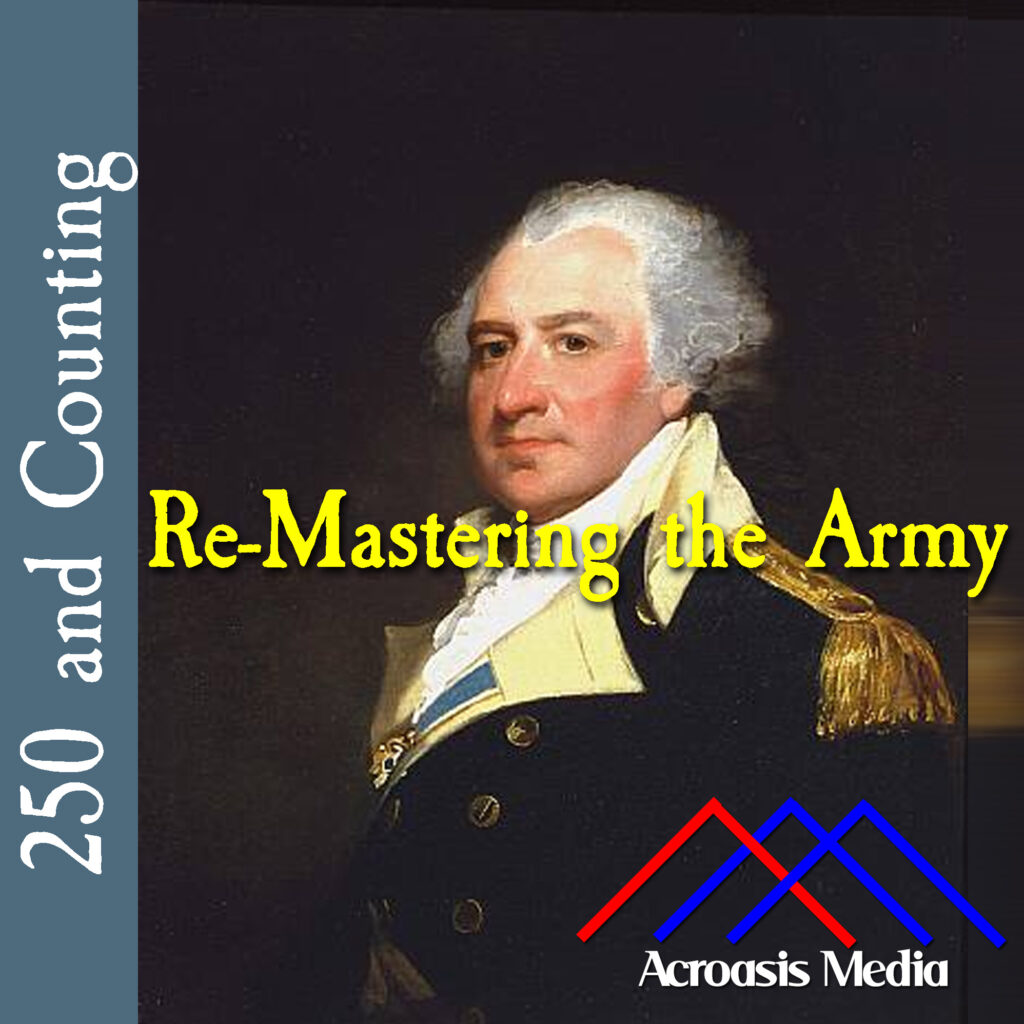
Thomas Mifflin was the Continental Army’s first Quartermaster General, and he was replaced by someone who just couldn’t get the job done, so he was asked to return to the position. He was good at the Quartermaster duties, but he really preferred to be on the front lines.
Oddly enough, though, when the soldiers at Valley Forge went through all their hardships, it was Mifflin who got the blame for it, and Congress had to appropriate a lot of money to settle the complaints. He still managed to keep the position, but the writing was on the wall and he resigned his commission a few months later.
Mifflin wasn’t done with public service, though. He became a delegate to the Congress and even spent some time as its President. And once Pennsylvania revamped its Constitution to include a genuine Governor position, as the last President of Pennsylvania he became the state’s first Governor, from 1790 to December 1799. He returned to the State Legislature but died a few weeks later.
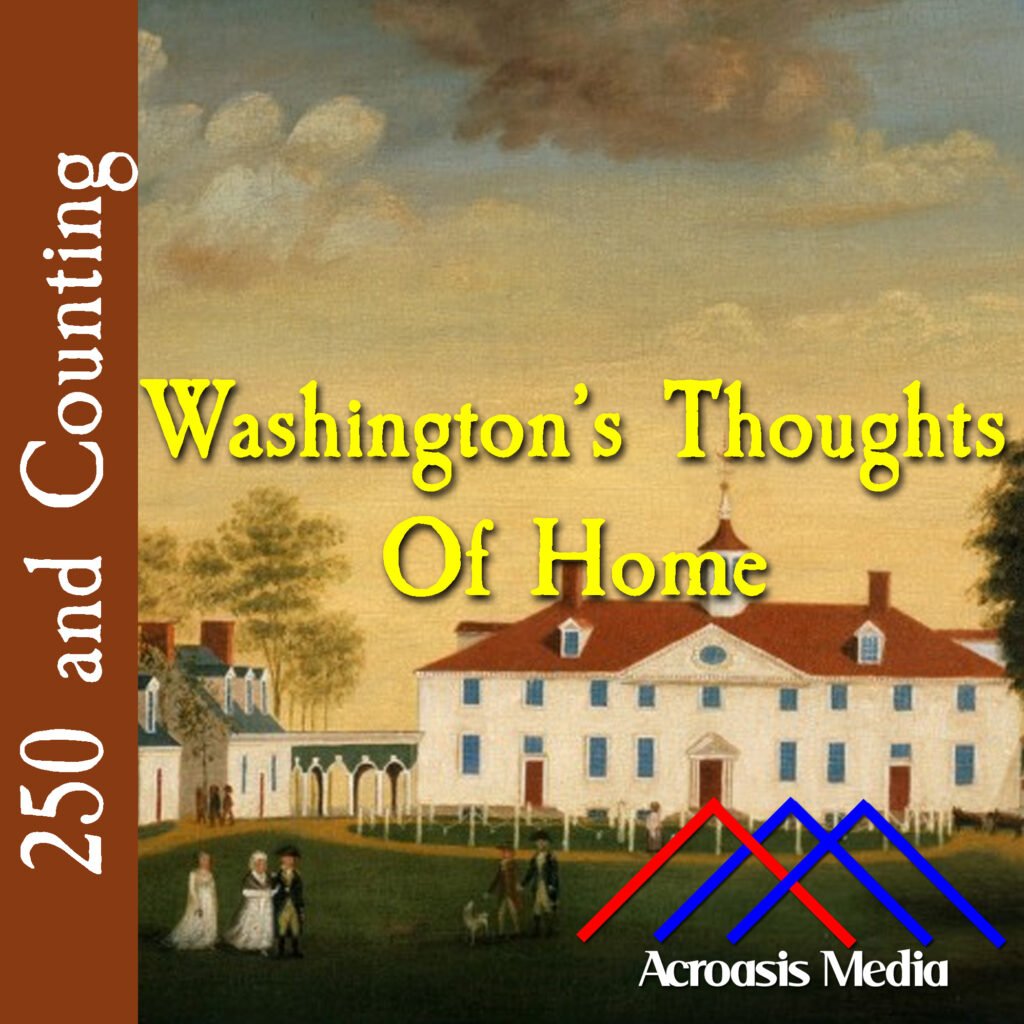
Mount Vernon, the mansion along the Potomac River in which George Washington lived, was originally built by his father when George was two years old. At that time, however, it was a rather modest house.
Washington’s half-brother Lance lived in the house until his death in 1752. After a year or two, George leased out the property, but he did not own it outright until 1761. He did, however, expand the house during the 1750s. In 1774 he made more additions, until it looked like the building we can see and visit today.
Washington’s original intent was that the exterior of the building be symmetrical along its center line, which was a classical look for buildings.
(Fun Fact: the college I attended for my undergrad coursework, Adelphi University, was also initially designed to have symmetrical buildings. In fact, the builders added a nonfunctioning chimney to the gymnasium building to ensure symmetry. They’ve since added to the building so the symmetry is gone, but the twin stacks remain.)
At any rate, the building is not symmetrical because of design choices on the inside, so a couple of windows are “out of place” and the main entry door isn’t aligned with the cupola. Clearly Washington was a pragmatic guy when it came to these things. Symmetry is nice, but not strictly necessary.
Nowadays the property is run by the Mount Vernon Ladies’ Association, who bought the house from John Augustine Washington III for the sum of $200,000 in 1858, along with about 200 acres of the surrounding land. Over the years they’ve done lots of restoration work but other than the addition of electricity in 1917, they’ve made no significant changes to the house.
When you only have two minutes to get the point across, you sometimes lose some of the nuances. This is a rundown of the second letter discussed today:
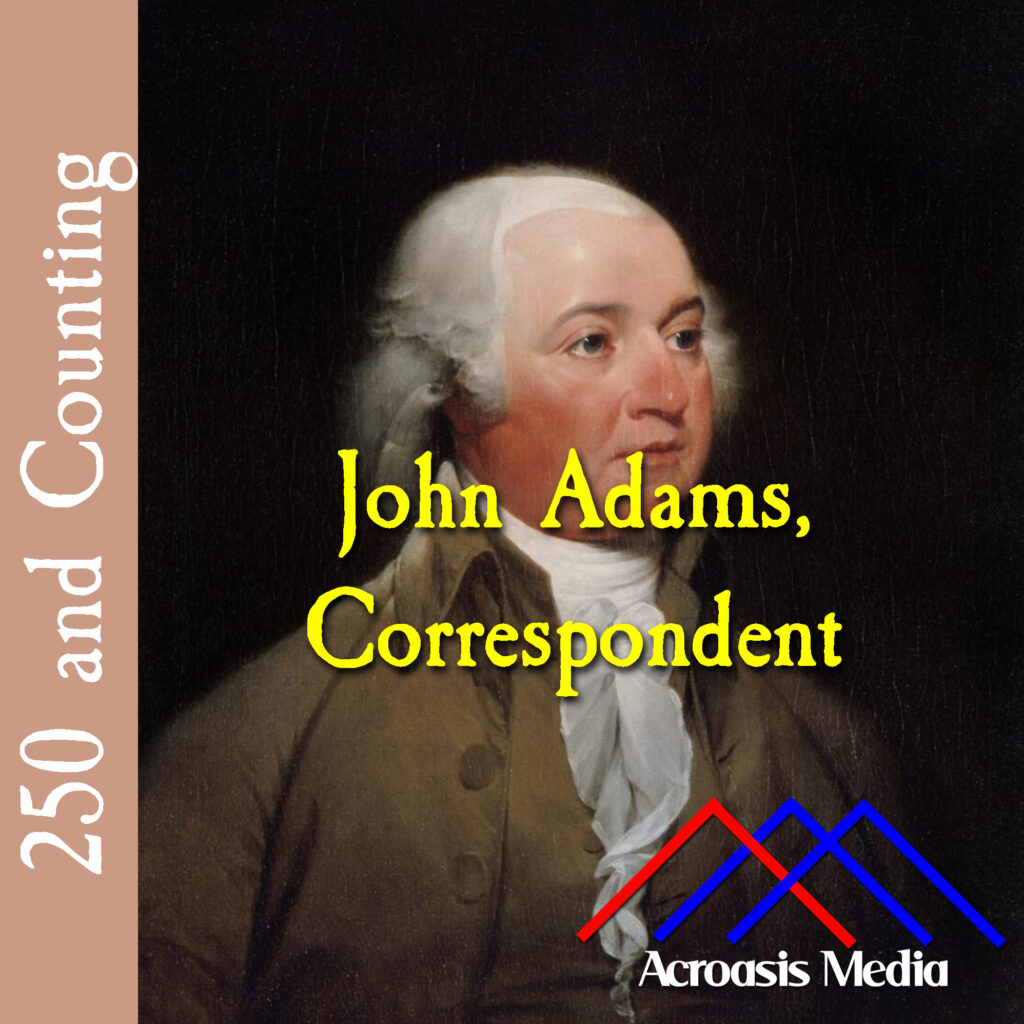
Abigail Adams penned a poignant letter to her husband, John Adams, who was still serving in the Continental Congress but hoping to get home as soon as his replacement arrived.
This correspondence highlights the immense psychological and economic strain experienced by those on the home front during the American Revolutionary War.
Abigail’s primary anxiety centered on the military situation in New York. She expressed deep frustration over conflicting reports regarding casualties and prisoners, troubled by rumors of colonial regiments refusing orders or behaving poorly under pressure. This operational uncertainty coupled with the immediate hardships in Massachusetts painted a grim picture of the war effort.
Furthermore, Abigail criticized a growing “venal spirit” within the local communities. She observed that patriotism alone was no longer enough to motivate enlistment; instead, towns were forced to offer increasingly high bounties to secure short-term military commitments. The relentless military drafts heavily strained Massachusetts towns as they struggled to meet their quotas, forcing citizens to pay exorbitant costs to hire replacement soldiers.
On a domestic front, Abigail balanced these structural societal collapses with immediate family pressures. Rumors of an enemy fleet in the bay magnified her isolation as she managed the family household and farm entirely on her own. This letter serves as a vital historical record of the domestic sacrifices that sustained the revolution, an account that John Adams later acknowledged receiving in his response on October 8, 1776 (which we’re not likely to discuss then).
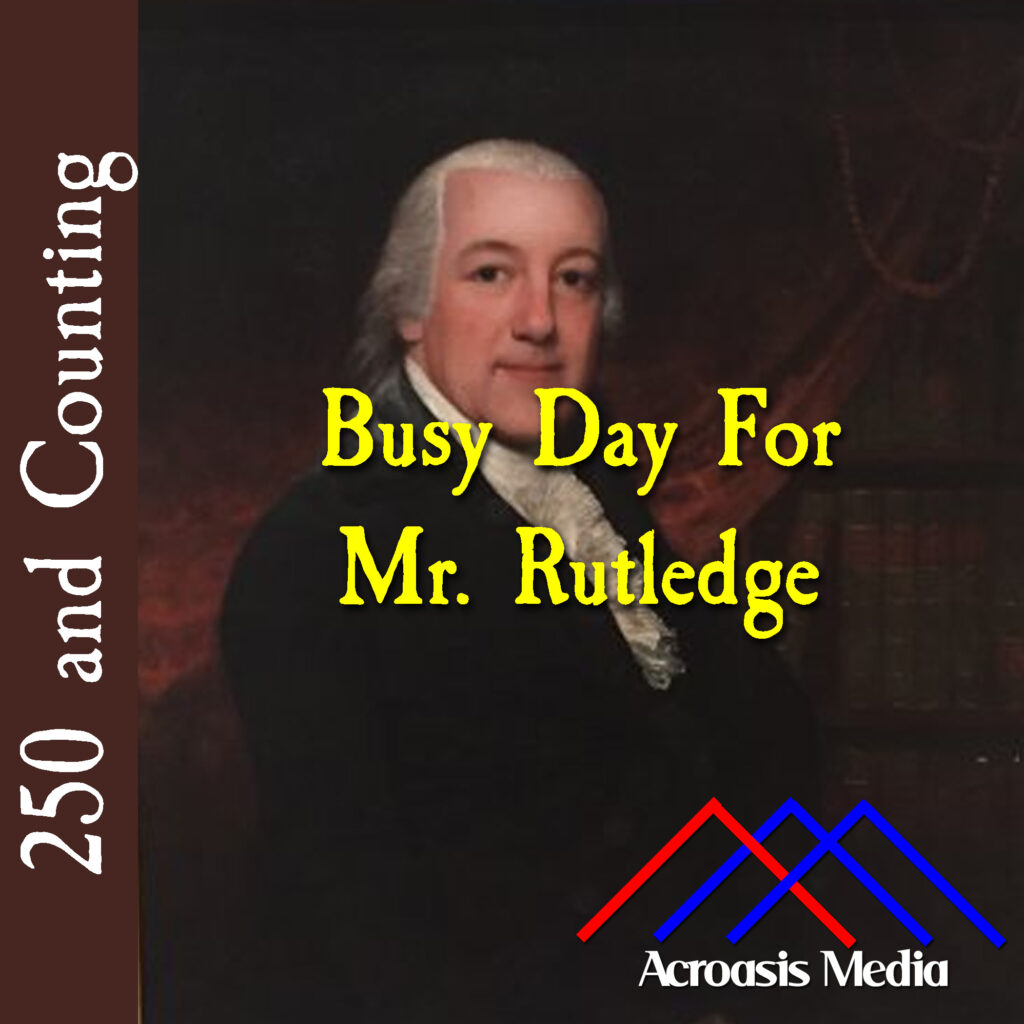
In putting this episode together, I realized that I used this same image of Edward Rutledge back in the September 9 episode. However, I neglected to put the information for the image in the alt text. And that’s something I do try not to overlook. On the other hand, I was still hopped up on cold medication, so there’s that.
And before I forget, I mentioned the censure of Esek Hopkins during the episode, so I wanted to ensure that I linked back to that as well.
In addition to being the youngest signer of the Declaration of Independence, at the tender age of 26, Edward Rutledge was also a governor of South Carolina. By my count he was their ninth governor, from 1798 to 1800, but that’s if you count his brother John Rutledge twice, since John served twice, non-consecutively. Also, he was the ninth governor of the state of South Carolina; if you count the colonial governors, he’d be thirty-ninth.
After leaving the Continental Congress, Rutledge did fight in the Continental Army. He was captured during the Siege of Charleston in 1780 and released in a prisoner exchange the following year.
I should note that while Rutledge was governor he suffered from an attack of gout and went home to Charleston to recuperate. Not long afterwards, he heard the news of George Washington’s death and was so upset by this that he had an attack of apoplexy and died. (Modern-day medical types would probably say that he had a cerebral stroke.) Rutledge had been the Governor for 401 days.
The Continental Congress, in the wake of Washington’s recent letter, finally realized that they weren’t going to be able to defeat the British on their own. Some outside assistance would be needed.
So on this day in 1776, they appointed a three-man commission to undertake a diplomatic mission to France, seeking money, arms and other materials.
France, as we’ve mentioned before, was a good country to hit up. They were still salty about the way the French and Indian War ended up, and they’d already been assisting America through gray and black markets, in order to give themselves plausible deniability should someone get caught. Should this mission succeed, the activity would be much more overt, and could be perceived as France’s official recognition of the United States as a sovereign nation.
It ultimately didn’t work out that way; that particular distinction went to Morocco and France became the second nation to officially recognize the US.
As Mike notes, the trip itself wouldn’t get underway for another few months, but there’s no doubt that the meeting with French authorities marked a critical turning point for the American Revolution.
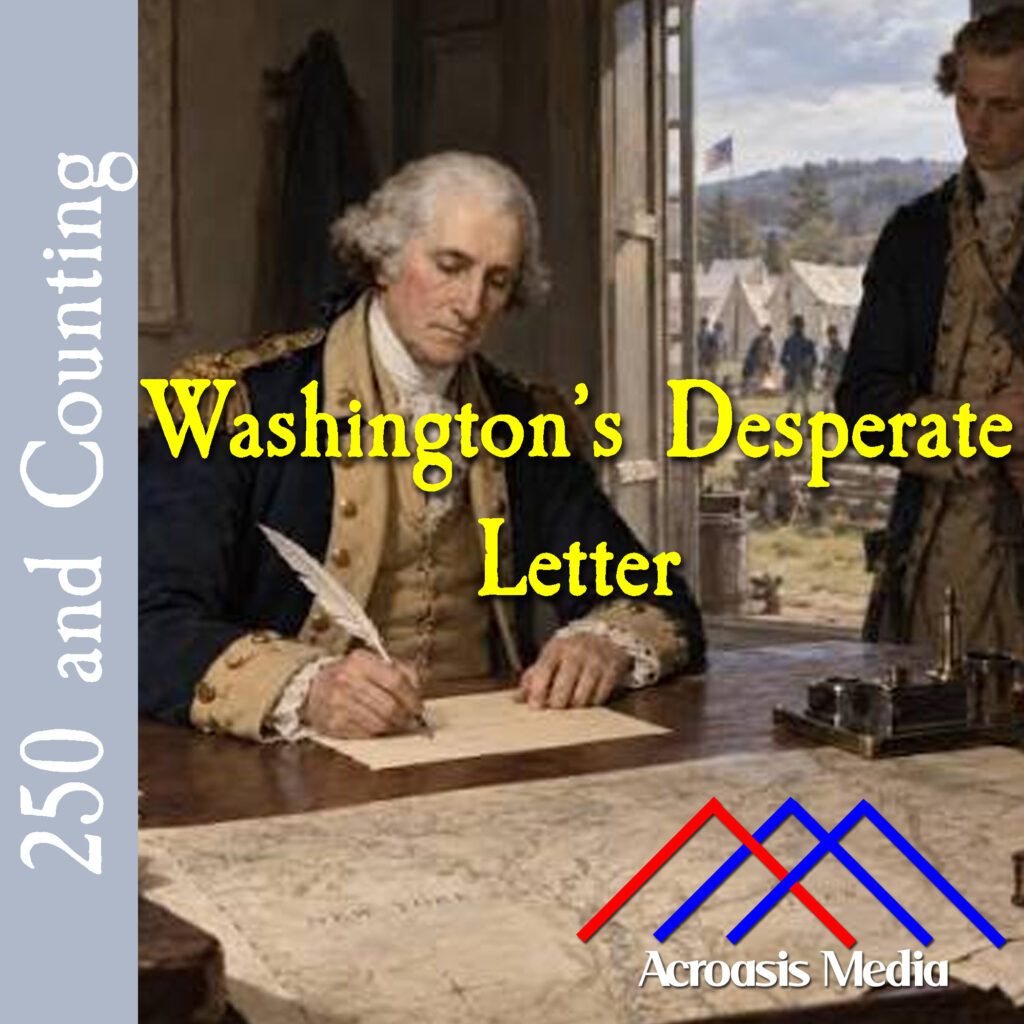
George Washington was a practical man, and he realized that without a standing army, he wouldn’t stand a chance against the British.
Sure, it’s good to have motivated people who are passionate about the cause, but when they have setbacks, they’re more likely to bail out, and that’s exactly what he was facing once the dust began to settle from his losses in New York. Many of the recruits that he had weren’t finishing out the enlistment period they’d agreed on when they first joined up, and the fact that their supplies and their pay were sporadic didn’t help matters.
It was with this in mind that Washington wrote to Congress, strongly recommending that they make some changes to the way that the Continental Army was being administered. Improving pay would be great, but simply ensuring that pay happened on a regular basis would be even better. And, of course, if a standing army could be established, then the men would be locked in for longer periods of time, and his officers wouldn’t spend so much time training new recruits.
Whether Congress agrees to this change…stay tuned.