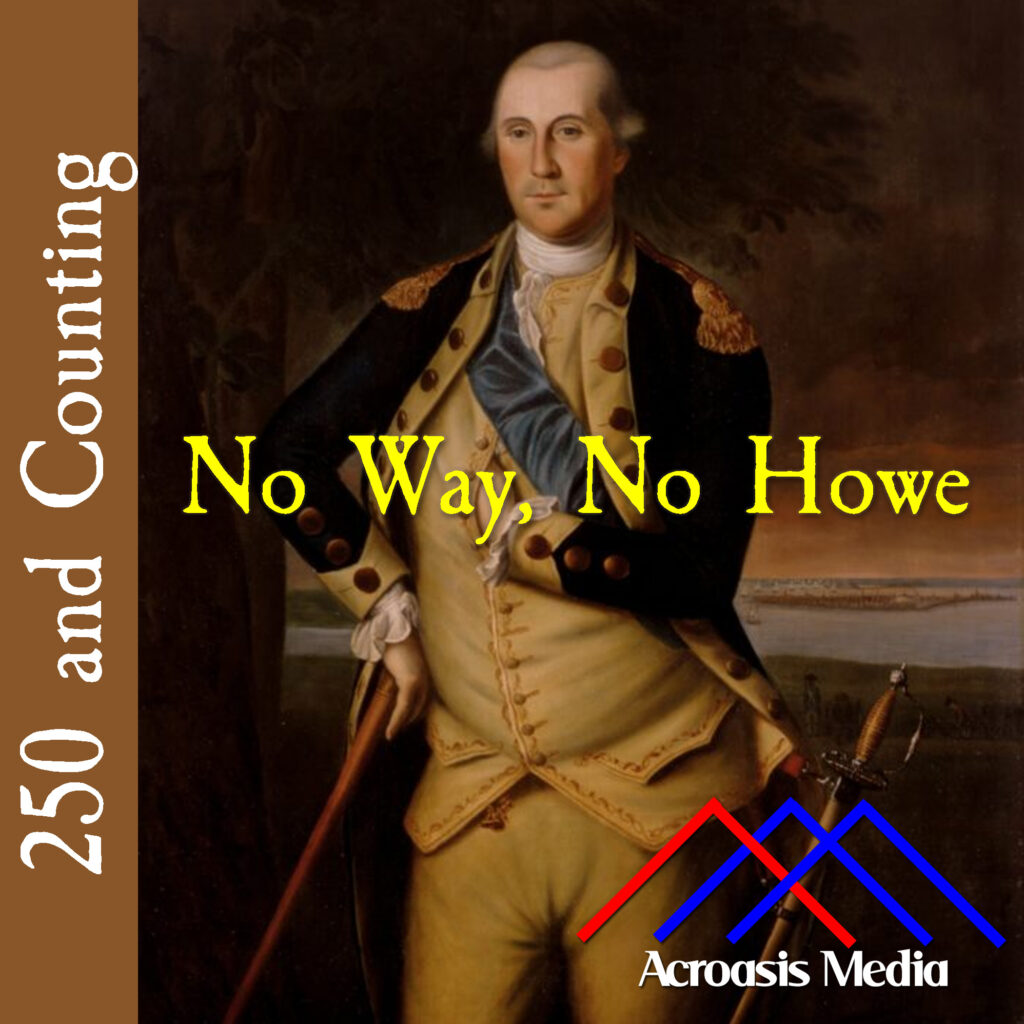
One fine Thursday morning in August of 1776, about 4000 British troops, led by General Henry Clinton and General George Cornwallis, landed at Gravesend Bay in Brooklyn. By the end of the day, their number had swelled to over 16,000.
George Washington’s problem was that he only heard about the initial 4000 later that day and decided that his guess regarding any invasion of Brooklyn was little more than a feint. Washington was no fool, but he was definitely wrong about this one.
It’s been coming for at least two months, and the Battle of Long Island has finally begun.
As we’ve noted a few times the past couple of days, George Washington had to make a few educated guesses about what the British were planning to do, but this left his troops thinly spread throughout Brooklyn and Manhattan, which left the Continental Army at a big disadvantage.
While numerous skirmishes have broken out up and down the coast between the British and American militia forces from time to time, this was Washington’s first major tangle with the British Army. That it didn’t go so great wasn’t his fault; that it didn’t go as badly as it could have is entirely his doing, as we’ll learn in a few days.
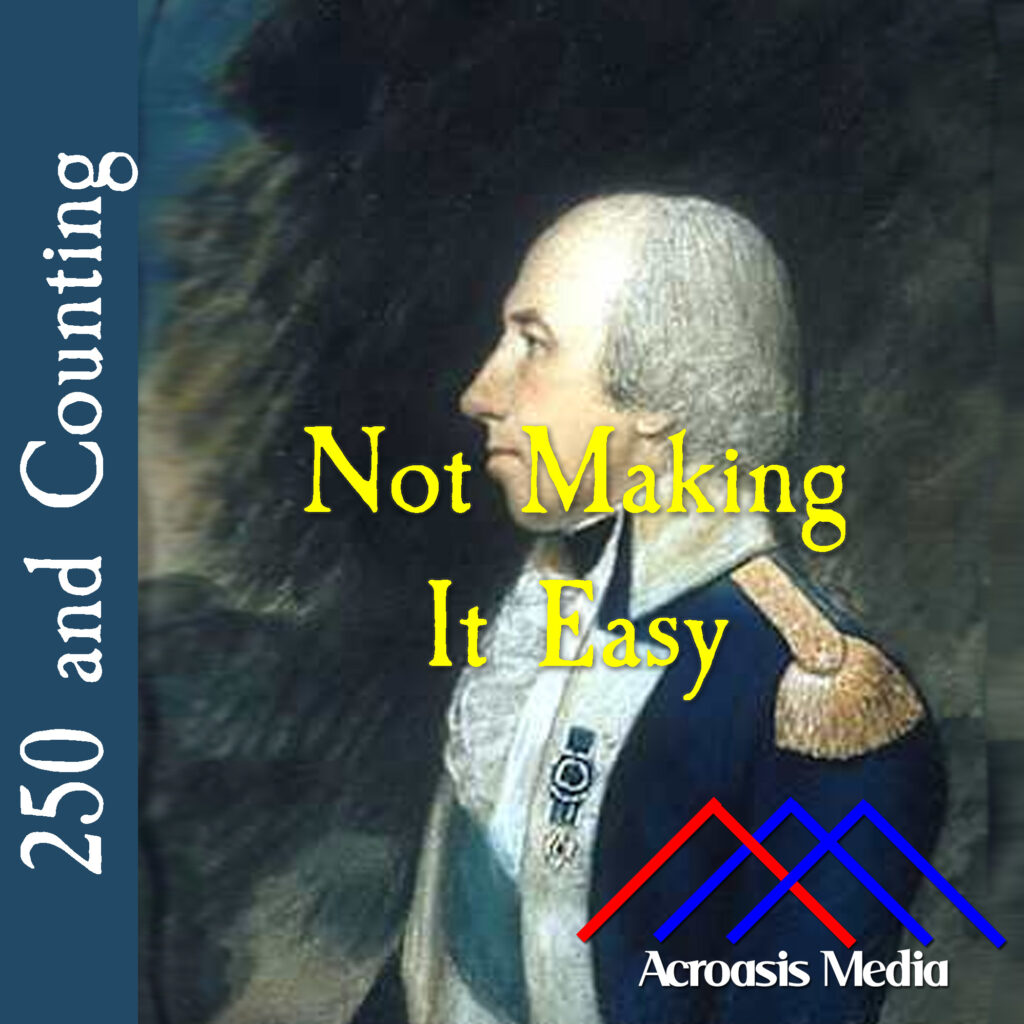
The reason that this portrait—and most of the others—of Rufus Putnam is in profile is that, when he was a child, one of his eyes was disfigured in an accident, giving it a, “outward, oblique cast.”
Putnam joined the Revolutionary War effort the very first day, after the battle at Lexington and Concord. During the Siege of Boston, Putnam directed efforts to fortify Dorchester Heights. Part of what had the British so flummoxed about that wasn’t that he did a good job (though he did), it was that he managed to get it all up and in place so fast.
Rufus Putnam worked his way up through the ranks quickly, so that by the time he was in New York, he was a colonel and designated an engineer.
But in December 1776, when the Continental Congress rejected his proposition to establish a national corps of engineers, Putnam resigned his commission. His resignation was short-lived and he eventually joined the Continental Army and served under Major General Horatio Gates. Putnam commanded two regiments in the battle of Saratoga.
He continued to work on critical fortifications, including Fort Putnam at West Point in 1778. In 1779 Putnam served under Major General Anthony Wayne in the Corps of Light Infantry following the capture of Stony Point, commanding the 4th Regiment. Putnam’s remaining military career was less eventful. In January 1783 he was commissioned as brigadier general.
After the war, Putnam returned to Massachusetts and returned to his original work as a surveyor. But a few years later, in 1788, Putnam led a group of veterans to settle land in the west, where they established what we now call Marietta, Ohio, the first European-American permanent United States settlement in the Northwest Territory. Putnam was appointed to serve as one of three judges of the Northwest Territory after Samuel Holden Parsons died. Marietta was settled on land that the local natives considered theirs, and it took a couple of years for the Ohio Brigade (with Putnam in the lead) to beat them back.
As Ohio residents organized to write a constitution and be admitted as a state, in 1802 Putnam was elected a Washington county delegate to the Ohio Constitutional Convention.
Putnam died on May 4, 1824, and was buried at Mound Cemetery in Marietta, Ohio.
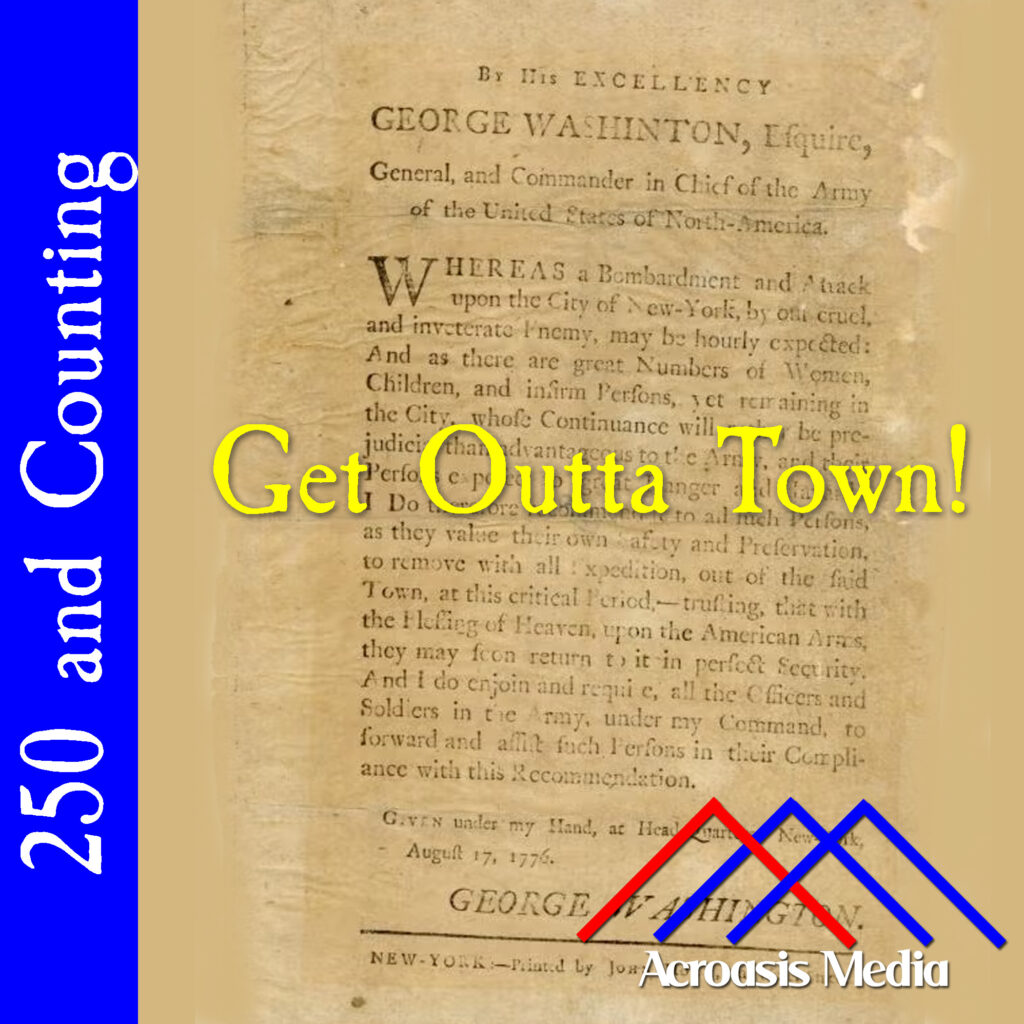
Ever the polite man, George Washington strongly urged (rather than ordered) civilians to evacuate Manhattan before the British began their attack.
Washington’s biggest problem was that he knew that the British were coming, but he had no idea how they were going to do it, given that Manhattan is an island, and while Brooklyn is not (its location at the west end of Long Island notwithstanding; work with me a little here), it’s still got a lot of coastline to defend. So even if Washington had a number of troops similar to the Howes, they’d likely be stretched a little thin. With slightly more than half the British strength, he’s definitely stretching thin.
So to evacuate Manhattan was the smartest move, since there was practically no way he could defend the land and the people living on it. The best he could do it say “please go, and with any luck you’ll be back before you know it.”
Unfortunately, “before you know it”, in this case, meant “not until 1783.”
I promised you a postscript for the Christopher French story, but let me offer up some broader context first.
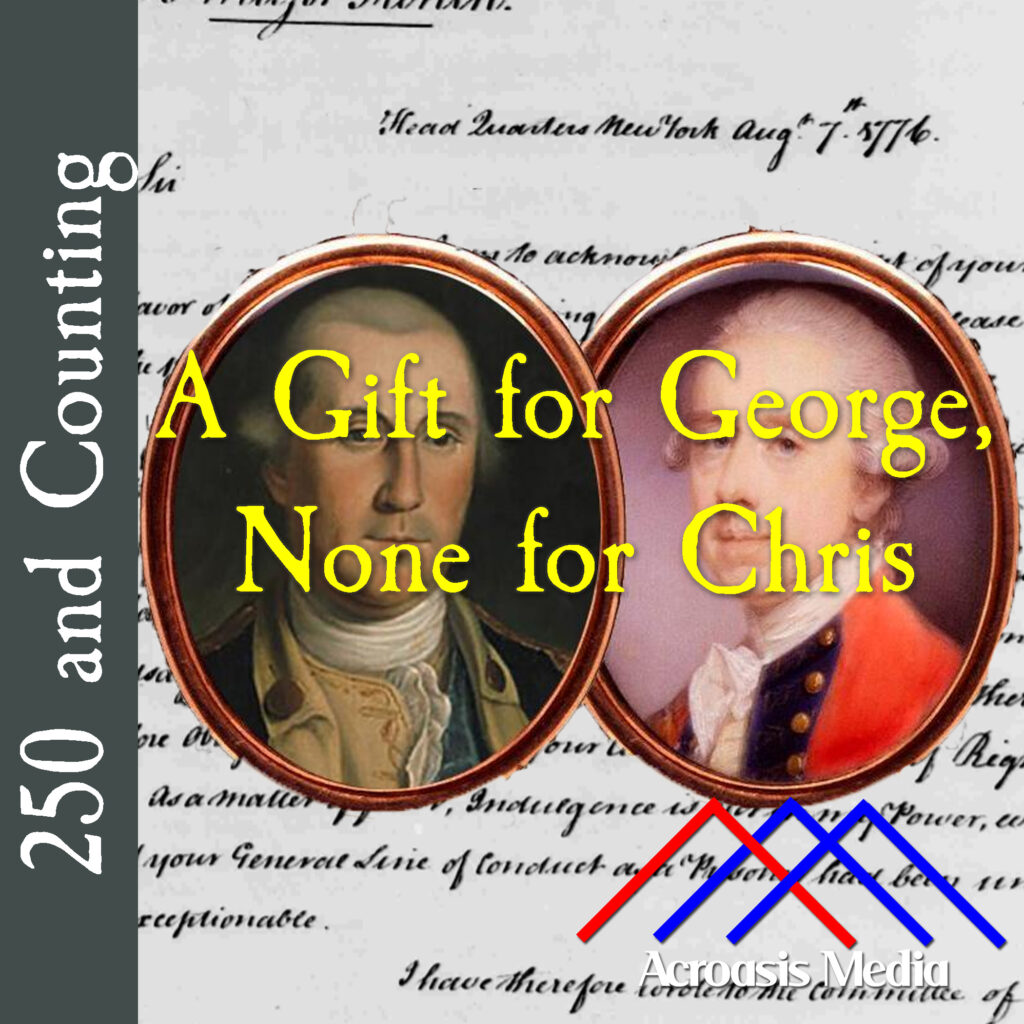
In July 1776, French wrote to George Washington from Connecticut, where he was being held as a prisoner of war. The purpose of the letter was to request parole from his confinement.
Washington’s reply reads:
Sir: I am to acknowledge the receipt of your favor of the [the date is missing here but from other documents it was probably the 22nd] July, intimating your expectations of release on the 12th. of this month.
I have considered your Parole, advised with those whose Knowledge and experience gives weight to their Opinion, and otherwise endeavoured to inform myself how far your Construction of it is founded upon Justice, Reason or Usage; I do not find it warranted by either, My Duty therefore Obliges me to over rule your Claim as a matter of Right. As a matter of favor, Indulgence is not in my Power, even if your General Line of Conduct as a Prisoner had been unexceptionable.
I have therefore wrote to the Committee of Hartford, sent them a Copy of this Letter and hope you will, without Difficulty, conform to the Regulations already made with respect to Prisoners, by the General Congress.
It is probable a general Exchange of Prisoners will soon take place, it will then be a pleasing part of my Duty, to facilitate your return to your Friends and connections, as I assure you it is now a painful one to disappoint you, in an Expectation which you seem to have formed, in a full Persuasion of being right and in which on mature Deliberation, I am so unhappy as totally to differ from you. I am Sir etc.
This much you knew. Here’s the postscript. Christopher French wrote another letter subsequent to the one Washington responded to. In that letter, which Washington received on August 8, it appears that French withdrew his request. Washington immediately sent a second letter, responding to this one:
Sir: I was unwilling to determine hastily, upon your claim of a Release founded upon your Parole, and therefore delayed the acknowledgment of your favor of the 22d July, until I should fully inform myself. I had accordingly wrote you Yesterday, that I was so unhappy as to differ from you in the construction you had put upon it, but as there was reason to believe, a General Exchange of Prisoners might soon take place, I should chearfully facilitate your return to your Friends.
Last Night I received your favour of the 5th. August waving your Claim of a Release, which makes any farther Discussion of that matter unnecessary. Your other proposal, of being exchanged for Major Meigs or Col. Allen, will meet with no Objection from me; should you write to General Howe on the Subject the Letter shall be chearfully forwarded and his Answer returned.
Should any Difficulty arise in the Exchange, I am doubtful, how far I should be authorized, without consulting the Congress, to grant you an Indulgence similar to that of Major Meigs, which I have been informed was allowed in consequence of his saving the Life of a British Officer, either nearly connected with, or much esteemed by General Carlton.
However, you may assure yourself Sir, that both Duty and Inclination lead me to relieve the unfortunate and that I agree with you, that your long and early Captivity gives you a very just Claim to special Notice, and I shall be happy in furthering your Wishes, as far as my Station will admit. I am Sir, etc.
In short, Washington was happy to be relieved of the burden of refusing the initial release, but also still more than willing to cooperate should a prisoner exchange take place.
At this point, Americans were fighting a two-front war. More accurately, they were fighting two wars against different enemies: the Cherokee in the southwest areas of the country (so far), and the British…well, practically everywhere else. But today we’ll focus on the British in New York.
After yesterday’s disaster in the Ninety-Six District of South Carolina, the Cherokees, plus a bunch of Loyalists, moved east about 30 miles to Seneca, which at that time was called Esseneca Ford.It was there that they met up against Andew Williamson, who they outnumbered by something like four-to-one. But with the assistance of some men on horseback, plus another batch of reinforcements, the Cherokees were forced to retreat.
In New York, the British, along with a huge number of Hessian mercenary soldiers, were massing in Staten Island with an eye toward taking Manhatten, Long Island and the Hudson Valley in an effort to cut off New England. George Washington will be facing an enormous battle very soon, but on Monday we’ll be telling you about something at least as important fo the General.
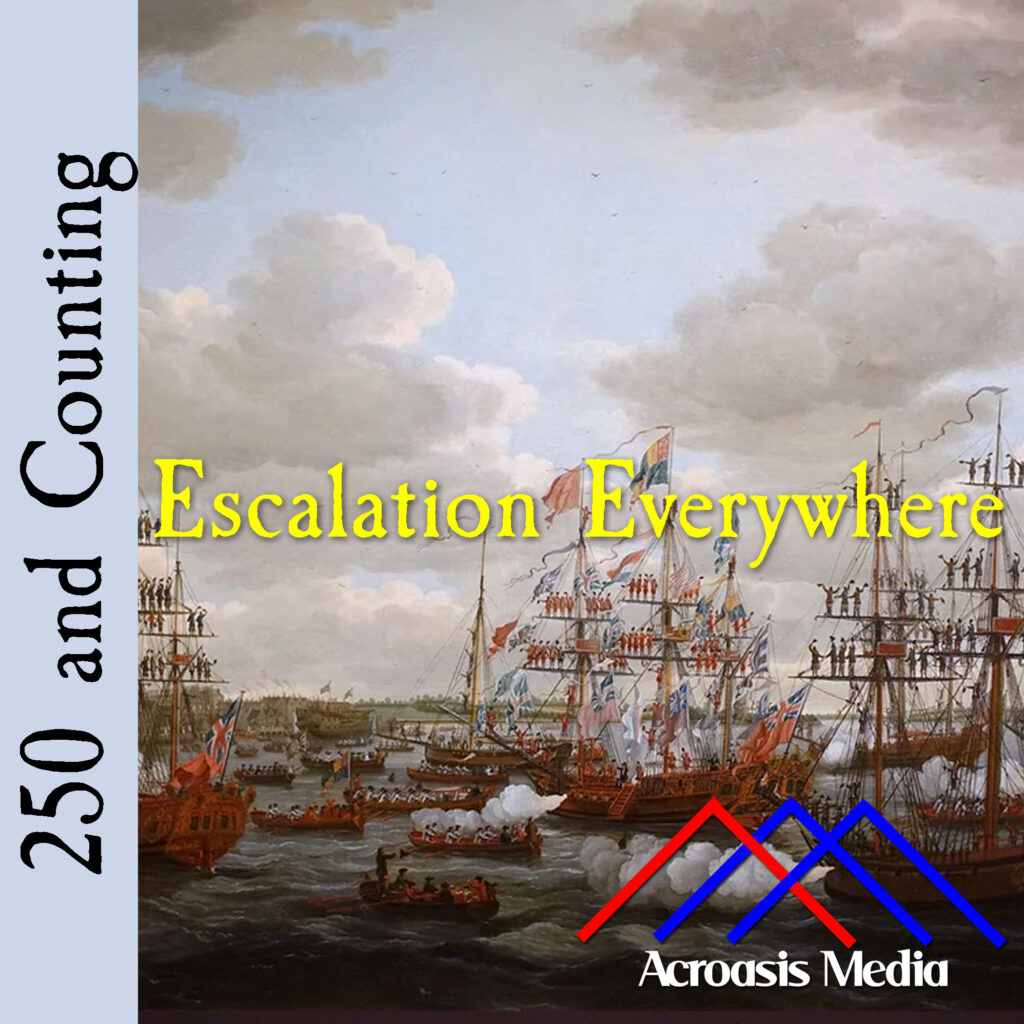
The presence of the British in Staten Island wasn’t a big mystery, but within a month after they first arrived, the number of ships in New York Harbor was well over 100, and still growing.
And, as George Washington suspected (along with many others), the British began moving up the rivers surrounding Manhattan, working their way up the Hudson River in the effort to use New York as a wedge between New England and the rest of the colonies. Specifically, if supplies couldn’t get through, then it weakens both sides of the line.
As for New York itself, part of Washington’s problem was that he didn’t know if the British plan was to take New York City (still a small chunk of Manhattan Island at that time), or to move through Long Island. As a result he had to hedge the bet a little bit and send troops in both directions, spreading the Continental Army rather thinly. This may have forced the British to do something quite similar, but they still had Washington vastly outnumbered.
Huntington, New York, is coincidentally quite close to where I grew up. And frankly, I had no idea that they could celebrate the way they did on this day in history.
In addition to being its own little town, Huntington was determined not to let the British take any more of Long Island than they already had. They’d gotten word that the inhabitants of New York City had determined not to oppose the British. This kind of makes sense, since there were lots of Loyalists there still. But a man named John Sloss Hobart, who was one of the Sons of Liberty in the area, headed a committee that was designed to secure the disaffected, to remove or destroy any grain, and, if necessary, lay Brooklyn to waste.
This effort ultimately failed, and unfortunately their absence from the Huntington area near the end of August meant that British soldiers were making landfall about 50 miles east of Huntington with no militia to meet them. Since Huntington had the bulk of the militia in the area, the British could act as they wanted, further hastening the fall of Long Island that summer.
Many Patriots had to get out of town, so they headed across the Long Island Sound to Connecticut for the duration.
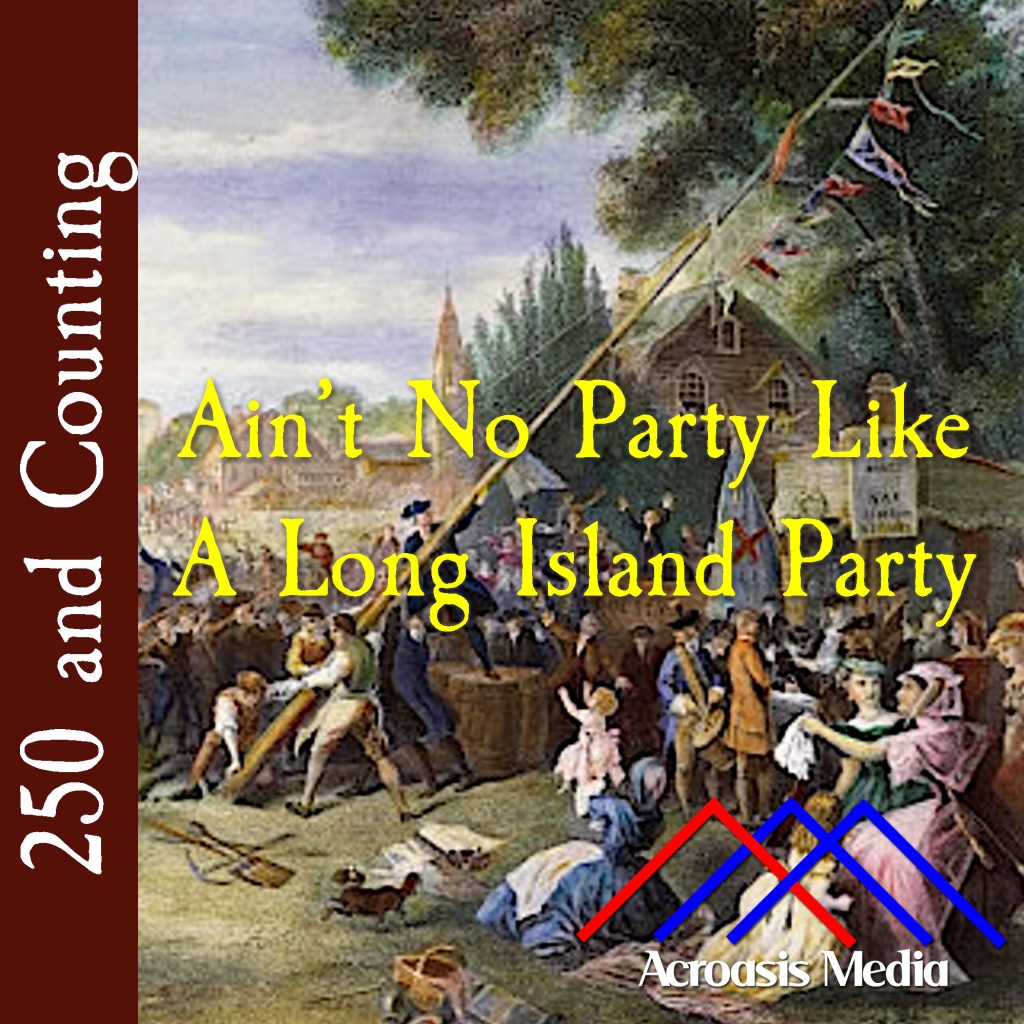
But for all that, Huntington, NY remains proud of their heritage, and they even took the time this past weekend to reenact the event, demonstrating the firing of weapons, showing off 18th Century crafts and trades, and offering tours of the Arsenal. And yes: they blew up an effigy of King George III. I guess they still know how to party in Huntington.
That George Washington agreed to meet with Colonel James Patterson was a bit of a surprise.
He’d turned down the opportunity to meet with his British counterparts on multiple occasions, but when asked if he’d meet with one of those men’s officers, Washington accepted the offer.
Once the meeting was set, Washington was more gracious than most people would expect. Colonel James Patterson was rowed to the Battery dock in lower Manhattan from the British barge. At this point it was expected that he would be blindfolded to prevent him from gathering intelligence on Washington’s headquarters. Instead, he was brought to a different location without being blindfolded.
Patterson met with Washington, Henry Knox, Joseph Reed and a few others, and it was clear that these officers were very deferential to the General, typically referring to him as “Your Excellency.” Again, protocols were important to Washington.
After rejecting the Howes’ letter yet again, Patterson mentioned the benevolence of His Majesty, King George III (which was probably not the right thing to say to George Washington, but still), and explained that the Howes were there “to accommodate this unhappy dispute”.
According to Knox’s letter to his wife, Patterson then explained that Lord Howe had broad powers of pardon, but Washington wasn’t interested. As far as the General was concerned, “the Americans had not offended, therefore they needed no pardon. This confused [Patterson].”
Shortly thereafter, Patterson was escorted back to his barge, disappointed but sociable.
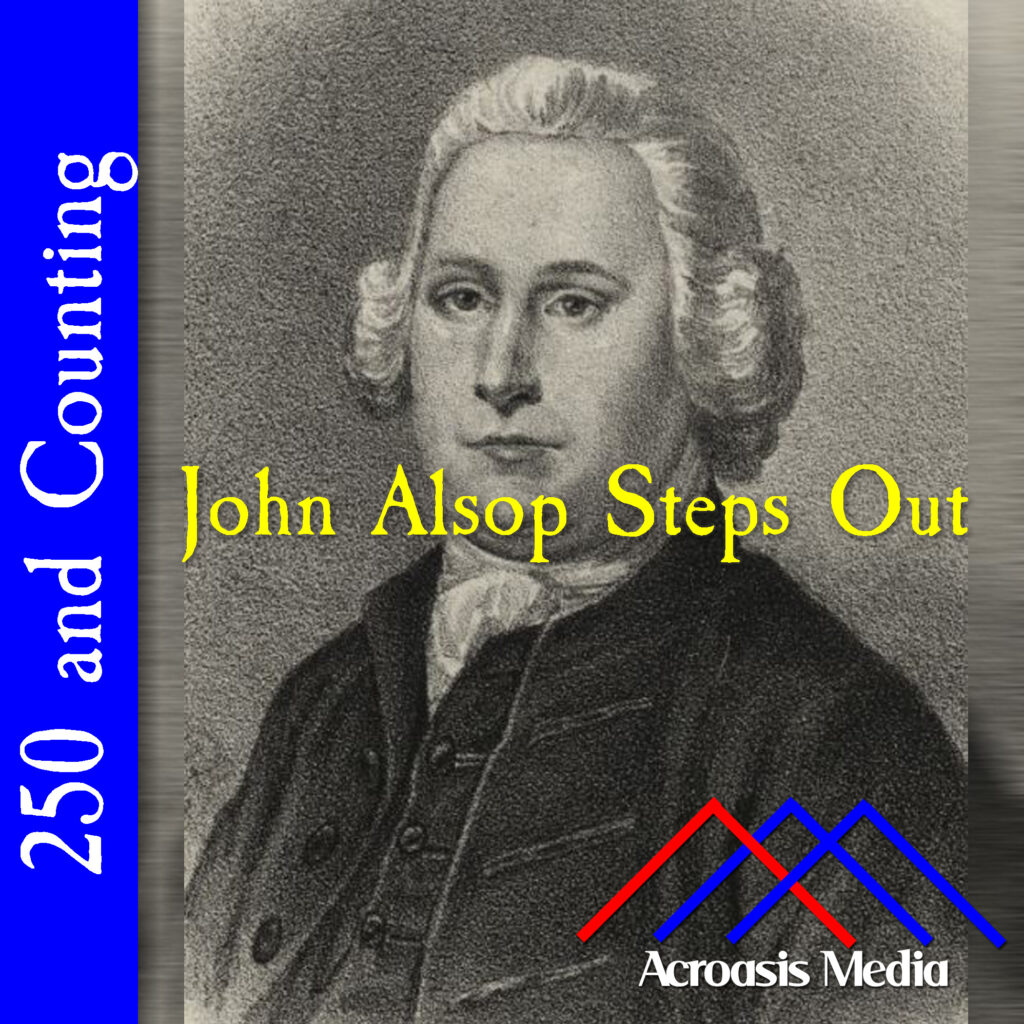
John Alsop was born in 1724 in New Windsor, Orange County, in the British Province of New York. He was the son of John Alsop, Sr. and Abigail Sackett. His father was a lawyer in New Windsor and later New York City, where he was largely interested in real estate.
As a young man he moved to New York City, where he entered the mercantile world with his brother Richard. The brothers became importers and merchants in cloth and dry goods. John became interested in civic and political activities. He was elected by New York County to serve in the Province of New York Assembly. He was one of the civic leaders that incorporated the New York Hospital Association and served as its first governor from 1770 to 1784. In 1757, his brother Richard retired from business and removed to Middletown, Connecticut.
Early in the Revolution, the Province of New York Assembly could not reach a conclusion about the Continental Congress. As a result, delegates were selected by the revolutionary committees in each county. In 1774, Alsop, along with James Duane, John Jay, Philip Livingston, and Isaac Low, was named as a delegate. When the First Continental Congress convened on September 5, Jay presented their credentials, and the Congress accepted. Alsop arrived in Philadelphia on September 14.
Alsop returned to the Second Continental Congress, and while he assisted in the war effort prior to the Declaration, he never lost his hope for reconciliation with Britain and he wound up resigning from the Congress rather than sign the Declaration. He did continue supporting the Continental Army, from his home in Newtown, NY until that town was overtaken by the British, then he continued to work from Manhattan. When they took Manhattan as well, Alsop fled to Connecticut and stayed there until 1783, when the occupation ended.
Alsop died at his home in Newtown, Queens County, New York, on November 22, 1794, and is buried in Trinity Church Cemetery in Manhattan. His considerable fortune, which he managed to rebuild, was passed to his daughter and son-in-law after his death.