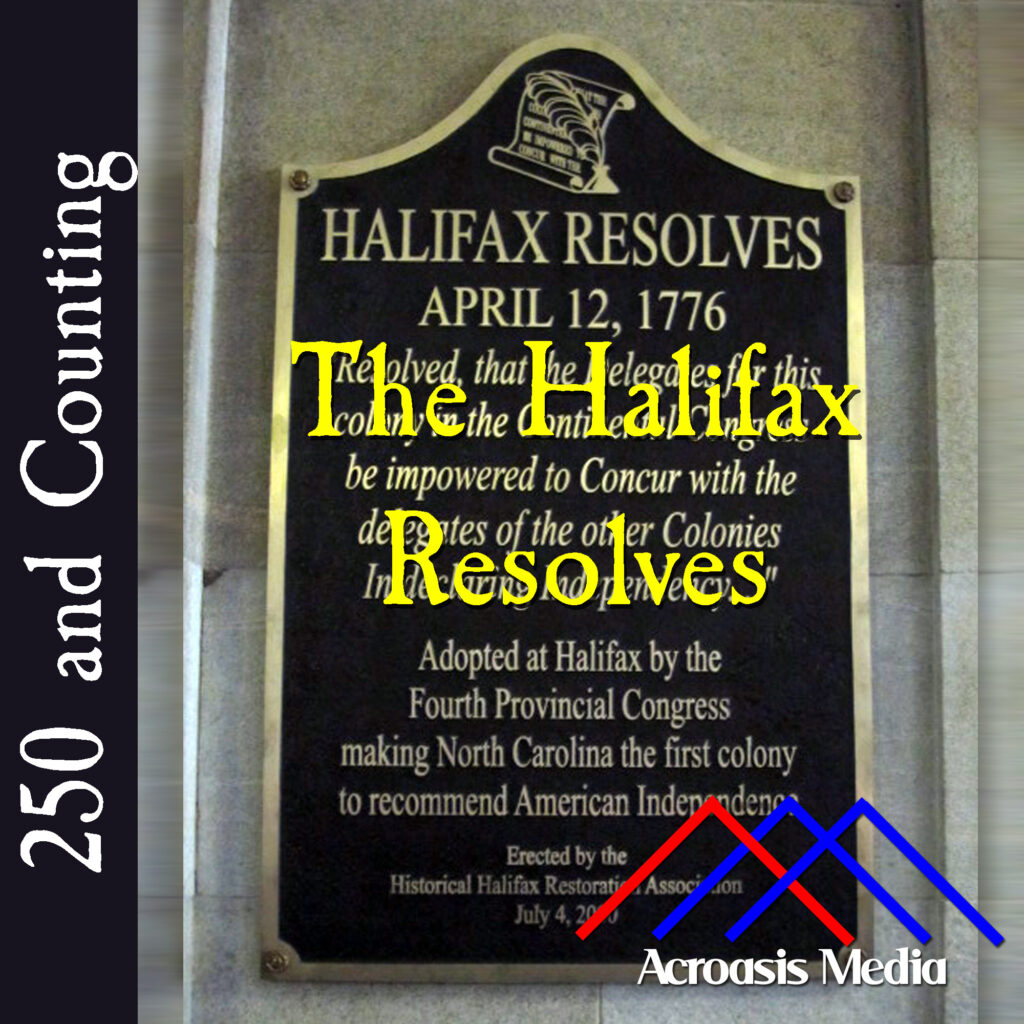
The Halifax Resolves was the first official action in which Independence from Great Britain was actually called for and approved.
I have to admit that in earlier years, when driving up and down Interstate 95, when I got to Halifax County in North Carolina, I’d see a sign saying that this county is “Where the Spirit of Independence Was Born.”
And this didn’t make a lot of sense to me: Most of the action early on was in Boston. Philadelphia is where the Declaration was written and signed. Richard Henry Lee, who proposed Independence, was from Virginia. How does Halifax County get to make this claim?
While there were a lot of smaller things going on on this day in 1776, there are typically multiple things going on for any given day. We often have to make choices regarding what we’re going to concentrate on, and don’t think we don’t feel a twinge of regret when we spot something else that happened on thus-and-such a date and had a moment of “Man, I wish we’d done that one.”
So today we were fortunate in that there were several smaller items going on, but we didn’t have to use up a lot of audio real estate to cover all of them. It’s nice to have the luxury of telling all the stories you’ve got for a day.
Incidentally: Mike and I are in Boston this week, absorbing history, interviewing people and shooting video for you to enjoy in a few weeks when we’ve finished editing it. It’s an extra dimension to the show that we hope you’ll enjoy.
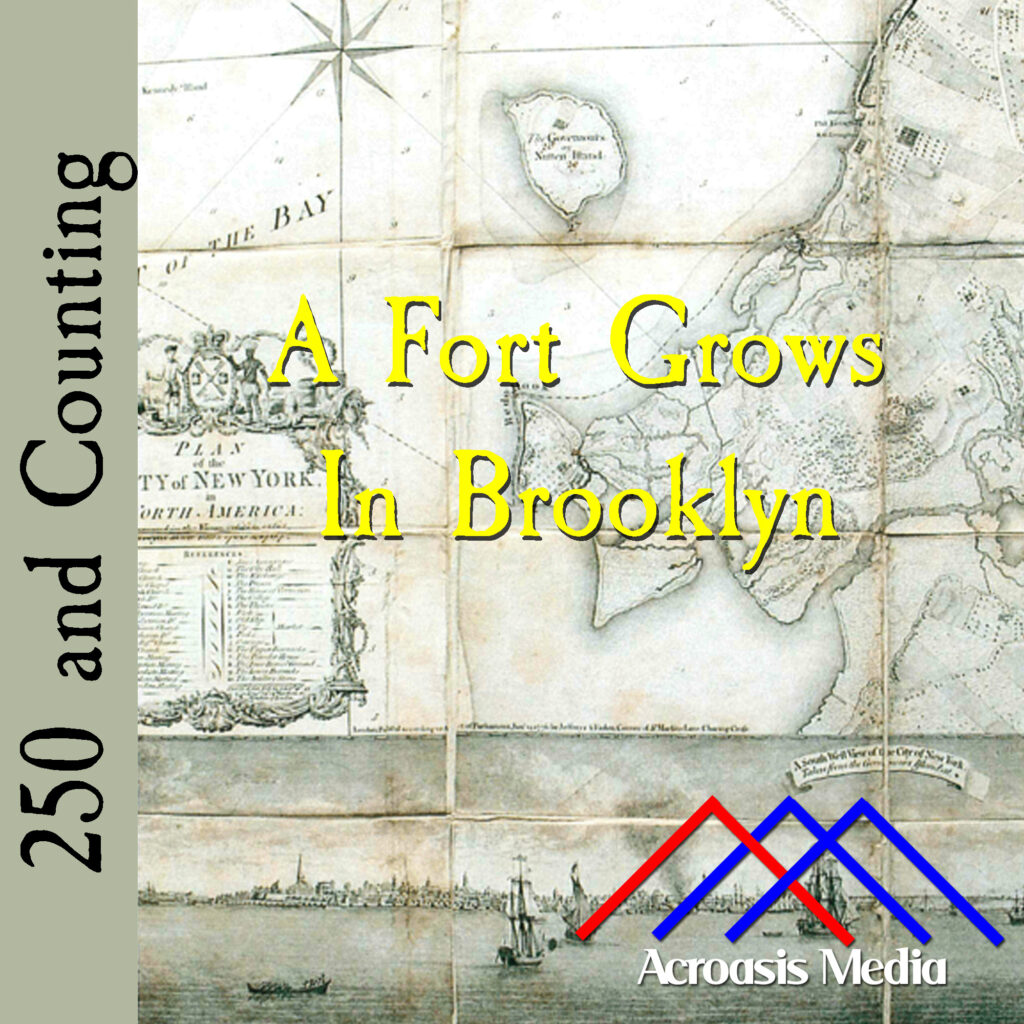
The construction of Fort Defiance in the Red Hook section of Brooklyn made perfect sense. That part of the peninsula sticks out into New York Harbor and provides an excellent view of anything that might be sailing in or out.
Red Hook comes from the Dutch Roode Hoek, “hoek” translating to “point”, which can still be seen in modern-day maps. The whole area, what we now call Red Hook and Gowanus, was settled by the Dutch in the 1630s.
Red Hook was some swampy land when the Dutch moved in. But the Dutch know something about swampy land, and they got straight to work, filling in lakes and re-channeling waterways. They began farming the land, including orchards of fruit trees.
After the war broke out and the Continental Army drove the British from Boston, George Washington sent Brigadier General William Alexander to Brooklyn to see what could be done defensively. A plan was developed to build two forts along the Brooklyn Heights, about a mile and a half apart. Fort Greene would be the furthest east, Fort Defiance would be the furthest west. Across the channel on Governor’s Island, another fort would be built, so that British ships could be fired on from both sides.
Now, when we say “fort,” we’re not talking about something made of wood or stone. Plenty of those did exist, but not here. This was more like a breastworks built of earth and stone, which had a few cannons near the top. There were three of these breastworks connected by trenches, and they took up most of the island on which they stood. (Incidentally, Mike was correct about the island not existing anymore; the space was filled in and is now part of the larger land.) This took only a few days to put together; the fort at Governor’s Island was more like what one would expect to see.
By the time the British arrived, the Continental Army was quite ready from a defensive standpoint. But the British were much larger in number and had a Navy besides. Stay tuned; it’s going to be an exciting summer.
We need your love! Don’t forget to share this show with your friends. Likewise, share it with your enemies; maybe they’ll become your friends as a result.
The Lees were a very prominent family in Virginia, connected to most major events in that era of American History. So it makes sense that Francis Lightfoot Lee sees American Independence on the horizon, and that it was Richard Henry Lee who first put the question (or, as the Founding Fathers wrote it, “The Question”) before Congress.
Incidentally, it’s worth noting that Francis and Richard were the only brothers to sign the Declaration of Indepenence.
Esek Hopkins wasn’t just the Commander In Chief of the Continental Navy; he was the only Commander In Chief of the Continental Navy. As we noted just a day ago, the navy was disbanded shortly after the war (sold off, you may recall) until a few years later, when the US Congress decided we needed a US Navy and we had to start all over again.
In the 1760s he was a merchant who once took on a slave ship. Unfortunately he didn’t really know what he was doing, and more than half the slaves died enroute to the West Indies; furthermore the surviving captives were in such poor health that they sold for very little.
For a couple of months, in 1775, Esek Hopkins was appointed as a brigadier general to shore up forces in Rhode Island, but two months later he was appointed Commander in Chief of the Continental Navy authorized by the Continental Congress to protect American commerce.
His specific orders, which were issued on January 5, 1776, were:
You are instructed with the utmost diligence to proceed with the said fleet to sea and if the winds and weather will possibly admit of it to proceed directly for Chesapeake Bay in Virginia and when nearly arrived there you will send forward a small swift sailing vessel to gain intelligence….If…you find that they are not greatly superior to your own you are immediately to enter the said bay, search out and attack, take or destroy all the naval force of our enemies that you may find there. If you should be so fortunate as to execute this business successfully in Virginia you are then to proceed immediately to the southward and make yourself master of such forces as the enemy may have both in North and South Carolina…Notwithstanding these particular orders, which it is hoped you will be able to execute, if bad winds, or stormy weather, or any other unforeseen accident or disaster disenable you so to do, you are then to follow such courses as your best Judgment shall suggest to you as most useful to the American cause and to distress the Enemy by all means in your power.
Having been given eight small ships to carry this out, Hopkins instead read the last part of his orders very closely, and did exactly that part of it. Instead of hanging around Virginia and the Carolinas, he made for the Bahamas, where he executed the raid on New Providence.
While this move proved advantageous to the colonies as a whole, the Southern Colonies were especially upset and the rifts between them and the Northern Colonies got a little wider. Ultimately (though not right away) Hopkins was politically damaged for this action. It didn’t help that Hopkins was also accused of torturing British prisoners in his care, but that led to a military policy of immediate reporting of any misconduct committed by any person acting in the service of the United States.
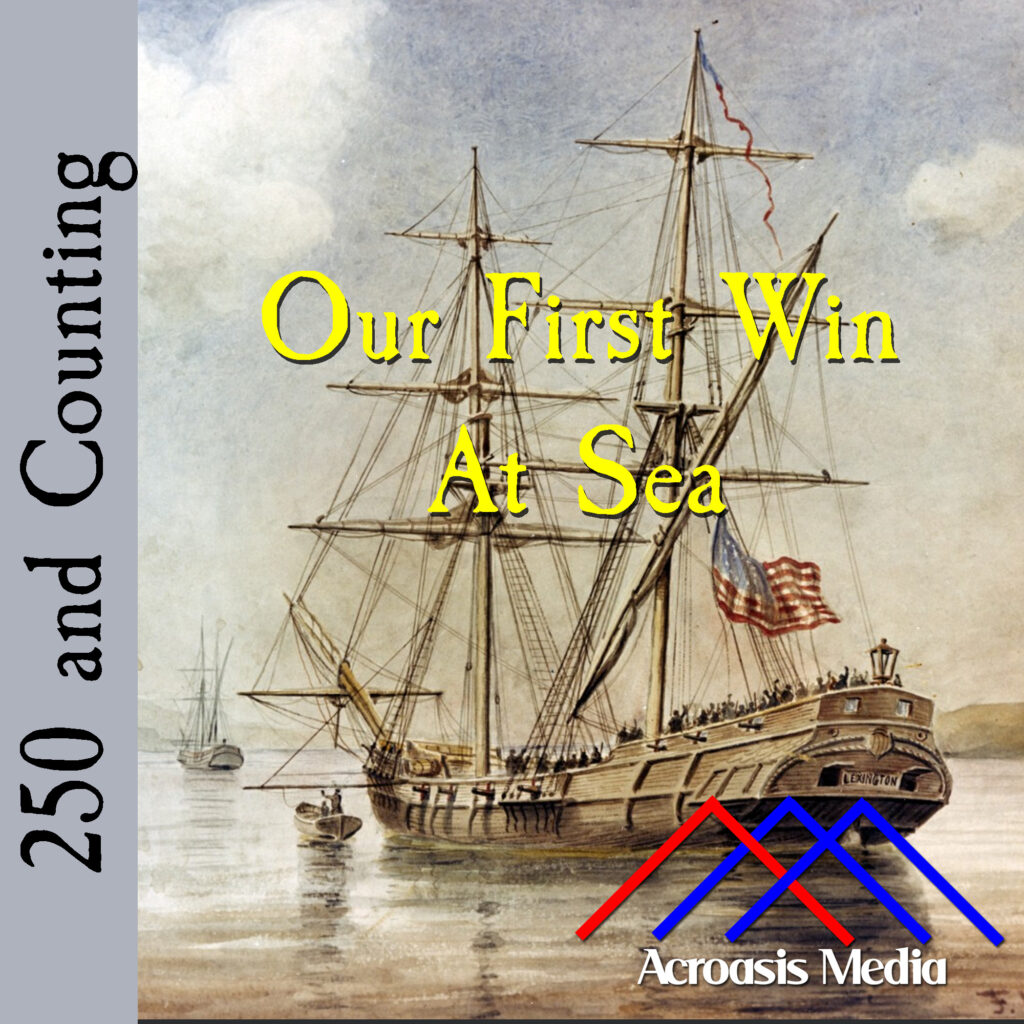
Captain John Barry was commanding the Lexington, looking for Lord Dunmore’s fleet when they more or less stumbled on the HMS Edward off the coast of the Virginia Capes.
By most accounts the battle went on for two hours and included the Edward trying to lure the Lexington into the capes, though it’s not clear why. Possibly there was some help there in the form of other ships or land-based guns. And possibly because being in the capes meant that geographically, the Lexington wouldn’t have as much room to maneuver. But in the end the Lexington was victorious.
Capturing a ship from the world’s mightiest navy, and bringing that ship back to Philadelphia, was a huge morale boost to Continental forces, especially given that the Continental Navy was so small and newly-established. Plus, John Barry became a celebrity and eventually was promoted to Commodore.
We’ve mentioned a few times that boycotts and import restrictions didn’t have a huge impact on the British economy. After all, the British Empire was huge and America just didn’t have the financial clout to make such things hurt.
The real issue, many Britons thought, was that America had the impudence to act at all. How dare these mere colonists think that they can behave in such a dreadful manner, what with the wasting of the tea and circumventing our governors? Stuff like that, you know?
And it was because of that attitude that many people in Parliament weren’t so much interested in reconciliation as they were interested in punishment. But America had gotten used to being so far from Britain, and the harder that England held on, the more America just slipped out of the grasp, like trying to hold a fistful of sand.
The war was less than a year old, but heroes were already beginning to emerge, as we learn from contemporary writings. The arrival of George Washington in Providence, RI, was considered a big event each time he came through.
In fact, it was such a big deal that the website for Stephen Hopkins’ house in Providence notes that “George Washington was a guest here. Twice.”
I suppose they could have hung up two “George Washington Slept Here” signs but nobody would get it. Then again, “George Washington Slept Here” isn’t quite the trope it used to be. Leave me alone, I’m old. And get off my lawn.
Hopkins, for what it’s worth, was an important person in his own right, having been central to the development of the colony and then the early days of the state. If you visit the house, though, be forewarned that it’s not in the same place it was when Hopkins lived there; it’s been moved twice since he was there. Although, to be fair, it’s always been on that street.
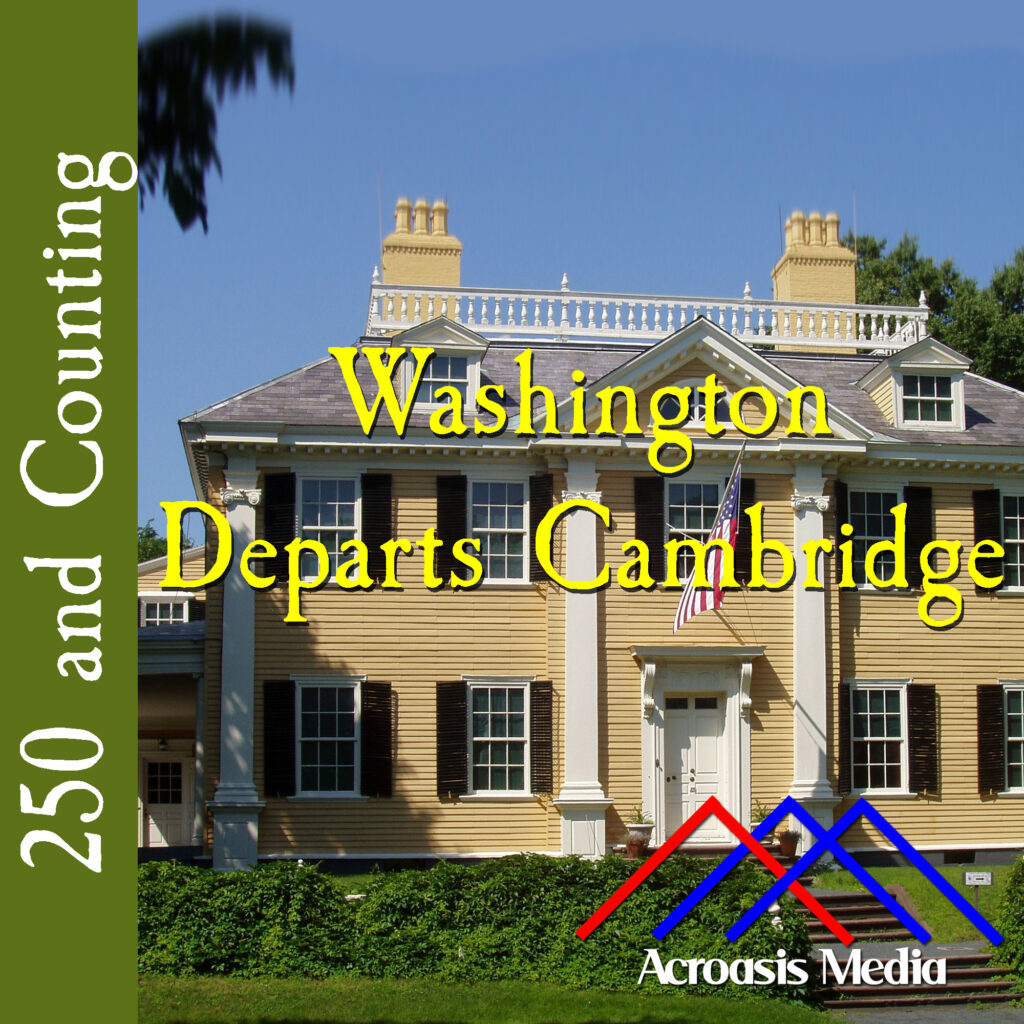
To say the Washington left the Longfellow House is putting the cart before the horse, because Washington was in it before Longfellow.
The house originally belonged to John Vassall Jr, a Loyalist who had the good sense to get out of town when the shooting started. From July 16, 1775 until this day in 1776, Washington occupied it as his home and his headquarters. In 1791 Washington’s apothecary Andrew Craigie purchased the house and made a major addition to it, the only big cosmetic change to the house. After Craigie’s death, his widow rented out various rooms to supplement what little income she had, and one of her tenants was Henry Wadsworth Longfellow, who eventually became the owner in 1843 when it was purchased for him as a wedding gift.
The Longfellow family was the last to live in the house; some time after his death the family established the Longfellow Trust to provide for the house’s preservation, and in 1972 the house and its possessions were donated to the National Park Service.
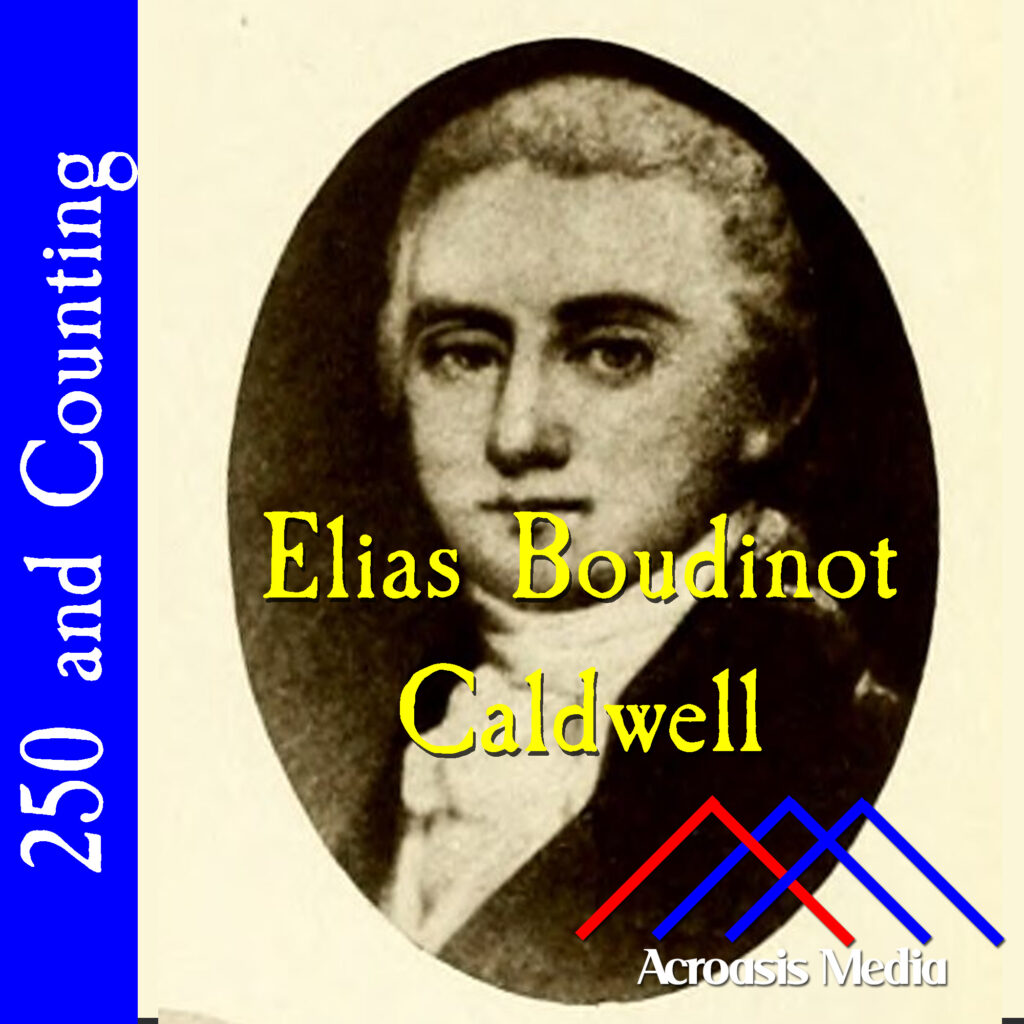
I mentioned briefly that Elias Boudinot Caldwell was a member of the Society for the Colonization of Free People of Color of America (to the extent that anyone can say that briefly), and I though I’d get a little deeper into that organization here.
The group was founded in 1816 by Robert Finley, along with Caldwell and Francis Scott Key, to encourage and support the repatriation of freeborn people of color and emancipated slaves to sub-Saharan Africa. Their feeling was that free people of color could not integrate into American society. It was also thought that free Blacks running around would incite still-enslaved Blacks to escape or rebel. So…why not relocate them?
The group, which later became known as the American Colonization Society, thought they’d be preventing a civil war from breaking out. In fact, some historians think they may have hastened its onset. What’s more, only a few thousand African Americans out of millions, eventually made the trip to (what would become) Liberia. Worse still, they were kind of bad at it. Transporting people to Liberia was very costly, and close to half the people who arrived died from tropical diseases.
And for all that, the ACS didn’t officially dissolve until 1964.