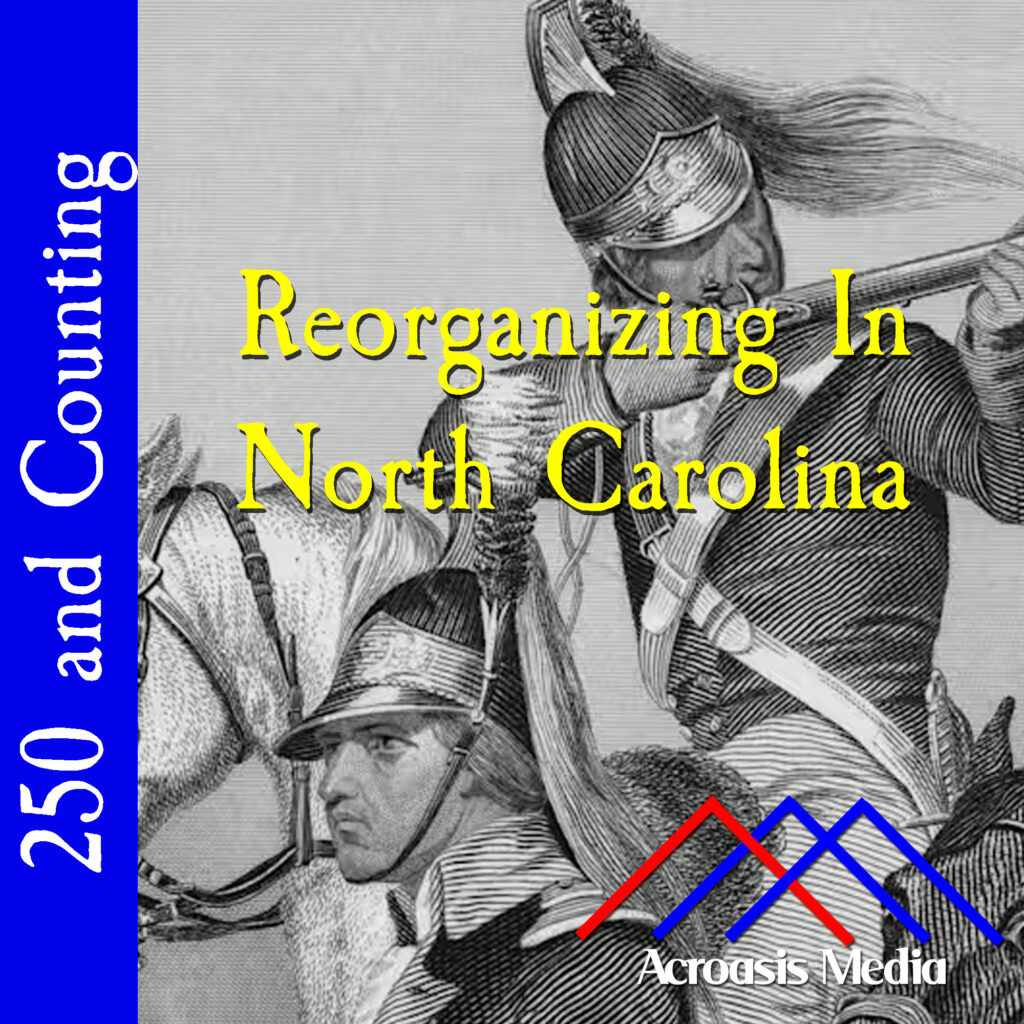
North Carolina’s Orange County Regiment went through a lot of change in a very short amount of time. First they were divided, then reabsorbed into a different group, all in the span of about two weeks.
Fortunately things stablilized for them then, but the resulting Hillsborough District Brigade of militia saw a lot of action over the next several years in the Carolinas and in Georgia. By the time the war ended, Hillsborough was one of the few groups still standing. But chances are, if there was an important battle in that part of the world, this group was part of it.
When Henry Knox wrote to George Washington apologizing for getting to Noweich,Connecicut so late, he had a pretty good excuse: he spent a bunch of money on hiring people to move materials down; and those people had trouble getting the job done.
But then Henry Knox also tells the story of leaving the caravan briefly to look at Newport RI and determine whether it’s defensible. Imagine how he felt when, after he spent two days figuring out the five best places to stand when defending Newport, he has to explain why he lost those two days afterward. But he did take the time to frame it as an activity that surely would make the Commander-in-Chief look better.
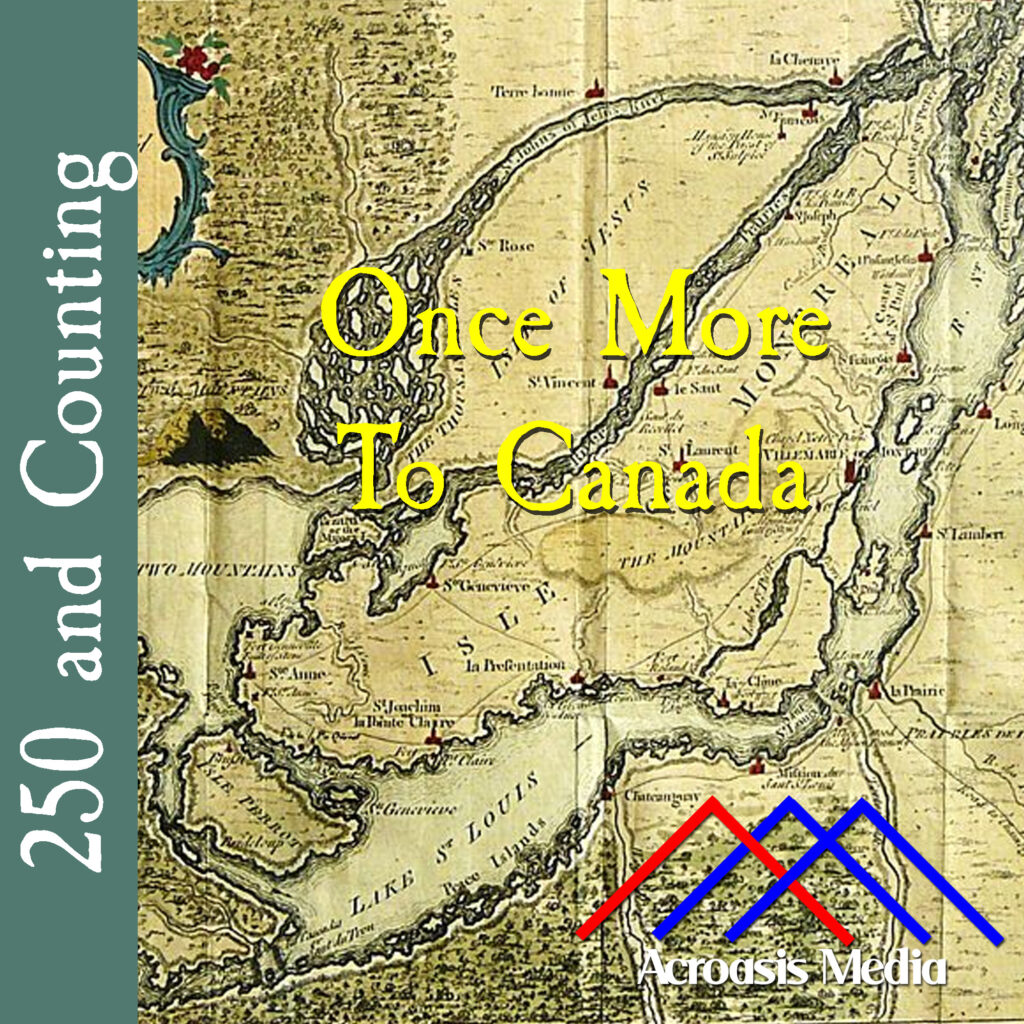
If nothing else, the tenacity of the Continental Congress has to be admired, because sending a delegation to Canada, especially after the recent New Year’s Eve disaster in Quebec, and then the “who knows how well it went” trip in March, was a sign of either eternal optimism or an inability to get the hint.
It was probably a little of Column A and a little of Column B.
At any rate, Ben Franklin, Samuel Chase and Charles Carroll headed up to Montrèal to see if relations with Canada could be smoothed over a little bit. And perhaps they could, but the Canadians still weren’t interested in the events going on to their south.
So we’re here once again: the battle ended with the British retreating into the city of Boston, and holding siege there for the better part of a year, until Washington was given several cannons brought down from Fort Ticonderoga, which vastly improved his shooting range.
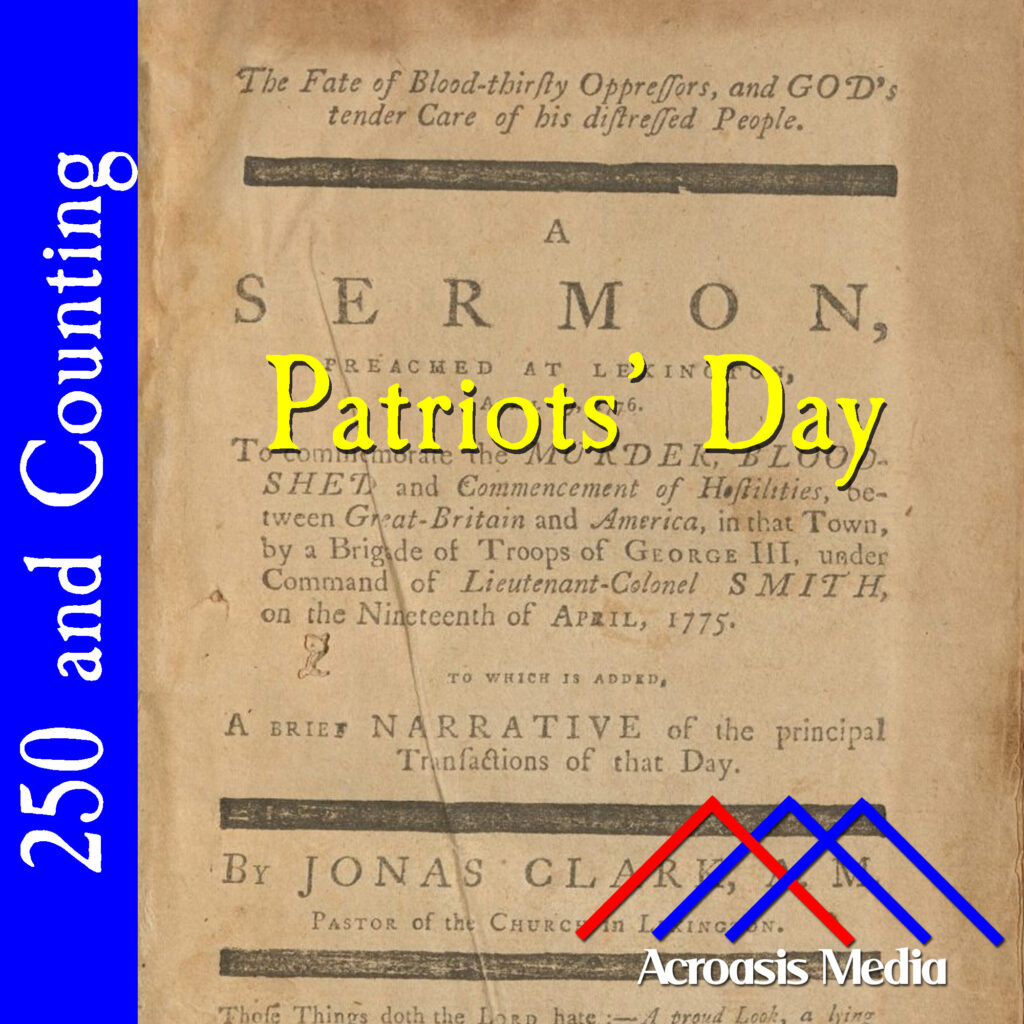
A year later, Reverend Jonas Clark marked the day with a sermon that is nearly 40 pages long in its published version. He used a lot of harsh rhetoric in his sermon, casting the British as though they were Satan’s owm minions:
They approach with the morning’s light; and more like murderers and cut-throats, than the troops of a christian king, without provocation, without warning, when no war was proclaimed, they draw the sword of violence, upon the inhabitants of this town, and with a cruelty and barbarity, which would have made the most hardened savage blush, they shed INNOCENT BLOOD!
The sermon does come back around to God, noting that:
And from the nineteenth of April, 1775, we may venture to predict, will be dated, in future history, THE LIBERTY or SLAVERY of the AMERICAN WORLD, according as a sovereign God shall see fit to smile, or frown upon the interesting cause, in which we are engaged.
So…God picks favorites, so long as we humble ourselves before Him and trust in His name.
Incidentally, I first heard about the children walking from Acton to Concord on the Julie Mason Show, on SiriusXM’s POTUS Channel. she had very fond memories of this, so I dug around a little to discover whether this activity was still going on all these years later. If anything, it’s grown!
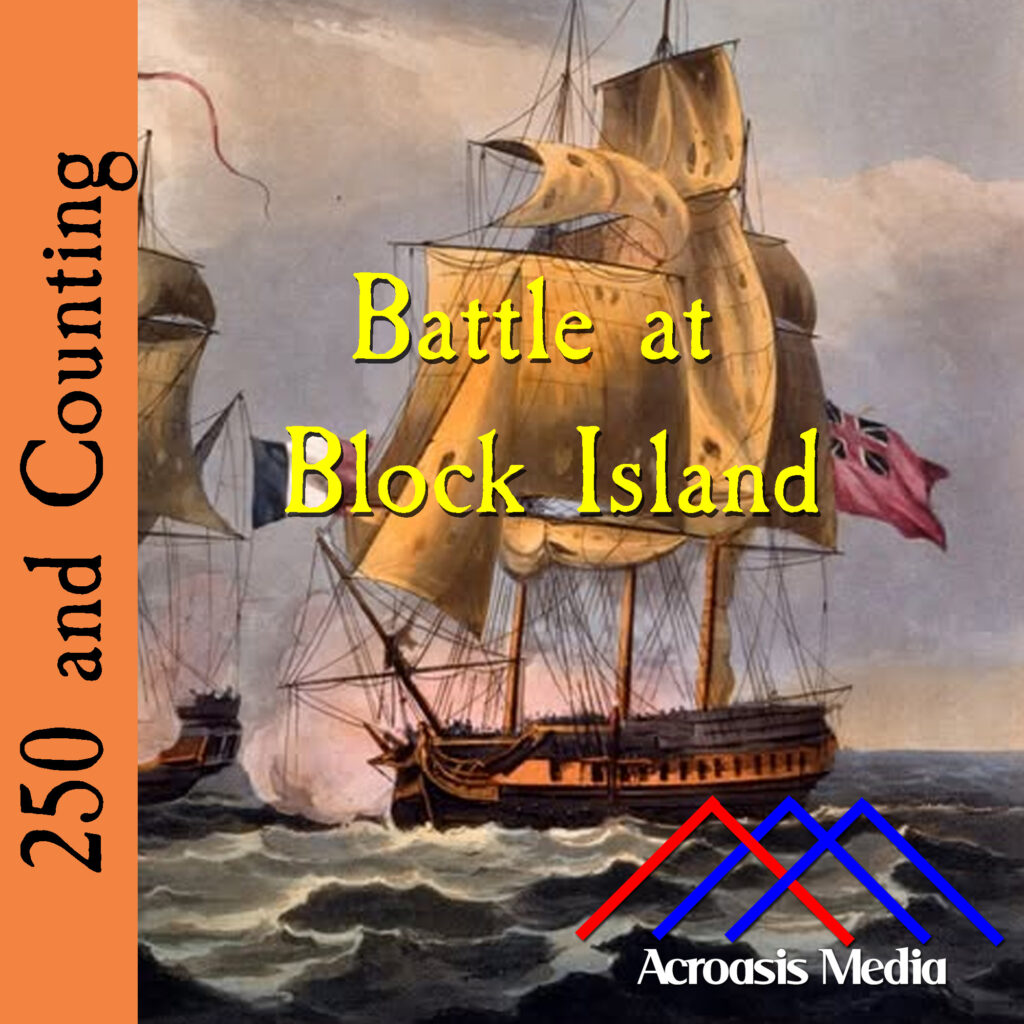
When you have seven ships and you encounter a single ship belonging to the enemy, the Battle of Block Island teaches us that it’s still possible to be overconfident.
Some people tried to frame the Battle of Block Island as a draw, but those people really weren’t paying attention. The HMS Glasgow took some damage, but far more damage was done to the ships that engaged her: The Cabot had its steering disabled and mostly just got in the way, the Alfred lost its tiller as well and also served as an obstacle. Providence held back and was undamaged; Columbus came in late and her fire was ineffective; likewise the Andrew Doria, which got stuck behind the Alfred. And the Glasgow got away, besides.
Between Esek Hopkins’ earlier disobeying of his orders and now this debacle, among other transgressions, he was formally censured. By 1778 he had been dismissed altogether from the Navy.
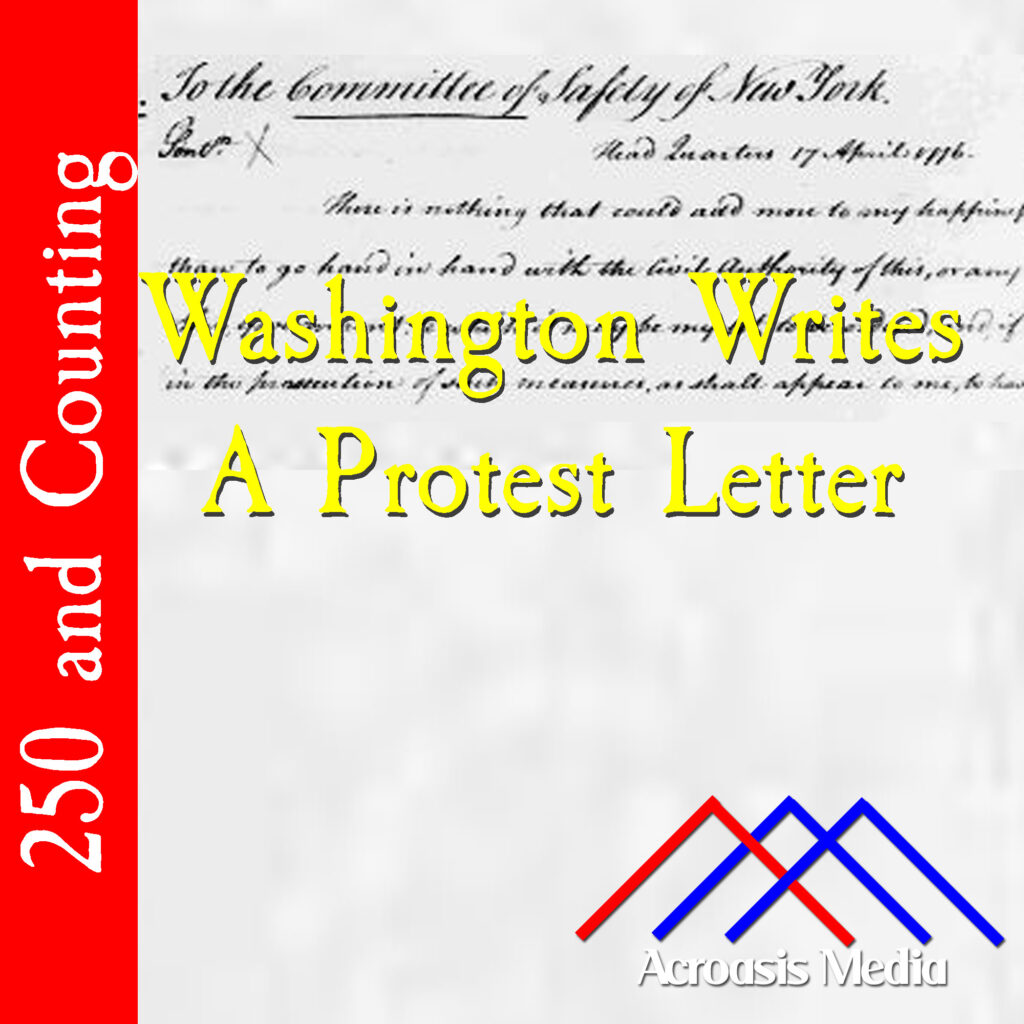
One of the things I really appreciate about reading documents from this era is just how polite they were; George Washington’s letter to the NY Committee of Safety, when you read between the lines is an admonition wondering if that august body had lost their damn minds.
One of the best examples of this is the Declaration of Independence itself. As Aaron Sorkin describes it in an episode of The West Wing:
[N]ever has a war been so courteously declared. It was on parchment with calligraphy, and “Your Highness, we beseech you on this day in Philadelphia to bite me, if you please.”
However, we’re getting ahead of ourselves; that doesn’t happen for another couple of months (and not when you think!).
At any rate, Washington was correct in his assessment that it didn’t make a ton of sense for New York to supply the British while at the same time opposing them. At the same time he didn’t accuse them directly; he played it very cool and suggested that the NY Committee of Safety could get a lot of credit if they’d do as he suggested.
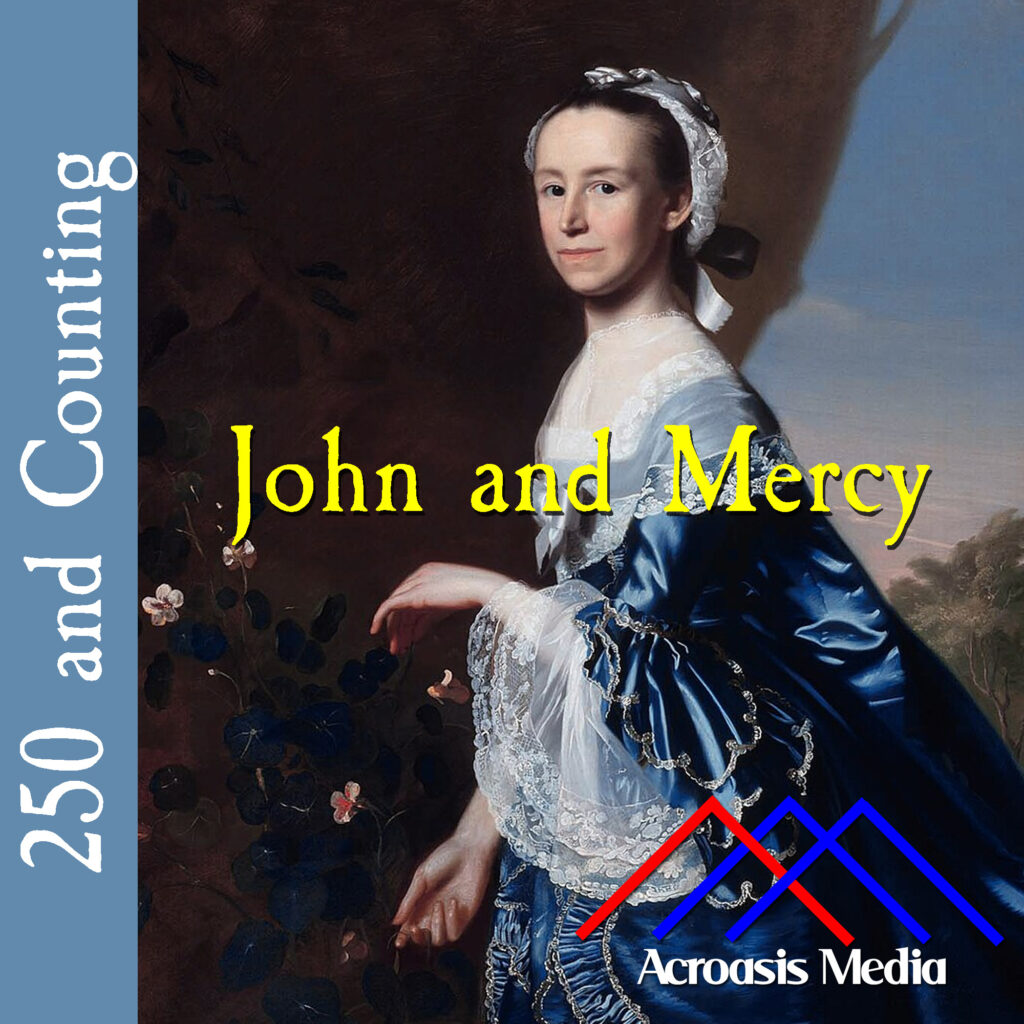
Mercy Otis Warren doesn’t get nearly enough love in our history books, and barely enough of it here, besides. Having said that, our episode a little over a year ago was a fun little tribute.
Mercy Otis Warren was a playwright, a pamphleteer and a poet before, during and after the Revolution. Some of her plays were thinly veiled attacks on the British. She was self-taught and pretty brilliant at it, considering that she was one of the first to advocate for a Bill of Rights (though nobody knew she’d written the piece advocating one until her great-great-grandson found a document tying the pamphlet to her).
And while this episode focuses on correspondence between her and John Adams, she frequently exchanged letters with George Washington, John Hancock, Patrick Henry, Samuel Adams, and Thomas Jefferson. But her best relationship was with John Adams, who she looked to as a wiritng mentor. It was at his suggestion that she began writing a history of the Revolution while it was still being fought. She didn’t need primary sources to write her history, she was the primary source. At worst, she was getting it second-hand from the members of the Continental Congress and local leaders.
Mercy was married to James Warren, and I mention that here because oftentimes she’s thought to be the widow of Dr. Joseph Warren, who died at Bunker Hill. In fact, despite having the same name, Joseph was not related to James, nor to Mercy.
Incidentally, Mike gives a shout-out to the Massachusetts Historical Society, which is a fascinating repository of documents and items related to the history of the state, but which has a special lens on the Revolution, especially this year. So I figured I’d do the same here, along with a link. If you’re in town, it’s not to be missed. And it’s free, though donations are encouraged. Go check them out and from there it’s a short walk to Fenway Park, where you can catch a Red Sox game. (Alas, they were playing away games while we were in town.)
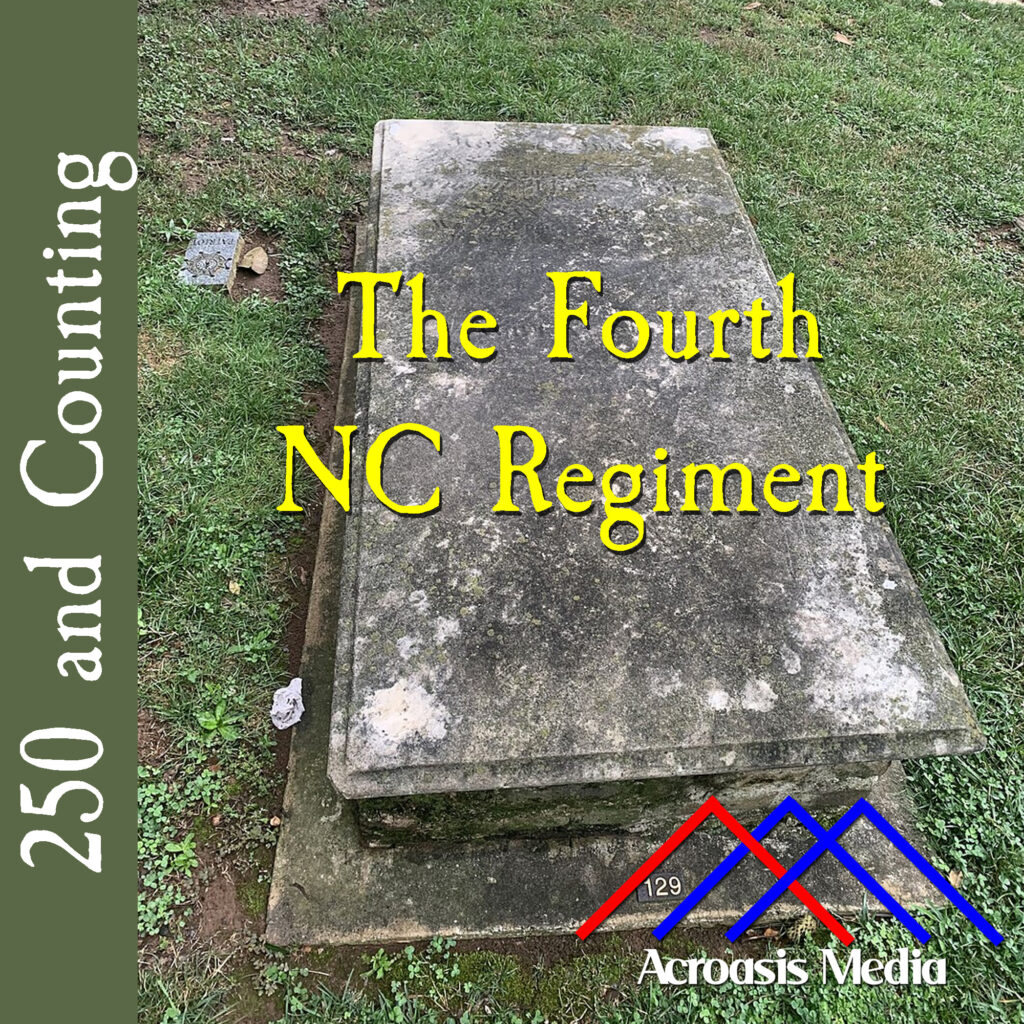
The Fourth North Carolina Regiment got into some interesting battles, but in retrospect it feels as though they didn’t get a ton of love from the Army in general.
(My delaying the show notes probably doesn’t do anything for their ego either, but I was so tired that I was practically hallucinating. But I didn’t want to delay the episode drop, and I didn’t want to do meaningless show notes. And I do thank you for your patience.)
Not long after they organized, they were moved to the Northern Department of the Continental Army, then after a couple of years they were switched back to the Southern Department. Thomas Polk was removed from command without being told about it. They were absorbed by another regiment at one point and then dissolved altogether when the enlistments ran out, so the leaders had to go and recruit more men, meaning they weren’t around when the British took Charleston, SC.
Today’s cover art is the grave of Thomas Polk. That small plate reading “129” is the lot number; there used to be a lovely plaque there identifying Polk as one of the signers of the Mecklenburg Declaration, but it was reportedly stolen. See? No respect.
We’ll hear from them later this year when we talk about the Battle of Fort Moultrie.
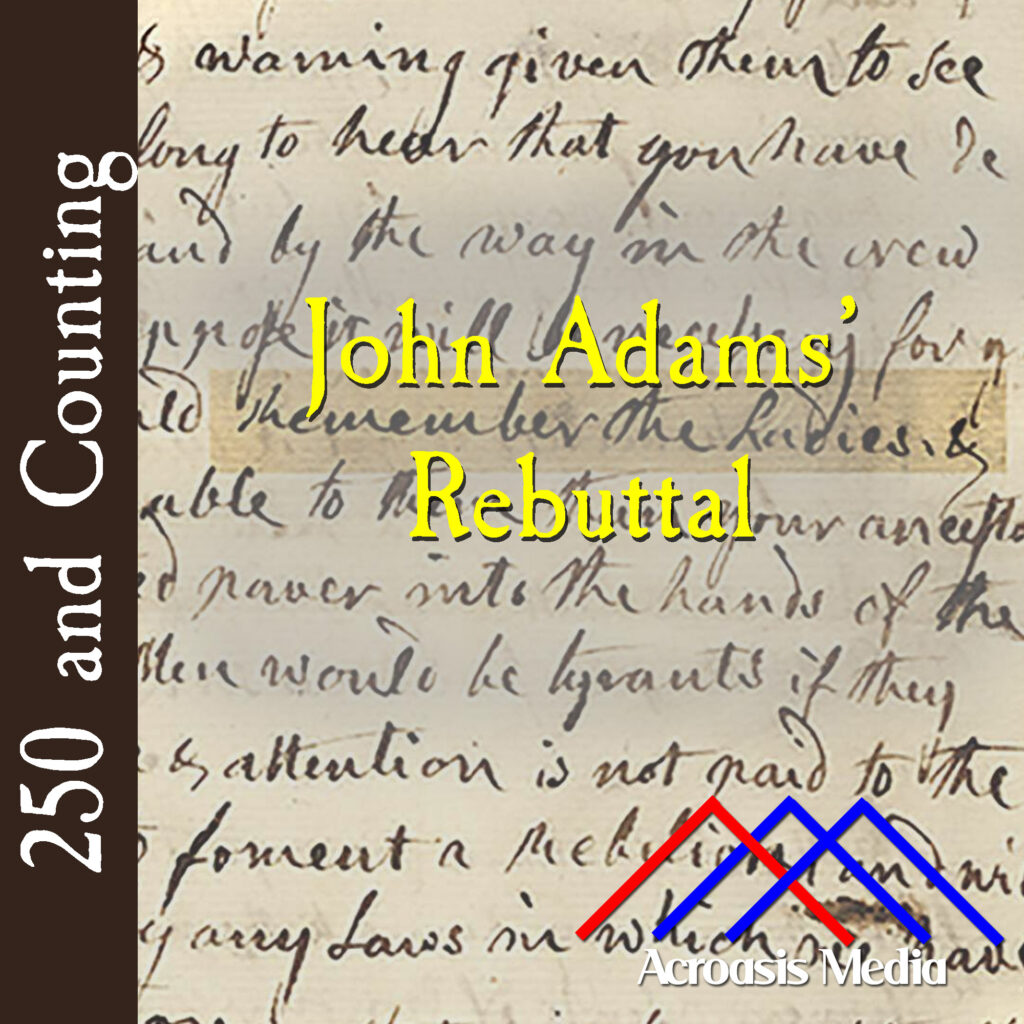
When Abigail Adams wrote her “remember the ladies” letter on March 31, she wasn’t just filling the page with anything that came into her head. Abigail Adams was quite intelligent and John treated her as an intellectual equal, seeking out her counsel on many matters. This in an era in which such things are rare. (And shame on us for giving it short shrift.)
This also means that John’s reply, which Mike talks about today, was in earnest, if it was a little naïve in retrospect.
Mike also mentions that he and I were at the Massachusetts Historical Society last week, which is true, and we hope to have some material to share with you over the next few weeks. In addition, we shot a bunch of video which will need some editing, after which we’ll give you our tour of Old Boston. Or maybe Mike’s tour; I don’t appear on camera at all. Try to live with that disappointment.
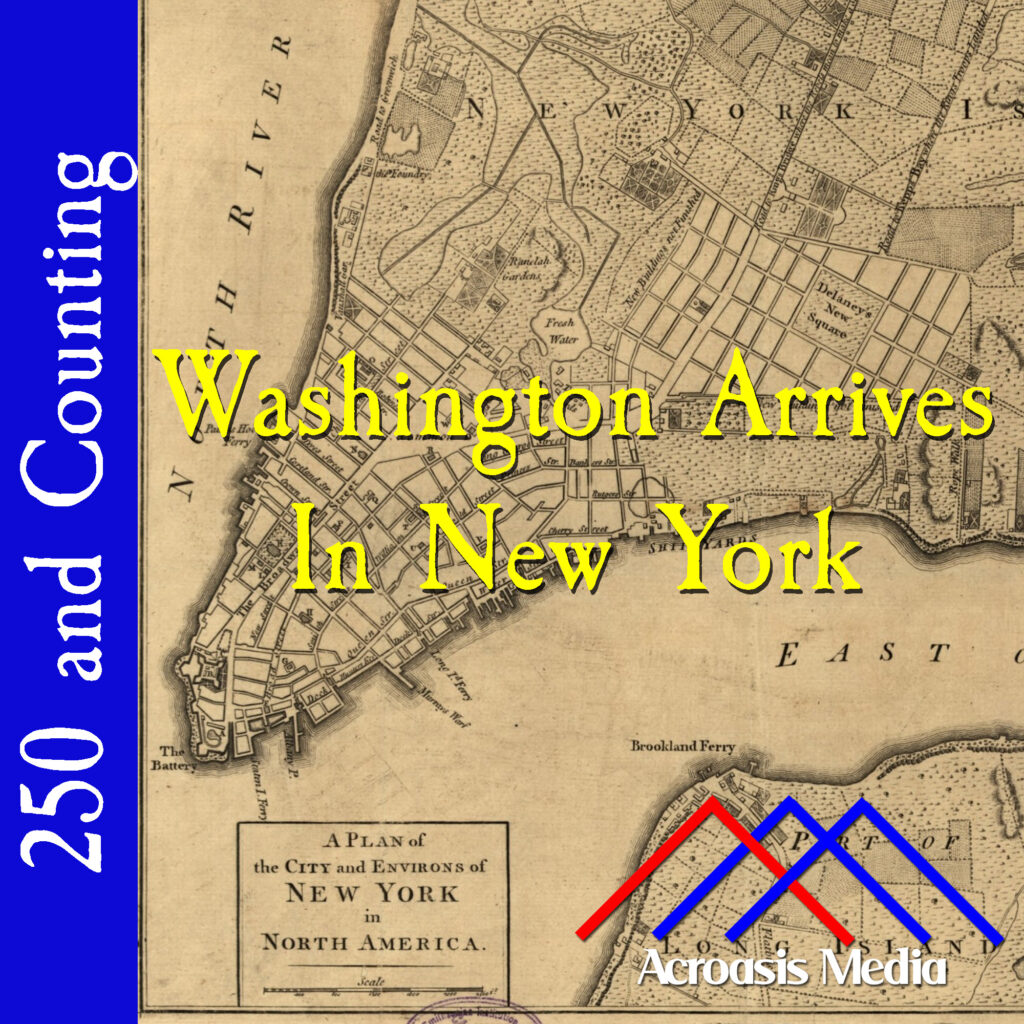
When George Washington arrives in New York, things aren’t quite the way he’d like them to be, but he doesn’t really have time to worry about that.
Construction of Fort Defiance had already begun, and before long the building of Fort Stirling would commence. Even though they were outmanned and outgunned, Washington was going to make sure that if a British victory were to happen in New York, it was going to be a Pyrrhic victory.
About Fort Stirling: like Fort Defiance, nothing remains of the original structure. When the British evacuated the city in 1783, the locals destroyed whatever remained of the fort. It was originally named Fort Half-Moon because of its shape but it was renamed in honor of William Alexander, who was also known as Lord Stirling.
There remains a historical marker in the ground for this fort, at the intersection of Clark Street and Columbia Heights; when traveling west on Clark Street it will be on your right, protected by an iron fence (it’s right behind the fence and easy to see). When the park was created and dedicated in 1925, the Fort Greene Chapter of the Daughters of the American Revolution donated the granite tablet that marks the fort’s site.