Category: American Revolution

  • Busy Day For Mr. Rutledge–September 27, 1776

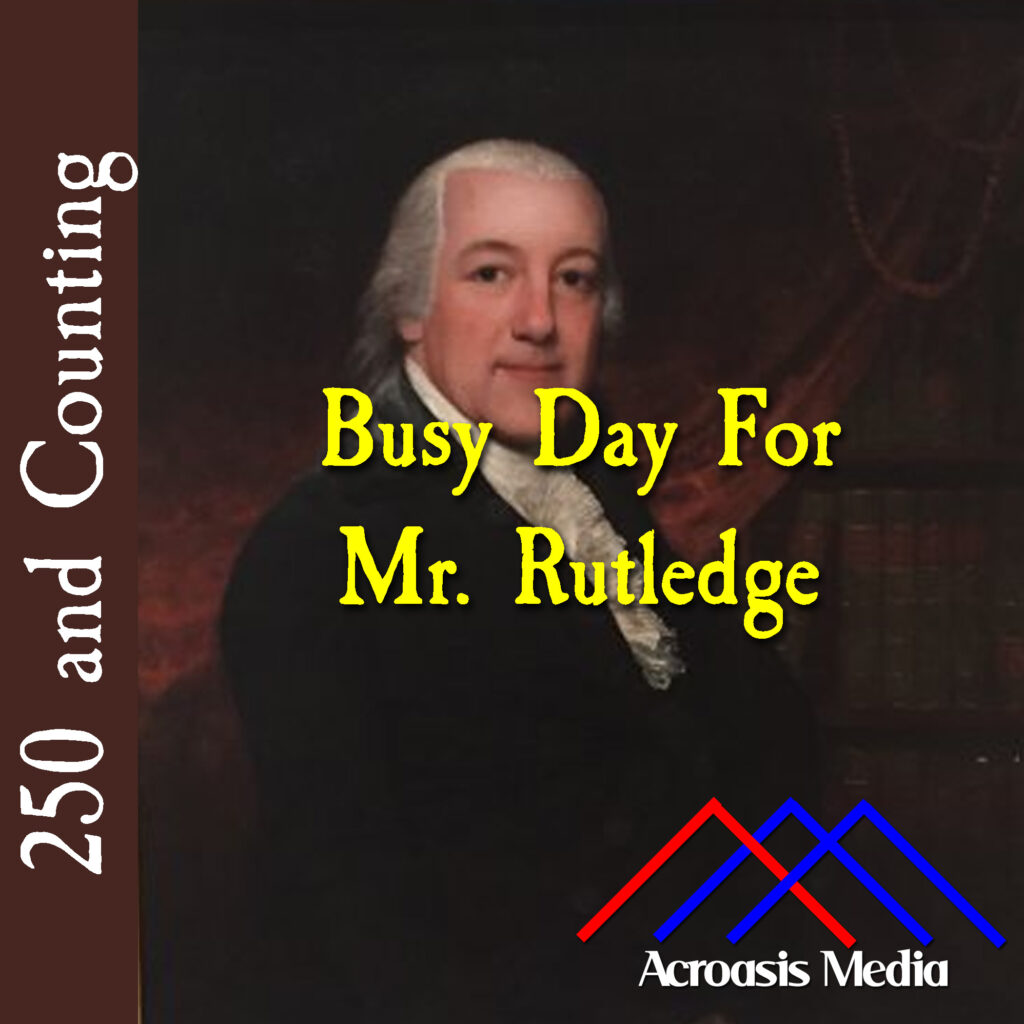
    Cover art for September 27, 1776: Portrait of Edward Rutledge by James Earl, 1791. via Gibbes Museum of Art in Charleston, SC.

    In putting this episode together, I realized that I used this same image of Edward Rutledge back in the September 9 episode. However, I neglected to put the information for the image in the alt text. And that’s something I do try not to overlook. On the other hand, I was still hopped up on cold medication, so there’s that.

    And before I forget, I mentioned the censure of Esek Hopkins during the episode, so I wanted to ensure that I linked back to that as well.

    In addition to being the youngest signer of the Declaration of Independence, at the tender age of 26, Edward Rutledge was also a governor of South Carolina. By my count he was their ninth governor, from 1798 to 1800, but that’s if you count his brother John Rutledge twice, since John served twice, non-consecutively. Also, he was the ninth governor of the state of South Carolina; if you count the colonial governors, he’d be thirty-ninth.

    After leaving the Continental Congress, Rutledge did fight in the Continental Army. He was captured during the Siege of Charleston in 1780 and released in a prisoner exchange the following year.

    I should note that while Rutledge was governor he suffered from an attack of gout and went home to Charleston to recuperate. Not long afterwards, he heard the news of George Washington’s death and was so upset by this that he had an attack of apoplexy and died. (Modern-day medical types would probably say that he had a cerebral stroke.) Rutledge had been the Governor for 401 days.

  • The French Commission

    Cover art for September 26, 1776: 1785 portrait of Arthur Lee by Charles Willson Peale. via Independence National Historical Park in Philadelphia.

    The Continental Congress, in the wake of Washington’s recent letter, finally realized that they weren’t going to be able to defeat the British on their own. Some outside assistance would be needed.

    So on this day in 1776, they appointed a three-man commission to undertake a diplomatic mission to France, seeking money, arms and other materials.

    France, as we’ve mentioned before, was a good country to hit up. They were still salty about the way the French and Indian War ended up, and they’d already been assisting America through gray and black markets, in order to give themselves plausible deniability should someone get caught. Should this mission succeed, the activity would be much more overt, and could be perceived as France’s official recognition of the United States as a sovereign nation.

    It ultimately didn’t work out that way; that particular distinction went to Morocco and France became the second nation to officially recognize the US.

    As Mike notes, the trip itself wouldn’t get underway for another few months, but there’s no doubt that the meeting with French authorities marked a critical turning point for the American Revolution.

  • Washington’s Desperate Letter–September 24, 1776

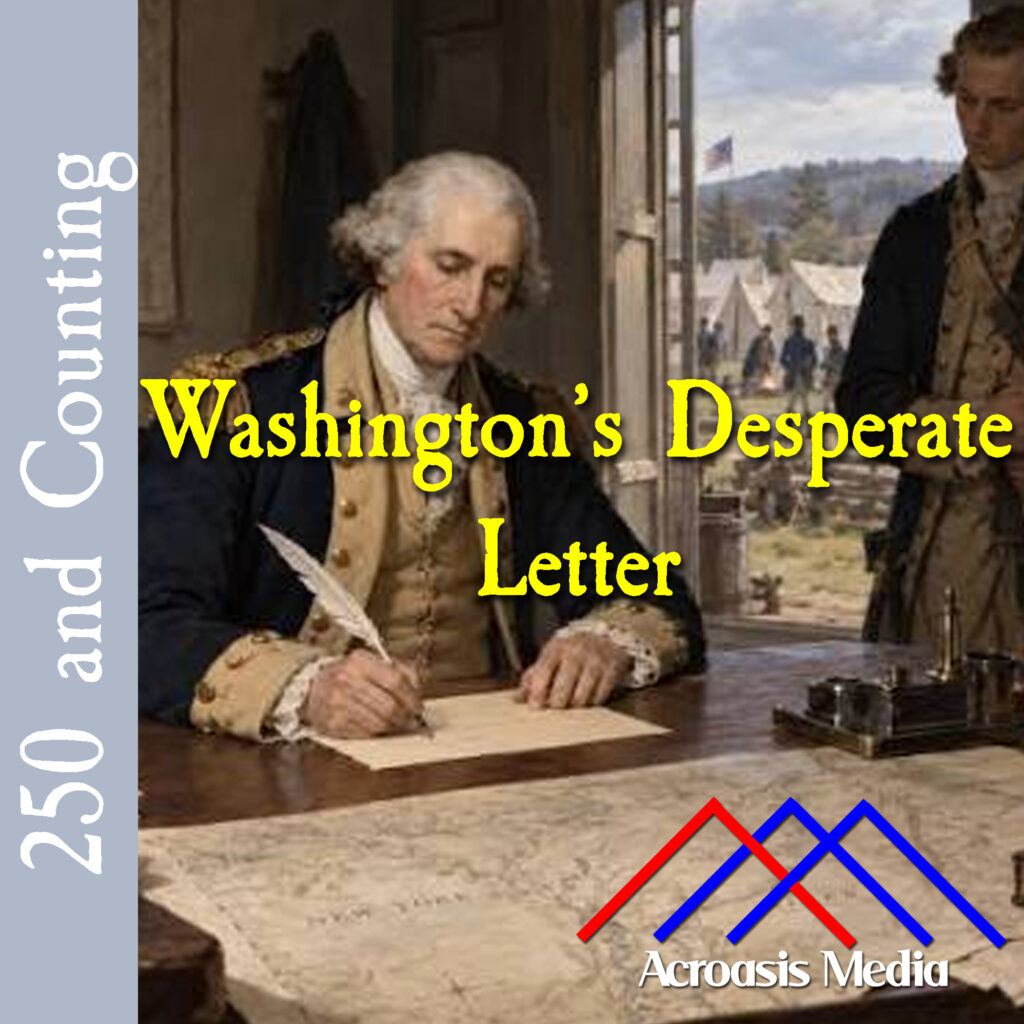
    Cover art for September 24, 1776: portrait of George Washington commissioned by John Hancock shortly before the Declaration was issued, painted by Charles WIllson Peale in 1776. via the Brooklyn Museum.

    George Washington was a practical man, and he realized that without a standing army, he wouldn’t stand a chance against the British.

    Sure, it’s good to have motivated people who are passionate about the cause, but when they have setbacks, they’re more likely to bail out, and that’s exactly what he was facing once the dust began to settle from his losses in New York. Many of the recruits that he had weren’t finishing out the enlistment period they’d agreed on when they first joined up, and the fact that their supplies and their pay were sporadic didn’t help matters.

    It was with this in mind that Washington wrote to Congress, strongly recommending that they make some changes to the way that the Continental Army was being administered. Improving pay would be great, but simply ensuring that pay happened on a regular basis would be even better. And, of course, if a standing army could be established, then the men would be locked in for longer periods of time, and his officers wouldn’t spend so much time training new recruits.

    Whether Congress agrees to this change…stay tuned.

  • Nathan Hale Is Hanged–September 22, 1776

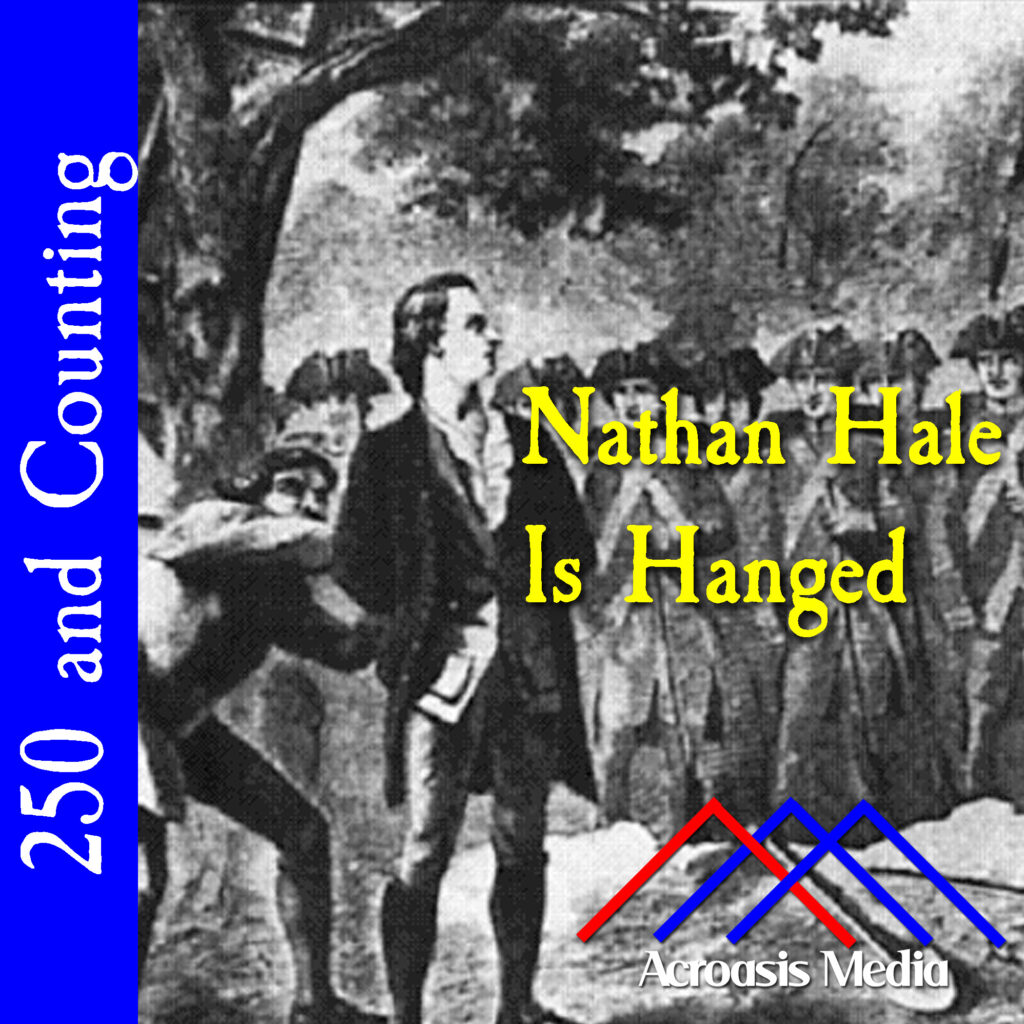
    Cover art for September 22, 1776: "The British Hang Nathan Hale in New York City, 1776", artist identified as M. Nevin. Published as a print in 1860. Via Library of Congress.

    For a long time the debate about what Nathan Hale said before he was hanged was whether he said “I regret that I have but one life to give for my country” or “I regret that I have but one life to lose for my country.”

    In more recent years, it’s emerged that what he said is probably lost to history, since contemporary accounts aren’t especially clear about it. More accurately, the most reliable-ish contemporary account is second-hand at best, so it’s a History version of the game Telephone. You kids remember telephones, right? I realize that nowadays a telephone is an app on your phone. (Leave me alone, I’m two hundred and six years old.)

    By all accounts, Hale comported himself well this day. He almost certainly said more than one sentence. Some have thought that when he said the “regret” line, he was reciting a passage from Joseph Addision’s play Cato, which includes:

    How beautiful is death, when earn’d by virtue!
    Who would not be that youth? What pity is it
    That we can die but once to serve our country.

    Many place names and buildings are named after Nathan Hale; one you may not realize comes from him is the town of Halesite on Long Island; until 1899 it was known as Huntington Harbor. In that year it was changed to honor Nathan Hale to mark the area where he first landed on Long Island from Connecticut not long before his capture.

  • Nathan Hale’s Capture–September 21, 1776

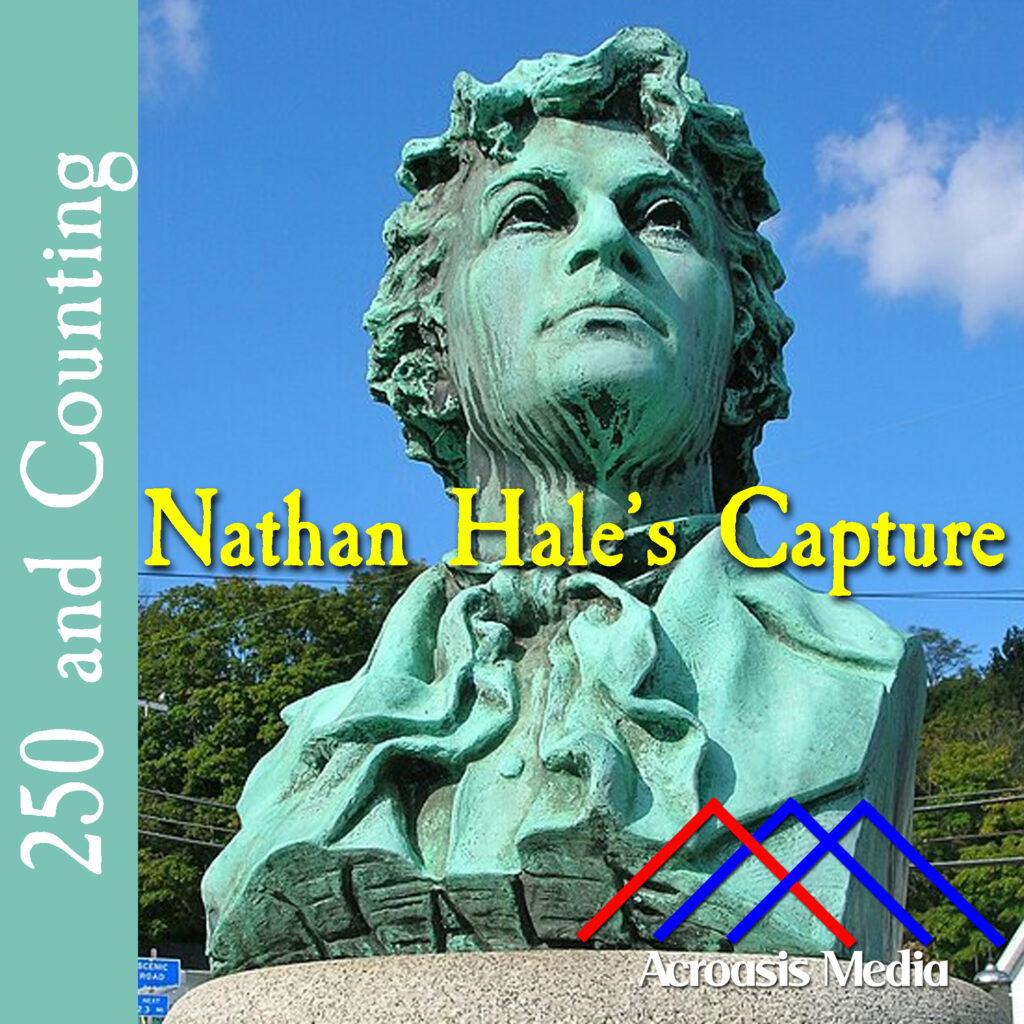
    Cover art for September 21, 1776: Bronze bust of Nathan Hale, sculpted by Enoch Smith Woods between 1885 and 1900, located in East Haddam, CT. via Wikimedia Commons.

    One of the events that took place the same day of Nathan Hale’s capture is that there was a huge fire in New York that burned about a quarter of the city.

    Now, the British thought that it was started by American saboteurs to prevent the city from falling into British hands. However, while that idea had come up, George Washington was under orders not to do so, and they therefore denied any responsibility. For their part, the Americans suggested that British soldiers were responsible for the fire (without orders to do so), to enable them to sack the city.

    There is a third possibility out there that’s been floated, and that would be that Hale was responsible for setting the fire. However, he was across the river in Queens when he was arrested, so it’s not likely at all that he was the culprit; in fact, there’s really no evidence that arson specifically was to blame for the fire. It’s not known where it started, or whether it began in more than one place. What is known is that the weather conditions (dry and windy), plus the wooden buildings and narrow roads, made it easy for the fire to spread, and when it stopped, it was as much by wind changes as any efforts by people to put it out. (Also, a large undeveloped property acted as a fire-break.)

  • Washington’s Report–September 18, 1776

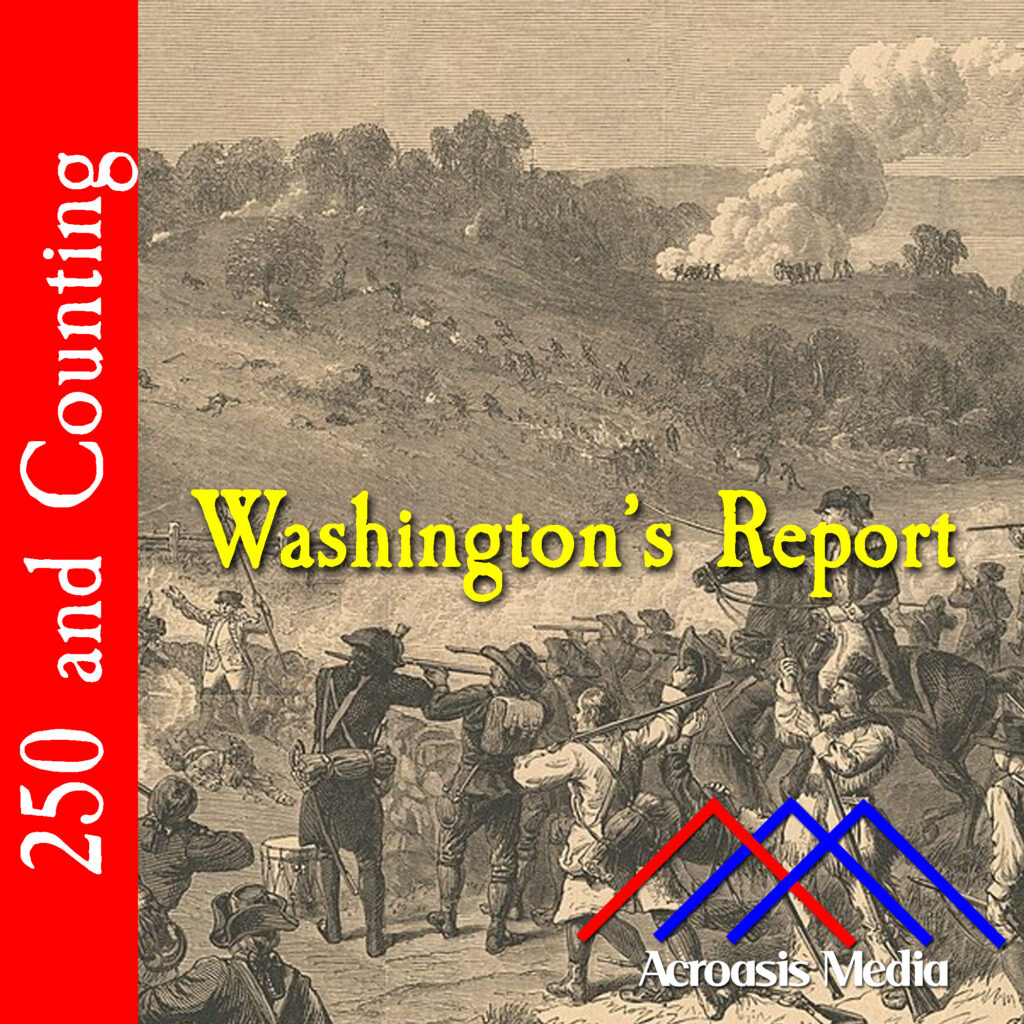
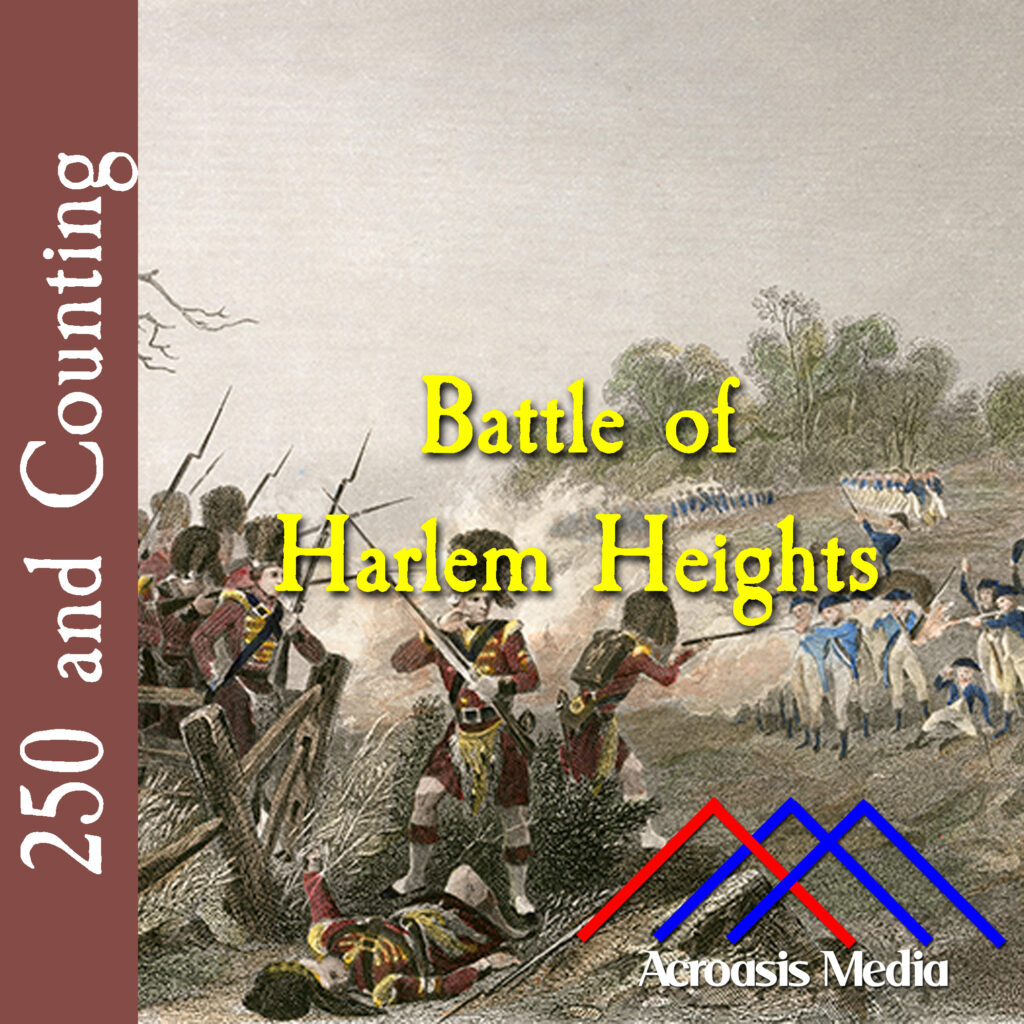
    Cover art for September 18, 1776: "The Battle of Harlem Heights, September 16, 1776" (Cropped), multiple printmakers, via New York Public Library.

    Washington’s report to Congress regarding the events at Harlem Heights a couple of days earlier didn’t pull any punches with regard to how badly his army was beaten, or what mistakes he and his men might have made.

    It didn’t always make for cheerful reading in Congress, but at least they knew what they were up against. They knew they weren’t getting whitewashed “Everything Is Just Peachy” reports from someone afraid of dealing with Congressional fallout.

    And fortunately, Washington’s report in this case was a mixed bag of bad luck, extraordinarily good luck, unfortunate timing and the plain difficulty of defending an island that had so much coastline within sight of adjacent coastline (because Manhattan is surrounded by rivers, not oceans). New York ended badly for the Continental Army, but there were multiple times that it could have ended so much worse.

  • Battle of Harlem Heights–September 16, 1776

    Cover art for September 16, 1776: "Battle of Harlem," steel engraving by James Charles Armytage ca. 1859, Based on an original illustration from the same period by Alonzo Chappel. via George Washington Presidential Library.

    While it didn’t change the result in New York, the Battle of Harlem Heights was a tactical win for the Continental Army, and a boost to morale as well.

    It was the Continental Army’s first true victory since Lexington and Concord, and after the demoralizing loss at Kip’s Bay only a day earlier, demonstrating that these soldiers (who were still little more than ordinary citizens) could, in fact, stand up successfully to the mightiest fighting force in the world.

    Harlem Heights is a neighborhood to the west of Harlem, and nowadays is called Morningside Heights. A cynic would suggest that the neighborhood changed names in the 1890s so that Columbia University wouldn’t have to be associated with a predominantly black neighborhood, but to be fair the neighborhood was also known as Cathedral Heights because of the presence of St. John the Divine Cathedral.

    At any rate, the neighborhood is definitely worth a visit. There are a few historical plaques around Columbia University, and if you like visiting cathedrals, St. John is definitely worth your while. Grant’s Tomb can also be found in that area, and if you’re a fan of the TV show Seinfeld, you will be thrilled by what you find at 112th St and Broadway. That’s all I’m sayin’.

  • Battle of Kip’s Bay–September 15, 1776

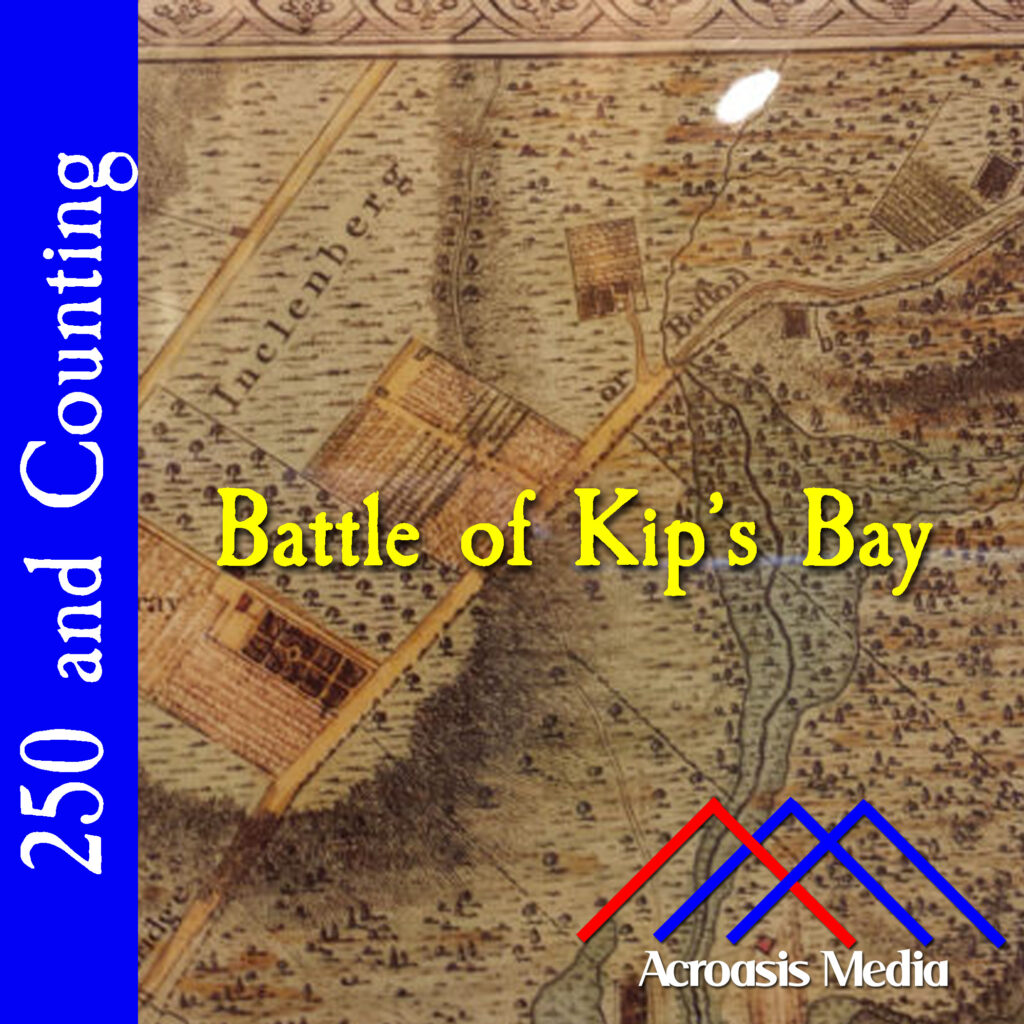
    Cover art for September 15, 1776: Map excerpt of Manhattan detailing an estate called Inclenberg. Map surveyed ca. 1766-7, published as a completed engraving in 1776. via New York Historical Society.

    Calling it “The Battle of Kip’s Bay” may actually be overstating it a little bit; there were 500 militamen from Connecticut in the area when the British landed, and their defenses were blown away almost immediately, after which they panicked and ran.

    But I tell you all about that in the episode. This is my chance to tell you a related story, and nobody knows whether it’s true.

    If you look at today’s artwork, you’ll see a piece of a map and an estate called Inclenberg, about where modern-day Murray Hill can be found. Kip’s Bay is just out of frame to the right. Inclenburg was owned by the Murray family (hence the neighborhood name), who were a family of Quaker merchants who owned a wharf and a fleet of ships at the base of Wall Street.

    Now, the story goes that the original plan was for the British to march across Manhattan, west to east, in order to cut off Washington’s army. As I note in the episode, about a third of them were still to the south in the city and would therefore be trapped and stranded. Then, once they were divided, the British would pursue the rest of them to the north, in Harlem Heights.

    What’s known as a fact is that the British did not complete their traversing of the island; they stopped somewhere around Inclenberg. The legend part of this story is that when they got to Inclenberg, Mary Murray, the socialite who ran the estate, and two of her lovely daughters came out to greet General Howe and his commanders and offered them some afternoon tea.

    Howe and his officers had a wonderful afternoon of hospitality, with tea and entertainment by the girls (singing, ya pervert), and the finest Madeira wine in New York City. In the meantime, Major Aaron Burr led the separated group of troops up through the western side of the city to Harlem Heights, and relative safety.

    It’s really more likely that Howe simply stopped while waiting for more forces to arrive, and that’s the story I tell during the episode. But it’s a fun story, and it is known for sure that General Putnam’s men did escape what would have been certain capture by the British, who had to be absolutely apopleptic to learn that so many soldiers had escaped yet again without their knowing about it.

  • Word From Congress–September 14, 1776

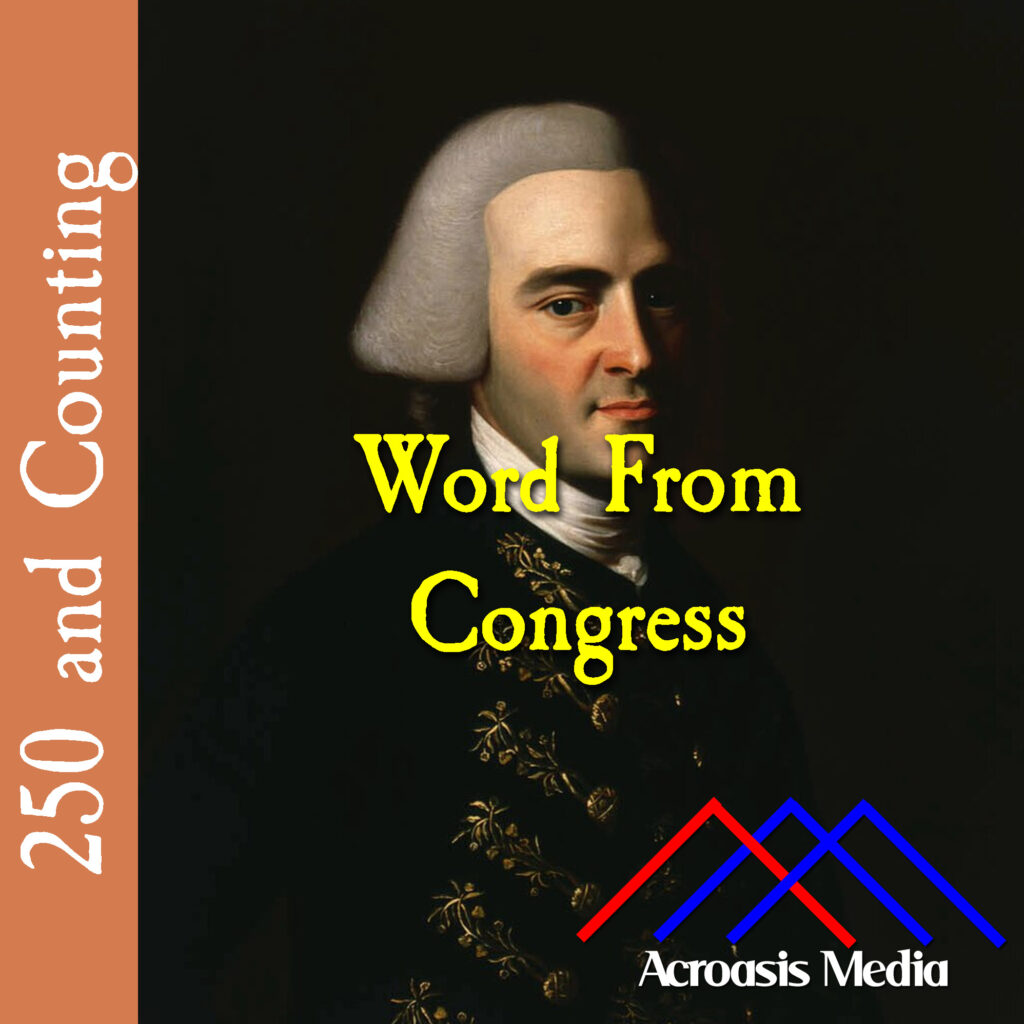
    Cover art for September 14, 1776: portrait of John Hancock by John Singleton Copley, ca 1770-72. via Massachusetts Historical Society.

    Washington was on the brink of retreating from New York City, but he was getting pushback from some of his generals regarding how it should be done.

    Fortunately for him, this Gordian Knot was cut by a letter arriving from John Hancock on behalf of the Continental Congress.

    Nathanael Green and William Heath weren’t necessarily in agreement with Hancock’s recommendations, but orders are orders and everyone prepared to move out based on those.

    But about a week later, something happened to render part of those orders moot.

  • Suspicious Movements–September 13, 1776

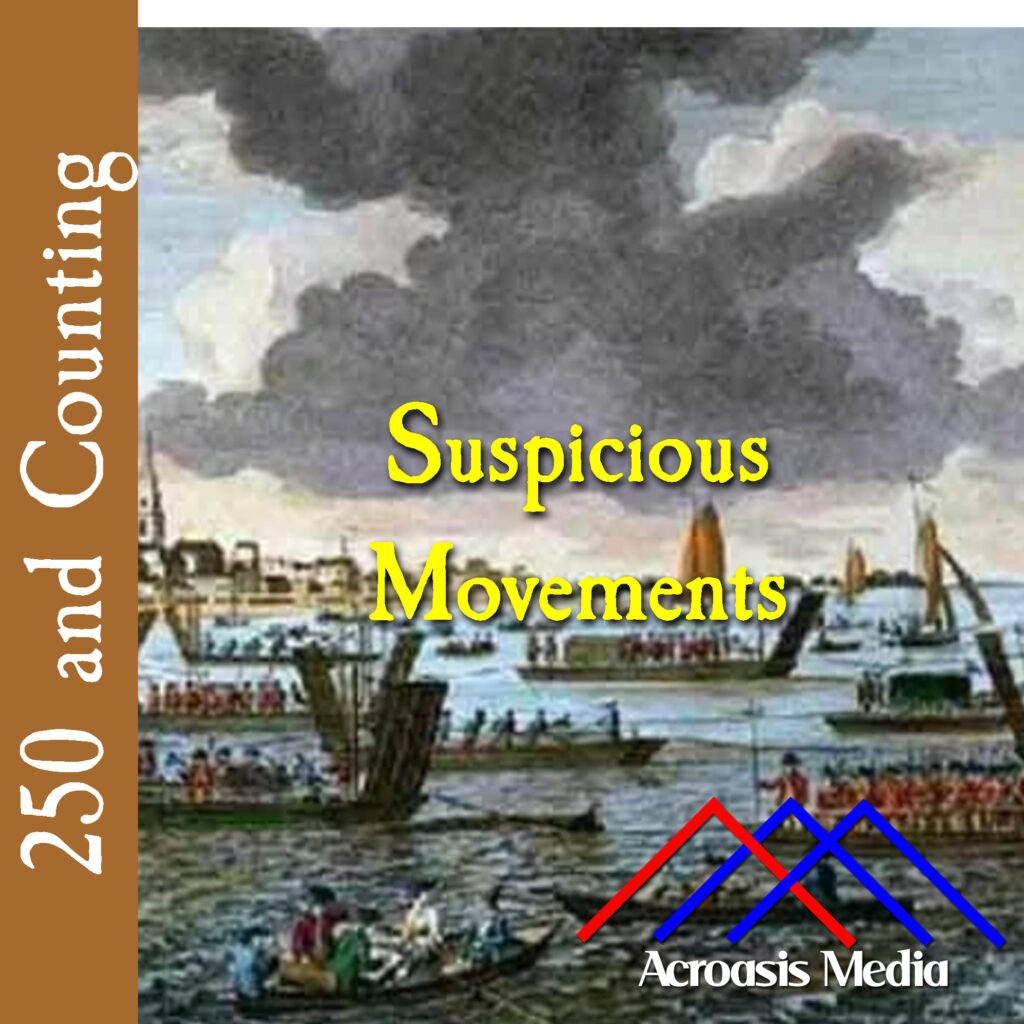
    Cover art for September 13, 1776: The British Landing at Kip's Bay, Watercolor drawing by Robert Clevely, 1777.

    When Patriot forces saw four ships moving into Bushwick Creek, it was ominous but probably not a huge surprise, given that the British already held Brooklyn. They put up largely token fire from their own strongholds and that was pretty much that.

    Washington knew that Manhattan was next, but it wasn’t clear how the attack would come, or from where specifically, but he’d already begun the work of getting people and materials out of town, so it probably wasn’t much more than a distraction for him.

    In fact, it was a distraction and a diversion, as we’ll learn in a couple of days. Whether it was strictly necessary is another question.

    A quick note on today’s artwork: Robert Clevely was a marine artist who was an eyewitness to the landing on Kip’s Bay. I figured it was worth mentioning because so many of the art pieces I wind up presenting here aren’t necessarily contemporary to their subjects. But this one is someone who was actually there.