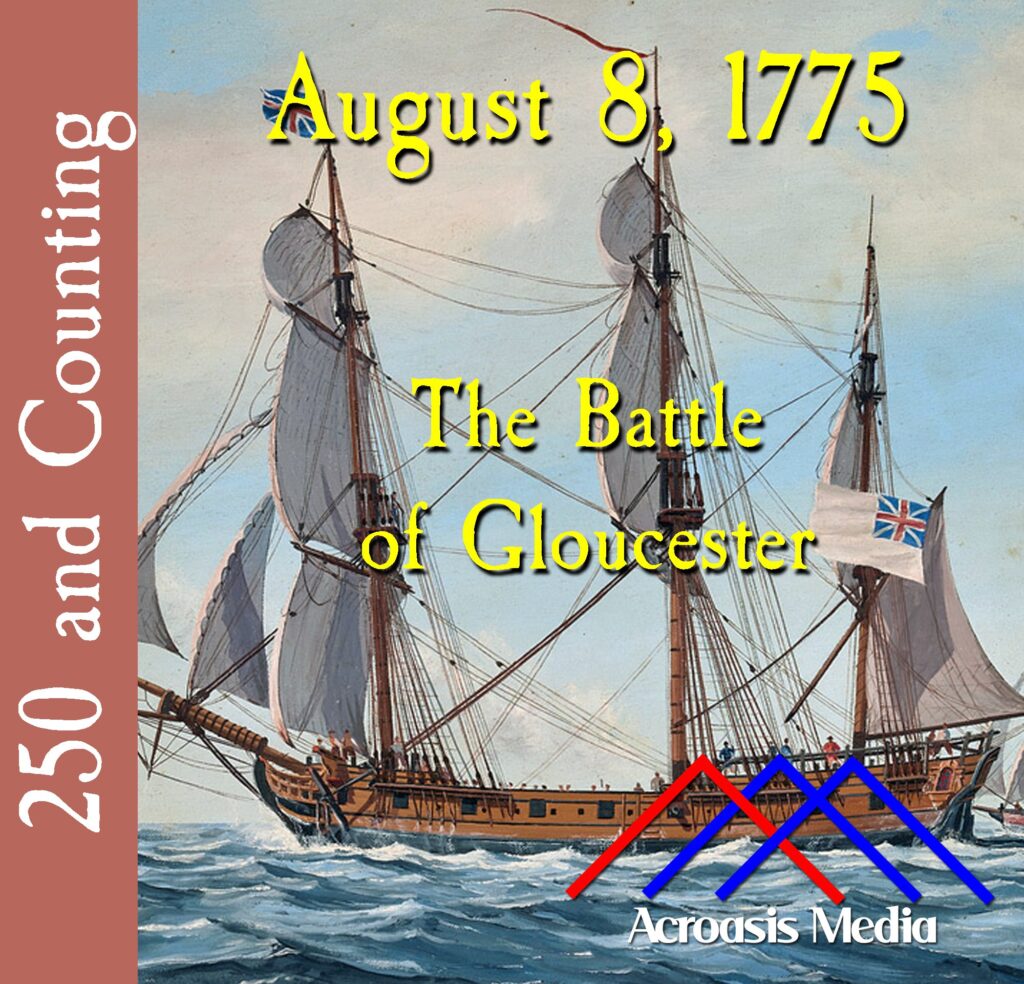
It was another net win for the Americans as the HMS Falcon, which had originally been assigned to the Colonies to enforce the Intolerable Acts, took a run at stealing livestock in order to provision the British who were stuck in Boston during the siege.
Unfortunately for them, the Colonists were wise to their moves and took appropriate action…more than once.
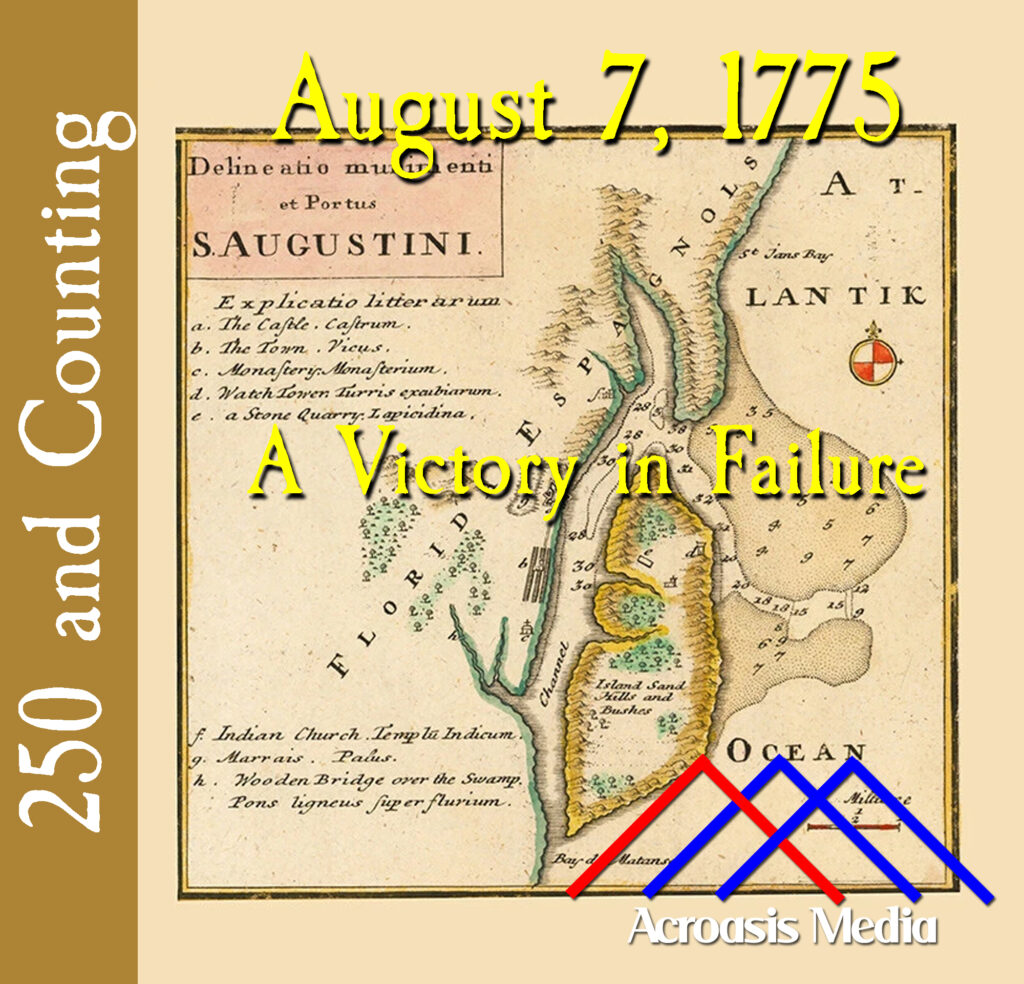
Once again, complacency wins the day. An American ship heads to Florida to raid the British ammunition stores there, and instead stumbles on a ship carrying literal tons of gunpowder. And it’s easily captured because the crew was asleep.
Wasn’t anyone on watch? Apparently not, or they still managed to allow the American ship to get close enough that they could get on board. EIther way, American ships weren’t worth considering, and there wasn’t any American Navy…yet. But events over the next few days could change all that.
I’m the first to admit that my math didn’t work out during yesterday’s episode. I have no excuse other than I’m on vacation this week and perhaps not as detail-oriented as usual.
You may remember a couple of days ago when we mentioned that one of the things that broke in George Washington’s favor was the timely arrival of a company of riflemen. These were the men in question. Rifles have different barrels from the typical guns that Colonial forces used, and were therefore more accurate. In addition, riflemen were specially trained for improved accuracy.
Daniel Morgan’s crew was one of the reasons that Washington’s ruse against the British worked out well: with these men around, the British were less likely to attack, and Washington was able to replenish his ammunition stores within a couple of weeks.
Meanwhile, three thousand miles away from the action…
…the Spanish were exploring the West Coast and claiming a lot of territory in their name. It was largely exploration and planting flags, although there were some colonies established as well.
But what’s interesting about the bit of exploration we’ll be looking at today is that, even though the Spanish had been up and down the coast for a couple of hundred years, it wasn’t until 1769 that they realized that the strait leading into San Francisco Bay was even there. Possibly because it was frequently fogged in, possibly because the area was considered hazardous to navigate.
One of the reasons (we think) that the Colonial forces were able to gain small advantages over the British forces is that the Colonial Army was relatively untrained, and sometimes succeeded through dumb luck. They attempted things that “everyone knows” wouldn’t work, and surprise! It did work because nobody thought they’d be dumb enough to try it.
The Colonies also didn’t have a lot of Navy going on just yet, and it may have been because of this that they were able to succeed at sea, as well. British ships would sail past American fishing vessels, thinking them of no consequence, and suddenly they’d find themselves outwitted by a whaling ship.
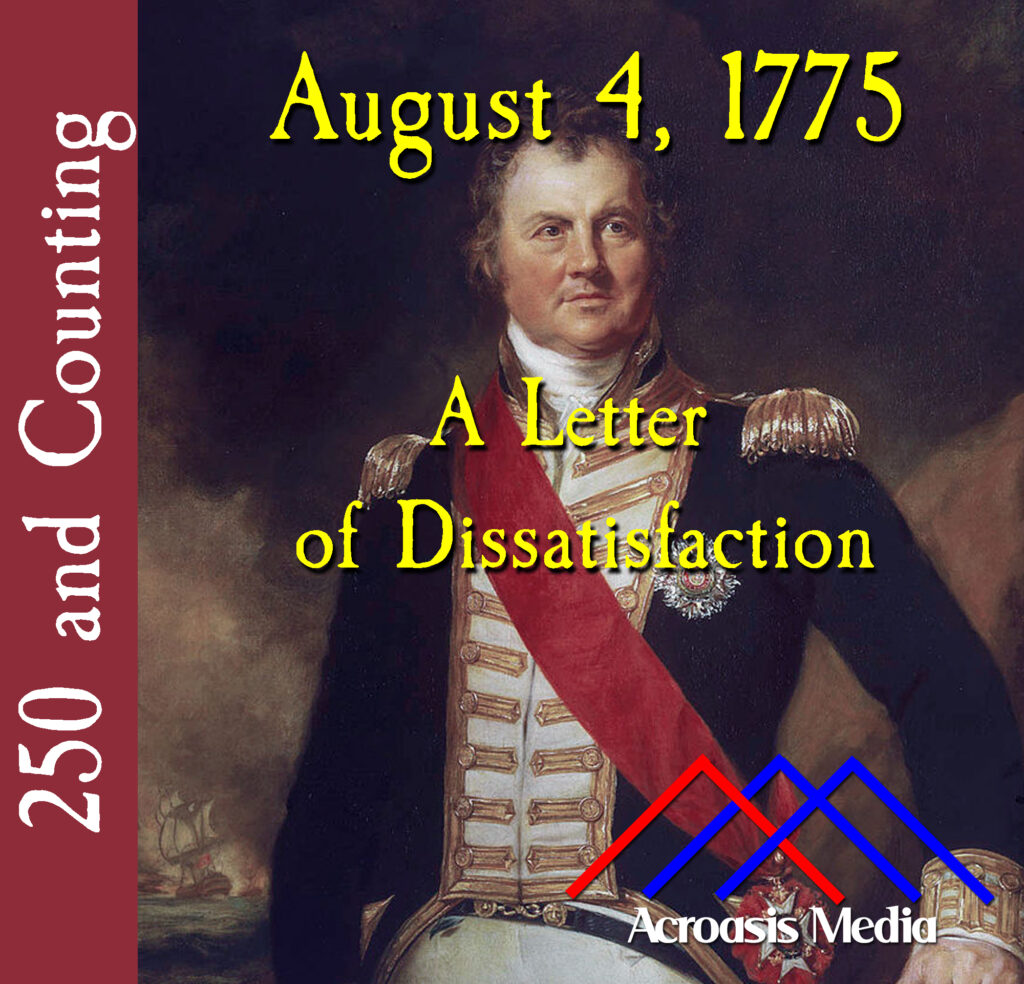
Some British captains did manage to catch on to American tactics, though. Edward Thornborough was one of them, and he made his concerns clear in a letter written on this day in 1775.
As noted, two days ago we told you about how George Washington got the bad news that he didn’t have nearly as much gunpowder and ammunition as he thought he did.
It was on this day in history that he and his team of generals put their heads together and came up with some rather solutions. Some of them depended on deception while others depended on dumb luck. Fortunately things worked out quite well.
Since May 10, the Second Continental Congress had been working for six days a week. And on any given day, depending on the committee to which they were attached, they’d work from anywhere between eight and twelve hours.
And remember: this was in the height of summer in Philadelphia, where the temperatures were in the 90s and chances are, so was the humidity most of the time.
Now, as Mike will attest in today’s episode, they got a LOT of stuff done in those ten weeks. And considering how thoughtfully they took every subject they tackled, it was a definite feat on their part. It was a well-deserved break.
For those of you who are coming here from Hamilton Radio for the first time: welcome to 250 and Counting!
Each day we spend just a couple of minutes telling you about some event that took place exactly 250 years ago today, to give you an idea of some of the events leading up to, and then beyond, our nation’s 250th birthday next year.
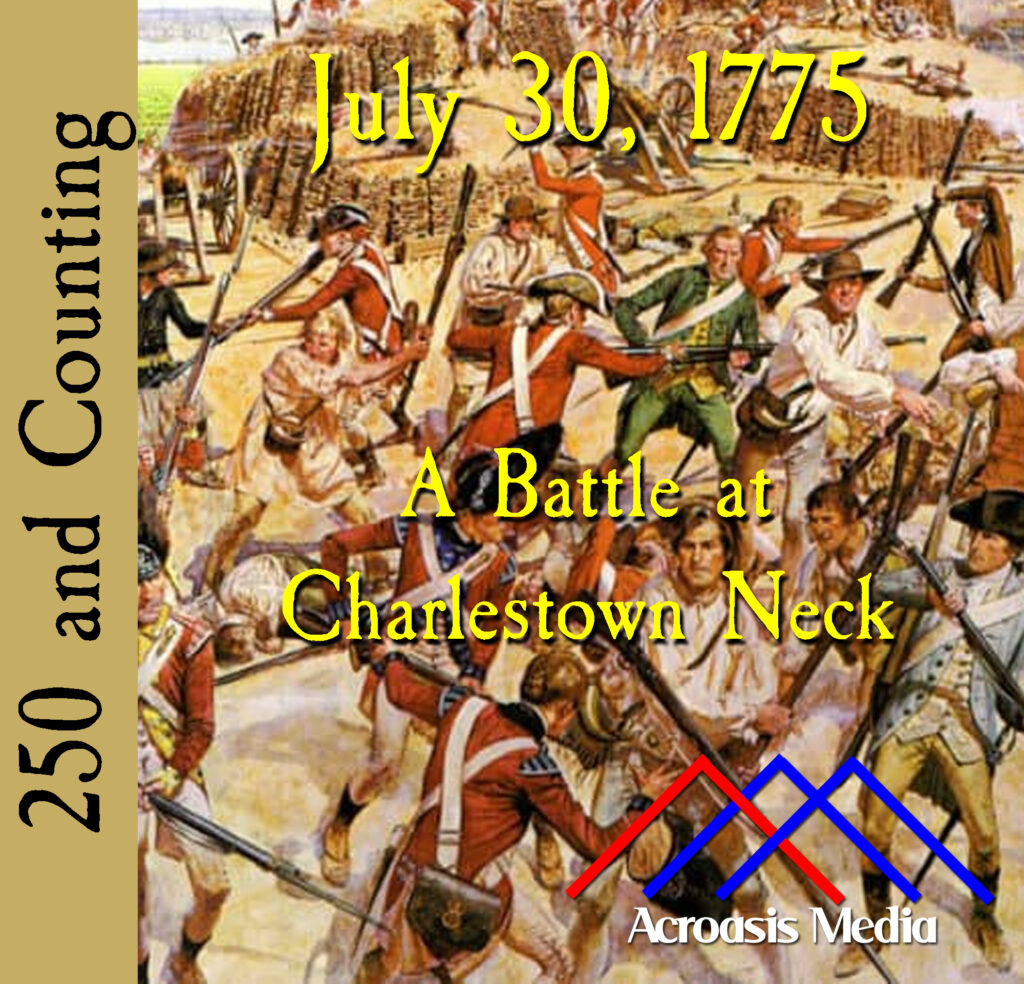
For those of you who aren’t new to the show, you may remember a couple of days ago, when the British tried to break out of the Siege of Boston by launching an attack at Charlestown Neck. Their attempt failed, but George Washington and the Continental Army got very lucky, because they had no idea that they were low on gunpowder and the raw materials needed to make ammunition. In a couple of days we’ll learn what they did to address the problem.
It’s not entirely Lord North’s fault that his proposal for securing peace took so long to get to the Colonies; messages took a long time to get across the ocean.
It is his fault that he sent it to individual people across the Colonies, thinking he could demonstrate that the Colonies are divided and aren’t on board with the revolution.
It’s also his fault for not counting on someone from the New Jersey delegation (in this case; it could have been any delegate) bringing the proposal to the Second Continental Congress.
Unfortunately, before anyone on this side of the Atlantic saw it, fighting had broken out at Lexington and Concord, and the document was seen as far too little, far too late.
Boston had been under siege since Lexington and Concord. Of course the British felt that they needed to break out of it from time to time, and today was one of those attempts.
Now, this was a success for the Continental Army, but the fact is, few people realized at that time just how close they were to losing that battle, and badly. But that’s for a couple of days from now, on August 1st.
Coincidentally, August 1st is the day that this podcast begins airing on Hamilton Radio!
Tune in to HamiltonRadio.net to hear our show, and a bunch of others. We’re in good company over there.