
Tag: Massachusetts History

  • Washington Departs Cambridge–April 4, 1776

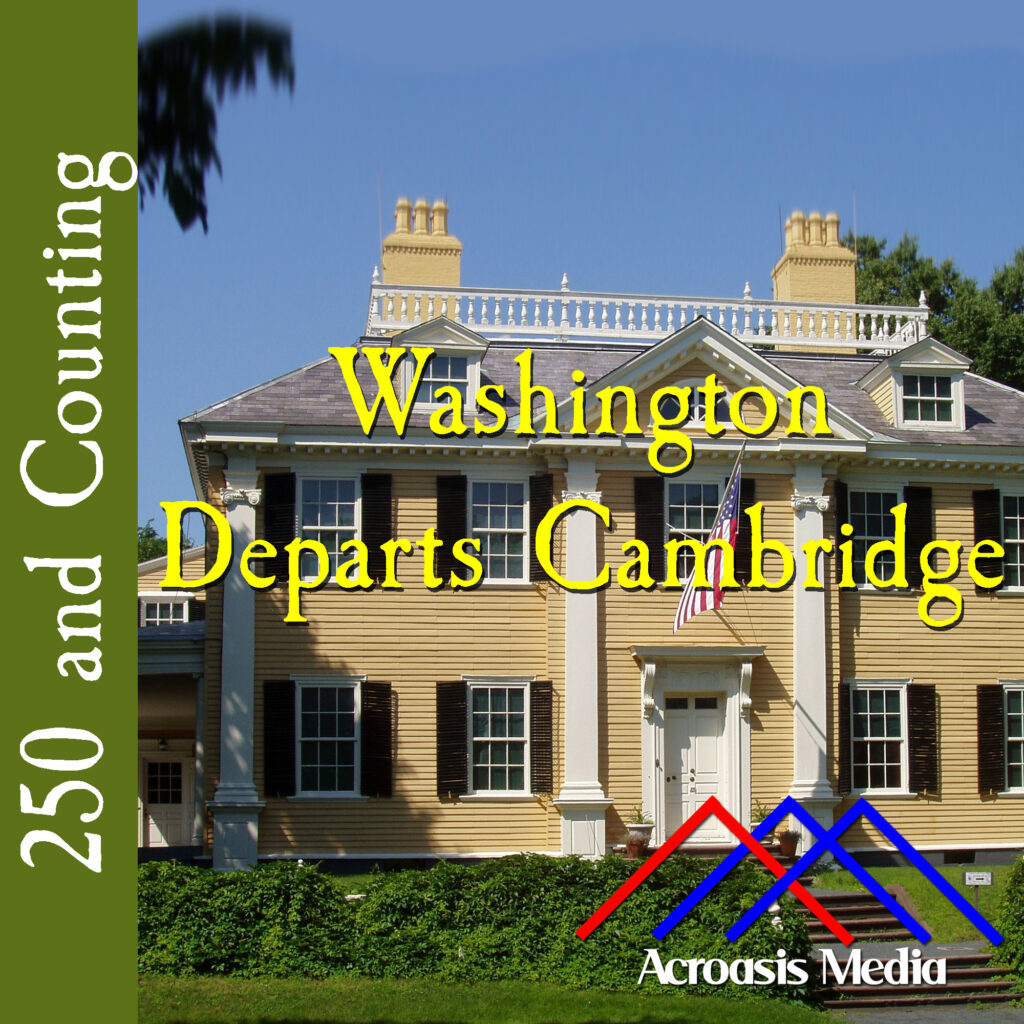
    Cover art for April 4, 1776: Longfellow National Historic Site, also known as the Vassall-Craigie-Longfellow House, in Cambridge, Massachusetts. Uploaded to Wikipedia by user Daderot.

    To say the Washington left the Longfellow House is putting the cart before the horse, because Washington was in it before Longfellow.

    The house originally belonged to John Vassall Jr, a Loyalist who had the good sense to get out of town when the shooting started. From July 16, 1775 until this day in 1776, Washington occupied it as his home and his headquarters. In 1791 Washington’s apothecary Andrew Craigie purchased the house and made a major addition to it, the only big cosmetic change to the house. After Craigie’s death, his widow rented out various rooms to supplement what little income she had, and one of her tenants was Henry Wadsworth Longfellow, who eventually became the owner in 1843 when it was purchased for him as a wedding gift.

    The Longfellow family was the last to live in the house; some time after his death the family established the Longfellow Trust to provide for the house’s preservation, and in 1972 the house and its possessions were donated to the National Park Service.

  • Letters From The General–March 24, 1776

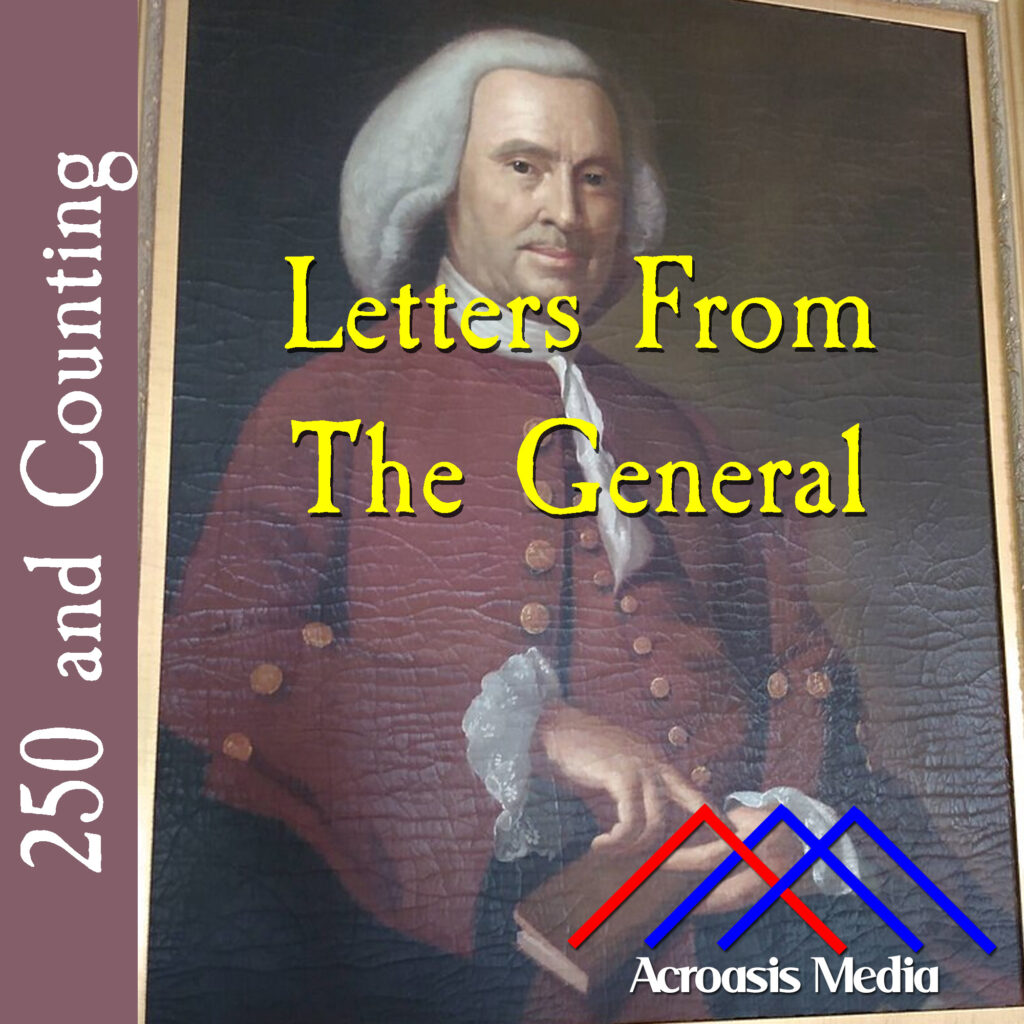
    Cover art for March 24, 1776: Reproduction of a portrait of Josiah Quincy I by John Singleton Copley. Photo uploaded to Wikipedia by user Mmangan333.

    Mike had a little fun busting on George Washington’s spelling in today’s episode, but we do have to offer a little grace here, because in 1776 efforts to standardize spelling in the English language were only just beginning to catch on.

    About a hundred years earlier, some of the language was simplified; thus, sinne became sin; logique became logic; toune to town, etc. Not long afterward, some words were tied to their Greek or Latin roots, e.g. det became debt (Latin, “debitum”) and dout became doubt (Latin, “dubitare”), and so on.

    It really wasn’t until the 19th Century that more serious efforts to standarize some English took place, as the science of phonetics began to rise. In the 1870s, societies actually began springing up that were dedicated to reforming the English language’s spelling. One such group had the editor of the Chicago Tribune as a member, so whenever his group had something they thought was good, he’d be the first one using it in print.

    In 1903 a group called the Simplified Spelling Board was formed, backed by Andrew Carnegie. Their recommendations were immediately relayed to all government agencies by President Teddy Roosevelt.

    And then between the 1930s and 1975, the Chicago Tribune (again) was at the forefront of changes to standardized spelling, thus giving the new language a huge platform on which to rest.

    Look that up in your Funk & Wagnalls, kids.

  • Meet The New Boss–March 20, 1776

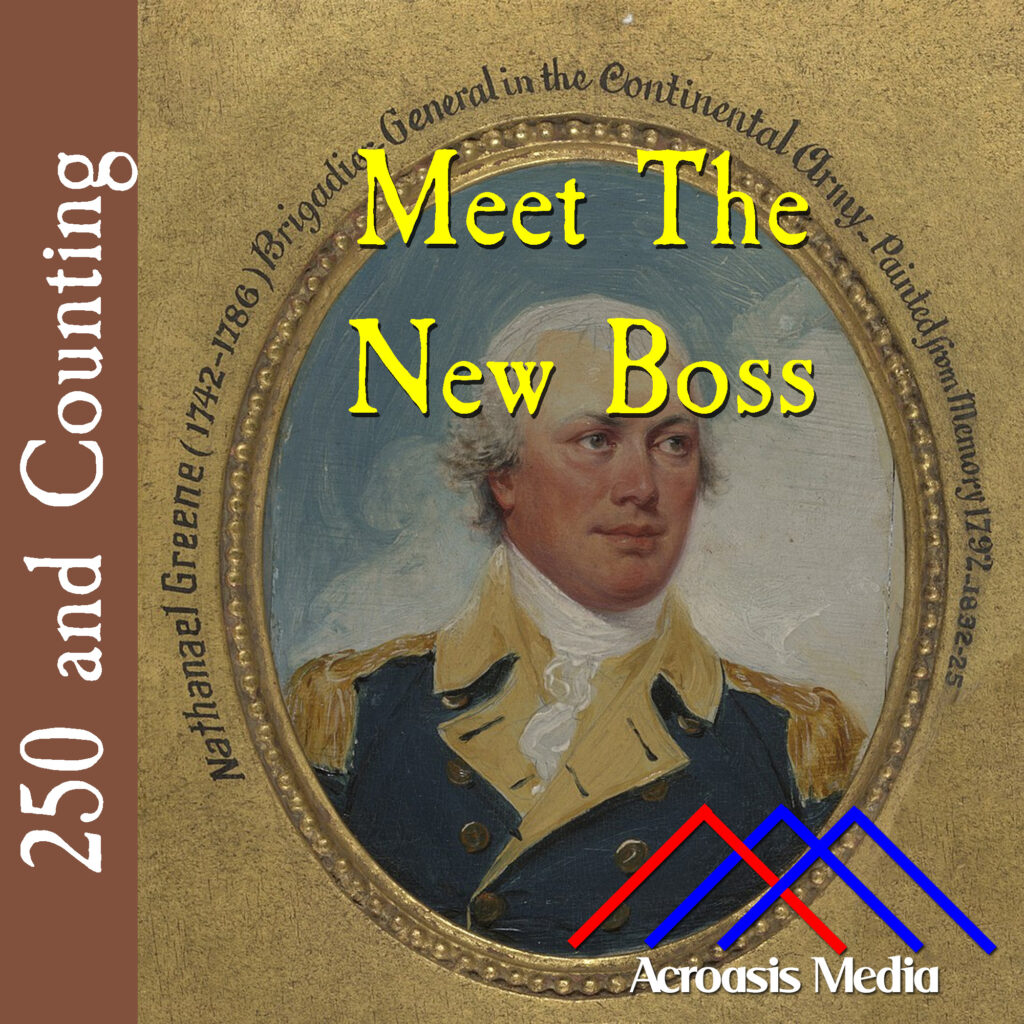
    Cover art for March 20, 1776: portrait of Nathaniel Greene "painted from memory" by John Trumbull, 1792. via Yale University Art Gallery.

    While preparing to depart Boston for New York, George Washington appointed Nathaniel Greene to run things for awhile until everything was back in order.

    Fortunately for both Greene and Washington, matters straightened out rather quickly, because Greene was called to join Washington just a few weeks later.

    Nathaniel Greene was tasked with fortifying Brooklyn while Washington prepared to defend Manhattan. As a military leader, Greene had a bit of a mixed record, but more often than not it appears that he was the victim of poor timing when things didn’t go well for him.

    Later on in the war, he took on the position of Quartermaster General, which on its surface looks like a demotion, but Washington still considered him “inner circle” and Greene would sit in on War Council meetings, even though he was considered a staff officer.

    Later on, when things started looking gloomy in South Carolina and Georgia, Nathaniel Greene was put in charge of the Southern Department of the Continental Army, where he embarked on a campaign of guerilla warfare rather than pitched battles. His unconventional approach wasn’t always successful, but if the British won a battle it was at a much greater cost than it should have been.

  • Reviewing Boston–March 18, 1776

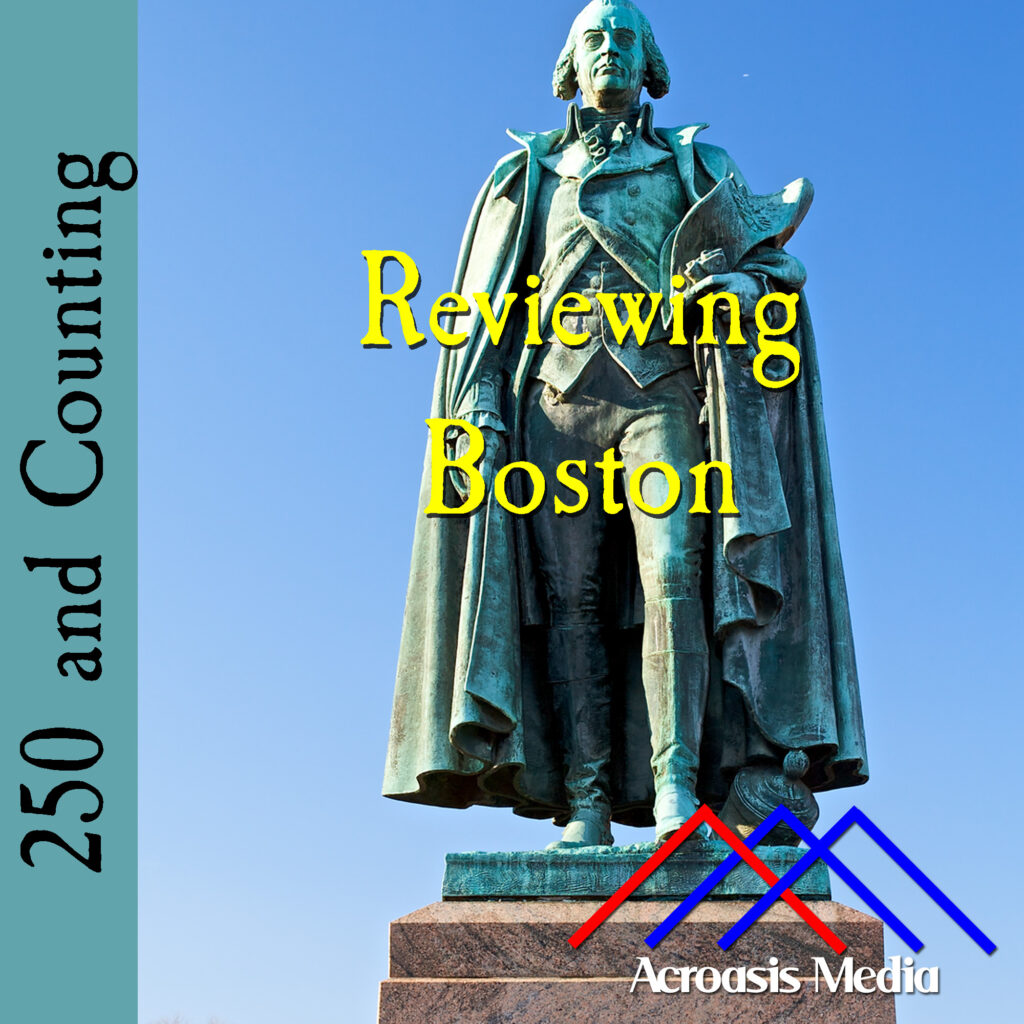
    Cover art for March 18, ,1776: Statue of Artemas Ward at Ward Circle in Washington, DC. Photo by Wikipedia user GarrisonLeMasters, 2008.

    In the aftermath of the siege of Boston, it was incumbent upon George Washington and his men to re-enter the city and take stock of its condition.

    Mike brings up Artemas Ward in today’s episode, and I’m pretty sure that was the first time his name has come up in the course of this podcast. Ward was a major general during the Revolutionary War, among others, and an effective political leader when he wasn’t being a soldier. It was Ward who sounded the alarm on Bunker Hill, and who took command of the New England area once Washington led most of the troops down to New York City. ‘

    The statue in today’s cover art can be found in the center of a traffic circle in Washington, DC, where Massachusetts and Nebraska Avenues cross one another. Ward’s great-grandson donated four million dollars to Harvard on the condition that they build a statue of Artamis, and maintain his Shrewsbury home. Harvard apparently chose to purchase a statue but did not provide enough money to provide the general with a horse. Oddly enough, because it’s a traffic circle and therefore has no obvious way for a pedestrian to get to the center (i.e., no crosswalk), it’s quite difficult to get close enough to the pedestal to read the inscription:

    ARTEMAS WARD
    1727–1800
    SON OF MASSACHUSETTS
    GRADUATE OF HARVARD COLLEGE
    JUDGE AND LEGISLATOR
    DELEGATE 1780–1781 TO THE CONTINENTAL CONGRESS
    SOLDIER OF THREE WARS
    FIRST COMMANDER OF THE PATRIOT FORCES

  • The Siege Ends–March 17, 1776

    Cover art for March 17, 1776: The first Congressional Gold Medal, given to George Washington in 1790 for his first victory of the war in Boston. 1776 Washington Before Boston Comitia Americana Second Restrike (Baker-48G) Image credit to Heritage Auctions

    It’s been 333 days since Lexington and Concord, when the British were forced to retreat to Boston and were bottled up there by Colonial forces.

    It’s been a week since the British said “enough” and decided to effect their departure from the city as soon as the weather cooperated.

    But today, the day finally came.

    It took about five hours to launch over a hundred ships, carrying thousands of soldiers, women and children from the city.

    It was Washington’s first major win and the last time the British did anything of importance in New England. The war began to move south, to New York, New Jersey, and Pennsylvania. Virginia and the Carolinas also had their share of action, as we’ll see in the coming months.

  • Beginning of the End in Boston–March 4, 1776

    Cover art for March 4, 1776: A map of the Boston area during the siege. from the History Department at the US Military Academy.

    Colonel Henry Knox took about ten weeks to get from Ticonderoga to Cambridge rather than the two he anticipated. But his arrival meant the siege’s end in Boston would come soon.

    Knox had brought something like 60 tons worth of material overland using hand-built sledges and carts drawn by oxen. The last leg of the trip is still a mystery, because Knox’ diary ends about two weeks early. What is known is that as he passed through the occasional town, people would line up to watch. So we know when he was where, but the usual stuff that ran through Knox’ head for that portion of the trip is gone.

    Still, his arrival at Cambridge meant that Washington now had what he needed to fortify his position and do what he needed to drive the British out of Boston. After nearly a year, the siege’s end was actually in sight.

  • A New Job For John Adams–February 9, 1776

    Cover art for February 9, 1776: John Adams as portrayed by Mather Brown in 1788.

    One of John Adams’ stronger talents was being able to see the motivation behind the action, and because of this he was usually able to thwart unattractive actions somehow.

    In today’s case, he was able to thwart people who opposed him by simply agreeing with them. As a newly-minted Chief Justice of Massachusetts, some Loyalist (if not Loyalist, then certainly in the Don’t Declare Independence crowd) delegates from Maryland suggested that because he worked for Massachusetts, he had an inherent conflict of interest and therefore couldn’t vote in Congress.

    Now, at that time a colony’s quorum was exactly one delegate, so if he was the only person from Massachusetts attending that day, Massachusetts wouldn’t be able to cast a vote. So, Adams did the sensible thing and agreed with the Marylanders. Then he resigned from the position they thought he’d never give up.

  • Rules for Native American Trade–January 27, 1776

    Cover art for January 27, 1776: Engraving titled Washington and Fairfax and a War-Dance by John Rogers, 1857.
    Engraving titled Washington and Fairfax and a War-Dance by John Rogers, 1857. The event depicted actually took place in 1779.

    As noted in the episode, there were several different rules laid down for trading with Native Americans at that time, and some of them were designed to ensure that they remained on our side or, at worst, that they remained neutral in Revolution-based matters.

    But the rules wound up working out well for both sides: the various tribes were able to get the materials they wanted, and trade was conducted under better-controlled conditions.

    In addition, they led to trade-related treaties with several tribes up and down the coast during the next year or so. And with over 80 tribes east of the Mississippi River at that time, that’s a lot of treaties to negotiate.

  • Birth Of A Navy–December 29, 1775

    Cover art for December 29, 1775: The Pine Tree Flag, which was the ensign of the Massachusetts State Navy.
    The Pine Tree Flag, which was the ensign of the Massachusetts State Navy. There are a few variations of this, because the original was destroyed by the British.

    While the Massachusetts Naval Militia was pretty much wiped out in 1779 (oops, spoiler alert), it wasn’t the end of a state-based Navy for Massachusetts.

    Massachusetts began to rebuild, but in 1780 a new state constitution was adopted, and just as the navy was delayed in its original inception by bureaucracy, the Massachusetts State Navy wound up dissolved the next year. They were re-established for the War of 1812, but again disbanded when that war ended.

    Nowadays, any state naval militia are automatically part of the United States Militia, and in Massachusetts specifically, any attempt to reactivate a naval militia in Massachusetts must be done either by the governor of Massachusetts or the Massachusetts General Court.

    There are five state naval militia extant, so far as I can tell: Alaska, New York, Ohio, South Carolina, and Texas.

  • Martha Comes to Cambridge–December 11, 1775

    Cover art for December 11, 1775: Portrait of Martha Dandridge Custis, 1757 by John Wollaston. This was the year her first husband died.

    Most of the portraits we see of Martha Washington were made when she was older, so we have (I think) this image of her as a bit of a crabby old frump.

    And maybe she was, by the time her husband got to be President. She didn’t really love the life of the public spouse and charming party hostess. But it turned out she was good at it, and if it made her crabby, nobody who mattered knew about it on a firsthand basis.

    In fact, Martha Washington was known to be fashionable, calm, outgoing and easy to get along with. And because Boston was rather straitlaced compared to Virginia, she gave off a bit of an exotic air during her time in Cambridge.

    Frump, indeed.