Tag: Massachusetts History

  • Birth Of A Navy–December 29, 1775

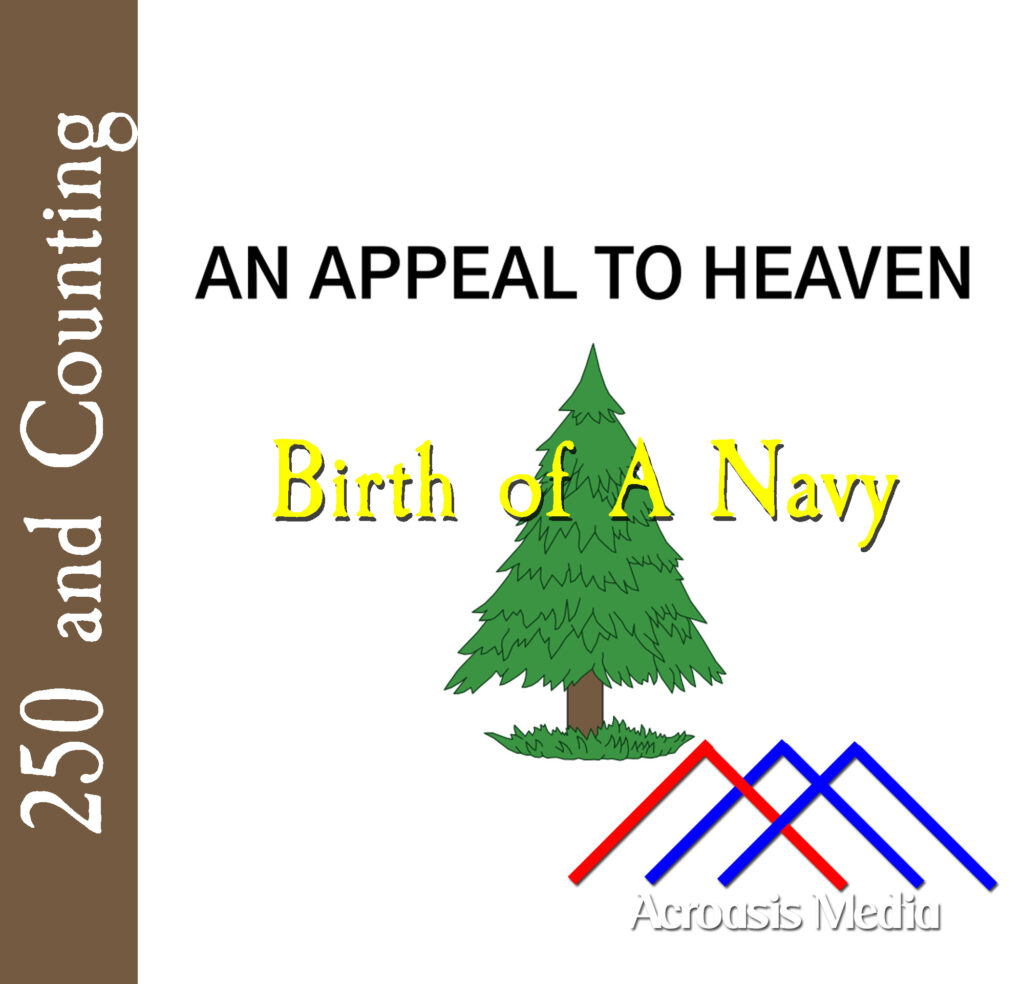
    Cover art for December 29, 1775: The Pine Tree Flag, which was the ensign of the Massachusetts State Navy.
    The Pine Tree Flag, which was the ensign of the Massachusetts State Navy. There are a few variations of this, because the original was destroyed by the British.

    While the Massachusetts Naval Militia was pretty much wiped out in 1779 (oops, spoiler alert), it wasn’t the end of a state-based Navy for Massachusetts.

    Massachusetts began to rebuild, but in 1780 a new state constitution was adopted, and just as the navy was delayed in its original inception by bureaucracy, the Massachusetts State Navy wound up dissolved the next year. They were re-established for the War of 1812, but again disbanded when that war ended.

    Nowadays, any state naval militia are automatically part of the United States Militia, and in Massachusetts specifically, any attempt to reactivate a naval militia in Massachusetts must be done either by the governor of Massachusetts or the Massachusetts General Court.

    There are five state naval militia extant, so far as I can tell: Alaska, New York, Ohio, South Carolina, and Texas.

  • Martha Comes to Cambridge–December 11, 1775

    Cover art for December 11, 1775: Portrait of Martha Dandridge Custis, 1757 by John Wollaston. This was the year her first husband died.

    Most of the portraits we see of Martha Washington were made when she was older, so we have (I think) this image of her as a bit of a crabby old frump.

    And maybe she was, by the time her husband got to be President. She didn’t really love the life of the public spouse and charming party hostess. But it turned out she was good at it, and if it made her crabby, nobody who mattered knew about it on a firsthand basis.

    In fact, Martha Washington was known to be fashionable, calm, outgoing and easy to get along with. And because Boston was rather straitlaced compared to Virginia, she gave off a bit of an exotic air during her time in Cambridge.

    Frump, indeed.

  • The Capture of the Nancy–November 28, 1775

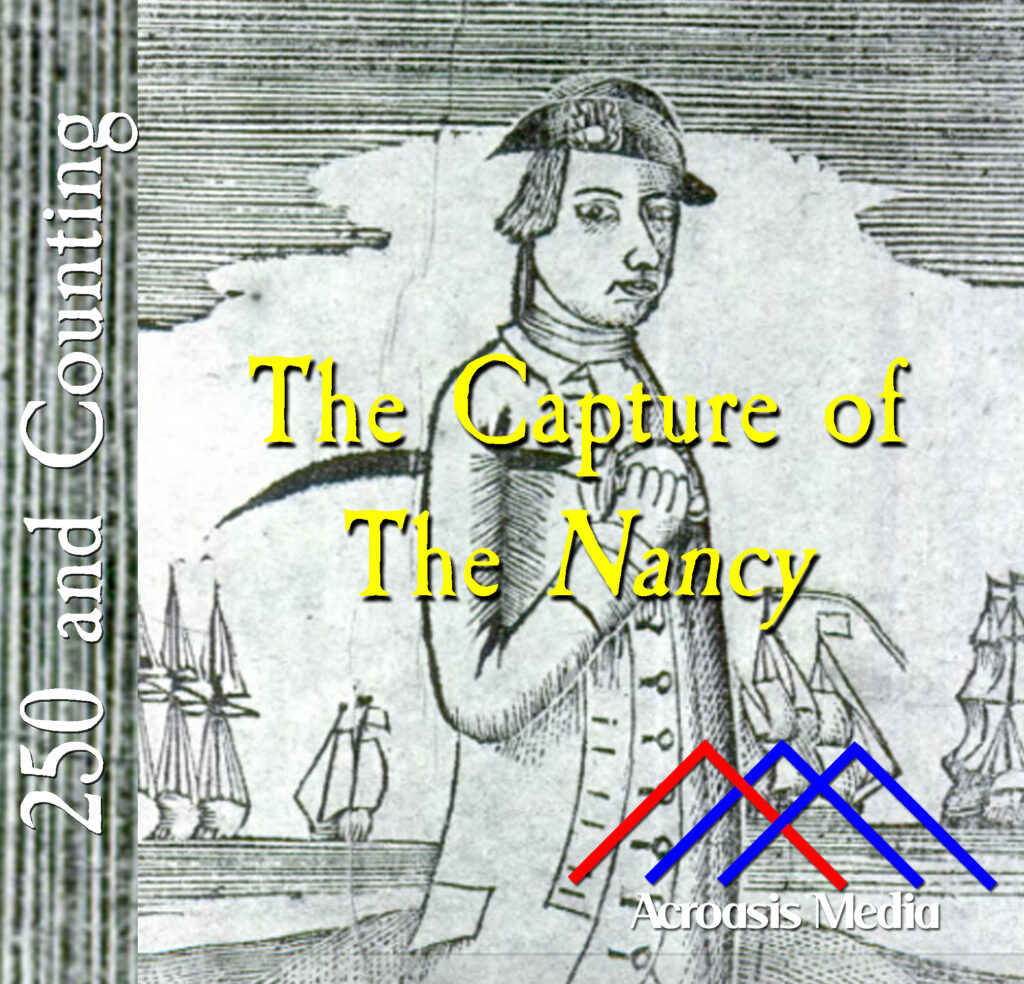
    Cover art for November 28, 1775: Wood blcck engraving of John Manley, 1782. Artist unknown. Via Peabody Essex Museum.

    The capture of the British brigantine Nancy wasn’t Captain John Manley’s first (it was perhaps his third), but it was probably one of his most significant, considering the cargo. It was also probably the first British ship of any real consequence to be captured by any American.

    Overall, Manley’s effectiveness as a Navy captain was rather variable. He was a big risk/big reward kind of sailor, and so when he was successful, he was very successful, and when he wasn’t, he wound up imprisoned. And frankly, there were a few times he wasn’t successful.

    But that doesn’t take away from his successes. Between 1775 and 1783 Manley was the sole ship captain for the capture of ten ships, and was an active participant in the capture of five others.

    The US Navy has named three ships after him, the most recent a Forrest Sherman-class destroyer which was decommissioned in 1983 after 26 years of service.

  • The Fate of War and Some Refugees–November 25, 1775

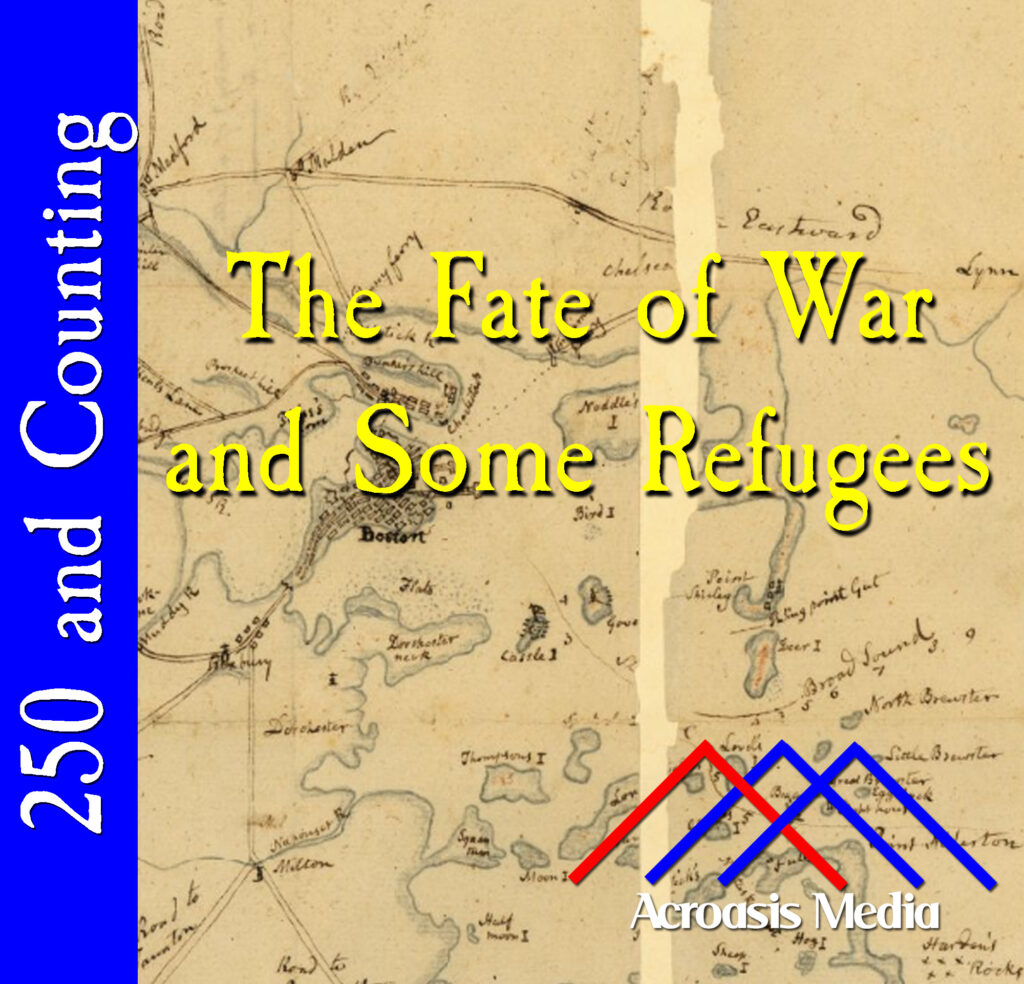
    Cover art for November 25, 1775: a manuscript map of Boston showing Point Shirley to the far right, away from the city. (It's under the "fu" in "refugees")

    It’s hard to emphasize just how remote Point Shirley is compared to the Boston. Let me try anyway. On most maps of Boston, Point Shirley isn’t even on the map. It’s so far to the east that it’s nearly in the ocean. I’m not sure it’s even possible to see Boston from Point Shirley.

    And given Point Shirley’s location at a place between the bay and the ocean, and the fact that it’s November, and you’ve got a cold, windy place where you’ve just dumped 300 sick, destitute people without provisions or a means of getting warm.

    Here’s a weird coincidence: if you look closely at this “manuscript” map from 1775, Point Shirley is at the center right. Need another hint? It’s just under the “fu” in the word “Refugees.” And if anyone got a big FU from the British, it was this group.

  • A Day of Thanksgiving–November 23, 1775

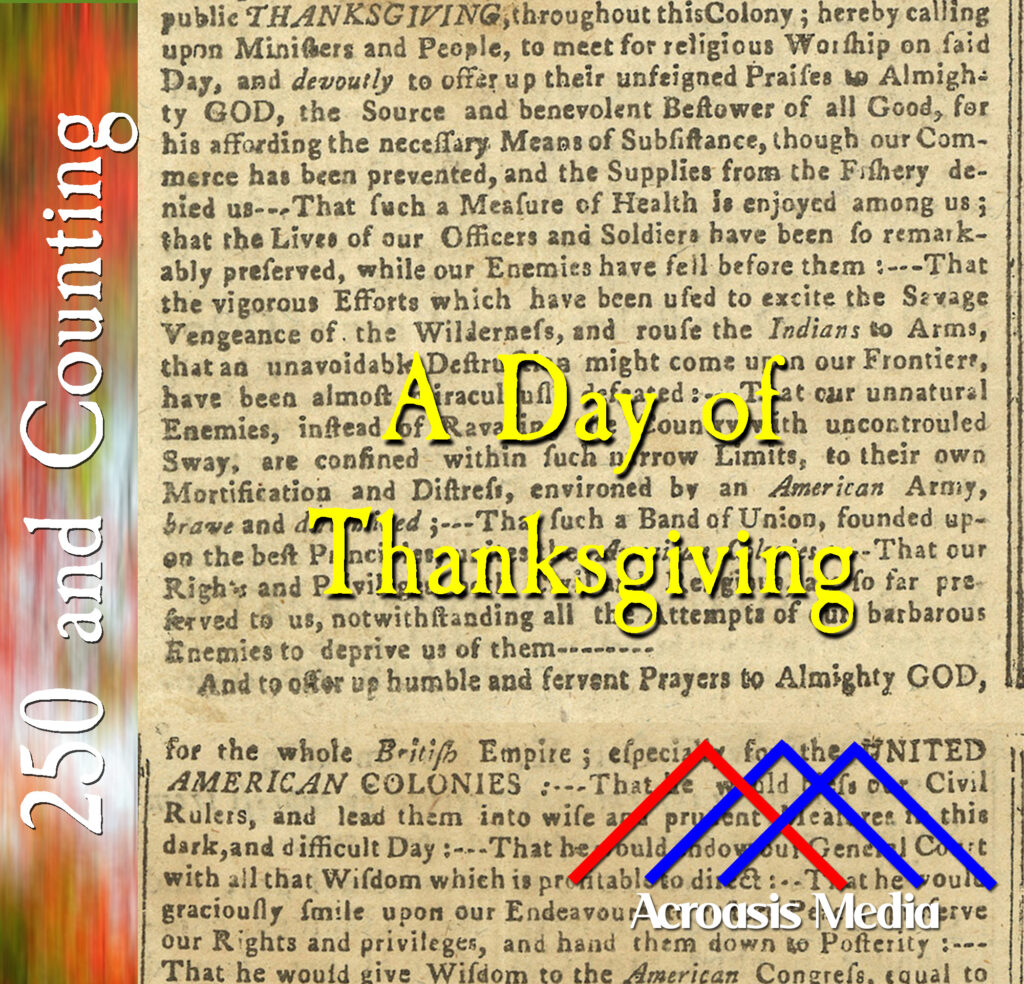
    Cover art for November 23, 1775: detail of the proclamation of a day of Thanksgiving as published in the New-England Chronicle (Cambridge, Massachusetts) on November 16, 1775.

    November 23, 1775 was at least the fifth time that a day of Thanksgiving was declared in North America. It might be the sixth, but the documentation for one of them is kind of thin,

    It might be the first Thanksgiving held on a Thursday, but again it’s tough to know for sure. It’s certainly the third held in New England.

    This is my first Thanksgiving in a few years in which I’m not the person cooking the meal, so I’m a little bit at loose ends this weekend; usually I’m already in pre-game mode. But I get to do Christmas, so I’ll save Family Madness Preparation for that week instead.

    If you’re the one preparing for Thanksgiving, don’t forget to take a moment now and then to relax a bit and take in the day.

    And the parade, of course. Watch the parade. And a couple of episodes of The West Wing (you know the ones, if you’re a fan like Mike and I are).

  • Sam Adams on Armies–October 31, 1775

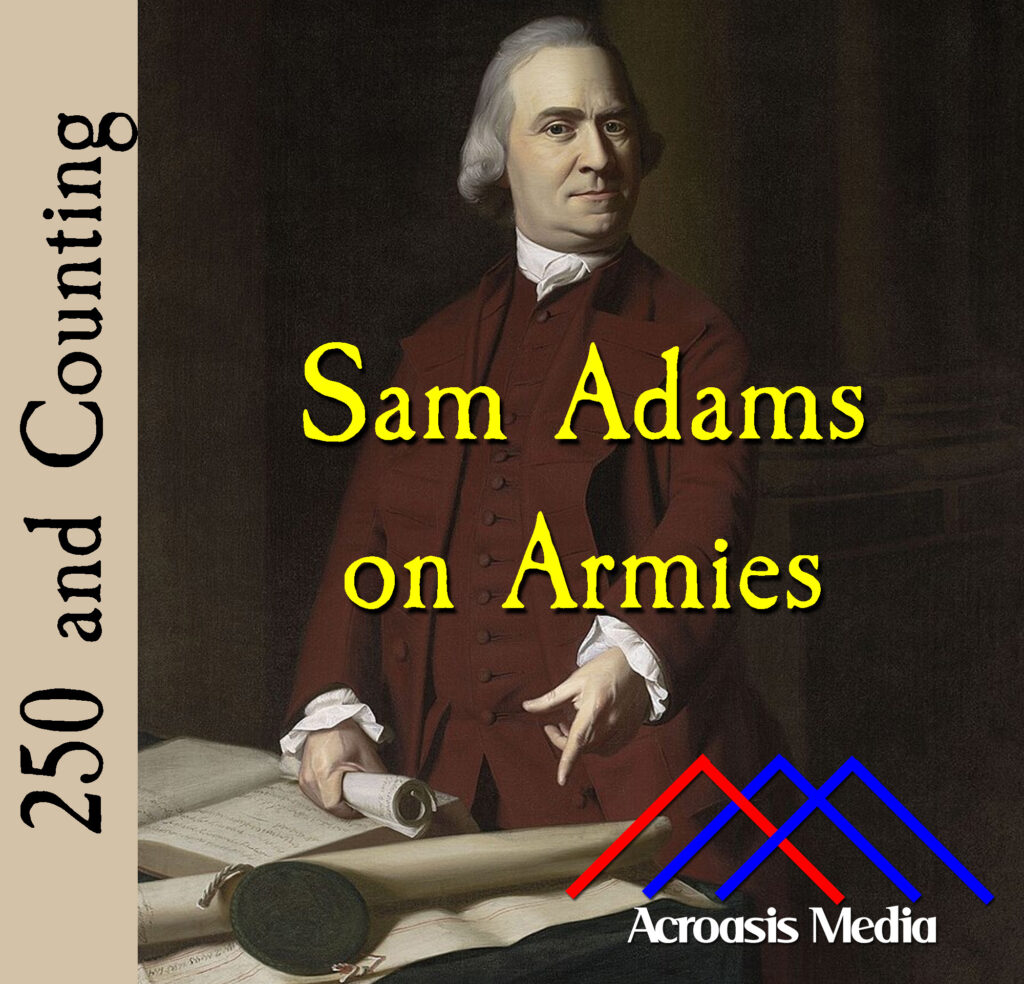
    Cover art for October 31, 1775: Samuel Adams, ca. 1772 by John Singleton Copley

    Sam Adams was a patriot in his own right, oftentimes supporting his second cousin John. The two of them were often able to work together closely. What’s more, they were an efficient team, with Sam Adams being the fiery agitator and organizer, and John Adams acting in the more measured and sophisticated role, playing the political diplomat.

    But Sam also had his own ideas about how things should be organized. When he heard that the Massachusetts Assembly was considering putting together military groups, he applauded the idea, but he was also worried that having each colony create an army, then putting them all under the control of a single entity, might be dangerous in the long run. He expressed these fears in a letter to Eldridge Gerry, written on October 29 and delivered to Gerry today.

  • Dorothy Becomes Mrs. Hancock–October 28, 1775

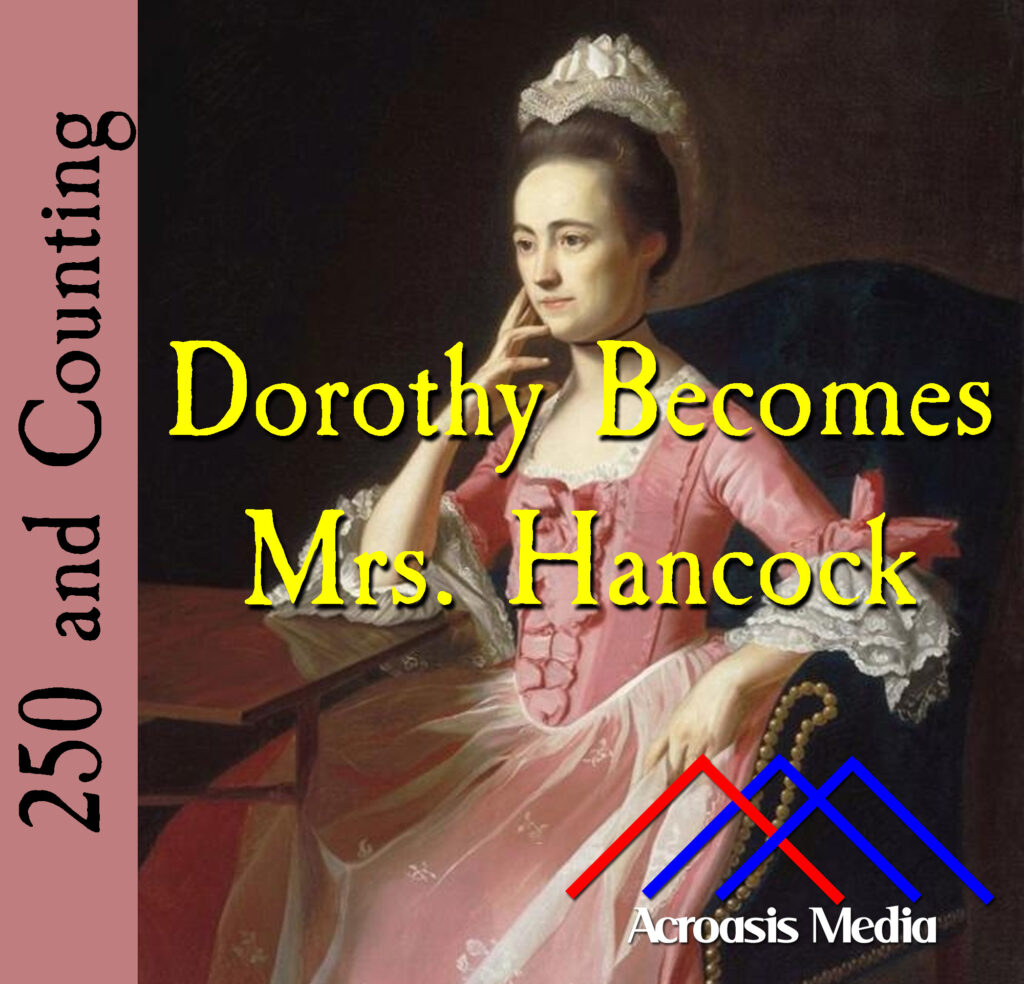
    Cover art for October 28, 1775: Portrait of Dorothy Quincy, 1772, by John Singleton Copley

    It’s nice, isn’t it, that not everything we have for your benefit concentrates on people shooting at each other or generally not being kind?

    Take today, for instance. It’s Wedding Bells for the President of the Continental Congress! John Hancock got married to Dorothy Quincy today!

    (Okay, never mind that the motivations to get these two together may have been a little corrupt. Let’s just be happy for this couple, hm? )

  • The Burning of Falmouth–October 16, 1775

    Cover art for October 16, 1775: detail of a 1782 engraving depicting the burning of Falmouth. From the Library of Congress Photographs and Prints Collection via Wikimedia.

    To be clear, the actual burning of Falmouth took place on October 18, but the events that led directly to it happened on this day.

    Captain Henry Mowat had been captured by patriots in Falmouth some time earlier. When he returned, he brought five gunships with him. When he demanded that the locals swear allegiance to King George III, he gave the command that laid waste to the town.

  • October 6, 1775: A Strongly-Worded Letter

    Cover art for October 6, 1775: Seal of the Commonwealth of Massachusetts. Basic design adopted by Governor John Hancock and the Council on December 13, 1780 [1], present design adopted in 1901, rendered by E.H. Garrett

    We actually touched on this once before, but George Washington was known for being quite the gentleman, but he did have a temper, especially when things weren’t handled in a gentlemanly way. Cross the lines of civility and he was hoisting the Jolly Roger, my friend.

    In a previous episode we noted that Washington wrote to General Gage about the treatment that captured American soldiers were receiving. In it was a thinly-veiled hint that he had prisoners too. And he’d be more than happy to treat them the way the British were apparently treating American soldiers. It’s not clear whether this had the desired effect. What is clear is that when something didn’t meet his expectations, he was going to make himself heard.

    And by this date, Washington had a few things that needed to be addressed by the Massachusetts General Court. That sounds like a legal body but it was, in fact, the provincial government at that time. There were some things that the Continental Congress handled for the army, but the General Court took care of much more at that time. Unfortunately for Washington, the General Court was—in his opinion—dragging its feet and needed a nudge in the right direction.

    And Washington was only too happy to provide that nudge.

  • September 21, 1775: RIP Abel Prescott

    Cover art for September 21, 1775: this might be Paul Revere. It might be William Prescott or Samuel Dawes. It's definitely not Abel Prescott.

    In the episode itself I took the time to hammer home the point that many of our historical legends aren’t quite what they seem to be.

    But also important is the forgotten people of our history as well. Not just the faceless folks who fought and died (or didn’t but remained in obscurity), but the people who were an important part of some events, yet go unnoticed today. And Abel Prescott is one of those people.

    Not a lot is known about him, other than that he was William’s younger brother. And while William Prescott, along with William Dawes and Paul Revere, were intercepted by the British, Abel Prescott did manage to get away, albeit with a bullet in his side. Five months later, that bullet killed him.