Tag: Massachusetts History

  • April 16, 1775: Sylvester Maxwell

    Cover art for April 16, 1775: the gravestone of Sylvester Maxwell, in the East Charlemont Cemetery in Charlemont, MA

    I (Claude) remember once reading something about how it’s not so much the dates on the tombstones so much as it is the dash in between the dates. Because the dates represent singular events, but a lot of stuff happened during the dash.

    And while that sentiment is often so much glurge, it does get me to thinking sometimes about the legacies left behind by tombstones. These were people who wanted to be remembered somehow. That’s not to say that people who choose to be cremated or buried at sea or dispensed with by some other means don’t want to be remembered; they just don’t seem to care whether there’s a marker saying I WAS AND NOW I’M NOT. These are largely the types who feel that you’re forgotten when your name is spoken for the last time, or when the last person who remembers you is, themselves, dead.

    Sylvester Maxwell, to me, is in an odd place. We have his name and we know a few things about him, but we don’t have a good handle on who he was. He could be any one of hundreds of stones we pass in any given cemetery.

    I’m getting maudlin here; I apologize. And I’m on vacation! In a beach condo! I gotta lighten up!

    Okay, then: for all that, Mike has a story for you about Sylvester Maxwell. And there is something rather notable about his life, that he’ll tell you about.

    Enjoy. I’m going to see if I can get some Vitamin D the natural way.

    Aw, man. It’s night time.

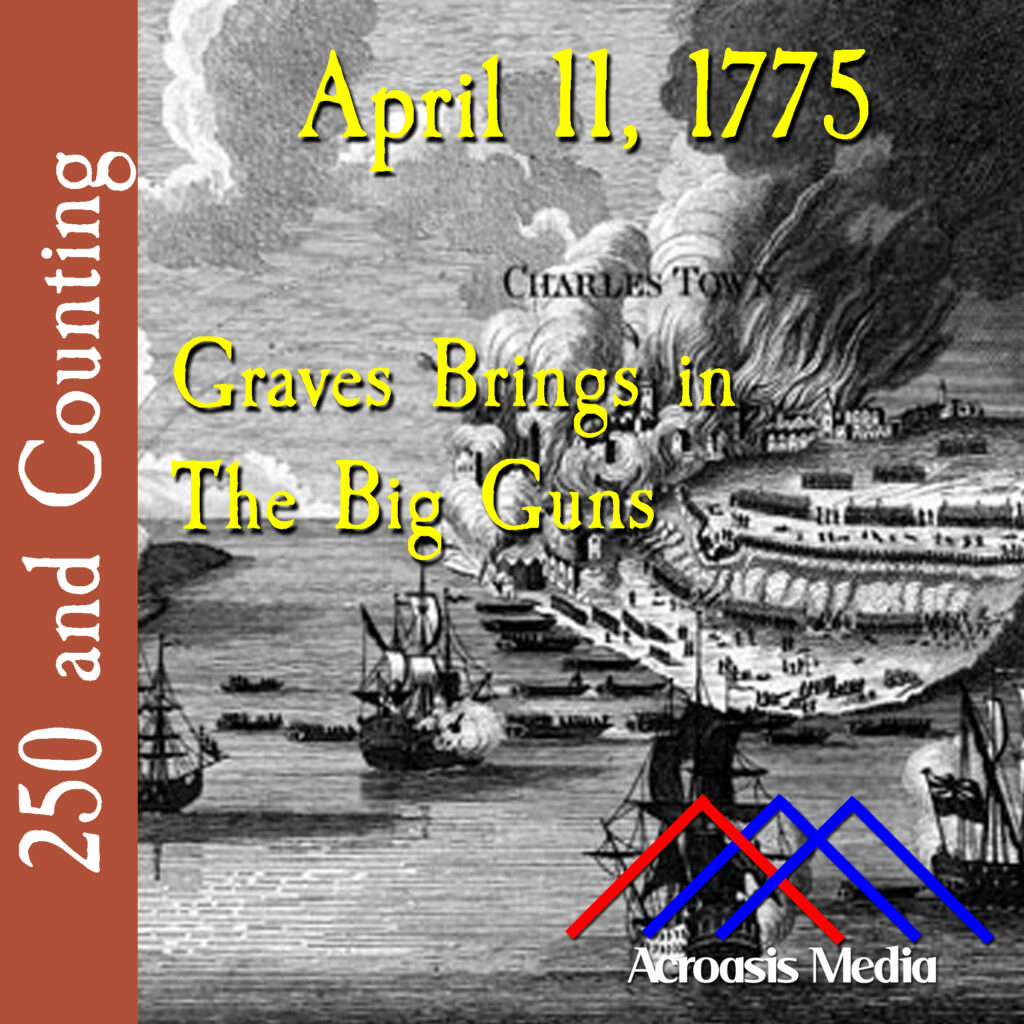
  • April 11, 1775: Graves Brings in The Big Guns

    Cover Art for April 11, 1775: "View of the Attack on Bunker's Hill with the Burning of Charlestown, Engraving by Lodge. The Somerset is among the ships in the image.

    When the HMS Somerset first reached Boston, she was an old, leaky, weathered mess. Admiral Graves asked for permission to repair it, and while the work was slow at first, the sailors actually managed to get the important parts of the work completed. By this day in 1775, the ship was considered seaworthy and capable of doing more from its perch in the harbor, so Graves moved it into the place of two other ships, largely to demonstrate that he could do it, and safely.

    Had the lookouts been more alert when the battles of Lexington and Concord first broken out, the outcome could have been quite different.

  • April 10, 1775: Skirmishes in Assonet, MA

    Cover art for April 10, 1775: Profile Rock in Assonet, MA. Scanned from a 1902 postcard. The formation collapsed in 2019.

    This isn’t the first time you’ll see a statement like this, but the bottom line is: the history books aren’t 100% correct. Sure, the Shot Heard Round The World was at Lexington and Concord. But that’s not where the fighting started.

    Nearly two weeks before Concord, there were small battles going on in Assonet, Massachusetts, near the Rhode Island border.

  • April 8, 1775: The New England Army

    Cover art for April 8, 1775: painting of members of the New England Army. Painting by Don Troiani

    Well…it’s official. It was on this day in 1775 that our assorted collection of irregular militiamen turned into a genuine army.

    The Provincial Congress in Massachusetts proposed, and adopted, a resolution that provided for a genuine army dedicated to protecting our shores against the British. That was the New England Army, but the name didn’t last long. Tune in to find out their other name.

  • April 7, 1775: Francis Cabot Lowell

    Cover art for April 7, 1775: a silhouette of Francis Cabot Lowell. There are no portraits extant of Lowell, so this profile is typically used to represent him.

    It’s cake and candles today for Francis Cabot Lowell, a manufacturer who helped modernize the textile industry in the United States, largely through industrial espionage: in the middle of a trade war with Europe, Lowell visited England and memorized the processes they were using so that he could bring them back to this side of the pond, helping us to break the hold on imported goods from Europe by innovating the cradle-to-grave manufacturing process for fabrics.

    Yet, despite his prominence in the industry, and despite the statue that stands in his name in the town of Lowell, Massachusetts, the silhouette seen in today’s cover art is the only hint that we have regarding what he might have looked like. There are no portraits extant that we know of.

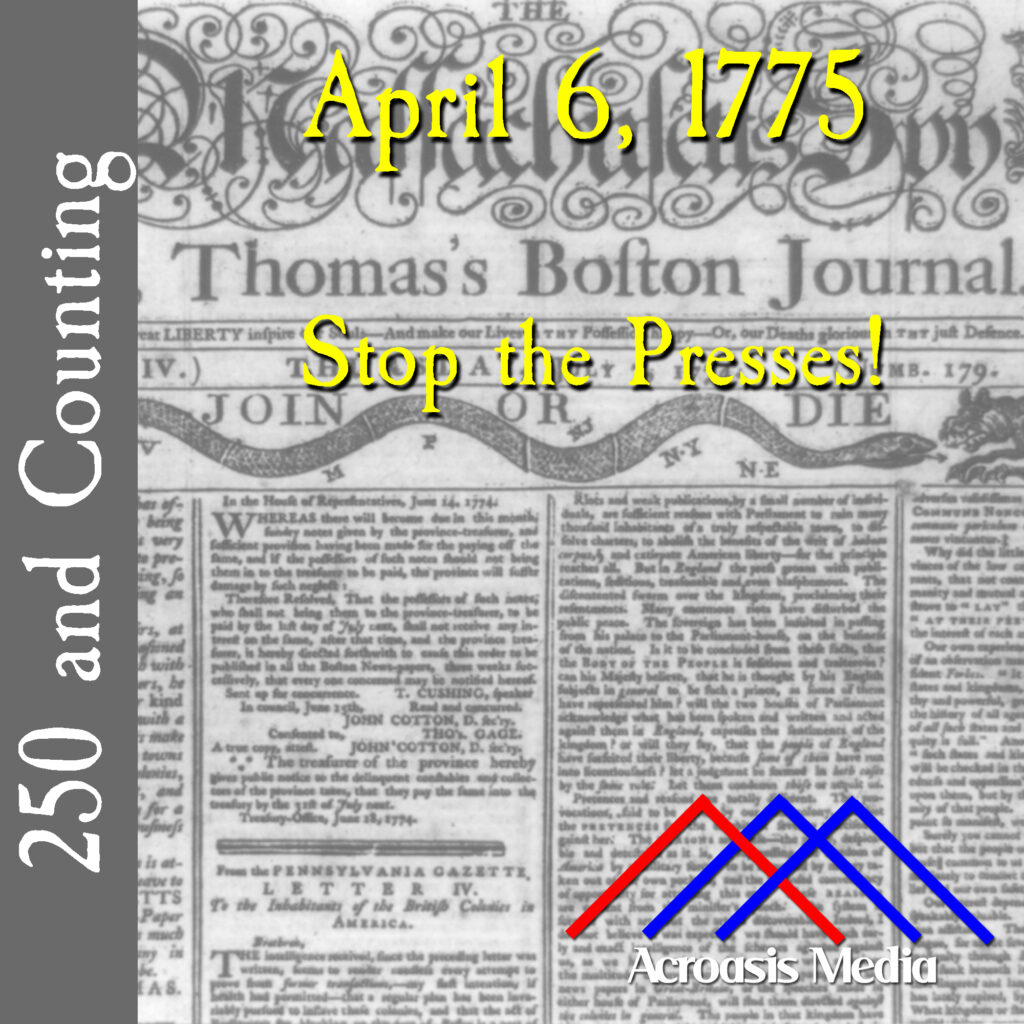
  • April 6, 1775: Stop the Presses!

    Cover art for April 6, 1775: Detail of the front page of the Massachusetts Spy, July 7, 1774.

    In past episodes (quite recently, in fact) we’ve talked about the Colonists’ need to move caches of gunpowder and other weaponry when they got wind of an imminent British seizure.

    By the time April of 1775 rolled around, it wasn’t just the explosive weapons that the British were after; it was the press as well. And the more you hear about the specific things that the British imposed on the Colonies as events moved closer to all-out war, the more obvious their need to appear in the Bill of Rights becomes. (Whatever you think of any specific Amendment, it’s not too tough to see the reasoning that went into its inclusion if you look at it from a contemporary standpoint rather than a modern-day one.)

    This it was that on this day, the Colonists heard that the British were going to move in on restricting a free press, so the Massachusetts Spy simply up and left so there would be nothing to seize.

  • April 5, 1775: The British Gear Up For War

    Cover Art for April 5, 1775: A 2007 photograph of the Old Powder House in Nathan Tufts Park, Somerville, Massachusetts. Photo by Erik Edson, via Wikimedia Commons.

    Up until now, we’ve presented General Thomas Gage as rather a hard liner who was looking to subjugate the Colonies somehow. Nothing could be further from the truth.

    The fact is, he like being a light-hearted guy, and when he became the Royal Governor of Massachusetts, he discovered exactly what kind of mess he’d stepped into. At that point, anything he did would only make matters worse.

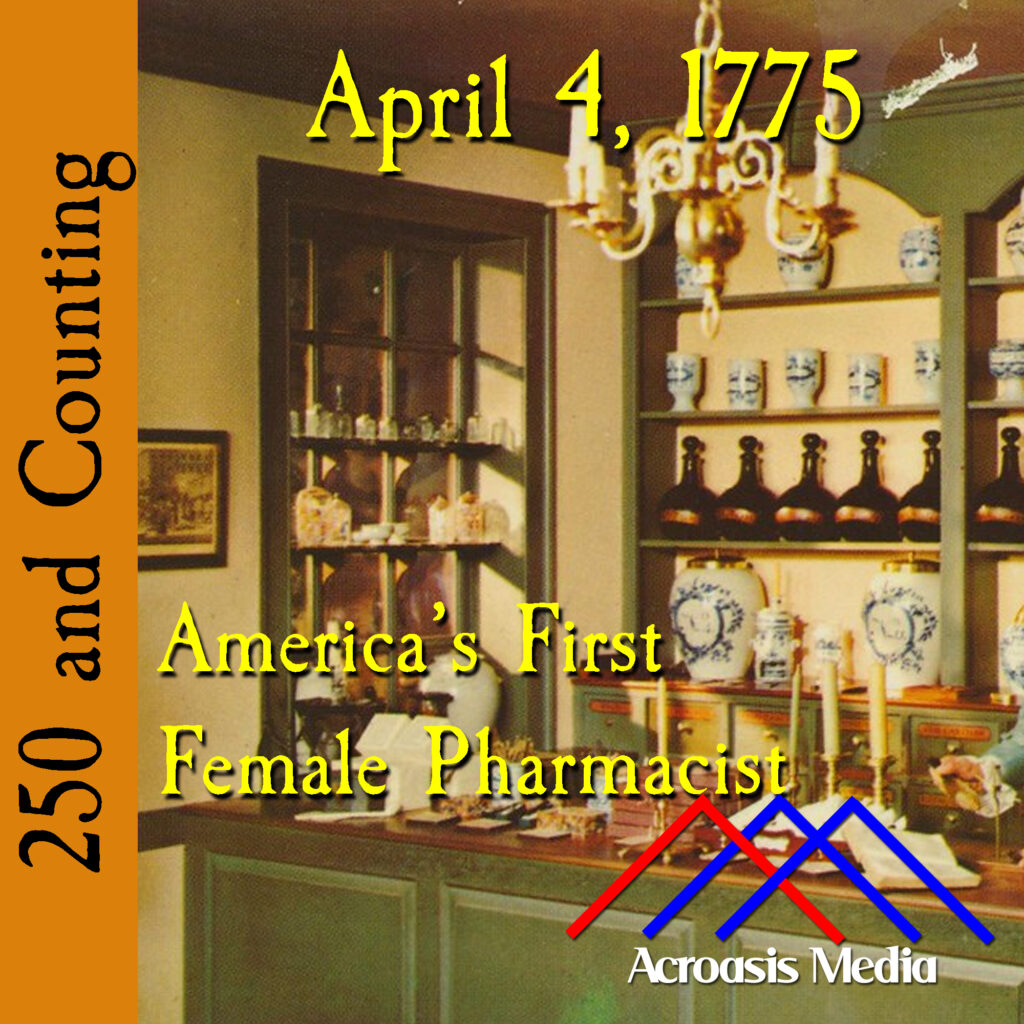
  • April 4, 1775: America’s First Female Pharmacist

    Cover art for April 4, 1775: a reproduction of an 18th Century Apothecary shop in Williamsburg, VA.

    The title kind of buries the bigger story, but we wanted to ensure that you understood what a big deal Elizabeth Gooking Greenleaf was.

    Elizabeth was dead by the time 1775 rolled around, but her family continued to run the apothecary shop for many years, and they were instrumental in ensuring that the Massachusetts Patriots were equipped with medical supplies should war break out.

    Today there is a chain of pharmacies in the midwest called GreenLeaf Apothecary, but there’s no connection we could find between this and the original, except perhaps as homage.

  • March 31, 1775: Mercy Otis Warren, Ignoring the Rules

    Cover art for March 31, 1775: photo of the statue of Mercy Otis Warren that stands outside the County Courthouse in Plymouth, Massachusetts. Photo by Kenneth C. Zirkel,. Other than cropping to fit, used without changes under the Creative Commons License.

    Today’s episode marks the end of Women’s History Month. We’ve noted a few episodes since this adventure first started that involved women taking political action as groups, but Mercy Otis Warren was one of the most influential individual women to take a political stand in the Revolution era.

    She was self-educated, and married a man who was both enlightened and politically active himself, and she used her position as her husband’s hostess to develop and maintain connections of her own. She was also able to use what she learned to develop some of the pieces she wrote, whether they were factual or thinly-disguised fiction pieces.

    Claude and his wife Shannon did the extra-touristy thing of visiting Plymouth, Massachusetts during Thanksgiving weekend several years ago, and we did see the Mercy Otis Warren statue, but frankly at that time we still had a lot to learn about her. (If you go, be warned that Plymouth Rock is even more disappointing than everyone tells you it is.)

    And because it’s an episode celebrating Mercy Warren, we talked Shannon into recording the episode. Enjoy.

  • March 30, 1775: King George III Restricts Trade

    Cover Art for March 30, 1775: Portrait of King George III, ca 1790,

    In the past we’ve talked about the New England Restraining Act; today was the day that King George III actually put it into action.

    To mark that day, Mike takes you through some of the details of the act and its impact on the trade in the Colonies, and the political impact in Britain.