Tag: New York History

  • John Alsop Steps Out–July 16, 1776

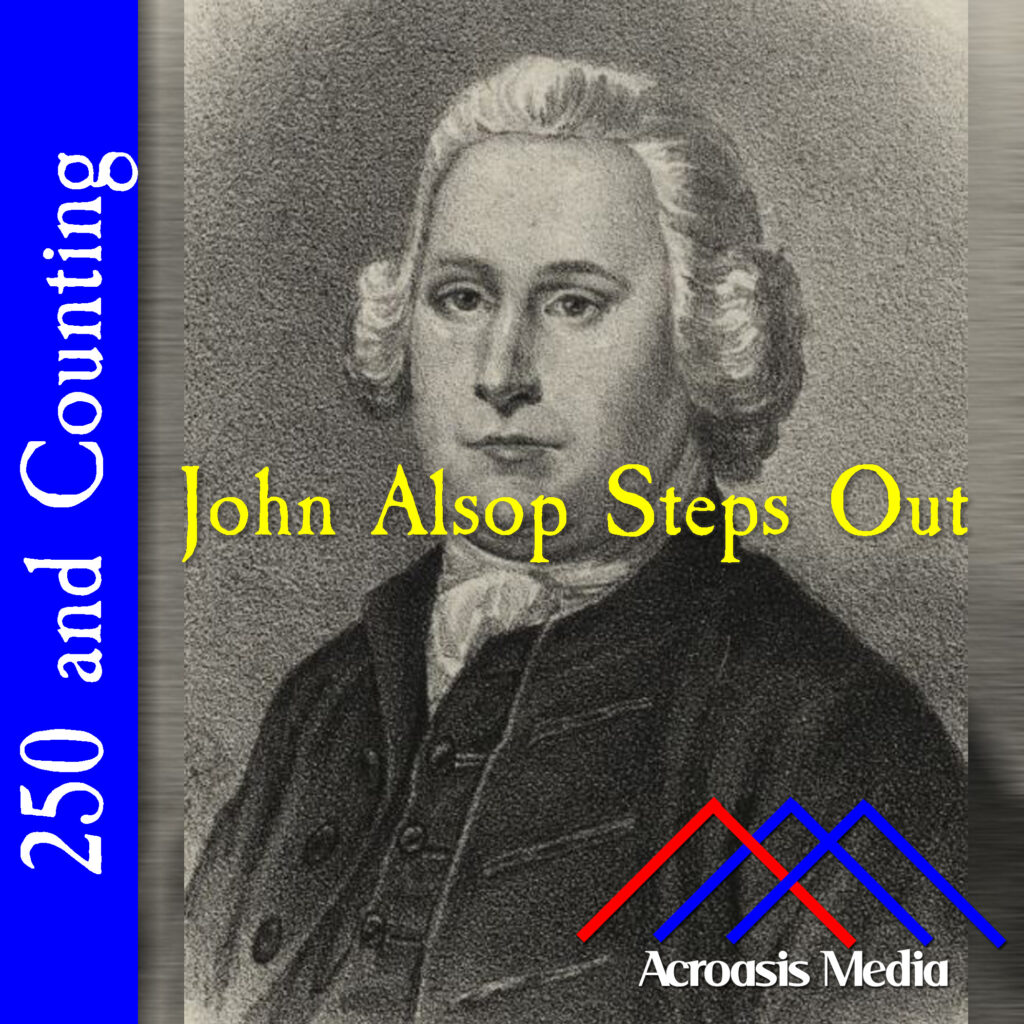
    Cover art for July 16, 1776: John Alsop. Lithograph by Max Rosenthal created around 1885, based on an oil painting by an unknown artist, ca. 1765.

    John Alsop was born in 1724 in New Windsor, Orange County, in the British Province of New York. He was the son of John Alsop, Sr. and Abigail Sackett. His father was a lawyer in New Windsor and later New York City, where he was largely interested in real estate.

    As a young man he moved to New York City, where he entered the mercantile world with his brother Richard. The brothers became importers and merchants in cloth and dry goods. John became interested in civic and political activities. He was elected by New York County to serve in the Province of New York Assembly. He was one of the civic leaders that incorporated the New York Hospital Association and served as its first governor from 1770 to 1784. In 1757, his brother Richard retired from business and removed to Middletown, Connecticut.

    Early in the Revolution, the Province of New York Assembly could not reach a conclusion about the Continental Congress. As a result, delegates were selected by the revolutionary committees in each county. In 1774, Alsop, along with James Duane, John Jay, Philip Livingston, and Isaac Low, was named as a delegate. When the First Continental Congress convened on September 5, Jay presented their credentials, and the Congress accepted. Alsop arrived in Philadelphia on September 14.

    Alsop returned to the Second Continental Congress, and while he assisted in the war effort prior to the Declaration, he never lost his hope for reconciliation with Britain and he wound up resigning from the Congress rather than sign the Declaration. He did continue supporting the Continental Army, from his home in Newtown, NY until that town was overtaken by the British, then he continued to work from Manhattan. When they took Manhattan as well, Alsop fled to Connecticut and stayed there until 1783, when the occupation ended.

    Alsop died at his home in Newtown, Queens County, New York, on November 22, 1794, and is buried in Trinity Church Cemetery in Manhattan. His considerable fortune, which he managed to rebuild, was passed to his daughter and son-in-law after his death.

  • You Don’t Mess Around With George–July 14, 1776

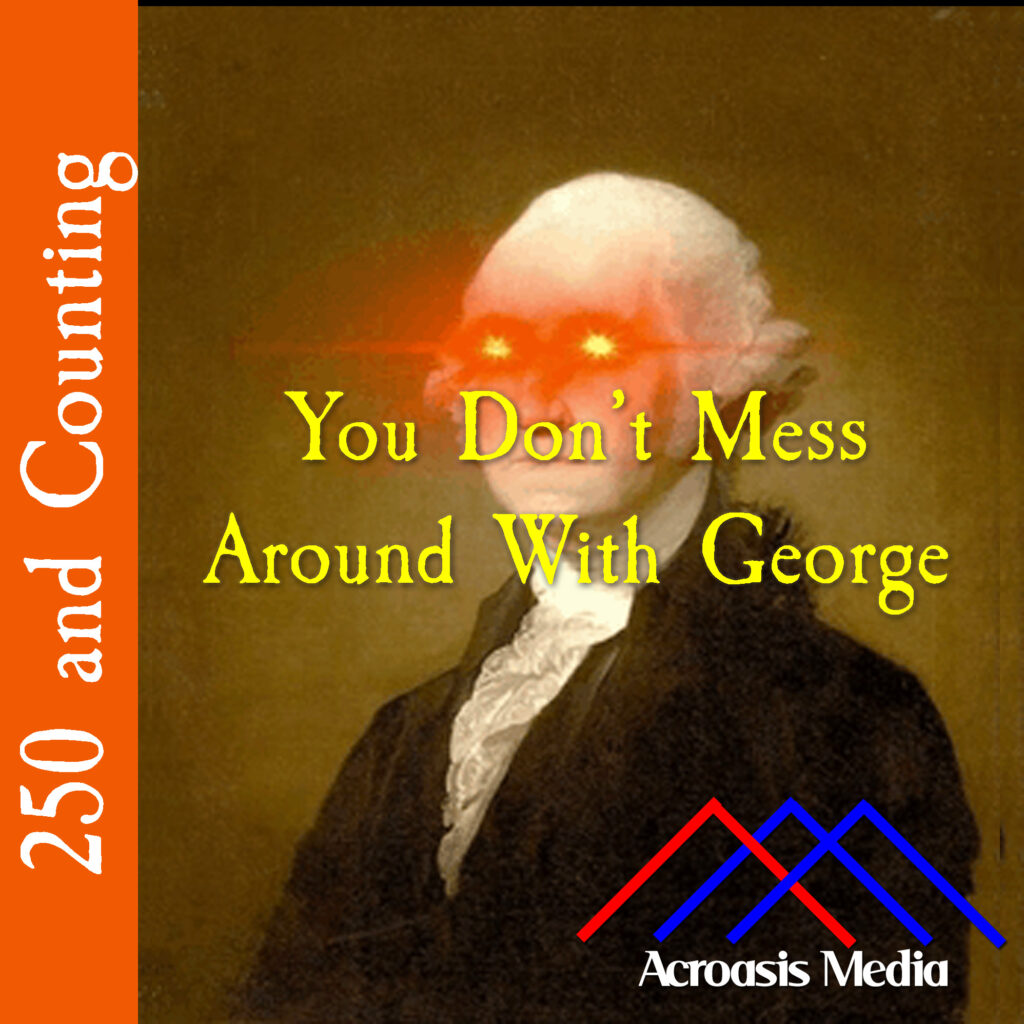
    Cover art for July 14, 1776: altered portrait of George Washington, via tenor.com.

    One of the most common things written about George Washington is that he always behaved like a gentleman, and expected others to behave the same way; following protocol was very, very important to him.

    When he was sixteen years old, he copied out by hand 110 rules of Civility & Decent Behavior in
    Company and Conversation
    , likely as a penmanship exercise. These rules are based on a set of rules composed by French Jesuits in 1595. The first English translations of the French rules appeared in 1640, and are ascribed to Francis Hawkins, the twelve-year-old son of a doctor. (So, probably as a translation exercise from Hawkins’ French tutor.)

    Without even knowing it, the people who worked with this set of rules was absorbing a code of behavior that worked for people of all social strata, rather than for a specific class of people. Thus, it makes sense that the protocol for Washington as a leader of soldiers, and then a nation, depended on the “all men are created equal” credo.

    As Parson Mason Locke Weems said of Washington, “‘no wonder every body honored him, who honored every body.” And while Weems is also thought to be the guy who made up the Cherry Tree story, he was certainly correct in this respect.

  • New York Becomes A State–July 11, 1776

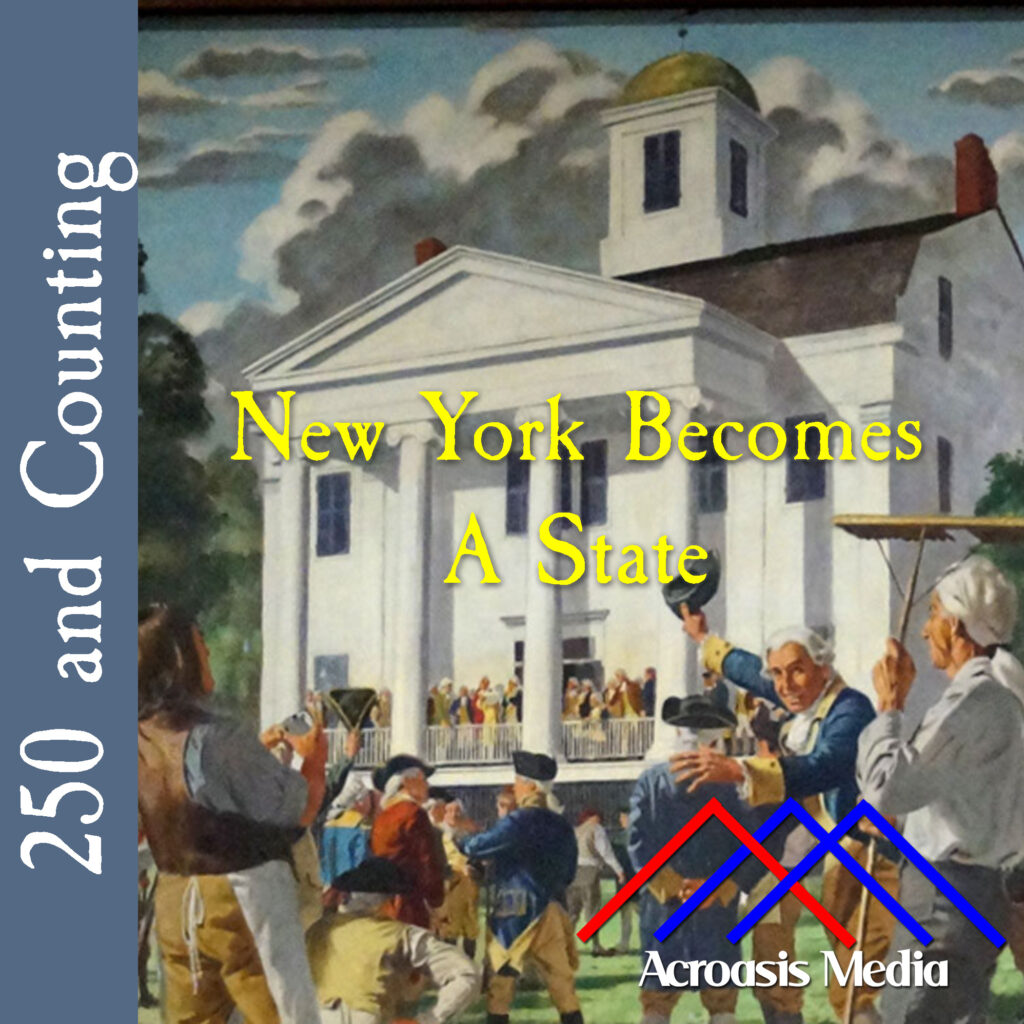
    Cover art for July 11, 1776: "Reading of the Declaration of independence White Plains, July 11, 1776" by George Albert Harker, commissioned by the Westchester Title and Trust Company in 1915.

    White Plains, New York, calls itself the birthplace of the State of New York, and this day in 1776 is the reason why.

    The provincial congress, having fled New York City to White Plains, received a copy of the Declaration of Independence and immediately approved it, then resolved to change their name from “The Provincial Congress of the Colony of New York” to “The Convention of Representatives of the STATE of New York.”

    Thus, when the Declaration was read aloud to an assembled crowd a short time later, it was the first time it had been read in New York State. The earlier reading in New York City didn’t count for that, because New York was still technically a colony. (And sticklers know that “technically correct” is the best kind of correct. Sticklers also get beat up a lot…um, I’ve heard. )

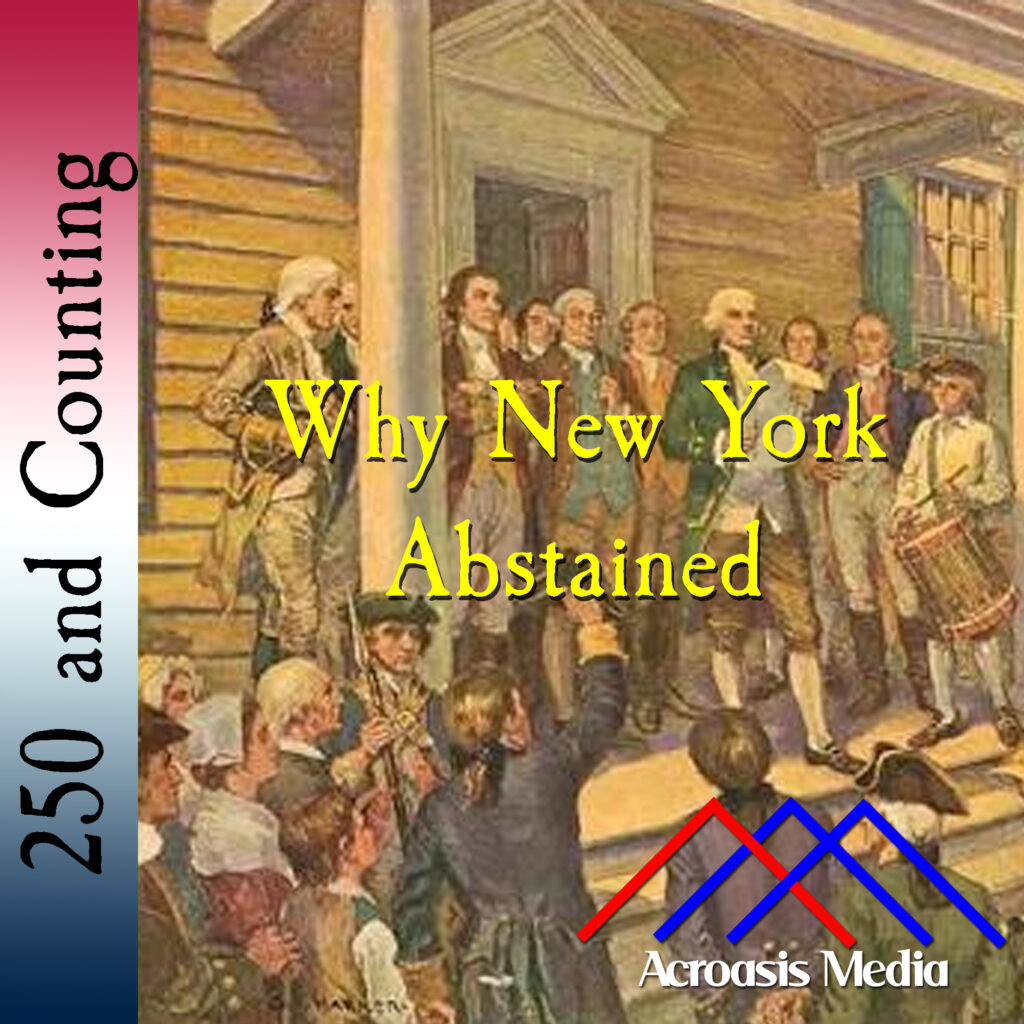
    About today’s cover art: the image that we used on the July 3 episode is also a depiction of Judge Thomas reading the Declaration to the people of White Plains, which is why it’s titled “Birth of the State of New York.” This is a different angle of the same event, created around the same time as the other image, by the same artist. Mr. Harker got some mileage out of this day and he wasn’t even there.

  • Down With The King–July 9, 1776

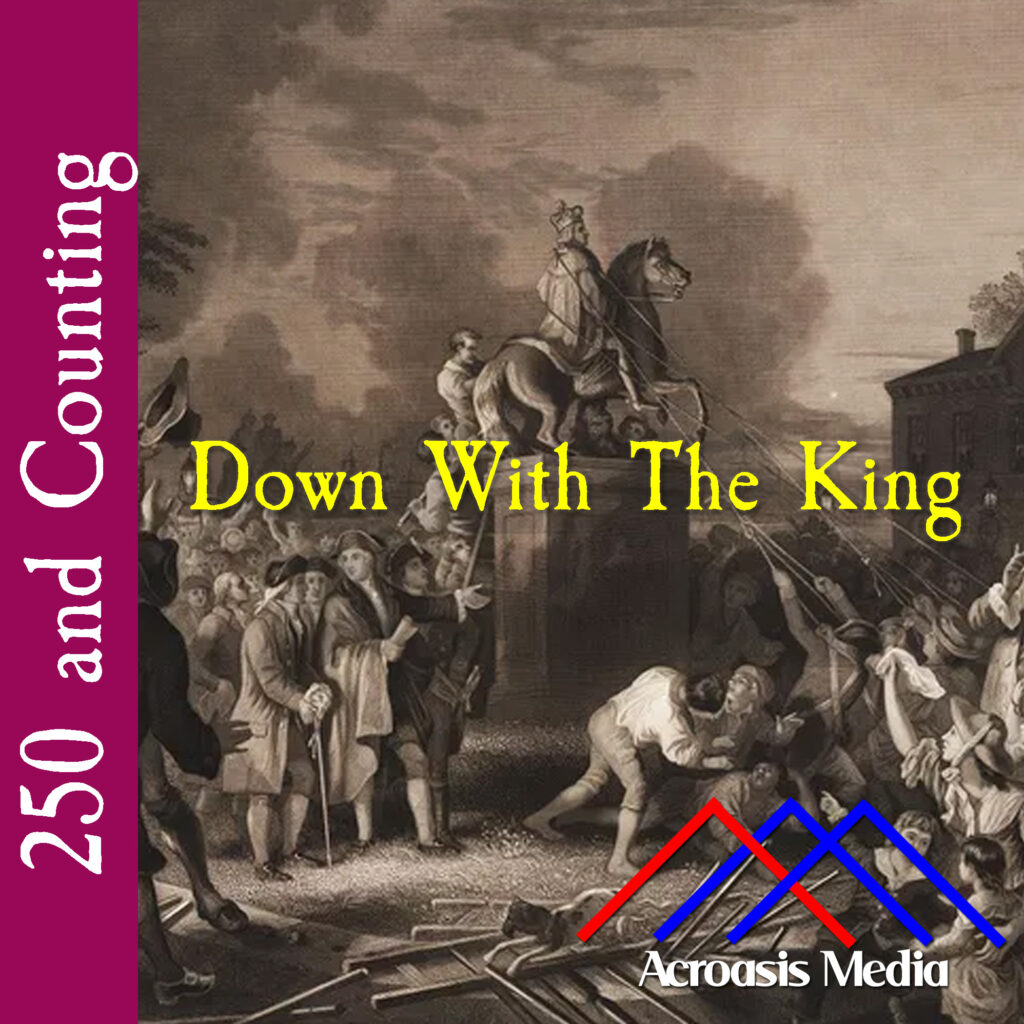
    Cover art for July 9, 1776: "Pulling Down the Statue of George III," by Johannes Adam Simon Oertel, engraved by John C. McRae, 1859. via Museum of the City of New York.

    When a statue of King George III was pulled down in New York, it was a good sign for the city, since there were times that it felt that the spirit of Independence was rather squashed by the sight of the British fleet, which was still arriving.

    A brief digression: several years ago (ugh, longer ago than I care to remember) I took the opportunity to visit the City of the Museum of New York. It’s quite a cool museum that has hundreds of thousands of objects in its collection, with several thousands on display at any given time. They currently have a special exhibit called The Occupied City, which deals with New York City during the early years of the American Revolution.

    According to an article I recently read in Smithsonian Magazine, which provided some of my research material for today’s episode, the Museum of the City of New York has, as part of this exhibit, an opportunity to virtually pull down the statue of King George III. Who can pass up something like that?

    No kidding, if you’re in Manhattan, budget yourself a few hours to see this museum. You’re guaranteed to learn a lot of fascinating things. Then head on over to the New York Historical Society. They already pulled down their statue of King George III (today, in fact), but there’s still plenty to see and do. They’re on opposite sides of Central Park and about 30 blocks apart, but if you do it in that order, you’ll end your day close to Zabar’s and that’s a whole other experience for you.

    Man, I miss living in New York.

  • Howe Checks In–July 7, 1776

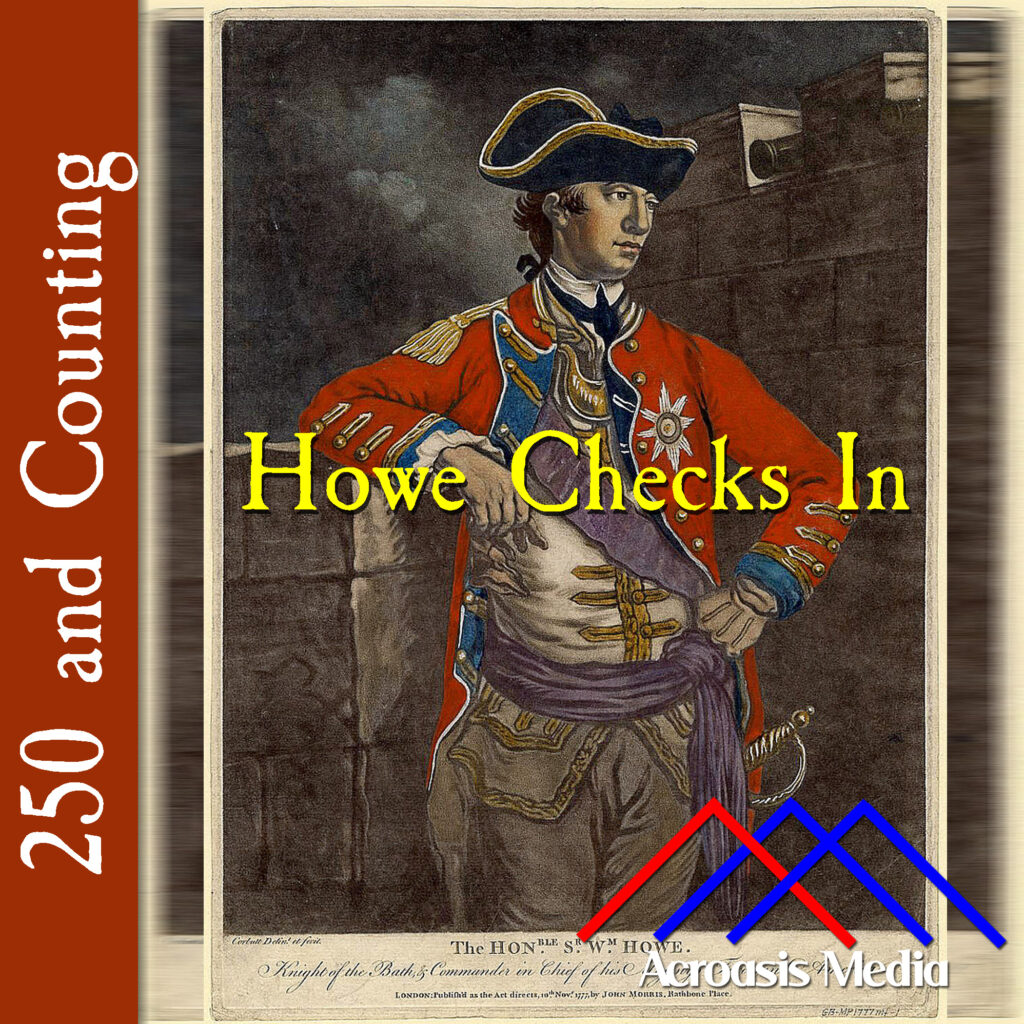
    Cover art for July 7, 1776: color mezzotint print portrait of WIlliam Howe by John Morris, published in 1777.

    William Howe had already been in New York for a little over a week when he wrote to George Germain from his Staten Island headquarters.

    Not everyone had yet arrived from Halifax, of course; it was a long trip and the ships moved at different speeds. Howe took the time to detail what troops and ships had already arrived in New York, and what was still enroute, and that he was awaiting some more reinforcements before acting in full.

    I presume that he was as detailed as he was because he was dispatching the letter to George Germain immediately via a packet ship, and the American Navy wasn’t really in a position at that point to intercept anything; otherwise they would have had a lot of actionable information about troop movements and their plans.

    On the other hand, George Washington (and a few others) had already figured out what the British were up to, but at this point they were at a little bit of a loss regarding how they were going to counter it.

    Part of the problem was that the troops were still fighting more or less defensively. They didn’t have a specific cause to fight for. But in another couple of days, they would have that. It wouldn’t really help in the short run here, but it worked wonders in the end.

  • Why New York Abstained–July 3, 1776

    Cover art for July 3, 1776: "The Birth of the State of New York" by George A. Harker, ca. 1915. Print via Westchester County Historical Society; the original is in a private collection.

    In the play/film 1776, with nearly every vote cast throughout the show, a delegate from New York (Lewis Morris) steps up to announce New York’s abstention from the vote, “courteously.”

    It’s played for comedy, and at one point even the explanation is rendered comedic, when Morris tells the assembled delegates that the members of the legislature in New York “speak very fast and very loud, and nobody listens to anybody else with the result that nothing ever gets done.” He also says that the New York legislature has never given him explicit instructions. Now, the first thing may or may not be true (I’m from New York, so it’s possible), but the second item is not, as you learn in today’s episode.

    When it came to the question of Independence, New York did, in fact, abstain. And they were probably courteous about it besides. But New York’s abstention from the votes, over and over, were derived from explicit instructions, not their absence.

  • Hickey Leaves A Bad Mark–June 26, 1776

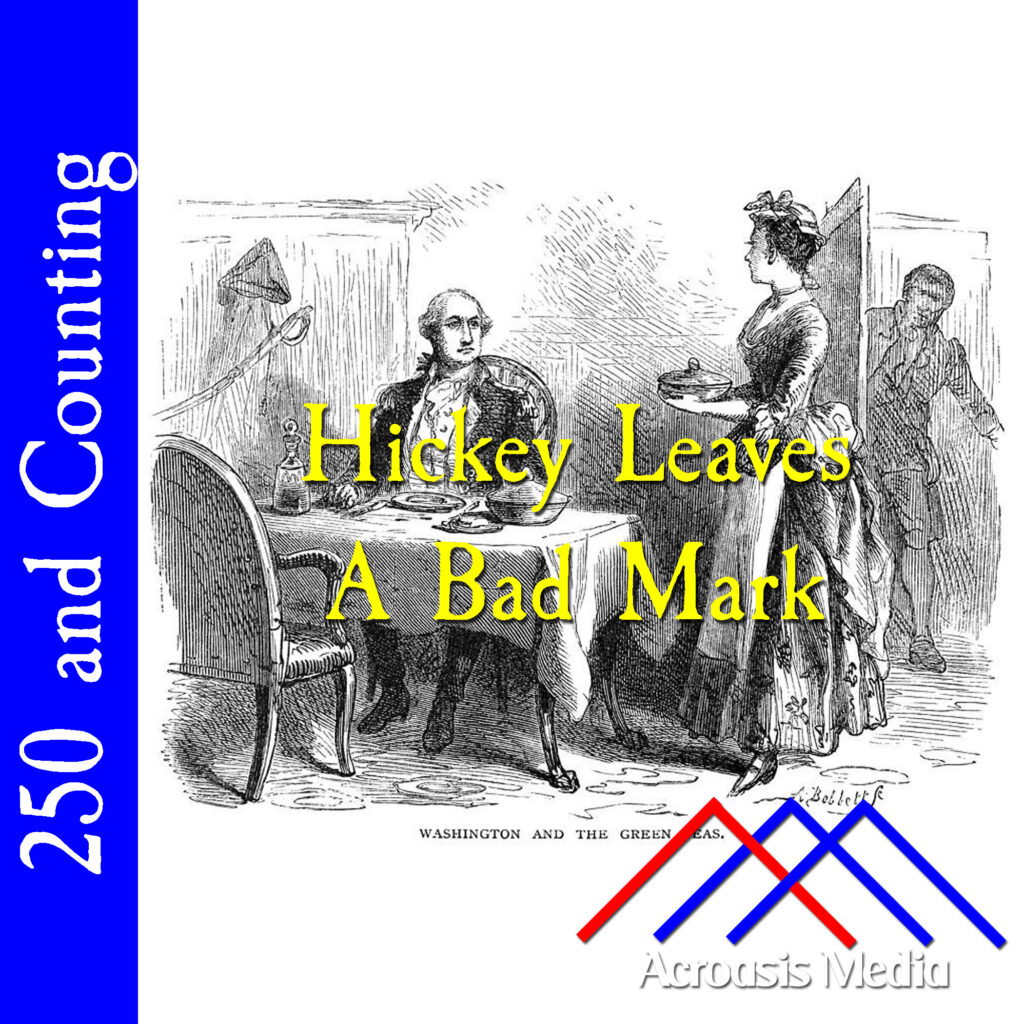
    Cover art for June 26, 1776: "Washington and the Green Peas". Engraving by Albert Bobbett, ca. 1876-77.

    That New York had a strong contingent of Loyalists was never a secret in 1776, but chances are that George Washington never thought one of his bodyguards, Thomas Hickey, was one of them.

    Hickey was a private in the Continental Army, which meant that he was part of a group that not only protected George Washington, but the Army’s local cache of money. At one point he was arrested for passing counterfeit money and it was while he was in jail that word got back to Washington that Hickey was planning to switch sides as soon as the British got there. So Hickey betrayed both the General and the currency he’d been assigned to protect.

    About the cover art: many years later, a story came out that was written by Washington’s grandson (more accurately, Martha Washington’s grandson) George Washington Parke Custis, that Washington was in danger of being killed by an insider via poisoning. After Custis died, his memoirs were published by his daughter Mary Anna Custis Lee, with extensive notes added by an antiquarian. According to this account:

    When Washington and his army occupied the city, in the summer of 1776, the chief resided at Richmond Hill, a little out of town, afterward the seat of Aaron Burr. [Samuel] Fraunces’s daughter was Washington’s housekeeper, and she saved his life on one occasion, by exposing the intentions of Hickey, one of the Life-Guard (already mentioned), who was about to murder the general, by putting poison in a dish of peas prepared for his table.

    Who alerted Washington to the poisoned peas varies from one account to another, and given a bunch of the details (which I’ve largely omitted here), it’s very likely that the story is apocryphal.

  • Isaac Van Houten–June 4, 1776

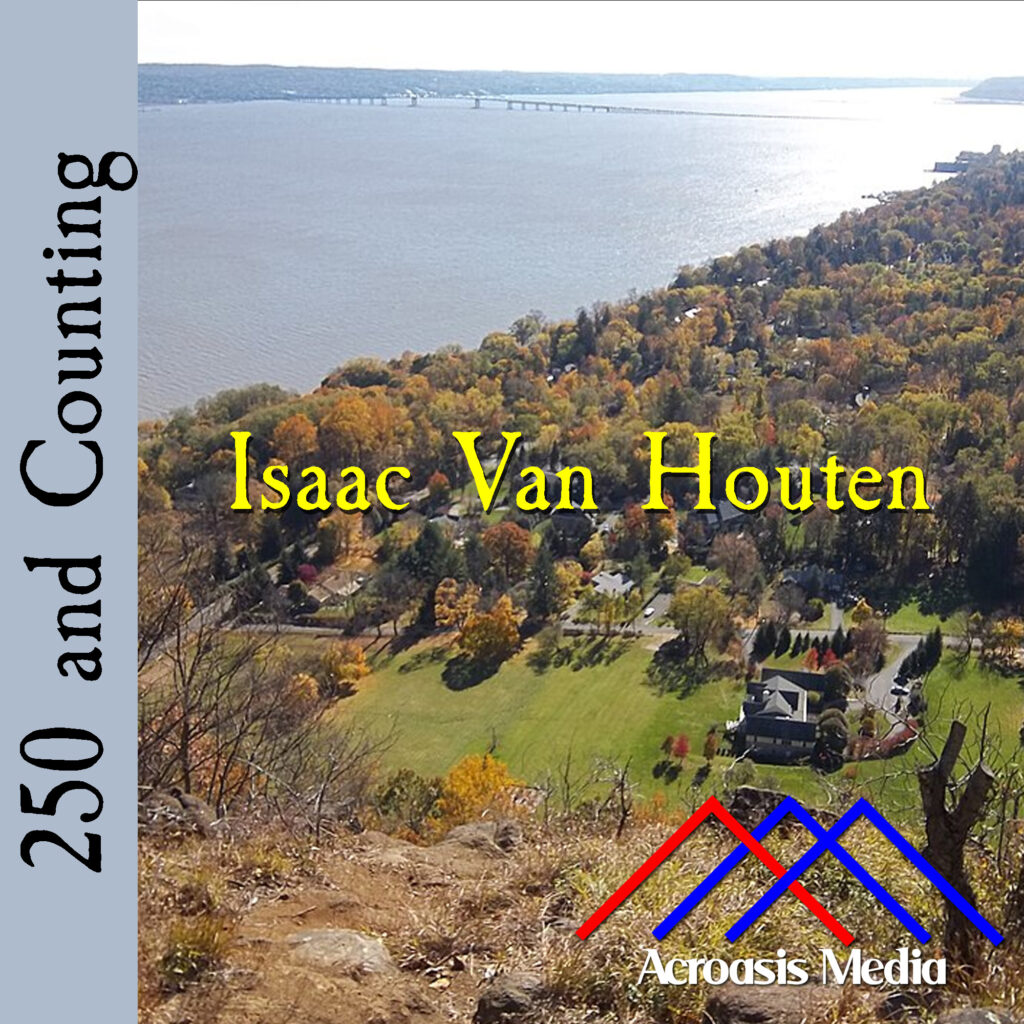
    Cover art for June 4, 1776: aerial view of Clarkstown in 2010, looking south. via Wikimedia Commons.

    The Rockland County area of New York State is some lovely country. It’s just north of New York City and, along with adjacent Duchess and Westchester Counties, could be considered the heart of the area where the Dutch settlers came and stayed.

    As a result you’ll find many place names that have Dutch origins. This is why so many places in the downstate New York area (the triangle above NYC) end in “-kill”, because “kill” is dutch for “creek.” Thus, “Fishkill” means “fish creek”.

    At any rate, while not a lot is known about Isaac Van Houten, it’s clear that he almost certainly has Dutch ancestry, given both his name and his hometown along the lower Hudson River.

  • Delegates Start Getting Their Orders–May 23, 1776

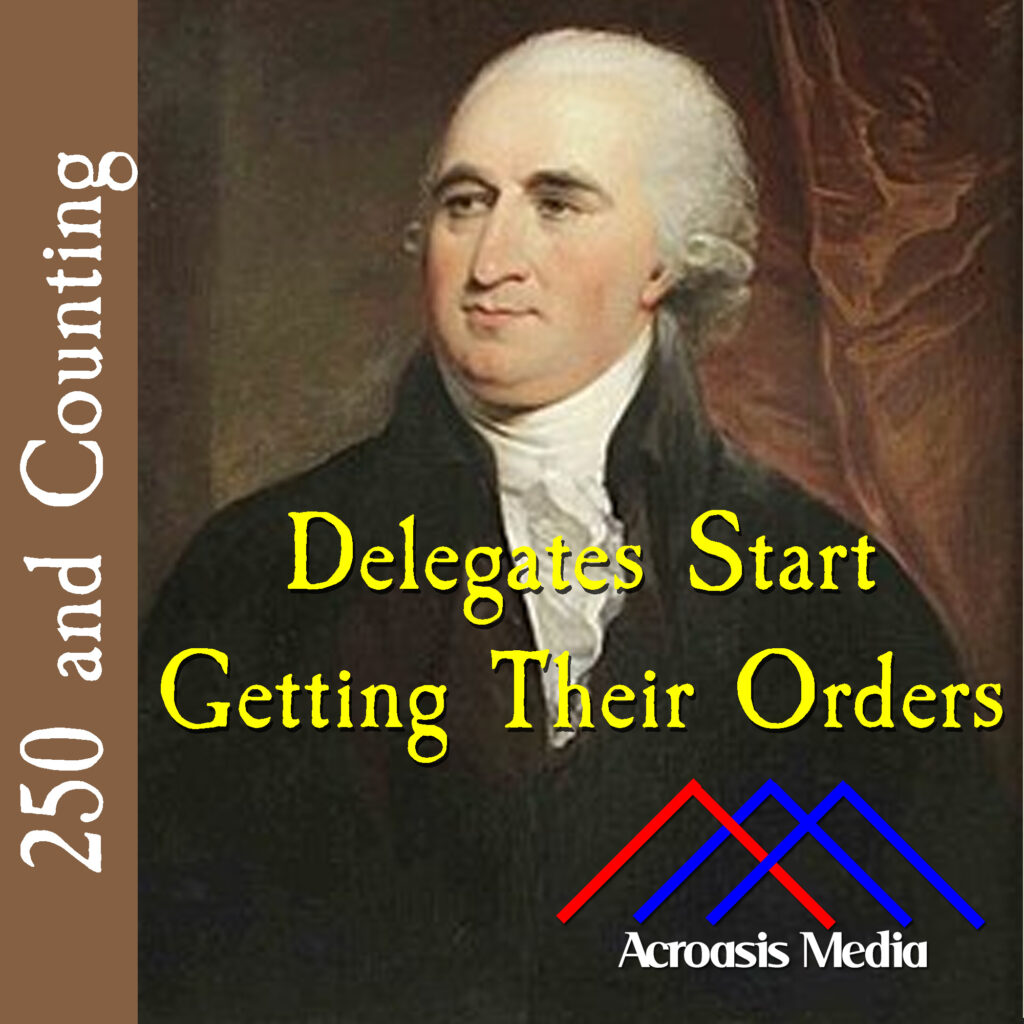
    Cover art for May 23, 1776: portrait of James Duane by John Trumbull, 1805.

    Once the preamble to Congress’ resolution had been written and unanimously approved back on May 15, it really was just a matter of when, rather than whether, America was going to formally declare itself as a separate state from England.

    The hardest part was getting all the ducks in a row, as the expression goes. The biggest reason that independence hadn’t already been declared is that anything that came out of the Continental Congress had to pass unanimously, so they could speak with a single voice. Now, at the delegate level, they didn’t all have to vote the same way, but once a majority of the delegates from a given colony voted a certain way, then the colony voted that way as part of the larger body.

    Some colonies had the green light to vote in the affirmative, as long as a different colony brought up the question. Georgia was rather split within the state, and was also more concerned with the skirmishes they were having at the border with Florida. So they mostly didn’t care. New York delegates, as we mentioned yesterday, arrived with instructions not to vote on Independence at all. Even when they finally did vote, it was technically against their orders.

    But one of the more passionate sets of orders came from a group in Boston. Put your earbuds in and learn about how florid writing can really get your point across.

  • The Third NY Provincial Congress–May 22, 1776

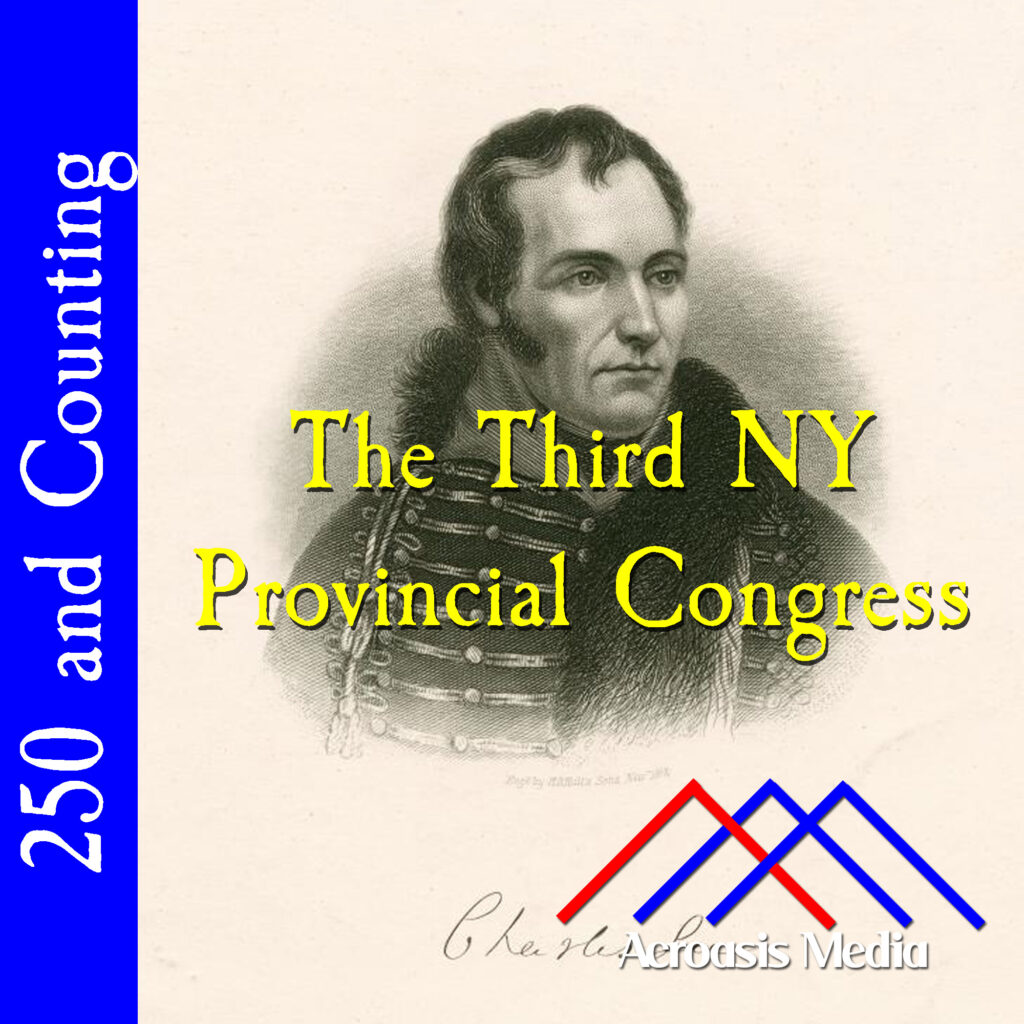
    Cover art for May 22, 1776: portrait of Major-General Charles Lee. Engraving created in 1860 by H.B. Hall & Sons of New York.

    When the Third NY Provincial Congress convened on this day, chances are that nobody really got their hopes up.

    By this point, that body had already met a few times, so it was generally known where they stood when it came to the Independence Question. And sure enough, when they sent delegates to the Continental Congress, they sent those delegates with instructions to oppose Independence. Rather than do that, however, the New York delegation typically just remained on the sidelines, appearing to neither favor nor oppose the notion. This went on for several weeks, and while it didn’t necessarily hinder the cause, neither did it really help matters.