
Author: Claude Call

  • Washington Has Concerns–January 14, 1776

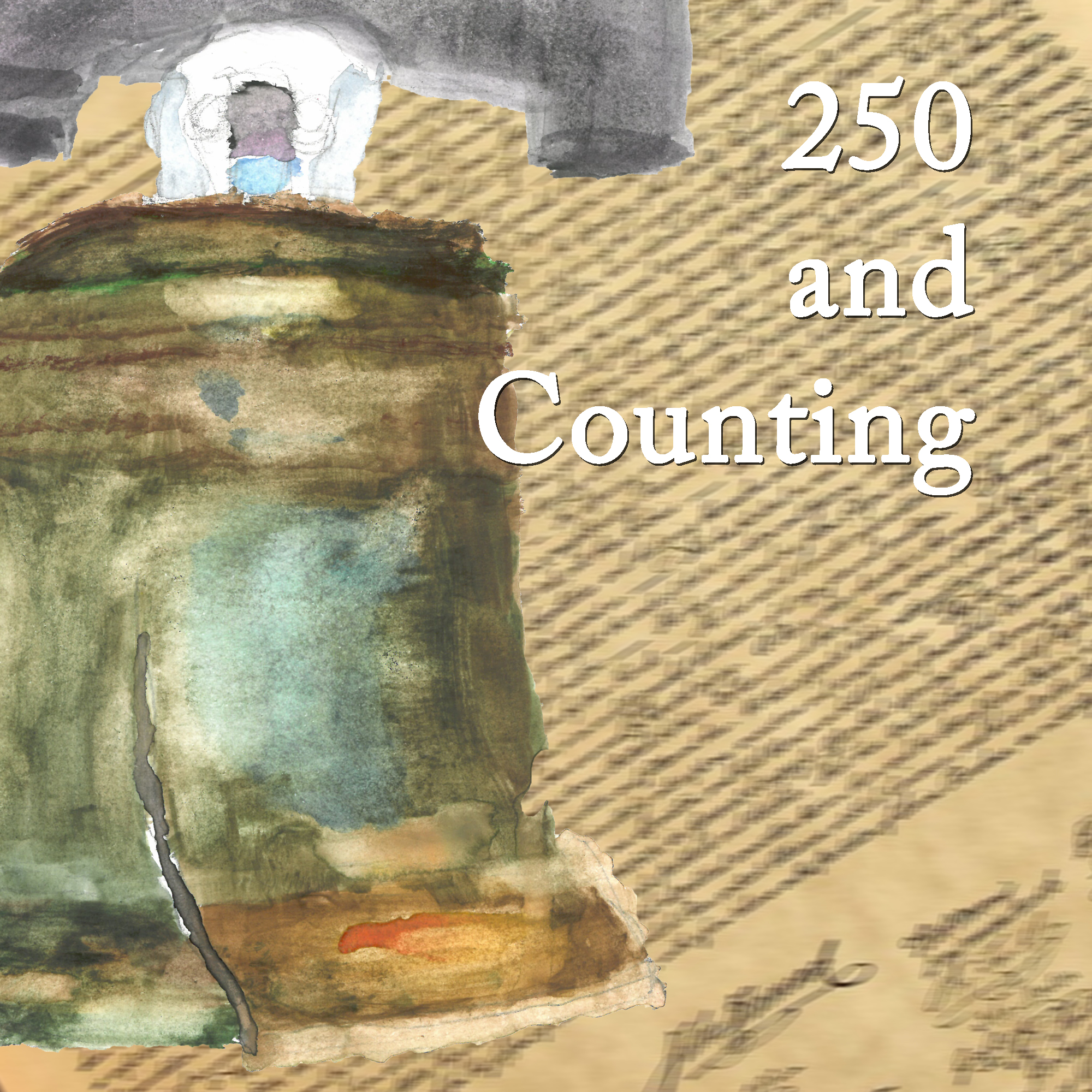
    Cover art for January 14, 1776: correspondence from Charles Thompson, Secretary to the Second Continental Congress, to George Washington. via Library of Congress.
    Correspondence from Charles Thompson, Secretary to the Second Continental Congress, to George Washington. via Library of Congress.

    As George Washington’s aide-de-camp, Joseph Reed was privy to a lot of things on his Commander-in-Chief’s mind. And it shows in the level of prose that Washington uses when writing to Reed, because it’s much less formal.

    Compare that to the letter he sent to the Continental Congress the same day. In both cases he was expressing concerns regarding his troops, but in one case it’s a criticism of their readiness (Joseph Reed), and in the other it’s concern for their well-being (John Hancock).

    Washington’s troops would remain relatively undisciplined for several months, until the winter encampment at Valley Forge. But I’m getting waaaaay ahead of the story, so stick around. Meanwhile, put this in your ears.

  • John M. Snowden–January 13, 1776

    Cover art for January 13, 1776: Portrait of John Maugridge Snowden, Third Mayor of Pittsburgh. From the Snowden Family Collection via Wikimedia Commons.
    Portrait of John Maugridge Snowden, Third Mayor of Pittsburgh. From the Snowden Family Collection via Wikimedia Commons.

    What can I say about John M. Snowden that I didn’t tell you about in the episode itself?

    The truth is, he’s not a well-documented man, nor is his family, even though (as I noted) his wife was an advisor to George Washington for awhile.

    I can note that I foreshortened his career a little bit, in that he had done a little public service before he was the mayor of Pittsburgh. He also spent some time as the Allegheny County Recorder and Treasurer before he was elected mayor. It should be noted, however, that until 1835 mayors were appointed by the City Council. It wasn’t necessarily a bad thing, but it could lend itself to corruption. And the incumbent won the first election, so chances are the process wasn’t too bad.

    We also spend a little time with Henry Knox, who (you might remember) began the Noble Train of Artillery journey back on December 17. His arrival in Cambridge is still about two weeks out; we don’t know a lot about what happened during that time because today is the day that his diary stops. But when he arrives, we’ll all be there to greet him.

  • Prudence Island Under Attack–January 12, 1776

    Cover art for January 12, 1776: Prudence Park on Prudence Island, from a 1930s-era postcard. Via Wikimedia Commons.
    Prudence Park on Prudence Island, from a 1930s-era postcard. Via Wikimedia Commons.

    Prudence Island, in the Narragansett Bay off Rhode Island, didn’t have a lot of strategic value to anyone. What it DID have was livestock, and the British were hard-pressed to get supplies, especially for Boston, which had been under siege since mid-April.

    And, as Mike notes during the episode, neither army was really shy about stealing what they needed to advance their cause.

    While the residents of Prudence Island managed to repel the British on their second engagement, everyone just pretty much noped out of there, with only a few ever returning. So in the long run, it was a win for the British.

  • Rush To The Altar–January 11, 1776

    Cover art for January 11, 1776: Portrait of Julia Stockton Rush by Charles Willson Peale, painted in 1776.
    Portrait of Julia Stockton Rush by Charles Willson Peale, painted in 1776. Sure, most of the episode is about Benjamin Rush, but who would YOU rather look at? Right.

    Although she was quite young when she married Benjamin Rush, Julia Stockton was probably as brilliant and opinionated as her husband was.

    Not long after they married on this day in 1776, Benjamin was appointed Surgeon General to his friend George Washington, and as the war got more intense and involved, and American losses began to pile up, Benjamin would occasionally hear soldiers complaining about them, and he would repeat that information to her in both letters and in conversation.

    But sooner or later, she warned him in early 1778, some of this backbiting was going to get back to General Washington. He did promise to take this advice to heart, but it was already too late. One of his letters did get back to Washington’s camp, and he was never forgiven for it.

    Benjamin Rush is perhaps more well-known for being America’s answer to Hippocrates, because of his popularity as both a doctor (especially for the poor) and as a teacher. But there’s so much more to him, and his relationship with Julia, than most might consider. If you get an opportunity and you enjoy reading about history, consider picking up a copy of Rush: Revolution, Madness & the Visionary Doctor Who Became a Founding Father, by historian Stephen Fried. It’s about $20 via Amazon, or the Kindle edition is under $5, quite the bargain.

  • It’s Just…You Know…–January 10, 1776

    Cover art for January 10, 1776: the original cover of Common Sense. via Wikimedia Commons.
    The original cover of Common Sense. via Wikimedia Commons.

    Okay, so here’s the thing about Common Sense:

    It’s not as though Thomas Paine came up with prose so extraordinarily clear that everyone suddenly smacked their foreheads and said, “My God! Independence! Of COURSE!”

    In fact, many people thought Common Sense was crazy, and others considered it an incitement to the all-out war that everyone was trying to avoid. There were complaints that what Paine had written was dangerous, even violent.

    But the pamphlet was heavily advertised, and Paine was involved in a very ugly, very public feud with his publisher Robert Bell. Those two things, combined with the accusations of scandalousness, meant that sales were going through the roof. And people weren’t just buying it, they were reading it.

    And as time went on, the argument made by Paine became more and more palatable. And by the time July came around, Paine’s ideas largely stood up to reason.

    P.S. One time years ago, when I lived in New York, I came home from work in a powerful rainstorm. When I entered the house, rather than track my wet feet throughout the house, I opened up my newspaper and dropped it on the floor, and I stepped lightly a few times on it. When my wife asked what I was doing, I told her, “These are the Times that dry men’s soles.”
    I’ll let myself out, now.

  • A Plan Is Hatched–January 9, 1776

    Cover art for January 9, 1776: a miniature portrait of Josiah Martin, artist unknown, circa 1775.
    A miniature portrait of Josiah Martin, artist unknown, circa 1775.

    Josiah Martin was the last Royal Governor of North Carolina, and while he spent the first few months of the job in New York, he probably wouldn’t have a reputation as an especially bad governor if he hadn’t been hampered so much by circumstances that were in place before he got the job.

    There were money issues that his predecessor had left behind, and the rest of the government was plagued by internal squabbling that pretty much ensured nothing got done. It’s actually kind of amazing that there were any Loyalists left in North Carolina by the time 1776 rolled around.

    But there were, and so Josiah Martin began to put together a nearly foolproof plan to get himself back in power.

    Nearly.

    P.S. You know you watched a lot of The West Wing when you hear the name “Josiah” and your mind immediately goes to “Bartlet.” Just sayin’.

  • The Play’s The Thing–January 8, 1775

    Cover art for January 8, 1775: Portrait of John Burgoyne c. 1766, by Joshua Reynolds. Via the Frick Collection.
    Portrait of John Burgoyne c. 1766, by Joshua Reynolds. Via the Frick Collection.

    Mike wasn’t kidding when he said that, had it not been for his part in the Revolution, John Burgoyne would be best known as a playwright. He wrote several plays, most of them quite successful. Interestingly enough, the play Mike cites today is not often listed among his oeuvre. So we get the feeling that “The Blockade to Boston” was more of a one-act, or a skit-level kind of show meant specifically for that day’s audience.

    But he was a general during the Revolution, and he was actually a pretty good one, although for the longest time he got the blame for the British loss. (You may still think this is the case, but more recently historians have moved away from this.)

  • Preparing To Defend New York–January 7, 1775

    Cover art for January 7, 1775: Portrait of Jonathan Trumbull and his wife Faith, painted by his son John Trumbull, 1778. via New York Public Library.
    Portrait of Jonathan Trumbull and his wife Faith, painted by his son John Trumbull, 1778. via New York Public Library.

    There are many letters between George Washington and Connecticut Governor Jonathan Trumbull. Presumably something as simple as proximity to another leader was attractive to both of them, especially in an age where letters took several days to go a hundred miles.

    We have to presume that the two men had very reliable people transporting these letters, given how much detail is in this one regarding Washington’s guesses about British troop movements and exactly what he was going to do about it. It’s certainly been the case before that correspondence has been intercepted by the British in the past, and the Postal Service hadn’t been up and running for very long by that point.

    At any rate, Washington was correct in that the British were taking a hard look at New York City (still mostly just the southern tip of Manhattan, mind you) and the palisades along the Hudson River, which was still called the North River then. Where he was likely incorrect was in the timing of that move, which may have resulted in a little complacency.

  • Retreat From Charleston–January 6, 1776

    Cover art for January 6, 1776; Oil painting of William Moultrie, who was a General when this was painted by Charles Wilson Peale in 1782.
    Oil painting of William Moultrie, who was a General when this was painted by Charles Wilson Peale in 1782.

    From a strategic standpoint, Charleston Bay was probably much more attractive to the British than Boston Harbor was. The northern harbor was more open to the sea, there were a bunch of small islands to navigate around, and the weather could get quite treacherous.

    Meanwhile in South Carolina, there was a definite entry/exit point, there were fewer islands to deal with, and while it can still get cold in that area, the winters are still much milder.

    But from a shipping standpoint, both cities were attractive and needed to be controlled, as far as the British were concerned.

    It’s interesting, in retrospect, that the Patriots would attack the British ships as they departed the harbor area in Charleston, though. If nothing else, they more or less gave away the fact that Sullivan’s Island was fortified, which wasn’t necessarily common knowledge. And sure enough, there was an attack there by the British, which we’ll talk about in June. Stay tuned!

  • The First State Constitution–January 5, 1776

    Cover art for January 5, 1776: the manuscript for the first New Hampshire constitution. Via New Hampshire Secretary of State social media account.
    The manuscript for the first New Hampshire constitution. Via New Hampshire Secretary of State social media account.

    It’s fun to say that the New Hampshire Constitution was the first time that an American commonwealth constitution, and that several of the others quickly followed, as though a dam had broken.

    But the fact is, the various colonies were putting together their own constitutions at the urging of the Second Continental Congress, and New Hampshire just happened to be the first.

    That said, let’s not take away from them the fact that they managed to get it done with a great deal of efficiency, and I’m also impressed at the way they got the subsequent documents done. But you’ll have to listen to the episode to hear that.

    Oh, yes: I promised you the recipe for Martha Washington’s cake she served for her Twelfth Night party. This comes from the New England Historical Society.

    Take 40 eggs and divide the whites from the yolks and beat them to a froth. Then work four pounds of butter to a cream and put the whites of eggs to it a Spoon full at a time till it is well work’d. Then put 4 pounds of sugar finely powdered to it in the same manner then put in the Yolks of eggs and 5 pounds of flour and 5 pounds of fruit. 2 hours will bake it. Add to it half and ounce of mace and nutmeg half a pint of wine and some fresh brandy.

    It was a big honkin’ cake.

    Bon appetit!