Category: Massachusetts History

  • May 27, 1775: The Battle of Chelsea Creek, pt.1

    Cover art for May 27, 1775: Portrait of Colonel John Stark, artist unknown.

    Not to be confused with Chelsea of Battle Creek, who has worked for a famous cereal company for 28 years. (We may have made that up.)

    Lexington and Concord was the first “official” battle of the American Revolution, but at best it was a draw: Patriots took a bunch of losses, soldier-wise, but the British were forced to retreat under fire the entire time, and they wound up mostly sequestered in Boston when the dust settled.

    This could be considered the next chapter in that story, in that the Siege of Boston led directly to the events of this day, and the next, in 1775. Claude is setting up the story, and Mike will be finishing it off tomorrow. Enjoy!

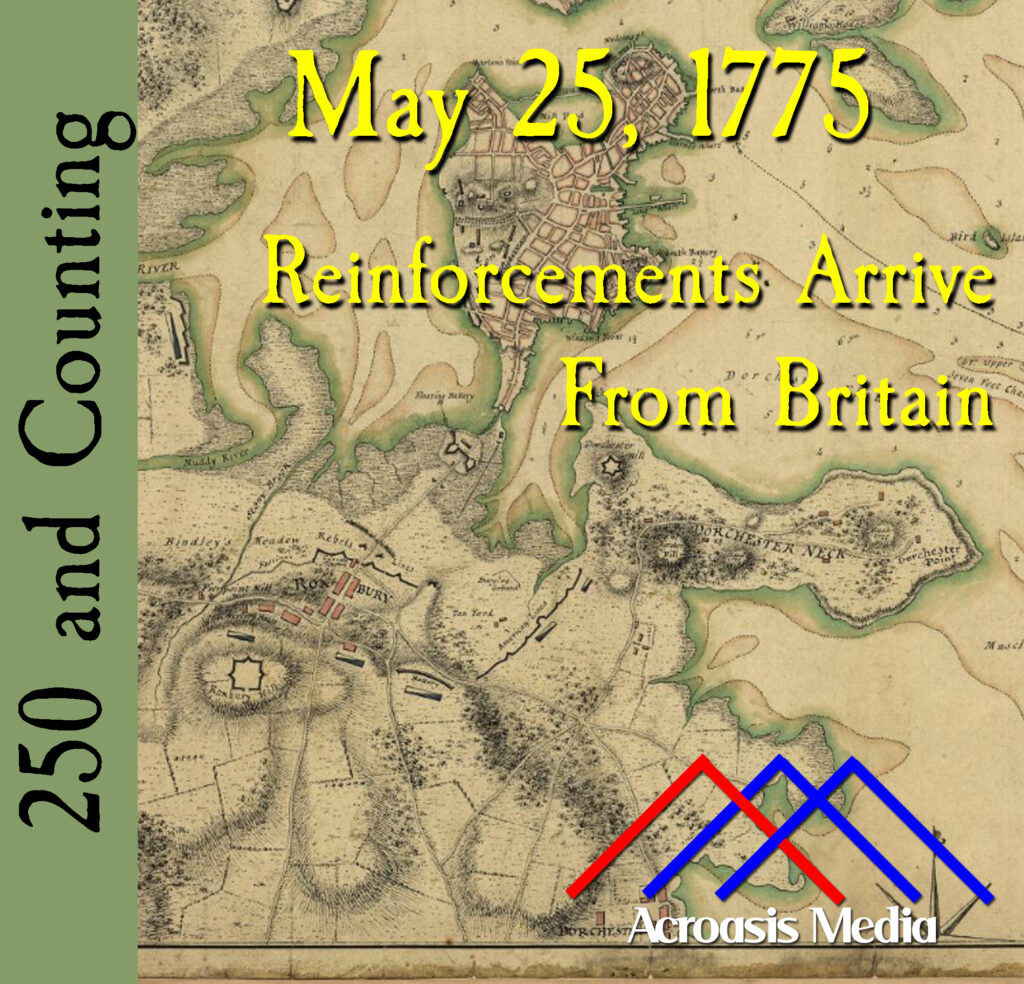
  • May 25, 1775: Reinforcements Arrive From Britain

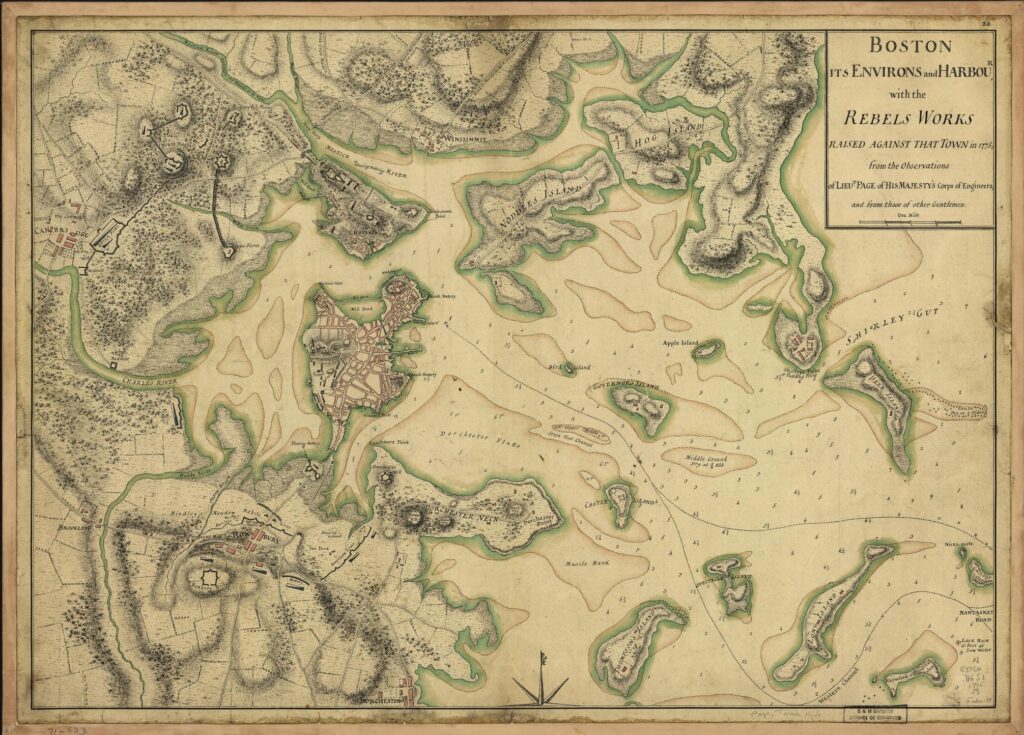
    Cover art for May 25, 1775: Map of Boston showing rebel placements, drawn by Sir Thomas Hyde in 1775 (detail). From the Library of Congress website.

    Sometimes it’s kind of tough to bring an image to life through an audio podcast, but we thought it was important enough that you needed to see it somehow.

    It’s oftentimes hard for us to understand just how wild the Thirteen Colonies were back in the day. In 1775, New York City was roughly a square mile of the southern tip of Manhattan. Where today’s Wall Street is was literally a wall, keeping out anything to the north. That’s another 13 miles of island (roughly) to the north which might have some Europeans living there, but not many. So, to that end…

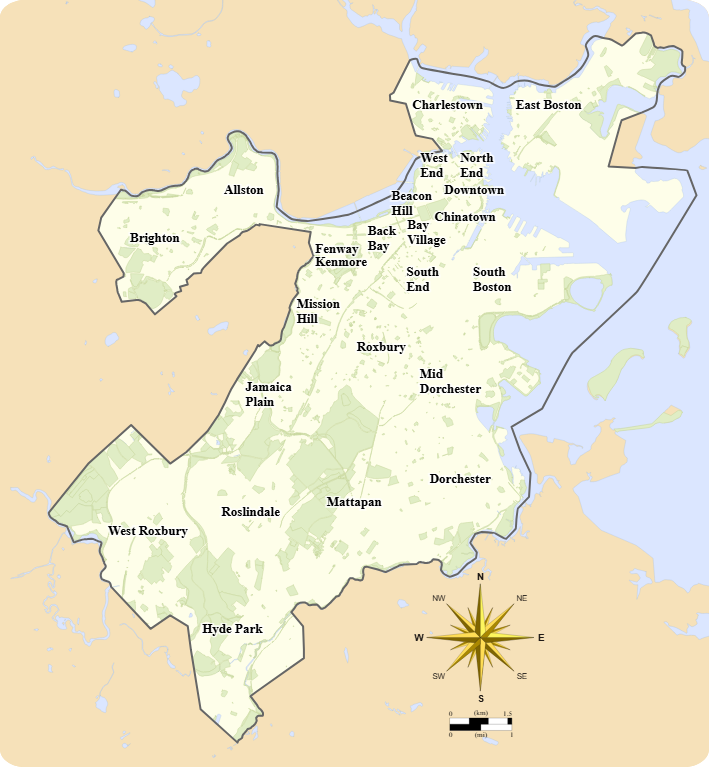
    This is a map of modern-day Boston, with a neighborhood breakdown on it, per the city’s Office of Neighborhood Services:

    And this is the full map from the cover artwork. They’re slightly rotated to one another (more likely, the 1775 map is pointed toward magnetic north than true north), but the heart of Boston, at center left, is essentially the tip of today’s South Boston. On the map above, the siege line is about where the word “South” is printed.

    So it was pretty easy to set up a line of defense to keep the city isolated, especially since the city was surrounded by water on three sides. Supplies and people could get in and out by water, but the city itself was still cut off for anyone approaching by land.

  • May 19, 1775: From Sam Adams to Samuel Purviance

    Cover art for May 25, 1775: Portrait of Samuel Adams by John Singleton Copney. Adams is probably wondering why everyone is offering him a beer these days.

    Baltimore has a lot of historic pride in its street names. Nearly all of them can be traced back to an historic figure or event: Key Highway, named after Francis Scott Key. (Also the Key Bridge, but we’re all still sad about that.) Fort Avenue, leading to Fort McHenry. And while I’m at it, McHenry Street, about two miles from the fort. The town also has John Street, Eager Street and Howard Streets, all of them named after John Eager Howard. one of the earliest governors of the state.

    During the revolution, a prominent family in the city of Baltimore was the Purviance Family, led by brothers Robert and Samuel Purviance. They were both well-known for their activities to support the Colonists’ side during the Revolution. Where are they memorialized?…Listen in and find out.

    P.S. I do have theories about this but I’m hoping to explore those in a later episode.

  • May 14, 1775: Don’t Mess With Fairhaven

    Cover art for May 14, 1775: HMS Falcon, accompanied by a smaller ship. Painting by William Nowland Van Powell.

    The Thirteen Colonies didn’t have a lot in the way of a navy to help them with their battles, especially not against perhaps the biggest and best navy ever up until then.

    What they did have was people who were willing to act in lieu of a navy. Some of them did it out of sheer patriotism, and others were a little more mercenary about it. Specifically, privateers.

    Now, “privateers” sounds a little like “pirates” and people often use the words interchangeably. You should stop being friends with those people. Privateers are a specific breed of sailor. They’re government-sanctioned to act as a kind of ad-hoc navy, authorized to take action in times of war. Typically, their job was to disrupt merchant vessels (hence the confusion with pirates).

    It wasn’t long after the Revolution began that Fairhaven, Massachusetts, became a place known for privateer activity.

    Extra credit activity: check out the West Wing, Season 4, Episode 18. You’ll learn more about privateers, and as a bonus, you’ll never think of Francis Scott Key the same way ever again.

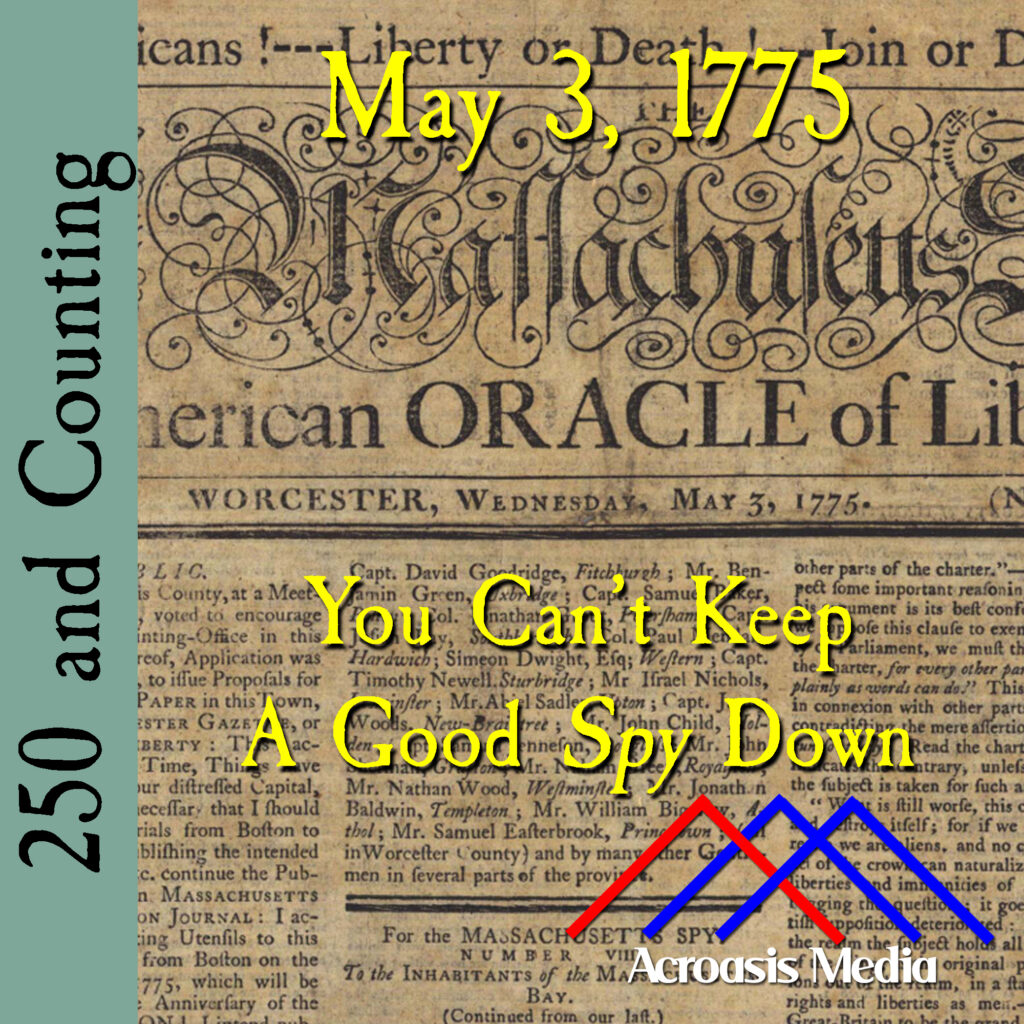
  • May 3, 1775: You Can’t Keep a Good Spy Down

    Cover art for May 3, 1775: detail of the Massachusetts Spy from that day.

    More often than not, items that appear in the Bill of Rights derive directly from actions that the British took at one time or another in the past. Ban guns, will you? Here’s a nice Second Amendment. Ban free speech? Here’s your First Amendment.

    And so on.

    Today’s edition could be considered a Part Two to the events of April 16, when the Massachusetts Spy had to pack up shop and hightail it out of Boston down the road some forth miles to Worcester specifically so it could keep publishing. On this day, the Spy sprang back to life.

  • May 2, 1775: Meet Rachel Revere

    Cover art for May 2, 1775: portrait of Rachel Walker Revere by Gilbert Stuart, 1812.

    Rachel Walker Revere was Paul Revere’s second wife. When he married her, he’d only been a widower for a few months, so clearly she made a big impression on him, especially since they remained together until her death in 1813 (one year after the portrait in today’s artwork was painted), and he didn’t remarry after that.

    Rachel was a very supportive wife to Paul, by most accounts, but she was also willing to give him grief when he deserved it, as you’ll learn in today’s episode.

  • April 26, 1775: Josiah Quincy II Dies at Sea

    Cover art for April 26, 1775: posthumous portrait of Josiah Quincy II by Gilbert Stuart, c. 1825

    Josiah Quincy—who we’ve talked about before; remember that portrait?—would have been one of the more prominent men we speak of when we use venerated tones about the Founding Fathers, had it not been for the fact that he died just as the war was getting started.

  • April 25, 1775: Benedict Arnold Wasn’t All Bad

    Cover art for April 25, 1775: Benedict Arnold engraving by Henry Bryan Hall after John Trumbull, published 1879.

    Benedict Arnold was a pretty smart guy who chose the wrong friends…and, as we’ll discover later on, the wrong enemies as well.

    But for the time being, here’s a peek into some of Arnold’s activities when he was still on our side in both body and spirit.

  • April 24, 1775: Eyewitness Testimony from Lexington & Concord

    Cover art for April 24, 1775: Written deposition of John Robins regarding events at Lexington

    The testimony of John Robins is what teachers like to call “primary sources”. It’s a document prepared by someone contemporary to an event, and even if the narrator is unreliable, we learn much more from it than from, say, something that was written long after the fact.

    In the case of John Robins’ testimony regarding events at Lexington and Concord, the events were still fresh in his mind, having happened only a few days earlier. And because it derived from an official proceeding, that document was reasonably well-preserved and serves as a fascinating window into one of the most important events of our history.

    And as for Robins himself, he was a relatively common man who happened to be part of the militia that day and might have been otherwise forgotten.

  • April 23, 1775: Boston Needs a Few Good Men

    Cover art for April 2,3, 1775: detail from a page of the 11/17/1774 Holt's Journal.

    I (Claude) suppose that I should note that for a few days last week I sounded a little odd. You’re not wrong; I was not in my usual recording space and not using my usual recording equipment; what’s more I was plagued by allergies and sounded a little rough on top of the funky acoustics. I hope it didn’t bug you too much.

    Anyway.

    Today, the Massachusetts Provincial Congress takes the time to organize its militiamen into a decent army. Meanwhile in New York, word gets out about Lexington and Concord, and people in that colony have a big decision to make.