Category: Second Continental Congress

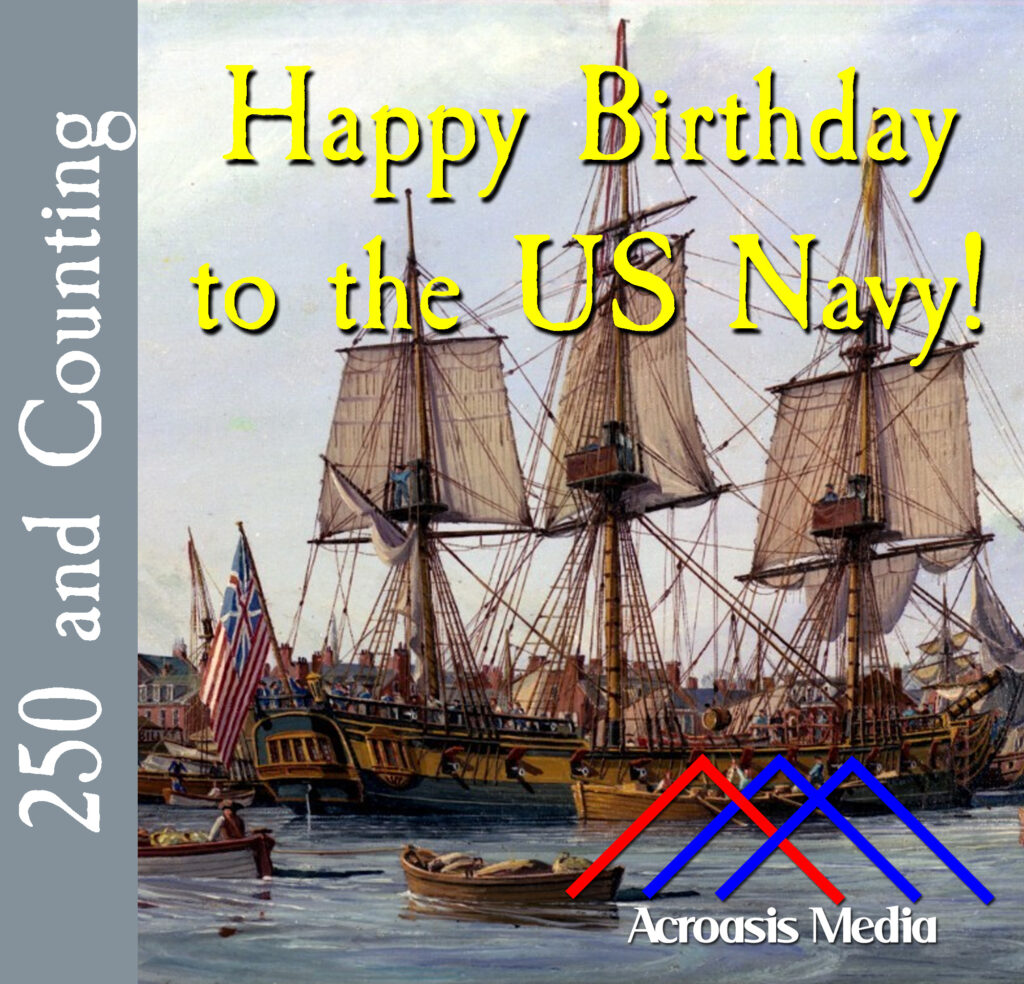
  • Happy Birthday to the US Navy!–October 13, 1775

    Cover art for October 13, 1775: The Continental ship ALFRED, oil, by W. Nowland Van Powell. Meant to commemorate the official commissioning of the ship on December 3, 1775.

    It’s Cake and Candles for the US Navy, born this day in 1775.

    The Continental Congress initially authorized the purchase and retrofitting of two ships. But before long they saw the wisdom of having a navy, and soon many more ships were purchased, and commissioned into service.

    The Continental Navy, to be honest, didn’t have a huge impact on the war. Many ships were lost to British attacks, weather, or accidents. What it did have a big impact on, however, was the War of 1812. The seamen who fought in the Revolution were well-seasoned officers by the time that war came along.

    It’s also worth noting that the Continental Navy was disbanded after the Revolution, but a few years later the US Navy was officially established. However, given the continuity of tradition and the fact that today was the day that Congress authorized the purchase of the vessels, the Navy decided in 1971 that October 13, 1775 was the date of its official establishment.

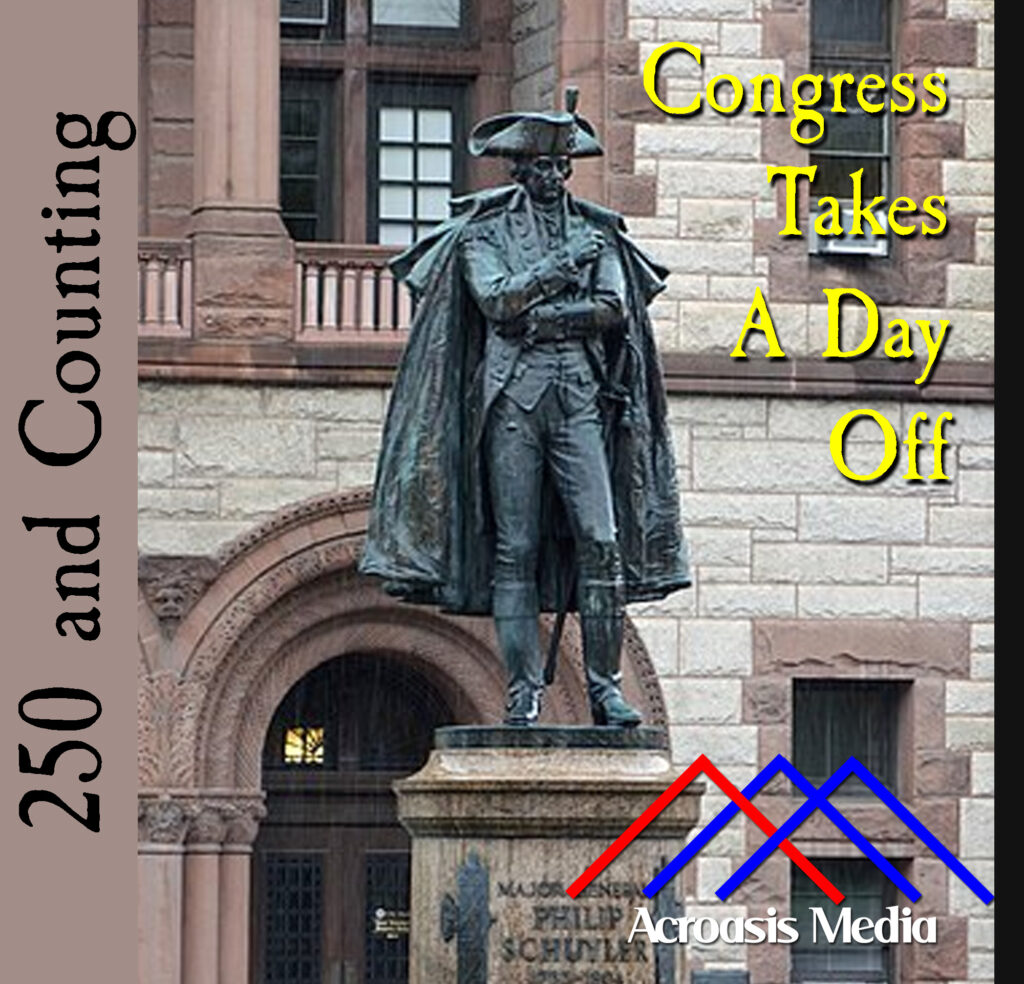
  • Congress Takes A Day Off–October 10, ,1775

    Cover art for October 10, 1775: Statue of Philip Schuyler in Albany. The statue was installed in 1925, but it was removed in 2023 because of his unfortunate association with slavery.

    That’s an interesting goof I made with today’s cover art, with the tiny black stripe down the right. It’s a mistake, but it looks like the picture has a shadow, so I’m keepin’ it.

    The Second Continental Congress was a very serious, thoughtful body of men who did not shirk their duties. They often worked very long hours, six days a week, and might have gone for seven had it not been for, y’know, God stepping in and commanding, “Hey, none of that. That’s My day.”

    So the fact that Congress chose to knock off early one day—and a Tuesday, besides—suggests that maybe they really needed this one.

  • October 3, 1775: Rhode Island Suggests a Navy

    It’s often tough to remember that when the fighting first broke out, it wasn’t a bid for independence from Britain. It was an attempt to protect and defend rights that the Colonists thought they had as part of their relationship with Britain. Reconciliation was (amazingly) still on the table, even six months after Lexington.

    So while many colonies had created their own small navies (with Congress’ encouragement), there were several in Congress who felt that creation of a navy was a step too far. They were okay with an army, but not a navy? I don’t really get it either.

    When Rhode Island finally put forth a formal proposal for a Continental Navy, it met with almost universal resistance. Why? Tune in and find out.

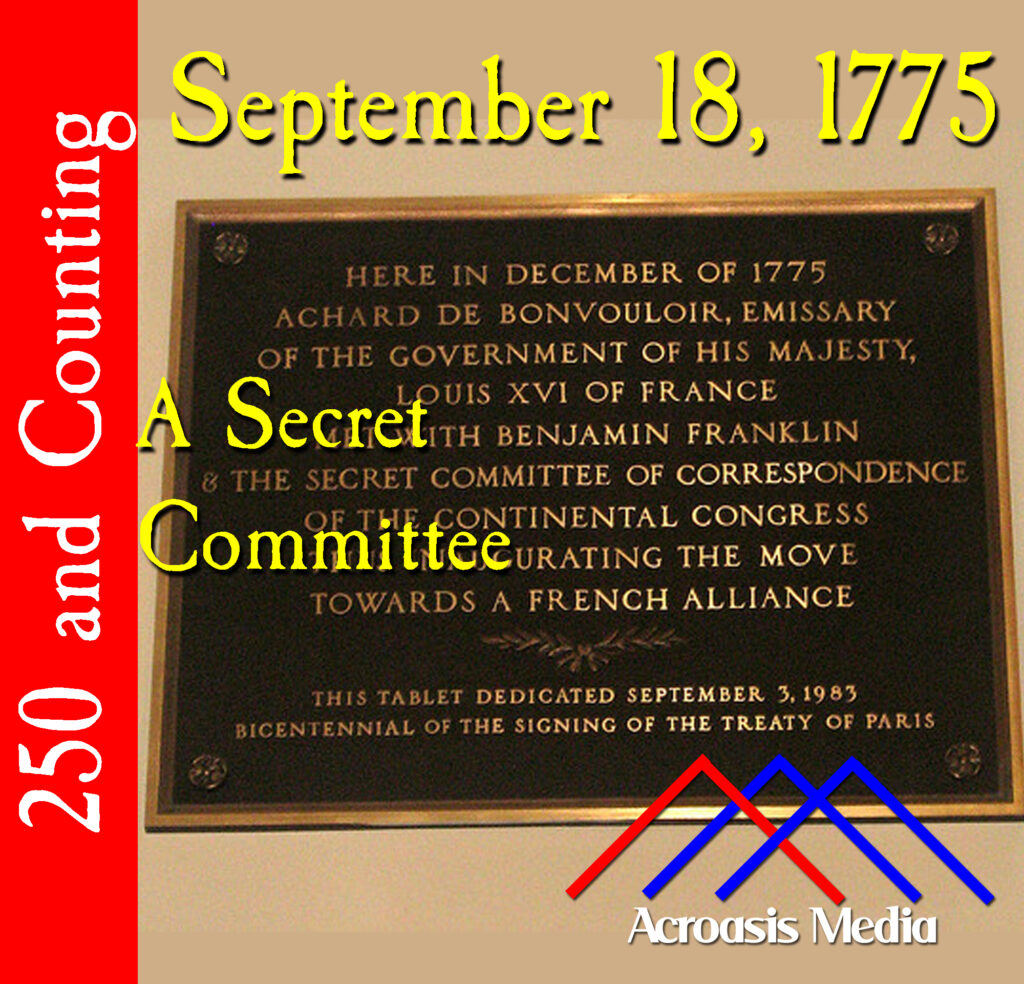
  • September 18, 1775: A Secret Committee

    Cover art for September 18, 1775: Theplaque in Carpenter's Hall (Philadelphia) designating the location where the Committee of Secret Correspondence met with Julien Alexandre Achard de Bonvouloir.

    The Committee of Secret Correspondence is one of those names that sounds like they should be on Double Secret Probation or something. However, when you look at their purpose, the name makes sense.

    The Committee of Secret Correspondence was formed to seek out support from other nations. They reached out to France, Spain, and a few others to get supplies, food, munitions…pretty much anything they could get. Oftentimes they had to use a third party to give everyone plausible deniability.

    And fortunately, their tactics were mostly successful.

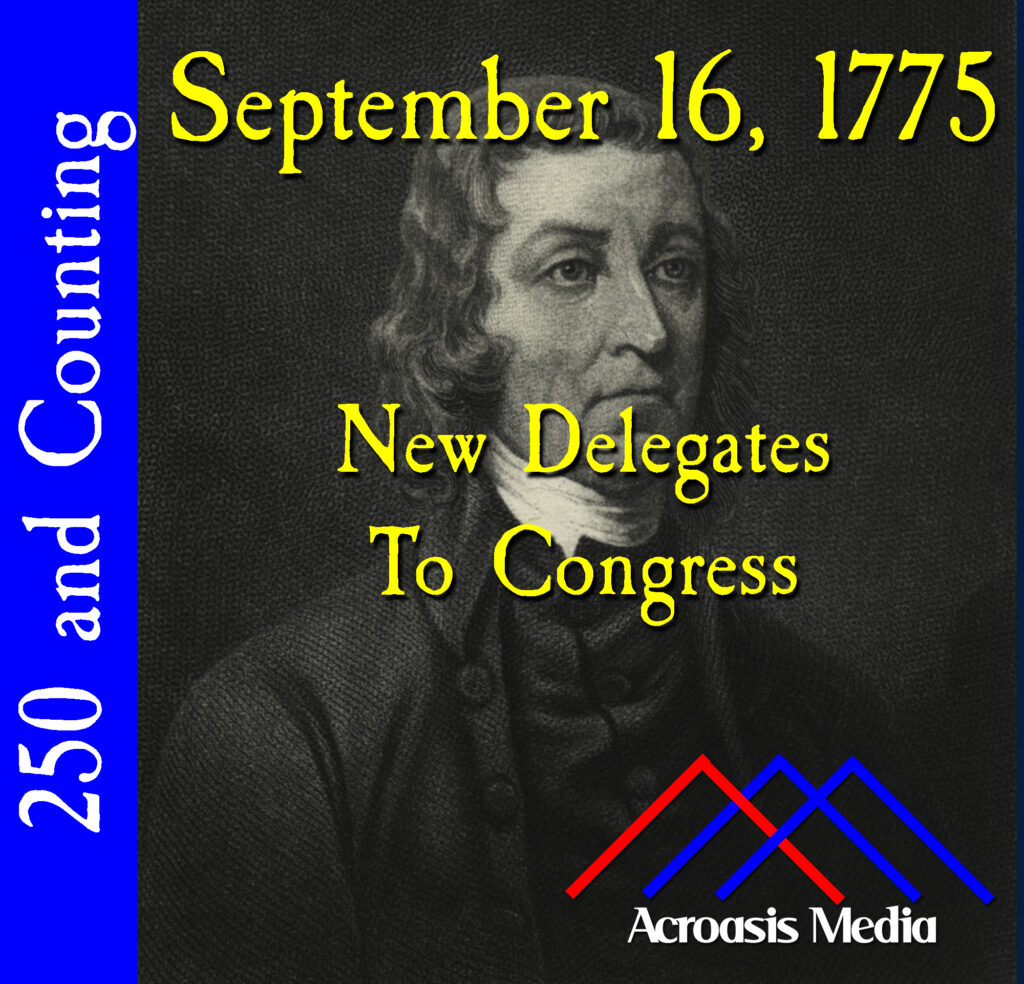
  • September 16, 1775: New Delegates to Congress

    Cover art for September 16, 1775: Josiah Bartlett, painted by Edwin Tryon Billings, mezzotint, after a portrait by John Trumbull. The original by Trumbull hangs in the State House in Concord, New Hampshire. via Wikimedia and the New York Public Library.

    So obviously this Josiah Bartlett isn’t the guy on The West Wing, in part because President Bartlet is fictional. (Okay, maybe entirely because of that.) But he is supposed to be a direct descendant of the Founding Father. Why, and when, the terminal T dropped off was never explained.

    Anyway, Josiah Bartlett and John Langdon both arrived in Philadelphia from New Hampshire as delegates to the Continental Congress, and they both fought in the war, plus they were around for the Constitutional Convention—so there’s a lot of history between them.

  • August 13, 1775: The Olive Branch Petition Arrives in England

    Cover art for August 13, 1775: the signature page of the Olive Branch Petition.

    As you may recall, several months ago some members of the Continental Congress thought it was important to make one last effort to reconcile with Britain before things got worse. So they composed the Olive Branch Petition and sent it off to England.

    Transit times being what they were then, the petition took several weeks to get to its destination. In the meantime, things got worse.

    So when the Olive Branch Petition arrived, nobody really cared. But there were two other documents that made matters worse. Plus, you know, all the shooting that went on in April. And in June.

  • August 2, 1775: Congress Takes A Break

    Cover art for August 2, 1775: A picture of Independence Hall with a sign out front reading "Gone Fishin'". AI generated image via ChatGPT.

    Since May 10, the Second Continental Congress had been working for six days a week. And on any given day, depending on the committee to which they were attached, they’d work from anywhere between eight and twelve hours.

    And remember: this was in the height of summer in Philadelphia, where the temperatures were in the 90s and chances are, so was the humidity most of the time.

    Now, as Mike will attest in today’s episode, they got a LOT of stuff done in those ten weeks. And considering how thoughtfully they took every subject they tackled, it was a definite feat on their part. It was a well-deserved break.

  • July 31, 1775: Congress Responds to the North Proposal

    Cover art for July 31, 1775: Response of the Continental Congress to the Conciliatory Resolution, published in a New England newspaper in 1775.

    It’s not entirely Lord North’s fault that his proposal for securing peace took so long to get to the Colonies; messages took a long time to get across the ocean.

    It is his fault that he sent it to individual people across the Colonies, thinking he could demonstrate that the Colonies are divided and aren’t on board with the revolution.

    It’s also his fault for not counting on someone from the New Jersey delegation (in this case; it could have been any delegate) bringing the proposal to the Second Continental Congress.

    Unfortunately, before anyone on this side of the Atlantic saw it, fighting had broken out at Lexington and Concord, and the document was seen as far too little, far too late.

  • July 28, 1775: Reaching Out to Ireland

    Cover art for July 28, 1775: Detail of a broadside of Congress' July 28 declaration to Ireland, as published in a Connecticut newspaper on August 16, 1775

    We told you a short time ago about a document sent to Canada by the Second Continental Congress. It outlined the reasons we got into a shooting match with Britain. It also made a point of noting that we’re not asking them to join us, but we wouldn’t complain too loudly if they did. The Canadians declined and they maintain a connection to Britain even as an independent nation. (As this is written, King Charles III is considered the King of Canada.)

    Some time later, Congress sent a similar letter to Jamaica. For what it’s worth, Jamaica is still a “commonwealth realm”, with Charles III as king. (We didn’t do an episode on that one, but it also happened around this time.)

    And on this day in 1775, Congress sent yet another letter to Ireland. The Irish also managed to stick with the Mother Country for a while, but finally broke away themselves a few years ago.

  • July 27, 1775: The Army Hospital is Born

    Cover art for July 27, 1775: Posthumous portrait of Dr. Benjamin Church, based on "contemporary description."

    The Continental Congress thought they had a strong candidate in Dr. Benjamin Church as their Surgeon General. And while Church was a generally good doctor as such, and a loyal member of the Sons of Liberty, he wasn’t especially good at leading others to do the same. This eventually turned into a big problem that came to a head in October, when George Washington needed to step in.