Category: Second Continental Congress

  • Homesickness Sets In–December 2, 1775

    Cover art for December 2, 1775: Portrait of Joseph Hewes, 1775. Author unknown; now hanging at Guilford Courthouse National Military Park, Greensboro, NC

    All of the men who were part of the Second Continental Congress were serious men who had businesses of their own back at home. So spending so much time in Philadelphia had to have been taxing on them, especially since the days were so long. Of course many of them were going to be homesick. Read the letters between John and Abigail Adams as an excellent example.

    And remember: to go home to, say, Boston could take about a week in 1775. So they’d be away for two weeks at a minimum, and that’s entirely traveling time. Taking care of whatever they needed to only added to the absence.

    We do know that many of them did go home from time to time, but they were obliged to return and continue the business of running a country while simultaneously ducking interference from the British.

    Joseph Hewes’ letter to Samuel Johnston has a special poignancy about it.

  • The Fate of War and Some Refugees–November 25, 1775

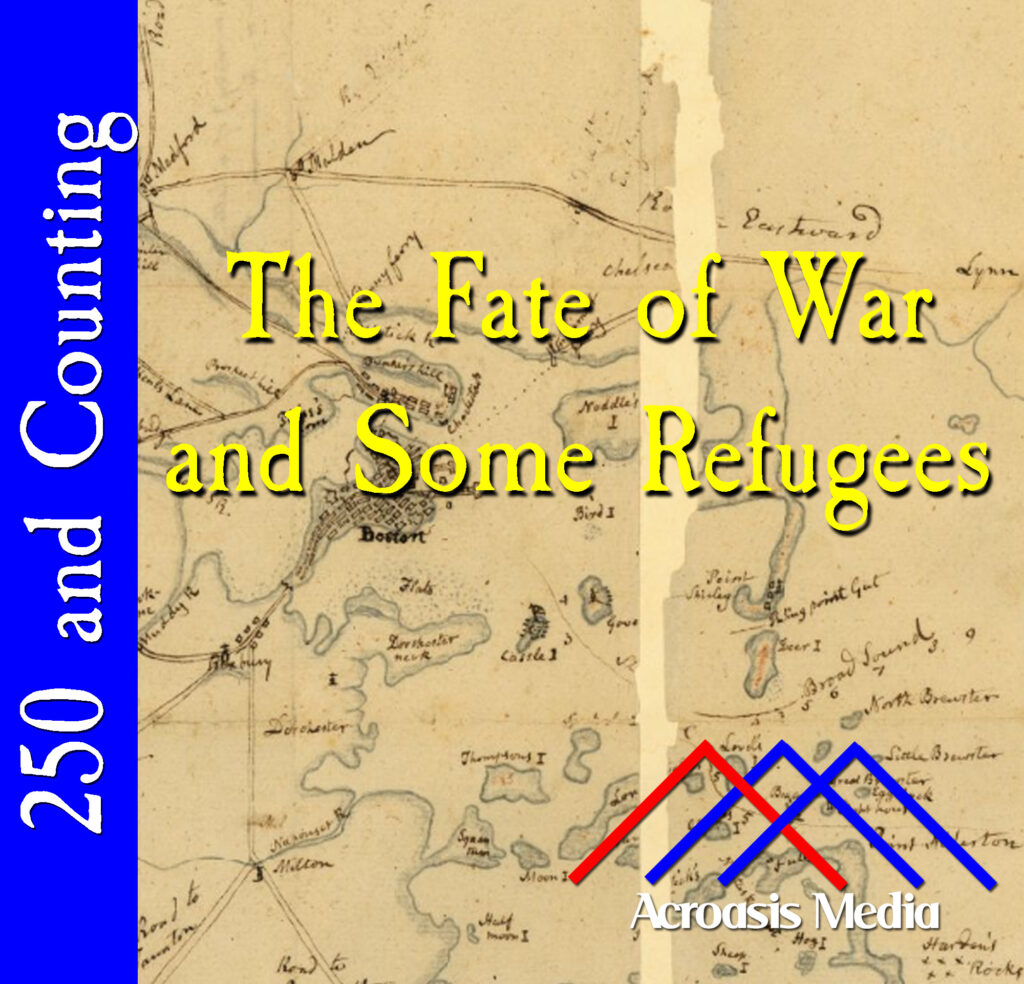
    Cover art for November 25, 1775: a manuscript map of Boston showing Point Shirley to the far right, away from the city. (It's under the "fu" in "refugees")

    It’s hard to emphasize just how remote Point Shirley is compared to the Boston. Let me try anyway. On most maps of Boston, Point Shirley isn’t even on the map. It’s so far to the east that it’s nearly in the ocean. I’m not sure it’s even possible to see Boston from Point Shirley.

    And given Point Shirley’s location at a place between the bay and the ocean, and the fact that it’s November, and you’ve got a cold, windy place where you’ve just dumped 300 sick, destitute people without provisions or a means of getting warm.

    Here’s a weird coincidence: if you look closely at this “manuscript” map from 1775, Point Shirley is at the center right. Need another hint? It’s just under the “fu” in the word “Refugees.” And if anyone got a big FU from the British, it was this group.

  • Considering North Carolina–November 24, 1775

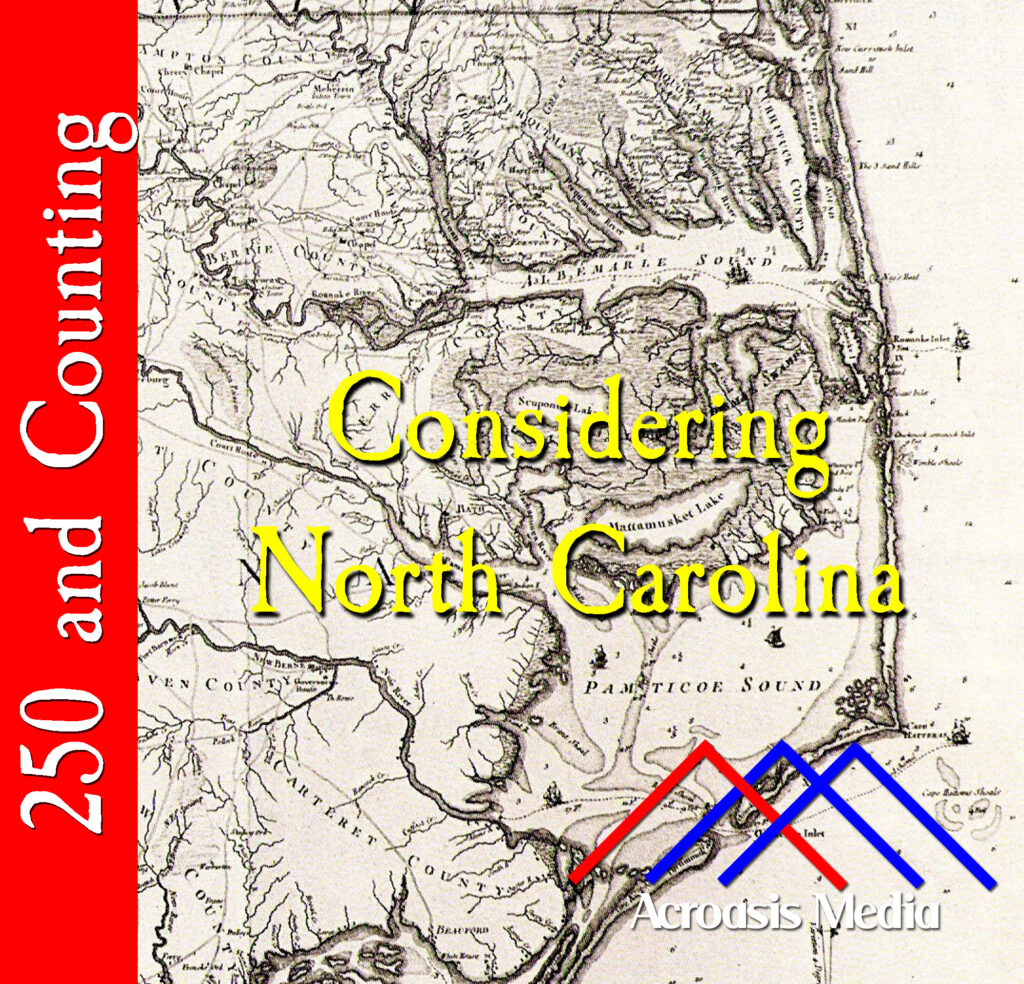
    Cover art for November 24, 1775: Crop of a map by Henry Mouzon of the northeastern portion of North Carolina in 1775. via Library of Congress Maps website.

    Two days ago, Mike had a case of the Martian Flu or something, so I needed to record in his place. today he sounds as good as ever. Since I could never bounce back from anything affecting my voice that quickly, I think it’s necessary to hurl invective his way. But I won’t ’cause I’m classy.

    Where were we? Oh yeah. One of the interesting things about the American Revolution is that even though there were major, busy ports up and down the coast, only a few of them captured Britain’s attention. Boston MA and Portsmouth NH caught a lot of grief. New York wasn’t much of a shipping powerhouse yet. New Jersey, ditto. And most of the Jersey coast wasn’t conducive to shipping anyway. But Delaware and Maryland had some deep-water ports but were largely overlooked during the war. Virginia caught a little bit, Georgia was ignored, South Carolina…well, we’ve already talked about that quite a bit, haven’t we?

    But North Carolina, which had bays and sounds protected by barrier islands, had a great deal of attractive waterways, but it seemed like nobody really thought about it, until today. That’s when the Second Continental Congress decided that there were too many governments replacing the British one originally there, and therefore everyone needed to get their boats steered in the same direction, you should excuse the expression.

  • The Prize Court Committee–November 17, 1775

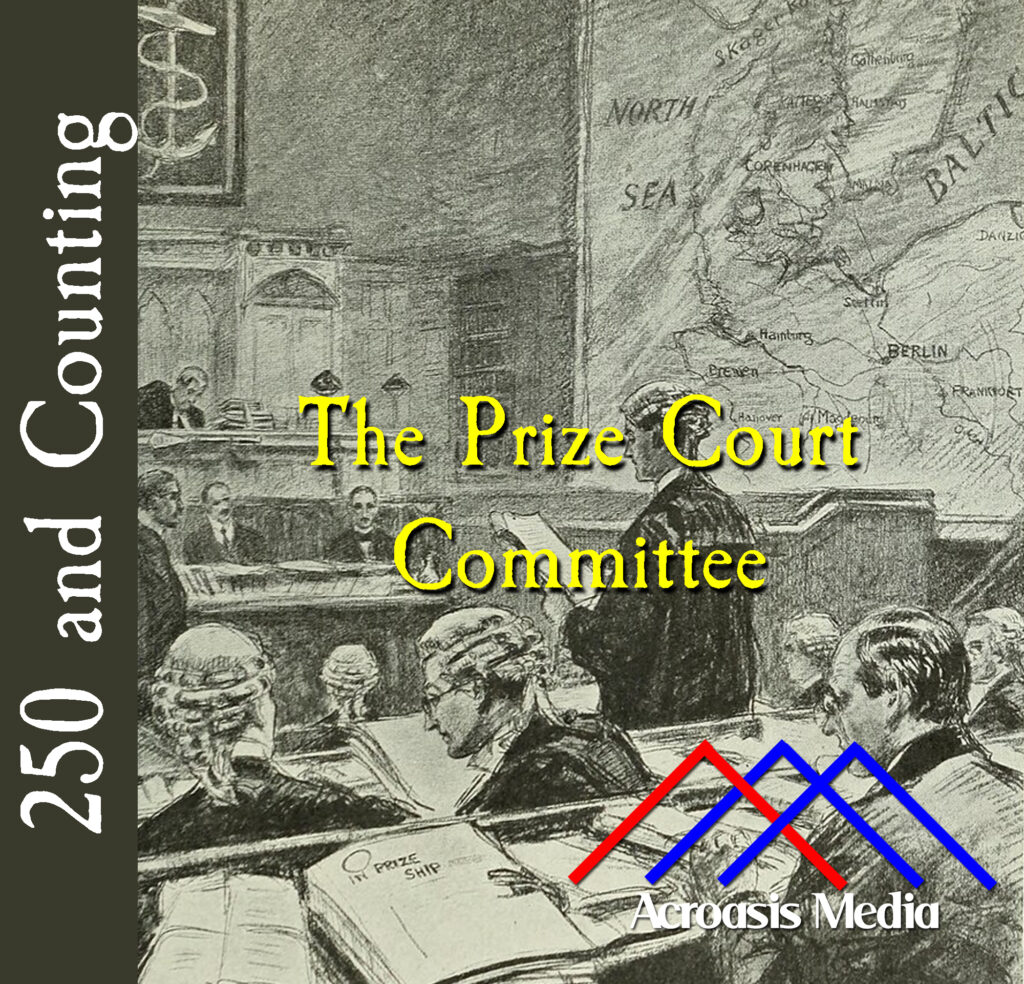
    Cover art for November 17, 1775: a British prize court from World War I. From The Times History of The War (1914). Artist unknown.

    A Prize Court is a formal organization dedicated to the disposition of items captured from an enemy.

    Because the Colonies were more or less building it all from the ground up, much of what they adopted came directly from the British. As a result the Prize Court and its structure is a British institution that made its way over here. This doesn’t happen anywhere else in the world, though in the early 20th Century an International Prize Court was proposed and established, but it was never ratified or implemented.

    So it’s still just the British, which maintains a formal court, and the United States, which largely followed the original committee recommendation by largely leaving it up to the individual states.

  • Birth of a Privilege–November 8, 1775

    Cover art for November 8, 1775: a wood engraving cartoon from Harper's Weekly, March 10, 1860, depicting a member of Congress franking his laundry. From the US Senate collection, accession number 38.00536.001

    When we talk about Franking, we typically use it in the context of the Franking Privilege, something that members of Congress, ex-presidents, and a few others get to use. In short, if they put their name on the envelope, they can mail stuff without cost to themselves. (The Congressional budget reimburses the US Postal Service.)

    But Franking isn’t limited to the franking privilege. “Franking” refers to any kind of device, mark, or combination of the two that makes something eligible for mailing. Put a postage stamp on a letter, that’s franking. Run it through a meter, that’s franking. Business Reply Mail is franking, too. And many of the rules are international in nature; any disputes are handled by an agency that answers to the United Nations.

    For what it’s worth, the franking privilege is intended solely for typical communication with constituents: newsletters or “what’s going on” letters. It can also be used for official business. However: the use of the privilege for political purposes is a big no-no. In addition, there are blackout periods, such as 60 days before an election, or 90 days if the congress member is on the ballot.

    See that? You’ve learned from me, now go learn from Mike.

  • Congress Has A Busy Day–November 6, 1775

    Cover art for November 6, 1775: portrait of John Langdon by Hattie Elizabeth Burdette, 1916.

    There are going to be days when no truly big events happen, but that wasn’t going to stop the Second Continental Congress from getting stuff done.

    Today we have a bit of an image of that group as a bunch of men who are hard-drinking philosophers, ready—and maybe eager—to burst into fisticuffs, or perhaps the occasional song, depending on where you got your impressions.

    So for that reason, we do like to remind you that the Continental Congress, for all their weird little squabbles, was a serious group of men. They took their jobs seriously, and put a lot of thought into everything they did. They often put in long hours, working until after darkness fell many days, and they typically worked six days a week.

  • It’s Finally Official–October 27, 1775

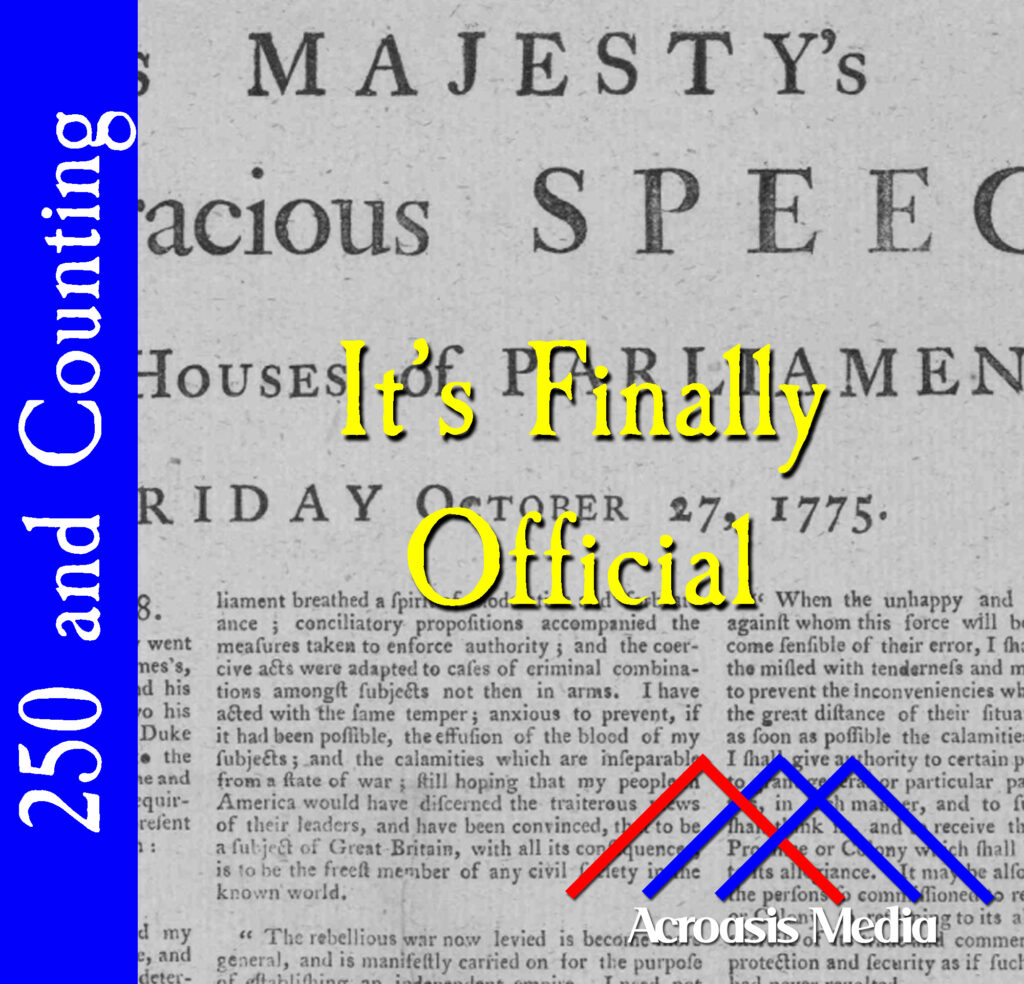
    Cover art for October 27, 1775: Detail of a broadside containing the text of King George III's speech to Parliament on this day.

    We’re 300 days into 1775 and therefore 300 days into this show, and we’ve finally gotten to the point where British troops will be shooting at Americans because the two parties are officially at war.

    Up until now, all the fighting was about control, because what better way to control people than by shooting at them?

    But King George III’s declaration of rebellion in August was informal in nature. It wasn’t until he declared the Colonies to be in rebellion before Parliament that genuine attention was paid to it. It was still theoretically possible that the Colonists could back off and let things go to the way they were, but the odds were vanishingly small.

  • RIP Peyton Randolph–October 23, 1775

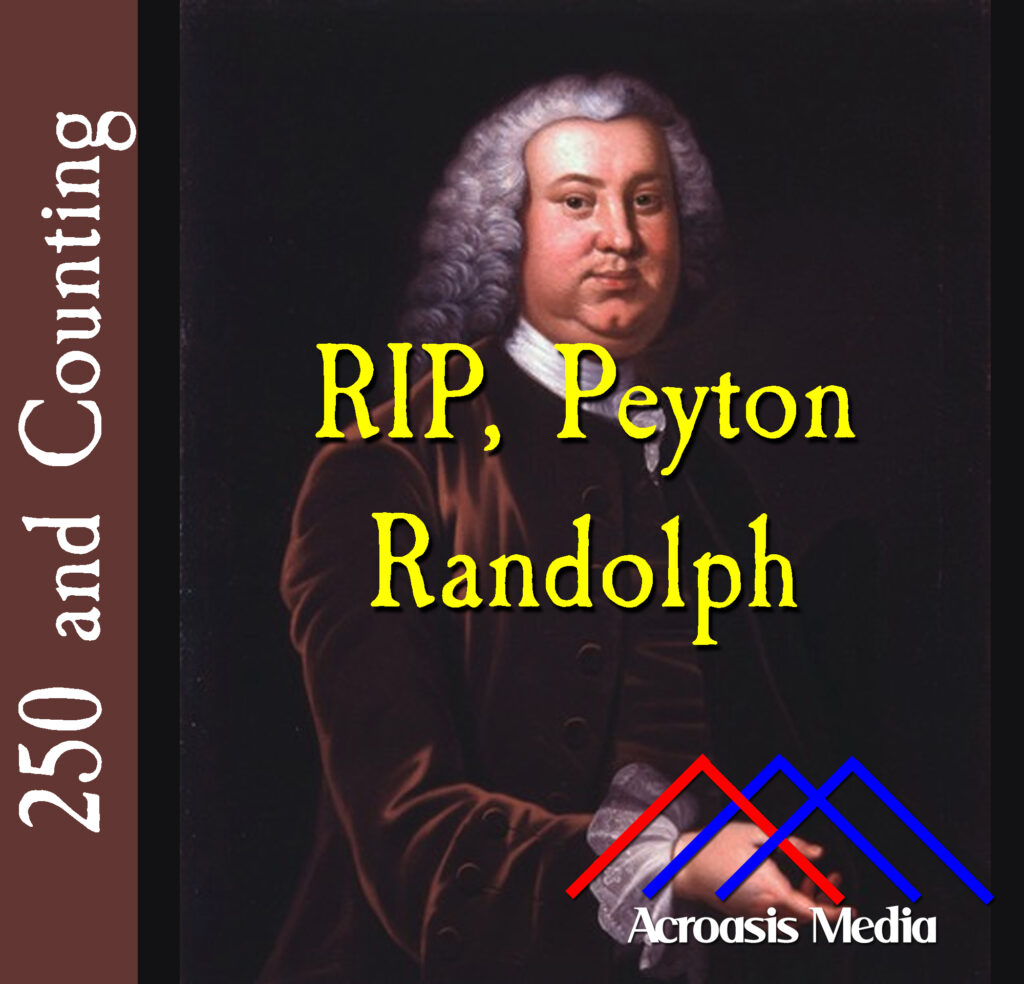
    Cover art for October 23, 1775: Peyton Randolph, by John Wollaston the Younger, 1775.

    Peyton Randolph is another one of those Founding Fathers who goes largely unknown to most people, probably because he died relatively young (age 54) and early in the whole Independence movement.

    But Randolph was a true Patriot and while he wasn’t around to sign the Declaration of Independence, it’s said that his spirit was at the heart of the document.

    It’s worth noting that, as the Royal Governors were kicked out one by one, the Continental Congress began to assume governmental duties for the Colonies. This is why some would argue that, as the first President of the Continental Congress, Peyton Randolph should also be considered our first US President, and never mind the fact that he died before the nation was established. It’s not a terrible idea, we guess…

    Fort Randolph in present-day West Virginia was named after him, as are the Randolph Counties in North Carolina and Indiana, not to mention the town of Randolph, Massachusetts.

  • Saltpeter, John–October 21, 1775

    Cover art for October 21, 1775: Portrait of John Adams by Benjamin Blyth, 1766

    The Second Continental Congress was having a busy week, with the worries about the trade embargo going on, and whether ships from other nations could get in/out safely.

    And John Adams was worried, too–worried that he wouldn’t be able to keep up with the demand for gunpowder for the soldiers. One of the components of gunpowder is saltpeter, and while it isn’t hard to make, it’s certainly easier to let someone else make it and then pay them for their efforts. Fortunately, help arrived in the form of a “recipe” for saltpeter published in a local newspaper.

  • Washington Gets Some Relief–October 18, 1775

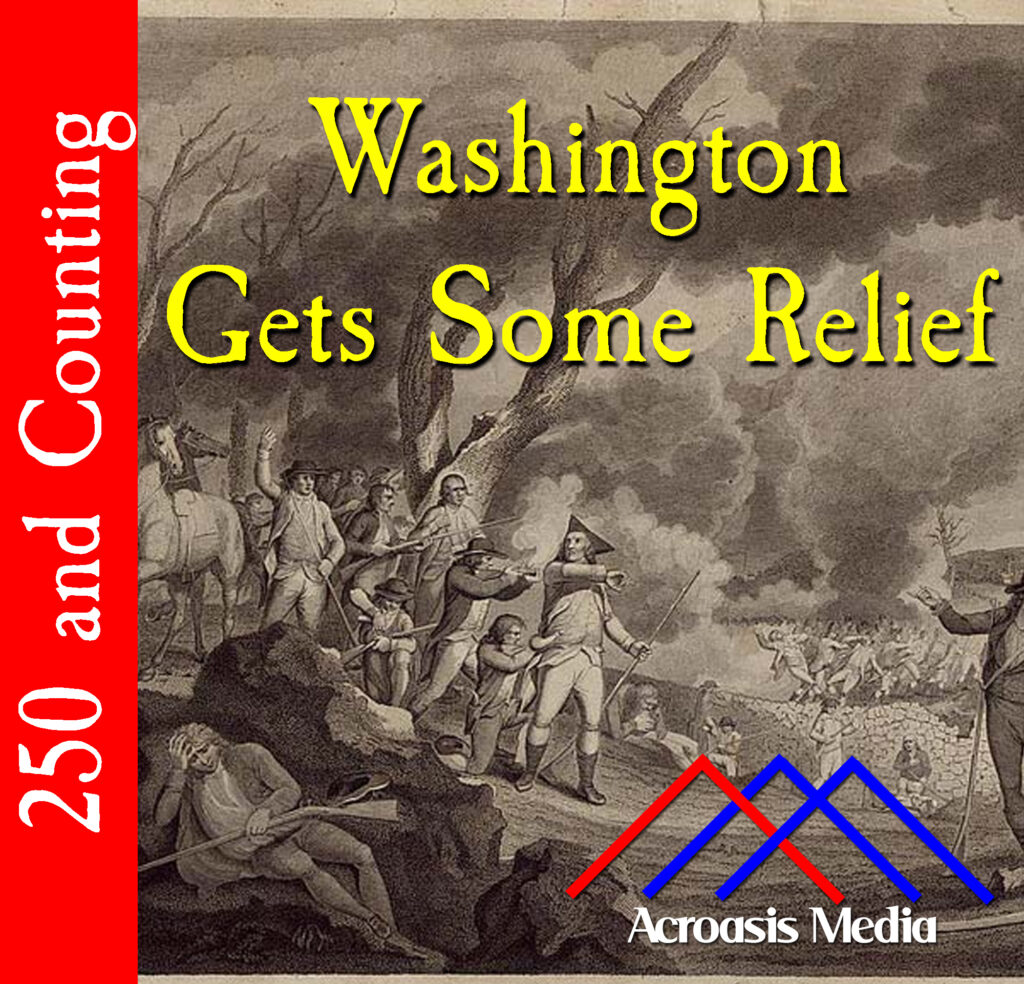
    Cover art for October 18, 1775: the Battle at Lexington, Amos Doolittle (engraver) and Ralph Earl (artist). via the New York Public Library and the Library of Congress.

    George Washington was a pretty smart guy. He knew exactly what his army needed, in all aspects. He had a handle on discipline, on supplies, on tactics and any number of other things. Washington surrounded himself with people who were smart, too. This went a long way toward ensuring his success.

    So when his army started to fall apart because some basic needs weren’t getting met, Washington took action. He knew that sending another letter to Congress wasn’t going to help. So instead he met with them directly. And like a dog savaging a toy, Washington grabbed Congress in his (not wooden!) teeth and shook them in a figure-eight.

    Metaphorically, of course. And while he didn’t get everything he sought, he managed to get the important stuff done and the rest of it…well. The rest of it, at least he knew he’d been heard. And he’d live to fight another day.