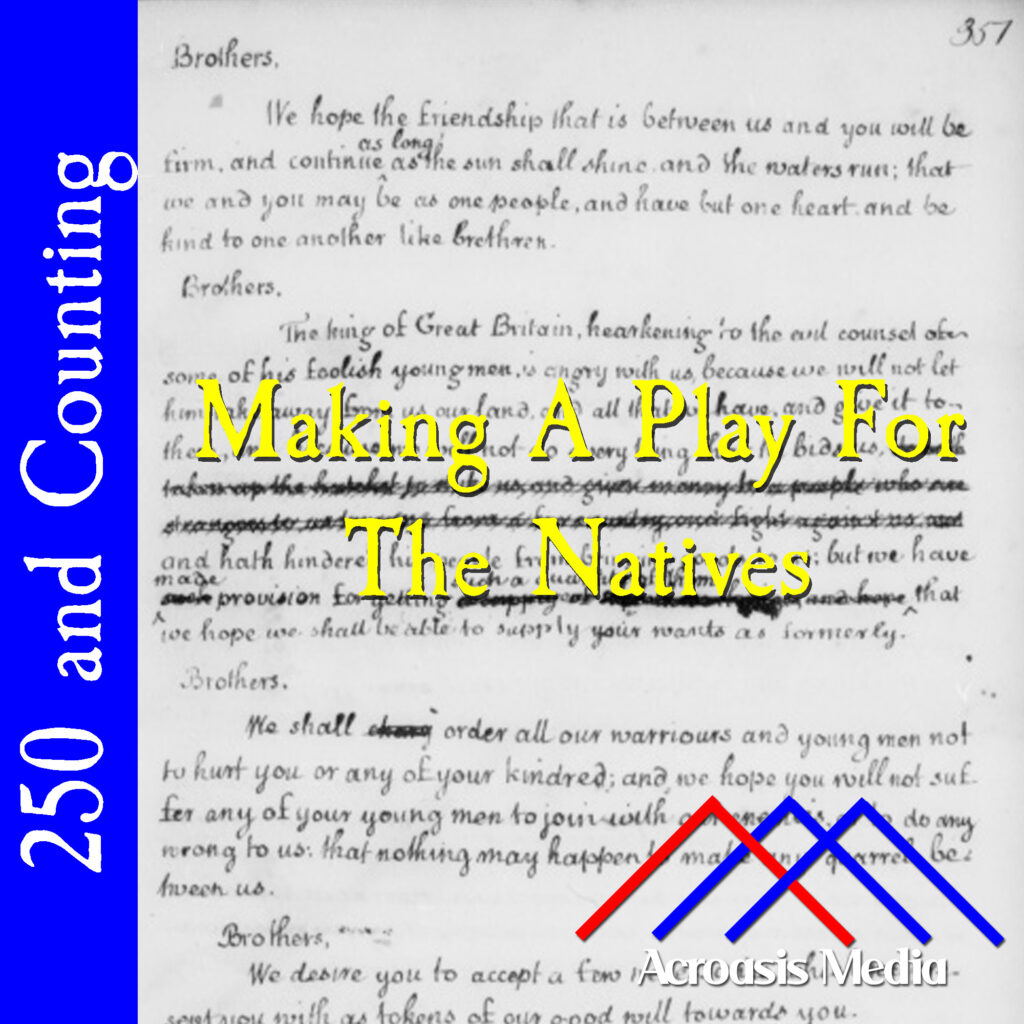
The Continental Congress knew that good relationship with the Native Americans was the smart thing to do, but it took them months to put together the Committee for Indian Affairs, even when their first attempt to bring the natives in failed miserably.
In that first try, they came to the upstate New York and framed the Revolution as though it was a family dispute. The Iroquois, taking that literally, decided to stay out of the affair, then.
This time around, the Iroquois (and shame on me, I should be saying Haudenosauree) came to Philadelphia, but in my humble opinion they weren’t treated especially well, having to wait for several days to meet with the Congress, and several more days to hear the proposal that the Committee for Indian Affairs put together. Small wonder, then, that they simply left without even responding to the Americans’ offer.
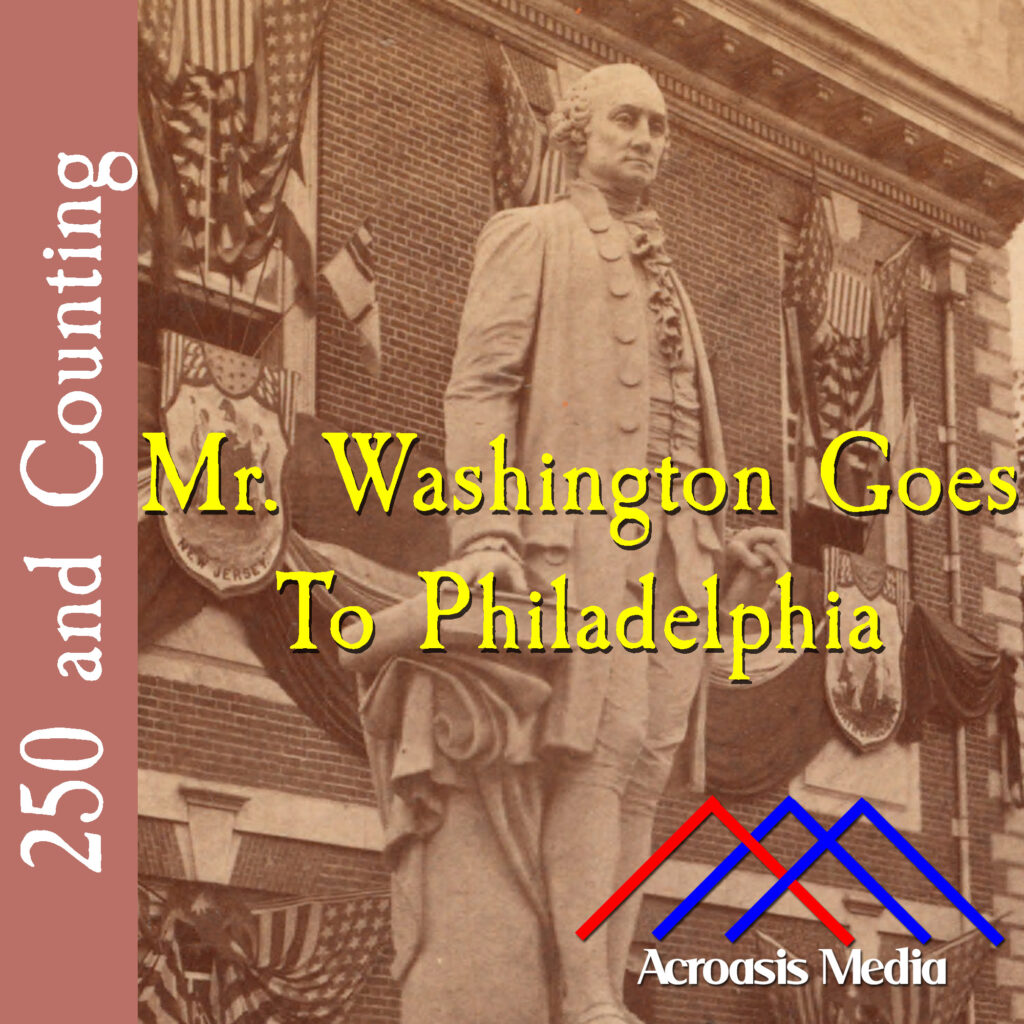
The idea of George Washington in Philadelphia sounds kind of like a no-brainer, but with dealing with a war against the greatest army in the world, plus having to put up with ill-trained troops to fight that war, he was a busy guy and didn’t get out there much.
Later on, after the war, of course, it was a common sight. But given Washington’s post-war stature as the soldier who delivered American victory, plus his stint as our first President—and the man who set many of the precedents for Presidential behaviors and ceremonies—it makes sense that Philadelphia would erect a statue to honor him, and park it right in front of Independence Hall.
The first statue of Washington in Philadephia was erected in 1869 and dedicated by the mayor. After about 40 years it began to show signs of the weather and overall climate getting to it, so a decision was made to replace it with a bronze replica and move the marble version to an indoor location. It now stands inside Philadelphia’s City Hall, while the bronze one still stands outside Independence Hall, where it has been since 1910.
Today, Mike takes you to this day in 1776, when Washington felt he had no choice but to speak to Congressional delegates himself
Once the preamble to Congress’ resolution had been written and unanimously approved back on May 15, it really was just a matter of when, rather than whether, America was going to formally declare itself as a separate state from England.
The hardest part was getting all the ducks in a row, as the expression goes. The biggest reason that independence hadn’t already been declared is that anything that came out of the Continental Congress had to pass unanimously, so they could speak with a single voice. Now, at the delegate level, they didn’t all have to vote the same way, but once a majority of the delegates from a given colony voted a certain way, then the colony voted that way as part of the larger body.
Some colonies had the green light to vote in the affirmative, as long as a different colony brought up the question. Georgia was rather split within the state, and was also more concerned with the skirmishes they were having at the border with Florida. So they mostly didn’t care. New York delegates, as we mentioned yesterday, arrived with instructions not to vote on Independence at all. Even when they finally did vote, it was technically against their orders.
But one of the more passionate sets of orders came from a group in Boston. Put your earbuds in and learn about how florid writing can really get your point across.
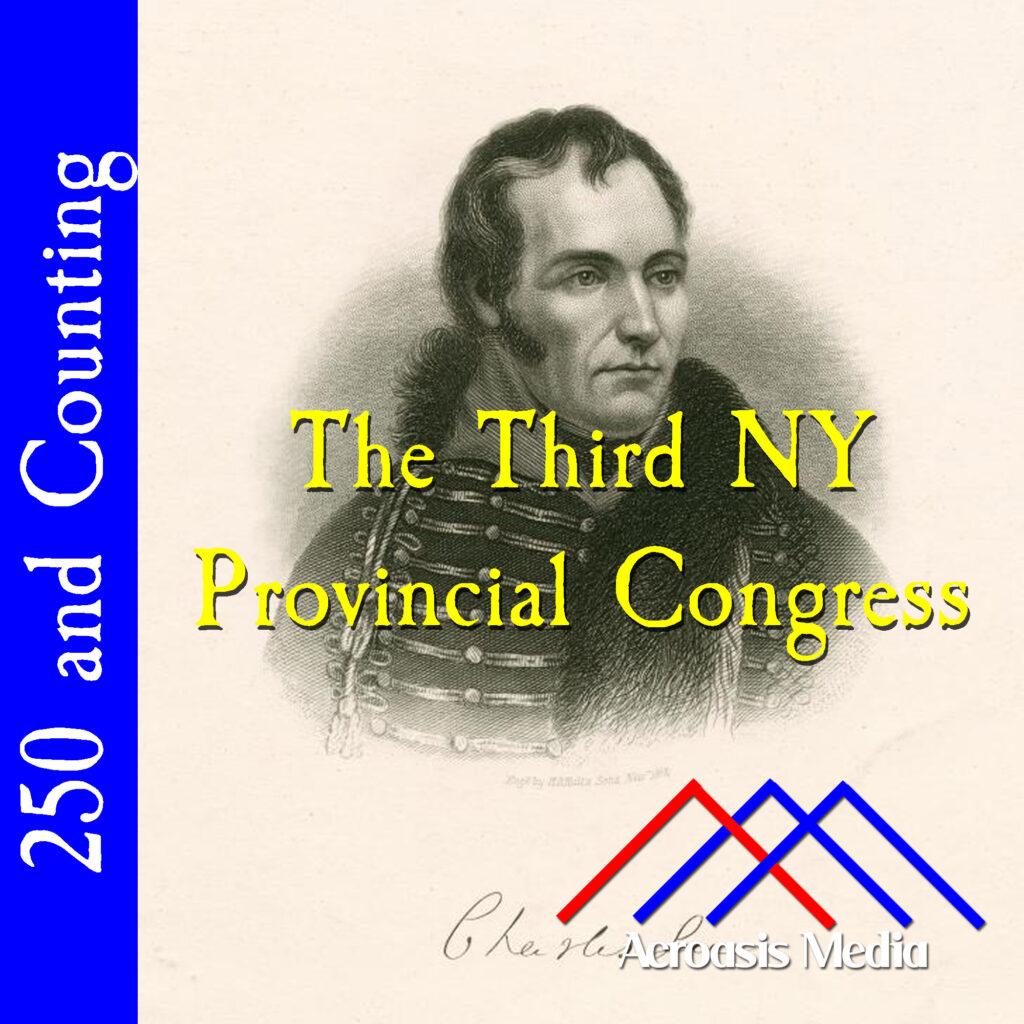
When the Third NY Provincial Congress convened on this day, chances are that nobody really got their hopes up.
By this point, that body had already met a few times, so it was generally known where they stood when it came to the Independence Question. And sure enough, when they sent delegates to the Continental Congress, they sent those delegates with instructions to oppose Independence. Rather than do that, however, the New York delegation typically just remained on the sidelines, appearing to neither favor nor oppose the notion. This went on for several weeks, and while it didn’t necessarily hinder the cause, neither did it really help matters.
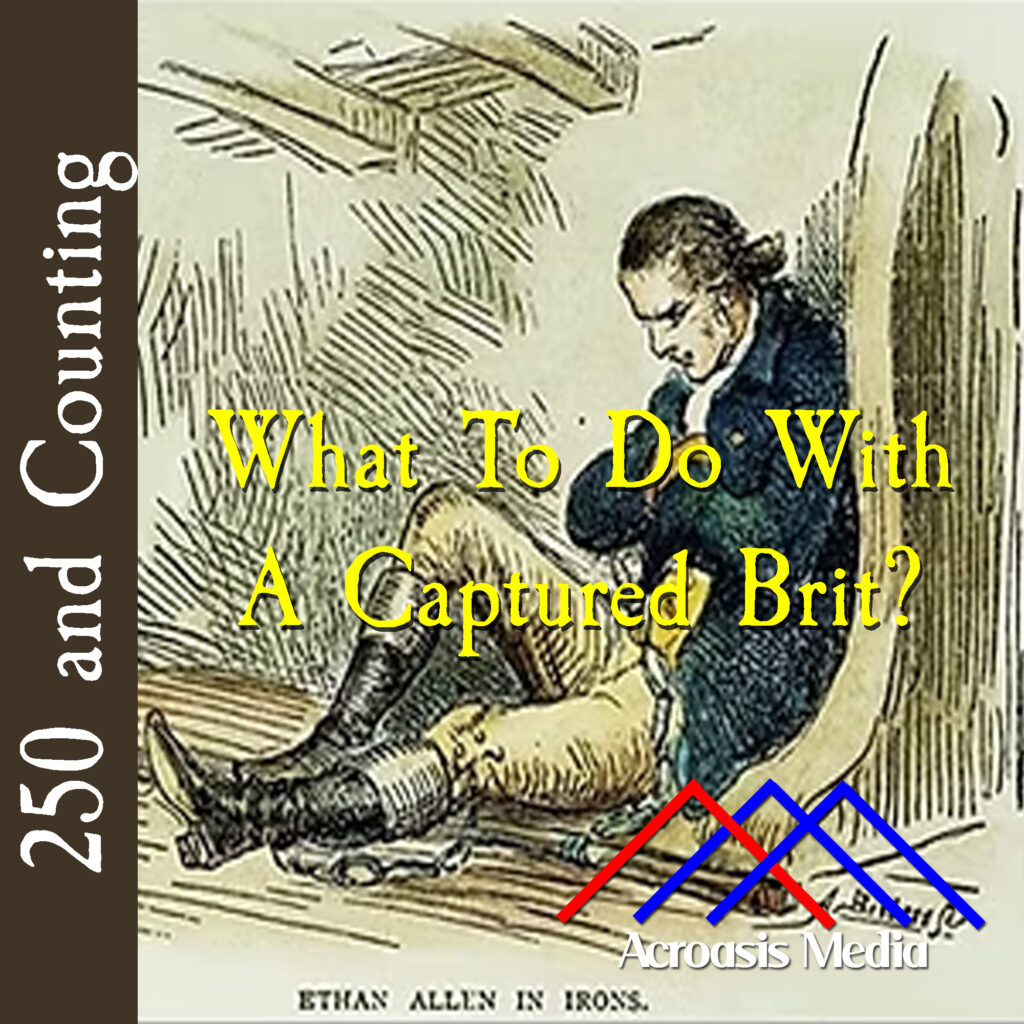
Early in the war, it became apparent that the treatment of prisoners was going to be a very lopsided affair.
British soldiers were treated humanely and with dignity. American soldiers…not so much. As we noted last August, when Americans were captured they weren’t treated as prisoners of war but rather as criminals who didn’t deserve dienity. During the course of the war, over 8000 soldiers died because of the conditions of their confinement.
Despite this, it appears that the Continental Congress, when asked the question directly, determined that the humane route was the most appropriate one. This didn’t really change the British approach, but at least we had a policy, and we had it in writing.
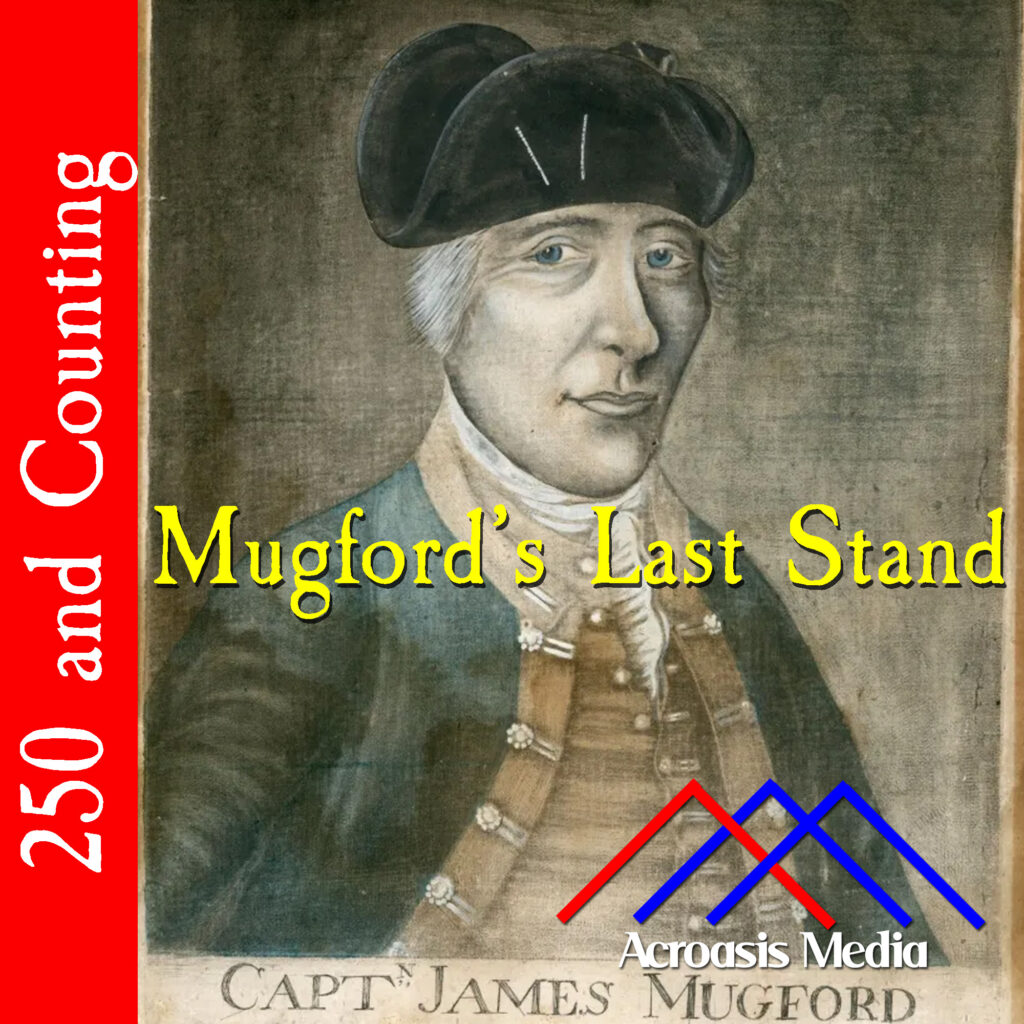
Captain enlisted in the Continental Army not long after the battles at Lexington and Concord. He was commissioned as a Captain and immediately put to work capturing British ships.
One of the more surprising things about the battle between the USS Franklin is not so much the victorious outcome, which was starting to feel a little bit of a foregone conclusion at this point, or that the ships moving in on the Franklin at first pretended to be friendly Bostonians, since that was actually a common tactic.
It was the fact that his birth date and death date are the same calendar day. Mugford was born in 1789, and died in 1776, on May 19. That seems like the sort of coincidence that might get a little more attention.
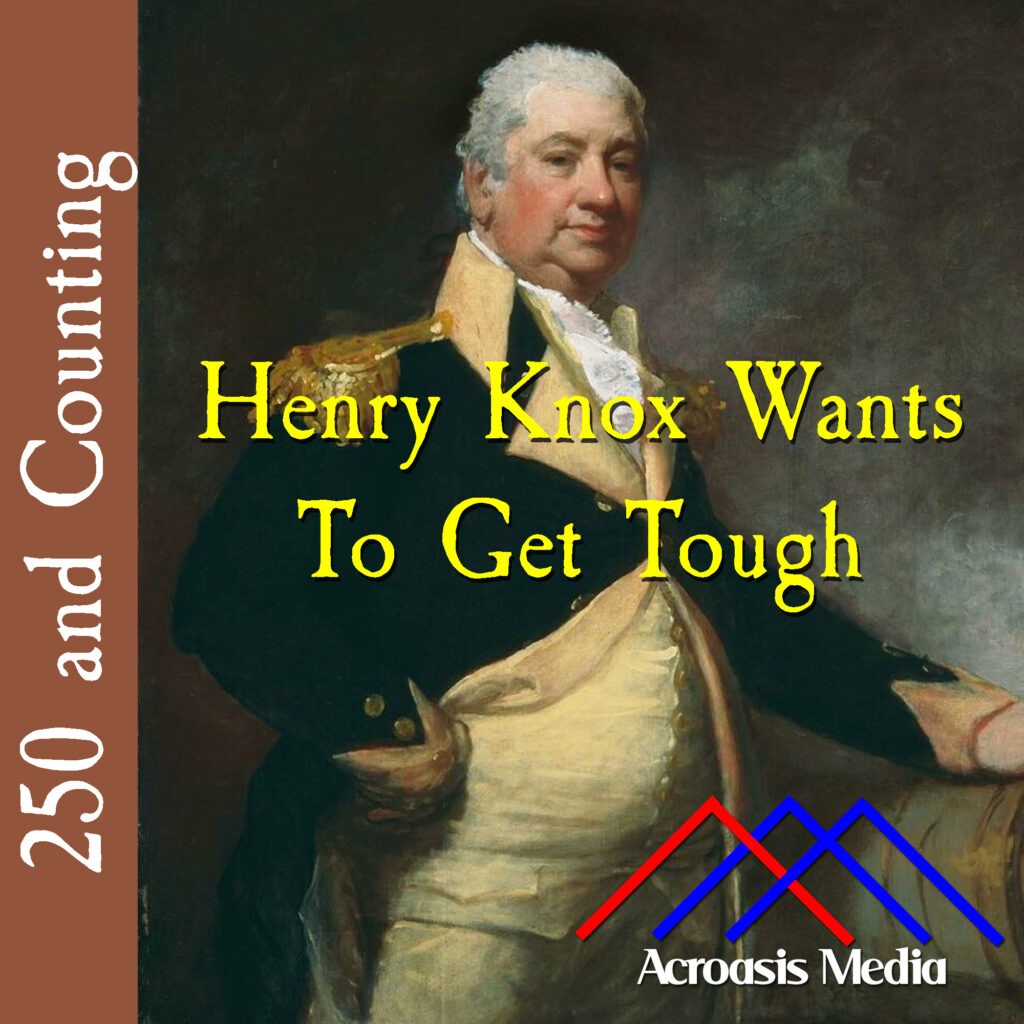
If the name Henry Knox sounds familiar to you, give yourself a prize. Knox was the man in charge of the Noble Train of Artillery, in which large amounts of ordinance were taken from Fort Ticonderoga and transferred to Boston. The presence of the new guns, with greater range than either side had at that point, led to the British finally evacuating the city a relatively short time later.
But by this point Knox was back in New York, only he was in the city rather than the upstate area, and he could see that reconciliation was a pipe dream at best. So he wrote to John Adams to stress the importance of eventual independence.
It is not recorded whether Adams replied “No duh,” since he’d been making the same arguments to the Second Continental Congress for some time.
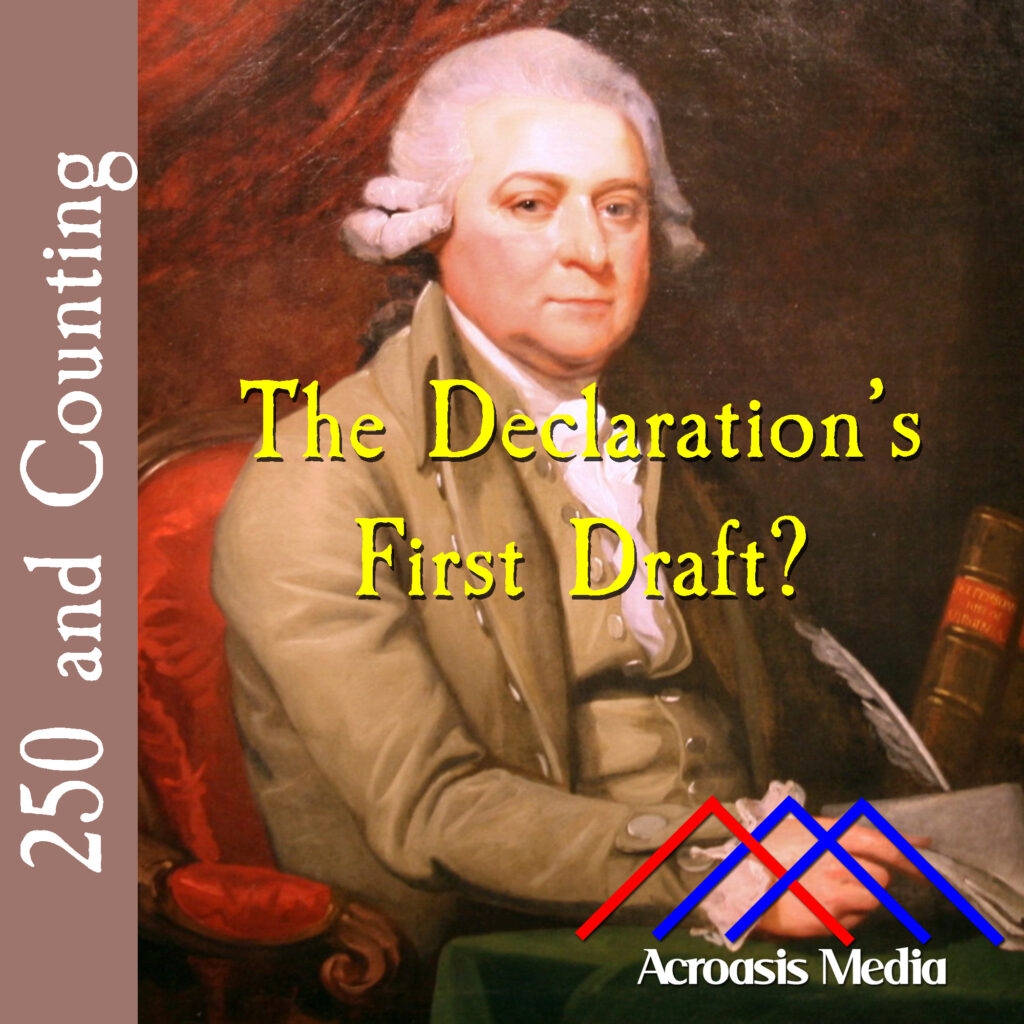
I have to admit that this small chunk of history has me a little confused, because if you’re going to vote on a resolution, shouldn’t you have the wording of that resolution in place? But the Second Continental Congress did vote on May 10, and now they’ve written a Preamble to the Resolution, largely drafted by John Adams. And from many angles, it looks like a formal break from England, but it’s really not.
Adams also thought the Preamble to the Resolution looked like a formal break, but he also recognized that a genuine declaration would be needed, and soon.
The Preamble to the Resolution read thus:
Whereas his Britannic Majesty, in conjunction with the Lords and Commons of Great Britain, has, by a late Act of Parliament, excluded the Inhabitants of these united Colonies from the Protection of his Crown; and whereas no Answer whatever to the humble Petitions of the Colonies for redress of Grievances and reconciliation with Great Britain has been or is likely to be given, but the whole force 386of that Kingdom aided by foreign Mercenaries is to be exerted for the destruction of the good People of these Colonies; and whereas it appears absolutely irreconcileable to reason, and good Conscience, for the People of these Colonies now to take the Oaths and Affirmations necessary for the support of any Government under the Crown of Great Britain, and it is necessary that the Exercise of every kind of Authority under the said Crown should be totally suppressed, and all the Powers of Government exerted under the Authority of the People of the Colonies, for the preservation of internal peace, Virtue and good order, as well as for the defence of their Lives, Liberties and Properties against the hostile Invasions and cruel depredations of their Ennemies; therefore
Resolved That it be recommended to the respective Assemblies and Conventions of the United Colonies, where no Government sufficient to the Exigencies of their affairs hath been hitherto established, to adopt such Government as shall in the Opinion of the Representatives of the People best conduce to the happiness and Safety of their Constituents in particular and America in General.
Adams was pushing the rest of the Congress hard, and he knew it. Moreover, so did they, and in his diaries he notes the dismay and even anger that he brings on when he talks about Independence. But before long a Committee of Five will be formed to write up an important document.
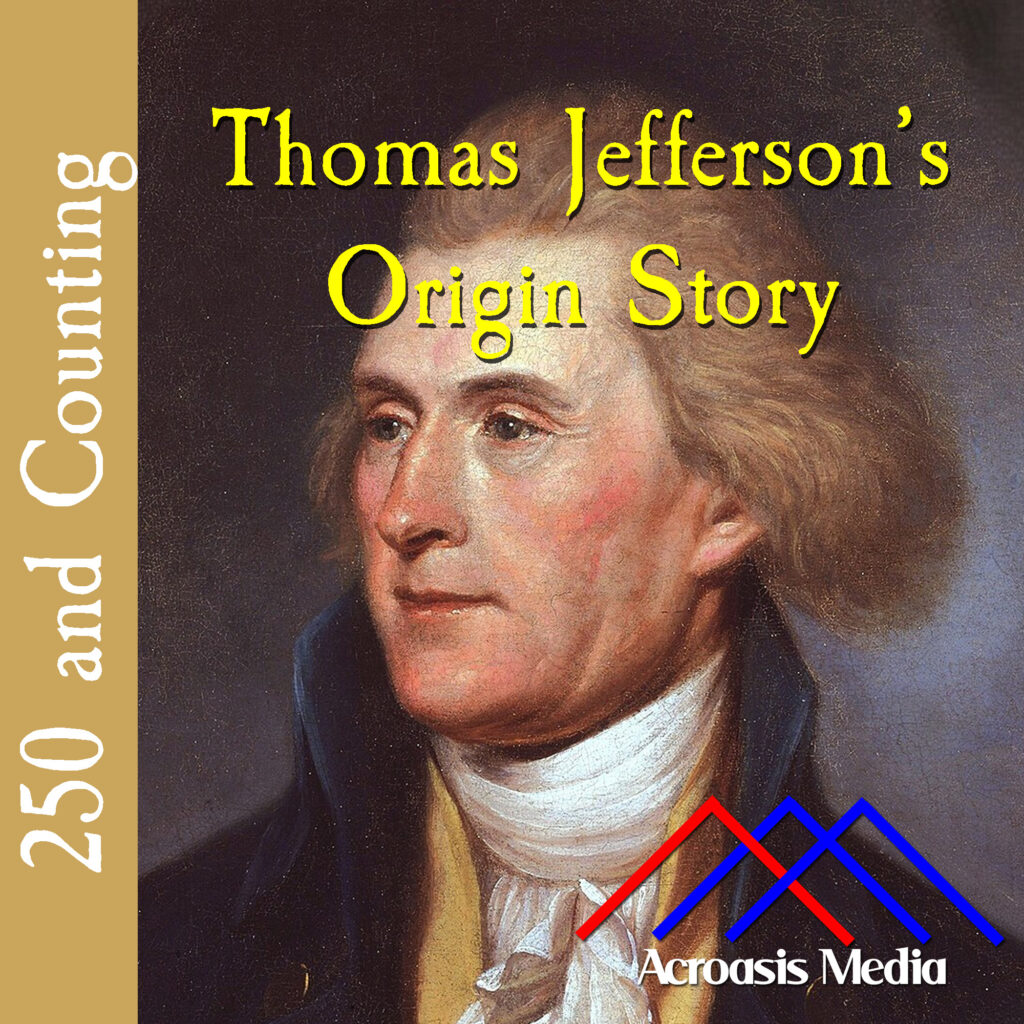
Thomas Jefferson gets most of the credit for writing the Declaration of Independence, but Thomas Jefferson’s background clearly informed his writing of that document. That’s what Mike talks about in today’s episode.
In this space I’d like to tell you a little about Declaration House. The building was newly erected at the time Jefferson rented out a room from its builder, a bricklayer named Jacob Graff (which is why it was originally called the Graff House, go figure).
Jefferson lived in the space with his 14-year-old enslaved valet, Robert Hemmings. Between 1776 and 1883, the house underwent several remodelings until it was finally torn down. It was reconstructed in 1975 by the National Park Service, and when it’s open, it has some museum exhibits on the first floor along with a short film about the drafting of the Declaration. The second floor is a reproduction of the space Jefferson used, containing period furnishings.
As this is published, the site has been closed to the public since 2025 as part of a comprehensive rehabilitation project.
Charles Gravier, comte de Vergennes, was France’s Foreign Minister from 1774 to 1787 during Louis XVI’s reign.
France was still salty about having lost the Seven Years’ War. On this side of the pond we refer to it as the French and Indian War, but this was a global affair that took place mostly in Europe. France and Austria took on Great Britain and Prussia, and a few other nations joined in with the coalitions. Winston Churchill once called it the “First World War” because so many nations were in conflict on four different continents, and he’s not wrong in the bigger picture.
At any rate, Charles Gravier (more properly referred to as “Vergennes”) hoped that by helping the Americans, he could weaken British dominance on the global stage. (You may remember we talked about this ten days ago.) In the end it turned out to be a mixed bag: while the Americans eventually were successful in their attempt to break away from Britain, France didn’t get a lot out of it by the time the dust settled, and the French finances (which were already weakened) were further damaged. And then, of course, the French people took the hint from America and had themselves a French Revolution.